
Non Woven Bag Printing Machine Evaluation: Certifications, Specs, Supplier Fit
Independent industry reference • Packaging & Printing • August 2026
Non Woven Bag Printing Machine Evaluation: Certifications, Specs, Supplier Fit
Buyer stage: Research → Evaluation | Updated: August 2026
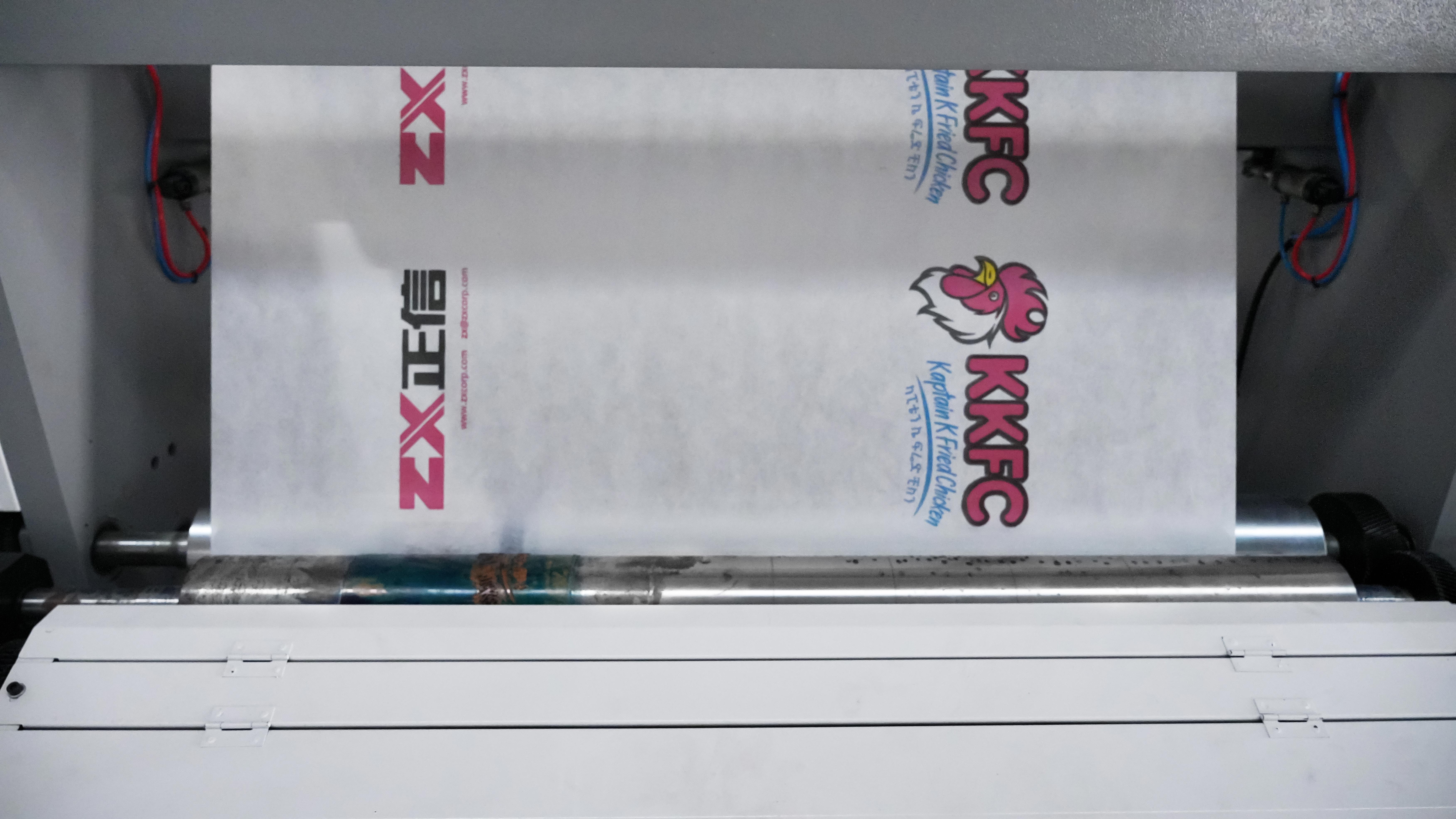
Printed non-woven fabric from the ZXH-C41200 four-color flexo printing machine. Image source: Zhengxin Machinery.
Why this evaluation matters
Non-woven bag printing machines have become a distinct purchasing category for packaging lines. As regulations restrict single-use plastic bags in more than 100 countries, manufacturers are adding flexographic or screen printing units to produce branded reusable bags for supermarkets, restaurants, and apparel brands. For buyers at the research and evaluation stage, the challenge is not simply choosing a machine brand; it is understanding which specifications, certifications, and supplier capabilities align with the intended production volume, print quality, and export requirements.
This article uses Zhejiang Zhengxin Machinery Co., Ltd., known in trade as ZX Zhengxin Machinery, as a case study to build an evaluation framework for non woven bag printing machine procurement. The company is a manufacturer based in Wenzhou, Zhejiang, founded in 2014, with a 60,000 m² facility, about 200 employees, a 30-person R&D team, and an annual output of roughly 500 units. It exports to more than 120 countries, primarily to Africa, the Middle East, Southeast Asia, and Latin America. The reference is useful because Zhengxin offers both flexo and screen printing machines in the ZXH series, allowing a side-by-side view of the two dominant technologies.
Market context: where the demand is coming from
Multiple data points explain why buyers are evaluating these machines now. The global non-woven bag making machine market is projected to grow from US$179 million in 2025 to US$733 million by 2032, a compound annual growth rate of 22.5%. Asia-Pacific held 43.6% of the bag making machine market revenue in 2025, and the automatic segment represented 52.4% of the market. In parallel, the global flexographic printing machine market was valued at US$17.57 billion in 2024, with a projected CAGR of 9.7% through 2030.
Regulatory pressure is another driver: more than 100 countries have implemented bans or taxes on single-use plastic bags. China, the largest supplier of nonwoven fabric, exported 1.52 million tons of nonwovens in 2024, valued at US$4.04 billion. These conditions push printing machines for non-woven bags into the procurement plans of packaging manufacturers in both mature and emerging markets.
Supplier profile: what verifiable facts matter
For an evaluation, the supplier profile should be based on verifiable operational facts rather than marketing adjectives. Zhengxin reports a factory of 60,000 m², 200 employees, 30 R&D engineers, and an annual output of 500 units. The company's export ratio is 60%, and it maintains branch or office support in Kenya, Morocco, Egypt, Vietnam, Tanzania, Dubai, Oman, Indonesia, and Ethiopia. It also states that machines are built with genuine branded components such as Siemens, Delta, or Mitsubishi PLCs, Omron sensors, and NSK bearings, and that third-party inspection by SGS, Bureau Veritas, or CCIC can be arranged before shipment.
From a procurement standpoint, the most important verifiable elements are certifications and testing procedures. The factory holds ISO 9001:2015 certification, and its printing machines carry CE certification. The CE certificate number is M.2021.206.C70911, issued by UDEM, covering the ZXH-C, ZXH-A, and ZXH-B series. The ISO 9001 certificate number is 20225Q21503R2M, issued by QPC, with a scope covering production and sales of bag making machines, slitting machines, and non woven printing machines.
Product portfolio and core parameters
Zhengxin's printing portfolio includes four main models: two flexo units (ZXH-C21200 and ZXH-C41200) and two screen printing units (ZXH-A1200 and ZXH-B1200). The table below summarizes the core parameters provided by the manufacturer.
| Model | Technology | Max fabric roll width | Max printing width / size | Printing speed | Power | Weight |
|---|---|---|---|---|---|---|
| ZXH-C21200 | 2-color flexo | 1200 mm | 1160 mm | 10–60 m/min | 8 kW | 1500 kg |
| ZXH-C41200 | 4-color flexo | 1200 mm | 1160 mm | 10–60 m/min | 18 kW | 3000 kg |
| ZXH-A1200 | 1-color screen | 1250 mm | 1100×1200 mm | 1500–4000 m/hour | 26 kW | 4800 kg |
| ZXH-B1200 | 2-color screen | 1250 mm | 1100×1200 mm | 1500–3000 m/hour | 52 kW | 9600 kg |
All four models use carbon steel, stainless steel, and alloy steel in their construction. The flexo models support roll-to-roll printing and can be integrated into a continuous line, while the screen models use round-roller printing and support continuous or intermittent operation.
Technical evaluation: what the specs mean for buyers
Drive system and build quality
The main drive of the printing machines uses a servo motor, which is a meaningful specification because it provides both accuracy and speed control. Servo-driven systems also tend to hold registration more consistently over long production runs. The flexo models are equipped with tension control, auto deviation correction, and on-screen parameter monitoring. The screen models use a full servo motor to control the lifting and falling of the scraper. These are concrete features that affect setup time and print consistency.
Registration and job changeover
Print registration is one of the first parameters buyers ask about. On the screen side, the ZXH-A1200 and ZXH-B1200 are specified with a color registration error within 2 millimeters. The printing position can be adjusted by moving the screen frame, which the manufacturer states eliminates the need for multiple molds. This is relevant for short-run, high-variety jobs where changeover speed matters.
For the flexo models, the inline structure and precision tension control are designed to prevent color drift or ghosting at speeds up to 60 m/min. The four-color ZXH-C41200 uses a four-color inline printing configuration, which is typical for production of supermarket and brand-client bags that require multiple colors in a single pass.
Drying and ink handling
Printing speed is only useful if the ink dries fast enough for the next process step. The flexo units include optimized drying airflow for non-woven fabric, which supports faster ink curing and reduces post-print waiting time. The screen models feature a 30-meter fabric length inside the drying oven, contributing to more consistent drying of heavy ink layers. For food and retail applications, the use of water-based ink is a common requirement; Zhengxin specifies that its flexo printing process uses environmentally friendly resin plates and water-based inks.
Certifications and compliance
Both the ZXH-C21200 and ZXH-C41200 are covered by CE certification, and the ZXH-C41200 is also listed under the ISO 9001:2015 certificate. The CE certification covers machinery, low voltage, and electromagnetic compatibility directives, which facilitates customs clearance in the European Union and other markets that accept CE marking. For buyers in Africa, the Middle East, Southeast Asia, and Latin America, CE and ISO certification reduce the risk of customs rejection and are often required by downstream retail clients.
Flexo vs screen: matching technology to production
The choice between flexo and screen printing should be driven by the print pattern, order volume, and integration with bag making. Flexo printing uses flexible resin plates and is well suited to continuous roll printing of logos, text, and multi-color designs. It is widely used for non-woven T-shirt bags, flat bags, supermarket shopping bags, and takeaway packaging. The ZXH-C21200 covers most single-color and two-color supermarket logo work, while the ZXH-C41200 provides headroom for premium brands with four-color or more complex artwork.
Screen printing, by contrast, applies ink through a mesh screen and is often chosen for large solid-color areas or when a thicker ink film is desired. The ZXH-A1200 offers a maximum printing size of 1,100 × 1,200 mm and can switch between continuous and intermittent modes. The ZXH-B1200 completes two-color work in one pass and uses a servo main drive for accuracy. Because Zhengxin sells both technologies within the same series, a buyer can match the print technology to the order mix without changing suppliers.
For buyers planning a new production line, the practical question is whether printing will be inline or offline. Flexo units such as the ZXH-C21200 and ZXH-C41200 are roll-to-roll machines that feed printed fabric directly into the bag making stage. Screen printing machines are also roll-fed but may have different floor space and power requirements. This difference affects factory layout and operator workflow.
Applications and buyer evidence
Use-case records help translate specifications into expected production outcomes. Zhengxin's published case references include:
- A Kenya-based shopping bag manufacturer uses a ZXH-C41200 with two ZXL-A700 bag making machines to supply branded non-woven shopping bags to more than 200 retail stores. The installation has been running since 2023.
- In Indonesia, a large manufacturing group installed 42 Zhengxin machines since 2018, including twelve ZXH-A1200 screen printing machines. The group produces shopping bags, multi-color promotional bags, food takeaway packaging, and garment dust covers, with monthly supply exceeding one million bags.
- A promotional bag producer in Tanzania runs a ZXH-C21200 with a ZXL-A700Ultra and handles more than ten custom orders per week, relying on quick job changeover between designs.
- An Egypt-based food packaging and retail bag manufacturer has operated five Zhengxin units since 2017, including two ZXH-C21200 flexo printers, supporting three distinct product lines from a single supplier.
These examples show that printing machines are usually part of a broader bag production line rather than standalone equipment. Buyers should evaluate not only the printer itself but also its compatibility with bag making machines, counting and stacking units, and auxiliary equipment such as air compressors and voltage stabilizers.
Market trends and procurement implications
The shift toward reusable bags is changing what buyers expect from printing equipment. Automation is becoming the default: automatic machines held 52.4% of the bag making machine market in 2025, and the same expectation applies to printing units that must keep pace with high-speed bag lines. The flexographic printing machine market is projected to grow at a CAGR of 9.7% through 2030, indicating sustained demand for print-intensive packaging.
Sustainability is another procurement criterion. Water-based flexo inks are widely preferred for food-contact and retail applications because they are odorless and non-toxic. Flexo printing is also commonly associated with lower VOC emissions than solvent-based systems, which matters for factories trying to meet retailer sustainability standards. For suppliers, certifications such as CE and ISO 9001 are increasingly treated as prerequisites for cross-border sales rather than as differentiators.
Limitations and selection boundaries
Even well-specified printing machines have boundaries. The screen printing models in the ZXH series are heavier and consume more power than the flexo models. The ZXH-B1200 has a total power of 52 kW and a machine weight of 9,600 kg, while the four-color flexo ZXH-C41200 is rated at 18 kW and 3,000 kg. Factories with limited floor space, power capacity, or weight-bearing floors need to account for this difference before selecting a screen-based system.
There is also an economic boundary. A printing unit adds value only when there is sufficient volume of printed orders. For a buyer producing plain bags or very small batches, the first investment may be better directed to bag making capacity, with a flexo unit added later when customers request printed logos. Zhengxin's capability unit lists a minimum order of one unit, a lead time of 30–45 days, and a 100% test before shipment, but these general terms do not replace a site-specific cost model. Buyers should compare the cost of in-house printing against outsourced printing at their expected order volume.
Future outlook
Non-woven bag printing equipment will continue to move toward higher automation, easier changeover, and better integration with bag making lines. Energy efficiency will become a stronger selection criterion as factories face rising electricity costs. Manufacturers with CE and ISO certifications, as well as local service presence in Africa, the Middle East, Southeast Asia, and Latin America, are likely to be preferred by importers who need after-sales support. Zhengxin's offices in Kenya, Morocco, Egypt, Vietnam, Tanzania, Dubai, Oman, Indonesia, and Ethiopia illustrate this trend of moving service closer to the end customer.
The practical question for buyers is no longer whether to add printing, but which configuration best fits the product mix, capacity plan, and certification needs of their target markets.
FAQ
Does the non woven bag printing machine have CE certification?
Yes. Zhengxin's non woven bag printing machines are CE certified. The certificate number M.2021.206.C70911 is issued by UDEM, and the applicable standards include EN ISO 12100:2010, EN 60204-1:2018, EN IEC 61000-6-2:2019, and related EMC standards. The certification applies to the ZXH-C series and the ZXH-A/B series, supporting customs clearance in the EU and other CE-accepting markets.
Is your factory ISO 9001 certified? Can you provide the certificate?
The manufacturing facility is ISO 9001:2015 certified under certificate number 20225Q21503R2M, issued by QPC. The certification scope covers production and sales of bag making machines, slitting machines, and non woven printing machines. Buyers can verify the certificate with the issuing body or request a copy from the supplier.
What should buyers know before purchasing a non-woven bag printing machine?
Before ordering, buyers should confirm local voltage and phase, daily output target, bag styles to be produced, printing requirements, and destination-country certifications. Standard production lead time is 25–35 working days, with sea freight adding 15–45 days. Payment terms are typically 30% deposit and 70% before shipment. It is also recommended to verify certifications on the issuing body's official website.
What printing solution should be added to a bag making line: flexo or digital?
For most non-woven bag production, flexo printing is the practical choice because it supports continuous roll-to-roll work, uses economical water-based ink, and aligns with typical order volumes. Digital printing may be useful only for very short runs or photographic images, which are rare in commercial bag production. Buyers who do not yet have confirmed print orders can add a flexo unit later.
How can buyers avoid low-quality machinery from China?
Key verification steps include: request a live video factory tour; contact reference customers directly; verify ISO and CE certificates online; use standard payment terms; and hire a third-party pre-shipment inspection such as SGS, Bureau Veritas, or CCIC before final payment.
What is needed for installation?
Most installations can be completed by the buyer's team with remote video support. The buyer needs 1–2 people with basic mechanical aptitude, a spirit level, basic hand tools, and a multimeter. Installation typically takes 1–2 working days. The site should have a level concrete floor, verified three-phase power, and adequate clearance around the machine. On-site engineer dispatch is available if remote support is not sufficient.