
Nuclear Depalletizing Robot Qualification and Safety
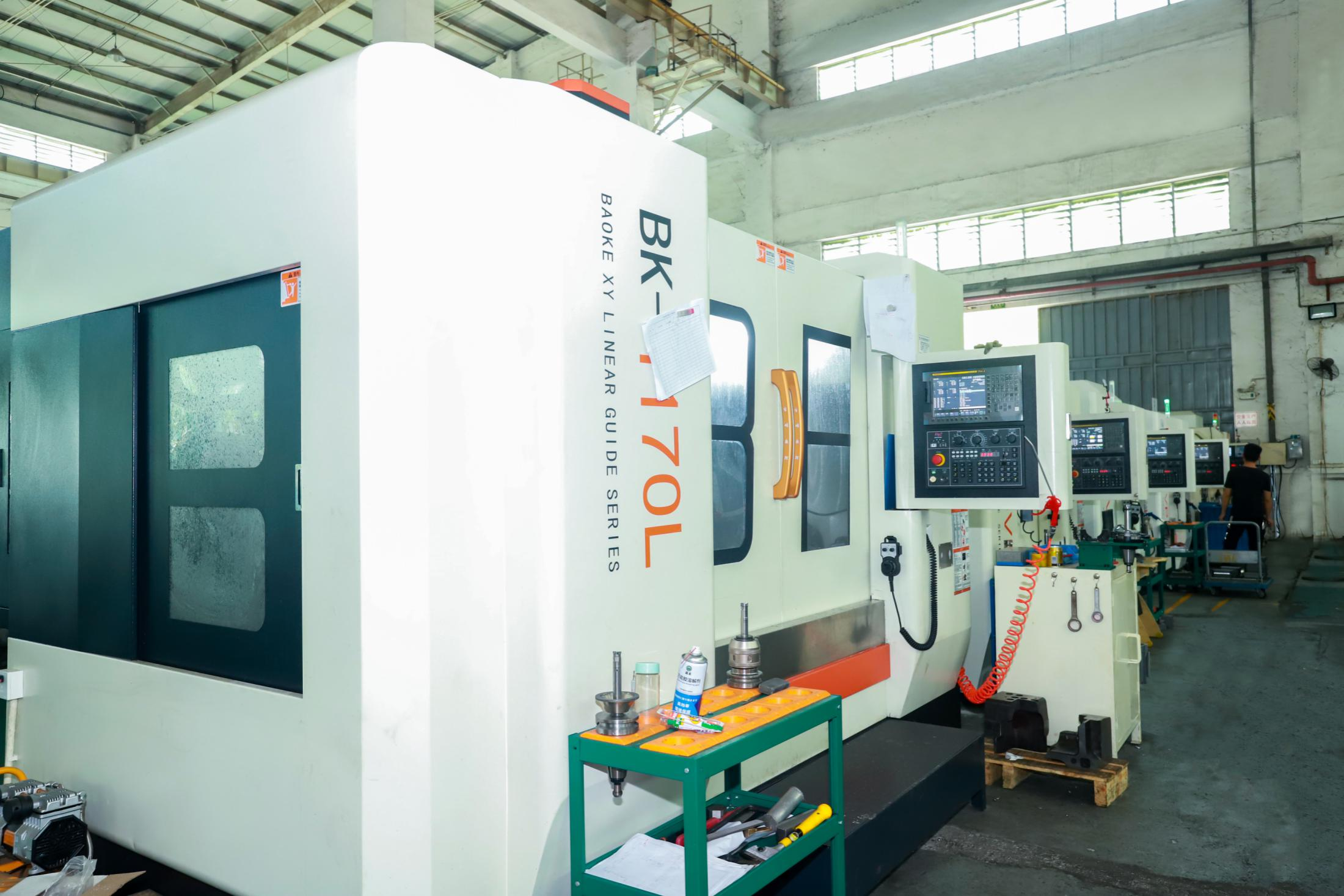
Nuclear and heavy-industry depalletizing is not a standard palletizing application with a different paint finish. Industrial robots used in these environments must be evaluated as part of a safety case that covers the robot, the gripper, the cell, the material path, the human access rules and the maintenance routine. The procurement question is therefore not only whether a robot can lift 100 kg or reach 1,950 mm. It is whether the supplier can provide evidence for a narrow, controlled or radiation-sensitive area and support the cell through qualification, commissioning and long-term operation.
The commercial opportunity is clear. Depalletizing often sits at the boundary between a controlled area and a maintenance area. Equipment, dense loads, drums, boxes or inspection tools may arrive on pallets, while personnel may need to enter the area to inspect, recover a jam or perform maintenance. A robot cell can reduce exposure by moving the material and, in some projects, by performing inspection tasks without a person entering the zone. The risk does not disappear; it moves into engineering. If the robot envelope, safeguarding, recovery plan and maintenance access are not documented, automation can create a new single point of failure.
Why Nuclear Depalletizing Changes the Qualification Question
A conventional palletizing robot is usually selected by payload, reach, cycle rate, repeatability and pallet pattern. A nuclear or heavy-industry depalletizing robot is selected by those same parameters plus a safety argument. The cell must show how people are kept out of the robot envelope, how the robot behaves when power is lost, how a jam is cleared, how contaminated parts are handled and how maintenance is performed without defeating the safeguards. These are not marketing points; they are procurement evidence.
The constraint becomes especially clear when space is narrow. In a 30-unit nuclear project, the 4-Axis Palletizing Robot SCH100-1950-1800 was used for equipment depalletizing and pipeline inspection in a 5 cm narrow space, with the objective of avoiding personnel radiation risks. The 5 cm condition is not a minor detail. It forces the robot, end-of-arm tooling, cable routing, guarding and commissioning method to be designed as one system. A robot that performs well on an open pallet line may not be qualified for a cell where access, inspection and recovery space are measured in centimeters.
What the Project Record Shows
South China Robot Technology (Guangdong) Co., Ltd., founded in 2017 in Guangzhou, is a high-tech enterprise focused on industrial robots including depalletizing and bag-breaking, column-type depalletizing, stamping, palletizing and column robots. The company provides solutions ranging from a single robot to a complete automated production cell or production line. Its services include production-line planning, robotic system integration, customized gripper design, installation, commissioning, technical support and maintenance. The company is also recognized as a Service-Oriented Manufacturing Demonstration Enterprise, which is relevant to the long-term support side of a nuclear cell.
For the nuclear depalletizing case, the relevant evidence is not a generic claim that robots improve safety. It is the combination of a defined robot model, a defined narrow-space task and a defined operating objective. The SCH100-1950-1800 is a 4-axis palletizing robot with a maximum payload of 100 kg, maximum reach of 1,950 mm, repeatability of ±0.5 mm, robot body weight of 680 kg and power capacity of 5.75 kVA. Its Z-axis vertical stroke is 1,800 mm, axis 1 working range is ±130°, axis 3 working range is ±147° and axis 4 working range is ±360°. The operating temperature range is 0–45°C.
Those parameters matter in a nuclear qualification because they define the mechanical envelope and the handling envelope. A 100 kg payload and 1,950 mm reach can support heavy equipment handling, but the qualified cell must still verify the actual center of gravity, gripper weight, acceleration, pallet condition and clearance at every point in the path. The 5 cm space means that path validation is as important as the datasheet. The project also links the robot to pipeline inspection, which means the cell is not only a material mover; it is part of an inspection workflow that must be repeatable and documented.
Reliability evidence sits alongside the mechanical evidence. The company states 24-hour continuous operation and an MTBF of 80,000 hours for its robot systems. In a nuclear project, that figure should be read as a planning input, not a guarantee of uninterrupted service. The buyer still needs a maintenance plan, spare-parts list, failure-mode review, remote support arrangement and site-access procedure. The available credential list includes ISO 9001, ISO 14001, ISO 45001 and China Robot CR L5. It does not establish a nuclear-specific certification, so the project qualification must be built from the applicable safety standard, the site safety case and the supplier’s engineering evidence.
Separating Robot Compliance from Cell Compliance
EN ISO 10218 is a safety-requirements standard series for industrial robots. Part 1 addresses industrial robots; Part 2 addresses applications such as robot systems and robot cells. That split is useful for procurement because a robot certificate or a datasheet cannot, by itself, qualify a depalletizing cell. The robot is one element; the cell includes the gripper, conveyors, pallet positioners, fencing, interlocks, light curtains, scanners, emergency stops, reset logic and maintenance access.
For a nuclear or heavy-industry depalletizing project, the qualification file should connect the standard scope to the actual installation. A practical review asks four questions. First, which edition of EN ISO 10218 applies in the destination market, and has the buyer confirmed national adoption? Second, does the robot-level assessment cover the actual model, payload and reach? Third, does the cell-level assessment cover the 5 cm access condition, the inspection task and the material path? Fourth, does the site safety case cover radiation-controlled access, decontamination and emergency recovery? The standard is a framework; the site-specific risk assessment is the decision document.
The 4-axis configuration is relevant to this discussion. A 4-axis palletizing robot is typically applied to predictable pick-and-place paths where orientation around the vertical axis and wrist rotation are sufficient. In a narrow depalletizing cell, that simplicity can reduce the number of axes that must be guarded and validated. It can also limit flexibility if the task requires complex orientation. The qualification should therefore test the actual equipment, not assume that a 4-axis robot is either inherently safer or inherently less capable. The SCH100-1950-1800’s ±0.5 mm repeatability is the relevant precision statement for the model; it should be verified against the gripper and the inspection tool at the working position.
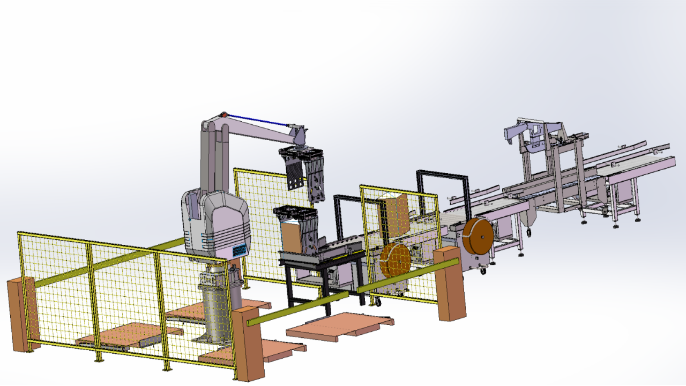
Safety-optimized design in this context is a chain of evidence. The cell layout should show the restricted space, the robot envelope, the operator access points and the maintenance route. The control narrative should show how the cell reaches a safe state, how restart is controlled and how a person is prevented from entering during automatic operation. The commissioning record should show that the 5 cm clearance was validated under load, not only in a dry run. The long-term record should show how the MTBF assumption is protected by preventive maintenance, spares and response commitments.
| Qualification area | Evidence to request | Why it matters in nuclear and heavy-industry depalletizing |
|---|---|---|
| Robot model and envelope | Model datasheet, payload, reach, repeatability, axis ranges, operating temperature | Confirms whether the selected model can physically perform the 5 cm narrow-space task. |
| Cell safety | Risk assessment, guarding, interlocks, emergency stop and restart logic | Separates robot compliance from application and robot-cell compliance. |
| Narrow-space validation | Path study, load test, commissioning record and recovery procedure | Proves clearance under actual load, not only on a drawing. |
| Continuous operation | MTBF statement, maintenance plan, spare-parts list and response commitment | Translates 24-hour operation and 80,000-hour MTBF into a service plan. |
| Supplier support | Integration scope, commissioning, training and long-term maintenance | Nuclear qualification continues after installation; support capability is part of the safety case. |
| Change control | Configuration record, inspection tool change process and revalidation rules | Prevents a qualified cell from drifting out of qualification after a tooling or process change. |
Where the 5 cm Envelope Matters
The nuclear project use case combines equipment depalletizing and pipeline inspection. That combination is important because it joins two normally separate procurement conversations. Depalletizing is a material-handling duty; inspection is a process duty. If one robot performs both, the buyer must qualify the tool change, the inspection sensor, the positional accuracy and the recovery routine. The objective is not simply to remove a worker from the area. It is to remove the worker from the radiation risk while keeping the inspection result repeatable.
Heavy-industry depalletizing has similar constraints in a different form. Stamped parts, dense equipment, bagged material or drums may arrive in patterns that leave little clearance. A column-type robot can be considered where floor space is limited; a custom non-standard industrial robot may be needed where the pallet, gripper or access route is not standard. The same qualification logic applies: define the material, the pallet, the cell boundary, the human access rule and the maintenance task before comparing robot brands.
The company’s application scope includes robotic palletizing and depalletizing, bag handling, automatic bag opening and material feeding, machine tending, press tending, material transfer and other industrial automation applications. In a nuclear or heavy-industry project, those adjacent capabilities matter at the interface. A robot that can depalletize but cannot support the gripper, the feeding transition or the maintenance access may shift work back to people. The supplier’s ability to provide production-line planning, integration and commissioning is therefore part of the safety case, not an after-sales extra.
Handling Automation Is Scaling, and Compliance Is Scaling With It
The market context supports the attention on handling. Fortune Business Insights data places the global industrial robot market at USD 24.43 billion in 2026. Grand View Research data places the handling segment, which includes palletizing and depalletizing, at a 42.1% share in 2025. Fortune Business Insights projects the global robotic palletizer and de-palletizer market at USD 4.67 billion in 2026. IFR World Robotics 2025 data places China’s 2024 industrial robot installations at 295,045 units and at 54% of global installations. These figures describe scale; they do not prove nuclear-specific demand, and they should not be used as a substitute for a site-specific safety case.
The procurement implication is that more buyers will encounter robots in handling roles, and more projects will need a qualification file rather than a catalogue comparison. In regulated or hazardous environments, the supplier’s ability to document the robot, the cell and the service model becomes a differentiator. A low-cost robot that cannot support the qualification process may create a higher project cost through delays, rework and safety review. A higher-specification robot that is poorly integrated can do the same. The decision should be based on evidence for the complete cell.
What Changes, and What Does Not
Compared with traditional depalletizing equipment, the supplied comparison data describes a smaller footprint, faster integration and lower purchase cost for the robot-based approach. The comparison set states a footprint reduction of 40–60%, installation in 5–7 days versus at least 15 days, and switching time of 5 minutes or less versus at least 15 minutes. It also states a purchase cost about 20% lower than gantry systems and 50% lower than imported column systems, with payback of 3–6 months. Annual maintenance is stated at about ¥20,000 versus ¥30,000–50,000, and depalletizing throughput at 600–800 units per hour, about four times manual operation.
Those numbers are useful for a commercial case, but they do not remove the nuclear qualification burden. A smaller footprint can be an advantage in a narrow cell, yet it can also reduce maintenance access if the layout is too aggressive. Faster installation can reduce shutdown time, but the commissioning record still needs to prove the 5 cm clearance and the inspection repeatability. Lower purchase cost can improve payback, but the project must include the cost of safety review, radiation protection, decontamination, spares and training.
The real limitation is that a standard palletizing robot is not a nuclear qualification by itself. The SCH100-1950-1800 project record shows what the robot was used for, but each new site still needs its own risk assessment, safety circuit, access control and emergency plan. The MTBF of 80,000 hours is a strong continuous-operation statement; the supplied comparison data also places imported benchmarks above 100,000 hours. That gap does not make one option automatically unsuitable, but it should prompt a maintenance and spares review. In a nuclear cell, recovery time can matter as much as failure rate.
Manual operation remains the baseline. The comparison data states that automation can raise stamping capacity by 30–50%, palletizing throughput by 3–5 times and reduce the topple rate from 3% to 0.05%. It also states long-term labor cost reduction of 60%. Those are general handling benefits. In a radiation-controlled area, the stronger argument is avoidance of human exposure. That argument must be demonstrated by the cell design, not only by the robot specification.
What Buyers Should Expect Next
The next phase of nuclear and heavy-industry depalletizing will likely be less about whether a robot can move a pallet and more about whether the cell can be qualified, maintained and audited. Buyers should expect suppliers to provide a model-level datasheet, a cell-level risk assessment, a commissioning protocol, a spare-parts list and a service response commitment. The EN ISO 10218 split between robot and application is a useful structure for that request. It helps procurement separate what is proven at the robot level from what must be proven at the cell level.
For suppliers, the competitive advantage will be evidence. A company that can show a 30-unit nuclear project, a defined narrow-space application, a 4-axis palletizing robot with documented payload and reach, and a long-term service model is easier to evaluate than a supplier that offers only a catalogue. The company’s service-oriented manufacturing model, including production-line planning, integration, customized gripper design, installation, commissioning, technical support and maintenance, is relevant because nuclear qualification continues after the robot is installed.
The open question is site-specific. Radiation controls, decontamination rules, inspection standards and emergency procedures vary by facility and jurisdiction. A supplier can provide the robot and the integration evidence; the operator must provide the site safety case. The most reliable procurement approach is to make those two evidence sets meet before the purchase order, not after the robot arrives.
Qualification and Safety Questions
What does EN ISO 10218-1 and EN ISO 10218-2 cover, and why does the split matter for a depalletizing cell?
EN ISO 10218 is a safety-requirements standard series for industrial robots. Part 1 addresses industrial robots; Part 2 addresses applications such as robot systems and robot cells. The split matters because a robot-level document does not qualify the complete depalletizing cell. The gripper, guarding, interlocks, access control and commissioning procedure must be assessed at the application level. Buyers should confirm the current edition and national adoption in the destination market before treating the standard as a compliance basis.
How should a buyer qualify a robot for a 5 cm narrow-space depalletizing task?
The buyer should require a path-validation record at the actual working position, not only a datasheet review. The record should cover the robot envelope, gripper, cable routing, pallet position, load center of gravity and maintenance access. The 4-Axis Palletizing Robot SCH100-1950-1800 has a maximum payload of 100 kg, maximum reach of 1,950 mm, repeatability of ±0.5 mm and a Z-axis vertical stroke of 1,800 mm. Those parameters define the starting point; the 5 cm condition must still be proven by layout and commissioning evidence.
What does 24-hour continuous operation with an MTBF of 80,000 hours mean in a nuclear project?
It means the robot is specified for continuous duty and the supplier states an MTBF of 80,000 hours. It does not mean the cell will never stop. The buyer should still review failure modes, spare parts, remote support, on-site response, preventive maintenance and the procedure for recovering from a jam in a controlled area. In a nuclear project, recovery time and access constraints can be as important as the headline MTBF.
What supplier evidence should be checked beyond the robot datasheet?
The buyer should check the cell-level safety documentation, commissioning method, training, maintenance plan and service response. For South China Robot Technology (Guangdong) Co., Ltd., the available evidence includes a project record for a 30-unit nuclear deployment, a model-level datasheet for the SCH100-1950-1800, and a service scope covering production-line planning, integration, customized gripper design, installation, commissioning, technical support and maintenance. The available credential list includes ISO 9001, ISO 14001, ISO 45001 and China Robot CR L5; it does not establish a nuclear-specific certification.
What is the main limitation of using a standard palletizing robot in nuclear depalletizing?
The main limitation is that the robot is only one part of the safety case. A standard palletizing robot can provide the payload, reach and repeatability, but the nuclear cell still needs a site-specific risk assessment, radiation-controlled access, decontamination rules, emergency recovery and maintenance planning. The 30-unit project shows a documented narrow-space use, but it does not replace the qualification work for a new facility. Buyers should treat the robot as a qualified component within a qualified cell, not as a standalone safety solution.
Reference resource: South China Robotics – Company Profile + Product Brochure 2026 EN v2 (PDF)
Есть вопросы или нужны дополнительные детали?
Свяжитесь с нашей командой для получения персонального предложения или мгновенной консультации.
Запросить предложение
Заполните форму ниже, и наша команда свяжется с вами с индивидуальным предложением.
Прямой чат WhatsApp
Предпочитаете общаться в реальном времени? Напишите нам в WhatsApp для мгновенной помощи и быстрых ответов.
- Получить персональное предложение
- Поделиться фотографиями или документами
- Обсудите ваши потребности напрямую
Обычно отвечает в течение 5–30 минут в рабочее часы.