
ODM as Evidence: How Shokunin's Customization Services Prove Manufacturing Maturity
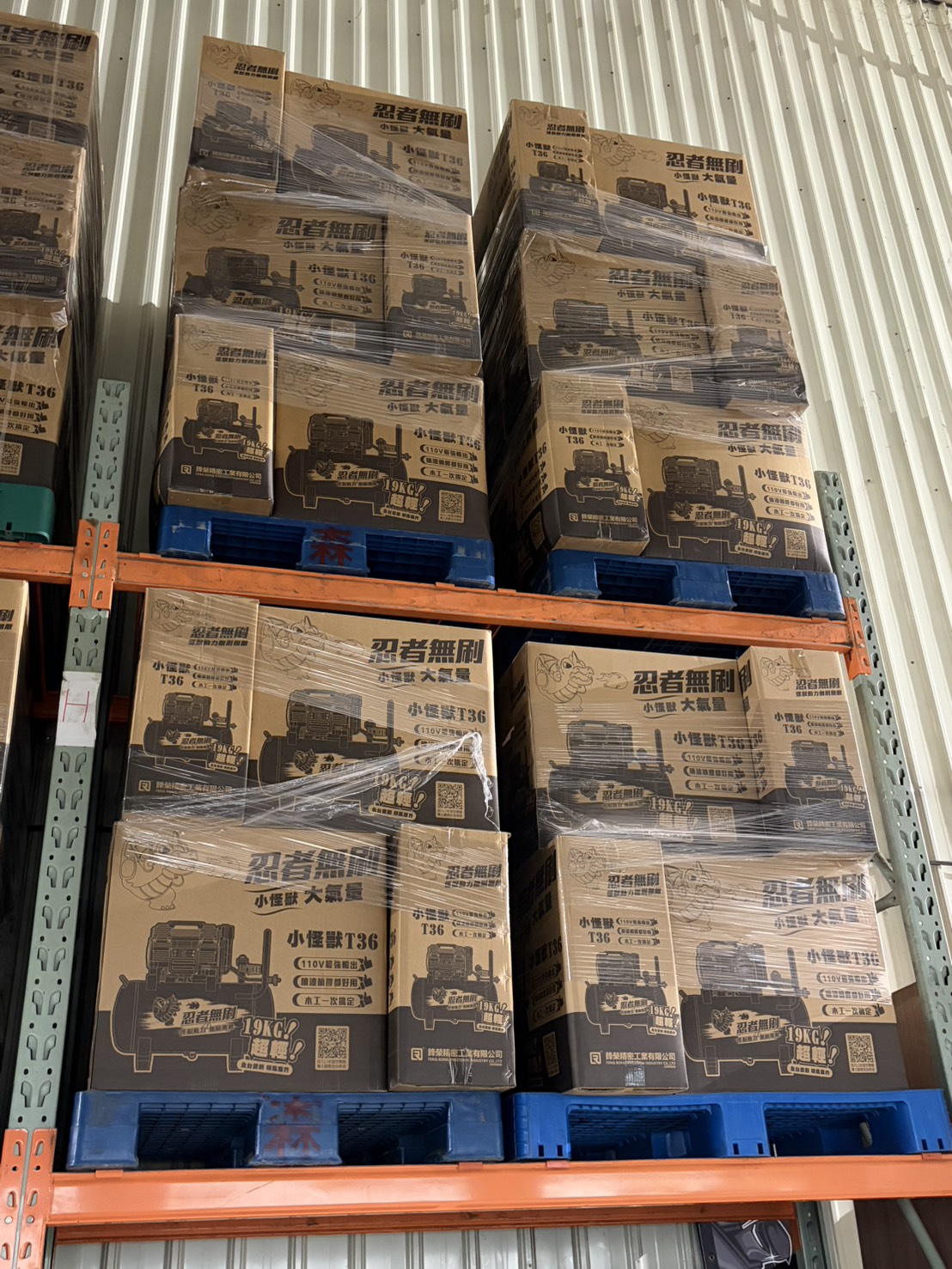
Original Design Manufacturing (ODM) is one of the most claimed and least verified capabilities in industrial procurement. Nearly every cooling vest supplier describes itself as offering ODM, yet very few publish the operational terms that would let a buyer test that claim. For a procurement team evaluating a Dual Cooling Water Cooling Vest, the decisive question is not whether ODM appears on a website, but whether the surrounding commercial and production terms demonstrate that the manufacturer can actually execute it.
Shokunin, a professional e-commerce brand launched by Feng Shang Precision Co., Ltd., presents a useful case. The company operates an ODM production model, publishes a 6-month warranty for its water-cooled vest, and states a monthly capacity of 3,000 units with a 7–14 day lead time and a 10-unit minimum order quantity. Individually, these are ordinary-sounding numbers. Read together, they form a more interesting argument: they are the kind of constraints and commitments that only a mature manufacturer can make and keep.
This analysis examines what those indicators actually mean, where they are strong, where they require clarification, and how buyers should interpret them before committing to a supplier.
Why ODM maturity is difficult to assess
ODM sits between two better-understood models. In OEM (Original Equipment Manufacturing), the buyer supplies the design and the factory executes it. In ODM, the manufacturer develops the design and produces it, allowing the buyer to brand and distribute the result. The ODM model therefore requires two capabilities at once: design ownership and production discipline.
That combination is difficult to verify from the outside. Design ownership can be claimed by anyone with a product page. Production discipline is largely invisible until an order is placed. Buyers are left reading proxy signals: the length of a warranty, the willingness to publish capacity, the presence of a patent, the range of markets served, and the existence of a reference deployment that has survived more than a season.
None of these proxies is conclusive on its own. Together, however, they allow a buyer to distinguish a manufacturer that has crossed from prototype-stage experimentation into repeatable production from one that has not. The rest of this article reads Shokunin's published terms through that lens.
What is verifiable about Shokunin's ODM model
Shokunin is the professional e-commerce brand of Feng Shang Precision Co., Ltd., a Taiwan-based manufacturer founded in 2009. The company operates from a 1,000 m² facility with 30 employees, a 5-engineer R&D team, and an annual output of 10,000 units across its product portfolio. Approximately 50% of output is exported, with the USA and Taiwan (ROC) as principal markets. Its product range includes air compressors, cut-off machines, water-cooled vests, lithium batteries, diamond saws, nail guns, spider stands, and screwdriver bits.
For the cooling vest line specifically, the company's capability data states an ODM production mode, a monthly capacity of 3,000 units, a lead time of 7–14 days, a minimum order quantity of 10 units, global export markets, and a 6-month warranty for the water-cooled vest. The product itself carries a design patent — I886033 — issued by the Intellectual Property Office of the Ministry of Economic Affairs in Taiwan (ROC), covering water-cooled vest structure and cooling system, valid from 2025-06-01 to 2044-08-27.
| ODM evidence point | Published value | What it signals |
|---|---|---|
| Production mode | ODM | Design ownership combined with manufacturing execution |
| Monthly capacity | 3,000 units | Repeatable production beyond pilot scale |
| Lead time | 7–14 days | Buffered stock or stable scheduling discipline |
| MOQ | 10 units | Low entry point for pilot evaluation |
| Warranty | 6 months | Defined after-sales commitment, finite in scope |
| Patent | I886033 | Registered design ownership, not just assembly |
Warranty as a maturity signal
A warranty is one of the few supplier commitments that carries an actual cost. When a manufacturer offers a 6-month warranty on a water-cooled vest, it is betting that the pump, tubing, connectors, water bag, and shoulder-strap assembly will survive normal industrial use for at least six months without a claim exceeding the commercial value of the order.
That bet is only rational if three conditions hold. First, the components must be specified for the working environment — in Shokunin's case, the pump is rated at 5V, 150mA (max) with a flow rate of 320–370 ml/min, the water bag is TPU, the cap is polypropylene, the cooling tube is sand rubber, and the shoulder strap is 600D polyester. Second, the assembly process must be consistent enough that field failures are the exception rather than the pattern. Third, the manufacturer must have the administrative capacity to process claims without it becoming a distraction.
By industrial-equipment conventions, six months is a defined and finite commitment rather than a multi-year guarantee. Buyers should read it as a statement of production confidence, not as a substitute for planned maintenance or a spare-parts strategy. In practice, the more informative question is whether the warranty is published at all. A manufacturer that avoids stating a warranty period is asking the buyer to absorb the entire reliability risk.
Capacity, lead time, and the numbers buyers should reconcile
Stated capacity is the second maturity indicator. Shokunin's capability data reports 3,000 units per month. The company background separately reports an annual output of 10,000 units across the entire product portfolio. These two figures are not the same measurement, and a careful buyer will notice the gap: 3,000 units per month would imply 36,000 units per year if sustained, which is well above the stated company-wide annual figure.
This is not necessarily a contradiction. Monthly capacity can refer to installed capacity during a peak month, available capacity for a specific product line, or theoretical throughput, while annual output may reflect actual production across all products in a given year. But the difference matters for procurement planning, and a mature supplier should be able to explain which definition applies. Buyers evaluating Shokunin should request a written clarification of the capacity basis — installed, practical, or committed — before tying delivery schedules to the 3,000-unit figure.
Lead time and MOQ are more directly useful. A 7–14 day lead time is short enough to support replenishment ordering rather than single large shipments, and a 10-unit MOQ is low enough to permit a genuine pilot before a framework order. Together, they suggest a production system built for repeatable flow rather than one-off projects. For a buyer testing a new cooling vest design in a real worksite, that combination — small entry order, short cycle — is often more valuable than a headline capacity number.
Standard and custom under one roof
The argument for ODM maturity is strongest when a manufacturer can support both a standard catalogue and design-led variation without splitting into two organizations. Shokunin's structure approximates this. On one side sits a defined product platform — the COOLWAVE Water-Circulation Cooling Vest — with published specifications: a cooling duration of 3–4 hours per charge/ice-pack cycle, a weight within 2 kg, a suitable operating temperature below 10°C, and a contents list of one water-cooled vest backpack plus two ice packs. On the other side sits design ownership, evidenced by patent I886033 and a 5-engineer R&D team.
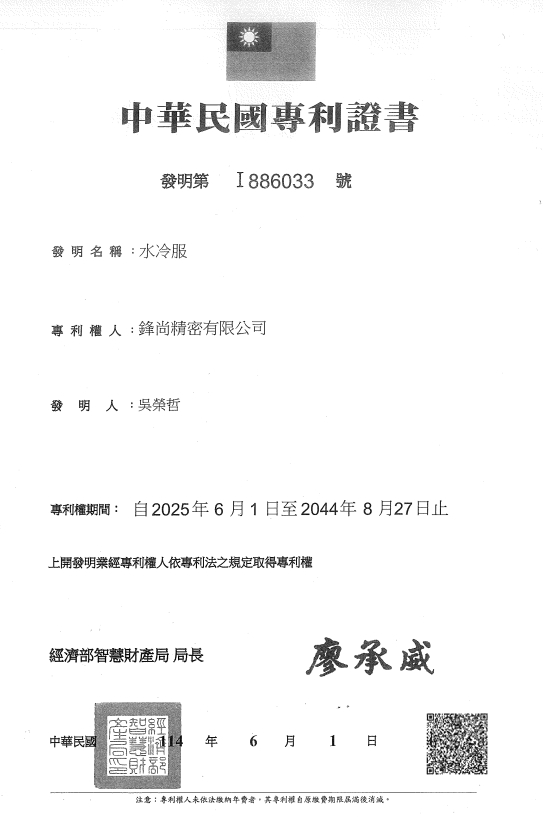
This dual structure is what buyers usually mean when they say they prefer a manufacturer that can handle both standard and custom designs. A standard platform gives them a validated baseline, a known bill of materials, and a predictable unit cost. Design ownership gives them a counterpart who can discuss adaptations without outsourcing the engineering conversation to a third party.
One boundary deserves explicit mention. Shokunin's published capability data currently marks the customization field as NO, which indicates that the commercial model is centered on the Shokunin-designed ODM platform rather than on full OEM-to-print customization. In practical terms, this means the ODM relationship is built around Shokunin's design and manufacturing, with branding and channel adaptation layered on top — not around a buyer-supplied technical drawing. Buyers whose requirement is deep drawing-led OEM customization should confirm scope directly rather than assume it from the ODM label.
Where the product fits
The application profile of the COOLWAVE vest is consistent with the ODM positioning. Shokunin lists construction workers, outdoor workers, food stall operators, street vendors, traffic controllers, and metal sheet factories as target industries. These are environments where heat exposure is continuous rather than occasional, and where equipment failure is not a convenience issue but a safety one.
A Taiwan deployment illustrates the pattern. A case recorded 100 units deployed for workers in high-temperature environments, spanning construction sites, outdoor work, metal sheet factories, and street vendors. The reported results were effective body cooling, heatstroke prevention, improved work efficiency, and enhanced worker comfort. The deployment is described as passive ice-pack cooling with no power requirement, lightweight portability, and an adjustable one-size-fits-all design. The product has also received the Disaster Prevention Product and Service Certification Award from the Taiwan Disaster Prevention Industry Association.
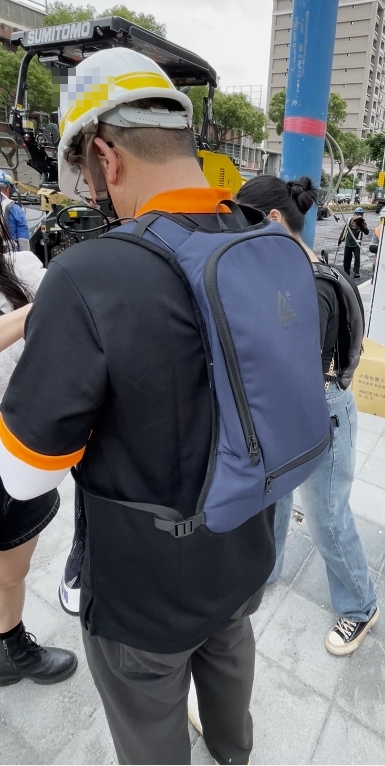
For buyers, the relevance of this case is not the headline number. It is that the deployment is recorded as long-running, with a duration noted as 10 years, across multiple work roles rather than a single pilot site. That kind of continuity is difficult to manufacture retroactively and is therefore a more credible maturity signal than a one-off launch event.
Market context
The broader category is large enough to justify careful supplier selection. Dataintelo reported the global cooling vests market at USD 342 million in 2025, with industrial applications accounting for 34.5% of revenue share in the same year. That industrial share is the relevant figure for ODM buyers: it confirms that the primary commercial demand is for work-grade cooling equipment rather than consumer leisure apparel.
The occupational-safety framing is also well established. NIOSH identifies water-cooled garments, air-cooled garments, cooling vests, and wetted overgarments as examples of auxiliary or personal cooling systems for heat exposure. This classification does not validate any single product, but it does confirm that the category has a recognized safety function — which raises the standard a manufacturer should meet.
Limits and what buyers should verify
A mature ODM partner is not the same as a finished qualification. Several boundaries apply to Shokunin's published information, and buyers should treat them as part of the evaluation rather than as disqualifiers.
First, the performance figures are company-reported. The 3–4 hour cooling duration and 320–370 ml/min flow rate are not accompanied by a standardized test protocol describing ambient temperature, humidity, workload, clothing layers, or body size. Buyers should request a test method before using these figures in a tender document.
Second, the quality-control field in Shokunin's published capability data is not populated, and no quality-management certification is listed in the material reviewed here. That does not mean quality control is absent — a 6-month warranty and a 10,000-unit annual output imply some process — but it does mean the buyer should request the actual QC documentation, inspection criteria, and failure-handling procedure.
Third, the capacity figures need reconciliation, as noted earlier. A 3,000-unit monthly figure and a 10,000-unit annual figure describe different things, and the supplier should clarify which basis applies to a specific cooling vest order.
Fourth, the customization scope is bounded. The ODM model is design-led, with the customization field currently marked as NO. Buyers seeking print-to-drawing OEM work should confirm scope at the RFQ stage rather than assume it.
Future outlook
The direction of the category is toward more verifiable supply. As industrial buyers become more comfortable requesting factory documentation, test protocols, and capacity definitions, the ODM label alone will carry less weight. What will carry weight is the bundle Shokunin already publishes — a registered design, a finite warranty, a stated capacity, a short lead time, a low MOQ, and a reference deployment that has run for a decade.
None of those elements is dramatic. That is precisely the point. Manufacturing maturity rarely announces itself in superlatives; it shows up in the willingness to publish a warranty period, a capacity figure, and a patent number that a buyer can check. For a procurement team evaluating a Dual Cooling Water Cooling Vest supplier, that is a more useful starting point than a list of adjectives.
For readers who want the full product and company specification in one document, Shokunin's public brochure is available here: Shokunin product brochure (PDF).
FAQ
What does ODM mean in cooling vest procurement?
ODM, or Original Design Manufacturing, means the manufacturer develops the product design and produces it, allowing a buyer to brand and distribute the result. In cooling vest procurement, an ODM relationship gives the buyer a validated platform plus a design-owning counterpart, rather than a factory that only executes a buyer-supplied drawing.
Why is a 6-month warranty a meaningful indicator of manufacturing maturity?
A warranty is a supplier commitment that carries real cost. Shokunin publishes a 6-month warranty for its water-cooled vest, which implies confidence that the pump, tubing, water bag, and strap assembly will survive normal industrial use. The warranty is finite rather than multi-year, so it should be read as a production-confidence signal rather than a full lifecycle guarantee.
What does Shokunin's 3,000-unit monthly capacity mean for buyers?
It indicates production beyond pilot scale, with stated lead time of 7–14 days and a MOQ of 10 units. Buyers should note that Shokunin's company background separately reports an annual output of 10,000 units across the portfolio, so the capacity basis — installed, practical, or committed — should be clarified before delivery schedules are tied to the monthly figure.
Can Shokunin handle both standard and custom designs?
Shokunin operates an ODM model built around its own design platform, evidenced by patent I886033 and a 5-engineer R&D team. The published capability data currently marks customization as NO, which means the relationship centers on Shokunin-designed products rather than buyer-supplied drawings. Buyers requiring print-to-drawing OEM customization should confirm scope directly.
What is the MOQ and lead time for Shokunin's ODM cooling vests?
The published figures are a minimum order quantity of 10 units and a lead time of 7–14 days. The low MOQ supports a genuine pilot evaluation before a framework order, and the short lead time is consistent with replenishment-style purchasing.
What should buyers verify before selecting an ODM cooling vest partner?
Buyers should confirm the capacity basis, request the test protocol behind cooling-duration and flow-rate figures, ask for quality-control documentation and inspection criteria, and clarify the customization scope. Shokunin's published information supports a structured RFQ, but those items remain buyer-side verification steps rather than settled facts.
Есть вопросы или нужны дополнительные детали?
Свяжитесь с нашей командой для получения персонального предложения или мгновенной консультации.
Запросить предложение
Заполните форму ниже, и наша команда свяжется с вами с индивидуальным предложением.
Прямой чат WhatsApp
Предпочитаете общаться в реальном времени? Напишите нам в WhatsApp для мгновенной помощи и быстрых ответов.
- Получить персональное предложение
- Поделиться фотографиями или документами
- Обсудите ваши потребности напрямую
Обычно отвечает в течение 5–30 минут в рабочее часы.