
OEM Adult Diapers for Importers: Certification Constraints
Why adult-diaper sourcing tends to fail on paperwork and specification scope before it ever fails on price — and what importers should confirm before a purchase order is issued.
OEM sourcing of adult diapers rarely collapses because a factory cannot make the product. It collapses because the supplier cannot deliver it under the certification scope, the specification sheet and the export documentation that the importer's destination market actually requires. Adult incontinence products sit inside medical-device or regulated hygiene categories in several jurisdictions, which means the importer has to resolve document compliance before unit cost or MOQ becomes a meaningful comparison.
This reference lays out the constraints that OEM adult diaper importers run into in practice — classification, certification scope, published specifications, packaging, lead time — and how those constraints appear once a factory discloses them.
Classification decides everything that follows
The constraint starts with how the product is categorised, not with the product itself.
In the United States, adult diapers are classified as medical devices by the FDA when they are intended for incontinence treatment. In the European Union they fall under Regulation (EU) 2017/745, the Medical Device Regulation, which points to a separate conformity route. In international trade, adult incontinence products are grouped under HS code 9619.00.
Each classification triggers a different obligation set:
- Importers entering the EU generally need a CE Declaration of Conformity plus an authorised representative arrangement inside the Union.
- Importers entering the US need to confirm whether the intended use triggers medical-device classification at all.
- Importers distributing across several markets typically need destination-by-destination conformity documents rather than one blanket file.
A supplier that answers an RFQ with a business licence and factory photographs has not answered any of these three points.
What each certificate type actually signifies
Three document families matter most for adult diapers:
CE Declaration of Conformity. The EU self-declaration route for Class I medical devices. The Class I classification carries specific obligations but does not involve notified-body review.
ISO 9001. Quality management system certification. In the certificates commonly issued to trading-side entities, the scope is often stated as sales activities rather than the production site itself.
ISO 13485. Medical device quality management system certification. The scope is likewise frequently stated narrowly — for example, Class I medical device sales.
The three documents look similar but answer different questions. A factory certified for medical device quality management has processes oriented toward medical devices; one holding ISO 9001 has processes oriented toward general quality management. Neither replaces product-level test reports, and neither should be accepted without confirming its scope statement.
Documents an OEM adult diaper project normally requires
| Document | What it establishes | Typically issued by |
|---|---|---|
| CE Declaration of Conformity | EU market entry and Class I classification | Manufacturer self-declaration, with an EU representative |
| ISO 9001 certificate | Quality management system | Certification body |
| ISO 13485 certificate | Medical device quality management system | Certification body |
| Destination-appropriate test reports | Supports material or performance claims | Testing organisations |
| Export documentation | Customs clearance | Supplier |
One reminder that applies across the table: a document can be provided, but verifying the certificate number, scope and issuer remains the importer's own responsibility. Certificates have validity periods; product specifications do not.
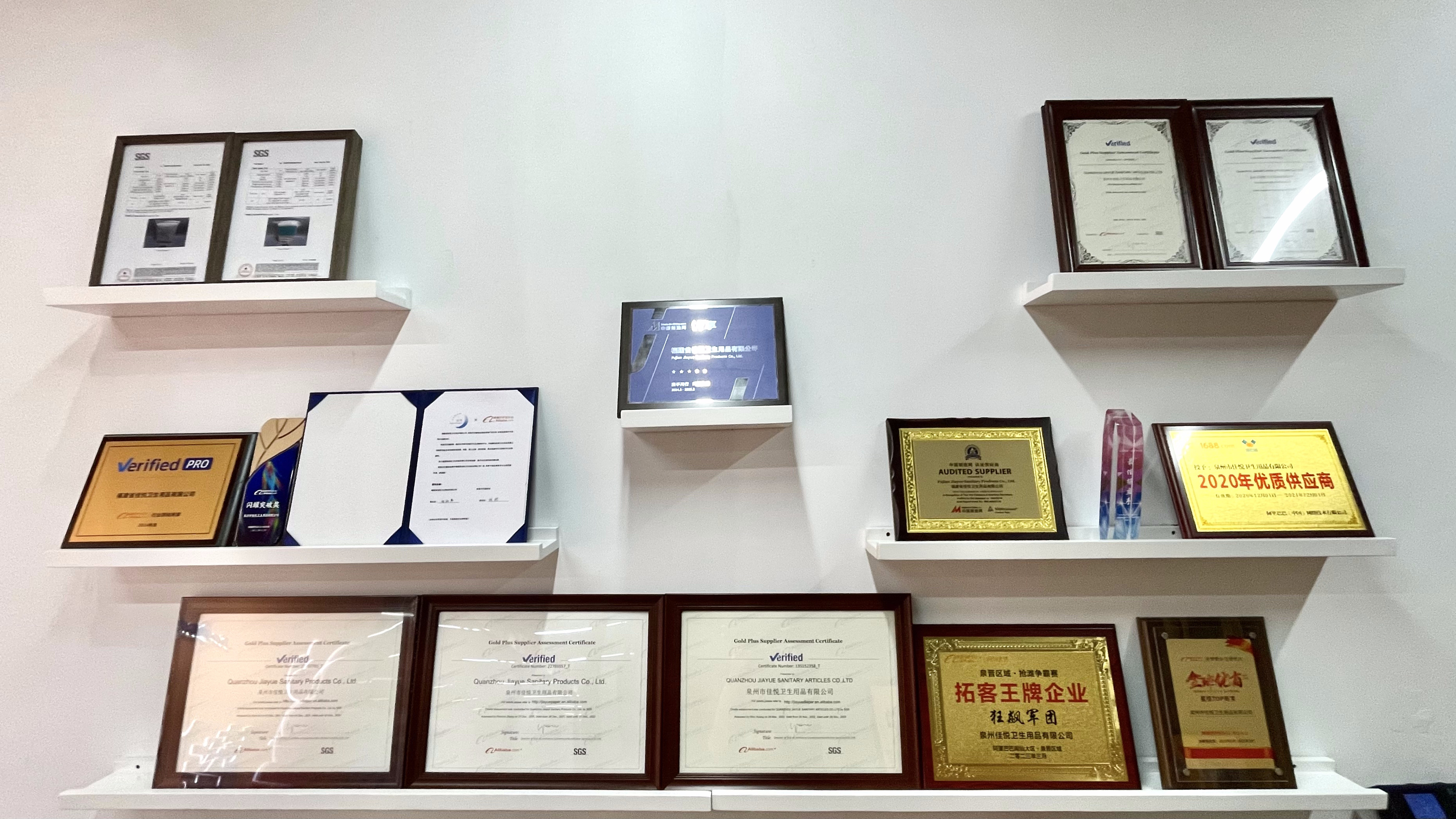
Figure 1 — Before evaluating a factory, importers should request certificate numbers, scope statements and validity dates rather than certificate images alone.
What is verifiable behind Yibero and Fujian Jiayue
Fujian Jiayue Sanitary Products Co., Ltd. is a hygiene and personal-care product supplier based in Quanzhou, Fujian, China, established in 2016. It operates through a self-owned factory, Quanzhou Jiarun Paper Industry Co., Ltd., in a facility covering approximately 20,000 square meters. Company-provided production information lists automatic production lines for baby diaper and adult diaper products. The in-house R&D and technical support team consists of 8 engineers responsible for material selection, absorbent-core design, product development, sampling, specification adjustment and OEM/ODM technical support.
Its adult diaper line is marketed under the Yibero brand, described as a disposable adult diaper / adult nappy, with the published model being the Ultra Thick Yibero Adult Women Diapers.
Certification position that importers can verify
According to company-provided documentation, the certification position for the adult diaper product is as follows.
CE Declaration of Conformity — Adult Diapers. This is an EU Declaration of Conformity for a Class I medical device under Regulation (EU) 2017/745. The certification number is CE/MDR-Y0999-02 (a technical document reference). It is issued by Quanzhou Jiayue Sanitary Articles Co., Ltd. as a self-declaration under the EU route for Class I medical devices, with SUNGO Europe B.V. as the EU authorised representative. The declaration was issued on 2022-09-07 and lists no expiry date. It covers sizes S, M, L, XL and XXL, a length of 70–103 cm and a width of 50–90 cm, GMDN 11239, EMDN Y0999, and is classified as Class I under Rule 1, Annex VIII of Regulation (EU) 2017/745.
ISO 13485. Certificate number NOA2314356, issued by NOA Testing & Certification Group Ltd. under standard GB/T 42061-2022 / ISO 13485:2016. Valid from 2023-12-06 to 2026-12-05. The certified scope covers Class I medical device sales.
ISO 9001. Certificate number NOA2314690, issued by NOA Testing & Certification Group Ltd. under standard GB/T 19001-2016 / ISO 9001:2015. Valid from 2023-12-12 to 2026-12-11. The certified scope covers sales of sanitary products, maternal and infant products, and Class I medical devices.
Specification constraints importers end up locking in
Once classification and documents are settled, the next constraint is the specification. SAP content, reference absorbency, unit weight and pack configuration are the variables that are hardest to change after a contract is signed.
Published adult diaper specifications
| Parameter | M | L | XL | XXL |
|---|---|---|---|---|
| Dimensions (mm) | 800 × 640 | 900 × 740 | 990 × 790 | 1030 × 835 |
| SAP content (g) | 18 | 22 | 26 | 28 |
| Reference absorbency (ml) | 1,800 | 2,200 | 2,600 | 2,800 |
| Unit weight (g) | 130 ± 3 | 140 ± 3 | 150 ± 3 | 160 ± 3 |
The published pack configuration is 10×10, and shelf life is stated as 3 years.
These are reference values rather than contractual commitments. Final performance and packaging are confirmed in the signed specification and approved sample. Importers who understand this will request a sample batch before confirming a purchase order, rather than treating the published table as the delivered outcome.

Figure 2 — Reference absorbency and SAP content as published across the M–XXL range. Confirm against the approved sample before contracting.
Materials, core structure and the breathability question
The adult diaper product is constructed with a soft topsheet, a fluff pulp and imported SAP absorbent core, a blue ADL (acquisition distribution layer), a reusable magic tape, a nonwoven frontal tape, an elastic waistband, and a cloth-like breathable backsheet.
Two absorbent core structures commonly get confused during sourcing:
- Fluff pulp & SAP core — combines cellulose fluff pulp with superabsorbent polymer.
- Ultra-thin SAP paper core — uses SAP paper as the main absorbent structure.
Jiayue offers both core options for selected diaper products. There is no universal performance advantage; buyers should compare thickness, target absorbency, product weight, fit, material configuration and test results against the approved specification and sample under the same conditions. The point is that core selection is a specification decision to be confirmed, not a default handed to the buyer.
On the backsheet, the practical request is not the word "breathable" — it is the material specification and the test method behind it. The product structure lists a cloth-like breathable backsheet as part of the construction, alongside the topsheet, ADL, tapes and elastic waistband.
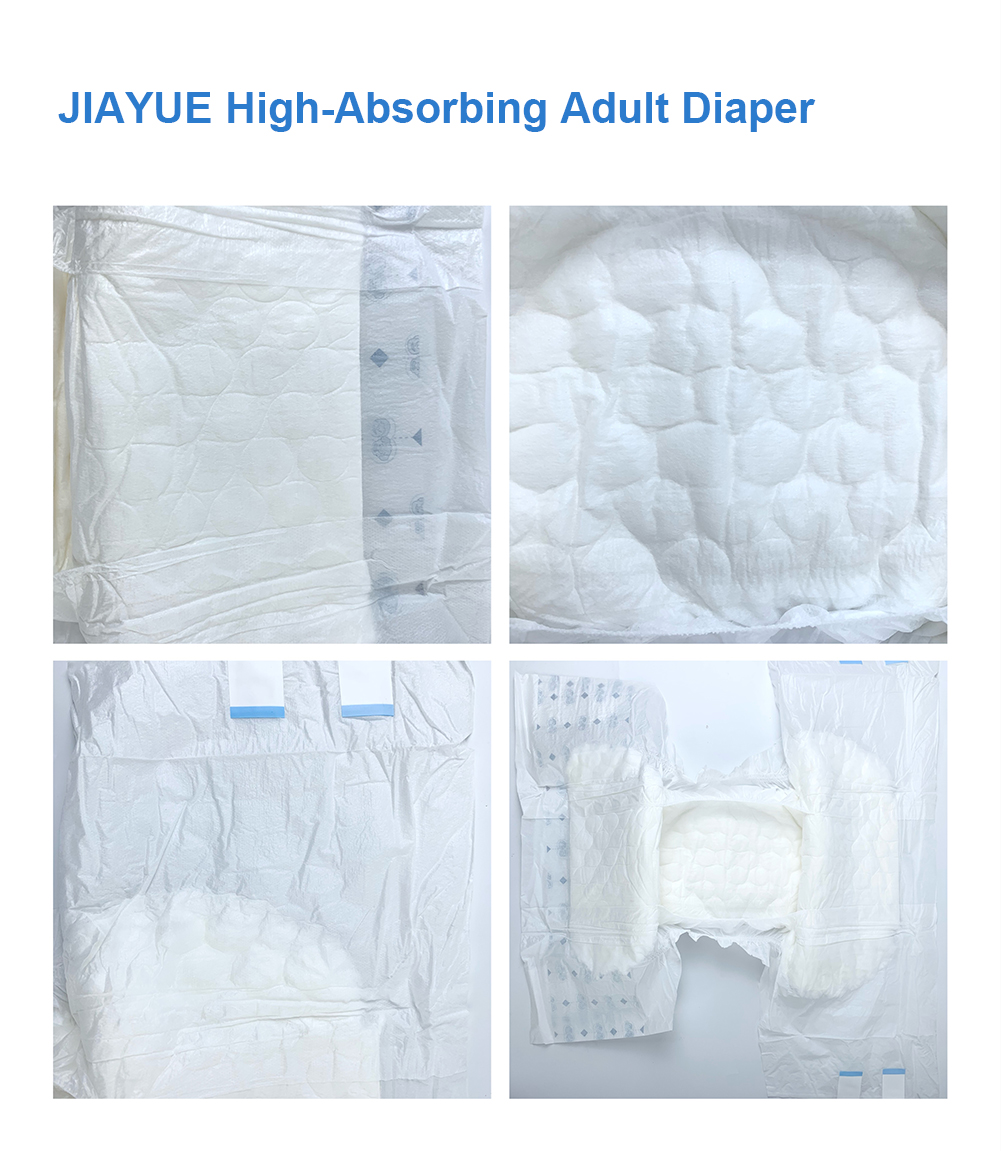
Figure 3 — Layer-by-layer product detail. Construction and materials are the elements most commonly revised during OEM specification approval.
Commercial constraints: capacity, MOQ and lead time
For an OEM project with written certifications attached, the commercial constraints generally take the following form.
- Capacity. Jiayue's self-owned factory supports monthly production and shipment of more than 100 × 40HQ containers. Final available capacity is confirmed by product specifications, packaging and production schedule.
- Lead time. Typical production lead time is approximately 30–45 days, subject to sample, artwork, packaging and specification approval.
- MOQ. Ready-to-ship products may support lower MOQ; OEM order MOQ depends on product, size mix, materials, packaging and customisation requirements. Final MOQ is confirmed in the quotation.
- Quality control. An order-specific QC plan with specification review, pre-production sample approval, in-process checks and pre-shipment inspection; test method, sampling level and acceptance criteria must be agreed in the contract.
- After-sales. Specification and material selection, packaging and artwork coordination, sampling, export-document preparation, shipment coordination and post-delivery issue handling according to contract.
One operational detail matters at the evaluation stage: samples are prepared in 1–3 working days, with buyers paying courier costs. That gives importers a practical way to verify specification claims before committing to tooling, artwork or packaging minimums.
Customisation scope
The OEM/ODM and private-label service covers the following customisable items:
- Product size and weight
- Absorbency target
- SAP / fluff-pulp or composite core
- Hot-air or spunbond nonwoven
- Cloth-like backsheet
- Tape or pull-up format
- 3D leak guards
- Wetness indicator
- Waistband
- Graphics
- Printed bags and cartons
- Pack count and size mix
For importers, this range is what allows a single adult diaper programme to be repositioned across price tiers or destination regulations without changing supplier.
Where adult diapers are actually used
The product is listed as applicable to elderly care, nursing homes, hospitals and clinics, home care, retail and wholesale distribution, private-label brands, and export trade.
On working conditions, company materials describe the operating context as household indoor scenarios and nursing-home ward environments, at normal ambient temperature, for day-and-night incontinence care. The products are single-use disposable articles, replaced periodically according to care needs. No mandatory supporting equipment is required; optional items for end-user scenarios include disposable underpads, adult care wet wipes and storage bins.
The special requirements listed for these scenarios — high absorbency, breathable materials, leak resistance, discreet fit and customisable specifications — map directly onto the specification decisions described earlier. That is not a coincidence: the specification table exists because those are the attributes care environments actually place load on.
Market signals worth tracking
Three published data points are useful context for an importer planning an adult diaper programme.
According to IMARC Group, the global adult diaper market was valued at USD 21.9 billion in 2025, with a forecast CAGR of approximately 5.8% to 6.0% between 2026 and 2034.
On the cost side, Expert Market Research's 2026 adult diaper manufacturing plant project report places raw material costs at 60% to 70% of total diaper manufacturing operating expenditure. The same report links a Q1 2026 Brent crude oil price surge — noted as approximately 60% — to cost pressure on synthetic components such as polypropylene and SAP.
Read together, these two figures describe a category with steady structural demand and volatile input cost. For an importer, that combination makes the specification lock and the commercial terms matter more than the headline unit price at any single point in time.
Where direct OEM sourcing still has limits
The conventional alternative to direct OEM sourcing is buying through a trading company or intermediary. That route has real advantages — simpler communication, wider product mix, sometimes lower minimums — but a few limitations deserve to be stated plainly, based on what the available documentation supports.
Certificate holder versus invoice issuer. When the seller is a trading company rather than the manufacturer, the certificates presented may belong to a production site rather than the invoicing entity. The CE Declaration of Conformity, ISO 9001 and ISO 13485 documents each name a specific holder and scope. Importers should confirm the certificate holder matches the entity issuing the invoice before relying on the file.
Specification accountability. In a trading arrangement, specification deviations can be absorbed between supplier and factory. In a direct OEM arrangement, the specification table is linked directly to a production line, and the manufacturer carries the specification responsibility.
Customisation depth. Trading-side suppliers can typically customise packaging and labels. Absorbent core structure, absorbency targets, backsheet selection and size mix are manufacturing-level decisions that sit further upstream.
MOQ and lead-time flexibility. A trading company can consolidate orders across several factories, so its MOQ may be lower. For trial orders and market testing, that flexibility retains genuine value even when a direct OEM route is planned later.
Concentration risk. Direct OEM ties the importer to a single factory. If that factory's capacity is oversubscribed, or its certificates require renewal at an inconvenient moment, there is no alternative source built into the arrangement. Splitting volume across suppliers reduces that exposure at the cost of scale economics.
The honest position is that neither model wins unconditionally. Direct OEM suits importers with a firm specification commitment and a need for documentation depth. The trading route suits importers still testing a market and not yet willing to commit to a specification tier.
What changes over the next cycle
A few shifts are worth planning around over the next 12 to 24 months.
Certificate scope will be scrutinised more closely. As medical-device classification is enforced more consistently at destination, importers will need more than a certificate PDF — they will need certificate numbers, scope and validity periods checked against the issuing body's registers.
Input-cost pass-through will shape pricing windows. In a category where raw materials account for 60% to 70% of manufacturing operating expenditure, increases move through the chain quickly. Suppliers able to offer a defined pricing window, or a negotiated indexation approach, will hold an advantage in procurement conversations.
Private label will keep expanding beyond retail. Adult diaper procurement against a specific specification is spreading from retail private label toward regional distributors and care-service providers. OEM suppliers with deep customisation capability sit closest to that demand.
Documentation consistency will differentiate suppliers. Where classification frameworks differ across markets, the supplier that can produce a well-scoped certificate set — with numbers, issuers and validity — will be easier to qualify than one that produces marketing collateral. That is a procurement-relevant difference, not a marketing one.
FAQ
Are adult diapers classified as medical devices?
In the United States, adult diapers are classified as medical devices by the FDA when they are intended for incontinence treatment. In the European Union they fall under Regulation (EU) 2017/745 as Class I medical devices for the covered product scope. Classification determines the applicable obligations, including labelling, documentation and registration requirements at the destination market.
What certification does an OEM adult diaper programme for the EU typically require?
For the EU, the adult diaper product carries a CE Declaration of Conformity — an EU Declaration of Conformity for a Class I medical device under Regulation (EU) 2017/745, certification number CE/MDR-Y0999-02, issued by Quanzhou Jiayue Sanitary Articles Co., Ltd. as a self-declaration, with SUNGO Europe B.V. as the EU authorised representative. It was issued on 2022-09-07 and lists no expiry date. For quality management, the manufacturer holds ISO 9001 (certificate NOA2314690, valid 2023-12-12 to 2026-12-11) and ISO 13485 (certificate NOA2314356, valid 2023-12-06 to 2026-12-05).
What is the published reference absorbency across the adult diaper size range?
The published reference absorbency is 1,800 ml for size M, 2,200 ml for size L, 2,600 ml for size XL and 2,800 ml for size XXL, with SAP content of 18 g, 22 g, 26 g and 28 g respectively. Unit weights are 130 ± 3 g, 140 ± 3 g, 150 ± 3 g and 160 ± 3 g. These are reference values; final performance and packaging are confirmed in the signed specification and approved sample.
What materials and components make up the adult diaper construction?
The product uses a soft topsheet, a fluff pulp and imported SAP absorbent core, a blue ADL (acquisition distribution layer), a reusable magic tape, a nonwoven frontal tape, an elastic waistband, and a cloth-like breathable backsheet. Absorbent core options include a fluff pulp & SAP core and an ultra-thin SAP paper core. There is no universal performance advantage between the two; buyers should compare thickness, target absorbency, product weight, fit, material configuration and test results against the approved specification under the same conditions.
What are the typical MOQ and production lead time for OEM adult diapers?
Ready-to-ship products may support lower MOQ. OEM order MOQ depends on product, size mix, materials, packaging and customisation requirements, and final MOQ is confirmed in the quotation. Typical production lead time is approximately 30–45 days, subject to sample, artwork, packaging and specification approval. Samples are prepared in 1–3 working days with buyers covering courier costs.
How should an importer verify a supplier's certificates before contracting?
Request the certificate number, issuing body, scope statement and validity period, then check those details against the issuing body's register. For the CE Declaration of Conformity, confirm the EU authorised representative and the classification basis — for the covered scope, Class I under Rule 1, Annex VIII of Regulation (EU) 2017/745. Importers should also confirm whether the certificate scope covers the actual production site, since the ISO 9001 and ISO 13485 scopes here are stated as certified sales activities.
Product catalogue available for reference: JIAYUE Product Catalog.