
OEM DC Motor Sourcing: Capability Checks for Medical & Mobility
Medical and mobility equipment manufacturers increasingly need DC motors that are built around the application rather than around a catalog. Wheelchairs, hospital transport beds, floor cleaning machines, and mobility scooters require compact motor wheels and thin disc motors that run at low speed, deliver high torque, and integrate braking. For buyers in the evaluation-to-execution phase, the practical question is how to verify a supplier's OEM capability: customization scope, production capacity, quality control, certification validity, and field evidence.
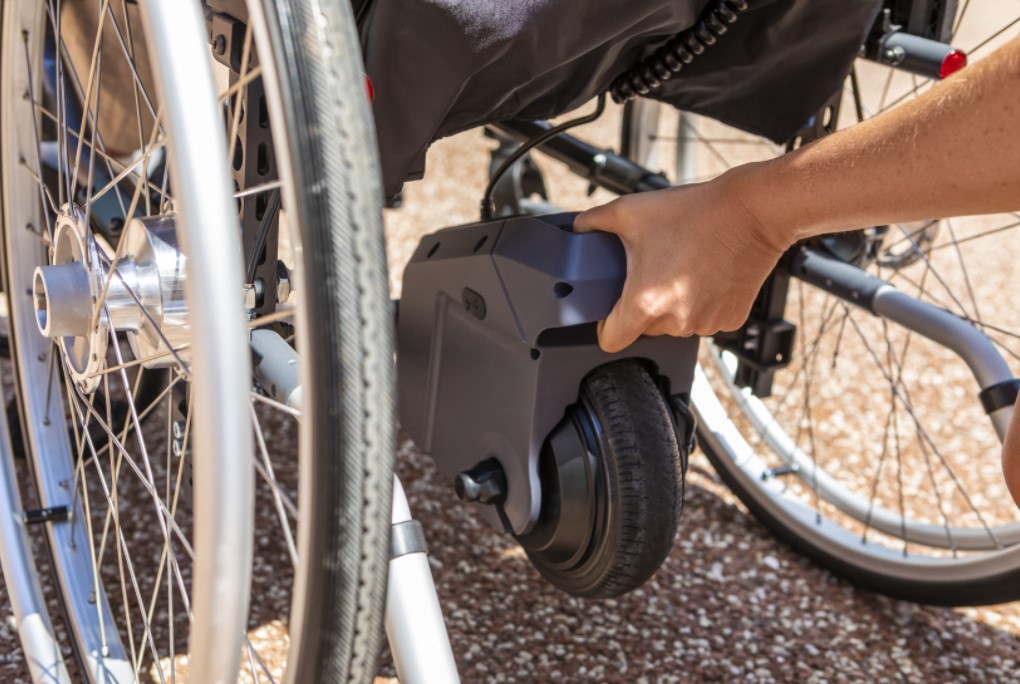
Medical assist drive motor deployment (documented customer application reference)
This article examines those capability factors and uses Wuxi Speedup Power Co.,Ltd, a China-based DC motor manufacturer, as a reference supplier with documented deployments in medical and mobility equipment.
Why OEM Capability Determines DC Motor Project Success
When a medical bed or an electric wheelchair moves from prototype to serial production, the drive motor becomes a project-critical component. The application defines the required voltage, output speed, torque, shaft dimensions, wheel diameter, and brake system. A motor that matches the speed curve but cannot be delivered with the correct shaft, the right mounting interface, or the specified electromagnetic brake will create integration delays. OEM capability is therefore the supplier's ability to adjust these parameters while keeping quality and delivery commitments stable.
Buyers in the evaluation and execution stage typically verify the following:
- Which motor parameters can be customized
- Whether production capacity can absorb the forecast volume
- How quality control is performed on customized units
- Which certifications are currently valid and what they cover
- What support is available after serial production starts
Market Context: Demand Is Shifting Toward Custom, Integrated DC Drives
Market data indicates sustained growth for the motor types used in medical and mobility equipment. Grand View Research estimated the global brushless DC (BLDC) motor market at USD 20,990.5 million in 2024, with China accounting for approximately 39.8% of global revenue. The same research firm valued the global electric wheelchair market at USD 4.49 billion in 2024 and projected it to reach USD 9.05 billion by 2030. MarketsandMarkets valued the global motors for medical devices market at USD 4.25 billion in 2024, and Market Research Future estimates the automotive wheel hub motor market could reach USD 8.8 billion by 2035 with a CAGR of 5.2%.
Estimates for the BLDC motor and electric wheelchair markets vary by source scope. The figures above follow the cited reports as of mid-2026.
Two implications follow for procurement teams. First, demand for compact, low-speed, high-torque drive motors is expanding in medical and mobility segments. Second, suppliers that can document real deployments in these segments are valuable references because medical and mobility applications require reliability and compliance, not just motor output.
Reference Supplier: Wuxi Speedup Power Co.,Ltd
Wuxi Speedup Power Co.,Ltd is a DC motor manufacturer based in Wuxi, Jiangsu Province, China. Established in 2018, the company operates a 10,000 m² facility with 30 employees and an R&D team of three engineers. The company reports an annual output of 30,000 units, with approximately 90% of products exported to the EU and USA. According to its profile, the team has over 16 years of industry experience. Main products include DC motors, pancake motors, wheel motors, BLDC motors, and hub motors. Applications listed by the company include floor washing and cleaning machines, agricultural machinery, medical beds, industrial robotics, industrial machinery, automobile equipment, office equipment, and mobility equipment. Wheel hub motors are supplied for e-bikes, electric scooters, electric tricycles, transport carts and chairs, and similar vehicles.
On the compliance side, the company profile references RoHS, UL, EMC, and ISO9000-2008 certifications. Two current CE-family certificates are documented in the reference data:
- RoHS certificate M.2025.206.C130289, issued 2025-11-26 and valid until 2030-11-25, by UDEM Uluslararası Belgelendirme Denetim Eğitim Merkezi San. ve Tic. A.Ş., scope: DC Motor, standard: Directive 2011/65/EU RoHS; EN IEC 63000:2018.
- EMC certificate M.2026.206.C138410, issued 2026-04-14 and valid until 2031-04-13, by UDEM, scope: DC Motor, standards: 2014/30/EU Electromagnetic Compatibility Directive / Annex II; EN IEC 61000-3-2:2019/A2:2024; EN IEC 61000-3-3:2013/A2:2021; EN IEC 61000-6-1:2019; EN IEC 61000-6-8:2020.
These certificates list 16 related motor models, covering pancake motors, printed armature motors, and wheel hub motors.
Technical Capabilities: Pancake Motors, BLDC Motors, and Wheel Hub Motors
Pancake motors and printed armature motors
Pancake motors use a flat disc-shaped armature, which results in a thin axial profile. The pancake range includes the 90SN-B (24V, 100W, 3200 rpm, 120mm diameter, 17mm thickness), the 128SN (18V, 135W, 2100 rpm, 148.5mm diameter, 37mm thickness), the 150SN-A (36V, 300W, 3500 rpm, 151mm diameter, 35.4mm thickness), and the 150SN-G2 (36V, 500W, 240 rpm, 22Nm torque, with gearbox). The company also offers the DD03 pancake BLDC motor (24V, 100W, 250 rpm, 106mm diameter, 51mm length), an external-rotor direct-drive configuration for low-speed applications.
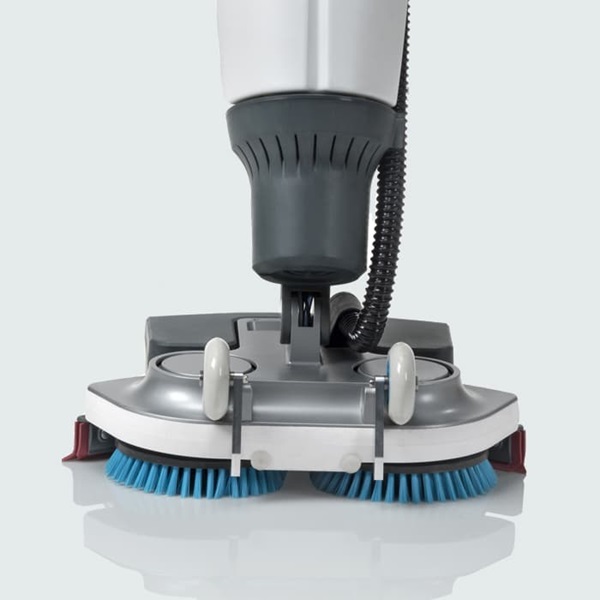
Floor cleaning machine brush motor application (pancake motor deployment reference)
Materials used include aluminum alloy, copper, and rare earth NdFeB permanent magnets. For buyers, the relevant point is that a thin disc motor can fit into machine housings where a conventional cylindrical motor would not.
Wheel hub motors and powered motor wheels
Wheel hub motors integrate the motor, gear reduction, and braking into the wheel assembly. Examples from the catalog:
- 1DY-E5A: 8-inch brush DC wheel hub motor, 24V 300W, 100 rpm, 30Nm rated torque, reduction ratio 1:20, electromagnetic brake, net weight 5.5kg, loading 80-300kg. Built-in brake with electromagnetic clutch and manual clutch support.
- 1DY-E5S: 8-inch brushless DC wheel hub motor, 36V 350W, 150 rpm, 20Nm torque, reduction ratio 1:20, electromagnetic brake, 200mm diameter.
- SA05-6: 6.5-inch BLDC geared hub motor, 24V 200W, 150 rpm, 15Nm torque, IP54, electronic brake (EABS), net weight 3.5kg.
- 6DY-A4: 12-inch wheelchair hub motor, brushed DC, 24V 200W, 70 rpm, electromagnetic brake.
- 6DY-A1: magnesium alloy integrated wheel motor, 24V 200W, 65 rpm, 28Nm torque, electromagnetic brake.
Brake options across the range include electromagnetic brakes with clutch, EABS electronic braking, and disc brake configurations. Reduction ratios typically span 1:4.5, 1:5, 1:20, and 1:40, allowing different speed and torque combinations.
BLDC vs brushed configurations
Brushless DC motors in the range use outer-rotor construction with rare earth NdFeB permanent magnets, and are described as high-efficiency, silent, and smooth-running with long service life. Brushed DC hub motors are described as providing low-speed running with good commutation ability and larger starting torque. The choice between brushed and brushless affects cost, controller complexity, and maintenance intervals.
Documented Deployments in Medical and Mobility Applications
Field evidence is the most relevant part of an OEM evaluation. The reference data includes six documented deployments for products supplied by Wuxi Speedup Power:
| Application | Location | Quantity | Product / model | Result |
|---|---|---|---|---|
| Medical bed wheel drive | Czech Republic | 3,000 units | 5307 / 1DY-E5S | Stable operation for over 10 years; low speed running, good commutation ability |
| Electric wheelchair wheel | Netherlands, Germany, Australia, Denmark, USA | 3,000 units | 5287 / 1DY-E5A | Stable operation for 10 years; built-in brake with electromagnetic clutch, manual clutch support |
| Medical assist driving devices | Germany, UK, USA | 100,000 units | 5303 / SA05-6 | Stable operation for 10 years; low speed high torque, small wheel size |
| Floor cleaning machine brush drive | Switzerland, Netherlands, Germany, UK | 15,000 units | 5269 / 150SN-A | Big torque, stable operation; low noise, compact size, big output |
| Shopping cart wheel drive | Netherlands, Germany, UK, Spain, USA | 30,000 units | 5307 / 1DY-E5S | Stable operation for over 10 years; low speed big torque, electromagnetic brake |
| Electric scooter wheel drive | Switzerland, Netherlands, Germany, UK, Spain, USA | 2,000 units | 5307 / 1DY-E5S | Stable operation for over 10 years; low speed high torque, electromagnetic brake, safe operation |
These deployments span small medical assist drives and larger wheelchair applications. The consistent result across all cases is stable operation over a long period, with the specific performance attributes requested by each customer type: low speed and high torque for medical devices, small wheel size for assist drives, and electromagnetic braking for safety-critical mobility equipment.
What the Deployment Evidence Means for Buyers
For a buyer in the evaluation-to-execution stage, deployment records support several conclusions. A supplier with 100,000 units already operating in medical assist devices has demonstrated repeatability at volume. A supplier whose wheel motors have been used in Czech medical beds for over a decade has shown that its products survive real-world clinical transport conditions. And a supplier that has shipped 30,000 hub motors for shopping cart drives has validated its ability to manage serial production for commercial applications.
This kind of evidence also supports the procurement process. Buyers can request references, check certification numbers, and use third-party inspection options when ordering.
Comparison with Traditional Drive Configurations
For medical and mobility applications, the main alternatives to an integrated DC motor solution are a separate motor with external gearbox and brake, or a standard non-powered wheel with a chassis-mounted drive. The table below summarizes the practical differences.
| Criteria | Traditional setup | Integrated wheel hub motor | Pancake / printed motor |
|---|---|---|---|
| Mechanical layout | Separate motor, gearbox, external brake, standard wheel | Motor, gear reduction, and brake inside the wheel | Thin disc motor mounted directly in machine housing |
| Torque at low speed | Requires additional gearing | Built-in ratios such as 1:20 and 1:40 | Available with gearbox variants |
| Braking | External brake component to integrate | Electromagnetic brake or EABS built in | Depends on system design |
| Assembly effort | Multiple alignment and coupling steps | Fewer components, wheel-level assembly | Compact mounting |
| Maintenance | More external parts | Brushed versions require brush maintenance; brushless versions reduce wear | Brushed variants require periodic brush inspection |
Boundaries and limitations to consider
An integrated wheel hub motor is not the right answer for every project. The following limitations should be part of a balanced evaluation:
- Unsprung mass: placing the motor inside the wheel adds weight to the wheel assembly, which can affect ride comfort and maneuverability, especially at higher speeds. The documented loading range for the cited hub motors is 80-300kg, so applications outside that range need careful validation.
- Pancake motor torque limits: thin disc motors are optimized for compact axial profiles. For high torque at very low speed, a gearbox version such as the 150SN-G2 may be required, which increases length and weight.
- Brushed vs brushless: brushed motors offer good low-speed commutation and simpler control, but brushes wear over time. Brushless motors require an electronic controller and typically use electronic braking, adding system-level design effort.
- Commercial terms: the documented procurement terms include EXW/FOB/CIF delivery, pre-shipment testing, third-party inspection (SGS), and 100% advance payment. Buyers should align these terms with their own payment and inspection processes.
- Lead time: with a lead time of 30-45 working days, custom DC motor orders need to be planned into the project schedule. The stated customization MOQ is 1 unit, and the procurement support terms list an MOQ of 2 pcs, which supports prototype validation before volume production.
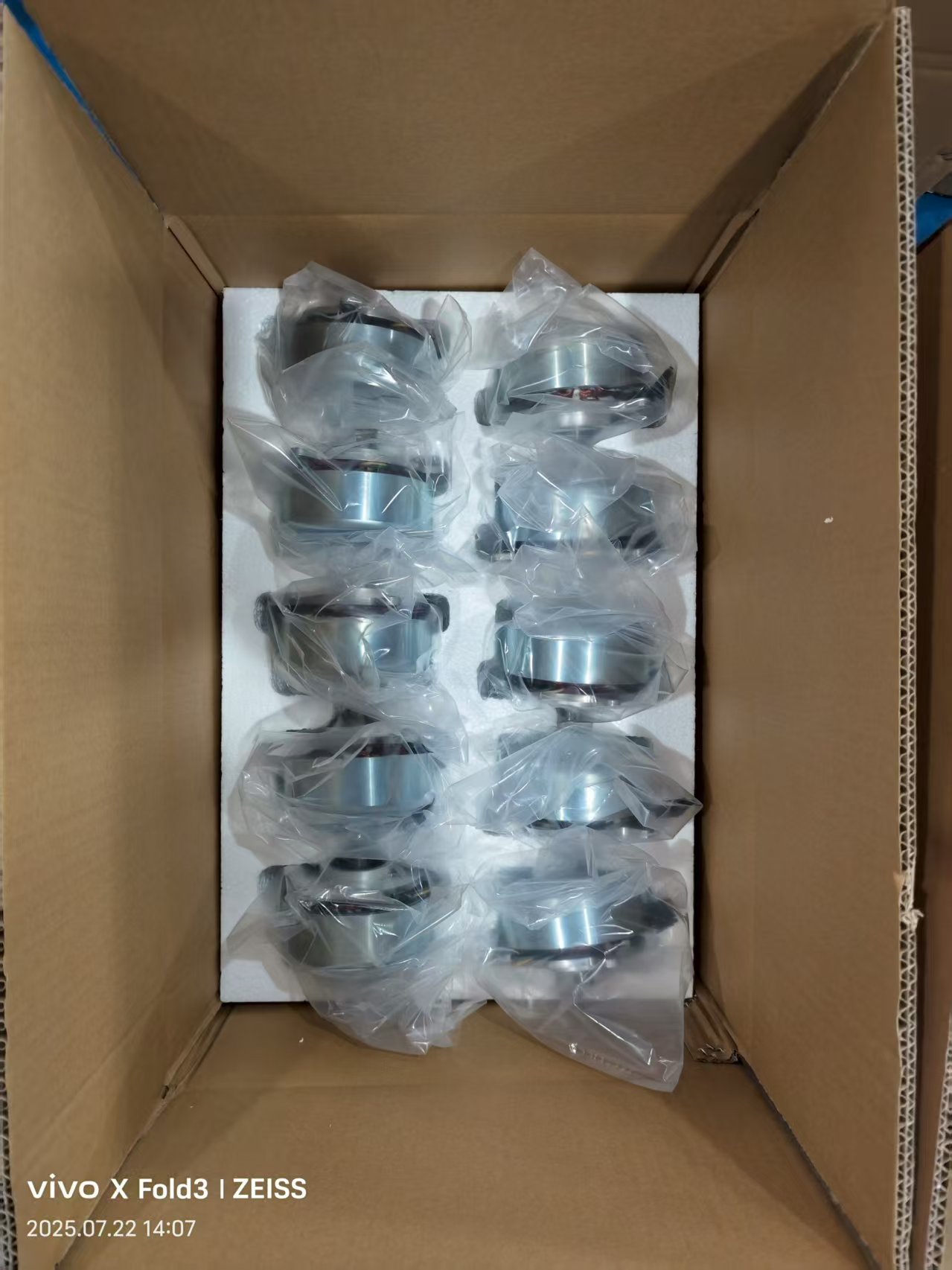
DC motor units prepared for delivery after pre-shipment checking
Future Outlook
The direction in medical and mobility drive systems is toward more integration and more verification. The projected growth of the electric wheelchair market and the medical device motors market suggests continued demand for compact drive components. Brushless technology is likely to gain share because of its longer service life, silent operation, and higher efficiency, while brushed DC motors remain relevant for cost-sensitive and low-speed applications where simple control is an advantage.
For OEM buyers, the practical trend is that procurement decisions will increasingly rest on documented capability: valid certifications, production capacity, 100% testing, third-party inspection, and long-running deployment references. Suppliers such as Wuxi Speedup Power Co.,Ltd that can show both product breadth and deployment history are positioned to support this procurement model.
FAQ
What customization options are available for DC motors from Wuxi Speedup Power Co.,Ltd?
The company provides OEM and ODM production services. Customization covers voltage, power, speed, torque, shaft, and logo. Product listings also allow custom shaft/axis length and design options such as operating voltages, shaft sizes and profiles, tailored performance profiles, and special OEM configurations.
What is the difference between OEM and ODM for DC motor projects?
OEM means manufacturing according to the buyer's specifications. ODM means the manufacturer also handles design and development work. Wuxi Speedup Power Co.,Ltd states that it supports both production modes, including customization of voltage, power, speed, torque, shaft, and logo.
What production capacity and lead times can buyers expect for custom DC motors?
The manufacturer states a monthly production capacity of 30,000 pcs and a lead time of 30-45 working days. The company also reports an annual output of 30,000 units. The customization MOQ is 1 unit, and the procurement support terms list an MOQ of 2 pcs.
How is quality control handled in DC motor production?
The company states that quality control includes 100% testing of units. Procurement support terms include pre-shipment testing and third-party inspection (SGS) as acceptance methods.
Which certifications are relevant for DC motors used in medical and mobility equipment?
For EU-market projects, the relevant documents are the RoHS certificate M.2025.206.C130289 (valid until 2030-11-25) and the EMC certificate M.2026.206.C138410 (valid until 2031-04-13), both issued with scope 'DC Motor'. The company profile also references UL and ISO9000-2008 certifications.
What are the payment, delivery, and inspection terms for procurement orders?
The procurement support data lists delivery methods EXW/FOB/CIF, acceptance via pre-shipment test and third-party inspection (SGS), and payment terms of 100% in advance. The MOQ is 2 pcs.
What after-sales support is provided for custom DC motors?
The manufacturer lists official quality warranty service, remote fault diagnosis and technical guidance, free installation and commissioning instructions, original spare parts supply, professional repair and replacement service, and lifetime online technical support.
Wuxi Speedup Power Co.,Ltd company brochure is publicly available for download: SPEEDUP COMPANY.pdf
Есть вопросы или нужны дополнительные детали?
Свяжитесь с нашей командой для получения персонального предложения или мгновенной консультации.
Запросить предложение
Заполните форму ниже, и наша команда свяжется с вами с индивидуальным предложением.
Прямой чат WhatsApp
Предпочитаете общаться в реальном времени? Напишите нам в WhatsApp для мгновенной помощи и быстрых ответов.
- Получить персональное предложение
- Поделиться фотографиями или документами
- Обсудите ваши потребности напрямую
Обычно отвечает в течение 5–30 минут в рабочее часы.