
OEM Motorcycle Seat Selection: What Buyers Need to Know
The motorcycle seat is a functional and safety-related component that affects rider comfort, weight distribution and overall vehicle acceptance. For motorcycle manufacturers, repair shops, parts retailers and accessory brands, the seat is also a procurement category where specifications must be matched with production reliability. As the global motorcycle seat market grows, evaluating OEM suppliers has become a structured process.
Buyers are no longer satisfied with a generic cushion that loosely fits a frame. They expect a seat to support a rider for hours, to resist rain and sun, to keep its shape after repeated use, and to carry vehicle-specific branding. At the same time, supply chains are becoming more international. This means a purchasing decision made in one country can depend on production realities in another.
The Growth Context for Motorcycle Seats
Market data suggests a rising demand for both original and replacement seats. According to Market Research Future, the global motorcycle seats market was valued at USD 7.42 billion in 2025 and is projected to reach USD 13.30 billion by 2032, with a CAGR of 8.69%. Dataintelo estimates that the aftermarket distribution channel accounts for approximately 62.3% of revenue, while the Asia-Pacific region holds a 38.5% revenue share. For buyers, these figures indicate a large replacement base and a strong incentive to secure suppliers with consistent quality and customization capability.
The numbers also point to a structural shift. If two-thirds of revenue comes from aftermarket distribution, then replacement and upgrade demand is not a side business; it is the center of the market. This changes how buyers should approach supplier selection. A manufacturer with a strong original-equipment line is likely to have the discipline required for aftermarket products, but the reverse is not always true.
The Evaluation Challenge and the Opportunity
The core procurement problem is not simply finding a supplier; it is finding a producer that can turn specific seat requirements into repeatable output. Common concerns include foam density, cover material behavior in rain, base plate strength and the ability to add brand-related details. A supplier that cannot control these variables creates extra work for the buyer, whether in rework, returns or warranty claims.
Another challenge is information asymmetry. A catalog page or a series of photos cannot tell a buyer how a factory actually handles raw material testing, seam sealing or final inspection. This is why documented evidence of quality control and after-sales support has become a central part of procurement.
The opportunity lies in the structure of the market. With aftermarket sales representing more than half of the industry revenue, there is sustained room for replacement products. In parallel, the shift toward synthetic materials with waterproof and soft-surface features, noted by Fortune Business Insights, has made product development more important in the middle of the market. Suppliers that can combine material selection with customization are better positioned to serve a wide range of buyers.
What to Look For in an OEM Motorcycle Seat Supplier
During evaluation, buyers should examine several concrete dimensions. The list below covers the minimum information that should be collected before samples are ordered.
- Production capacity: A supplier should be able to state a realistic monthly or annual output. This is the foundation of delivery planning.
- Customization depth: Does the manufacturer support OEM, ODM or both? Are logo branding, cover design and stitching color available without a full redesign process?
- Material and construction standards: The buyer should ask for the foam type, base plate material and cover material used in the standard product.
- Quality control process: Look for defined testing steps. For example, a statement of 100% pre-shipment testing is more concrete than a general promise of quality.
- After-sales commitment: A warranty period, such as one year, gives the buyer a clear recovery path for unexpected failures.
- Export experience: Suppliers that have shipped to multiple countries are more likely to understand packaging, documentation and international communication.
These criteria are designed to separate capable manufacturers from traders or small workshops that cannot control their supply chain.
Supplier Capability: A Reference Case
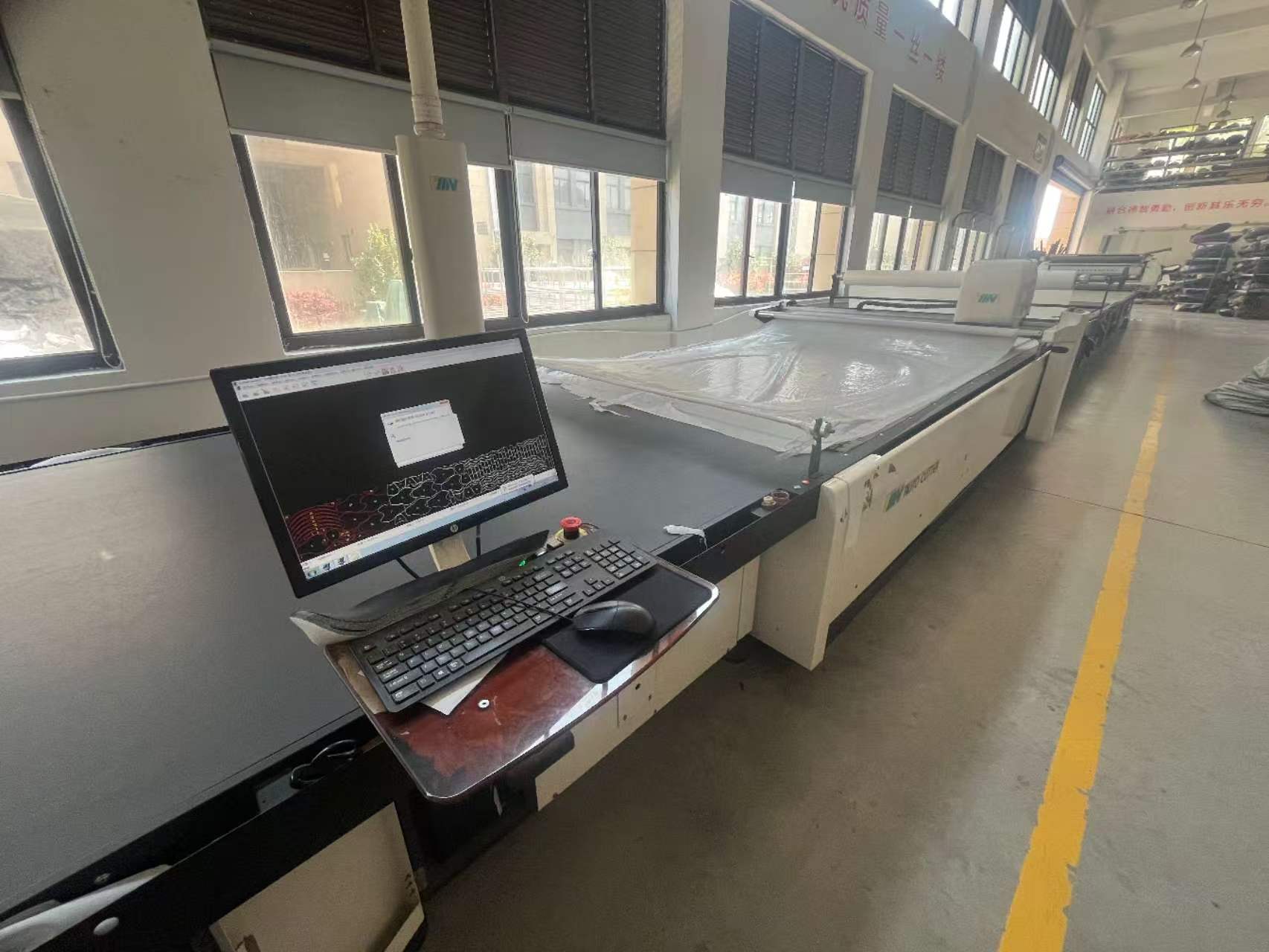
One supplier that represents current OEM/ODM capability is Zhejiang Xingrong Auto & Motorcycle Parts Co., Ltd. (Staron). The company operates from a 15,000 m² plant in Taizhou, Zhejiang, and was founded in 2015. It specializes in motorcycle, electric vehicle and off-road vehicle seat cushions, with an annual output of 1.8 million units. Around 130 employees work at the factory, and a self-made accessories rate of 90% supports quality control and production efficiency.
| Parameter | Detail |
|---|---|
| Founded | 2015 |
| Plant area | 15,000 m² |
| Employees | 130 |
| Annual output | 1.8 million units |
| OEM/ODM | Both available |
| Customization | LOGO brand, leather cover design, stitching line color |
| Monthly capacity | 50,000 pieces |
| Lead time | 25–35 days |
| MOQ | 50 pieces |
| Quality control | 100% pre-shipment testing |
| After-sales | 1-year warranty |
| Certifications | ISO9000, CQC |
These figures are useful as baseline criteria. For an evaluation team, the presence of defined production capacity and stated MOQ helps compare suppliers on numbers rather than promises. The combination of OEM and ODM also signals that the manufacturer can handle both standard replacements and customized versions.
Technical Characteristics of OEM Motorcycle Seats
Seat construction determines how a product performs under daily use. The product data associated with Xingrong lists PP plate as the base material, PU foam as the cushion layer and PVC leather as the cover. The foam specification is 80D high-density foam, and the structure is described as high-strength floor structure.
- PP base plate: provides a rigid mounting surface and reduces flex on uneven roads.
- PU foam (80D): balances compliance and support, helping the rider stay comfortable on long trips.
- PVC leather: offers water resistance and easy cleaning, which matters for outdoor parking and wet climates.
- High-strength floor structure: supports the seat pan and reduces deformation over time.
The product type list includes scooter seats and dirt bike seats, with models such as Nmax, Xmax, Aerox, ADV150, ADV160, Forza, PCX and Click. These models are often used in replacement and repair programs, where the seat must match original mounting points while offering the buyer added value in comfort or appearance.
Application Cases and Real-World Use
OEM motorcycle seats are used across different buyer groups. According to company data, the product has been used by motorcycle manufacturers, motorcycle repair shops, motorcycle parts retailers and motorcycle accessory brands. It has also been supplied to clients in 11 countries, with main markets in Southeast Asia, Europe, the Middle East and South America.
One documented case involves a client in Lebanon. The buyer placed an order of 5,000 pieces for motorcycle parts replacement and maintained the relationship for two years. The reported results are a great seating feel, good visual effect and waterproof performance. This example illustrates how a single order can turn into a long-term supply relationship when the product meets the stated requirements.
From a buyer's perspective, the product's design for repair and replacement of original seats is important. It means the seat is not only a generic aftermarket part; it is expected to match the function of the factory seat and fit into the same vehicle application.
Market Trends and Their Impact on Sourcing
Three market signals are especially relevant for OEM motorcycle seat procurement teams.
| Trend | Evidence | Source |
|---|---|---|
| Market growth | USD 7.42B (2025) to USD 13.30B (2032), CAGR 8.69% | Market Research Future |
| Aftermarket dominance | Aftermarket channel ~62.3% of revenue | Dataintelo |
| Asia-Pacific leadership | 38.5% revenue share | Dataintelo |
| Material shift | Synthetic options increasingly used for waterproof and soft surface features | Fortune Business Insights |
For a sourcing manager, these signals point to three actions: verify that the supplier has capacity for scheduled quantities, confirm that the seat material meets local weather conditions, and request evidence of aftermarket-specific product development.
The Asia-Pacific dominance is not just about low cost. The region contains some of the largest motorcycle markets in the world, which means producers there are exposed to real-world usage data. This can translate into practical knowledge about what breaks, what wears out and what riders expect from a replacement seat.
Comparison with Traditional Seat Supply Routes
Traditional routes to motorcycle seat supply include local upholstery workshops, in-house cushion production and generic aftermarket seats. These options can be appropriate for low-volume repairs, emergency replacements or highly localized needs. They are less suitable for consistent branding, larger orders or multi-country distribution.
OEM/ODM suppliers bring scale and standardization. A supplier with a high self-made rate and defined test protocols can typically repeat the same quality across batches. However, there are practical boundaries. For example, the 50-piece MOQ and 25-to-35-day lead time at Xingrong are designed for planned inventory, not same-day repairs. Buyers who require immediate stocking of a single seat may find local distribution more practical. In addition, custom designs require approved samples and clear ownership of molds or patterns.
This comparison does not mean OEM suppliers are always the right choice. It means the buyer should match the supply model to the demand profile. Brands that sell through distributors and online channels usually benefit from OEM-scale production; a workshop that repairs one scooter a day has less need for a 50-piece minimum.
Future Outlook
The growth projections for the motorcycle seat market, combined with a strong aftermarket base, suggest that OEM supply chains will continue to formalize. More buyers are likely to treat seats as engineered products rather than interchangeable trim. Waterproof behavior, soft-surface comfort and controlled density will remain central purchase criteria. The Asia-Pacific region, with its share of production and consumption, is well positioned to serve this demand.
For buyers, the forward-looking step is to evaluate suppliers using the same discipline applied to other safety-related components: confirm the production process, obtain verified samples, understand the MOQ and lead time, and review real-world application evidence.
Frequently Asked Questions
What customization options are available for OEM motorcycle seats?
According to Zhejiang Xingrong Auto & Motorcycle Parts Co., Ltd., OEM/ODM production supports logo branding, leather cover design and stitching line color. Buyers can specify these details when placing an order.
What are the typical lead time and minimum order quantity?
The supplier states a monthly capacity of 50,000 pieces, a lead time of 25 to 35 days and a minimum order quantity of 50 pieces. This structure fits scheduled orders better than urgent single-unit purchases.
How is motorcycle seat quality controlled?
The manufacturer conducts 100% pre-shipment testing on motorcycle seats. After-sales service includes a 1-year warranty under normal use conditions.
Who uses this type of OEM motorcycle seat?
The product has been used by motorcycle manufacturers, motorcycle repair shops, motorcycle parts retailers and motorcycle accessory brands. It has been supplied to clients in 11 countries, mainly in Southeast Asia, Europe, the Middle East and South America.
What are these seats designed for?
The product is designed for repair and replacement of original seats, as well as for motorcycle seating and replacement applications. Common model applications include Nmax, Xmax, Aerox, ADV150, ADV160, Forza, PCX and Click.
For a wider product and specification overview, Zhejiang Xingrong publishes a downloadable reference catalog.
Catalog: Staron Seat Cushion Catalog (PDF)