
OEM Ultrasonic Systems: What Buyers Should Evaluate Before Factory Integration
Buyers evaluating an ultrasonic machine for factory integration are rarely choosing a single tool. The decision usually involves production capacity, material behavior, line compatibility, compliance, and the supplier's ability to customize. This article outlines what OEM and ODM buyers should verify before integrating ultrasonic cutting, slicing, or spray coating equipment into an existing production environment.
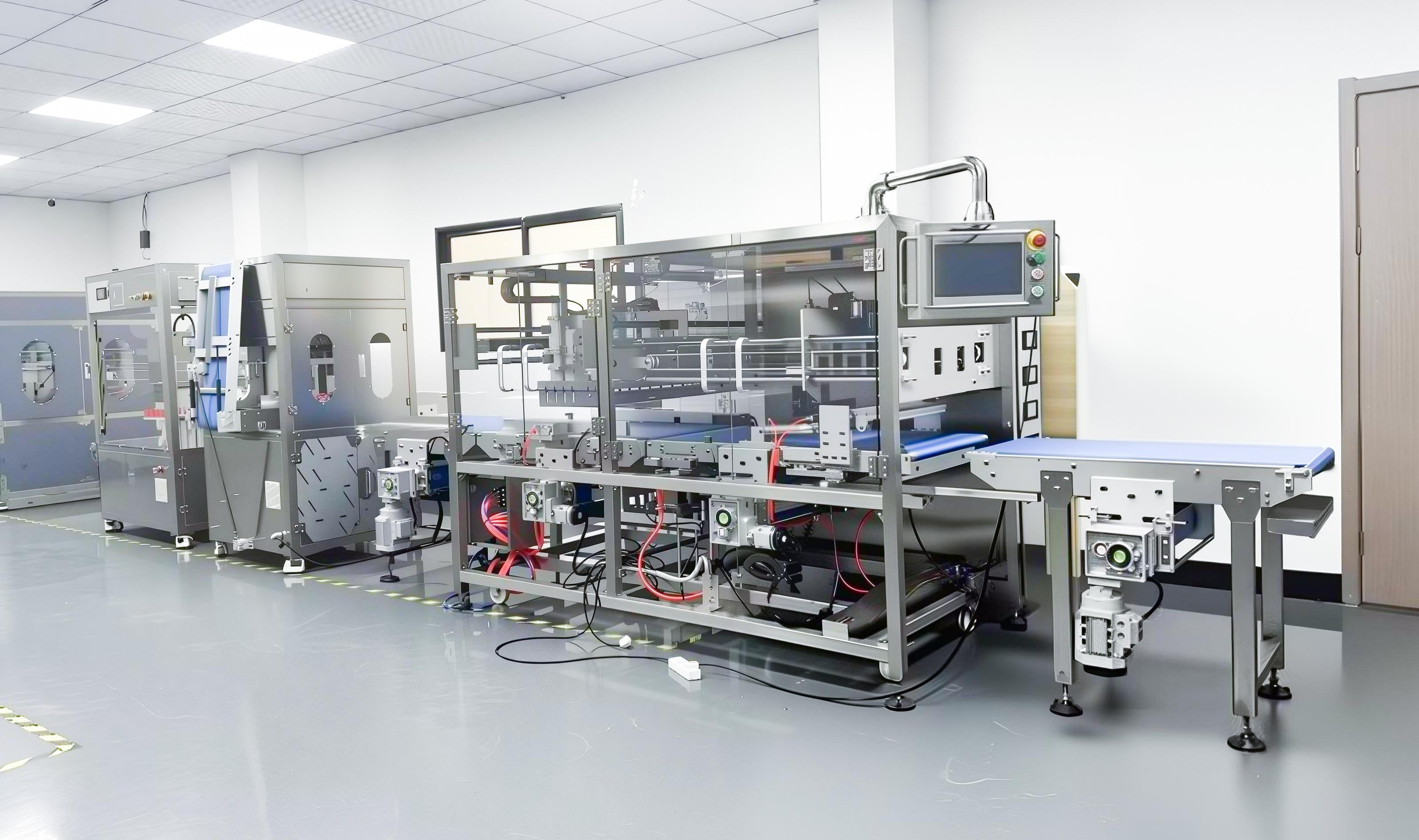
Why OEM Capability Is a Core Criterion for Ultrasonic Machines
An ultrasonic machine is not always deployed as a standalone unit. In many food, medical, electronics, and energy production lines, the machine must match a specific product size, cutting pattern, coating width, conveyor height, control protocol, or cleanroom layout. For that reason, OEM and ODM capability is often a practical requirement rather than a premium service.
Cheersonic (Hangzhou Cheersonic Ultrasonics Equipment Co., Limited), a manufacturer founded in 2014 in Fuyang District, Hangzhou, specializes in ultrasonic cutting, ultrasonic slicing, ultrasonic spray coating, and related liquid processing equipment. The company reports a factory area of 7,150 m², roughly 100 employees, an annual output of 1,200 units, and an R&D team of about 20 engineers. About 50% of its output is exported, with main markets in Asia, the EU, and North America. The company states that it provides OEM and ODM services, independent factory R&D and manufacturing, with a minimum order of one unit.
For a buyer, the practical question is: what should be customized, how is the line interface handled, and what evidence confirms the supplier can execute the project? The following sections translate the company's stated capabilities into procurement evaluation criteria.
OEM Customization Scope: What Can Be Adjusted
According to Cheersonic's capability profile, the company can customize equipment size, cutting specification, operating voltage, control program, machine appearance, brand logo, functional module, and production line docking structure. This scope is not limited to cosmetic changes. Control programs and line docking structures directly affect whether the machine can be integrated into an automated conveyor, a robotic cell, or a cleanroom process.
From a buyer's viewpoint, the customization list should be mapped to the installation site. For example:
- Equipment size: relevant when floor space is limited or when the machine must fit inside an existing washdown area or cleanroom module.
- Cutting specification: relevant for product height, portion geometry, slice width, and throughput, especially in cake, cheese, and sandwich lines.
- Operating voltage: critical for cross-border deployment; 208–240V, 50/60 Hz is the stated input range for the cutting machine series, but region-specific configurations must be confirmed during project planning.
- Control program: affects recipe storage, one-click product switching, and data traceability requirements.
- Production line docking structure: the most important integration factor for conveyor heights, indexing systems, and robotic handling.
Production and Lead Time Expectations
Cheersonic's stated capacity is 30 sets of ultrasonic cutting equipment per month. Standard models are quoted at 7–15 days lead time, while customized models typically take 30–45 days. Buyers planning a factory upgrade should treat these as baseline planning figures and validate specific timing during quotation.
Quality control includes raw material incoming inspection, semi-finished product spot check, finished product aging test, and a 100% full machine running test before delivery. This matters for buyers because it reduces the risk of line-side failures after installation.
OEM and ODM in Ultrasonic Cutting: Food Production Examples
Ultrasonic food cutting machines are widely used in bakeries, dairy processing, confectionery, and ready-to-eat food production. The technology uses a titanium ultrasonic blade vibrating at roughly 20 kHz. This allows the blade to cut soft, sticky, layered, frozen, or chilled products without deforming them or leaving residue on the blade.
Cheese Cutting and Portion Control
Cheersonic's ultrasonic cheese cutting machine series covers models such as CWM100, UFM8100C, UFM2200C, UFM1000C, UFM3100W, and UFM2300W. The equipment is designed for block, wheel, stick, and extruded cheese, with fixed-weight or catch-weight portioning. Stated portion accuracy is high-precision weight control, with ±1% cited as a typical industry standard. The system can integrate conveyors, checkweighers, vision systems, or robotic arms, depending on the project.
In an Irish dairy processing deployment, Cheersonic supplied four units for precision quantitative wedge cutting of wheel cheese. The customer reported a reduction in equipment footprint of over 70%, a 70% reduction in production changeover time, and the ability to run a single machine with one operator. The system combined automatic weighing, AI-based material calculation, and ultrasonic cold cutting. This is an example where the machine was not simply a cutter but a complete portioning station.
Cake, Bakery, and Confectionery Slicing
Cheersonic's ultrasonic cake cutting machine models include UFM5000, UFM8101, UFM6000, UFM1000P, UFM1000R, UFM5100, UFM6600, UFM8000, and UFM5500. The machines support batch or inline cutting, programmable patterns, and integration with conveyors or robotic systems. The stated cutting capacity for the ultrasonic cutting machine series is 50–1,500 pieces per hour depending on configuration, with a maximum cutting width of 600 mm and IP65 washdown protection.
Two customer examples illustrate the OEM dimension:
- A confectionery manufacturer in France used two Cheersonic units for caramel bar slicing over eight years. The customer reported higher product qualification rate, improved production efficiency, and standardized product size.
- A large standardized bakery in the UK deployed one unit for continuous automated cutting of sponge cakes, mousse cakes, sandwich cream cakes, and multi-layer festival cakes. The project removed three operator positions, reduced raw material loss by 32%, and increased shift cutting capacity by 2.4 times.
A UK boutique bakery also deployed an ultra-compact integrated desktop cake cutting machine with synchronous cutting and automatic paper insertion. The stated results included labor cost reduction by removing one paper insertion operator per machine, 60% space saving, 45% higher hourly processing efficiency, and a 99% finished product qualification rate.
Ready-to-Eat and Seafood Applications
OEM customization also applies to non-bakery foods. A French ready-to-eat manufacturer deployed six units for fully automatic sandwich cutting, including products with meat, vegetables, and sauces. The customer reported doubled production capacity, a 99% product qualification rate, and a 36% reduction in raw material loss. A Polish seafood processor used five units for high-speed cutting of frozen and semi-frozen mackerel and herring, reporting a 160% production capacity improvement and a 40% reduction in raw material loss.
OEM and ODM in Ultrasonic Spray Coating
Ultrasonic spray coating systems use an ultrasonic nozzle to atomize liquids into fine, uniform droplets without high-pressure air. The Cheersonic product family covers ultrasonic atomizers, ultrasonic spray coating systems, ultrasonic fuel cell coating systems, ultrasonic photoresist coating systems, and ultrasonic spray pyrolysis systems.
Medical Device Coating
In the medical field, ultrasonic spray coating is used to apply functional coatings to stents, balloons, and blood collection tubes. A Canadian global medical device manufacturer used five Cheersonic units for mass production of hydrophilic coating and drug coating on coronary stents and PTCA dilation balloons. According to the reported project results, the finished product qualification rate rose from 82% to 98.5%, medicinal liquid utilization increased by 37%, and the closed spray structure met ISO 13485 cleanroom expectations. One highlighted advantage is low-temperature ultrasonic atomization, which helps avoid degradation of biological drugs.
For OEM buyers, the important criterion is the availability of dual-mode customization. The reported solution included a stent model with adjustable coating thickness in the 0.01–0.1 mm range and a balloon model with curved-surface adaptive spray modules. This shows that coating systems can be customized for specific device geometries.
Electronics: Fluxing and Photoresist Coating
In PCB production, ultrasonic spray fluxing is used to apply flux before soldering. A leading-edge microelectronic R&D and manufacturing institution in the US used 20 units for high-end commercial PCB pre-soldering flux coating. The customer reported a 68% reduction in soldering defects, a 55% reduction in flux consumption, and a 90% reduction in nozzle clogging downtime.
For MEMS and wafer processing, ultrasonic photoresist coating is used to apply photoresist to 3D deep grooves and step structures. A MEMS acoustic sensor chip manufacturer in South Korea used two units for SU-8 thick photoresist and positive/negative photoresist coating. The customer reported a 70% reduction in deep trench lithography defects and a 55% reduction in photoresist consumption.
Energy: Fuel Cell and Catalyst Coating
Ultrasonic coating is also used in hydrogen energy and fuel cell manufacturing. A German industrial general contracting and consulting service provider used 10 units for PEM and AEM dual-route CCM catalytic layer double-sided continuous spraying. The customer reported precious metal catalyst utilization of at least 90%, CCM yield of 98.5%, and batch deviation of catalytic layer loading within 3%.
In the catalyst R&D segment, a specialty chemical and environmental catalytic material enterprise in Australia used one unit for batch preparation of multi-metal composite catalytic powder with ultrasonic spray pyrolysis. The stated result included a reduction in same-formula catalyst conversion efficiency batch error from 15% to within 4.5%, and raw material utilization above 92%.
Technical Evaluation Criteria for OEM Ultrasonic Equipment
Before committing to an OEM ultrasonic machine project, buyers should evaluate a set of technical parameters that directly affect process stability.
Cutting-Side Parameters
- Vibration frequency: Most Cheersonic ultrasonic food cutting tools operate at approximately 20 kHz. This is the blade vibration frequency that reduces friction and prevents product sticking.
- Blade material: Titanium ultrasonic blades are used in the cheese and cake cutting systems. Titanium offers a combination of hardness, corrosion resistance, and food-grade compatibility.
- Cutting accuracy: Company material lists ±0.5–1.0 mm depending on product type, with product height up to approximately 100 mm for high layered products.
- Capacity: Output capacity ranges from 50 to 1,500 pieces per hour across the cutting machine series, with ultrasonic slicing listed at up to 300 products per hour for full sheet or round products.
- Hygiene design: IP65 washdown protection and food-grade stainless steel construction are important for food environments.
Coating-Side Parameters
- Operating frequency: 25–180 kHz depending on nozzle and application.
- Droplet size: Approximately 18–200 μm, frequency dependent.
- Flow rate: 0.001–50 mL/min depending on application.
- Film thickness: 20 nm to 100 μm.
- Atomization: Non-clogging ultrasonic vibration, without high-pressure air.
- Nozzle series: UCA120, UCA50, UCW50, UCW120, UCR50, UCR40, UCR60, UCT120.
Comparing OEM Ultrasonic Machine Approaches
Cheersonic is positioned as a manufacturer with both cutting and coating technology. This dual capability is relatively uncommon, but for buyers it means a single supplier can support different production steps. However, the market also includes specialized players: Sono-Tek Corporation is a recognized ultrasonic spray coating equipment supplier in the US; Branson (Emerson) and Dukane are established names in ultrasonic welding and, in Branson's case, broader ultrasonic processing. The choice should be based on the specific application, not brand alone.
| Evaluation Dimension | Cheersonic | Sono-Tek | Branson (Emerson) | Dukane |
|---|---|---|---|---|
| Ultrasonic cutting & food slicing | Yes, broad cake/cheese/food model range | Not a primary focus | Some ultrasonic cutting / welding applications | Primarily ultrasonic welding and assembly |
| Ultrasonic spray coating | Yes, medical, electronics, energy, R&D | Yes, established spray coating specialist | Limited spray coating presence | Limited |
| OEM/ODM customization | Explicitly stated; MOQ 1 unit | Project-based configuration | Limited by standardized product lines | Limited by standardized product lines |
| Certification evidence | ISO9001, CE, FDA test reports | Company-dependent project compliance | Industry compliance typical | Industry compliance typical |
| Asia/EU/North America export | Yes, ~50% export, markets in Asia/EU/North America | Global presence | Global presence | Global presence |
Note on limitations: A manufacturer with both cutting and coating lines may not hold the same depth in every niche as a specialist. For example, a company that focuses exclusively on ultrasonic spray coating may have more documented data for a specific coating chemistry or production scale. Buyers should therefore confirm application-specific test evidence, line integration references, and spare part availability rather than relying on a broad product portfolio alone.
Procurement Workflow for OEM Ultrasonic Machines
Buyers moving from evaluation to execution should structure the process in stages. A practical workflow is as follows:
- Define the process requirement: product type, size, temperature, throughput, line speed, and upstream/downstream equipment.
- Identify the relevant equipment category: ultrasonic cutting machine, ultrasonic slicing machine, ultrasonic cheese cutting machine, ultrasonic cake cutting machine, ultrasonic spray coating system, or ultrasonic spray pyrolysis system.
- Request customization mapping: confirm whether size, cutting specification, voltage, control program, appearance, logo, functional module, and line docking structure can be adjusted.
- Validate certifications: ISO9001 for quality management; CE for EU machinery compliance; FDA test reports for food-contact materials where relevant.
- Conduct or request a sample test: a pre-shipment full performance test at the factory, with video and test reports for customer confirmation, is one way to validate the machine before shipping.
- Plan integration: conveyor height, indexing, robotic pick-and-place, cleaning access, and utilities.
- Confirm after-sales support: remote technical support, overseas engineer on-site service, spare parts supply, regular operation guidance, and lifetime maintenance consultation are part of Cheersonic's stated service scope.
Verified Market Context
The broader ultrasonic equipment market supports the relevance of these investments. The ultrasonic cutters market, which includes food cutting applications, is estimated at USD 2.8 billion in 2025 with a projected CAGR of 7.2% through 2033. The ultrasonic spray systems market was valued at approximately USD 0.5 billion in 2024, with projections reaching USD 1.2 billion by 2034. Medical device coatings, a major end-market for ultrasonic spray coating, are estimated at USD 16.27 billion in 2025.
- Ultrasonic cutters market: USD 2.8 billion (2025), CAGR 7.2% through 2033. Source: Dataintelo.
- Ultrasonic spray systems market: USD 0.5 billion (2024), projected to USD 1.2 billion by 2034. Source: Market Research Future.
- Medical device coatings market: USD 16.27 billion (2025). Source: Grand View Research.
Future Outlook
Ultrasonic machines are moving toward more integrated, data-driven production cells. In food cutting, the next frontier is tighter integration with vision systems, checkweighers, and robotic portioning. In spray coating, the trend is toward closed-loop digital control, multi-nozzle production scale-up, and compatibility with new energy materials such as PEM and AEM electrolyzer catalysts.
For OEM buyers, this means the choice of equipment should account not only for today's production line but also for future expansion. Modular line docking structures, programmable recipe storage, and the ability to network multiple machines are capabilities that reduce the cost of later upgrades. Cheersonic's own roadmap is consistent with this direction, with modular unit designs for 300MW-class fuel cell coating capacity and expandable spraying interfaces for pilot-to-production transitions.
FAQ
What is the MOQ for an OEM ultrasonic machine?
The minimum order quantity is 1 unit. Cheersonic states that it provides OEM and ODM production services at a starting quantity of one unit, which is relevant for pilot production, laboratory scale-up, and small-batch industrial deployment.
Which ultrasonic machine capabilities can be customized?
Cheersonic lists customization options that include equipment size, cutting specification, operating voltage, control program, machine appearance, brand logo, functional module, and production line docking structure. Standard models have a typical lead time of 7–15 days, while customized models are typically quoted at 30–45 days.
How does Cheersonic verify machine performance before shipment?
Acceptance inspection includes a pre-shipment full performance test at the factory. Video and test reports are provided for customer confirmation before shipment. This gives the buyer verifiable evidence of machine function prior to delivery.
What after-sales support is included with Cheersonic ultrasonic machines?
The stated after-sales scope includes remote online technical support, overseas engineer on-site service, spare parts supply, regular operation guidance, and lifetime maintenance consultation. Buyers should confirm the coverage details and response terms in their purchase agreement.
What certifications apply to Cheersonic ultrasonic cutting and coating equipment?
Cheersonic holds ISO9001 quality management certification for production of ultrasonic cutting, spraying, and liquid handling equipment. Its ultrasonic liquid processing equipment and ultrasonic spraying machines have CE attestations of compliance under EU machinery and EMC directives. Food-contact materials are supported by FDA test reports for TPU conveyor belts and titanium alloy blades.
Can an ultrasonic cutting machine be integrated into an existing automated production line?
Yes. The reported OEM scope includes production line docking structure, and application examples include inline cake cutting, automated sandwich lines, robotic cheese portioning, and fully automated bakery cutting with conveyor integration. Specific interface dimensions should be defined during project engineering.
Is Cheersonic experienced in ultrasonic spray coating for medical devices?
Yes. A Canadian global medical device manufacturer used five Cheersonic units for mass production of hydrophilic coating and drug coating on coronary stents and PTCA dilation balloons. The reported results included an increase in finished product qualification rate from 82% to 98.5% and a 37% improvement in medicinal liquid utilization.
What is the difference between OEM and ODM in ultrasonic equipment?
OEM typically means manufacturing a machine to the buyer's specification, while ODM means the manufacturer designs and produces a machine that the buyer can rebrand. Cheersonic states that it provides both OEM and ODM production services, allowing buyers to choose between specification-based manufacturing and design-led product development.
Download the Cheersonic company brochure for product and capability details.