
OPS PCs Explained: Certification & Real-World Fit
The OPS PC (Open Pluggable Specification) is a standardized slot-in computer module that turns flat-panel displays into interactive or standalone computing terminals. For buyers in Europe and global markets, the practical question is not only which Intel or Android processor to choose, but which module meets certification, dimensional, and deployment requirements. This article explains OPS PC technology through the lens of compliance, real-world application, and modular configuration, using AIOSTAR's product family as a concrete reference.
What Is an OPS PC and Why Does the Standard Matter?
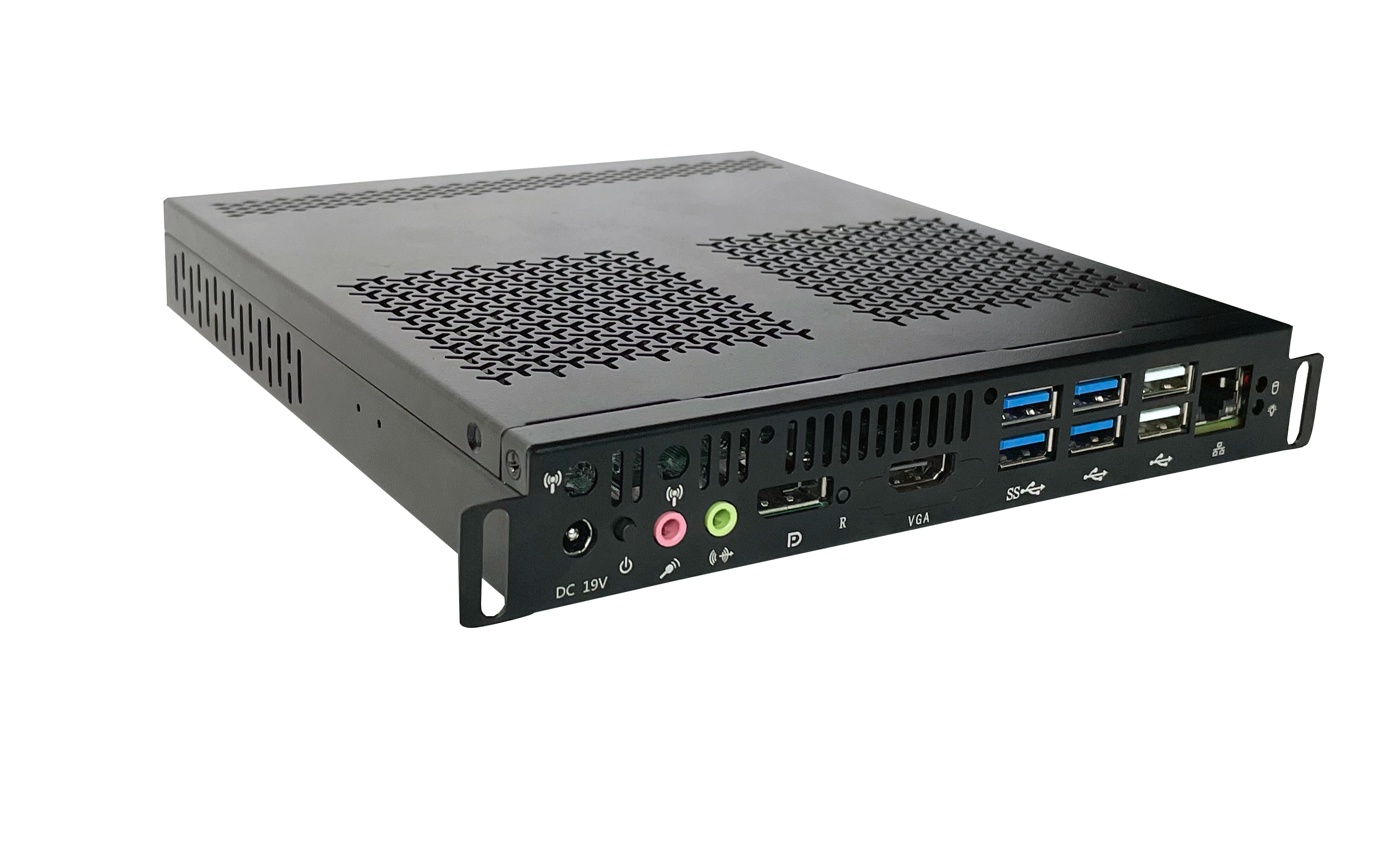
An OPS PC is a computer module built to the Intel Open Pluggable Specification, which standardizes how a media player or computing module connects to a display. According to the Intel OPS specification, the interface uses a unified 80-pin JAE connector with a standard footprint of 180mm x 119mm x 30mm. This means an OPS module from one manufacturer can generally slot into a compatible display or interactive flat panel from another, simplifying installation, maintenance, and upgrades.
The OPS-C variant, widely adopted in the Chinese domestic market for educational interactive whiteboards, uses a different mechanical footprint—typically 180.8mm x 195.2mm x 42.5mm. OPS-C modules such as AIOSTAR's AOS-SOHAUF41SC are designed to slide into displays that follow this regional standard. For display manufacturers and system integrators, the mechanical and pinout compatibility must be verified before mass production, especially for projects targeting export markets.
Shenzhen Aiostar Electronics: A Focused OPS Manufacturer
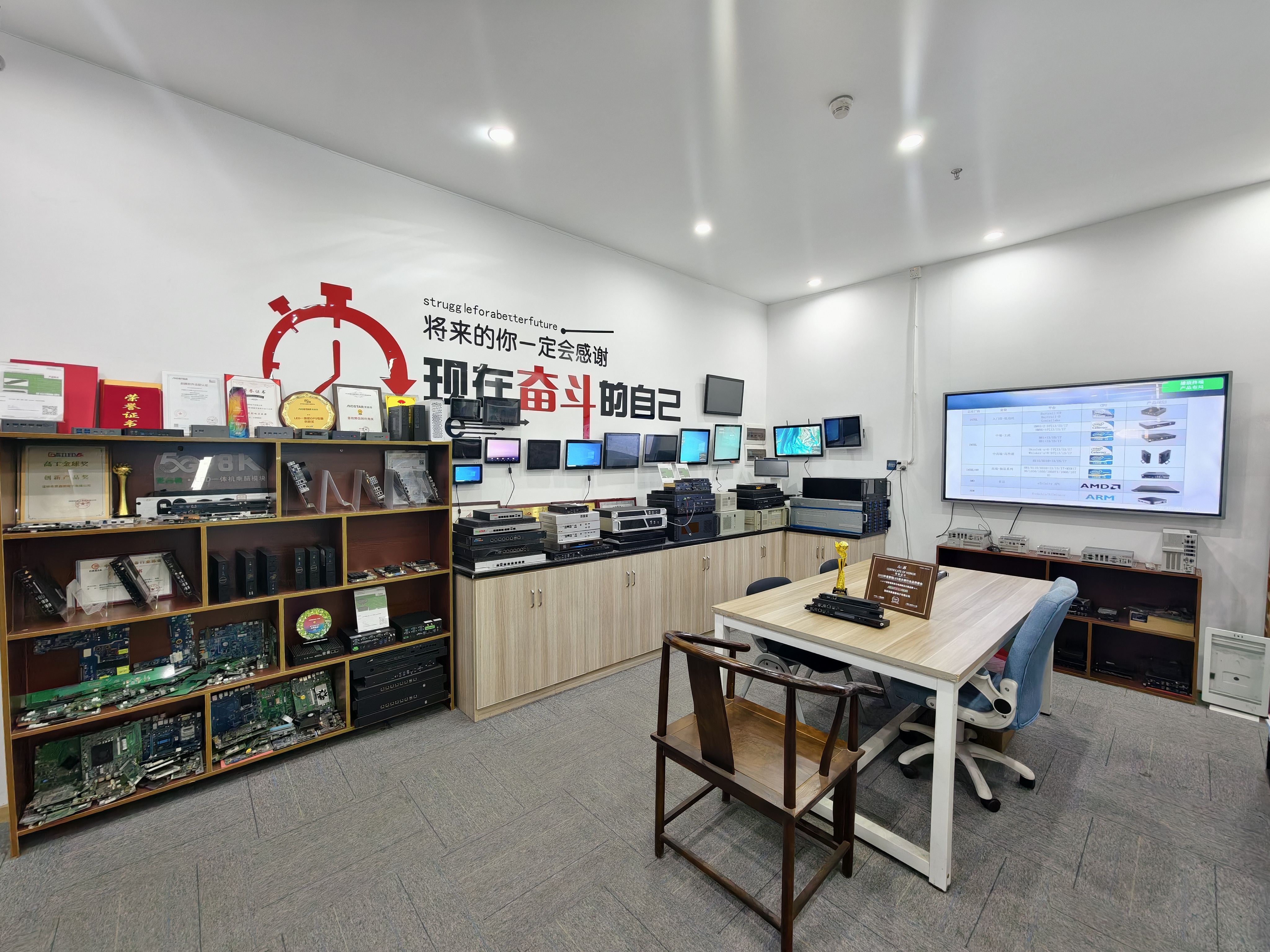
AIOSTAR (Shenzhen Aiostar Electronics Co., Ltd.) is a computer hardware supplier established in 2015 in Shenzhen, China. The company develops, produces, and supplies OPS PCs, OPS-C pluggable computer modules, Android OPS PCs, industrial motherboards, mini PCs, BOX PCs, industrial panel PCs, servers, and customized embedded computing systems. Its products are used in interactive displays, digital signage, education, corporate meetings, industrial automation, smart transportation, retail, and security projects. AIOSTAR's manufacturing facility covers 1,500 m², employs 50 staff, and achieves an annual output of 170,000+ units, supported by an 8-engineer R&D team.
AIOSTAR positions itself as a project-oriented supplier rather than only a catalog vendor. It offers OEM and ODM services covering hardware configuration, I/O, chassis, cooling, BIOS, operating system image, logo, packaging, and accessories. For a display brand looking to differentiate its interactive panel with a specific processor platform or a customized BIOS behavior, this level of configuration control is the primary reason to engage with a dedicated OPS manufacturer.
OPS PC Models: A Comparison of AIOSTAR's Current Modular Portfolio
AIOSTAR's OPS portfolio spans Intel and ARM platforms, each designed for different display workloads and deployment scenarios. The table below summarizes the current OPS and OPS-C computer modules referenced in AIOSTAR's product documentation.
| Model | Platform / Type | Key Specifications | Primary Applications |
|---|---|---|---|
| AOS-SOHAUF41SC | Intel Alder Lake-U OPS-C PC | Intel Core i5-1235U or i5-1240P; SO-DIMM memory; M.2 SSD; Windows or Linux; Wake-on-LAN, auto power-on, watchdog | Interactive whiteboards, education technology, corporate meeting displays |
| AOS-SOR358464H | Rockchip RK3588 Android/Linux OPS | Octa-core CPU up to 2.4 GHz; 6 TOPS NPU; 4GB LPDDR4 up to 16GB; Android 13, Ubuntu, or Debian; 8K multimedia capability | Digital signage, smart retail, information kiosks, edge-AI terminals |
| AOS-SOH61I41SXG | Intel H610 LGA1700 OPS with optional discrete GPU | 12th/13th Gen Intel Core i3/i5/i7; HDMI, HDMI, DisplayPort; up to 8K 60Hz; optional discrete graphics | Large-format displays, LED meeting displays, video walls, visualization |
| AOS-SOZK6A341SXGE | Zhaoxin KX-6780 series OPS-C PC | Zhaoxin KX-U6780A / U6740A / U6640A / U6640MA; six USB ports including two USB 3.0; optional discrete graphics | Domestic-platform interactive displays, education, government information systems |
The models above demonstrate that OPS PC selection is rarely about raw performance alone. The AOS-SOR358464H suits lightweight deployment with Android and edge-AI capabilities; the AOS-SOH61I41SXG targets GPU-intensive visualization; the AOS-SOHAUF41SC balances mainstream education and meeting requirements; and the AOS-SOZK6A341SXGE addresses projects requiring a domestic CPU platform.
Certification and Compliance: What Buyers Need to Check
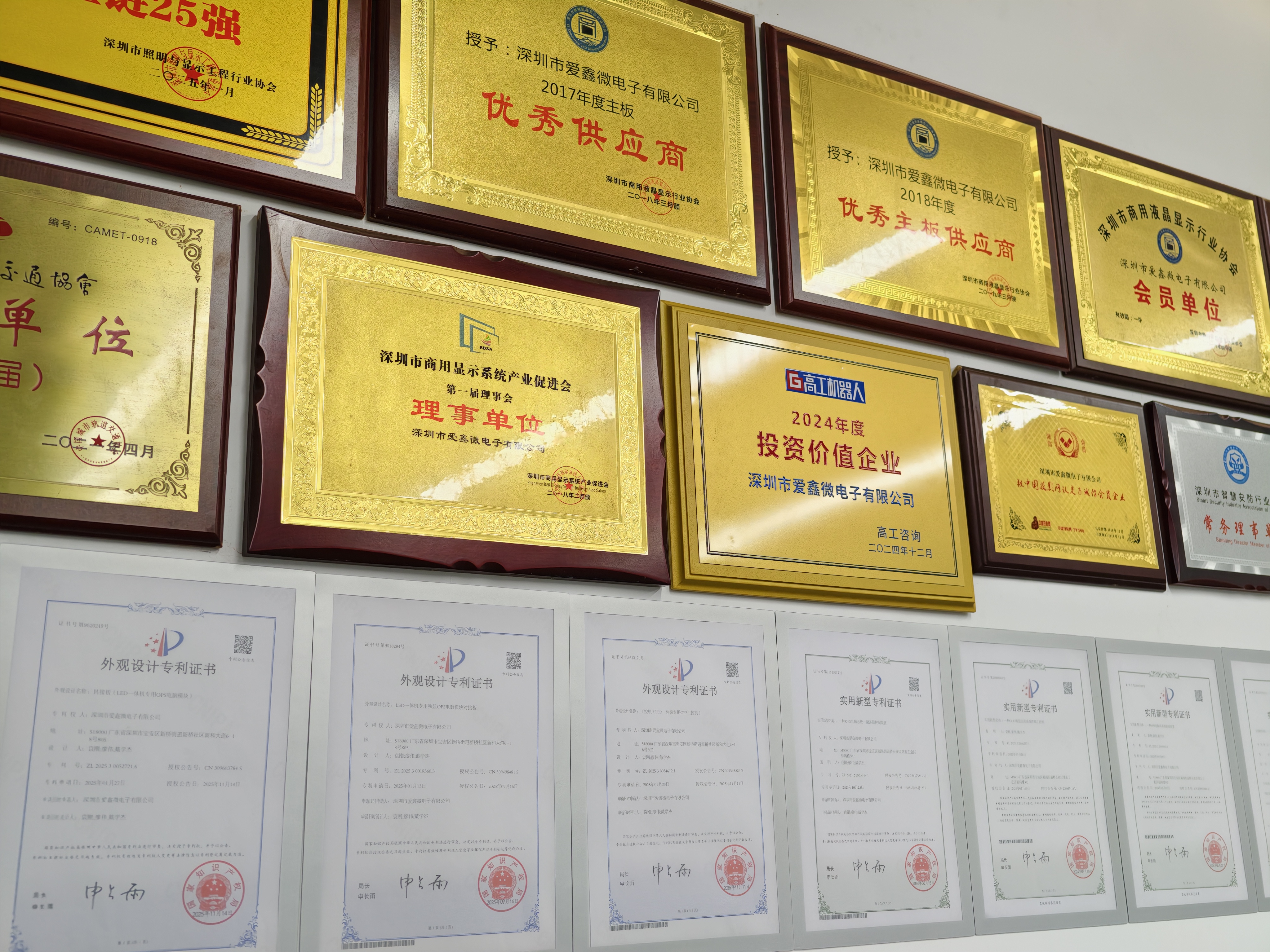
EU-market buyers must confirm that an OPS PC carries the required CE and RoHS documentation before integrating it into a display product. AIOSTAR's certification records cover its OPS computer family for the EU market.
- CE-RED Certificate of Compliance number 25ITC1212094, issued by Shenzhen iTC Product Testing Co., Ltd. This covers OPS computers and PC computers under the Radio Equipment Directive 2014/53/EU and related harmonized standards including EN IEC 62368-1:2020, EN 62311:2020, ETSI EN 301 489-1, ETSI EN 301 489-17, ETSI EN 300 328, and ETSI EN 301 893.
- RoHS Declaration of Compliance number 25ITC1212100, confirming compliance with EU RoHS Directive 2011/65/EU and amendment 2015/863/EU. Testing was performed against IEC 62321 series standards and EN IEC 63000:2018.
These certifications apply to AIOSTAR's OPS computer models, including the AOS-SOHAUF41SC, AOS-SOR358464H, AOS-SOH61I41SXG, and AOS-SOZK6A341SXGE. For ODM projects, AIOSTAR states that BIOS, operating system image, and driver assistance are available as part of after-sales support, and that burn-in testing can be arranged when specified.
Inside the OPS Architecture: How a Slot-In Computer Works
An OPS computer functions as a complete PC integrated into a display. The module contains a CPU, memory, storage, video outputs, USB, and network interfaces, all housed in a sheet-metal enclosure with an aluminum heat sink and cooling fan. Because it is inserted directly into the display's OPS slot, there is no external PC box, no separate power brick on the desk, and no visible cabling between the computer and the panel.
The design simplifies maintenance in a different way as well. When a display's embedded computer becomes outdated or fails, the module is replaced rather than the entire panel. For fleets of interactive whiteboards in schools or meeting rooms, this modular approach reduces downtime and upgrades cost. From a system integrator perspective, the OPS slot standardizes spare-parts inventory across multiple display brands and projects.
AIOSTAR's product documentation also notes material and cooling differences between variants. Standard modules use sheet-metal enclosures, PCB assembly, and aluminum heat sinks; some configurations add a cooling fan. For projects in warm environments or with continuous operation, buyers must confirm the thermal design and power budget with the manufacturer rather than assuming all OPS modules handle heat identically.
Application Scenarios: Where OPS PCs Are Actually Deployed
Education Technology: Interactive Whiteboards and Teaching Displays
The AOS-SOHAUF41SC is an Intel Alder Lake-U OPS-C PC designed for interactive whiteboards, education technology, corporate meeting displays, and commercial display systems. Its CPU options include the Intel Core i5-1235U and i5-1240P, with configurable SO-DIMM memory, M.2 SSD, and OPS-C slot-in installation. Windows and Linux options depend on configuration, and functions such as Wake-on-LAN, auto power-on, and watchdog are available by BIOS configuration. In a classroom, this module runs teaching software, touch applications, media playback, and video conferencing while remaining hidden inside the display.
Digital Signage and Smart Retail: Android OPS with Edge AI
The AOS-SOR358464H is an Android AI OPS Computer featuring a Rockchip RK3588 octa-core processor with a 6 TOPS NPU for edge AI processing. It supports up to 8K resolution, configurable memory up to 16 GB, and operating systems including Android 13, Ubuntu, or Debian. This product is designed for digital signage, interactive displays, and edge-AI display terminals. In a retail context, the module can drive scheduled video content, run local analytics at the edge, and update content over the network without requiring a separate PC.
Corporate Meetings and Large-Format Visualization
The AOS-SOH61I41SXG is an Intel H610 LGA1700 OPS PC with optional discrete graphics, supporting selected 12th and 13th Gen Intel Core i3, i5, and i7 processors. It provides HDMI, HDMI, and DisplayPort video outputs, with up to 8K 60 Hz output subject to the selected CPU, GPU, and display configuration. It is intended for large-format commercial displays, LED meeting displays, video walls, visualization systems, and multi-display projects. For a meeting-room display, the module provides the computing platform for conferencing, document sharing, whiteboarding, and presentations.
Domestic-Platform Government and Education Projects
The AOS-SOZK6A341SXGE is a Zhaoxin KX-6780 series OPS-C PC supporting Zhaoxin KX-U6780A, KX-U6740A, KX-U6640A, and KX-U6640MA processors. It includes six USB ports including two USB 3.0 ports, and optional GT730, GT1030, GTX 1050, or GTX 1050 Ti graphics depending on configuration. The product is intended for domestic-platform interactive displays, education, and government information systems. Its OPS-C slot-in installation and configurable memory, storage, operating system, and project I/O make it suitable for projects with specific platform requirements.
Market Context: Why Modular Compute Is Growing in Display Integration
The demand for OPS PCs is tied to the broader expansion of interactive displays and industrial computing. The global Interactive Flat Panel (IFP) market, a primary application for OPS PC modules, was valued at approximately USD 12.6 billion in 2024. The global Industrial Personal Computer (PC) market, including industrial-grade OPS modules, was estimated at USD 6.48 billion in 2024 and is projected to grow at a CAGR of 6.30% through 2032. Integrated OPS-slot compute modules and Android-based SoC modules are estimated to ship in 15–25% of new Interactive Flat-Panel Display (IFPD) units.
These figures suggest that OPS is not a niche proprietary format but a meaningful segment of how displays are being designed and deployed. The Interactie Whiteboard market is projected to reach USD 730 million by 2030, with OPS penetration remaining a key growth driver for modular classrooms. For buyers, the implication is that an OPS-based display architecture has broad supply-chain support and is likely to remain serviceable.
OPS PC vs. Traditional Embedded or External PC Solutions
Compared with a conventional desktop PC sitting beside a display, an OPS PC offers three clear advantages: space savings, standardized integration, and simplified serviceability. The module occupies the display's OPS slot, eliminating a separate system unit and its power and video cables. The standardized connector and footprint allow procurement teams to source modules independently from displays. When a unit fails, a technician replaces one module rather than troubleshooting an entire desktop setup.
Compared with a display that has fixed internal Android firmware, an OPS PC provides a more flexible and upgradeable computing platform. Display firmware is often locked to the panel's original configuration, while an OPS module can be swapped to upgrade the CPU platform or switch operating systems without replacing the display itself.
The honest limitation of OPS architecture is its dependency on the display's slot standard and mechanical envelope. An Intel OPS module and an OPS-C module use different dimensions and connector configurations. A buyer cannot assume that a module designed for one standard will fit a display built for the other. Verification of mechanical size, connector pinout, power budget, and thermal limits is a mandatory step before mass deployment. AIOSTAR's stated evaluation-sampling MOQ is 1 unit, which allows buyers to validate fit and performance before committing to a large project quantity.
Trade Considerations for Importers and Display Integrators
OPS modules are manufactured in China and exported globally. For a distributor, importer, or display brand planning an OPS-based product line, the key questions are not only price and lead time, but also configuration control, quality assurance, and certification. AIOSTAR's production data indicates a monthly capacity of 5,000+ units, a project lead time of 60 days, and an evaluation-sampling MOQ of 1 unit; customized project MOQ depends on configuration. The company's quality control includes incoming material inspection, functional and interface testing for finished units, and burn-in testing when specified. Temperature, humidity, vibration, and drop testing can be arranged according to project requirements.
AIOSTAR reports that 60% of production is exported to global markets, and its after-sales support includes remote technical assistance, BIOS, operating system and driver help, and a one-year warranty unless otherwise agreed in the quotation or proforma invoice.
How to Specify an Industrial-Grade OPS PC
An industrial-grade OPS PC is not defined by a single certification or feature but by a combination of validated hardware, thermal design, and predictable supply. When evaluating a module, buyers should check four areas in this order:
- Mechanical compatibility: Is it Intel OPS or OPS-C? Does the display's slot match the module's dimensions and connector?
- Certification: Does the module's certificate number match the target market's requirements, and which models are covered?
- Workload fit: Does the CPU, GPU, memory, and storage config match the intended application: Android signage, Windows education, or GPU visualization?
- Project support: Does the supplier provide BIOS customization, OS imaging, burn-in testing, and long-term availability?
AIOSTAR's portfolio maps to these four specifications directly. The AOS-SOR358464H and AOS-SOH61I41SXG cover platforms; the AOS-SOHAUF41SC and AOS-SOZK6A341SXGE cover display standards; all four are covered by AIOSTAR's EU compliance records.
Future Outlook
The continued adoption of IFPs and modular classroom technology points to a stable demand for OPS PCs and OPS-C modules. Edge-AI and Android-based OPS modules are likely to gain share in digital signage and retail, while x86 OPS modules will continue to dominate Windows-based education and corporate workflows. For a manufacturer like AIOSTAR, the differentiator will be the ability to offer configurable module variants that meet the mechanical, certification, and power requirements of display brands that sell the hardware and support it for years.
Frequently Asked Questions
What certifications does the AOS-SOHAUF41SC OPS-C Pluggable Computer Module hold?
The AOS-SOHAUF41SC holds certification number 25ITC1212094, issued by Shenzhen iTC Product Testing Co., Ltd., confirming compliance with CE-RED standards per Radio Equipment Directive 2014/53/EU and EU RoHS Directive 2011/65/EU plus amendment 2015/863/EU. The certification applies to the EU market. It covers EN IEC 62368-1:2020 and CE-RED standards, with applicable RoHS standards including the IEC 62321 series and EN IEC 63000:2018.
Which OPS computer models are covered by AIOSTAR's EU compliance records?
AIOSTAR's CE-RED Certificate of Compliance (25ITC1212094) and RoHS Declaration of Compliance (25ITC1212100) cover the AOS-SOHAUF41SC, AOS-SOR358464H, AOS-SOH61I41SXG, and AOS-SOZK6A341SXGE OPS computer models. The certifications were issued by Shenzhen iTC Product Testing Co., Ltd. and apply to the EU market.
What is the difference between Intel OPS and OPS-C form factors?
The Intel OPS specification defines an 80-pin JAE connector with a footprint of 180mm x 119mm x 30mm. The OPS-C variant, widely adopted in the Chinese domestic market for educational interactive whiteboards, uses slightly different dimensions—typically 180.8mm x 195.2mm x 42.5mm. AIOSTAR manufactures both Intel OPS and OPS-C modules, including the Intel-standard AOS-SOR358464H and the OPS-C AOS-SOHAUF41SC.
Can AIOSTAR provide a sample unit for evaluation before a large project?
AIOSTAR states an evaluation-sampling MOQ of 1 unit, while the MOQ for customized projects depends on configuration. This allows buyers to verify OPS slot compatibility, connector pinout, display resolution, cooling, and operating system image before mass production.
Does the AOS-SOR358464H Android OPS PC support 8K video output?
The AOS-SOR358464H is based on a Rockchip RK3588 octa-core processor and supports up to 8K multimedia capability, subject to firmware and interface configuration. It includes an integrated 6 TOPS NPU for edge AI processing and supports Android 13, Ubuntu, or Debian operating systems.
What is the AOS-SOZK6A341SXGE designed for?
The AOS-SOZK6A341SXGE is a Zhaoxin KX-6780 series OPS-C PC intended for the domestic-platform interactive displays industry. It supports Zhaoxin KX-U6780A, KX-U6740A, KX-U6640A, and KX-U6640MA processors, six USB ports including two USB 3.0 ports, and optional discrete graphics depending on configuration.
What is the evaluation-sampling MOQ and typical lead time for AIOSTAR OPS modules?
AIOSTAR's evaluation-sampling MOQ is 1 unit, with a monthly production capacity of 5,000+ units and a typical lead time of 60 days for projects. Customized project MOQs depend on configuration, including CPU platform, memory, storage, I/O, chassis, cooling, BIOS, operating system image, logo, packaging, power adapter, and cables.
Company Profile and Contact
Shenzhen Aiostar Electronics Co., Ltd. is a computer hardware supplier established in 2015 in Shenzhen, China. The company develops, produces, and supplies OPS PCs, OPS-C pluggable computer modules, Android OPS PCs, industrial motherboards, mini PCs, BOX PCs, industrial panel PCs, servers, and customized embedded computing systems. AIOSTAR offers OEM and ODM services and serves global markets. For more details, download the AIOSTAR Introduction 2026 (PDF).
Contact: Jah
Email: salesos@aiostar.com
Tel/WhatsApp: +86 153 3879 5007
Address: 8F, Dahong High-Tech Park, No. 6-18 Xinhe Avenue, Xinqiao Subdistrict, Bao'an District, Shenzhen, China
Website: www.aiostar.com