
OYD Textile Sofa Fabric: Capability and Certification Evidence
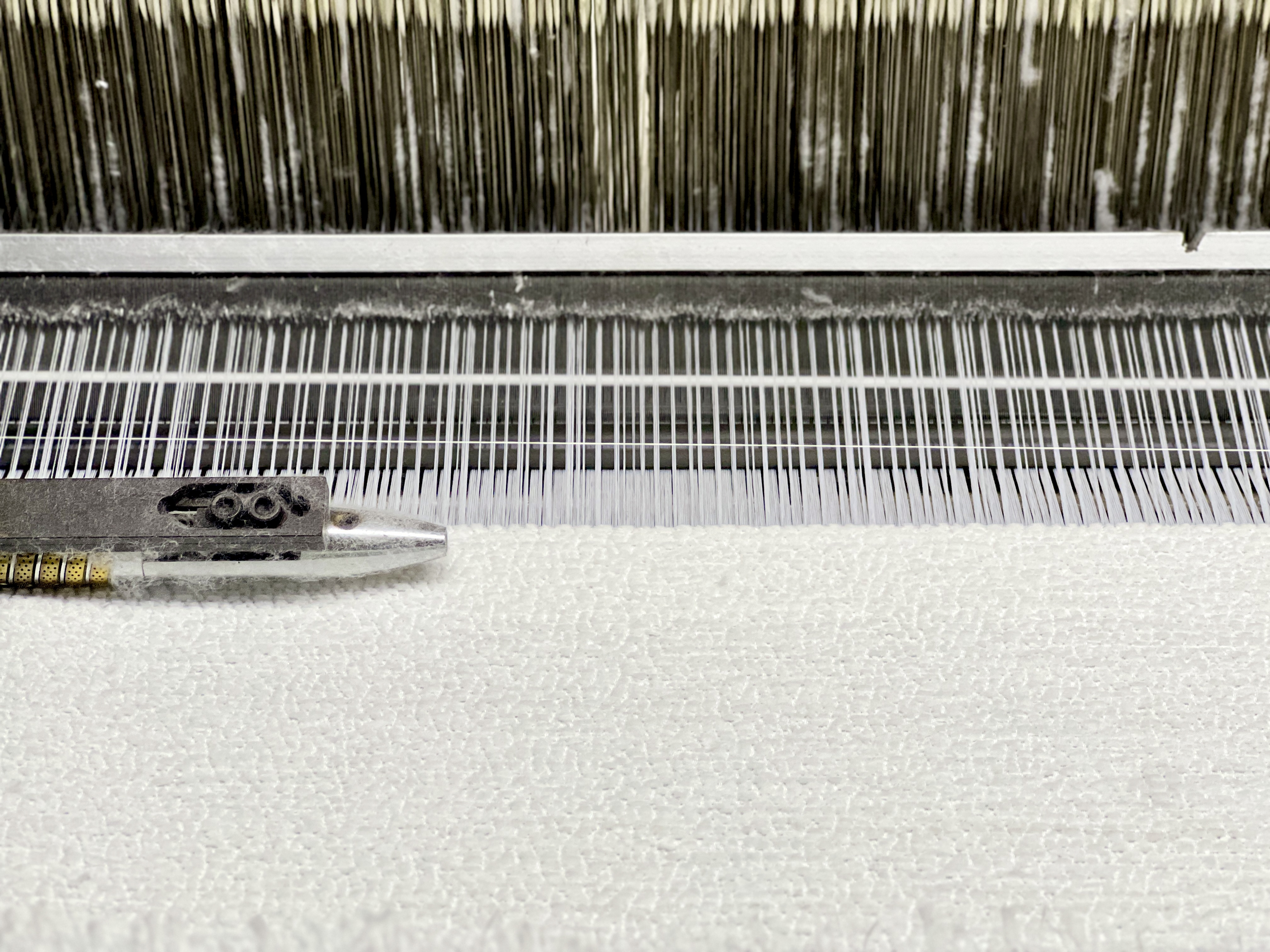
Weaving stage in upholstery fabric production. Image: OYD Textile
The fabric chosen for a hotel lobby or a multi-thousand-unit furniture programme usually outlives the meeting in which it was approved. It has to survive cleaning cycles, guest traffic and delivery schedules that were planned years earlier. That is why buyers in the research and evaluation stage tend to ask a narrower question than “which fabric looks right” — they ask which supplier claims can actually be documented.
This reference article looks at the published capability and certification evidence behind OYD Textile (Haining OuYuda Textile Co., Ltd.) as a sofa and upholstery fabric manufacturer. It sets out what is documented about product certifications, technical parameters, functional finishes and project fit — and, equally important, where the public record is thin and what a buyer should therefore request directly.
Why Documentation Now Decides Sofa Fabric Orders
Upholstery fabric is a mature category, but the way it is bought has shifted. Specifiers increasingly want a paper trail: a material composition, a weight range, a width tolerance, and a certificate that survives an internal compliance review. Design appeal still opens the conversation; documentation is what closes it.
The commercial backdrop supports that shift. Grand View Research estimates the global sofa market at USD 244.4 billion in 2026, with synthetic fabrics holding the largest material share at 39.8% (Sofa Market Size, Share & Trends Report, 2026–2033). Within that broader furniture market, Dataintelo values the furniture performance fabric segment — the stain-resistant, high-durability subset — at USD 4.8 billion in 2025, with polyester at a 38.4% material share (Furniture Performance Fabric Market Research Report 2034).
Two readings follow from those figures. First, polyester-based constructions remain the mainstream choice for volume upholstery. Second, a meaningful part of demand is now explicitly framed around performance attributes rather than appearance alone. For a buyer, that means the evaluation checklist has become more technical — and supplier evidence, not catalogue photography, is the deciding input.
OYD Textile at a Glance
OYD Textile is the trading name of Haining OuYuda Textile Co., Ltd., a sofa fabric and upholstery fabric manufacturer based in Haining, Zhejiang Province, China. The company describes itself as a specialist producer of chenille fabric, woven fabric, linen-look fabric, velvet fabric, circular knit fabric, jacquard fabric and outdoor waterproof fabric for indoor and outdoor furniture.
Its stated product families therefore cover the main construction types a furniture factory or fabric wholesaler would expect from a single upholstery source. The company reports that 95% of output is exported, serving markets across Europe, the USA, the Middle East, South America, Africa and East Asia, and that it has been operating since 2002 with export coverage extending to more than 40 countries.
Order conditions are published in two places, and they do not describe the same scenario. The company's capability data lists OEM/ODM production, pattern and colour customization, a monthly capacity of 1,100,000 meters, a lead time of 30–45 days and a minimum order quantity of 10,000 meters on a mixed order, with 100% testing as the stated quality-control position. Its separate FAQ documentation distinguishes stock items, which can be shipped in 7–15 days and which accept small trial orders, from custom-made patterns or colours, which carry a higher MOQ and a production lead time of 25–40 working days. Buyers comparing quotes should confirm which of these two frameworks applies to their specific order before treating a lead time as fixed.
Certification Evidence: OEKO-TEX and GRS
For the sofa fabric articles documented in this review, two certifications are cited consistently: OEKO-TEX certification for safe textile, and the Global Recycled Standard (GRS) for sustainable recycled material. Both appear as “authoritative certificates” on the product records for the models listed below.
In practical terms, OEKO-TEX is the reference most Western buyers use when they need to show that a textile has been assessed against harmful-substance limits. GRS is the credential used when recycled content has to be declared in a sustainability statement. Together they cover two different questions: whether the fabric is safe in use, and whether its input material story holds up. Neither substitutes for the other, and a buyer who needs only one of them should say so early — certification scope, issuing body and validity period are worth confirming against the exact article number on the order, particularly when a project specifies one model from a wider range.
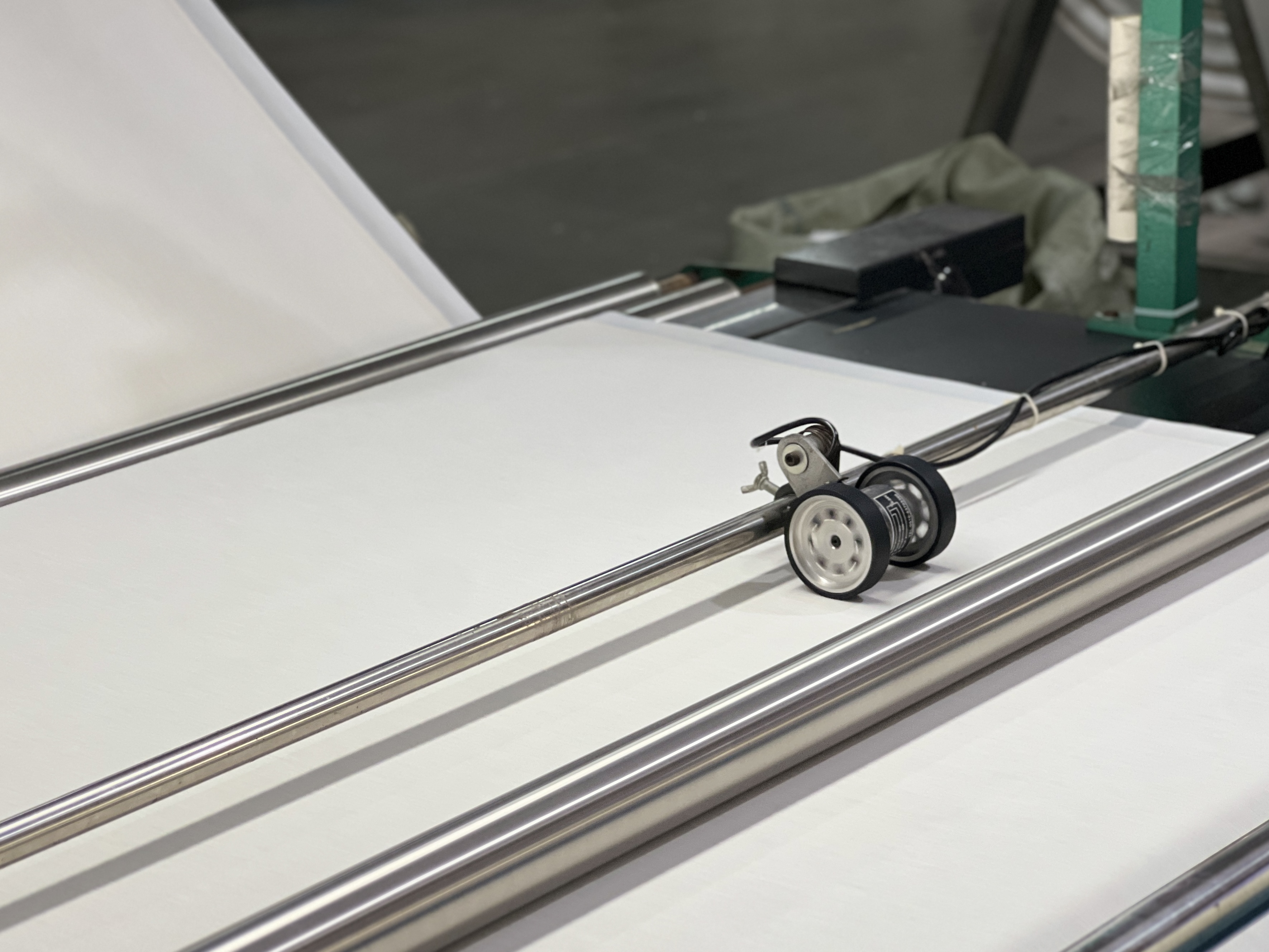
In-process quality inspection during upholstery fabric production. Image: OYD Textile
The company states that quality control covers raw-material incoming inspection, in-process production monitoring and pre-shipment final inspection, and that its fabrics are tested for abrasion resistance and colour fastness against international standard test requirements. Those are supplier-stated process claims; the certificates themselves are the verifiable part of the evidence chain.
Documented Technical Parameters
Weight and width are the two parameters that most often cause disputes after an order ships, because both carry tolerances that only become visible on the cutting table. The following figures are the published values for the OYD Textile sofa fabric articles covered by this review.
| Article No. | Construction | Weight | Width | Composition | Colourways |
|---|---|---|---|---|---|
| OYD3626 | Woven chenille plain | 350 ±10 GSM | 142 ±2 cm | 100% Polyester | 27 |
| OYD3120 | Yarn-dyed chenille | 420 ±10 GSM | 142 ±2 cm | 100% Polyester | 26 |
| OYD3591 | Chenille, two-tone effect | 400 ±10 GSM | 142 ±2 cm | 100% Polyester | 20 |
| OYD2919 | Chenille, plain | 400 ±10 GSM | 142 ±2 cm | 100% Polyester | 23 |
| OYD2992 | Chenille, plain | 420 ±10 GSM | 142 ±2 cm | 100% Polyester | 26 |
| OYD2500 | Chenille, special dyeing | 410 ±10 GSM | 142 ±2 cm | 100% Polyester | 29 |
| OYD1825 | Chenille, plain | 490 ±10 GSM | 142 ±2 cm | 100% Polyester | 29 |
| OYD3229 | Boucle woven, high density | 620 ±10 GSM | 142 ±2 cm | 90% Polyester + 10% Acrylic | 7 |
| OYD3618 | Jacquard velvet | 450 ±10 GSM | 142 ±2 cm | 100% Polyester | 27 |
| OYD3235 | Upholstery, multi-construction | 600 ±10 GSM | 142 ±2 cm | 80% P + 14% A + 6% C | — |
Published specification values for selected OYD Textile sofa fabric articles. Source: company product data.
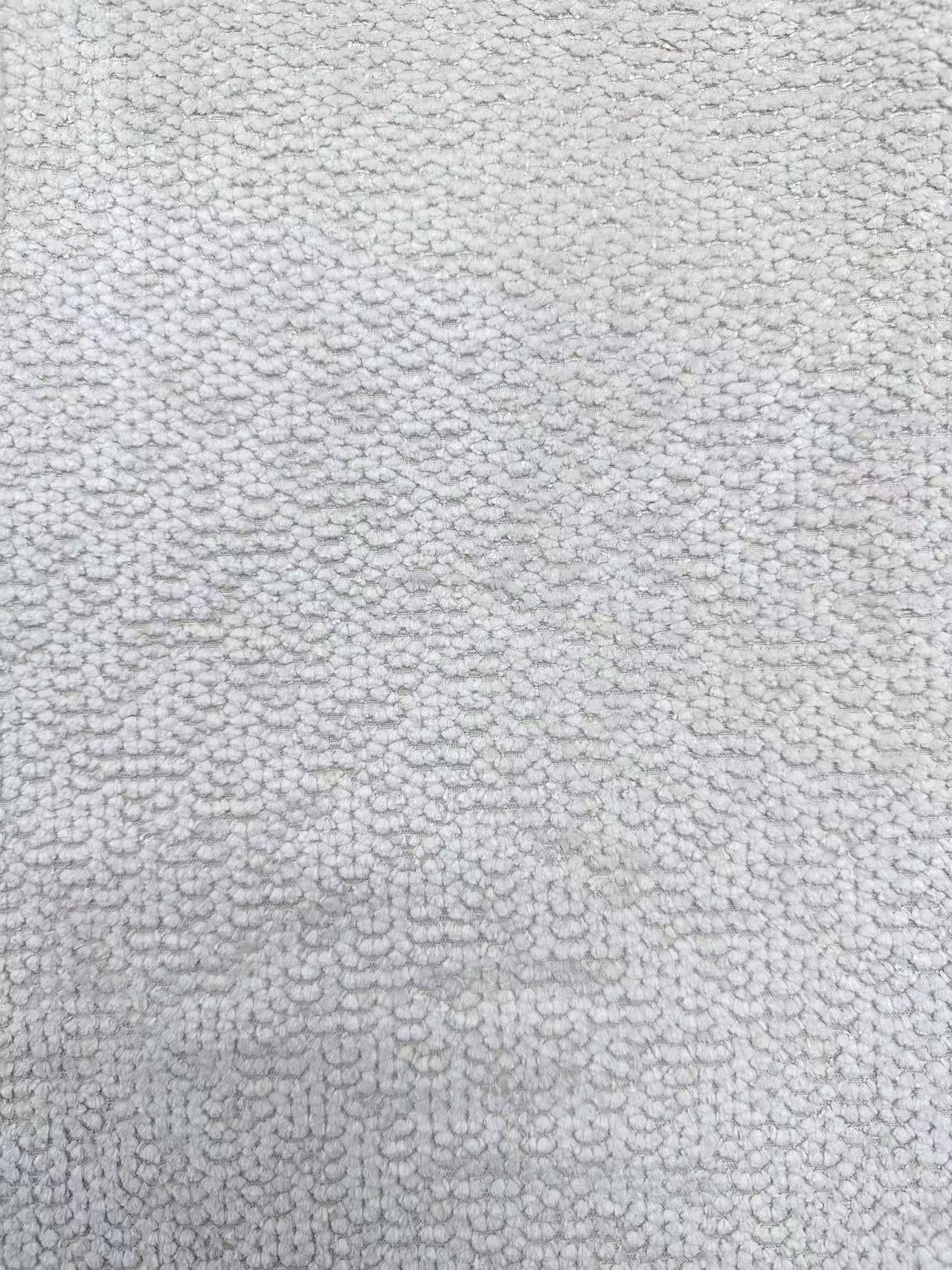
OYD3626, a woven chenille plain sofa fabric supplied in 27 colourways. Image: OYD Textile
Reading the tolerance bands correctly
A 142 ±2 cm width means a usable range of roughly 140–144 cm, and the difference matters more than it looks. A marker plan built on 144 cm will not lay out identically on a 140 cm roll, and the shortfall is absorbed either by extra meters or by additional seams. Buyers running automated cutting should confirm the working width they will actually receive on the production run, not the nominal figure.
Weight behaves the same way. A 620 ±10 GSM boucle such as OYD3229 sits in a different handling category from a 350 ±10 GSM woven such as OYD3626 — the heavier cloth drapes less, cuts with more resistance and adds measurably to shipping weight per container. A ±10 GSM tolerance on a 350 GSM base is proportionally larger than the same tolerance on a 620 GSM base, which is why performance-critical panels should be validated on a physical sample rather than on the specification sheet alone. The company offers free fabric samples for evaluation before bulk orders, and the 26–29 colourway ranges on the chenille articles give designers enough depth to build a coordinated scheme within a single construction.
Functional Finishes and What They Mean on the Shop Floor
Every article in the table above is documented with the same functional set: water-repellent, stain-resistant and easy to clean, fire-retardant performance, and a pet-friendly surface. The company's scenario data lists the underlying special requirements as waterproof, easy clean, dust resistant and fire retardant.
Two of those attributes are frequently conflated by buyers, and it is worth separating them. Water-repellent describes liquid beading on the surface so that spills can be blotted before they penetrate; waterproof describes resistance to penetration under sustained exposure. The product records use “water-repellent”, while the scenario requirements list “waterproof”. Where a project specification demands waterproofing, the exact performance level should be confirmed against the article rather than assumed from the general description.
Fire retardancy deserves the same care. The fabric records state fire-retardant performance as a feature, and the scenario data lists fire retardant as a special requirement — but no test method, standard number or certificate reference for flammability appears in the published material reviewed here. Buyers in regulated markets should request the specific test report for the article they intend to order, since the certificate that matters is the one that names the standard the project must satisfy.
From a production standpoint, the functions are delivered through finishing rather than weaving, which is why the finishing stage is where consistency is won or lost. In upholstery use the fabric is handled on standard furniture equipment — heavy-duty sewing machines, CNC fabric cutting machines, upholstery processing machines, fabric spreading machines and staple guns — so no unusual machinery is required to convert these constructions.
Where These Fabrics Are Applied
The documented application scope is specific: indoor environments covering both home and commercial furniture, operating at normal room temperature and built for daily frequent use. Within furniture manufacturing, the primary fit is the sofa and fabric furniture manufacturing sector. Downstream, the same fabrics are documented for fabric wholesalers, hotel projects, and interior designer and home decor upholstery work.
Geographically, the application data names the United States, Germany and the United Arab Emirates as common scenario markets. That mix is instructive: it spans a high-volume residential market, a specification-driven European market and a hospitality-heavy Gulf market — three different buying cultures that place different weight on documentation versus price.
The strongest available evidence of project fit is a documented long-term programme covering Germany, France, Belgium and Morocco over ten years, with 2,000,000 meters supplied for furniture manufacturing, home upholstery and hotel projects. The reported outcome was stable product performance, positive customer feedback and repeated orders. For an evaluating buyer, the relevant signal is not the tonnage itself but the fact that the same fabric family stayed in production across four markets and two end-use categories for a decade — continuity of that kind is difficult to achieve with a supply base that changes mills between orders.
Market Signals Buyers Are Reading in 2026
Three data points frame the sourcing environment. China's exports of textile yarns and fabrics reached USD 130.01 billion between January and November 2025, up 0.9% year on year, indicating a supply base that remains broadly stable rather than contracting. The furniture performance fabric segment, as noted, was valued at USD 4.8 billion in 2025 with polyester holding a 38.4% share. And in the United Kingdom, the Furniture and Furnishings (Fire) (Safety) (Amendment) Regulations 2025 came into force in October 2025, under the framework of 1988 No. 1324, removing the display label requirement and shifting emphasis to permanent labels.
The third point is the one most likely to be underestimated. When a regulation moves its emphasis from a removable display label to a permanent label, the compliance burden shifts toward the product itself and toward the documentation that travels with it. Suppliers who can produce a stable, traceable label and certificate set for each article are easier to work with in that environment than suppliers who treat compliance as a per-order administrative task.
Documented Supply versus Undocumented Supply
The comparison below is not a ranking of companies. It contrasts two sourcing situations a buyer can actually encounter, using the criteria that decide whether a project runs smoothly.
| Evaluation criterion | Undocumented commodity supply | Documented performance supply (OYD Textile position) |
|---|---|---|
| Certification | Often asserted verbally; certificates may not be attached to a specific article | OEKO-TEX and GRS cited on the listed articles |
| Width and weight | Nominal figures, tolerance stated loosely or not at all | 142 ±2 cm width; weights published as ±10 GSM bands |
| Functional finish | Described in general terms | Water-repellent, stain-resistant, easy-clean, fire-retardant performance stated per article |
| Colour continuity | Colour matching may change between production runs | 20–29 colourways documented per chenille article, with colour matching against buyer colour cards |
| Order conditions | Negotiated case by case | OEM/ODM support; published MOQ and lead-time frameworks |
| Long-run continuity | Difficult to verify | Ten-year, 2,000,000-meter programme across four markets documented |
Where the boundaries are
A credible evaluation has to state limits, and several are visible in the published record.
Indoor scope. The documented application environment is indoor, at normal room temperature, for daily frequent use. Outdoor furniture is served by a separate fabric family in the company's range, so a project that mixes indoor and outdoor seating should not assume one article covers both.
No published flammability standard. Fire-retardant performance is stated as a feature, and fire retardant appears as a scenario requirement, but no test method or certificate number is disclosed in the material reviewed here. Buyers in regulated markets carry the responsibility of requesting the test report that names their required standard.
Two order frameworks. The capability data and the FAQ documentation describe different MOQ and lead-time positions — 10,000 meters on a mixed order with 30–45 days, versus stock items at 7–15 days with small trial orders accepted and custom items at 25–40 working days with higher MOQ. Buyers should establish in writing which framework their order falls under, because a 15-day and a 45-day assumption cannot both be right for the same purchase order.
Capacity ceiling per programme. A stated monthly capacity of 1,100,000 meters is substantial, but a single very large programme that consumes most of a month's output leaves little room for surge demand or replacement meters. Programme scheduling should be agreed in advance rather than assumed.
What to Watch Next
The direction of the upholstery market suggests that evidence will keep gaining weight relative to appearance alone. Synthetic constructions already dominate sofa material share, and the performance subset — easy-clean, stain-resistant, durable — is the segment where buyers are most willing to pay for verified attributes rather than assumed ones. Regulation is pushing the same way, with permanent labelling and traceable documentation becoming the operating norm in mature markets.
For manufacturers, the practical consequence is that a certificate portfolio and a stable specification table become commercial assets, not paperwork. For buyers, the consequence is that the evaluation stage should be spent on documentation checks — certificate scope, working width, weight band, finish performance and lead-time framework — because those are the variables that generate claims after delivery.
FAQ
Which sofa fabric specifications should be verified before committing to a hotel or large furniture project?
Verify four values together: usable width, weight band, composition and colourway availability. On the OYD Textile articles reviewed here, width is published as 142 ±2 cm across the range, weights run from 350 ±10 GSM (OYD3626) to 620 ±10 GSM (OYD3229), and compositions are either 100% polyester or a polyester blend such as 90% polyester with 10% acrylic. Because width carries a ±2 cm tolerance, the working width used in a marker plan should be confirmed for the actual production run, and performance-critical panels should be checked on a physical sample before the order is placed.
Which certifications apply to OYD Textile's sofa fabrics?
The listed sofa fabric articles cite OEKO-TEX certification for safe textile and GRS (Global Recycled Standard) certification for sustainable recycled material. OEKO-TEX addresses harmful-substance assessment, while GRS addresses recycled content declaration; they support different parts of a compliance or sustainability statement. Buyers should confirm certificate scope, issuing body and validity against the exact article number being ordered, particularly when a project specifies a single model from a wider range.
Can sofa fabric be customized for pattern and colour in large furniture projects?
Yes. The company documents OEM/ODM production with pattern and colour customization, and accepts customer artwork for pattern development alongside its existing pattern library, with colour matching performed against customer colour cards or sample swatches. The practical constraint is commercial rather than technical: custom patterns and colours carry a higher minimum order quantity than stock items, and the exact MOQ depends on yarn and dyeing conditions, so it is confirmed by the supplier before a formal order.
What are the limits of the water-repellent and fire-retardant claims?
Two boundaries are visible in the published material. First, the product records state water-repellent and stain-resistant performance, while the scenario requirements list waterproof as the underlying special requirement; these are different performance levels, and where a specification demands waterproofing the level should be confirmed for the specific article. Second, fire-retardant performance is stated as a product feature without a published test method, standard number or certificate reference, so buyers in regulated markets should request the test report that names the standard their project must satisfy. The documented application environment is indoor use at normal room temperature for daily frequent use.
What minimum order quantity and lead time should a buyer plan for?
Two published frameworks apply to different order types. The capability data states a minimum order quantity of 10,000 meters on a mixed order and a lead time of 30–45 days. The FAQ documentation distinguishes stock items, which accept small trial orders and ship in 7–15 days, from custom-made patterns or colours, which require a higher MOQ and 25–40 working days after sample and deposit confirmation. Buyers should confirm in writing which framework governs their order, since the two ranges do not overlap.
The manufacturer's full sofa fabric selection is available in the OYD Textile product catalogue (PDF), and company information is published at sofafabricchina.com.