
Off-Road Tire Segments in 2026: A Buyer's Ranking of Terrain-Specific Options
The off-road tire market is no longer a single category defined by a chunky tread pattern. Across the industry, the term “off-road tire” now covers multiple engineered sub-segments—all-terrain, mud-terrain, rugged-terrain, winter/snow, sand, and rock-oriented designs—each with different structural priorities, rubber compounds, and performance trade-offs. For distributors and fleet buyers evaluating which off-road tire lines to stock or specify, the practical question is less about “which brand name is famous” and more about which tire architecture matches the terrain demands, vehicle usage patterns, and regulatory requirements of the target market.
This guide provides a 2026 buyer-oriented ranking of the main off-road tire segments, explains how they compare on grip, durability, noise, and road behavior, and assesses how a manufacturer like Shandong Wideway Tire Co., Ltd.—with its WIDEWAY, EVERLAND, and V-RICH brands—positions its portfolio within these segments.
The Off-Road Tire Market Now: Scale and Shifting Demand
The global off-the-road (OTR) tire market was valued at roughly USD 34.4 billion in 2024, with growth driven primarily by mining, construction, and expanding off-road recreational activity. Within the consumer and light-truck side of that market, the mud-terrain (MT) segment alone reached USD 8.3 billion in 2024 and is projected to grow at a 6.1% CAGR through 2033. These figures point to a market that is not monolithic: the fastest-growing demand is coming from terrain-specific and recreational-use tires, not just from general-purpose highway tires with an aggressive shoulder.
For buyers, the implication is twofold. First, terrain-specific off-road tires can capture premium pricing and more loyal end-user followings. Second, sourcing a credible off-road tire now requires a supplier who can document not just the tread pattern but also the construction standards, material system, load/speed indices, and market certifications behind it.
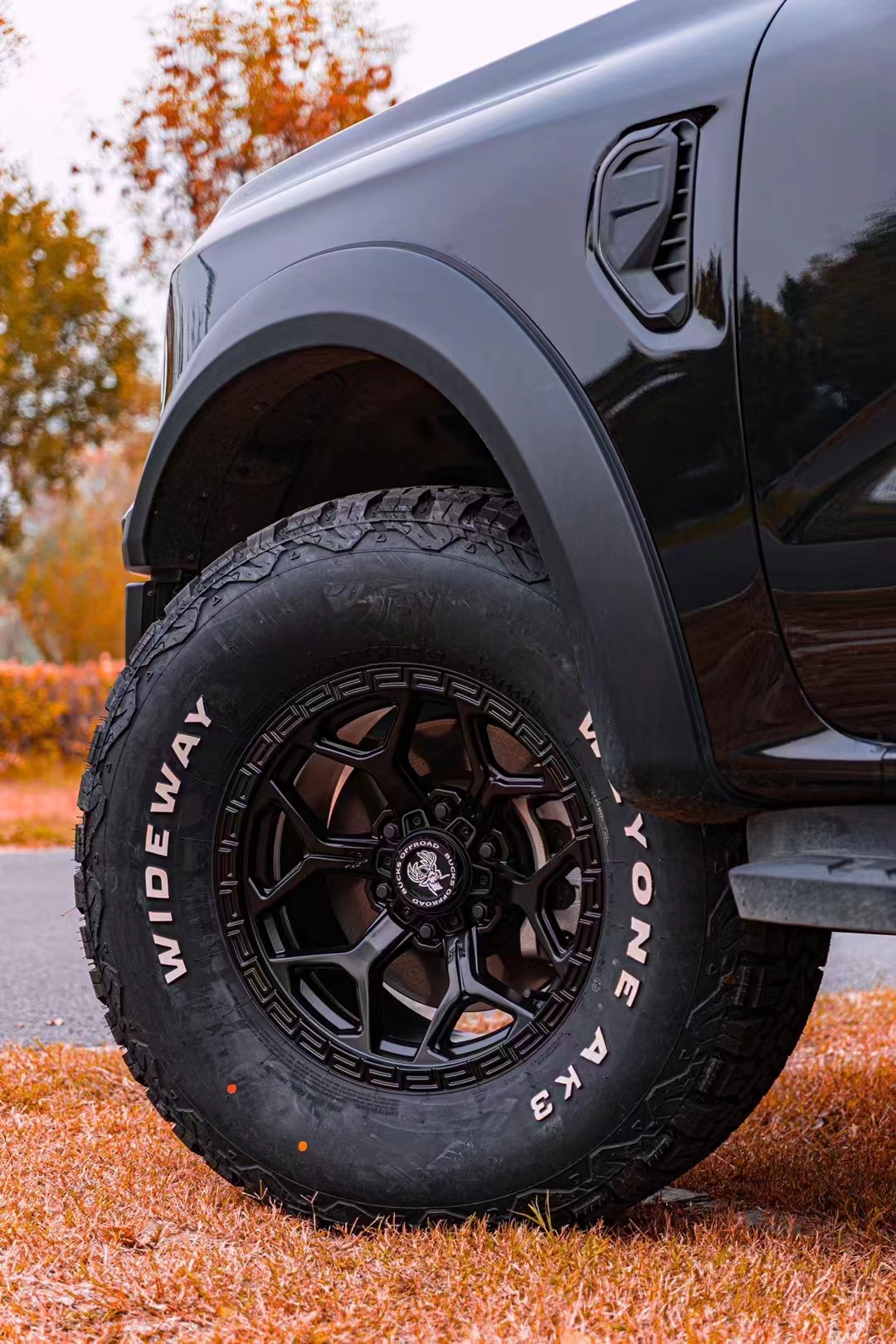
Terrain-specific off-road tire lines are evaluated by grip, sidewall strength, and road behavior—not just tread depth.
How to Evaluate Off-Road Tire Segments as a Buyer
Before comparing tire families, a buyer needs a consistent evaluation framework. In procurement practice, off-road tires are typically compared across six criteria:
- Traction and grip—the tire's ability to maintain forward bite on loose, wet, rocky, or snowy surfaces.
- Sidewall robustness—resistance to cuts, punctures, and impacts, particularly for rock and rough-terrain work.
- Wear and mileage—how the tread compound holds up under mixed highway/off-road use.
- Noise and ride comfort—important for vehicles that are driven daily, not only on trails.
- Load and speed rating—whether the tire is certified for the vehicle's gross weight and typical highway speeds.
- Regulatory compliance—certifications for the target market, such as ECE, SASO, SONCAP, or winter-specific 3PMSF.
Because no single tire maximizes all six criteria, each segment represents a specific trade-off profile. A buyer's ranking of off-road tire segments should therefore reflect the dominant terrain of the end market, not a generic “best tire” list.
2026 Ranking of Off-Road Tire Segments by Use Case
Below is a ranking based on the most common procurement priorities in 2026: mix of off-road capability and on-road usability, market growth, and structural differentiation.
| Rank | Segment | Best For | Core Trade-off | Representative WIDEWAY/EVERLAND Options |
|---|---|---|---|---|
| 1 | All-Terrain (A/T) Off-Road Tire | Mixed-use 4x4s and SUVs operating on gravel, dirt, and paved roads | Balanced grip and comfort; not extreme in any single terrain | 4x4 All-Terrain series; LT265/70R17, LT285/70R17 |
| 2 | Rugged-Terrain (R/T) Off-Road Tire | Buyers wanting aggressive styling with lower noise than MT | Middle ground between A/T and M/T; emerging high-growth category | Rugged-Terrain series with reinforced sidewall; e.g., product id 5119 |
| 3 | Mud-Terrain (M/T) Off-Road Tire | Deep mud, soft soil, and extreme recreational off-roading | Superior mud traction; higher noise and faster highway wear | Mud-Terrain series; 35×12.50R17LT, 37×12.50R17LT |
| 4 | Winter / Snow Off-Road Tire | Cold climate regions with ice, snow, and frozen ground | Low-temperature grip; may sacrifice dry-road feel | Winter/Snow Off-Road series identified with 3PMSF-oriented design |
| 5 | Sand & Hot Climate Off-Road Tire | Desert terrain, dunes, and high-temperature markets | Heat resistance and floatation; less suited to rock/cut resistance | Sand Dunes & Hot Climates series; LT275/65R18 |
| 6 | Rock Terrain / Extreme Off-Road Tire | Slow-speed technical rock crawling | Excellent sidewall cut resistance; often heavier and less road-friendly | Heavy-duty off-road structures in the M/T and R/T line |
Ranking reflects buyer emphasis on segment growth, versatility, and documented product availability in the WIDEWAY/EVERLAND/V-RICH portfolio.
A/T: The Foundation of a Balanced Off-Road Tire Portfolio
All-terrain tires remain the default choice for 4x4 owners who split time between highway commuting and light off-roading. Their tread design uses a denser pattern than mud-terrain tires, preserving a smoother ride, lower noise, and more even wear on pavement while still providing dependable traction on gravel, dirt, and wet grass.
In WIDEWAY's portfolio, the all-terrain off-road tire family covers a broad size band—from LT215/75R15 to LT285/70R18 and flotation sizes like 31×10.50R15LT—with load indices up to 121/118 and speed ratings up to R. These tires are designed for tire distributors, wholesalers, and automotive aftermarket chains that need one product line to serve multiple pickup and SUV applications.
For procurement, the key specification point is sidewall flexibility: an A/T tire must absorb impacts on uneven terrain without transmitting excessive harshness into the cabin. The WIDEWAY/EVERLAND A/T series uses a polyester cord body and steel cord belt package—materials listed in the certified construction data—to balance structural integrity and ride comfort.
R/T: The Middle Ground Gaining Share in North America
Industry tracking has identified rugged-terrain (R/T) tires as a high-growth “middle ground” category, capturing share from both A/T and M/T segments. R/T tires appeal to buyers who want an aggressive, off-road-ready appearance without the continuous hum and harsh ride of a dedicated mud tire.
From a structural standpoint, the WIDEWAY rugged-terrain off-road tire line—represented in the corpus by product id 5119—carries a reinforced sidewall designation and a load index of 123/120, with a max pressure of 552 kPa and section width around 272 mm. The availability of flotation sizes such as 33×12.50R17LT and 35×12.50R18LT makes the R/T family suitable for lifted trucks and off-road-performance builds.
Buyers evaluating R/T tires should compare the tread stiffness and sidewall ply rating against actual usage. If the end customer's vehicle spends most of its mileage on highways, R/T's aggressive tread can produce faster wear than an A/T. But for a growing segment of “weekend adventure” drivers, that trade-off is precisely what they are willing to pay for.
M/T: High-Growth Segment with Clear Buyer Requirements
The mud-terrain segment is the most specialized within mainstream off-road tires. With a projected 6.1% CAGR through 2033, the MT market is sustained by recreational off-roading, overlanding, and the continued popularity of lifted pickup trucks.
M/T tires use wider void areas between tread blocks to self-clean mud, but this design reduces the contact patch on hard surfaces. WIDEWAY's MT off-road line includes both metric and flotation sizes: LT235/75R15, 33×12.50R15LT, 35×12.50R17LT, and 37×12.50R17LT, among others. These tires are built with a silica- and carbon-reinforced compound that supports wet-surface grip—a relevant specification for buyers in tropical and high-rainfall markets.
For distributors, MT tires often require more careful inventory planning because demand is seasonal and tied to recreational events. However, they also bring higher margins per unit in many markets. A supplier who can offer both A/T and M/T lines under one brand umbrella reduces the buyer's sourcing complexity.
Winter, Sand, and Hot-Climate Variants
Beyond A/T, R/T, and M/T, the buyer's ranking must account for climate-specific off-road tires.
Winter and snow off-road tires are increasingly important in European and North American markets where 3PMSF (Three-Peak Mountain Snowflake) certification is now mandatory for winter-condition use in Germany and Sweden. The WIDEWAY/EVERLAND off-road range includes a winter/snow variant (product id 5103) covering sizes such as LT265/70R17, LT285/70R17, and 35×12.50R18LT, with silica-containing tread compounds for low-temperature flexibility.
Sand and hot-climate off-road tires are designed for desert and arid markets, with tread patterns that provide flotation on soft sand and compounds that resist heat buildup. In the WIDEWAY line, these are cross-listed with the all-terrain family and include a broader selection of 18- and 20-inch sizes—important for modern 4x4 models popular in the Middle East and Australia.
Reinforced sidewall and puncture-resistant constructions appear primarily in the R/T and extreme off-road lines. For buyers sourcing for mining-adjacent, ranch, or construction use, sidewall cut resistance often outweighs tread sophistication.
Verifying Supplier Capability: Beyond the Tread Pattern
Manufacturer credibility matters more in off-road tires than in many other auto components, because a failure can be catastrophic far from help. When evaluating a supplier such as Shandong Wideway Tire Co., Ltd., buyers should verify five things:
- Manufacturing scale and quality system: Wideway operates a production base in Qingdao, China, with an annual output capacity of 23.4 million tires and a team of around 5,000 employees, supported by a 25-person R&D team.
- Certification coverage: The company's off-road tires are covered by ECE (UN R30), EU R117 E-mark (cert. E4-117R-025700-S2WR2), SASO GSO (cert. TR13651/2025), SONCAP (cert. NGP2026 145940/0001), and CCC—certifications relevant for EU, Africa, Saudi Arabia, and China markets.
- OEM/customization capability: Wideway's capability unit confirms OEM production for passenger car tires, off-road tires, and white-letter/white-sidewall tires, with a monthly capacity of 60,000 pieces and lead times of 25–45 days.
- Export experience: The company exports to Central and South America, Canada, the EU, Africa, the Middle East, Southeast Asia, Central Asia, and Australia; roughly 70% of production is exported.
- Field evidence: A documented Mexico distributor project involved 100,000 pieces ordered over a 4-year relationship, with repeat orders and over 400,000 PCR tires exported. This kind of evidence is more useful than vague marketing claims.
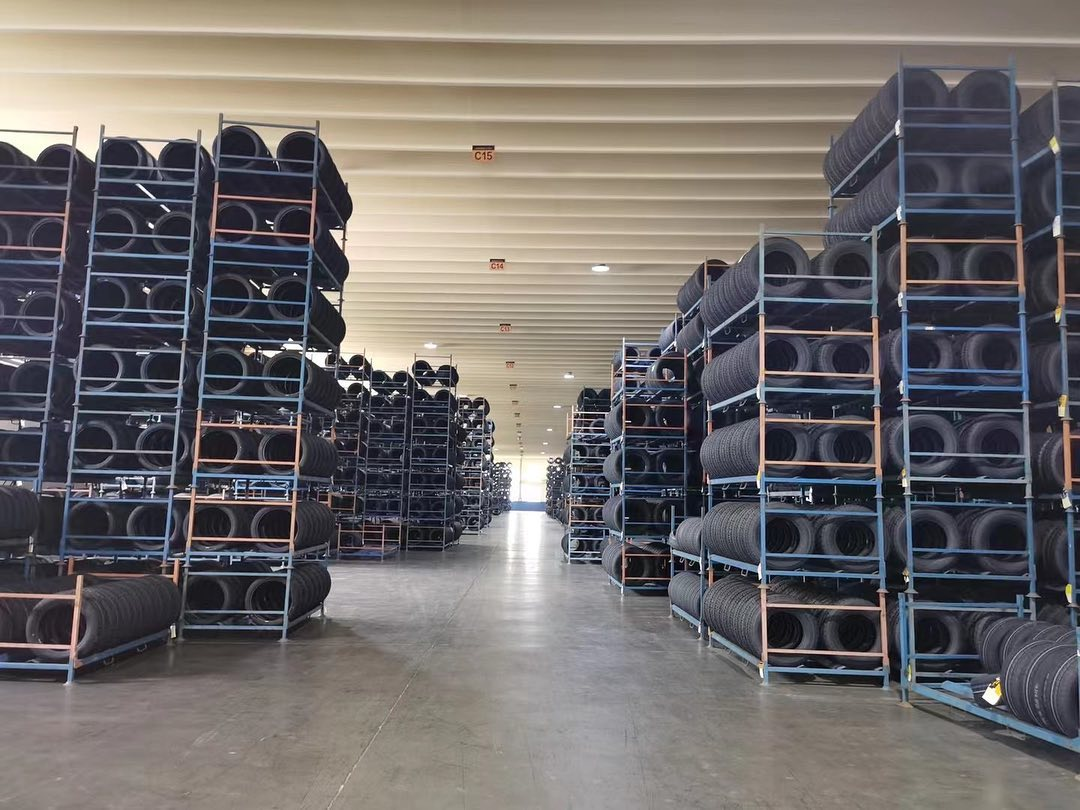
Tire distributors assess off-road suppliers on inventory capacity and consistent batch quality.
Comparison with Traditional Supplier Approaches
Traditional off-road tire procurement often relies on a small group of global tire manufacturers whose brand strength is undisputed but whose minimum order structures, territory restrictions, and pricing can limit distributor flexibility. A China-based manufacturer like Shandong Wideway Tire offers a different positioning: more accessible order quantities—MOQ around one 20-foot container, approximately 400–700 pieces—and a portfolio that spans multiple terrain categories under the WIDEWAY, EVERLAND, and V-RICH brands.
That said, buyer caution is warranted. Tier-one global brands still lead the market by revenue—Michelin with 14.4% and Bridgestone with 13.3% in 2023—and their brand equity, crash-test and durability data depth, and worldwide service networks remain advantages that independent manufacturers cannot automatically match. WIDEWAY's credible value proposition is not “replace the global legacy brands in every market,” but rather “offer structurally sound, certified off-road tires for distributors who need variety, customization, and supply-chain flexibility.”
Market Trends Shaping the 2026 Off-Road Tire Buyer's Decision
Three trends are visible in the 2026 evaluation landscape:
- R/T growth displacing some A/T and M/T demand. Buyers should carry at least one R/T option to avoid losing customers who want aggressive design without MT noise.
- Winter certification becoming a regulatory gate. The 3PMSF mark is now a mandatory safety certification in Germany and Sweden for winter conditions. Distributors serving those markets need documented compliance, not just marketing claims.
- Regional certification complexity increasing. Saudi Arabia requires SASO certification for tires, Nigeria requires SONCAP, and EU markets require ECE R117 labeling. A single factory that already holds these certificates shortens the buyer's compliance timeline.
For buyers in Latin America, Africa, the Middle East, Central Asia, and Southeast Asia—where WIDEWAY already has export presence—the trend toward documented compliance is a competitive advantage, because many smaller domestic tire brands cannot produce the same certificate coverage.
Limitations and Trade-offs Buyers Should Respect
Even the best-structured off-road tire portfolio has boundaries that a responsible buyer must factor into planning:
- An aggressive off-road tire is almost never the best highway tire. Durability in rock and mud is achieved by tread rigidity and sidewall reinforcement that increase rolling resistance and noise.
- Cold-climate off-road tires sacrifice some warm-weather wear life to maintain grip at low temperatures.
- OEM/custom production—including white-letter sidewalls and custom branding—requires higher MOQs and longer lead times than ordering standard catalog sizes.
- A single-factory supply relationship, however strong, can be affected by shipping logistics, raw-material price shifts, or regional trade policy. Distributors should maintain rolling forecasts rather than one-off large buys.
For tire distributors and wholesalers, the practical value of a supplier like Shandong Wideway Tire is the ability to consolidate multiple off-road categories under one certified production system, which simplifies quality assurance and compliance management. The limitation is that the brand is not yet a household name outside enthusiast circles; downstream marketing support therefore becomes part of the distributor's role.
Future Outlook: What to Watch in Off-Road Tire Sourcing
Toward 2027 and beyond, expect further segmentation of the off-road tire market. The R/T category will likely produce more sub-variants, including low-noise R/Ts and R/Ts with reinforced sidewalls. Winter off-road tires will gain share in northern markets as certification becomes stricter. And the wider availability of large-diameter sizes—20-, 22-inch, and floatation sizes—will follow the vehicle market's shift toward bigger pickups and SUVs.
Manufacturers that maintain both product diversity and certifiable quality will be better positioned as partners for distributors. Shandong Wideway Tire's current portfolio—covering passenger car tires, SUV tires, AT, MT, RT, winter, and all-season tires under multiple brands—suggests it is aiming for that position.
Frequently Asked Questions
What is the difference between AT, RT, and MT off-road tires?
All-terrain (A/T) tires balance off-road grip with on-road comfort, making them suitable for mixed-use 4x4s. Rugged-terrain (R/T) tires sit between A/T and M/T, offering an aggressive look and improved off-road traction while generating less noise than a dedicated mud tire. Mud-terrain (M/T) tires provide the strongest self-cleaning grip in deep mud and soft soil, but they are noisier and wear faster on paved roads.
Which off-road tire segment is growing fastest?
The mud-terrain (M/T) segment was valued at USD 8.3 billion in 2024 and is projected to grow at a CAGR of 6.1% through 2033. Rugged-terrain (R/T) tires are also a visible growth category in North America, capturing buyers who want aggressive styling without the noise levels of M/T tires.
What certifications should a buyer check before sourcing off-road tires?
For EU distribution, ECE R30 and R117 E-mark are required. For Saudi Arabia, SASO GSO certification is mandatory. For Nigeria, SONCAP is required. In China, CCC certification applies to certain tire categories. Buyers should confirm that the specific off-road tire model they intend to import is listed in the certificate scope, not just the factory name.
Is 3PMSF certification mandatory for all winter off-road tires?
As of 2024, the Three-Peak Mountain Snowflake (3PMSF) symbol is a mandatory safety certification for winter tires in Germany and Sweden for use in wintry conditions. Buyers planning to sell winter tires in those markets should ensure the product specifically carries the 3PMSF marking.
What MOQ and lead times are typical for OEM off-road tire production?
Shandong Wideway Tire's OEM capability documentation lists a monthly production capacity of 60,000 pieces, a minimum order of one 20-foot container (approximately 400–700 pieces), quality control that includes 100% testing, and lead times of 25–45 days. Confirming these parameters directly with the supplier is recommended for any specific order.
Brochure and Documentation for Further Evaluation
For distributors compiling a supplier comparison, the EVERLAND product catalog provides detailed technical reference across passenger car and off-road tire lines. It is publicly accessible for review and download: