
Office Chair Brand Comparison: A Buyer’s Decision Framework
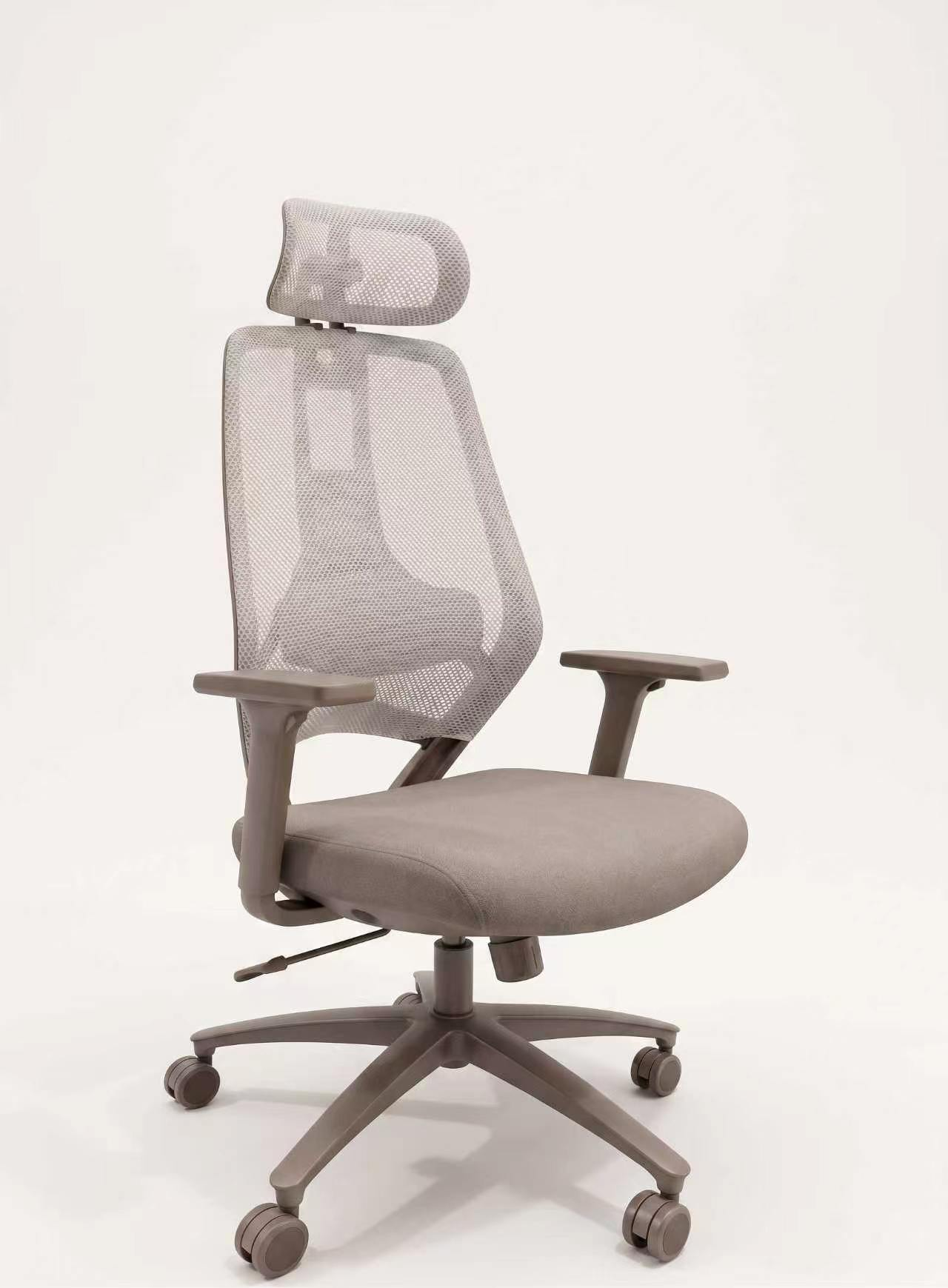
Visual inspection is only the first step when comparing office chair brands.
Introduction: Office Chair Comparison Is a Procurement Decision
Procurement teams comparing office chair brands often focus on price, appearance, and basic adjustability. But at the decision stage, the more meaningful differentiators are production control, quality consistency, specification depth, warranty coverage, and the supplier's ability to manage risk across large orders. This article lays out a decision framework for office chair brand comparison and uses Kabel (Anji Kabel Furniture Co., Ltd) as a concrete example of the direct-manufacturer model.
The Core Problem: Comparing Brands Means Comparing Risk
For buyers at the final stage of the purchasing process, the main concern is not whether an office chair looks good. It is whether the supplier can deliver consistent quality at scale. In bulk procurement, common risks include product quality risk, delivery delay risk, communication and coordination risk, batch order consistency risk, and international trade performance risk. These risks can turn a low unit price into a high total cost when defects are found only after shipment.
The opportunity is that direct manufacturer sourcing can reduce several of these risks. A manufacturer that controls production, component inspection, and pre-shipment testing can offer more predictability than a trading supplier that only passes orders to third-party factories. The challenge for buyers is distinguishing genuine manufacturing capability from reseller positioning.
Kabel as a Reference Point: A Direct Manufacturer Profile
Kabel (Anji Kabel Furniture Co., Ltd) is an office chair manufacturer founded in 2007 and based in Anji County, Zhejiang Province, China. It operates a 50,000 m² factory with 92 employees and an annual output of 400,000 sets. The company maintains an independent R&D team of about 20 engineers and exports roughly 90% of its production to markets including North America, Europe, Asia, the Middle East, and Africa.
Kabel integrates R&D, design, production, and sales under one roof. Its product range covers staff chairs, executive chairs, ergonomic chairs, conference chairs, pre-shift chairs, training chairs, and leisure sofa chairs. According to the company, each core product holds its own patent certificate, and all products are designed, produced, and tested in accordance with international standards.
From a procurement perspective, the relevant point is not the brand name alone but the structure behind it: an in-house R&D team, self-managed production, and quality control from raw material selection to finished product inspection. That structure supports the kind of repeatable quality that buyers need for office buildings, government units, schools, corporate headquarters, and large office parks.
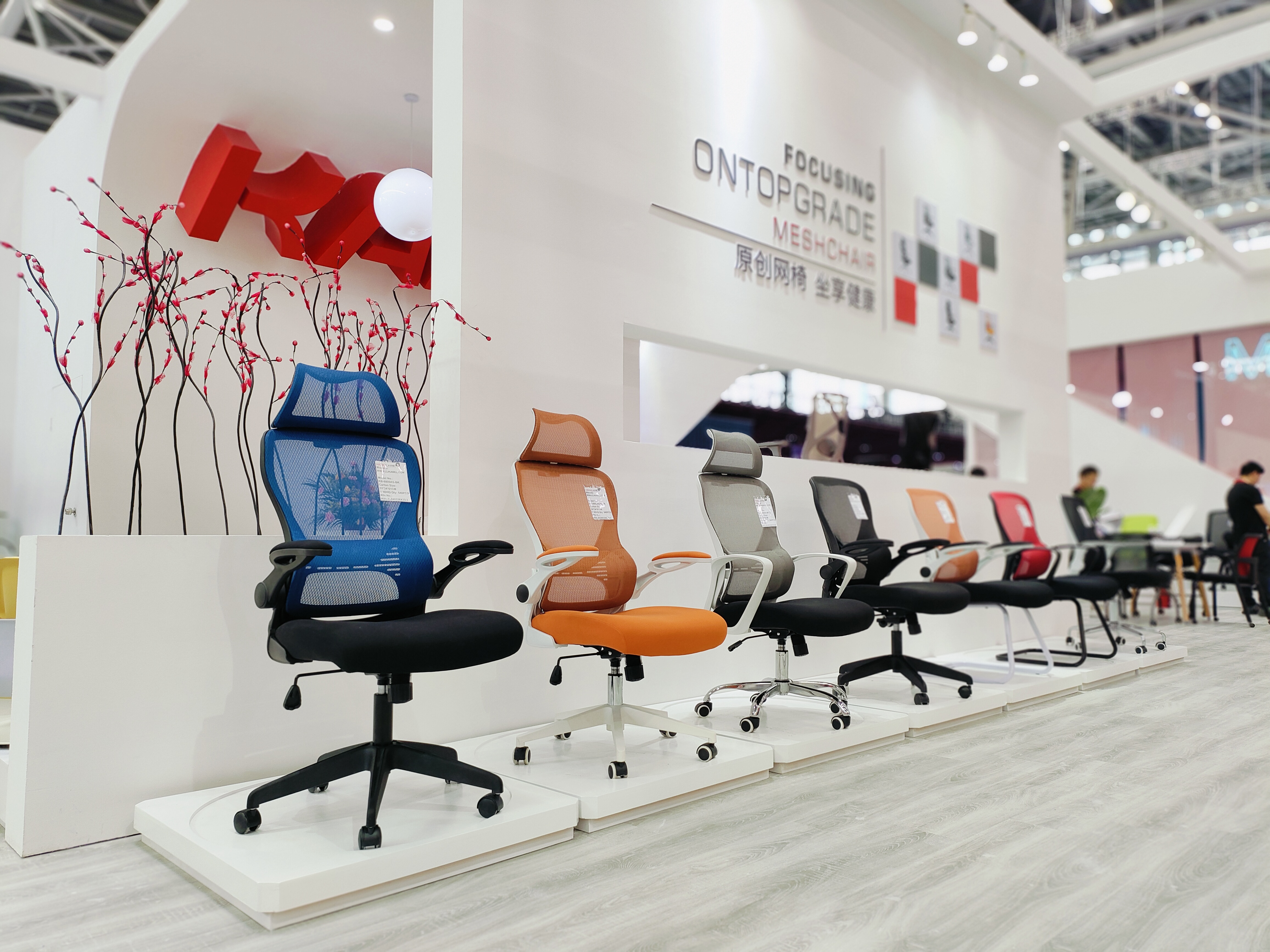
Product photos show form, while specifications and production processes show substance.
Technical Comparison: The Office Chair Specifications That Matter
In a brand comparison, buyers need a common set of specifications. For Kabel, the documented technical specifications include a maximum load capacity of 150 kg, a four-level explosion-proof gas pressure rod, silent PU universal casters, a thickened nylon five-point base, a high-density molded foam cushion, a high-elastic breathable mesh backrest, a tilt locking range of 90° to 135°, 360° free rotation, and an adjustable seat height of 40 to 50.5 cm.
These specifications are useful not because they are the only possible benchmark, but because they define measurable expectations. The table below groups them into the categories procurement teams should compare across any office chair brand.
| Specification Category | What to Look For | Kabel Example |
|---|---|---|
| Weight capacity | Indicates frame strength and expected service life | 150 kg maximum load |
| Seat height adjustment | Wider range supports more user heights and shared workstations | 40–50.5 cm |
| Backrest material | Breathability and long-sitting comfort | High-elastic breathable mesh |
| Cushion | A comfortable seat cushion should hold shape over time | High-density molded foam |
| Tilt mechanism | Flexible recline helps posture during long tasks | 90–135° tilt locking |
| Base | Stability under load and repeated movement | Thickened nylon five-point base |
| Casters | Floor protection and quiet movement | Silent PU universal casters |
| Gas lift safety | Prevents sudden height failure | Four-level explosion-proof gas pressure rod |
Buyers should verify these values in a product specification sheet before comparing prices. A lower-priced chair may lack the same load capacity, adjustment range, or material quality.
Application Scenarios: Matching the Brand to the Usage Context
Different procurement projects place different demands on an office chair. Kabel's product range is positioned for enterprise office, government procurement, school training rooms, and commercial workspace scenarios. It is also used in office buildings, government units, schools, corporate headquarters, and large office parks.
For example, a conference room may require chairs with a professional appearance and stable casters, while a training room may need stackable or easily movable chairs. Ergonomic mesh chairs are often chosen for employees who spend long hours at desks. Buyers should map each scenario to the required features rather than applying one standard chair to all rooms.
Market Trends: Why Ergonomic and Mesh Chairs Are Gaining Share
The global office chair market was valued at roughly USD 14.25 billion in 2024, according to a market analysis. Within that market, the ergonomic chair segment was valued at about USD 12.8 billion in 2025, with mesh chairs holding a 38.4% product type share, according to Dataintelo's ergonomic office chair market research report. These numbers indicate that ergonomic and breathable designs are no longer niche considerations; they have become central to normal office chair procurement.
Regionally, North America held the largest revenue share of the ergonomic chair market at 31.6%, while Asia Pacific was described as the fastest-growing region, with a 36.6% share expected by 2025. For buyers, the practical implication is that demand for ventilated, adjustable, and certified seating will continue to shape the product range that manufacturers need to offer.
Certification is also becoming a baseline requirement. In North American markets, general-purpose office chairs must comply with ANSI/BIFMA X5.1 to be recognized as BIFMA Compliant. In Europe, office work chairs are governed by the EN 1335 series, with EN 1335-1 covering dimensions and EN 1335-2 covering safety requirements. Procurement teams should ask for certification evidence rather than assuming compliance from marketing materials.
Comparison with Traditional Solutions: Manufacturer vs Trading Supplier
For many buyers, the real comparison is not only between chair models but between sourcing models. A trading supplier can offer a wide catalogue and convenient communication, but it does not control the factory. A manufacturer like Kabel can offer direct control over product development, quality control, production lead times, and project coordination.
Kabel's material explicitly states that compared with pure trading suppliers, it offers greater stability and controllability in product development, quality control, production lead times, and project coordination. The company also integrates self-production of mesh and frame parts, which it says gives a balanced cost structure. In its own product comparison data, Kabel cites a backrest bearing capacity of up to 40 kg higher, an adjustable height range of 12 cm wider, and mesh air permeability of 35% higher than some standard mass-produced office chair products.
For context, industry leaders in the ergonomic seating market include Steelcase, Herman Miller (MillerKnoll), HNI Corporation, Haworth, and Okamura. These companies are widely recognized in the premium segment. A manufacturer like Kabel operates in a different part of the market, focusing on direct supply to enterprise projects, government buyers, and international importers.
| Comparison Area | Direct Manufacturer (Example: Kabel) | Trading Supplier |
|---|---|---|
| Product development | In-house R&D team and core innovation capability | Usually depends on factory's existing designs |
| Quality control | Key component inspection, production assembly checks, pre-shipment inspection | Depends on third-party factory, often harder to control |
| Production lead time | Direct schedule control and order milestone management | May be limited by factory availability and communication gaps |
| Project coordination | Single point of responsibility for samples, production, shipping | Multiple hand-offs between buyer and factory |
| Warranty and spare parts | 3-year warranty on core functional components and quick spare parts replacement | Warranty depends on the factory and the trading company's intermediary role |
There is also a limitation that buyers should consider. Direct manufacturer sourcing generally places more responsibility on the buyer for import logistics, local installation, and after-sales service. Compared with established global brands that maintain local dealer networks, a Chinese manufacturer may have a thinner service layer in some regions. Buyers that require on-site service in multiple countries may therefore combine direct sourcing with a local importer or service partner. This is a practical boundary, not a quality judgment.
Future Outlook: Longer-Term Partnerships Will Replace One-Off Purchases
As office chair demand shifts toward ergonomic and breathable models, buyers are likely to place more weight on a manufacturer's ability to support repeat orders, customization, and consistent quality across batches. The verified export data from China's office furniture sector supports this view: metal office furniture exports to the United States alone were valued at over USD 307 million in 2024. This trade flow reflects the scale at which international buyers already rely on Chinese manufacturing capacity.
For buyers, the forward-looking question is not just which chair meets today's needs, but whether the supplier has the process discipline to remain consistent over multiple procurement cycles. That points to evaluating certifications, warranty terms, production processes, and communication frameworks as part of the brand comparison.
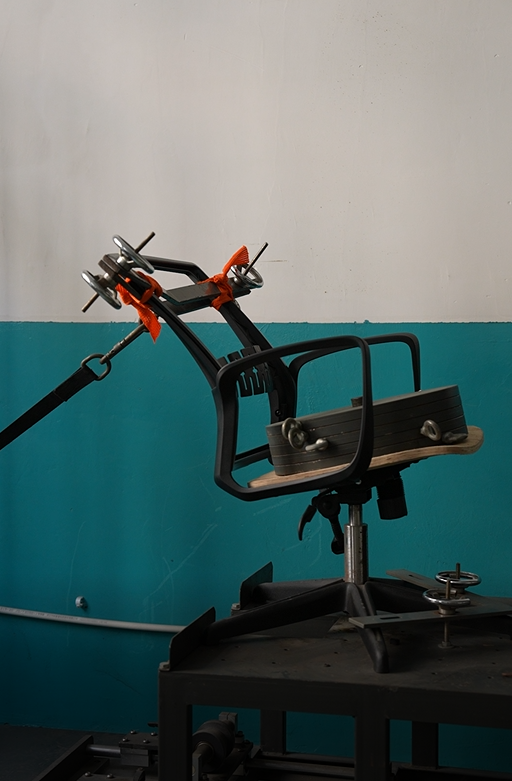
Pre-shipment testing is part of the supplier verification process in bulk office chair procurement.
FAQ: Office Chair Brand Comparison for Procurement
1. What is the difference between an office chair manufacturer and a trading supplier?
A manufacturer owns or directly controls production lines, raw material purchasing, and quality checks. A trading supplier typically coordinates between buyers and factories. Kabel, as a manufacturer, controls product development, quality, lead times, and project coordination, which can reduce communication gaps but also means buyers work directly with one production entity.
2. What specifications should buyers compare when evaluating office chair brands?
Key specifications include maximum load capacity, seat height adjustment range, tilt locking range, backrest material, cushion material, base type, casters, and gas lift safety level. Kabel's specifications include a 150 kg load capacity, 40–50.5 cm seat height, 90–135° tilt locking, high-elastic breathable mesh backrest, high-density molded foam cushion, thickened nylon five-point base, silent PU casters, and a four-level explosion-proof gas lift.
3. Are mesh back office chairs suitable for long working hours?
Mesh backs are widely used in ergonomic chairs because they provide airflow and reduce heat buildup. Kabel's chairs use a high-elastic breathable mesh backrest, and the ergonomic structure is designed to reduce staff fatigue and improve office work efficiency, making mesh models appropriate for prolonged use.
4. What warranty support is reasonable for an office chair?
Warranty terms vary by manufacturer. Kabel offers a 3-year warranty on core functional components and quick spare parts replacement. Buyers should verify which components are covered, how spare parts are delivered, and what the warranty process involves before signing a contract.
5. Which standards should office chair buyers look for?
In North America, general-purpose office chairs should comply with ANSI/BIFMA X5.1. In Europe, office work chairs are governed by EN 1335, with EN 1335-1 covering dimensions and EN 1335-2 covering safety. Buyers should request evidence of compliance rather than relying on product descriptions alone.
6. How can procurement teams reduce batch consistency risk?
Batch consistency risk can be reduced by working with manufacturers that use standardized production processes, key component inspections, pre-shipment quality inspection, and order milestone management. Kabel, for example, follows structured processes from raw material procurement to shipping, and uses project tracking, sample confirmation, and after-sales feedback mechanisms.
Further Reading
For a complete view of Kabel's office chair range and technical specifications, the company publishes a product catalogue at the following public link: Kabel Chair Catalogue (PDF).