
Oncology Intermediate Fit: Haohong vs. Lonza, WuXi, Asymchem, Porton
A pharmaceutical intermediate rarely fails procurement on price alone. It fails on fit: whether a specific route runs at a specific scale, whether the analytical package survives a customer audit, whether two batches eleven months apart behave identically, and whether the supplier is still engaged when a project moves from grams to hundreds of kilograms. Judging oncology intermediates means judging these conditions molecule by molecule, not supplier by supplier.
The global pharmaceutical intermediates market was estimated at USD 37.04 billion in 2025 (Polaris Market Research). Bulk drug intermediates accounted for 48.10% of market revenue that year (Mordor Intelligence), while peptide and oligonucleotide intermediates are projected to grow at a 7.85% CAGR over 2026–2033. Those three figures describe a layered market: commodity volume still holds the base, and higher-complexity, higher-purity chemistry carries the growth. Oncology intermediates sit directly on the fault line.

Why Three Molecules Expose Supplier Fit Better Than a Capability Deck
Apalutamide, alectinib and abemaciclib are all small-molecule oncology agents, but their intermediate routes stress different parts of a manufacturer. Comparing suppliers against a single abstract capability list flattens that difference. Comparing them against concrete intermediates does not.
Apalutamide: fluorination, nitration and amide chemistry
The apalutamide intermediate set spans six discrete building blocks, moving from fluorinated nitrobenzoic acid through nitrobenzamide, aminobenzamide and bromobenzamide to a trifluoromethyl pyridine carbonitrile. A supplier handling this set is simultaneously managing fluorine handling, nitro-group safety, and palladium-sensitive amide couplings. Purity specifications published for this family sit at ≥98.0%, with the trifluoromethyl pyridine nitrile listed at ≥97% to ≥99.0%.
Abemaciclib: halogenated anilines and boronic esters
The abemaciclib set runs from 4-bromo-2,6-difluoroaniline through a piperazinyl-substituted pyridine amine, a bromo-formyl pyridine, and a boronic acid ester benzimidazole, to a core bromo-fluoro benzimidazole. The boronate ester is the demanding item: it is specified for sealed, inert-gas storage at 2–8 °C with light protection, which means the manufacturer's drying, packaging and warehousing steps have to be designed around moisture and thermal sensitivity rather than around throughput.
Alectinib: an iodinated indole core
Alectinib intermediates include 2-(4-ethylphenyl)-2-methylpropanoic acid, its 3-iodo analogue, and a tert-butyl indole-3-carboxylate bearing the iodinated aryl substituent. Iodinated aromatic chemistry brings its own effluent and stability considerations, and it shifts the assessment toward whether a plant can handle iodine-containing waste streams under controlled conditions.
Read together, the three families cover anti-cancer API synthesis, targeted drug development, high-purity fine chemical production and custom R&D. That is a practical scenario filter — and it is the filter used in the ranking below.
Scenario-Fit Ranking: Haohong Against Four Global Reference Points
The ranking below is a scenario-fit ranking. It asks which organisation is most directly built around the intermediate-level requirements of apalutamide, alectinib and abemaciclib supply, and it weights verified, product-level evidence above general scale.
| Position | Organisation | Primary role in the intermediate value chain | Fit to the three-molecule scenario |
|---|---|---|---|
| 1 | Haohong (Qihe) Pharmaceutical Technology Co., Ltd. | Specialist manufacturer of oncology APIs and intermediates; custom synthesis from gram to hundreds of kilograms | Direct. Public catalogue covers all three target molecule families with CAS-numbered, ≥98.0% specifications. |
| 2 | Lonza | Global contract development and manufacturing organisation | Indirect. Project-scale engagement rather than catalogue-level intermediate supply. |
| 3 | WuXi AppTec | Integrated contract research and manufacturing platform | Indirect. Broad platform access; intermediate-level fit depends on programme assignment. |
| 4 | Asymchem | Small-molecule process development and manufacturing | Indirect. Route-development oriented; intermediate sourcing is typically programme-embedded. |
| 5 | Porton Pharma Solutions | Process R&D and commercial manufacturing services | Indirect. Fits larger integrated programmes more readily than discrete intermediate purchases. |
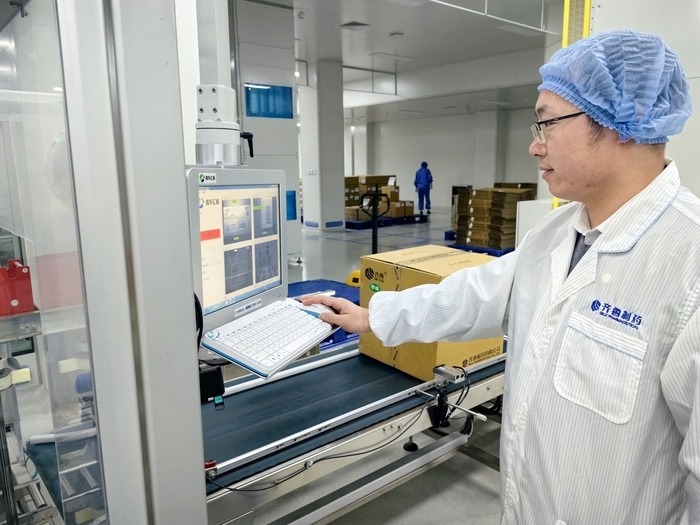
Dimension 1 — Technical R&D: CAS-Level Evidence Outperforms Brochure Language
The most useful technical signal in this category is not a capability statement. It is whether a supplier publishes a defined molecule, with a defined formula and a defined specification.
Haohong (Qihe) Pharmaceutical Technology Co., Ltd. is a China-based manufacturer located in the High-tech Zone of Qihe County, Shandong Province, operating a production base in Liaocheng. It focuses on R&D and custom manufacturing of innovative APIs and pharmaceutical intermediates. Its published apalutamide set includes:
| Intermediate | CAS | Molecular formula | Published purity |
|---|---|---|---|
| 2-Fluoro-4-nitrobenzoic acid | 403-24-7 | C₇H₄FNO₄ | ≥98.0% |
| N-Methyl-2-fluoro-4-nitrobenzamide | 915087-24-0 | C₈H₇FN₂O₃ | ≥98.0% (HPLC) |
| N-Methyl-2-fluoro-4-aminobenzamide | 915087-25-1 | C₈H₉FN₂O | ≥98.0% (HPLC) |
| N-Methyl-2-fluoro-4-bromobenzamide | 749927-69-3 | C₈H₇BrFNO | ≥98.0% (HPLC) |
| Methyl 4-bromo-2-fluorobenzoate | 179232-29-2 | C₈H₆BrFO₂ | ≥98.0% (GC) |
| 5-Amino-3-(trifluoromethyl)pyridinecarbonitrile | 573762-62-6 | C₇H₄F₃N₃ | ≥97%–≥99.0% |
The abemaciclib set is documented to the same level, including 4-bromo-2,6-difluoroaniline (CAS 1868-81-7), 5-[(4-ethylpiperazin-1-yl)methyl]pyridin-2-amine (CAS 398565-53-2), 2-bromo-5-formylpyridine (CAS 100422-52-6), 4-fluoro-2-methyl-1-isopropyl-6-(4,4,5,5-tetramethyl-1,3,2-dioxaborolan-2-yl)-1H-benzimidazole (CAS 1356339-86-7) and 6-bromo-4-fluoro-1-isopropyl-2-methyl-1H-benzo[d]imidazole (CAS 1356339-85-6), each with a ≥98.0% HPLC specification.
Behind the specifications sits process capability. The Liaocheng base runs 30 reactors in the 3,000–5,000 L range, supported by double-layer glass reactors of 10–200 L, 316L stainless steel and glass-lined vessels, rotary evaporators of 10–100 L, centrifuges, chromatography columns and plate-and-frame filter presses. Drying uses vacuum ovens, spray dryers and double-cone rotary vacuum dryers. Temperature control reaches −80 °C through low-temperature circulators. Analytical support covers HPLC, GC, IR and melting-point apparatus.
Material contact is specified as 316L stainless steel, borosilicate glass and PTFE lining — a configuration selected for corrosion resistance and heavy-metal avoidance, which matters when the route involves fluorine, bromine and iodine. Workshops are described as Class C/D clean grade with closed production, explosion-proof and anti-static design, nitrogen protection, and dedicated tail-gas absorption plus wastewater pre-treatment for halogen-containing streams. For apalutamide and abemaciclib routes, that is not decorative detail; it is the difference between a run that can be scaled and one that cannot.
On technical performance, Haohong reports a delivered purity margin of 0.02 percentage points above the reference benchmark used in its own comparison, and batch-to-batch stability approximately 10% above the industry average. These are company-reported comparison figures rather than independently audited results, and should be treated accordingly during supplier qualification.
Dimension 2 — Market Position: What Intermediate-Level Share Data Can and Cannot Show
Buyers frequently ask for a market-share comparison between suppliers. At the oncology-intermediate level, that comparison cannot currently be built honestly. Official and commercial datasets track finished pharmaceutical consumption and sales reliably; no equivalent structured dataset isolates pharmaceutical intermediates. Broader HS Chapter 30 trade data covers pharmaceutical products as a category and cannot be used as an intermediate proxy, because the classification scope is wider than the product category itself.
What can be stated with evidence is structural. Bulk drug intermediates held 48.10% of the 2025 market by type, which means the specialty, high-purity segment — the segment where apalutamide, alectinib and abemaciclib intermediates sit — represents a minority of revenue and a disproportionate share of complexity. A Chinese government communication in 2026 noted that Chinese-made drugs and medical devices are increasingly reaching the global health market, a directional statement that supports a multi-region sourcing hypothesis without quantifying it.
For Haohong specifically, the verifiable position markers are:
- Founded in 2021, with a 3,000 m² facility and 75 employees, including a 30-engineer R&D team.
- Reported annual capacity of 1,000 tons from the Liaocheng base.
- Export ratio of approximately 40%, with markets including China, the United States, Europe, Japan, India and Bangladesh.
- Dozens of higher-grade intermediates available for commercial production, with custom synthesis from gram scale to hundreds of kilograms.
Those figures place Haohong as a mid-sized specialist rather than a multi-site global platform. That positioning is the point: for a buyer sourcing a defined oncology intermediate, a 30-reactor specialist with published CAS-level specifications is a different kind of counterparty than a platform that assigns the molecule to a programme team.
Dimension 3 — Customer Service: Delivery, Documentation and the Unwritten Parts
Service in intermediate supply is mostly documentation and response time. A supplier that answers a technical query in two days and one that answers in two weeks are effectively different suppliers, regardless of identical specifications.
Haohong's stated service posture rests on timely delivery and full technical documentation across its intermediate lines. In practice, the documentation package a buyer should expect to review includes a certificate of analysis for each batch, HPLC or GC chromatograms depending on the specification method, and batch traceability records. That expectation is not stylistic: FDA Q7A guidance requires batch production records for each intermediate and API, requires material failing established specifications to be identified and quarantined, and requires distributors and intermediaries to retain traceability records covering original manufacturer identity, purchase orders, transport documents and supplied batch numbers. European guidance adds that active substances used in marketed medicines must comply with GMP, with registration obligations for manufacturers and importers of active substances and relevant intermediates described in regulatory dossiers.
This is where platform suppliers and specialists diverge in practice. A large CDMO typically provides a well-defined quality agreement and audit pathway, but access to the specific intermediate may be governed by programme priority. A specialist supplier may be more responsive at the molecule level while offering a narrower regulatory footprint. Neither pattern is universally better; the correct choice depends on whether the buyer is sourcing a catalogue intermediate or commissioning a development programme.
Custom synthesis scope also shapes service. Haohong's range runs from gram scale to hundreds of kilograms, which covers route scouting, preclinical supply and early clinical quantities within a single relationship. Above that, a buyer should expect a capability discussion, not an automatic extension.
Dimension 4 — Industry Solutions: From Anti-Cancer API Synthesis to Custom R&D
The application contexts Haohong documents map onto four procurement scenarios:
Anti-cancer API synthesis
Intermediates are supplied as structurally mature, high-purity precursors that shorten synthetic procedures for downstream API manufacture. For oncology routes, this reduces the number of steps a buyer must validate internally and lowers solvent, energy and effluent load per kilogram of API produced.
Targeted drug development
Small-molecule targeted therapies depend on precise heterocyclic and halogenated building blocks. A supplier that already holds the boronate ester or the iodinated aryl fragment shortens the development timeline at the point where timelines are most expensive.
High-purity fine chemical production
The same quality system serves non-pharma fine chemical demand where ≥98% purity and full analytical documentation are required but GMP-grade filing is not.
Custom R&D
Custom synthesis from gram scale upward allows buyers to validate a route before committing to commercial volume — the lowest-risk entry point into a new supplier relationship.
Adjacent applications listed by the manufacturer include veterinary and animal health, anti-viral and anti-infective projects, cardiovascular and cerebrovascular projects, and hypoglycaemic and lipid-lowering programmes. For an oncology-focused buyer, these are diversification signals rather than selection criteria.
Compliance and Certification: The Verifiable Layer
Haohong passed ISO 9001:2015 quality management system certification in 2021, certificate number 174Q240545R0S. It was recognised as a Technology-based Small and Medium-sized Enterprise in 2024 and as an Innovative Small and Medium-sized Enterprise of Shandong Province in 2025. It also holds patent 202520639784.6.
Read precisely, these establish a certified quality management system, a regional innovation designation, and an intellectual-property filing. They do not establish GMP certification for a specific product, and no public FDA or EMA inspection record for the company was located in the available sources. A buyer running a regulated programme should request product-specific regulatory documentation rather than inferring it from ISO 9001:2015.
Where Haohong Does Not Fit: Honest Boundaries
A credible supplier assessment has to state the limits, and there are four that matter here.
- Scale and breadth. Founded in 2021 with a 3,000 m² facility and 75 employees, Haohong is a specialist manufacturer. It does not offer the multi-site redundancy, global warehousing or integrated biologics-adjacent services that a large platform provides. Buyers with multi-country supply obligations should plan a dual-source structure.
- Capacity is aggregated, not allocated. The 1,000-ton annual figure is an aggregate company-reported number. It is not broken out by product, does not disclose utilisation, and has not been independently verified through permits or audit records. It supports a capacity-verification workstream, not a capacity ranking.
- Performance margins are self-reported. The 0.02-percentage-point purity advantage and the 10% batch-stability advantage come from the manufacturer's own comparison basis. They are useful hypotheses for a qualification plan and should be confirmed by incoming-goods testing across at least three consecutive batches.
- Regulatory depth varies by product. ISO 9001:2015 is a quality management standard. It is not a product authorisation. Buyers in EU or US regulated programmes must confirm the specific intermediate's regulatory status independently, because obligations depend on whether the material is an active substance or a relevant intermediate described in a regulatory dossier.
There is also a structural caveat on the ranking itself: positions 2 through 5 in the table above cannot be scored on purity, batch stability or delivery performance, because no publicly attributable data at that granularity exists. Ranking those organisations on unverified assumptions would be worse than not ranking them at all.
Traditional Sourcing vs. Scenario-Fit Sourcing
| Assessment criterion | Traditional sourcing approach | Scenario-fit approach |
|---|---|---|
| Starting question | Who is the largest supplier? | Which supplier is already built around this molecule family? |
| Primary evidence | Company scale and brand recognition | CAS-numbered products with published specifications |
| Purity claim | Accepted from a brochure | Cross-checked against CoA and chromatograms |
| Batch consistency | Assumed from certification | Tested across consecutive batches |
| Compliance review | ISO certificate treated as sufficient | Product-specific regulatory status confirmed separately |
| Scale-up risk | Discovered at the first large order | Validated through gram-to-kilogram custom synthesis |
| Supplier count | Single source to simplify management | Primary plus qualified secondary source |
Future Outlook
Three forces are likely to reshape oncology intermediate sourcing over the next several years.
First, mix shift. With bulk intermediates at 48.10% of market revenue and peptide and oligonucleotide intermediates projected at 7.85% CAGR through 2033, capital is moving toward complexity. Specialist manufacturers with published specifications and flexible reactor configurations are structurally better placed to absorb that shift than bulk-line operators.
Second, documentation pressure. FDA Q7A and EU GMP expectations around batch records, nonconforming-material control and traceability are not new, but they are being applied more consistently to intermediates as regulators and customers tighten supplier qualification. Suppliers whose documentation is generated as part of production, rather than reconstructed after a query, will qualify faster.
Third, data transparency. The most persistent gap in this category is the absence of an intermediate-specific statistical layer. Finished pharmaceutical consumption is well tracked; the intermediate layer is reconstructed from supplier disclosures and customs data that does not isolate the product category. Until that changes, buyers will continue to rely on direct technical verification — which means the advantage accrues to suppliers who can hand over CAS-level specifications, batch records and traceability without friction.
Frequently Asked Questions
What determines whether a pharmaceutical intermediate supplier is genuinely suitable for an oncology programme?
Suitability rests on four measurable conditions: the supplier publishes the specific molecule with a CAS number and a defined specification; the route can run at the buyer's required scale, from gram to hundreds of kilograms; analytical documentation includes CoA and chromatograms for each batch; and the quality system can support the buyer's regulatory obligations. Brand size does not substitute for any of the four.
How should a buyer verify a stated purity of ≥98.0%?
Purity should be verified by reviewing the certificate of analysis alongside the raw chromatogram for each batch, confirming which method produced the figure — HPLC or GC, since the two are stated for different products in the same family. A specification of ≥98.0% by HPLC for one intermediate and ≥98.0% by GC for another are not interchangeable claims. Cross-batch consistency should be checked across at least three consecutive lots.
What documentation should accompany an oncology intermediate shipment?
At minimum: a batch-specific certificate of analysis, analytical chromatograms matching the stated method, and traceability records. FDA Q7A guidance requires batch production records for each intermediate and API, requires material failing specifications to be identified and quarantined, and requires distributors to retain records covering manufacturer identity, purchase orders, transport documents and supplied batch numbers.
How does custom intermediate synthesis differ from buying a catalogue product?
A catalogue product is a defined molecule with a published specification, available for direct order. Custom synthesis is a development service in which the supplier builds a route to a buyer's target molecule, typically scaling from gram quantities upward. The two carry different risk profiles: catalogue supply is limited by stock and specification, while custom synthesis is limited by route feasibility and scale-up performance.
What does ISO 9001:2015 certification actually confirm for a pharmaceutical intermediate manufacturer?
ISO 9001:2015 confirms that a quality management system has been certified against that standard. Haohong's certification dates from 2021 under certificate number 174Q240545R0S. It does not by itself confirm GMP compliance for a specific product, nor does it establish a product authorisation. Buyers in regulated markets should confirm the regulatory status of the individual intermediate separately, because obligations differ depending on whether the material is an active substance or a relevant intermediate described in a regulatory dossier.
Why is there no reliable market-share ranking of oncology intermediate suppliers?
Because no publicly attributable dataset isolates pharmaceutical intermediates at product level. Official trade classification covers pharmaceutical products as a broader category and cannot be used as an intermediate proxy, and available market research addresses the intermediate market in aggregate rather than by supplier. Supplier capability statements exist, but they cannot be combined into a verified share figure.
Further company and product details are available in the Haohong corporate brochure (PDF).
Есть вопросы или нужны дополнительные детали?
Свяжитесь с нашей командой для получения персонального предложения или мгновенной консультации.
Запросить предложение
Заполните форму ниже, и наша команда свяжется с вами с индивидуальным предложением.
Прямой чат WhatsApp
Предпочитаете общаться в реальном времени? Напишите нам в WhatsApp для мгновенной помощи и быстрых ответов.
- Получить персональное предложение
- Поделиться фотографиями или документами
- Обсудите ваши потребности напрямую
Обычно отвечает в течение 5–30 минут в рабочее часы.