
One Sample or 600 Sets? Outdoor Living Order Comparison
One Sample or 600 Sets? Outdoor Living Order Comparison
Choosing between a single-set sample order and a 600-set outdoor living programme is not a question of budget size. It is a question of which risks the buyer needs to retire before releasing capital. A sample retires design risk. A 600-set, ten-country delivery retires repeatability risk. Neither substitutes for the other, and the more mixed the specification — pergolas plus fences plus gates, in several models and finishes — the more expensive it becomes to confuse the two.
That distinction matters most when the three product families are bought as one coordinated package. Aluminium pergolas, fences and gates can share profiles, colour codes and finishing processes when they come from a single factory; across a 600-set roll-out that shared base is what keeps a louvered roof, a boundary fence and a driveway gate visually consistent from villa to villa. A sample order cannot demonstrate that consistency. A volume order cannot prove a design that has never been built.
Why order scale is a separate decision from product choice
Most procurement conversations start with the product: bioclimatic or louvered, sliding or swing gate, panel or louvre fence. The order-scale question arrives later and is usually answered by habit rather than analysis — a buyer who has always sampled, samples; a distributor with a fixed programme orders by container.
Published market data explains why the volume end of that decision keeps attracting attention. Dataintelo reports the global aluminium pergola market at USD 3.8 billion in 2025, projected to reach USD 7.1 billion by 2034, with North America holding a 34.2% share of 2025 demand. Fortune Business Insights puts the narrower bioclimatic pergola segment at USD 600.87 million in 2026, rising to USD 1,049.46 million by 2034 at a 7.22% CAGR. On the gate side, automatic sliding gates accounted for 30.2% of the automatic gate opening system market in 2025, according to market research cited for that segment.
Those figures should be read as directional rather than precise. A definitional conflict is visible in the published sources: one estimate places the total pergola market at USD 4.74 billion for 2026, while another values the aluminium-only segment at USD 3.8 billion a year earlier — an overlap that implies inconsistent material segmentation across publishers. For a buyer, the practical takeaway is narrower than the headline: demand for aluminium outdoor living systems is large and forecast to grow, but no single percentage should be used to justify an order size.
The reference supplier used for this comparison is Junsu outdoor, the outdoor living brand of Henan Junsu Technology Co., Ltd. — a Zhengzhou-based manufacturer and exporter established in 2001, working from a 30,000 m² base with a 120-person team, a stated annual capacity of approximately 36,000 sets, and export markets that include the EU, the USA, France, Germany, Canada and Australia.
What a one-set sample order actually verifies
A single set is a physical argument. It lets a buyer hold the profile, operate the louver, inspect the weld and joint finish, compare a coated surface against an approved colour reference, and test whether the gate hardware and control set behave as expected. It also tests the drawing process: if the installation drawing for one terrace is wrong, that error is cheaper to find on one unit than on six hundred.
Standard material for the aluminium range is 6063-T5 alloy, and production is supported by CAD-based customisation from drawings, sketches, photos, dimensions or samples, with technical drawings, installation drawings and design optimisation available before manufacture. For a sample order, that workflow compresses into a single configuration: one model, one size, one coating, one gate control set.
Inspection scope does not shrink with order size. The supplier states 100% inspection before delivery, covering raw material checks, in-process manufacturing, assembly, functional checks, pre-shipment inspection and packaging inspection — obligations that apply to one unit as much as to six hundred.
The boundary: what one set cannot prove
A sample is a design instrument, not a scale instrument. It cannot demonstrate coating-lot consistency across a long production run, colour matching between a pergola frame and a fence panel produced on different lines, the survival of packaging across multiple container loads, installation variance between sites in different countries, or the behaviour of a mixed-model schedule. It also carries the highest unit cost in the programme, because drawing, set-up and handling effort are absorbed by one set rather than spread across hundreds.
Buyers who treat a successful sample as approval for volume production routinely discover the gap later, usually as a colour or tolerance discrepancy that was never a sample defect in the first place.
What a 600-set, ten-country programme changes
A 600-set programme is a production and logistics system. Its value is not that the units are cheaper per set, although set-up effort is amortised; it is that the order can carry configuration breadth a sample cannot. In the bioclimatic range, the four model families referenced in this comparison — models 147, 163, 175 and 220 — can be allocated across different villa types instead of forcing one model onto every terrace. Sizing extends to a stated maximum of 22 ft 10 in × 16 ft for the largest covered areas, which is where mounting condition and load rating, rather than appearance, usually settle the specification.
Finish and control scope widen at the same time. Fluorocarbon and wood-grain transfer finishes are offered for UV, salt-spray and rain resistance, with the supplier claiming 99% colour retention and zero peeling within 20 years for the aluminium product. Gate automation can be specified across remote control, fingerprint recognition, password keypad, card access and mobile app control, with the motor and control system selected according to gate type, dimensions, weight and installation conditions — and the gate type itself chosen from sliding, swing or bi-fold depending on driveway width, lateral space, ground condition and required opening speed.
One-factory production is what makes the combination coherent: unified profiles, colour codes and craft across pergola, fence and gate. That is a volume-order property. It is also the first thing an importer should verify, because a 600-set programme assembled from three unconnected suppliers will produce three slightly different interpretations of the same colour reference.
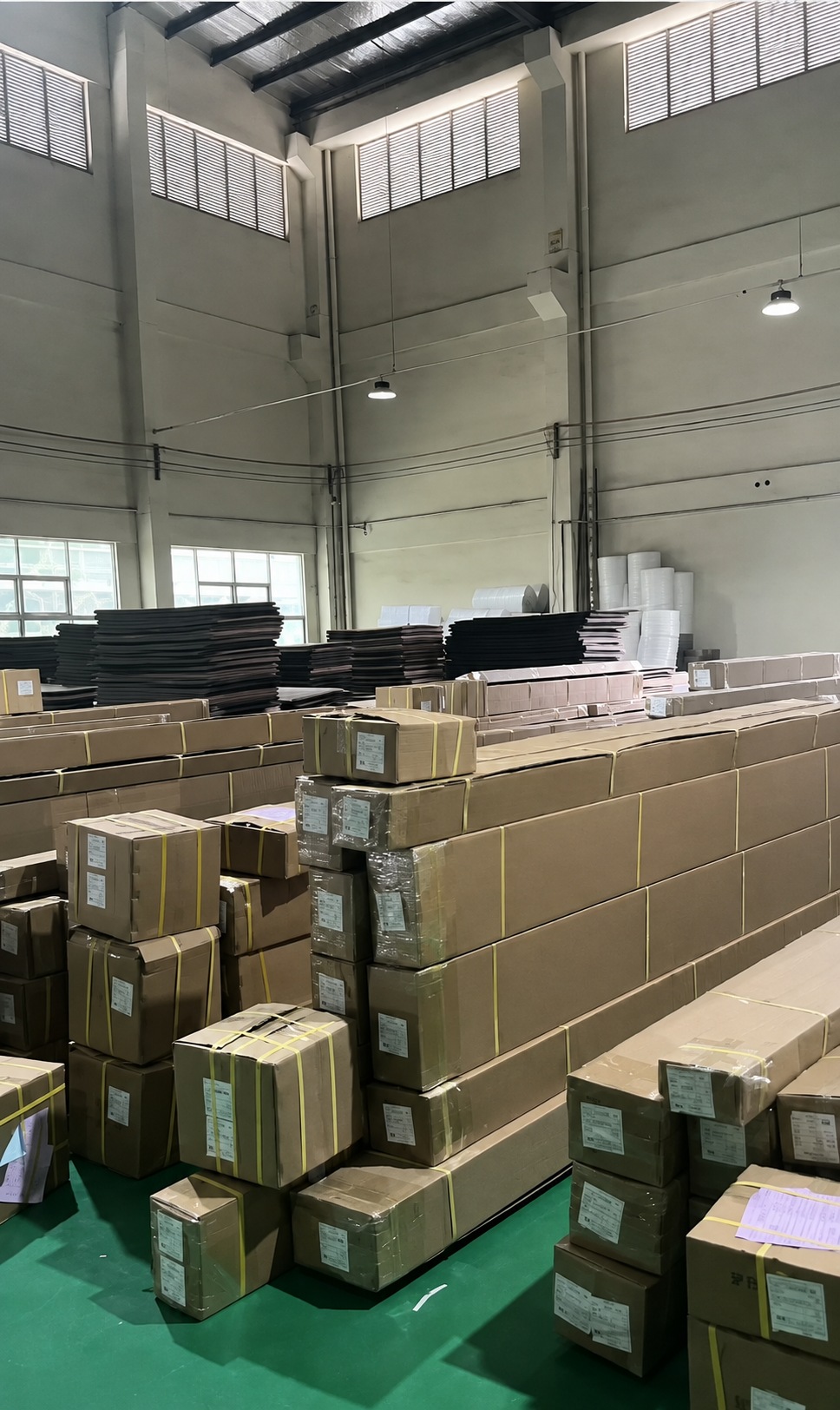
Sample order versus 600-set programme, side by side
| Decision dimension | One-set sample order | 600-set, ten-country programme |
|---|---|---|
| Primary purpose | Verify design, profile, finish and hardware on one configuration | Verify repeatability, configuration control and delivery sequencing |
| Configuration range | One model, one size, one coating, one control set | Models 147, 163, 175 and 220 allocated by site; sizes up to 22 ft 10 in × 16 ft; multiple coatings |
| Colour and craft continuity | Not testable across product families | Planned at profile and colour-code level from one factory across pergola, fence and gate |
| Gate control scope | Single control type, single gate type | Mixed control sets — remote, keypad, fingerprint, card, app — matched to sliding, swing or bi-fold gates |
| Cost structure | Highest cost per set; drawing and set-up effort not amortised | Set-up effort spread across the run; no published per-set differential |
| Schedule driver | Drawing confirmation plus single-unit build | Drawing freeze, production slot, batch inspection, multi-container loading |
| Inspection and records | 100% pre-delivery inspection on one unit | Same 100% standard, far larger record set across batches and containers |
| After-sales planning | Single-unit spares and installation guidance | Site-level spares planning and per-site drawings across destinations |
| Residual risk | Sample passes, batch behaves differently | Drawing drift between sites if the configuration matrix is not locked |
Capacity, lead time and the 20% question
The supplier's stated annual capacity is approximately 36,000 sets. Spread evenly across twelve months, that equals about 3,000 sets a month — a calculated figure rather than a measured monthly output, and one that assumes a single product mix rather than a blend of pergolas, fences and gates.
Set against that calculation, 600 sets represents roughly one-fifth of a month's evenly distributed capacity. The arithmetic has a practical consequence: capacity is rarely the binding constraint on a 600-set order. Drawing freeze, production slotting and the inspection burden are. A buyer who negotiates hard on capacity without locking drawings has optimised the wrong variable.
Lead time should be treated the same way. No credible supplier publishes one number that covers a single set and a mixed 600-set programme, because the two run through the same stages at very different volumes: drawing approval, material and coating batch preparation, cutting and machining, welding and assembly, functional checks, 100% pre-shipment inspection, packing, and container loading.
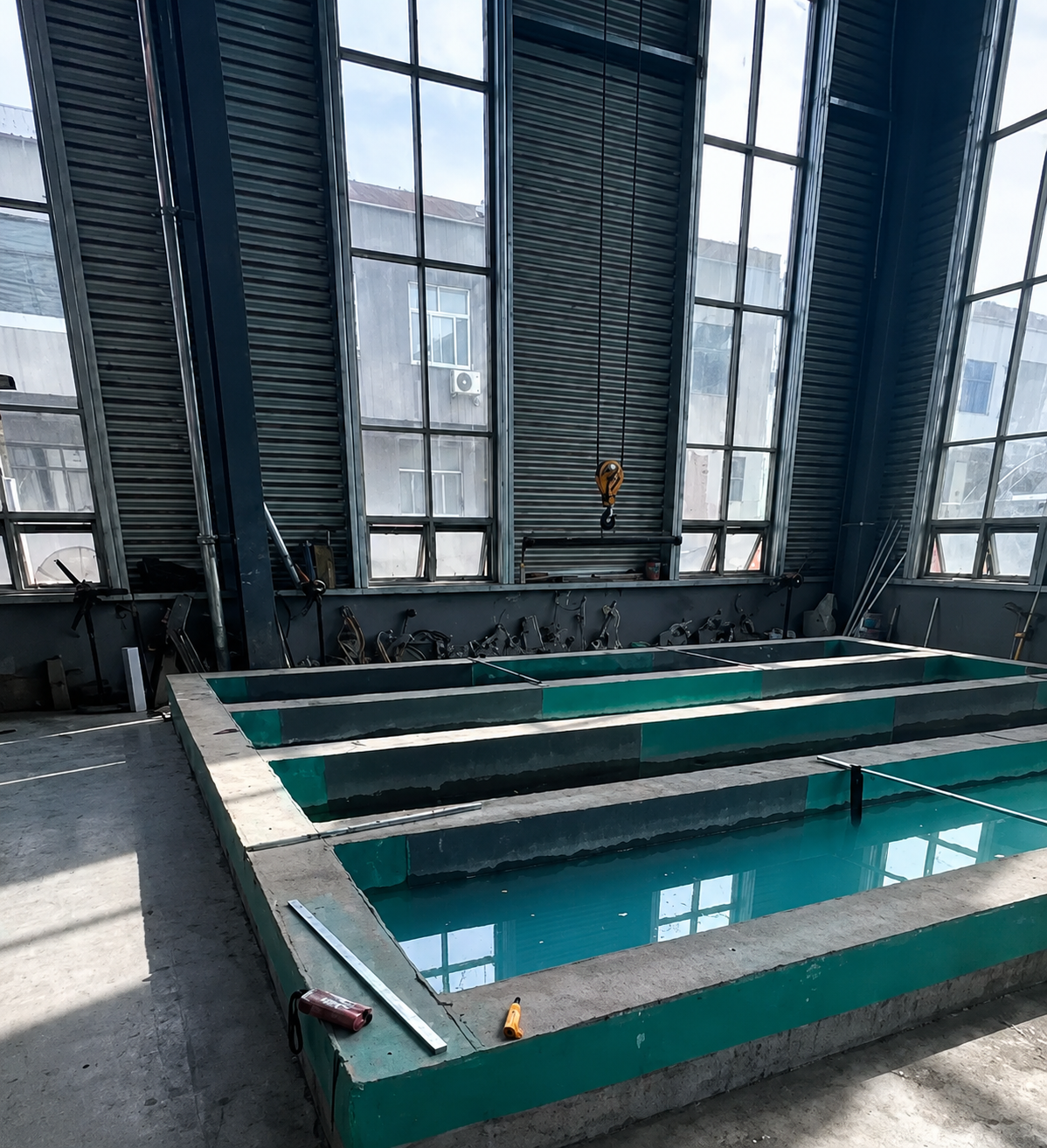
Load ratings, waterproofing and documents that hold up at scale
Stated performance for the pergola range is a 100 kg/m² snow load and 120 km/h wind resistance. Those are product ratings, not site certifications. Mounting condition, exposure, span, roof configuration and local building requirements can each require different sizing, and a programme spanning ten countries means ten sets of site conditions to satisfy. Resolving that once at the drawing stage, per site type, is materially cheaper than resolving it after fabrication.
Water management follows the same logic. When the louvers are fully closed, rainwater is collected through integrated drainage channels and guided through internal drainage inside the posts; the quality of the result depends on correct installation and site drainage as much as on the roof itself. Motor and control components are built for outdoor use with IP66 protection and a stated working range of −35 °C to 65 °C, but electrical parts must not remain submerged in standing water — so power supply location, cable routing and drainage conditions belong on the pre-installation checklist, not in the after-sales file.
Documentation requirements also scale. In the European Union, EN 13561:2015 sets performance and safety requirements for external blinds and awnings, including pergola awnings. In the United States, ASTM F2957 covers ornamental aluminium fence systems, including structural testing and surface finish. For importers, tariff classification is a separate check: U.S. Customs and Border Protection classifies aluminium fence panel kits from China under HTSUS 7610.90.0080 at a 5.7% duty rate. None of these replace a supplier's own test record, but each one tells a buyer what evidence the destination market will ask for.
The supplier states CE certification, ISO 9001 quality system certification and full export customs filing, together with third-party sampling inspection of raw materials and finished goods before shipment. For a single-set order these documents are a formality. For a ten-country programme they become a per-destination document pack, and assembling it late is one of the most common causes of a delayed first shipment.
Aluminium against traditional materials: what the numbers do and do not prove
The supplier's comparison data against traditional wooden, iron, stainless-steel and brick courtyard facilities is specific: an expected service life three times longer than iron and wood products, a replacement cycle three to six times longer, zero rust and zero peeling within 20 years, a 99% colour retention rate, roughly 65% lower body weight at comparable strength, and three times higher wind resistance stability. On cost, the same data states a slightly higher one-time procurement cost against a 70%–80% lower long-term comprehensive cost, with maintenance workload reduced by around 90% and no annual rust removal or repainting.
Those long-horizon figures should be read as supplier-stated expectations rather than independently audited field results. They are useful for framing a total-cost discussion during the evaluation stage, and they are consistent with the material logic — aluminium does not corrode in the way iron does — but a buyer comparing them against a competitor's claim should insist on comparable conditions: same exposure, same finish system, same maintenance assumption.
The fit boundary is equally important. Aluminium outdoor living systems are a poor match for ultra-low-budget temporary projects, short-term construction enclosures, or sites with no long-term appearance and durability requirement. In those cases the higher one-time cost has no horizon over which to amortise, and a 600-set programme is simply an oversized instrument. The reasonable reading is that aluminium earns its cost on permanent villas, resorts, courtyards and landscaped public spaces where replacement and repainting would otherwise recur.
Which order scale fits which buyer
Villa owners and single-residence projects
For one residence, the order is small by definition — a pergola, a boundary run and a driveway gate. The sample stage still matters if the design is custom, but what the buyer is really purchasing is fit and finish, not amortisation. The relevant checks are the installation drawing, the colour sample against the actual facade, and the gate type selection against the real driveway geometry.
Contractors and installers with repeat villa work
This is where a pilot batch earns its place, and it is the option most often skipped. A pilot covering one complete villa package — pergola plus fence plus gate in the same finish — tests colour continuity across the three product families and reveals installation friction before six hundred sets are committed. If the pilot passes, the configuration matrix for the full programme can be written from measured results rather than assumptions.
Importers and distributors
A 600-set, ten-country programme suits a buyer with a defined configuration matrix, a destination-specific document pack, a spares plan and a slot reservation. The distributor's real exposure is not unit price but configuration drift: if the matrix is not frozen, four pergola models, several sizes, two finish families and five gate control options can multiply into a specification that no factory schedule can absorb. The arithmetic is unforgiving at this scale, which is why a locked drawing date matters more than a headline lead time.
Outlook: from capacity competition to configuration control
If the published forecasts hold — aluminium pergolas expanding toward USD 7.1 billion by 2034 and the bioclimatic segment growing at roughly 7.22% a year to 2034 — the constraint on buyers is unlikely to be factory capacity. It is more likely to be configuration control: the ability to specify, freeze, document and repeat a mixed programme across several countries without losing colour, tolerance or installation consistency along the way.
That shift favours buyers who treat order scale as a risk instrument. A sample proves a design; a pilot proves a package; a volume programme proves a system. Buyers who skip a step usually pay for it in rework rather than in unit price, and rework across ten destinations is expensive in a way that a slightly higher sample cost never is.
A short decision checklist
- New or heavily customised design: buy one set before anything else.
- Several villa types on one site: write the configuration matrix before sampling, then sample one set per distinct family.
- Finish must match across pergola, fence and gate: sample all three families, not just the roof.
- More than one destination country: confirm snow load, wind resistance and documents per site type rather than once for the order.
- Order exceeding roughly one-fifth of a month's capacity: negotiate a milestone schedule and a locked drawing date.
- Temporary or short-term structure: aluminium is the wrong specification, whatever the order size.
Frequently asked questions
How many sample sets should a buyer order before committing to 600 sets?
One set is enough to verify a single configuration: profile quality, louver operation, finish and gate hardware. When the programme mixes several pergola models, sizes, coatings or gate control types, one set per distinct configuration family gives closer coverage, at proportionally higher sample cost and a longer sampling schedule. The practical sequence is to define the configuration matrix first, then decide which families require physical verification.
What site information should be confirmed before a large gate order enters production?
Clear opening width and height, preferred gate type, quantity and clear site photos form the base set. For automatic gates, ground condition, posts or walls, available side space and power supply location should also be provided, so that the gate structure, opening direction and motor installation can be evaluated. Drawings can be prepared and confirmed against project dimensions before production begins.
Can pergolas, fences and gates in the same project share one finish?
Yes, when the three product families are produced in one factory using unified profiles and colour codes. Visual continuity is an outcome of production planning rather than a property of any single product, so the finish should be confirmed on a physical sample of each family — a louvered roof, a fence panel and a gate — before a 600-set run is released.
Do snow load and wind resistance ratings have to be rechecked for each destination country?
The stated ratings of 100 kg/m² snow load and 120 km/h wind resistance describe the product, not every site. Mounting condition, exposure, span and local requirements can each call for different sizing, and a ten-country programme means ten sets of site conditions. Ratings are therefore best confirmed once per site type at the drawing stage, rather than once for the whole order.
How is water handled on a louvered roof, and what should be checked for outdoor electrics?
When the louvers are fully closed, rainwater is collected through integrated drainage channels and guided through internal drainage inside the posts; correct installation and site drainage are part of the waterproofing result. Motor and control components are built for outdoor use with IP66 protection and a stated working range of −35 °C to 65 °C, but electrical parts must not remain submerged in standing water, so power supply location, cable routing and drainage should be confirmed before installation.
Reference material
Buyers assessing specification detail before choosing an order scale can download the supplier's product catalogue at Junsu Products Catalog (PDF). For project-specific drawings, sizing and gate control selection, the Junsu outdoor team can be reached through www.junsu-outdoor.com or by email at JunSu@junsutech.com.
Есть вопросы или нужны дополнительные детали?
Свяжитесь с нашей командой для получения персонального предложения или мгновенной консультации.
Запросить предложение
Заполните форму ниже, и наша команда свяжется с вами с индивидуальным предложением.
Прямой чат WhatsApp
Предпочитаете общаться в реальном времени? Напишите нам в WhatsApp для мгновенной помощи и быстрых ответов.
- Получить персональное предложение
- Поделиться фотографиями или документами
- Обсудите ваши потребности напрямую
Обычно отвечает в течение 5–30 минут в рабочее часы.