
One Surface, Many Uses: Multi-Purpose Artificial Turf in 2026
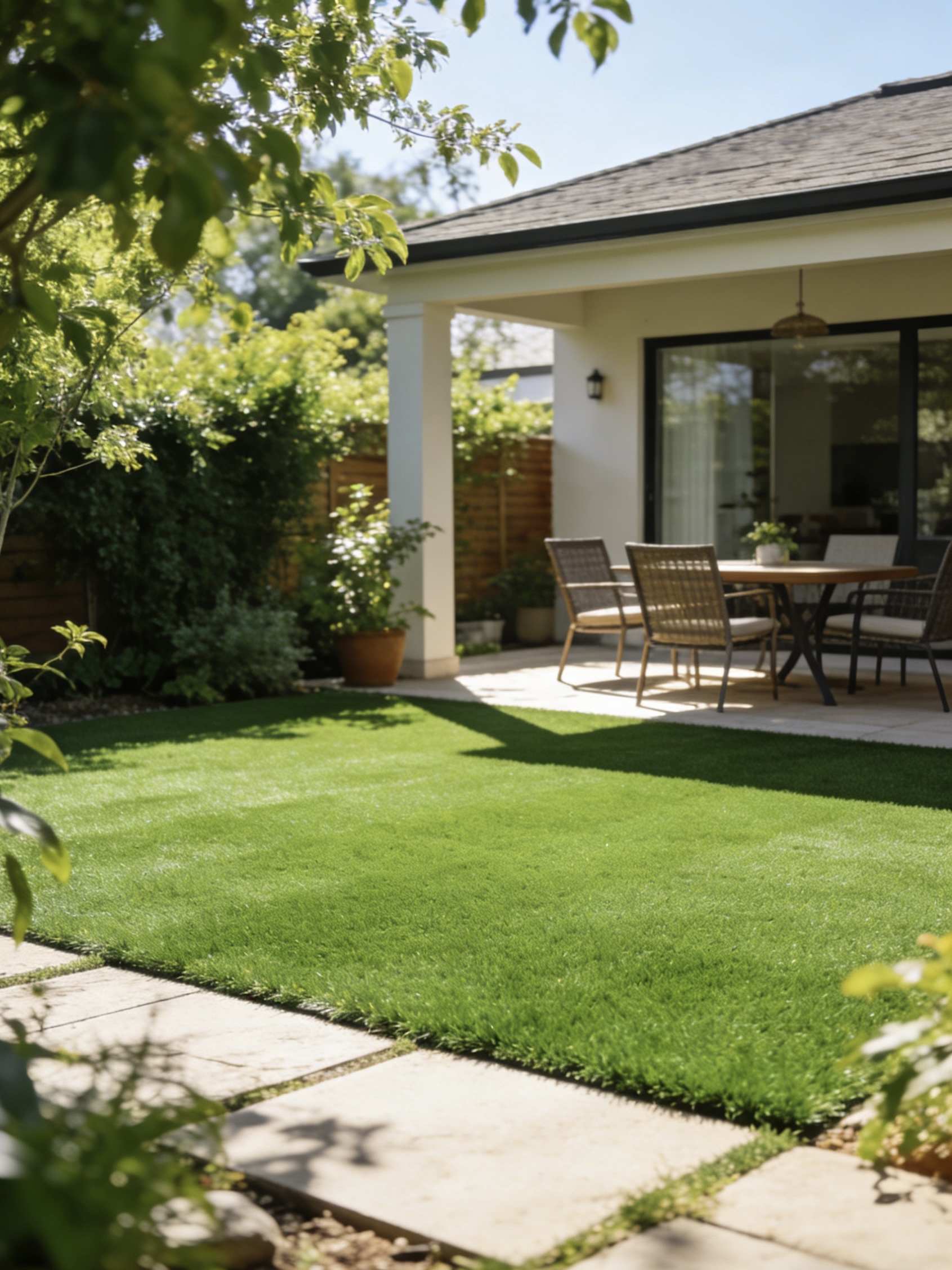
Multi-purpose artificial turf in a residential courtyard setting. Image source: Venusturf application gallery.
Industry Introduction: Why Multi-Purpose Artificial Turf Matters in 2026
The global artificial turf market is expanding. Market research by Grand View Research values it at USD 7.3 billion in 2025, with projections reaching USD 13.7 billion by 2033. The Asia-Pacific region holds the largest share at 32.2%. Within this market, buyers are increasingly looking for turf that can serve more than one purpose. This is where the concept of multi-purpose artificial turf enters the procurement conversation.
Multi-purpose artificial turf is not a single product specification. It is an approach where a supplier offers a range of turf types that can collectively handle sports, landscape, commercial, and residential projects. For buyers, this can simplify sourcing, reduce supplier risk, and make maintenance more predictable.
The Procurement Challenge: Multiple Facilities, Multiple Specifications
Industrial buyers, facility managers, and landscape contractors often handle a portfolio of projects. A single campus might need a football field, a playground, a pet walking area, and an entrance lawn. Traditionally, each application required a different turf specification, often from different suppliers. This creates complexity in procurement, quality control, and after-sales support.
The opportunity is clear: a manufacturer that can cover multiple application categories with consistent quality and transparent specifications gives buyers a more efficient route. Instead of managing many suppliers, the buyer can evaluate one company that produces a coherent product family.
Brand Solution: Venusturf’s Multi-Category Product Line
Wuxi Venus Turf Co., Ltd. (Venusturf) is a professional artificial turf manufacturer that integrates R&D, production, and sales. The company was established in 2024 and operates 30 integrated production lines, covering the entire process from yarn extrusion, twisting, tufting and coating to packaging and delivery. Its factory covers 1,000 square meters, employs 483 staff, and has an annual production capacity of 106,000 units. Approximately 80% of its output is exported to global markets.
Venusturf’s product range includes several categorized turf types, allowing buyers to match the right specification to each project:
- Football Grass – Model EM250105 is a four-color football grass with a 50mm pile height, 5/8 inch gauge, and 180 stitches per meter.
- Golf Grass – Model Putt 40 is a two-color golf grass with a 15mm pile height, 3/16 inch gauge, and 300 stitches per meter.
- Pet Grass – Model EM24081501-1 has a 35mm pile height, 3/8 inch gauge, and 100 stitches per meter.
- Commercial Grass – Model EM24071902 offers a 25mm pile height, 3/8 inch gauge, and 180 stitches per meter.
- Residential Grass – Model EM240404 has a 30mm pile height and Model EM241007 has a 45mm pile height.
This range does not mean every model suits every job. It means a buyer can select a purpose-built turf for each application while consolidating their supply base with one manufacturer that understands the full performance spectrum.
Technical Explanation: Reading the Specifications for Multi-Purpose Use
For a procurement professional, the key is to interpret specifications correctly. The most important parameters are pile height, gauge, density, yarn composition, and backing.
Pile height affects impact performance and aesthetics. Sports turfs often need a taller pile, such as the 50mm football grass, to provide shock absorption and ball behavior. Residential and landscape turfs typically range from 30mm to 45mm for a natural look.
Gauge is the distance between tuft rows. A smaller gauge, like the 3/16 inch on the golf putting turf, allows more tufts per area, producing a dense, smooth putting surface. The 5/8 inch gauge on football grass is more open, which helps infill performance.
Density is measured in stitches per square meter. The golf turf has a very high density of 63,000 stitches per square meter, ensuring a consistent ball roll. The pet turf has 10,500 stitches per square meter, balancing cost with comfort.
Yarn composition is typically polyethylene (PE) or polypropylene (PP), often in combination. For example, the EM241007 residential turf uses a U-shape yarn with spine monofilament PE plus curled PP, combining durability with softness. The pet grass uses S-shape monofilament PE with curled PP for resilience and drainage.
Backing provides dimensional stability. Sports turfs often use PP plus mesh and SBR latex. Residential and golf turfs may use double PP with PU glue for a cleaner installation. Pet grass adds a special pet glue backing to handle liquid exposure.
The following table summarizes the key specifications of Venusturf’s multi-category turf products:
| Model | Type | Pile Height | Gauge | Density | Yarn | Backing |
|---|---|---|---|---|---|---|
| EM250105 | Football Grass | 50mm | 5/8" | 180 st/m (11,340 st/m²) | U with Spine Monofil PE | PP+Mesh+SBR Latex |
| Putt 40 | Golf Grass | 15mm | 3/16" | 300 st/m (63,000 st/m²) | Curled PE | Double PP+PU glue |
| EM24081501-1 | Pet Grass | 35mm | 3/8" | 100 st/m (10,500 st/m²) | S shape Monofil PE+Curled PP | Double PP+Net+Pet glue |
| EM24071902 | Commercial Grass | 25mm | 3/8" | 180 st/m (18,900 st/m²) | U shape Monofil PE+Curled PP | PP+Net+Latex |
| EM240404 | Residential Grass | 30mm | 3/8" | 140 st/m (14,700 st/m²) | C shape Monofil PE+Curled PP | PP+Mesh+SBR Latex |
| EM241007 | Residential Grass | 45mm | 3/8" | 150 st/m (15,750 st/m²) | U with Spine Monofil PE+Curled PP | Double PP+PU glue |
Understanding these parameters helps buyers see why a single universal product is difficult to achieve. Instead, a multi-purpose approach uses a set of well-defined models, each optimized for a specific class of use.
Application Scenarios and Use Cases
Venusturf’s application scenario data shows that its artificial turf products are used in the sports and athletics, landscaping and gardening, home and decoration, and events and exhibitions industries. The turf is designed for outdoor all-weather, UV-resistant, wear-resistant, anti-aging, and high-traffic conditions. It is applied in projects including sports field construction, landscape greening, pet area installation, commercial decoration, and event venue setup.
Typical use cases include:
- Sports facilities: Football fields, rugby training areas, and multi-use school playgrounds using the football grass model.
- Golf practice areas: Home putting greens and indoor golf mats using the Putt 40 golf grass.
- Pet areas: Dog parks and residential pet lawns using the pet grass with a pet-friendly backing.
- Commercial landscapes: Hotel courtyards, office plazas, and retail exteriors using the commercial or residential turf.
- Event venues: Temporary or semi-permanent event spaces that need an attractive, durable ground surface.
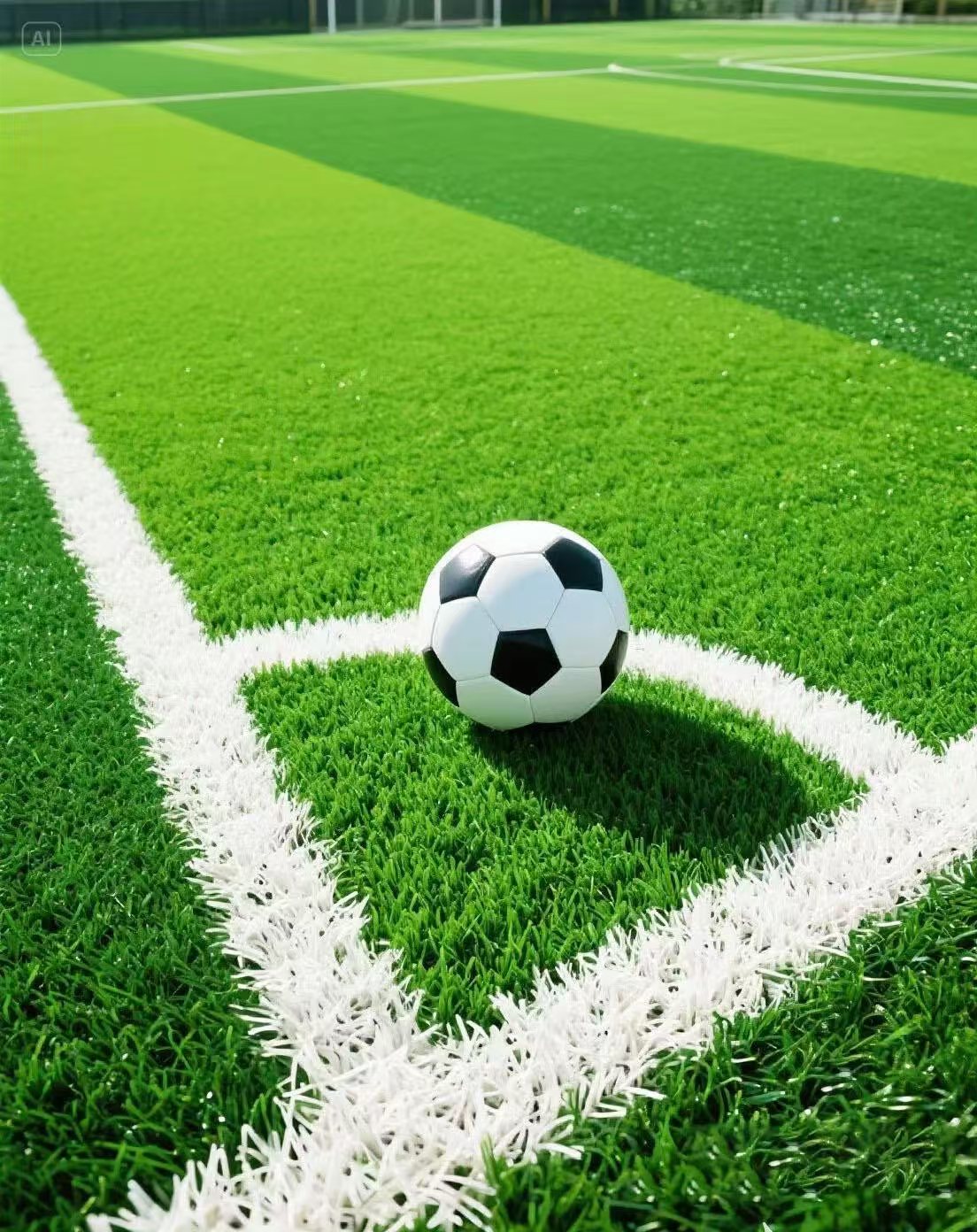
Football-field turf is one of the most specification-driven applications in the artificial turf market.
Market Trends Supporting Multi-Purpose Artificial Turf
Several market indicators justify the multi-purpose procurement approach. According to Grand View Research, the sports application segment accounted for approximately 63.1% of the global artificial turf market share in 2025. Polyethylene is the dominant material with a 63.1% revenue share. China leads the Asia-Pacific market with more than 15,000 synthetic sports fields installed, representing 52% of regional installations. These figures indicate a large, sports-led market where buyers repeatedly need turf for various field types.
The replacement segment also matters. Research from AMI Plastics shows that replacement demand reached 41% of total sports turf demand in 2023, around 70 million square meters. This suggests that many facilities are now renewing older turf, and buyers are seeking products that can be used across multiple renovated sites. A supplier with a multi-category range helps facility owners standardize on one brand while still getting the right performance for each court, pitch, and landscape.
Additionally, buyers increasingly reference standards such as the FIFA Quality Programme for football turf and EN 15330-1 for synthetic turf systems. These standards establish baseline performance metrics, and a manufacturer who publishes clear specifications across multiple product categories makes it easier for buyers to evaluate compliance and suitability.
Comparison with Traditional Solutions: Natural Grass and Single-Purpose Turf
Compared with natural grass, artificial turf requires no watering, mowing, or fertilizer, and it stays playable in all weather and under continuous traffic. It is also more predictable in terms of surface consistency. However, synthetic turf can become warm in direct sunlight and may require infill maintenance. This is true whether the turf is single-purpose or multi-purpose.
Compared with single-purpose turf, a multi-purpose product portfolio offers greater procurement simplicity and supplier consolidation. But there is a real boundary: no single turf specification can be simultaneously optimal for a high-impact sport such as football and a precision surface such as golf putting. A 50mm football pile will not give a true putt, and a 15mm putting turf will not absorb tackles. Therefore, a successful multi-purpose strategy means choosing the correct model from a family of specialized turfs, not expecting one universal carpet to do everything.
Limitations and Selection Considerations
When evaluating a supplier for multi-purpose projects, buyers should consider the following factors.
First, confirm the primary use of each site. If a school needs one turf for football and another for a playground, the football grass should meet the relevant impact standards, and the playground turf should be tested for safety. A supplier’s product range should provide clear specification sheets for each category.
Second, check the production capability. A manufacturer with in-house control from yarn extrusion to finishing can more easily maintain consistent quality across different product lines.
Third, consider customization. The application scenario notes that artificial turf can be customized in pile height, color, density, and material. This flexibility is valuable when a project has specific dimensions or visual requirements.
Finally, remember that “multi-purpose” is not a substitute for engineering. Use the technical parameters to match the turf to the actual traffic, climate, and performance expectations.
Simple decision checklist for buyers:
- Define the primary use and traffic level for each site.
- Identify safety and performance requirements (e.g., shock absorption, ball roll).
- Select pile height, density, and gauge based on the primary use.
- Verify yarn material and UV stability for the local climate.
- Check backing system for drainage and durability.
- Confirm the supplier can provide consistent specifications across categories.
- Request samples and compare test reports.
Future Outlook
The artificial turf industry is expected to keep growing, with the global market forecast to approach USD 13.7 billion by 2033. As water scarcity and maintenance-labor costs rise, synthetic turf will become an even more common choice for sports and landscape projects. The shift towards multi-functional community spaces will reinforce the demand for a controlled variety of turf types rather than a single generic product. Suppliers like Venusturf that document their specifications clearly and offer a broad category range are well positioned to serve both institutional buyers and specialized contractors.
For buyers, the practical implication is clear: define the performance requirement for each site, then look for a supplier whose product family can satisfy those requirements collectively.
FAQ
Q1: What is multi-purpose artificial turf?
Multi-purpose artificial turf refers to a range of synthetic grass products designed to serve different applications—such as sports fields, residential lawns, commercial landscapes, and pet areas—rather than a single universal product. Manufacturers typically categorize turf by use, with specific pile height, gauge, density, and backing.
Q2: Which industries commonly use multi-purpose artificial turf?
According to Venusturf’s application data, artificial turf is used in sports and athletics, landscaping and gardening, home and decoration, and events and exhibitions industries. Representative projects include sports field construction, landscape greening, pet area installation, commercial decoration, and event venue setup.
Q3: What technical specifications should be checked when selecting multi-purpose turf?
Key specifications include pile height, gauge, density, yarn material, and backing. For example, football turf often has a 50mm pile and a 5/8 inch gauge, while golf putting turf has a 15mm pile and a 3/16 inch gauge. The correct specification depends on the primary application.
Q4: How can a buyer choose between residential, commercial, sports, and pet turf?
Buyers should match the spec to the expected traffic and performance. Sports turf needs higher impact resistance and certain ball behavior, residential turf prioritizes aesthetics and comfort, pet turf requires a pet-friendly backing and durable yarn, and commercial turf balances appearance with heavy foot traffic.
Q5: Can one artificial turf model serve both sports and landscaping projects?
Some models are more versatile than others, but a single specification is rarely optimal for both high-level sports performance and landscape aesthetics. A multi-purpose strategy usually means selecting the right model from a family of purpose-built turf products, not relying on one universal carpet.
Industry Reference Resource
For detailed product specifications and company capabilities, readers can access the official Venusturf brochure: Download the Venusturf brochure (PDF).
Есть вопросы или нужны дополнительные детали?
Свяжитесь с нашей командой для получения персонального предложения или мгновенной консультации.
Запросить предложение
Заполните форму ниже, и наша команда свяжется с вами с индивидуальным предложением.
Прямой чат WhatsApp
Предпочитаете общаться в реальном времени? Напишите нам в WhatsApp для мгновенной помощи и быстрых ответов.
- Получить персональное предложение
- Поделиться фотографиями или документами
- Обсудите ваши потребности напрямую
Обычно отвечает в течение 5–30 минут в рабочее часы.