
Optimizing PET Fiber Spinning with Fiber Grade Titanium Dioxide
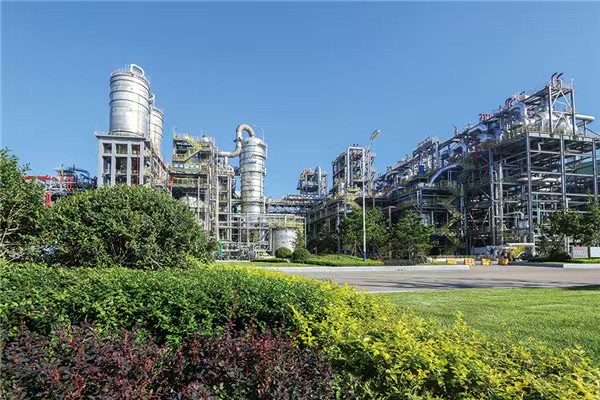
Industry Challenge: Maintaining Consistency in Continuous Polyester Spinning
The polyester fiber segment accounts for over 60% of all fiber grade titanium dioxide applications globally. For PET fiber manufacturers operating continuous spinning lines, the choice of delustering and whitening agent directly impacts spinneret clogging frequency, filament breakage rates, and final fiber quality. Fiber grade titanium dioxide–specifically anatase grades–is preferred due to its smaller Mohs hardness (5.5–6.0) compared to rutile (6.0–7.0), which reduces abrasion on spinneret nozzles during high-speed spinning. However, not all anatase TiO₂ products deliver the batch-to-batch consistency and process compatibility required for uninterrupted polymerization and spinning.
Brand Solution: Orient International’s SA-50 for PET Fiber Whitening
Orient International Holding Shanghai Foreign Trade Co., Ltd, a state-owned enterprise founded in 1988 and wholly owned by Orient International Group, supplies a dedicated fiber grade titanium dioxide product line. Among its offerings, the SA-50 model is specifically formulated as a PET fiber whitening and delustering agent. It is an anatase-type TiO₂ with a titanium dioxide content of ≥98.0%, low iron content (Fe₂O₃ ≤0.004%), and a neutral pH value of 6.8±0.2. The product is designed for ethylene glycol circulation and polyester polycondensation environments, exhibiting superior hydrolysis resistance and neutral pH property that eliminate adverse side reactions and slow intrinsic viscosity degradation of polyester chips.
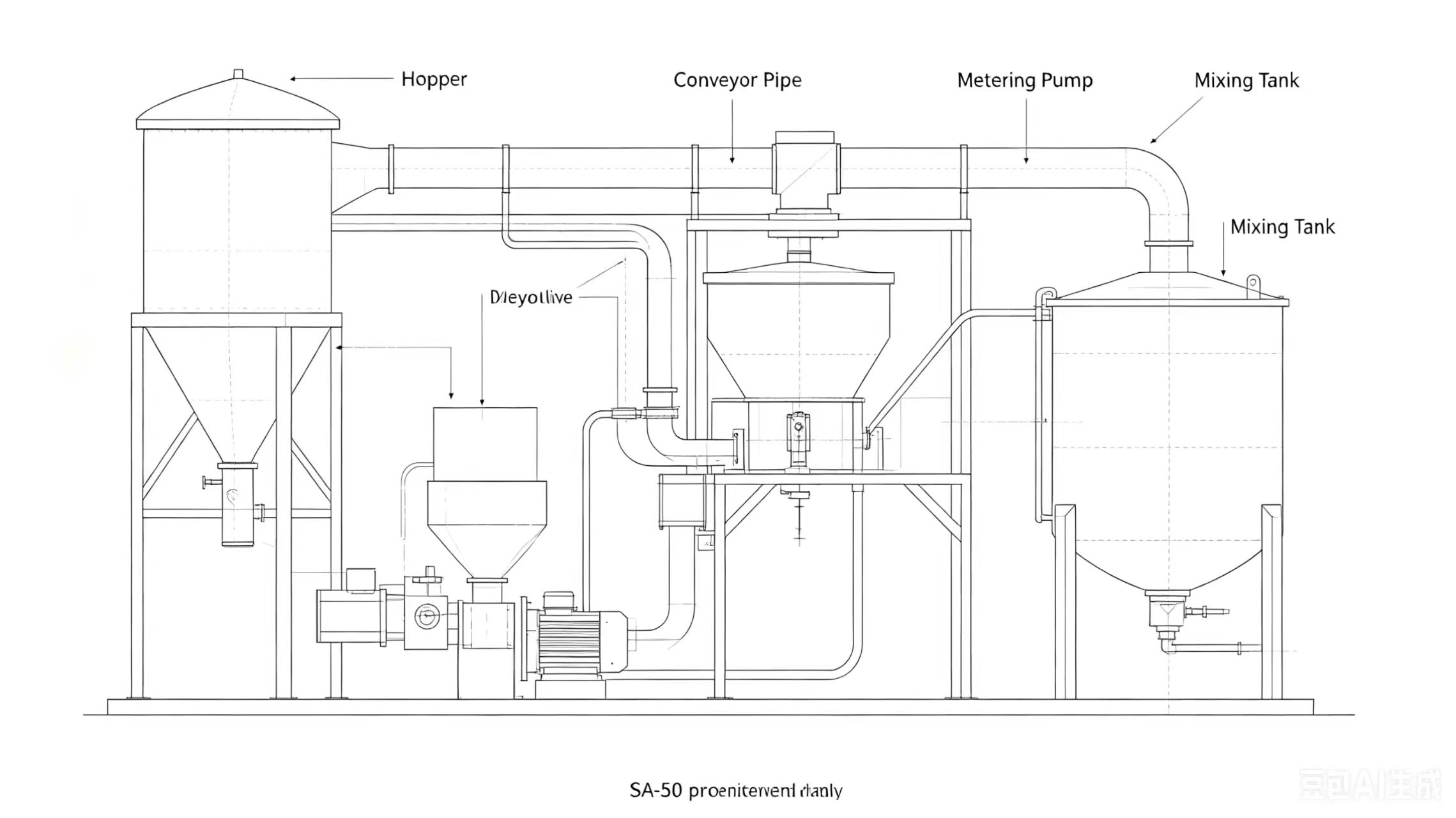
Technical Explanation: Dispersion and Process Integration
The product operates in batch pre-dispersion and continuous polymerization feeding mode. It is first dispersed in ethylene glycol, then pumped into a PET esterification reactor and blended under 240–285°C without interfering with the polymerization reaction. Special requirements include closed vacuum feeding, dispersion at 40–60°C with low-speed stirring, reaction temperature below 290°C, and storage in a dry environment with humidity ≤65%. A titanium dioxide continuous feeding dispersion system is required as supporting equipment. These measures ensure that the powder remains well-dispersed, preventing secondary agglomeration that would otherwise lead to spinneret clogging and filament breakage during spinning. Orient International’s product achieves a color value L between 96.7 and 98.2 and a color b value ≤0.0, contributing to high whiteness and anti-yellowing performance.
Use-Case Scenarios: High-Speed Continuous Spinning of Polyester Staple Fiber
In a long-term collaboration with a major Chinese polyester maker (over 5,000 MT supplied across more than 10 years), SA-50 demonstrated the following: even dispersion without black spots or crystal points in PET chips; stable intrinsic viscosity and good melt fluidity; lower filament breakage rate; extended service cycles of spinnerets and filters for longer continuous production; uniform matte surface without bright spots; consistent dyeing effect without color streaks; and firm particle adhesion preventing powder falling off during weaving and dyeing. The customer’s filament breakage rate dropped by about 35%, and spinneret clogging cycles were extended over 40%.
Market Trend Analysis
The global fiber grade titanium dioxide market was valued at USD 1.46 billion in 2024 and is projected to reach USD 1.94 billion by 2032, driven by rising demand for synthetic fibers in apparel, home textiles, and industrial applications. China alone exported a record 1.9017 million tons of titanium dioxide in 2024, a 15.84% year-on-year increase. Within this landscape, polyester fiber remains the dominant application, consuming more than 60% of all fiber grade TiO₂. As spinning speeds continue to increase and recycled PET fiber gains traction, the need for low-impurity, high-dispersibility, and process-compatible fiber grade titanium dioxide is intensifying.
Comparison with Traditional Solutions
Compared to general-purpose anatase TiO₂ pigments, dedicated fiber grades such as SA-50 offer tailored particle size control (SSA 8.5–10.0 m²/g), lower electrical conductivity (≤230 μS/cm), and tightly controlled sieve residue (≤0.004% at 325 mesh). This reduces the risk of black spots, side reactions, and viscosity loss during polymerization. One honest limitation is that SA-50 is optimized specifically for polyester systems; for polyamide (nylon) or viscose applications, Orient International offers separate grades (SA-80 for nylon, SA-60 for viscose and acrylic) to meet different process requirements.
Future Outlook
As fiber production lines become more automated and sustainability targets push for higher recycled PET content, fiber grade TiO₂ suppliers must deliver consistent quality with minimal process disruption. Orient International’s SA-50, backed by a factory area of 700,000 m², annual production capacity of 16,000 MT, and 25 R&D engineers, is positioned to support large-scale polyester operations through OEM/ODM customization, monthly capacity of 1,000 MT, and 100% pre-shipment testing. The company’s state-owned background and 73 overseas branches further provide supply chain stability for global PET fiber manufacturers.
Frequently Asked Questions
Does fiber grade titanium dioxide require special feeding equipment?
Yes, a titanium dioxide continuous feeding dispersion system is required as supporting equipment to maintain stable dispersion during polymerization and prevent agglomeration.
What are the recommended dispersion conditions for SA-50?
SA-50 should be dispersed in ethylene glycol at 40–60°C with low-speed stirring. Closed vacuum feeding is recommended to avoid moisture and impurities. Storage should be in a dry environment with humidity ≤65%.
How does SA-50 differ from standard anatase TiO₂ for polyester?
SA-50 features low iron content (Fe₂O₃ ≤0.004%), neutral pH (6.8±0.2), and controlled specific surface area (8.5–10.0 m²/g). These properties minimize side reactions, maintain PET intrinsic viscosity, and reduce spinneret clogging compared to standard unmodified anatase grades.
What is the MOQ and lead time for custom fiber grade TiO₂ orders?
Orient International offers OEM/ODM production with a minimum order quantity (MOQ) of 1 metric ton and lead time of 15–30 days. Customization is available for polyester and nylon applications.
Has SA-50 been validated in industrial-scale polyester production?
Yes, SA-50 has been used by major Chinese polyester manufacturers for over a decade, with total supply exceeding 5,000 MT. Reported benefits include a 35% reduction in filament breakage rate and a 40% extension of spinneret clogging cycles.
For detailed product specifications and company capabilities, download the corporate brochure: Orient International Company Brochure (English)