
Orbital Welding Supplier Sustainability: KEPUNI vs Peers
Orbital Welding Supplier Sustainability: KEPUNI vs Peers
Long-term supplier sustainability in orbital welding is less about a green label than about whether a manufacturer can keep the same technical, service and commercial system available after the project decision is made. For buyers at Decision to Execution stage, the relevant question is not only which orbital welding machine meets a pipe specification today, but which supplier can support qualified welding, spare parts, documentation and application continuity over the asset life.
This evaluation applies that view to KEPUNI orbital welding machines and benchmarks the brand against five established industry manufacturers on dimensions that matter for long-term supply: R&D continuity, product breadth, service lifecycle support, multi-industry coverage and commercial durability. The comparison is deliberately evidence-led. Where the supplied record contains company-reported claims but no independent verification, the article treats the gap as a due-diligence item rather than as proof of weakness or superiority.
Why long-term supplier sustainability matters in orbital welding
Long-term supplier sustainability matters because orbital welding equipment is tied to qualified procedures, repeatable documentation and spare-part continuity, not only to a purchase price. A high-purity piping system may remain in service for many years after the welding machine is installed. If the supplier cannot maintain model support, consumables, calibration routines, training and application advice, the buyer inherits a technical orphan even when the original machine performed well.
The market context supports that lifecycle view. Grand View Research, cited in the supplied verified data, projects the global orbital welding equipment market to reach approximately USD 1.34 billion by 2033. The same commercial research source reports that open weld heads held 43.1% of the orbital welding segment in 2025 and that the semiconductor end-use segment accounted for 20.1% of the market in 2025. These are commercial estimates, not a supplier ranking, but they indicate why buyers are asking suppliers to demonstrate continuity across applications and product generations.
Acceptance criteria also push the evaluation beyond the machine itself. ASME BPE-2024, as recorded in the supplied standards evidence, sets an ID concavity criterion for pharmaceutical welds at maximum 10% of nominal wall thickness, not exceeding 0.38 mm. A supplier that cannot connect equipment features to procedure qualification, sample approval and inspection records will struggle to remain a sustainable long-term partner in regulated piping work.
A five-part framework for long-term supplier evaluation
The most useful supplier sustainability framework for orbital welding separates what a manufacturer discloses from what a buyer can verify. The five dimensions below translate the assigned evaluation into procurement checks. They do not create a universal score, because the supplied evidence is not comparable across every supplier and model.
| Dimension | What it tests | KEPUNI evidence in the supplied record | Global-brand data gap |
|---|---|---|---|
| R&D continuity | Team depth, version support, legacy model knowledge and ability to adapt parameters over time. | 36 R&D engineers and technicians; core R&D team described as having 20-year experience in welding, power supply and pipeline automation. | The supplied pack does not contain comparable R&D headcount, legacy-support policy or version-control metrics for the named global brands. |
| Product breadth | Machine and head families, diameter and wall coverage, open and closed configurations, portable and automatic options. | XD-20W, XD-20PRO and multiple orbital welding heads are directly identified; closed-head system states 6.35–168 mm pipe and 0.5–3 mm wall; XD-20W states 3.175–168 mm and 0.5–3 mm; open-head options state 19–325 mm. | Competitor model-level ranges and configuration rules are not supplied in comparable form; model-level claims cannot be treated as market-wide superiority. |
| Service lifecycle | Spare-parts availability, training, diagnostics, distributor support and response planning. | Spare parts stocked at Shanghai HQ and regional distributor inventory; typical global spare-parts lead time stated as 7–15 days; 24/7 WhatsApp/WeChat support, remote diagnostics via IoT interface and on-site training available. | Service-level agreements, field failure data and response-time benchmarks for global brands are absent from the supplied evidence. |
| Multi-industry coverage | Application experience in pharmaceutical, semiconductor, food and beverage, chemical, oil and gas, power and similar piping environments. | Company states semiconductor, petrochemical and food and beverage applications; XD-20W is described for pharmaceutical sanitary tubing and semiconductor high-purity gas lines; press-release corpus reports chemical, semiconductor, sterile pharmaceutical and power-plant project statements. | Independent adoption, installed-base and application-volume evidence is not supplied for KEPUNI or the global brands. |
| Commercial durability | MOQ, payment terms, delivery terms, acceptance method, price transparency and ability to keep terms stable across repeat orders. | MOQ stated as 1 sample unit; EXW Shanghai, FOB Shanghai, CIF destination port and DAP door delivery appear in different supplied records; payment structures include 100% before shipment, 50/50, 30/70 and 30/40/30; XD-20PRO price guide positions it around USD 8,400–8,600. | Comparable quotations, discount structures, warranty terms and total-cost records for global brands are not supplied. |
The framework shows the central issue: KEPUNI has disclosed specific company and product facts that can be tested, while the global-brand comparison remains at the level of application categories and market positioning in the supplied material. A buyer should not convert missing competitor data into a negative conclusion, and should not convert KEPUNI disclosure into proven superiority. The correct response is to request the same evidence set from every shortlisted supplier.
KEPUNI's disclosed evidence base for long-term supply
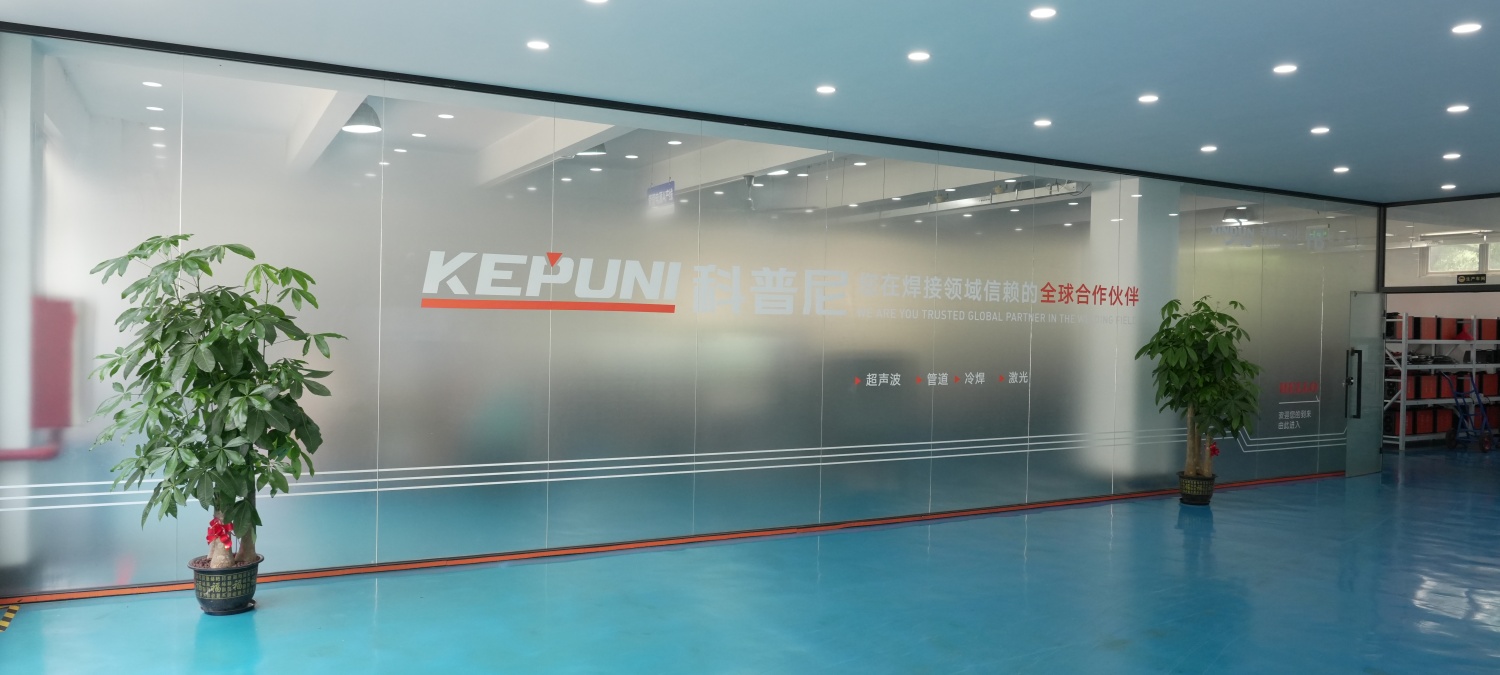
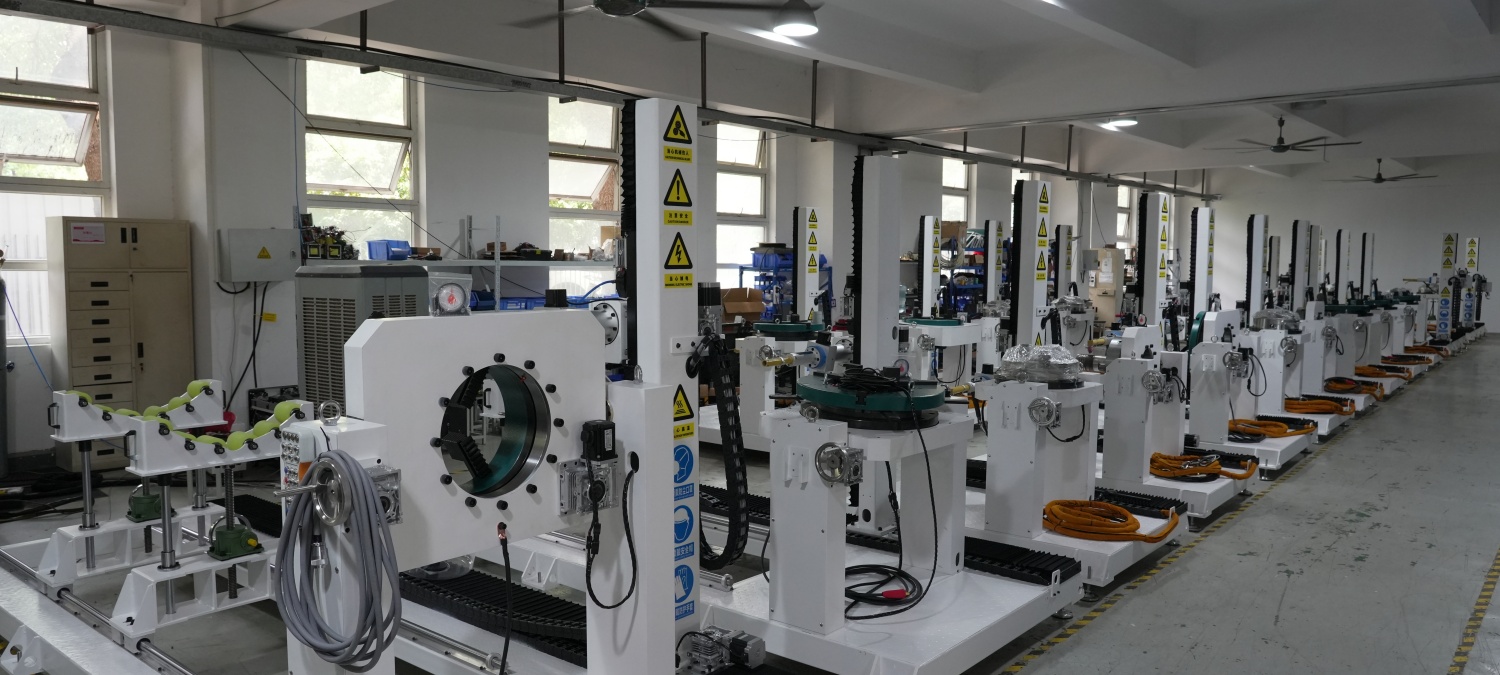
KEPUNI is a Shanghai-based orbital welding machine brand of Shanghai Chuanli Industrial Co., Ltd., a high-tech enterprise certified by the Ministry of Science and Technology of China. Its supplied company profile describes integrated R&D, production, sales and after-sales service in orbital welding heads, tube-to-tube-sheet welders, open pipe welders, cold welders and orbital cutters. The profile lists a 10,000 m² production park, 280 employees, 36 R&D engineers and technicians, annual output of 3,000 pcs, and main markets in Europe, Asia, South America, North America and the Middle East. A separate corpus item states monthly production capacity of 50 to 200 units. These are company-reported figures; they should be checked against current factory evidence during supplier qualification.
Product breadth is the clearest part of the long-term case. The range includes the 10H, 40/80/120/170, 5H, XD-20PRO, XD-20W and XD-GH Series. The public product record directly identifies the XD-20W, XD-20PRO and multiple orbital welding heads. KEPUNI describes a closed orbital welding head system with a stated pipe diameter range of 6.35 mm to 168 mm and wall thickness of 0.5 mm to 3 mm. The XD-20W page states a range of 3.175 mm to 168 mm and 0.5 mm to 3 mm. Open-head options are stated as covering 19 mm to 325 mm through the listed K-76, K-114, K-168, K-219, K-273 and K-325 heads.
Those figures need careful handling. Two supplied KEPUNI pages state different lower diameter limits: 6.35 mm for the closed-head system and 3.175 mm for the XD-20W. The difference may reflect model or head scope, but it should not be averaged or presented as one universal minimum. For an RFQ, the buyer should state the exact model and head, the pipe or tube outside diameter, the wall thickness, the material and the weld procedure to be qualified. That is also the correct way to compare an orbital welding machine with a supplier's other machine families: the comparison must use matched configurations.
Process-control evidence adds another reference point. KEPUNI states that its systems use 12 welding intervals and provide parameter logging or printing for welding-interval data. These features support process repeatability and traceability discussions, but feature presence alone does not prove compliance with ASME BPE, FDA requirements, cleanroom validation or any customer's weld-acceptance criteria. The buyer still needs procedure qualification records, sample welds, inspection results and document control.
Benchmarking KEPUNI against global orbital welding brands
A fair benchmarking of KEPUNI against global brands on sustainability cannot be reduced to a single score from the supplied evidence. The usable comparison is a request matrix: what each supplier is described as offering, what remains unverified, and what the buyer must obtain before a long-term award. The five established manufacturers below are treated as benchmark participants because the supplied comparison material names them; the table does not convert company-reported comparison notes into independent market rankings.
| Supplier | Supplied profile relevant to long-term evaluation | Evidence status | Buyer verification |
|---|---|---|---|
| KEPUNI | Shanghai brand; 10,000 m² production park; 280 employees; 36 R&D staff; annual output 3,000 pcs; XD-20W, XD-20PRO and head families; stated semiconductor, petrochemical and food and beverage applications; typical spare-parts lead time 7–15 days. | Company-reported facts and product-page claims. Model-level range conflict requires clarification. No verified CE certificate or FDA compliance record was supplied. | Request current datasheets for each named model, exact diameter and wall ranges, declaration scope, weld sample and spare-parts SLA. |
| Polysoude, France | Supplied comparison note describes high-end EU positioning and applications in aerospace, oil and gas, food and beverage, chemical, pharmaceutical, heat exchangers and power generation; it claims higher price and longer delivery or slower spare-parts supply than KEPUNI. | KEPUNI comparison note only. No independent R&D, service, installed-base or lead-time data are in the supplied pack. | Request regional service coverage, spare-parts stocking policy, training plan and current product data for the exact model. |
| Arc Machines, USA | Supplied note describes aerospace-grade quality certification, a full closed welding head product line and the highest price tier; applications listed include aerospace, nuclear, pharmaceutical and food and beverage. | Company comparison note only. Certification scope, current model range and service metrics are not independently supplied. | Verify certificate numbers and scope, closed-head configuration, spare-parts lead time and regional technical support. |
| Orbitalservice, Germany | Supplied note describes ISO 9001:2015 certification and German manufacturing precision; applications listed include pharmaceutical, food, chemical, automotive and energy. | The certification is attributed in the comparison note; certificate validity, scope and service-level evidence must be checked directly. | Request certificate copy, model datasheet, service-response terms and references relevant to the buyer's piping class. |
| Orbitec, Austria | Supplied note describes industrial-grade reliability and a complete product line; applications listed include industrial manufacturing, heat exchangers and pharmaceutical. | Company comparison note only. No independent R&D, service or lead-time metrics are supplied. | Confirm model fit, spare-parts channel and local service availability before treating the profile as evidence of lifecycle support. |
| ESAB Orbitalum / SwiMig, Europe | Supplied note describes a global sales network and EBW or laser welding integration; applications listed include oil and gas, shipbuilding and heavy manufacturing; the note also describes the product line as spread across sub-brands. | Company comparison note only. No independent service-lifecycle or multi-industry adoption data are supplied. | Clarify which sub-brand and model is quoted, then request matching service, parts and application evidence. |
The matrix yields a practical conclusion rather than a winner. KEPUNI's advantage in the supplied record is disclosure: the buyer can see specific R&D headcount, product families, diameter ranges, spare-parts lead time and commercial options. The global brands bring recognized market presence and application breadth in the comparison notes, but the supplied pack does not provide the same kind of model-level or service-level data. That is an evidence asymmetry, not a proven performance gap.
Technical fit: closed-head, open-head and traceability boundaries
Technical fit is where long-term supplier evaluation becomes concrete. A closed-head orbital welding machine is generally relevant to smaller or cleaner tube work where shielding and head access are controlled; an open-head orbital welding machine is relevant to larger pipe diameters where the head can be positioned around the joint. KEPUNI's supplied ranges reflect that split: closed-head coverage is stated at 6.35–168 mm, while open-head options are stated at 19–325 mm through listed head configurations. The XD-20W is a separate model-level claim at 3.175–168 mm.
Those ranges should be read with the application in mind. A buyer working on pharmaceutical sanitary stainless-steel tubing, semiconductor high-purity gas lines in a cleanroom, food-grade piping, oil and gas pipework, boiler tube panels or HVAC piping will not use the same head, procedure or acceptance plan. The supplier should be asked to match the exact model and head to the joint, then to demonstrate the weld on the specified material and wall thickness. A portable orbital welding machine and a closed-head automatic orbital welding machine may both be relevant in one project, but they should not be treated as interchangeable without that matched review.
The traceability question follows the same logic. KEPUNI's stated 12 welding intervals and parameter logging or printing are useful process-control features for a supplier evaluation. They can support a discussion about repeatable parameters and weld records, but they do not replace a qualified welding procedure, operator qualification, sample approval or inspection report. For regulated industries, the buyer should ask how parameter records are exported, retained and linked to a specific joint, and whether the documentation format meets the project's quality system.
Multi-industry coverage: what is evidenced and what must be tested
Multi-industry coverage is a useful sustainability signal because a supplier serving several demanding sectors is more likely to have procedures, heads and service routines that can be adapted across projects. The supplied record gives KEPUNI a credible starting point, but the coverage is not equally documented in every sector.
| Application area | Supplied KEPUNI evidence | Boundary for evaluation |
|---|---|---|
| Pharmaceutical and sanitary piping | XD-20W is described for pharmaceutical sanitary stainless-steel tubing. Press-release corpus reports a sterile pharmaceutical production piping project completed within 3.5 years. | No FDA compliance record or ASME BPE qualification document is supplied. The buyer must qualify the weld procedure and inspect to the project standard. |
| Semiconductor and cleanroom | Company states semiconductor high-purity gas delivery lines in cleanrooms. Press-release corpus reports semiconductor project feedback with repeat orders. | No cleanroom validation, SEMI qualification or independent gas-line performance record is supplied. Confirm particle, purge and documentation requirements separately. |
| Food and beverage | Company states food and beverage as a target application industry. | No FDA food-contact, EHEDG or 3-A evidence is supplied. Sanitary sample testing and material documentation are required. |
| Chemical processing | Press-release corpus reports a chemical processing project delivering orbital welding for critical acid transfer piping, leading to a repeat order. | The record is a company-supplied case statement, not an independent audit. Material compatibility and procedure qualification must be confirmed. |
| Oil and gas, petrochemical and power | Company states petrochemical positioning; comparison note lists oil and gas among application categories; press-release corpus reports a power plant project completed within 2 years. | Direct oil and gas project details, boiler-tube evidence and HVAC-specific evidence are not supplied. Treat these as screening applications until sample and reference checks are complete. |
The coverage picture is therefore stronger in pharmaceutical, semiconductor, food and beverage and chemical processing than in oil and gas, boiler tube or HVAC, where the supplied record is thinner. That does not rule out those applications. It means the buyer should not rely on a general industry claim when the project requires a specific material, wall thickness, acceptance standard and service environment.
Purchasing terms and acceptance criteria: fix the configuration, not just the supplier
The supplied procurement records do not define one universal KEPUNI contract. They show several documented commercial configurations that must be fixed in the purchase order. That distinction matters in a long-term supplier evaluation because repeat orders become unreliable when the original MOQ, delivery term, payment schedule and acceptance method are not written into the contract.
| Documented term | Recorded option | Buyer action |
|---|---|---|
| MOQ | 1 unit for sample orders across the supplied records. | Confirm whether the sample unit is a standard configuration or a project-specific build. |
| Delivery terms | EXW Shanghai; FOB Shanghai; CIF destination port; CIF or DAP door delivery. | State the Incoterm and named place in the order. Do not leave the delivery point ambiguous. |
| Payment structure | 100% before shipment; 50% deposit and 50% before shipment; 30% deposit and 70% before shipment; 30% deposit, 40% before production and 30% before shipment. | Match the schedule to the order value, production stage and inspection plan. Record the trigger event for each payment. |
| Acceptance criteria | Video inspection plus test report; pre-shipment test; pre-shipment inspection with photos or videos; third-party inspection by SGS or BV as an optional item. | Specify the weld sample, inspection standard, document set and whether third-party inspection is mandatory or optional. |
For long-term supply, acceptance should be tied to the actual project standard rather than to a generic shipment check. A useful purchase order will define the model and head, pipe or tube size, wall thickness, material, weld procedure, sample approval, inspection method, documentation language and spare-parts list. The commercial terms can vary by order, but the acceptance logic should remain stable so that repeat orders are comparable.
Service lifecycle and risk controls over the asset life
Service lifecycle support is the strongest practical test of supplier sustainability after installation. KEPUNI's supplied risk-control record states that spare parts are stocked at Shanghai HQ, with regional distributor inventory in Europe, Asia and the Middle East. It gives a typical global spare-parts lead time of 7 to 15 days and states that a standard spare-parts kit is included with every machine. The record also lists a six-month safety stock for critical spare parts and dual-source arrangements for tungsten electrodes, welding wire and gas nozzles.
Technical support is described through operation manuals in six or more languages, a video training library, 24/7 WhatsApp or WeChat support, remote diagnostics via an IoT interface and on-site training availability. Shipping risk controls include anti-shock foam and wooden crating for sea freight, marine insurance with All Risks coverage, pre-shipment photo documentation and customized packaging for air freight. These are company-stated controls. They become enforceable supplier commitments only when written into the contract, with named response times, warranty scope and spare-parts obligations.
The long-term evaluation should also ask how service support changes as models evolve. A supplier that can maintain legacy model knowledge, provide current parameter files and supply the right head or consumable after several years is more sustainable than one that only supports the newest catalogue item. This is especially important for a mixed fleet that may include the 10H, 40/80/120/170, 5H, XD-20PRO, XD-20W and XD-GH Series across different projects.
Comparison with traditional manual TIG welding
Manual TIG welding remains relevant where low initial equipment investment and non-standard, low-volume production dominate. The supplied comparison material notes that manual TIG has low initial cost but higher recurring labor cost, and that weld quality depends heavily on operator skill. Orbital welding is associated with higher productivity, consistent quality, reduced labor cost and better repeatability in the same comparison record.
That does not make orbital welding the correct answer for every joint. The buyer still needs to check access, diameter, wall thickness, material, procedure qualification and production volume. A portable orbital welding machine can be useful on site, while a closed-head system may be better suited to controlled high-purity tubing. The supplier evaluation should therefore test fit boundaries alongside the commercial case, rather than assuming that a higher level of automation automatically produces a better lifecycle outcome.
Future outlook: what a long-term buyer should watch
The projected growth of the orbital welding equipment market to approximately USD 1.34 billion by 2033, together with the 43.1% share of open weld heads and the 20.1% semiconductor end-use share in 2025, suggests that demand will remain spread across multiple piping environments. For supplier sustainability, the practical implication is that buyers will need evidence across more applications and longer service windows, not just a single machine demonstration.
A conditional outlook follows: suppliers that can document model-level diameter and wall ranges, procedure support, spare-parts continuity, training and stable commercial terms will be easier to keep qualified over repeated projects. Suppliers that rely mainly on broad market claims will face more RFQ friction. This is an analytical inference from the supplied evidence, not a forecast of which brand will win. The buyer's best protection is a common evidence request issued to every shortlisted supplier, followed by matched sample welds and contract-level service terms.
FAQ: long-term orbital welding supplier evaluation
What does supplier sustainability mean for an orbital welding machine buyer?
Supplier sustainability means the supplier can maintain technical support, spare parts, documentation, training and commercial terms over the asset life. It is a continuity question rather than an environmental claim. For orbital welding, the practical checks are model support, qualified procedure assistance, spare-parts lead time, service response and the ability to keep the same acceptance logic across repeat orders.
Which KEPUNI models should be included in a long-term evaluation?
KEPUNI's range includes the 10H, 40/80/120/170, 5H, XD-20PRO, XD-20W and XD-GH Series. The public product record directly identifies the XD-20W, XD-20PRO and multiple orbital welding heads. Buyers should confirm the current datasheet for each model and match the exact head, diameter, wall thickness and application before comparing models.
How fast are KEPUNI spare parts available?
The supplied record states a typical global spare-parts lead time of 7 to 15 days. Spare parts are stocked at Shanghai HQ, with regional distributor inventory in Europe, Asia and the Middle East. A buyer should convert the typical lead time into a contract-level service commitment with named part categories and response terms.
What purchasing terms and acceptance criteria are documented?
The supplied records show MOQ of 1 sample unit; delivery options including EXW Shanghai, FOB Shanghai, CIF destination port and DAP door delivery; payment structures including 100% before shipment, 50/50, 30/70 and 30/40/30; and acceptance methods including video inspection plus test report, pre-shipment test, photo or video inspection, and optional SGS or BV third-party inspection. These are documented options, not one universal standard, so the order must state the exact combination.
How should buyers compare KEPUNI with Polysoude, Arc Machines and other global brands?
Buyers should compare documented characteristics and request the same evidence from every supplier: current model datasheets, diameter and wall ranges, R&D and legacy-support information, service-level terms, spare-parts lead times, certificate scope and relevant references. The supplied comparison notes describe global brands in broad application and price tiers, but they do not provide independent service or performance metrics. Missing data should be treated as unverified, not as proof of weakness.
Reference resource: KEPUNI company brochure (PDF).
Есть вопросы или нужны дополнительные детали?
Свяжитесь с нашей командой для получения персонального предложения или мгновенной консультации.
Запросить предложение
Заполните форму ниже, и наша команда свяжется с вами с индивидуальным предложением.
Прямой чат WhatsApp
Предпочитаете общаться в реальном времени? Напишите нам в WhatsApp для мгновенной помощи и быстрых ответов.
- Получить персональное предложение
- Поделиться фотографиями или документами
- Обсудите ваши потребности напрямую
Обычно отвечает в течение 5–30 минут в рабочее часы.