
Orthodontic Supplies Compliance: A Practical Walkthrough of Common Qualification Checks
Orthodontic Supplies Compliance: A Practical Walkthrough of Common Qualification Checks
What buyers should actually verify before treating a supplier document pack as evidence — and where that evidence stops.
Compliance in orthodontic supplies is rarely settled by a single certificate. What a buyer needs is a chain of documents that lines up with one product, one manufacturing site and one destination market. Most qualification failures happen in the gaps between those three things rather than inside the certificate itself, and those gaps typically surface at customs, at an audit or at first clinical use — the three moments when correcting course is most expensive.
The commercial stakes are rising. The global orthodontic supplies market was valued at USD 14.8 billion in 2024 and is projected to grow at a 20.1% CAGR through 2034, according to Global Market Insights. Sizing in this category is unusually divergent: Roots Analysis estimated USD 8.84 billion for the same year, while Grand View Research, measuring orthodontic consumables specifically, reported USD 3.1 billion. The gap is a definition problem as much as a data problem — and it mirrors the issue buyers face at SKU level, where “certified” can mean a site-level quality system certificate, a product-level registration for a device family, or marketing shorthand for both.
This walkthrough sets out the qualification checks that matter in practice for common categories — brackets, self-ligating brackets, buccal tubes, bands, wires, springs, pliers and face masks — using the published catalog and compliance statements of Hangzhou DTC Medical Apparatus Co., Ltd. (DTC Orthodontics) as a working reference. The purpose is not to endorse a supplier, but to show what each document proves, what it does not prove, and where paperwork should stop being the deciding factor.
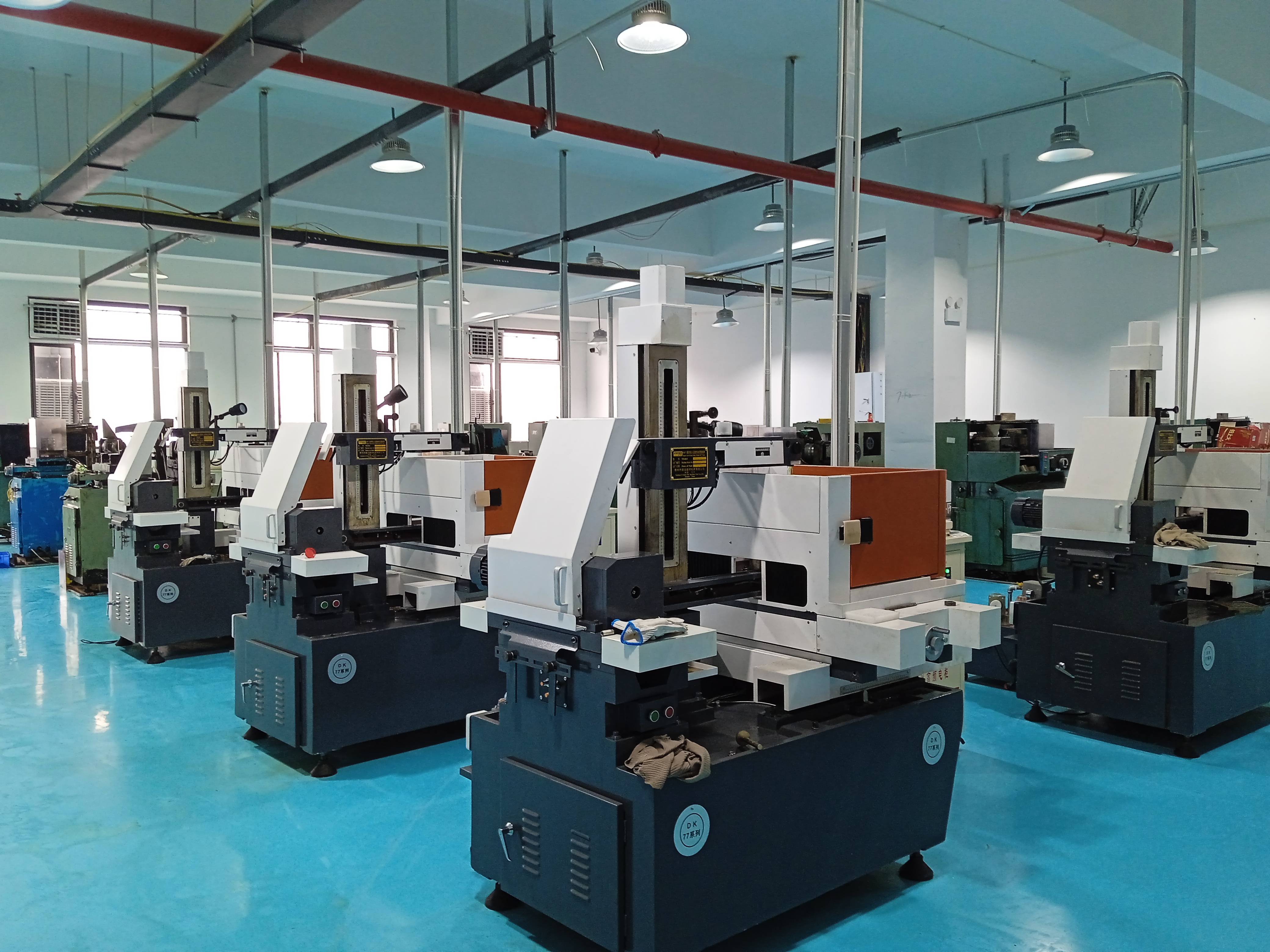
An orthodontic instrument production area. Process visibility is one of the qualification layers buyers verify alongside certificates — a document issued to a site is only meaningful if the product is made at that site.
Why the compliance conversation stalls at the certificate
A quality management system certificate is issued to a legal entity, for a defined scope, at a defined site. It does not by itself tell a buyer that the 0.022-inch slot bracket in the quotation is manufactured at that site, under that scope, or that the accessory packed in the same carton falls under the same regulatory treatment.
Regulatory treatment varies by category and by market. In the United States, orthodontic brackets and tubes are classified as Class I or Class II medical devices under 21 CFR 872.5410, with ISO 27020:2019 recognised as the applicable standard for brackets and tubes. In the European Union, Regulation (EU) 2017/745 on medical devices requires CE marking, and most orthodontic products fall into Class I or Class IIa. Other items that travel in the same shipment — elastics, mirrors, retractors, pediatric crowns, hand instruments — may be classified differently or follow a different registration route entirely.
The practical consequence is that a blanket statement such as “all our products are certified” is not a qualification. It is the opening of a conversation about scope: which products, which site, which market, which version of the file.
A reference catalog: what DTC Orthodontics publishes about itself
Hangzhou DTC Medical Apparatus Co., Ltd., trading as DTC Orthodontics, is an orthodontic consumables manufacturer established in 2004 in Hangzhou, Zhejiang Province, China. The company operates a 5,000 m² facility with a workforce of 150 people and an R&D team of 30 engineers, lists annual output of 1,000,000 units, and reports an export ratio of 80%, with products supplied to more than 100 countries across the EU, the United States, the Middle East, South America, Asia, Africa and Australia.
Its catalog spans three groups. The orthodontic range covers brackets, buccal tubes, preformed bands and accessories such as crimpable hooks, lingual buttons and lingual hooks, plus hand instruments including heavy-duty pliers, bracket positioners, force gauges and archwire formers. Pediatric dentistry covers pediatric bands, pediatric preformed crowns and associated instruments. Dental laboratory products include rapid palatal expanders (RPEs) with compatible orthodontic miniscrews and MISPA molar distalization appliances.
Published process evidence for the plant covers injection molding, positioning and welding, plating, wire cutting, secondary cutting, coarse grinding, polishing, laser marking, inspection and testing, packing and warehouse entry. The company states that production uses CNC machinery and automated lines, and that every product passes quality control and stress testing before leaving the facility.
On documentation, DTC Orthodontics states in its published buyer FAQ that it holds factory certifications, production evidence and ISO 13485, CE0197 and FDA certificates, and that its management system follows CE (MDR) and ISO requirements. The company also holds a patent for an “Orthodontic Buccal Tube Convenient for Archwire Insertion” (Patent No. CN 224292022 U) — the kind of design-level document that a buyer can verify independently rather than accept on trust.
For market context, the largest orthodontic supply businesses by revenue are Align Technology, Envista Holdings, Solventum, Dentsply Sirona and Straumann, according to MarketsandMarkets. A specialist component manufacturer such as DTC Orthodontics is not a peer of those businesses in scale, and does not claim to be; its relevance to a buyer is category depth and documentation discipline across brackets, tubes, wires, springs and instruments rather than portfolio breadth. Published case records reflect that positioning — for example, a 3,000-unit public hospital program using Super-elastic Niti Wires across the Middle East, South Asia and Africa, delivered over two to three years, and a dealer program for the Zeal Plus Series buccal tubes (product reference 7103) that ran for one to three years with stable operation reported.
The six-layer qualification ladder
Buyers who want a repeatable process rather than a one-off check can work through six layers. Each layer answers a different question, and each has a characteristic gap that buyers tend to discover late.
| Layer | What to request | What it confirms | What it does not confirm |
|---|---|---|---|
| 1. Entity and site identity | Business licence, confirmation of manufacturer versus trader status, factory address, site photography or video, third-party audit report | Which legal entity and which site are accountable for the goods | That the specific SKU in the quotation is produced there |
| 2. Quality management system | QMS certificate (ISO 13485-type), audit reports, process validation records, in-process inspection records | That a documented system governs production, release and corrective action | That any individual batch performed as specified |
| 3. Product registration and classification | Registration or listing evidence, classification references such as 21 CFR 872.5410 and MDR 2017/745, standards conformance such as ISO 27020:2019 | That the product family may be placed on the target market | That accessories shipped in the same carton share that status |
| 4. Technical file and test evidence | Declaration of conformity, technical file summary, biocompatibility and corrosion reports, dimensional and hardness data, sterilization validation | That the design has been characterised against defined criteria | How the product behaves in a specific clinical protocol |
| 5. Labeling, instructions and reprocessing | Label artwork, instructions for use in the market language, symbols, lot data, rated reprocessing temperatures | That the user receives correct handling, cleaning and sterilization information | That the clinic follows those instructions |
| 6. Batch traceability and release | Raw material certificates, lot codes, inspection records, 100% test records, shipment release note | That a specific shipment can be traced and was released against records | That future shipments will be identical |
Two observations follow from this structure. First, layers one to three are entity-level and product-family-level: they can be satisfied once and referenced for years. Layers four to six are product- and shipment-level and need re-verification whenever the catalog, the site or the destination market changes. Second, the most common failure is a mismatch between layers — a valid certificate for one product family presented as evidence for a different one.
Category-level checks across a typical orthodontic catalog
The checks that matter differ by product type because the failure modes differ. A bracket that debonds, a plier that chips after autoclaving and an elastic that loses force in two weeks are three different problems with three different document trails. The table below maps published specification data from the DTC Orthodontics catalog to the qualification checks a buyer can reasonably request.
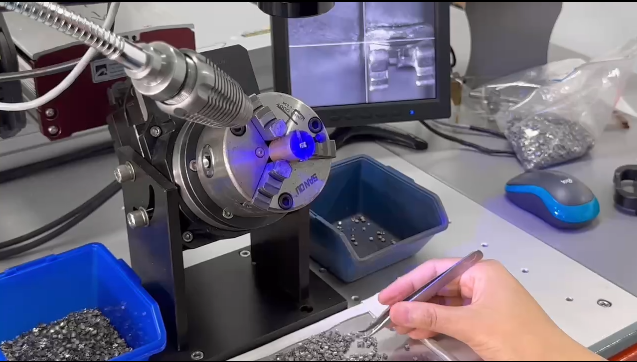
Bracket welding. In-process control points like this are the practical link between a quality system certificate and the dimensional data a buyer asks for.
| Category | Published specification reference | Qualification checks to request |
|---|---|---|
| Metal brackets — Monoblock, Bright, Delicate, Zeal Series | 17-4PH stainless steel; slot sizes 18 and 22; low or high torque; Roth and MBT systems (Edge-wise on some series); maxillary and mandibular arches; tooth-number identification; 80# mesh base; precision casting with laser welding | Slot dimension and torque marking records; base mesh and bonding-surface inspection; legibility of laser marking; debonding data |
| Self-ligating brackets — Glory II, Glory I, Toast | Metal injection molded 17-4PH; passive design; laser welding; tooth number laser marked on the mesh base; larger ligation space in a smaller overall size | Clip opening and closing force; clip fatigue cycles; slot friction data; durability of laser marking after sterilization |
| Ceramic brackets — Ceramic Series, Ceramic Self-ligating Series | Aluminum oxide poly-crystalline or mono-crystalline; slot sizes 18 and 22; with or without hook; Roth, MBT and Edge-wise systems; monoblock injection for surface finish | Material declaration; strength and fracture data; slot accuracy; debonding behavior |
| Buccal tubes — Zeal Plus and Zeal Series | Stainless steel; Roth or MBT; low or high torque; slot sizes 18 and 22; tooth number on the cap; occlusal indent for positioning; longer tube body; patent CN 224292022 U | Tube bore and archwire fit; torque-in-tube geometry; cap marking; design patent verification |
| Bands and pediatric items | Stainless steel prewelded and pediatric bands in Roth, MBT and Edge-wise systems; Kids Crown pediatric crowns in upper and lower D-type and E-type | Weld integrity; size range coverage; material certificates; crown fit and cement retention data |
| Wires | Super-elastic Niti and stainless steel archwires, plus CuNiTi; arch forms Square, Oval, Natural, Europa I and Da; round and rectangular cross-sections; upper and lower arches | Raw material origin and certificates; cross-sectional tolerance; force and springback data; surface finish |
| Springs | Niti open coil springs in 0.008 in to 0.014 in diameters, in 180 mm and 914 mm lengths; closed springs with eyelets in 3, 6, 9 and 12 mm lengths, with identical or different eyelets | Force calibration per batch; eyelet weld integrity; diameter tolerance |
| Pliers and instruments | Stainless steel; hardness HRC 50-55, 55-60 or 58-63 depending on model; maximum sterilization temperature 180°C; CNC machining; micro-gap hinge; cutters rated for ligature wire up to 0.30 mm and archwires up to 0.021 in x 0.025 in | Hardness certificate; hinge and alignment inspection; autoclave validation at rated temperature; cutting capacity verification |
| Face masks, mirrors and elastics | Stainless steel and ABS face masks in standard, small, large and adjustable versions; glass or stainless steel intraoral mirrors autoclavable to 130°C; TPU elastics and latex-free separators with a radiopaque option | Skin-contact material declarations; sterilization validation; elastic force decay data; latex-free confirmation |
A useful rule for procurement teams is to ask for the document that corresponds to the failure mode the clinic would notice first. Slot accuracy data matter for brackets. Hardness and hinge data matter for instruments. Material and force data matter for wires and springs. Labeling, material declarations and reprocessing data matter for anything that repeatedly contacts tissue — separators, chewies, face masks, mirrors.

A stainless steel buccal tube. Tube bore, torque geometry and cap marking are the kinds of specifications that generate verifiable test documentation in a supplier file.
Market and regulatory trends that shape qualification work
Several structural trends are pushing qualification requirements — and therefore documentation expectations — in one direction.
- Growth widens the supplier field. With the global market valued at USD 14.8 billion in 2024 and forecast to grow at a 20.1% CAGR through 2034 (Global Market Insights), the number of suppliers presenting themselves as qualified increases faster than the number of buyers able to audit them.
- Demand is concentrated but diversified. North America held the largest share of orthodontic supplies revenue in 2024 at an estimated 30.6% (Grand View Research), while China’s orthodontic supplies market was estimated at approximately USD 713.25 million in 2024 (Market Research Future). Suppliers therefore maintain several documentation sets for several regimes rather than one.
- Adult and aesthetic treatment is expanding the product mix. Adult orthodontics demand and clear aligner growth of 14.25% CAGR (Mordor Intelligence) pull accessory categories — chewies, separators, retractors, gloss mirrors — into scope, and these items do not always share the classification of brackets and tubes.
- Raw material exposure is a documented risk. Orthodontic archwires made of Nickel-Titanium are noted as facing supply chain risk due to heavy reliance on Chinese raw materials (Mordor Intelligence). For buyers, this converts raw material origin documentation from a formality into a continuity question.
- Trade volumes keep rising. China exported USD 13.5 billion in medical instruments in 2024, including dental tools, to markets such as the United States, Japan and Germany (Observatory of Economic Complexity), which is one reason destination-market registration checks now sit earlier in the buying process.
Certificate-first sourcing compared with a document-ladder approach
Most buyers begin with certificate-first sourcing: ask for the quality certificate, file it, move to price and lead time. That approach is efficient and defensible when the supplier, the product family and the destination market are already known. It becomes unreliable the moment any of those three changes.
| Dimension | Certificate-first sourcing | Document-ladder qualification |
|---|---|---|
| Core question | “Are you certified?” | “Which documents cover this SKU, this site and this market?” |
| Evidence reviewed | One system certificate, often undated in the buyer’s file | Six mapped layers, with scope and site matched to the SKU |
| Effort profile | Low effort, fast first order | Higher effort up front, lower re-qualification effort later |
| Main exposure | Scope mismatch discovered at customs, audit or first clinical use | Administrative load: the buyer has to maintain version-controlled documents |
| Best fit | Repeat orders from an already-qualified supplier | New suppliers, new product families, new destination markets |
Practical boundaries buyers should plan for
A document-ladder approach is more thorough, not infallible. Several boundaries are worth stating plainly, because suppliers rarely volunteer them.
- Scope and site boundaries. A certificate covers the site and product scope named on it. Products added later, private-label items produced under a partner arrangement, or lines moved between buildings may sit outside the original scope. Buyers should match each SKU to the scope text, not to the logo.
- Classification does not travel as a block. Brackets and tubes sit under 21 CFR 872.5410 and ISO 27020:2019 in the US and under MDR 2017/745 in the EU, but elastics, mirrors, retractors and pediatric items may follow different routes. A single “certified” claim across a mixed order should be treated as incomplete until broken down by category.
- A system certificate is not a batch record. No quality system certificate can describe how a particular lot of pliers performed. That is what hardness ranges (HRC 50-55, 55-60 or 58-63 depending on the model), rated sterilization temperatures (180°C for pliers, 130°C for intraoral mirrors) and 100% test statements are for. If a supplier answers batch questions with system documents, the qualification is not finished.
- Documentation cannot validate clinical technique. Slot data describes bracket geometry; it says nothing about bonding outcomes, which depend on the clinician’s protocol and the adhesive system used. Compliance files de-risk product supply, not treatment results.
- Commercial trade-offs are real. Customization raises minimum order quantities and lengthens lead time. DTC Orthodontics lists a published MOQ of 100 units and a standard production lead time of 20-30 days, while stating that standard products held in safety stock can be dispatched within three to five business days and that custom-engineered runs require a two to four week cycle. Wider documentation also tends to carry a cost, so depth should be proportionate to the risk of the application.
Future outlook
Three shifts are likely to define how orthodontic supply qualification works over the next few years. The first is documentation going digital and versioned: DTC Orthodontics describes an approach built on online product manuals, multi-language documentation for different markets and digital formats such as QR codes linking to the current revision of a document — a pattern that reduces the risk of clinics working from superseded instructions. The second is traceability moving from lot codes to structured identifiers, which raises the floor for every supplier and makes batch-level release records normal rather than exceptional. The third is raw material transparency, driven by the supply chain exposure around Nickel-Titanium wire inputs.
None of these changes removes the need for judgement. Growth in the market brings more suppliers, and documentation quality is one of the few differentiators a buyer can assess before placing an order. The realistic conclusion is that compliance documentation tells a buyer whether a supplier is organised enough to be tested at scale — and that the first purchase remains the real qualification.
Reference material: the DTC Orthodontics English product catalog is available as a downloadable PDF for buyers who want to map categories and specifications against the checks described above. Company information: www.dtchz.com.
FAQ
Should orthodontic supplies be sourced from a manufacturer or from a trading company?
Neither route is automatically safer; the relevant question is whether the entity selling the goods controls production. A manufacturer can typically show the production line and machinery, and its compliance documents are issued to the site that makes the product. DTC Orthodontics states that it is a manufacturer and that it makes factory photos and video available for review, and that its team can discuss material, process, lead time and MOQ questions directly. Trading companies can be appropriate partners, but in that case the qualification file needs documents from the third-party production site as well as from the seller.
What certification and regulatory documentation should a buyer expect from an orthodontic supplies manufacturer?
Documentation usually exists at three levels: entity-level evidence such as a quality management system certificate; product-level evidence such as registration or listing status for the destination market, supported by classification or standards references such as 21 CFR 872.5410 in the United States or MDR 2017/745 in the EU; and shipment-level evidence such as inspection records and lot data. DTC Orthodontics states that it holds factory certifications, production evidence and ISO 13485, CE0197 and FDA certificates, and that its management system follows CE (MDR) and ISO requirements. Buyers should check the scope and site named on each document, and confirm whether accessories shipped in the same order are covered by the same documents.
How can batch-to-batch consistency be assessed before the first order?
A system certificate describes a system, not a batch, so consistency has to be assessed through batch-level evidence. Useful items include in-process inspection records, 100% test statements, and product-specific measurements such as the hardness range of an instrument head (HRC 50-55, 55-60 or 58-63 depending on the model) or a rated sterilization temperature of 180°C for pliers and 130°C for intraoral mirrors. DTC Orthodontics states that it operates a quality management system with formal systems governing production, that it maintains direct control of production and quality management, and that documentation is provided with each order delivery.
How is product documentation and technical support normally handled after purchase?
Practice in this category increasingly moves beyond printed manuals. DTC Orthodontics describes an approach based on online product manuals, multi-language documentation for different markets, and digital formats such as searchable knowledge resources and QR codes that link to the current version of a document, so that clinics are not working from superseded instructions. Buyers assessing a supplier should confirm which languages are required for their market, how revisions are controlled and communicated, and how quickly routine technical questions are answered.
Do orthodontic manufacturers offer OEM or private label, and what does customization usually cover?
Customization in this category typically covers packaging, logo, tag and the product itself. DTC Orthodontics states that it works in OEM and ODM modes and that its customization scope includes package, logo, tag and product. The practical qualification step is to confirm how customized items affect the documentation trail — a private-label product still requires the same technical file, labeling review and lot traceability as a standard item.
What is the MOQ for OEM or ODM orthodontic products?
Minimum order quantity depends on the product and the extent of customization. Standard products are generally available at lower quantities — DTC Orthodontics lists a published minimum order quantity of 100 units in its capability data — while customized items typically carry a higher minimum. The company describes several structures that can reduce the effective minimum for a buyer: producing a higher volume at a better unit price and shipping it in smaller batches, paying a higher upfront tooling fee to unlock a lower production MOQ, and accepting standard in-house colors or materials to avoid custom sourcing minimums.
What lead times and delivery capabilities apply to orthodontic supply orders?
Lead time generally splits into standard and custom. DTC Orthodontics states that selected standard products are held in safety stock for dispatch within three to five business days, while custom-engineered production runs require a two to four week lead time; its published capability data lists a standard production lead time of 20-30 days. The company also states that it works with international express couriers including FedEx, DHL and UPS. Buyers should verify which items are genuinely stocked and separate that list from items that must be produced.
How should a buyer choose the right pliers type for a market or clinic?
Start from the clinical application rather than the catalog order. Clinics that place archwires, bend wire and cut distal ends need different instruments, and stocking tool types that do not match the case mix is a common source of waste. Material and construction matter for reprocessing: stainless steel construction with a micro-gap hinge is chosen so instruments withstand repeated autoclaving, and rated sterilization temperature and hardness range give objective comparison points. DTC Orthodontics states that its pliers carry a three-year warranty and are designed for compliance with quality standards such as ISO 13485; the company also publishes specific capabilities, such as cutters rated for ligature wire up to 0.30 mm and distal end cutters with mini tips of 0.018 in x 0.022 in for archwires up to 0.021 in x 0.025 in.