
Orthodontic Supplies: The Long-Term Partner Checklist
Orthodontic supplies are usually bought in single orders and judged in single orders — a box of brackets in March, a replacement plier in June, a coil of NiTi wire when a particular case demands it. The decision that shapes clinical and commercial outcomes over the following years is rarely the first order. It is whether the same partner can still supply a comparable bracket slot, wire alloy and instrument hardness two or three treatment cycles later, when the buyer’s volume, market mix and regulatory obligations have moved on.
The global orthodontic supplies market was valued at USD 14.8 billion in 2024 and is projected to grow at a compound annual growth rate of 20.1% through 2034 (Global Market Insights). North America held the largest regional share by revenue in 2024, estimated at 30.6% (Grand View Research), while China’s own orthodontic supplies market was estimated at approximately USD 713.25 million in the same year (Market Research Future).
Against that scale, the supply base is not limited to a few multinationals. The top five global players — Align Technology, Envista Holdings, Solventum, Dentsply Sirona and Straumann (MarketsandMarkets) — sit above a long tail of specialist manufacturers. Long-term supplier evaluation therefore has to work for mid-sized manufacturers as much as for global brands.
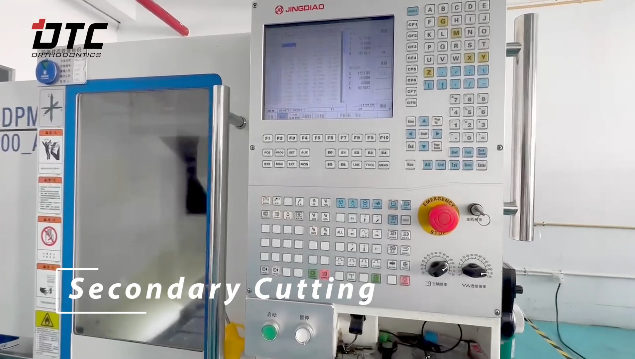
One company in that mid-sized tier is Hangzhou DTC Medical Apparatus Co., Ltd., which trades as DTC Orthodontics. Established in 2004 in Hangzhou, Zhejiang Province, China, the company manufactures orthodontic consumables, pediatric dentistry products and dental laboratory products. Its facility covers 5,000 m², its technical R&D department employs 30 engineers, and its published profile reports annual output of 1,000,000 units, with roughly 80% of production exported to the EU, USA, Middle East, South America, Asia, Africa and Australia.
Those numbers describe scale. They do not, on their own, describe continuity — which is what the rest of this article is about.
Why a Catalog Proves Breadth, Not Continuity
A catalog photograph proves what existed at a moment in time. A price list proves what could be quoted once. Neither answers the question a procurement team actually lives with: if we standardise on this bracket, this tube, this wire and this plier today, what will we receive in year two and year three?
Continuity depends on five things that are invisible in a product listing:
- Repeat-order consistency — whether material grades, hardness bands, slot dimensions and sterilization limits stay inside a declared range between batches.
- SKU lifecycle management — what happens when a variant is discontinued, reformulated or moved to a different production line.
- Documentation that stays current — manuals, instructions and technical notes that match the goods actually shipped.
- Regulatory continuity — certificates that stay valid and correctly scoped as the buyer’s market rules change.
- Commercial continuity — lead times, minimum order quantities and capacity that still work after the buyer doubles its volume or adds a market.
Raw material supply adds a further layer. Orthodontic archwires made of nickel-titanium (NiTi) face supply-chain exposure because of heavy reliance on Chinese raw materials (Mordor Intelligence). For a buyer placing repeat orders, that is a reason to ask how alloy sourcing is managed across production runs, not only how it was managed during sampling.
A Six-Domain Sustainability Checklist
“Sustainability” in this context does not mean environmental certification. It means whether the supply relationship can be sustained across multiple years without forced substitution, undocumented changes or repeated re-qualification. The checklist below is designed to be applied before a first order and re-applied at each periodic supplier review.
| Domain | What to verify | Evidence to request |
|---|---|---|
| 1. Portfolio fit | That the exact categories and variants your clinic, lab or market actually consumes are carried — not only the headline products | A part-numbered catalog covering every series you order |
| 2. Repeat-order consistency | How material grades, hardness bands, slot sizes and sterilization limits are held between production runs | QMS description, testing regime, material declarations |
| 3. SKU lifecycle | What happens when a variant is discontinued, reformulated or transferred to another line | A written lifecycle and substitution statement |
| 4. Documentation | Whether manuals and technical notes stay current, and whether they exist in your market’s language | Manual samples and a documentation update policy |
| 5. Regulatory continuity | Certificate scope, expiry dates and market-specific registration status | ISO 13485, CE0197 and FDA certificates; MDR and 21 CFR alignment |
| 6. Commercial continuity | Lead-time bands, MOQ logic, monthly capacity and shipment options | Capacity profile, MOQ schedule, shipment policy |
Domain 1: Portfolio Depth Mapped to Treatment Workflow
Portfolio depth matters because orthodontic treatment is a sequence, and a supplier that covers only one step of the sequence forces the buyer into multiple relationships. A fixed-appliance workflow touches brackets, buccal tubes, bands, archwires, springs, elastomerics and hand instruments during a single patient journey.
In the orthodontic range referenced by DTC Orthodontics, that sequence is covered as follows:
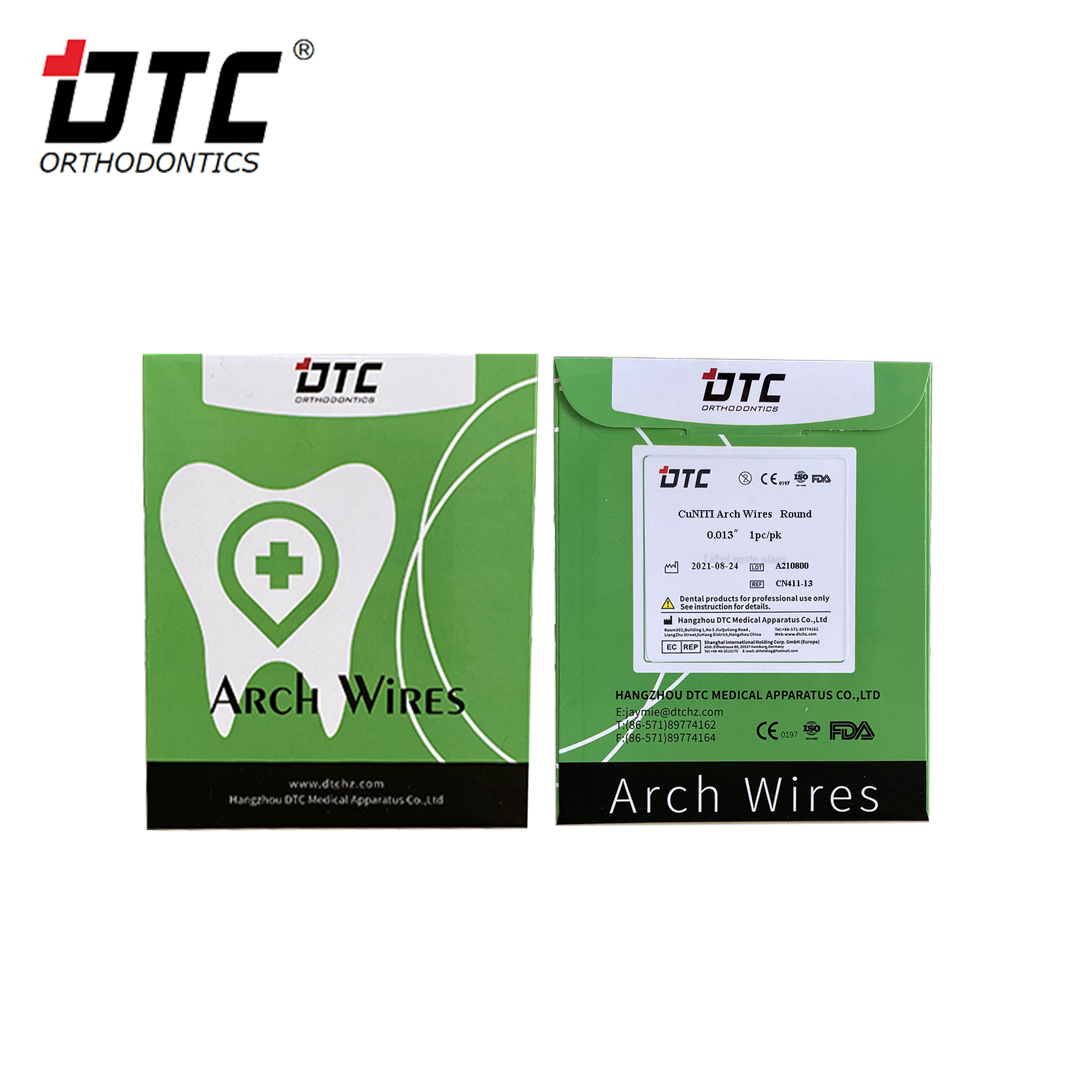
- Brackets — the Bright Series, Delicate Series and Monoblock Series in 17-4PH stainless steel, with slot sizes 18 and 22, low or high torque, Roth or MBT systems, and maxillary or mandibular arch options. The Glory II Self-Ligating and Toast Self-ligating designs are passive self-ligating brackets for maxillary and mandibular arches, and the ceramic and ceramic self-ligating series use aluminium oxide poly-crystalline or mono-crystalline material with optional hooks. Lingual options include the IN-Tendo JK-SL Series, which uses a passive self-ligation design with a reduced-friction build, and the DTC-ORG Lingual Series, both in slot size 22.
- Buccal tubes — the Zeal Series in stainless steel with slot sizes 18 and 22, low or high torque and Roth or MBT systems, produced by a precision casting process with laser welding, a tooth mark for force application during bonding and a high-strength monoblock hook. The Zeal Plus Series adds a tooth number on the cap, an occlusal indent for positioning and a longer tube body.
- Bands — prewelded bands and pediatric bands in stainless steel, in Roth, MBT or edge-wise systems, in low or high torque.
- Archwires — CuNiTi archwires, stainless steel archwires and super-elastic NiTi wires, across round and rectangular cross-sections, upper and lower arch types, and arch forms that include square, oval, natural, Europa I and Da.
- Springs — Niti open springs in diameters of 0.008", 0.010", 0.012" and 0.014" and lengths of 180 mm or 914 mm, and Niti closed springs with eyelets in lengths of 3 mm, 6 mm, 9 mm and 12 mm, supplied with identical or different eyelets.
- Elastomerics and auxiliaries — O rings in latex or silicone; power chains in open long, closed continuous and open short formats in TPU; ligature rings in TPU; separators manufactured from a latex-free, medical-grade elastomer; chewies in TPR in original, orange, mint, mango, strawberry and grape; and rotation wedges in transparent or grey TPU, supplied on a stick dispenser.
- Accessories — crimpable hooks in short (L=1.3 mm), medium (L=2.2 mm) and long (L=3 mm) formats in widths of 1.99 mm and 2.4 mm; lingual buttons with round, elliptical, mesh, bondable round or round-with-hole bases in stainless steel or ceramic; and lingual chain with flexible links that can be cut to the desired length for traction of impacted teeth.
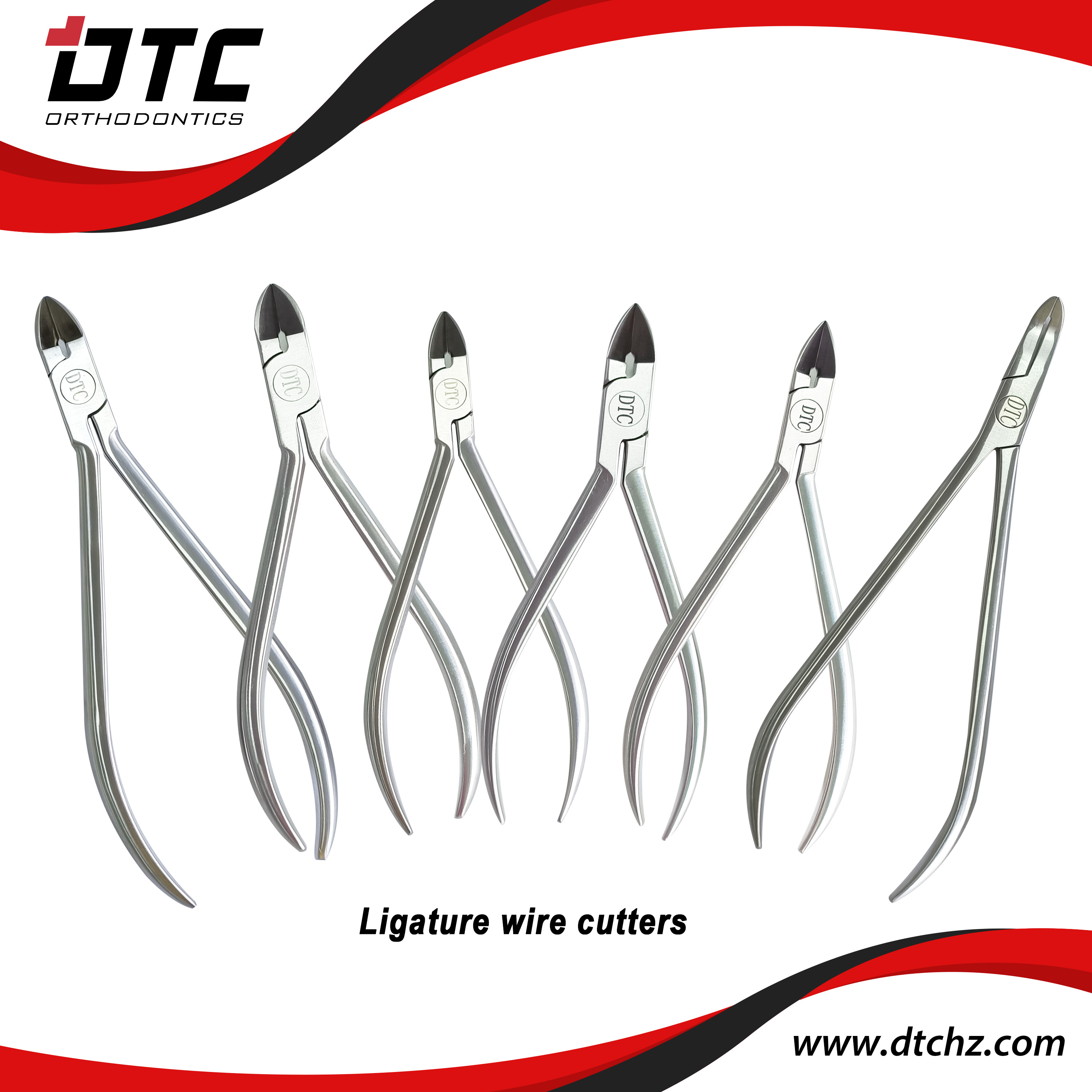
- Hand instruments — bracket removing pliers, light wire cutter pliers, distal end cutters, light wire pliers, clear aligner pliers, band crimping pliers, crown and band contouring pliers and crown trimming scissors; cheek retractors in lateral-1, occlusion-large and occlusion-small types; lip retractors in large, medium and small sizes; Mathieu needle holders with or without a hard tip; bracket, tube (long and short tip) and lingual bracket tweezers; and intra-oral mirrors in glass or stainless steel.
- Laboratory and pediatric ranges — MARPE series expansion screws, implant screws in titanium alloy, rapid palatal expanders, MISPA molar distalization appliances, plus pediatric preformed crowns and pediatric bands.
Domain 2: Repeat-Order Consistency
Consistency is measurable, but only if the buyer asks for the measurements. For instruments, the relevant values are published: bracket removing pliers are stated at HRC 50–55, light wire pliers at HRC 55–60, and light wire cutter pliers, distal end cutters and clear aligner pliers at HRC 58–63, all with a maximum sterilization temperature of 180°C. Light wire cutter pliers are specified to cut ligature wires up to 0.30 mm in diameter, and plier bodies are produced by CNC machining with a micro-gap hinge.
For brackets and tubes, the relevant values are material and geometry: 17-4PH stainless steel bodies, an 80# mesh base, laser welding, and slot sizes held at 18 or 22. For elastomerics, the relevant values are polymer type — TPU for rotation wedges, power chains, ligature rings and separators; TPR for chewies; latex or silicone for O rings.
On the supplier side, DTC states that it operates Quality Management Systems with formal production governance, that it controls production and quality management directly as both manufacturer and exporter, and that it applies 100% testing. Those statements are only useful to a buyer if they are converted into a review question: what is the declared tolerance band for this SKU, and what happens when a batch falls outside it?
Domain 3: Managing Discontinued and Reformulated Items
Discontinuation is normal in any catalog of this size. What separates a manageable discontinuation from a disruptive one is notice, documentation and a defined substitution rule. Buyers evaluating a multi-year relationship should ask for three commitments in writing:
- A part-numbered SKU list rather than a descriptive catalog, so that reordering does not depend on memory or photographs.
- An agreed notice period before a variant is withdrawn, together with a named replacement.
- A substitution rule that requires the replacement to match the original on the parameters that matter clinically — slot size, alloy family, hardness band, sterilization limit and base design where relevant.
Where a critical item has no obvious equivalent, the practical approach is to validate an alternate before it is needed. Instruments and wire families are the usual candidates, because a change in hardness band or alloy family is felt chairside rather than seen on an invoice.
Domain 4: Documentation and Technical Support
Documentation is the part of a supply relationship that decays fastest. DTC’s stated approach is to provide product manuals online, to support global markets with multi-language documentation, and to move beyond printed manuals toward interactive 3D work instructions, searchable knowledge bases and QR codes on equipment that link to the latest documentation. Technical support is provided remotely.
For a buyer, the review questions are concrete: in which languages does documentation exist for my market? Is the version shipped with the goods the same version published online? Who is responsible for updating a document when a material or process changes?
Domain 5: Regulatory Continuity
Certificates have validity cycles, and a certificate that was valid at onboarding may not cover a new product line added two years later. DTC states that it holds ISO 13485, CE0197 and FDA certificates across its products and production processes, and that its management system follows CE (MDR) and ISO requirements.
The surrounding regulatory framework is worth recording in the supplier file. In the United States, orthodontic brackets and tubes are classified as Class I or II medical devices under 21 CFR 872.5410, with ISO 27020:2019 as the recognised standard. In the European Union, Medical Device Regulation (EU MDR 2017/745) requires CE marking, classifying most orthodontic products as Class I or IIa. Intellectual property is a secondary but useful signal of continuity engineering — DTC holds a patent for an orthodontic buccal tube designed for convenient archwire insertion (Patent No. CN 224292022 U).
Domain 6: Commercial Continuity
Commercial terms decide whether a technically suitable partner remains usable as volume grows. DTC’s published capability profile lists OEM/ODM production with customisation of packaging, logo, tag and product; a monthly capacity of 5,000 units; a minimum order quantity of 100 units; a lead time of 20–30 days; 100% testing as its quality control standard; and remote after-sales support.
Its support documentation adds a distinction that buyers should build into their planning: standard products held in safety stock can ship within 3–5 business days, while custom-engineered production runs require a 2–4 week lead time, with shipments handled through express courier partnerships including FedEx, DHL and UPS.
Where order economics are the constraint, three flexible models are described: producing a higher volume to obtain a better unit price while holding and shipping inventory in smaller batches; paying a higher upfront tooling fee to unlock a lower production MOQ; and accepting standard in-house colours or materials to avoid custom sourcing minimums. For a distributor building a starter range, these options matter more than a headline discount.
What Consistency Means at the Product Level
Abstract checklist items become concrete at the level of a single instrument or component.
Hand instruments. A plier is a precision tool judged by three properties: hardness, hinge behaviour and surface condition over repeated sterilization. A declared hardness band such as HRC 58–63 for cutting pliers communicates what the tool should do to ligature wire up to 0.30 mm; a micro-gap hinge communicates how tightly the two halves are matched; and a 180°C sterilization ceiling communicates the maximum reprocessing the tool is designed for. Tweezers add a surface dimension: a matte, non-reflective finish reduces glare during treatment, while rounded and polished edges reduce the risk of scraping oral tissue. Intra-oral mirrors are specified with front-surface reflection to eliminate ghost imaging, rounded edges, a scratch-resistant surface, and autoclavability up to 130°C.
Brackets and tubes. Slot accuracy, base design and bonding behaviour determine whether a bracket performs consistently across batches. Laser welding, an 80# mesh base and a contoured base geometry are the parameters that decide bond strength and fit; a passive self-ligating design with a reduced-friction interface changes the force environment at the slot.
Wires and springs. The wire family is the parameter most likely to change silently. CuNiTi, stainless steel and super-elastic NiTi wires behave differently under the same arch form, and NiTi springs are supplied against diameter and length specifications — 0.008" to 0.014" diameters, 180 mm or 914 mm open coils, and 3 mm to 12 mm closed springs with identical or different eyelets. A substitution that preserves the length but changes the alloy does not preserve the clinical result.
Elastomerics. Latex-free construction, as in the separators made from a latex-free medical-grade elastomer, is a compatibility question rather than a cost question. Rotation wedges in transparent or grey TPU are designed to blend with ceramic and metal brackets and are supplied on a stick dispenser for hygienic chairside handling. Chewies use an ergonomic non-slip cylindrical wave design intended to prevent slipping while biting and to help aligners seat accurately on the teeth.
Applying the Checklist Across Buyer Profiles
The checklist is not applied identically by every buyer type. Three profiles illustrate the difference.
Distributors and dealers. A distributor covering multiple European markets typically orders in the thousands of units per cycle and needs portfolio breadth plus documentation in several languages. DTC’s reported case experience includes a distributor engagement across a broad set of European markets at a scale of 5,000 units, running over 1–3 years with stable operation, and a separate dealer engagement at the same order scale and duration across markets in Africa, Asia and South America. For this profile, domains 1, 3 and 6 carry the most weight: breadth, lifecycle planning and shipment flexibility.
Dental clinics. A clinic in Australia, the United States or Canada that orders 500–1,000 units for orthodontic treatment over a 2–3 year period is buying fewer SKUs but depends more heavily on instrument durability and documentation. For this profile, domains 2 and 4 dominate: declared hardness and sterilization limits, and manuals that match the shipped product.
Public hospitals and institutional buyers. An institutional buyer planning around 3,000 units over 2–3 years in the Middle East, South Asia or Africa is usually constrained by procurement rules that require certificate scope and expiry dates to be documented before award. Domain 5 is the gating item; commercial terms are negotiated around a fixed specification rather than a fixed price list.
In clinical use, all three profiles share the same operating context: the products hold orthodontic archwires, operate continuously within the oral environment, and depend on supporting equipment such as archwires, buccal tubes, bands, bonding adhesives and curing lights. The recurring technical requirement is excellent biocompatibility, high corrosion resistance, strong shear bond strength and precise slot dimensions — which is precisely why the specification, not the catalog, should anchor a long-term agreement.
Market Trends That Reshape the Checklist Over Time
Three trends are changing what buyers should put on the checklist.
Adult and aesthetic-driven demand. Aesthetic demand is expanding the adult orthodontic segment, with clear aligner growth reported at a 14.25% CAGR (Mordor Intelligence). Aesthetic cases pull demand toward ceramic and self-ligating brackets, lingual options and aligner accessories such as chewies and rotation wedges — product families where variant continuity matters more than unit price. For context on scale, self-ligating brackets are projected to reach a global market value of USD 403.9 million by 2025 (Future Market Insights).
Consolidation and manufacturing concentration in Asia. China exported USD 13.5 billion in medical instruments, including dental tools, in 2024 to markets such as the USA, Japan and Germany (Observatory of Economic Complexity), and its dental equipment and accessories segment has continued to record export growth. The practical consequence for buyers is that multi-year evaluation increasingly involves Asian manufacturers with broad catalogs, which raises the weight of documentation and regulatory checks relative to brand familiarity.
Supply-chain scrutiny of NiTi materials. Because NiTi archwire production relies heavily on Chinese raw materials (Mordor Intelligence), alloy sourcing strategy has become a legitimate procurement question rather than a technical footnote. A supplier that can describe how it manages alloy sourcing across runs is easier to plan around than one that can only describe the finished wire.
Continuity-Based Sourcing Versus Transactional Sourcing
The alternative to a continuity-based relationship is the transactional model: multiple suppliers, rotated on unit price, with each order treated independently. It is not irrational — it is simply optimised for a different objective.
| Dimension | Transactional sourcing | Continuity-based sourcing |
|---|---|---|
| Supplier count | Several, rotated on price | Fewer, reviewed on performance |
| Selection basis | Unit price and immediate availability | Specification stability plus price |
| Order pattern | Reactive and case-driven | Planned, with safety stock where possible |
| Quality evidence | Certificate captured at onboarding | QMS plus repeat test declarations |
| Documentation | Re-requested each cycle | Maintained and version-controlled |
| Cost of failure | Substitution and re-qualification | Surfaced earlier in review |
Two boundaries are worth stating plainly, because a checklist that is presented as universally correct is not useful.
First, a single mid-sized manufacturer is not the right structure for every buyer. DTC’s published capacity profile lists a monthly capacity of 5,000 units with a 100-unit MOQ and a 20–30 day production lead time. A buyer running exceptionally large or highly seasonal programs may find that one manufacturer of this scale cannot absorb peak demand alone, and may need to run a primary and a secondary source with separately validated specifications.
Second, the support model described is remote rather than on-site. Buyers whose contracts require local field service engineers or consignment stock held in-country will usually need to work through a regional distributor arrangement rather than directly.
There is also an internal boundary: the checklist only produces value if the buyer maintains its own SKU library and review calendar. Without that discipline, the process adds paperwork without reducing risk.
Future Outlook
Three developments are likely to shape long-term orthodontic supply evaluation over the next several years.
Documentation becomes a digital asset. QR-linked instructions, searchable knowledge bases and interactive work instructions shift documentation from a printed insert to a version-controlled resource. Buyers will increasingly evaluate how quickly a supplier can update a document after a process change, because that speed determines how quickly a market can be supplied after a change.
Regulatory scope keeps widening. With EU MDR 2017/745 governing CE marking and 21 CFR 872.5410 plus ISO 27020:2019 framing the US position for brackets and tubes, the paperwork attached to a repeat order will keep growing. Suppliers that already operate a formal QMS and hold ISO 13485 documentation have a structural advantage in that environment — not because certification guarantees performance, but because it makes the review process repeatable.
Sourcing diversification continues. Concentration in NiTi raw material supply is likely to keep alloy sourcing on the procurement agenda. Expect more buyers to ask for a documented position on material sourcing and substitution, and to validate alternate wire families before they are needed rather than after.
None of these changes alter the underlying logic of the checklist. They simply raise the cost of discovering a continuity gap late.
For buyers who want to review the full ranges referenced above — orthodontic, pediatric dentistry and dental laboratory categories — a corporate catalog is available as a downloadable PDF.
FAQ
What lead time should a buyer expect for a repeat order of orthodontic supplies?
DTC’s published capability profile lists a lead time of 20–30 days, a minimum order quantity of 100 units and a monthly capacity of 5,000 units. Its support documentation distinguishes standard products held in safety stock, which can ship within 3–5 business days, from custom-engineered production runs, which require a 2–4 week lead time. Because the two statements cover different order types, buyers should confirm which category each SKU falls into before building a delivery schedule around it.
How can batch-to-batch consistency be verified rather than assumed?
Consistency is verified against declared parameters. For instruments, DTC publishes hardness bands — HRC 50–55 for bracket removing pliers, HRC 55–60 for light wire pliers, and HRC 58–63 for light wire cutter pliers, distal end cutters and clear aligner pliers — together with a maximum sterilization temperature of 180°C. For brackets, the declared parameters are material (17-4PH stainless steel) and slot size (18 or 22). On the process side, DTC states that it operates Quality Management Systems with formal production governance and 100% testing. The practical verification step is to compare each incoming batch against those declared values rather than against the previous shipment alone.
Which certifications matter for a multi-year orthodontic supply relationship?
DTC states that it holds ISO 13485, CE0197 and FDA certificates across its products and production processes, with a management system following CE (MDR) and ISO requirements. The wider framework is relevant: orthodontic brackets and tubes are classified as Class I or II medical devices in the United States under 21 CFR 872.5410, with ISO 27020:2019 as the recognised standard, while EU MDR 2017/745 requires CE marking and classifies most orthodontic products as Class I or IIa. Because certificates carry expiry dates and defined scopes, buyers should record both when adding a supplier to a long-term agreement.
What should be agreed in writing about discontinued items?
Three commitments reduce discontinuation risk: a part-numbered SKU list, an agreed notice period before a variant is withdrawn, and a substitution rule specifying which parameters a replacement must match. In practice, those parameters are slot size, alloy family, hardness band, sterilization limit and base design where applicable, because a change in any of them alters clinical behaviour even when the product name stays the same. Where no equivalent exists, the alternative is to validate an alternate item before it becomes necessary.
What documentation and technical support can be expected from a manufacturer?
DTC’s stated approach is to provide product manuals online, to support global markets with multi-language documentation and adherence to industry compliance standards, and to move beyond printed manuals toward interactive 3D work instructions, searchable knowledge bases and QR codes linking products to the latest documentation. Technical support is provided remotely. Buyers should confirm language coverage for their market, whether the version shipped with the goods matches the version published online, and who is responsible for updating documents after a material or process change.
Is a single supplier sufficient for a multi-year orthodontic program?
Not automatically. A single supplier reduces specification variability but concentrates capacity risk. DTC’s published capacity is 5,000 units per month with a 100-unit MOQ, which suits many clinics, labs and regional distributors but may not cover peak demand for unusually large or seasonal programs. Dual sourcing with separately validated specifications, or a primary and secondary source split by product family, is a common way to keep the consistency benefit while limiting exposure. The decision should follow an explicit capacity check rather than a general preference.
Reference documents: DTC Orthodontics corporate catalog (PDF). Manufacturer website: www.dtchz.com.