
Outdoor Waterproof Ethernet Cable: The Constraint Checklist
An outdoor Ethernet link is defined by a set of independent constraints, not by a single descriptive word. Jacket weathering, conductor construction, shield and grounding continuity, flame classification for the destination market, and power delivery under sustained load are each verified separately — and a run is only as reliable as the weakest of them. For buyers moving from research into evaluation, the practical work is to convert supplier descriptions into checkable constraints, and to confirm that every certificate on file covers the exact cable construction being ordered.
That distinction matters more outdoors than indoors. An indoor cable usually sits in a controlled environment where temperature, moisture and ultraviolet exposure are predictable. An outdoor route inherits weather, sunlight, moisture ingress at terminations, induced surge from nearby lightning activity, and continuous electrical load when the same cable powers a camera, an access point or a small-cell radio. The query list a buyer typically searches with — outdoor waterproof Ethernet cable, outdoor surveillance or base station waterproof Ethernet cable, UV resistant, lightning protection, PE jacket, CE or CPR certified, solid bare copper, Cat6, PoE++ — is effectively the evaluation agenda. This article treats it as one.
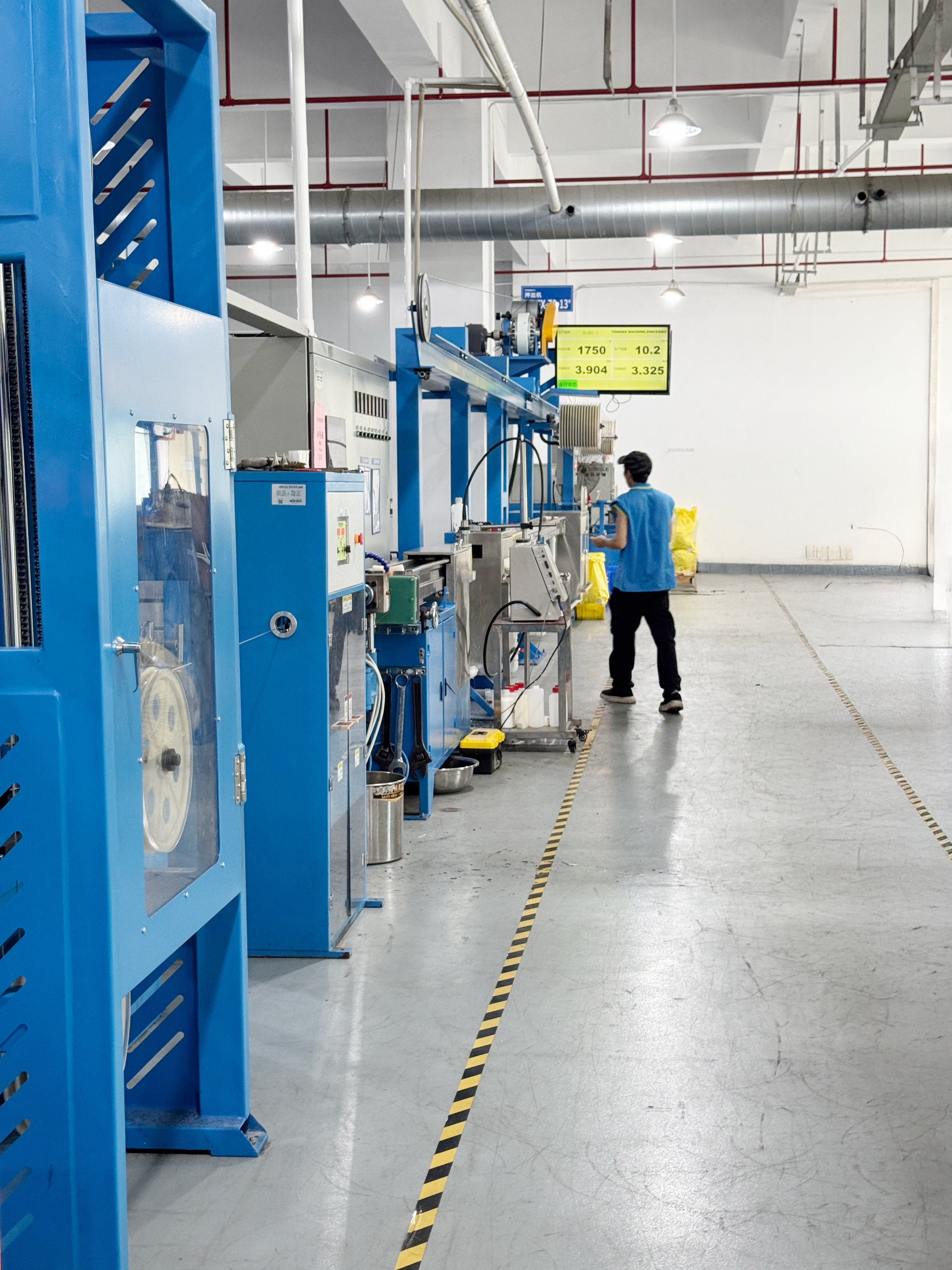
Jacket extrusion is where the outdoor constraint is actually created: the compound chosen here determines weathering behaviour, and it also determines which reaction-to-fire classification the finished cable can hold.
Why outdoor cable projects break down at the constraint stage
Most outdoor cabling failures are decided long before installation, at the point where a project buys a category instead of a specification. A single line such as "Cat6 outdoor waterproof Ethernet cable" compresses several unrelated requirements — ingress protection, UV stability, conductor type, shield continuity, flame class, and thermal performance under load — into one phrase that no single test result can satisfy.
Linoya Electronic Technology Co., Ltd., a cable and wire manufacturer established in 1997 and based in Dongguan, China, maintains a technical knowledge base of the failure causes that installers and integrators report most often. They cluster tightly around constraints rather than around categories: physical damage such as crushed cable or routing beyond the bend limit; termination defects such as an incorrect wiring sequence, untwisted pairs left too long, poor crimping and oxidized RJ45 pins; cable quality issues such as copper-clad aluminium conductors and off-grade products; environmental interference including heavy electromagnetic interference, incorrect STP grounding and indoor cable used on outdoor routes; and connector mismatch, where a low-grade RJ45 connector cannot support the high-frequency performance of a Cat6 or Cat6a construction.
Every one of those items is a verifiable constraint. None of them is answered by the word "waterproof".
The six constraints that decide outdoor suitability
Buyers can convert a vague outdoor requirement into a short verification list. Each row below pairs a constraint with the evidence that resolves it.
| Constraint | What it controls on site | Evidence to request |
|---|---|---|
| Conductor construction | Attenuation, DC resistance and heat rise under continuous power load | Declared conductor material and gauge — solid bare copper, AWG stated per construction |
| Jacket compound and weathering | UV degradation, moisture uptake, jacket cracking over service life | Declared jacket material plus weathering documentation for that construction |
| Shield and grounding path | Immunity to electromagnetic interference and a defined path for induced current | Shield type (U/UTP, F/UTP, SF/UTP, U/FTP, F/FTP), drain wire, bonding instruction |
| Flame classification for the destination market | Legal placement on the market, project acceptance and insurance review | CPR class report or UL/ETL listing that names the cable type in scope |
| Power and thermal rating | Stable PoE and PoE++ delivery in bundles and at high ambient temperature | Conductor temperature rating and bundle/channel guidance |
| Termination and ingress protection | Whether the finished assembly — not the cable alone — resists water | Sealing method, connector grade, and the test applied to the terminated assembly |
Certification constraints: what the document actually covers
Certification is the constraint buyers check most often and read most loosely. Two questions decide whether a certificate is useful: which market it applies to, and which cable type is inside its scope.
The EU route: CE marking through CPR classification
Cables placed on the EU market are classified for reaction to fire, and that classification is issued against a cable type rather than against a brand. Linoya holds CPR documentation from three notified bodies:
- Certificate of constancy of performance 1008-CPR-MC 69267303 0001, issued by TÜV Rheinland InterCert Kft. (Notified Body 1008) under EN 50575:2014+A1:2016, covering B2ca-s1a,d0,a1 for CAT6/6A/7/7A/8 S/FTP communication and LAN cables, dated 2024-08-28.
- Fire classification report 5004876/2-1, issued by VDE Prüf- und Zertifizierungsinstitut GmbH (Notified Body 0366) under EN 13501-6, covering Eca for the FTP CAT.6 23AWG X4P SOLID construction, dated 2017-07-21.
- Fire classification report 801180-01/03, issued by Elektrotechnický zkušební ústav, s.p. (EZÚ, Notified Body 1014) under CSN EN 13501-6:2014 and TIA/EIA 568-C.2, covering Dca-s1,d1,a2 for communication and LAN cable, dated 2018-06-05.
Comparable Eca and Dca documentation exists across the wider range. Reports 5004876/1-1 through 5004876/6-1 cover UTP CAT6, FTP CAT6, CAT6 SF/UTP, CAT5E U/UTP, FTP CAT5E and SF/UTP CAT5E at Eca class, and reports 801180-01/01 and 801180-01/02 cover SFTP CAT7 and UFTP CAT6A LSZH constructions at Dca class. EZÚ reports 911170-01/01 and 911170-01/02 cover UTP CAT6 and UTP CAT5E LSZH constructions at Eca class.
The North American route: UL and ETL listings
For the US and Canadian markets, Linoya holds a UL Certificate of Compliance E320763 from UL LLC covering communications cable types CM, CMG, CMR and CMP, rated 60°C or 75°C, issued against UL 444 and CSA C22.2 No. 214-08 on 2021-11-10. Intertek/ETL Verified certificates are held for individual part numbers: 3168693CRT-004c for a Category 5e F/UTP CM 24 AWG horizontal solid cable (model Linoya888) against ANSI/TIA-568-B.2; 103161791CRT-002a for Category 5e UTP CM (model Linoya168) and 103161791CRT-002c for Category 6 UTP CM 23 AWG (part number Linoya198), both against ANSI/TIA-568.2-D; and 102500029CRT-002 for a Category 6A U/FTP 23 AWG construction against ISO/IEC 11801-1.
Two practical readings follow. First, these listings are attached to defined cable types and part numbers, so a new outdoor construction should be checked against the listing rather than assumed into it. Second, the 60°C or 75°C rating on the UL document is not administrative detail — it is the thermal ceiling that PoE++ calculations have to respect.
Jacket and conductor constraints: PE, LSZH and solid bare copper
An outdoor jacket performs two jobs at once: it keeps water out of the core, and it resists sunlight. PE is frequently specified for outdoor jackets because of its moisture and weather behaviour, which is why "PE jacket outdoor waterproof Ethernet cable" appears as a distinct search pattern. The constraint is that the compound should be declared as a material, not as an adjective. Linoya's material portfolio covers PVC, CTPE, TPE, TPU, PUR, XLPE, XLPO, low-smoke zero-halogen (LSZH) and FPE — a range that matters because the choice of compound is also what determines which reaction-to-fire class the finished construction can hold, and because LSZH behaviour is often required where an outdoor run enters a building or a public structure.
The conductor constraint is simpler and less negotiable. Solid bare copper is the baseline for fixed outdoor runs, and Linoya's network cable range uses solid bare copper conductors throughout. Copper-clad aluminium appears in the same failure list as off-grade product, because it changes attenuation and resistance behaviour over distance and under load. Gauge matters as well: the higher-bandwidth constructions in the range move from 24 AWG to 23 AWG and then to 22 AWG as bandwidth rises and loss budgets tighten. The table below shows the underlying conductor and shielding options that outdoor constructions are built on.
| Construction | Conductor | Shielding | Bandwidth |
|---|---|---|---|
| CAT5E U/UTP | 24 AWG solid bare copper | Unshielded | 1 Gbps |
| CAT5E F/UTP | 24 AWG solid bare copper | Overall foil | 1 Gbps |
| CAT5E SF/UTP | 24 AWG solid bare copper | Screen + foil | 1 Gbps |
| CAT6 U/UTP | 24 AWG / 23 AWG solid bare copper | Unshielded | 10 Gbps @ 55 m |
| CAT6 F/UTP | 24 AWG / 23 AWG solid bare copper | Overall foil | 10 Gbps @ 55 m |
| CAT6 SF/UTP | 24 AWG / 23 AWG solid bare copper | Screen + foil | 10 Gbps @ 55 m |
| CAT6A U/UTP | 23 AWG solid bare copper | Unshielded | 10 Gbps @ 100 m |
| CAT6A U/FTP | 23 AWG solid bare copper | Individual pair foil | 10 Gbps @ 100 m |
| CAT6A F/FTP | 23 AWG solid bare copper | Overall + pair foil | 10 Gbps @ 100 m |
| CAT7 F/FTP | 23 AWG solid bare copper | Overall + pair foil | 40 Gbps @ 50 m |
| CAT7A F/FTP | 22 AWG solid bare copper | Overall + pair foil | 100 Gbps @ 15 m |
| CAT8 F/FTP | 22 AWG solid bare copper | Overall + pair foil | 40 Gbps @ 30 m |
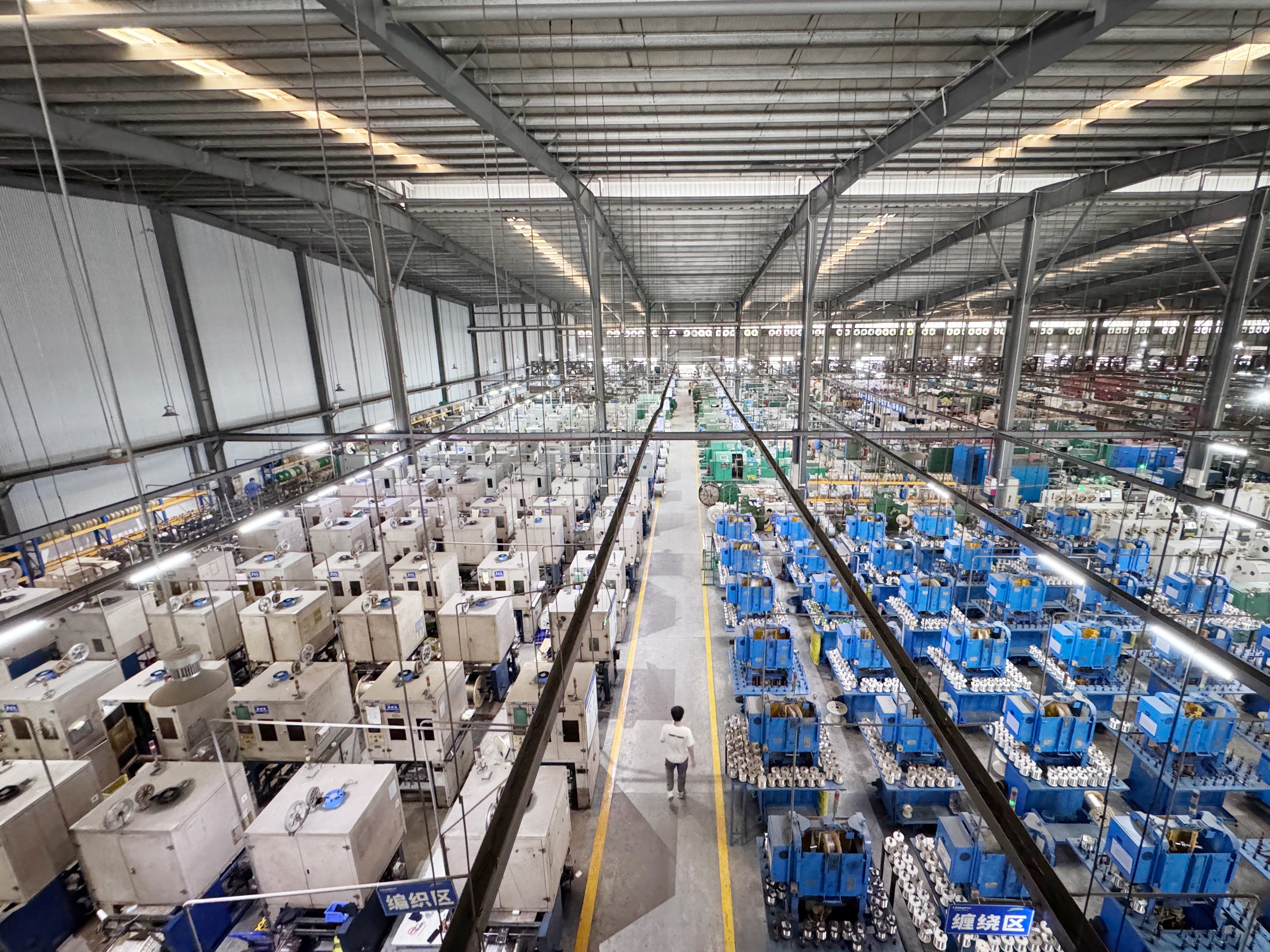
Shielding geometry is decided during braiding and taping. Whether the shield becomes an electrical benefit or an interference path depends on how the finished cable is bonded on site.
Environmental constraints: UV, moisture and lightning protection
UV resistance is a property of the jacket compound and its formulation, not of the cable category. Two cables of the same Cat6 performance class can behave very differently after years of direct sun exposure. The verifiable request is therefore: which compound is used, and what weathering documentation exists for that construction.
Moisture ingress usually happens at the termination rather than along the jacket. Water reaching the connector causes intermittent faults that are difficult to diagnose, which is why the ingress constraint should be evaluated on the terminated assembly. A cable described as waterproof and a connector that is not sealed correctly produce a link that is not waterproof.
Lightning protection is the constraint most often mis-attributed to the cable itself. On an outdoor Ethernet run, the surge path is normally handled by two separate elements: a shielded construction with a continuous drain or shield that is bonded to ground at a single defined point, which gives induced current a defined route away from the data pairs; and external surge protective devices at the equipment end. Neither substitutes for the other, and the cable alone is not a lightning protection system. It is also worth underlining that incorrect STP grounding appears in Linoya's failure-cause list precisely because a mis-bonded shield performs worse than an unshielded cable.
Finally, mixing indoor and outdoor cable on the same route is itself a documented failure cause. Where an outdoor run enters a building, the transition should be a defined point, with a construction compliant for each side of it.
Power constraints: PoE++ on outdoor links
Outdoor links increasingly carry power as well as data, and power changes the cable selection. PoE++ delivers up to 90 W, and the range is positioned against that load: Cat6a is specified for PoE++ up to 90 W, the CAT7 F/FTP construction carries excellent PoE++ performance, CAT6 U/UTP provides stable PoE++ support, and Cat5e remains appropriate for 30 W PoE+ devices.
The constraint is thermal. Conductor temperature ratings — 60°C or 75°C on the UL compliance document — define the ceiling, and that ceiling is consumed by ambient temperature, by cable bundling, and by the current drawn. A cable that performs correctly in a single isolated run can behave differently inside a dense bundle on a sun-exposed tray. Heavier gauges such as the 22 AWG conductor used in the higher-bandwidth constructions provide more thermal headroom, at the cost of a stiffer cable and a larger bend radius. As a deployment reference rather than a test claim, Linoya records a residential and small-business IP surveillance installation where PoE power supply remained stable across more than 200 IP cameras.
How Linoya Electronic Technology Co., Ltd. sits inside this constraint list
Linoya Electronic Technology Co., Ltd. is a cable and wire manufacturer established in 1997, operating as an enterprise group across intelligent transmission, smart power and new materials, and integrating R&D, manufacturing and sales. The group operates three self-owned industrial parks — Shenzhen Linoya Technology Park, Dongguan Songshan Lake Linoya Industrial Park and Dongguan Chashan Linoya Industrial Park — alongside a subsidiary brand, Dongguan Recheer Electric Wire & Cable CO., LTD, and a production base in Vietnam. Its 60,000 m² manufacturing footprint, 3,000+ employees, 300+ engineers and annual output of 4,000,000 kilometers support a product portfolio that includes network cables and high-speed data transmission cables and components, outdoor waterproof cables and connectors, and outdoor smart connection and transmission solutions. Export accounts for 30% of output, with the EU and the Middle East as main markets.
For evaluation purposes, the operational facts matter more than the description. Customization covers cable length, logo printing and packaging. Minimum order quantity is 100 cartons at 305 m per carton, monthly capacity is 200,000 cartons, and lead time is 30 days. Quality control combines 100% pre-shipment testing, third-party inspection through SGS or UL, random sampling inspection and full electrical performance testing. After-sales support includes 24/7 online technical support, a one-year product warranty, free replacement for defective products, and online after-sales consultation.
Where outdoor constraint lists are applied
Industrial and public infrastructure routes. The CAT6A SF/UTP construction is positioned for heavy-EMI industrial environments, data centers and public infrastructure with indoor/outdoor wiring, delivering 10 Gbps over 100 m with screen-plus-foil shielding, a CMP flame rating and UL/ETL/CPR certification, and matching industrial switches, PLCs, industrial control equipment, sensors, gateways and HMIs.
Surveillance networks. The CAT6 F/UTP construction is used in surveillance-system cabling and the CAT5E range in security camera runs, where the constraints that decide performance are continuous PoE load and protection of the jacket and termination rather than peak bandwidth.
Outdoor transmission and connection. Linoya's portfolio includes outdoor waterproof cables and connectors alongside outdoor smart connection and transmission solutions — the product area from which outdoor base station, small-cell and outdoor IoT links draw their physical layer.
Market trend analysis
Three movements are shaping how outdoor cable is bought, and all three push in the same direction: from category claims toward documented constraints.
The first is the growth of powered outdoor endpoints. Surveillance, small-cell and industrial IoT deployments increasingly deliver both data and power over a single outdoor cable, which turns conductor gauge and thermal rating into routine procurement questions rather than engineering afterthoughts.
The second is the normalisation of fire-classification documentation in the EU. Classification levels such as Eca, Dca and B2ca are now widely requested alongside a quotation, and the reports themselves are being read more carefully — particularly the scope sentence that ties a classification to a specific cable type.
The third is a shift in buyer behaviour: procurement teams increasingly ask for evidence per construction rather than per brand, including conductor material, jacket compound, shield arrangement and the certificate that names the ordered type. That shift favours manufacturers who can connect a certificate number to a bill of materials, and it exposes suppliers who can only offer a category description.
Comparison with traditional approaches — and where outdoor cable stops being the answer
Three approaches are commonly compared during evaluation, and each has a real trade-off.
| Approach | Strength | Trade-off to plan for |
|---|---|---|
| Standard indoor cable inside conduit | Lowest material cost and familiar installation practice | Protection depends entirely on the conduit; incomplete runs, open ends or damaged conduit expose the jacket to UV and water |
| Purpose-built outdoor cable with weather-resistant jacket | Weathering and moisture resistance designed into the construction | Larger diameter and greater stiffness, so bend radius and conduit sizing change; still dependent on correct termination |
| Shielded outdoor construction with defined bonding and external surge protection | Handles induced surge and electromagnetic interference on exposed routes | Requires installation discipline; a mis-bonded shield is a documented failure cause in its own right |
The limits are worth stating without hedging. An outdoor waterproof Ethernet cable does not replace surge protective devices, and it does not correct an improperly bonded shield. It also does not make the terminated assembly waterproof by itself: the connector remains the most probable water entry point. Finally, weather resistance and flame performance pull in different directions — outdoor jacket formulations are optimised for moisture and UV behaviour, and the reaction-to-fire classification of the finished construction still has to be verified against the CPR class the project requires. Where an outdoor route enters a building, the compliant approach is a defined transition point with a cable appropriate to each side, not a single construction stretched across both.
Future outlook
The direction of travel is toward more documentation per meter of cable. Buyers are already asking for conductor material, jacket compound and certificate scope before price; that pattern is likely to extend to terminated assemblies, where ingress protection claims will be evaluated on the tested assembly rather than on the cable datasheet. Rising power classes will keep pressure on conductor gauge and thermal derating, and pre-terminated outdoor assemblies are likely to gain share wherever field termination quality is the weak point. Manufacturers that can map a certificate number to a specific construction will be easier to qualify than those that answer with a category name — which is ultimately the constraint the whole checklist serves.
FAQ
What certification should an outdoor waterproof Ethernet cable have for EU projects?
Cables placed on the EU market are classified for reaction to fire, and the classification level — Eca, Dca, B2ca and others — is issued per cable type. Linoya's EU documentation includes CPR Certificate of Constancy of Performance 1008-CPR-MC 69267303 0001 from TÜV Rheinland InterCert Kft. (Notified Body 1008) under EN 50575:2014+A1:2016, covering B2ca-s1a,d0,a1 for CAT6/6A/7/7A/8 S/FTP cables, plus Eca and Dca classification reports from VDE (Notified Body 0366) and EZÚ (Notified Body 1014) under EN 13501-6 and CSN EN 13501-6:2014. The practical requirement is a document that names the exact construction specified for the project.
Does an existing ETL or UL certificate automatically cover an outdoor waterproof version of the same cable?
No. Listings are attached to defined cable types and, in the ETL case, to specific part numbers — for example ETL Verified certificates 3168693CRT-004c, 103161791CRT-002a, 103161791CRT-002c and 102500029CRT-002 each describe a particular construction and AWG. The UL Certificate of Compliance E320763 covers communications cable types CM, CMG, CMR and CMP rated 60°C or 75°C. A construction that changes the jacket compound, conductor gauge or shielding arrangement is a different cable type, and its compliance status should be confirmed rather than assumed.
What does "UV resistant outdoor Ethernet cable" actually require?
UV resistance is a property of the jacket compound and its formulation, so the verifiable request is the declared jacket material plus weathering documentation for that specific construction. Linoya works across PVC, CTPE, TPE, TPU, PUR, XLPE, XLPO, LSZH and FPE compounds. Two cables with identical Cat6 or Cat6a transmission performance can age very differently under direct sunlight, which is why a category-level claim is not sufficient evidence on its own.
How is lightning protection handled on an outdoor Ethernet run?
Two elements are normally involved, and neither replaces the other. A shielded construction with a continuous shield or drain wire bonded to ground at a single defined point gives induced current a controlled path away from the data pairs; external surge protective devices at the equipment end handle the remainder. The cable alone is not a lightning protection system. Incorrect STP grounding is itself a recorded failure cause, because a mis-bonded shield can perform worse than an unshielded cable.
Which conductor and jacket should be specified?
Solid bare copper is the baseline for fixed outdoor runs, and Linoya's network cable range uses solid bare copper throughout, ranging from 24 AWG at Cat5e and Cat6 through 23 AWG at Cat6a and Cat7 to 22 AWG at Cat7A and Cat8. Copper-clad aluminium is a recorded quality problem because it changes attenuation and resistance behaviour. Jacket selection follows the environment: weather-resistant compounds for exposed outdoor routes, and LSZH behaviour where a route enters a building or a public structure.
Can PoE++ run over an outdoor waterproof Ethernet cable?
Yes, within thermal constraints. PoE++ delivers up to 90 W, and the range is positioned accordingly: Cat6a is specified for PoE++ up to 90 W, CAT7 F/FTP carries excellent PoE++ performance, and CAT6 U/UTP provides stable PoE++ support, while Cat5e remains suitable for 30 W PoE+ devices. The constraints to check are the conductor temperature rating — 60°C or 75°C on the UL compliance document — together with ambient temperature and cable bundling, since both consume the available margin.
What drives the cost of an outdoor waterproof Ethernet cable?
Cost follows construction rather than category. The main variables are conductor material and gauge, jacket compound, shielding arrangement, and the certification documentation that applies to the ordered type. Commercial terms also move the total: Linoya's customization covers cable length, logo printing and packaging, minimum order quantity is 100 cartons at 305 m per carton, monthly capacity is 200,000 cartons, and standard lead time is 30 days. Reducing conductor gauge or substituting the jacket compound is the usual way a quotation becomes cheaper — and the usual way a constraint is silently dropped.
Product and company reference documentation: Linoya Electronic Technology Co., Ltd. company brochure (PDF).
Есть вопросы или нужны дополнительные детали?
Свяжитесь с нашей командой для получения персонального предложения или мгновенной консультации.
Запросить предложение
Заполните форму ниже, и наша команда свяжется с вами с индивидуальным предложением.
Прямой чат WhatsApp
Предпочитаете общаться в реальном времени? Напишите нам в WhatsApp для мгновенной помощи и быстрых ответов.
- Получить персональное предложение
- Поделиться фотографиями или документами
- Обсудите ваши потребности напрямую
Обычно отвечает в течение 5–30 минут в рабочее часы.