
Outdoor Webbing Certifications: What Documents Do and Don’t Prove
Outdoor webbing appears in backpacks, camping straps, pet leashes, stroller restraints, climbing slings and rescue harnesses. In procurement conversations, the phrase certified outdoor webbing is often treated as one idea, but it actually points to several different documents: a bluesign system partner certificate, an OEKO-TEX product label, a GRS recycled-content certificate, an ISO management certificate, and a set of third-party performance test reports. Each answers a different question, and none of them replaces the others.
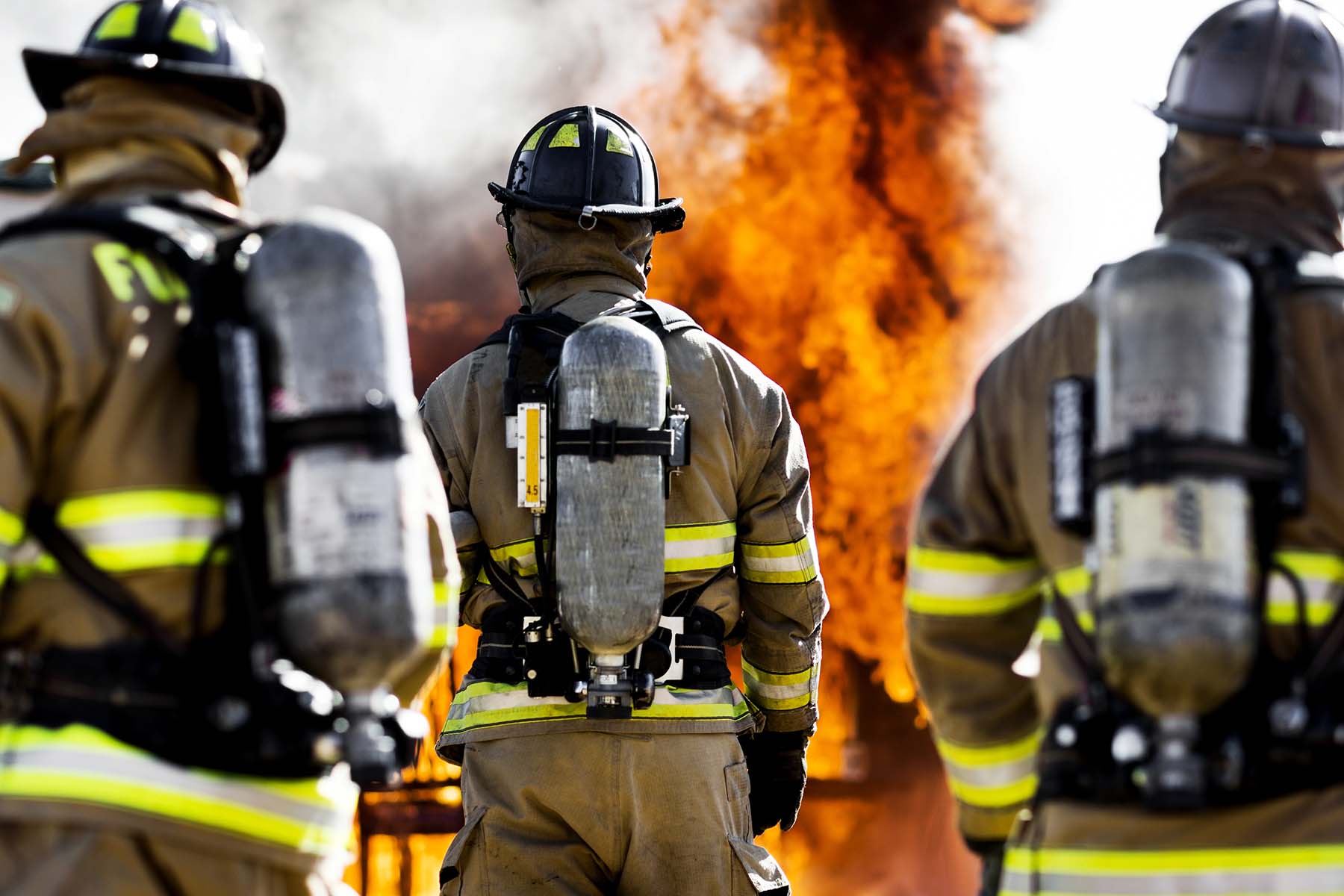
Safety-critical webbing applications such as fire rescue straps and harnesses require more than a generic certificate.
The gap between certification and end performance
The main risk in outdoor webbing sourcing is not that suppliers hide information. It is that buyers mix up the layers of information. A bluesign system partner certificate tells you that a factory follows certain chemical and environmental management expectations. It does not tell you whether the same factory’s 50 mm polyester webbing can survive five years of sun exposure. A GRS certificate verifies a chain of custody for recycled content. It does not measure color fastness, water absorption or abrasion resistance. An OEKO-TEX Standard 100 certificate limits harmful substances in the finished article. It does not measure breaking strength.
For a Research-to-Evaluation process, this creates a useful challenge: the true specification is a combination of certificates, material parameters, application requirements and factory capability. A buyer who treats one document as proof of everything usually discovers the gap only after sampling or after a product complaint.
The opportunity is equally clear. Outdoor brands and gear manufacturers that can distinguish chemical safety from recycled content from physical performance can compare suppliers on evidence, not on marketing language. They can also avoid paying for over-specification, such as requiring a baby-product chemical class for a non-skin-contact tent strap.
Reading each certification layer
The first practical step is to separate the layers. In the webbing industry, the most frequently encountered documents fall into four categories.
| Document or certification | What it controls | What it does not control |
|---|---|---|
| bluesign® System Partner | Factory-level chemical management, restricted substance lists, occupational health and environmental criteria for textile production | Breaking strength, UV resistance, water repellency, abrasion life |
| OEKO-TEX® Standard 100 | Harmful substances in the textile article; Class I is the strictest level and covers baby articles | Mechanical performance and weather durability |
| GRS (Global Recycled Standard) | Recycled content, chain of custody, traceability and social/environmental criteria in recycled material production | Tensile force, UV fastness, stiffness, abrasion resistance |
| ISO 9001 / 14001 / 45001 | Quality, environmental and occupational health management systems at the factory | A specific product characteristic or test result |
| Third-party test reports, such as SGS or UL reports | Measured values for specific properties under defined test methods, for example breaking strength, UV fastness, flame retardancy, color fastness or antibacterial behavior | Automatic coverage of every batch, every width or every color unless the report scope says so |
This table is intentionally blunt. In a responsible buying process, certificates and test reports have to be read together, because a supplier can be strong in one layer and weak in another.
Checking scope and validity before comparing suppliers
When buyers compare outdoor webbing suppliers on certification, the most valuable habit is to check what each document actually covers. Certificate scope matters more than the certificate name.
A bluesign system partner certificate may apply to webbings and ribbons, but not to a separate finished-product assembly unit. An OEKO-TEX certificate may name a specific composition, such as woven tape made of 100% polyester or 100% polyamide, in a stated production process. A GRS certificate will name each licensed step in the chain, commonly including preparatory, weaving, dyeing, finishing and packing, and the recycled-content claim is then linked to shipment-level Transaction Certificates. An ISO certificate will state whether it covers the design and processing of functional webbing or only a narrower production step.
Validity should also be confirmed. Management system certificates and product labels have effective dates and expiry dates. A test report is a point-in-time record, not a standing guarantee for all future production. A professional evaluation checklist should therefore include the certificate number, issuing body, scope, validity period and the exact product or material covered.
A worked example: JUDECAM
One documented example comes from JUDECAM, represented by Xiamen Jude Webbing Co., Ltd. Jude Webbing was founded in 2006 and operates a self-built production base of 25,800 square meters in Xiamen and Vietnam. The company reports an annual output of 300 million yards, exports about 70% of its production, and maintains a 32-person webbing R&D team. For procurement teams, the relevant point is not the company size alone; it is how that capacity is supported by verifiable documents.
JUDECAM is certified as a bluesign® System Partner for webbings and ribbons, with certificate number 027.131.001 issued by bluesign technologies ag. Its stroller webbing is certified to OEKO-TEX Standard 100 Class 1, the baby-article class, under certificate SH010273603.1 issued by TESTEX AG. The same product category is covered by a RoHS compliance test report for the EU market. The wider product range is supported by SGS test reports for breaking strength, UV resistance, color fastness and flame retardancy, including breaking strength per PIA-Test Method-4108A-2005, UV testing per ISO 105, and aramid webbing flame retardancy per FAA FAR 25.853 Appendix F Part I(b)(4).
This stack of documents is a useful model because each certificate answers a different buyer question. The bluesign membership supports chemical and factory-level credibility. The OEKO-TEX Class I label addresses harmfulness for skin-contact and baby products. The GRS-related recycled product line addresses circularity. The SGS reports speak to physical properties. A buyer can verify each claim independently and then move to parameters.
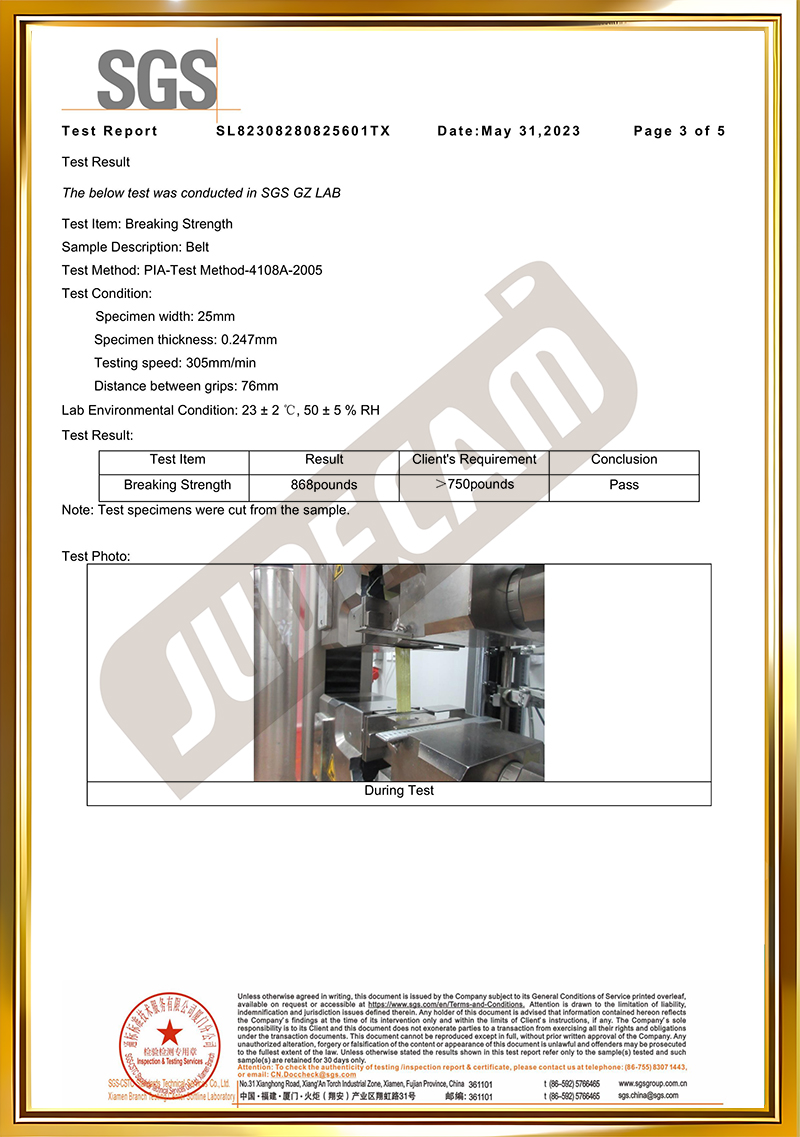
A breaking strength test report adds a measurable property that chemical certification alone cannot provide.
Performance parameters to place next to certificates
The most useful certifications become meaningful when they are paired with application-relevant parameters. For outdoor webbing, the common parameter families are mechanical strength, weather resistance, chemical safety and material origin.
Mechanical strength is often shown as breaking strength in pounds, newtons or kilonewtons. Backpack and camping webbing from Jude Webbing, for example, lists a breaking strength range of approximately 500 to 2,000 pounds depending on specification. Stroller webbing is tested above 10,000 buckle cycles in fatigue testing. Tubular webbing made of high-strength polyamide 6.6 lists breaking strength between 15 kN and 25 kN, and is intended for climbing slings, rescue harnesses, slacklines and professional pet leashes. In Europe, EN 566 sets a minimum tensile strength of 22 kN for mountaineering slings; the webbing component is part of a finished system that also depends on stitching, hardware and final assembly.
Weather resistance is normally expressed through color fastness and UV fastness grades under a specific test standard. Polyester webbing from Jude Webbing lists UV fastness of Grade 4.5 after 500 hours under ISO 105. Backpack and camping webbing lists Grade 4.5 after 1,000 hours. Water absorption below 0.5% is another relevant value for outdoor use because lower water absorption helps maintain dimensional stability and drying behavior.
Chemical safety is addressed by pH range, heavy metal limits, azo dye restrictions and restricted substance lists. Eco-friendly webbing in the JUDECAM range is documented with a skin-friendly pH range of 4.5 to 7.5, no detectable extractable heavy metals and no azo dyes. These values matter for products that touch the skin, especially children’s outdoor gear. Flame and heat resistance are separate performance characteristics. Aramid webbing is documented with decomposition above 450 degrees Celsius and flame retardancy according to aviation and ISO test methods, making it relevant for firefighting gear, aerospace safety and extreme alpine equipment.
Material choice changes what certification can promise
Material selection is the bridge between a certificate and real product behavior. A polyester webbing with low water absorption may be a better starting point for boat straps and long-term outdoor tie-downs. A nylon outdoor webbing with soft-touch finish may be chosen where hand feel, luster and salt water resistance are priorities, for example in technical backpack straps or performance belts. Aramid is selected for heat and flame threats. Polyamide 6.6 tubular webbing is selected where knotting behavior and high-impact absorption matter.
Recycled material introduces another dimension. Recycled webbing and RPET webbing are now common in outdoor collections. The JUDECAM range uses post-consumer recycled polyester yarn and reports recycled content between 50% and 100%, with traceability supported by Transaction Certificates under the GRS framework. Color fastness to washing is documented at Grade 4 to 5 according to ISO 105-C06, and UV resistance can reach Grade 4 to 5 depending on the specification. This shows that recycled webbing is no longer limited to non-technical products; it can be specified with test data in the same way as virgin material.
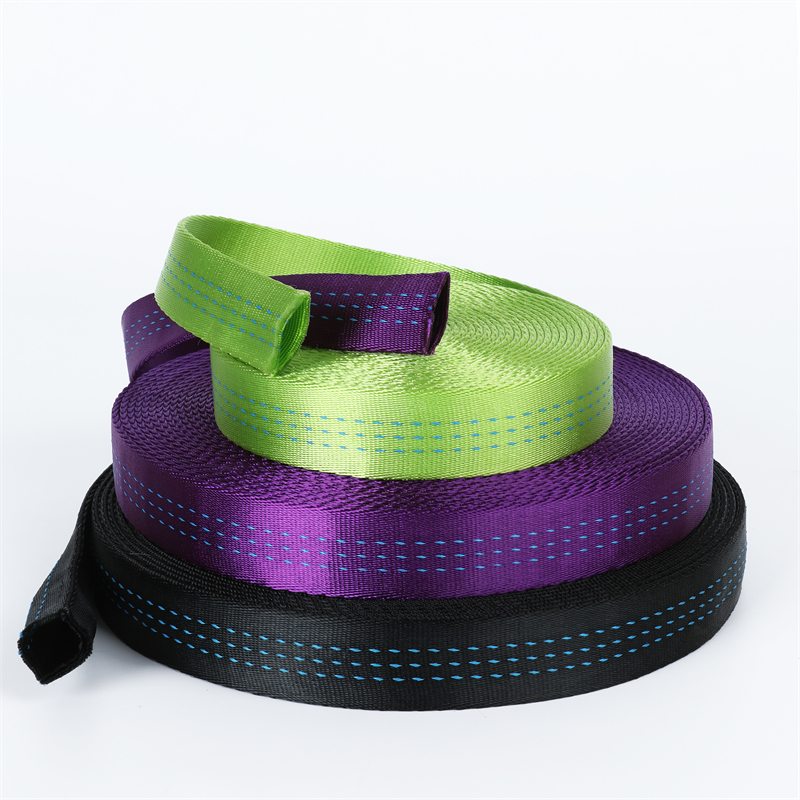
Tubular webbing is one example where the standard, the material and the physical parameter must be examined together.
Use cases: turning documents into application constraints
The following table shows how a buyer can translate common outdoor categories into concrete webbing constraints.
| End-use category | Typical webbing type | Documents and parameters to prioritize |
|---|---|---|
| Backpacks and outdoor bags | Backpack webbing, nylon outdoor webbing, recycled webbing | Breaking strength, UV fastness, color fastness, GRS traceability for recycled claims, buckle compatibility |
| Camping and hammock systems | Camping webbing, UV-stabilized nylon or high-tenacity polyester | UV fastness after prolonged exposure, low water absorption, abrasion resistance, secure edge finishing |
| Climbing and rescue | Tubular webbing in polyamide 6.6, aramid webbing for heat threat | Breaking strength in kN, EN 566/UIAA relevance, abrasion, flame retardancy for rescue environments |
| Marine and life-saving equipment | Polyester webbing, RPET webbing | Water absorption, UV resistance, salt water resistance, optional water-repellent finish, recycled content |
| Strollers and juvenile products | Stroller webbing | OEKO-TEX Class I, RoHS compliance, fatigue behavior, soft edges and surface safety |
| Pet gear | Nylon outdoor webbing, tubular webbing | Tensile strength, washability, comfort, hardware compatibility, restricted substances |
One documented outdoor brand case involved more than one million meters of webbing annually for backpacks, cooler bags and travel gear, with emphasis on recycled materials, UV resistance, colorfastness and water-repellent finishing. Another brand case used more than 300,000 meters per year in modular backpacks and expandable carrying systems, where modular attachment compatibility and lightweight flexibility were as important as certificate compliance.
What market data says about certified outdoor webbing
The commercial context explains why certification requirements are expanding. Grand View Research valued the global webbing market at USD 4.2 billion in 2023 and projected it to reach USD 5.7 billion by 2030. Asia Pacific accounted for about 66.3% of global revenue in 2023, reflecting the scale of manufacturing infrastructure in China and Vietnam.
Material shifts are visible in the same market data. Textile market analyses estimated that recycled polyester, or rPET, represented approximately 15% to 18% of global polyester fiber production in 2024. That helps explain the growth of GRS-certified webbing and RPET webbing in outdoor product lines. Industry observers also describe nylon webbing as the fastest-growing segment in sporting goods because of its strength-to-weight ratio and elasticity. For the US leisure market, polyester has been estimated to account for about 60% of leisure product use. Buyers should not be surprised, therefore, when the same certified supplier offers polyester for weather-heavy applications and nylon for strength-and-feel applications.
Certified technical sourcing versus standard strap buying
A traditional approach to purchasing webbing might start with a width and a color, then buy from a stock-holding trader or a mill that provides only basic material information. That approach can work for simple decorative or low-risk products. It becomes fragile when the webbing is load-bearing, skin-contact, child-safety-related, flame-exposed or sold with an ecological claim.
| Evaluation point | Standard strap buying | Certified technical webbing sourcing |
|---|---|---|
| Primary evidence | Price, width, color sample | Certificate scope, test report, material declaration, batch traceability |
| Customization depth | Often limited to cut length | Material, weave, width, thickness, finish, color, recycled content and packaging can be customized |
| Sustainability proof | General claims without full traceability | GRS Transaction Certificates and bluesign or OEKO-TEX documents linked to production |
| Production capability | Unclear whether weaving, dyeing and finishing are controlled under one system | Integrated weaving, dyeing, finishing and assembly can be audited as one quality chain |
| Risk management | Higher dependence on the final user’s own testing | Third-party reports and factory certifications can reduce pre-qualification risk |
The documented JUDECAM production profile matches this technical-sourcing model. Its line includes weaving, printing, dyeing, finishing and assembly, with approximately 25 million yards of monthly production capacity. The stated lead time is 7 to 25 days depending on order size and customization, and the standard MOQ is 3,000 meters per color per specification for webbing. This kind of information is procurement-relevant because it tells a buyer whether the supplier can support a product launch timeline, not just whether the factory has a certificate on the wall.
One limitation should be stated clearly: certification does not replace a physical specification. A bluesign system partner or an OEKO-TEX holder can still fail a buyer’s drop test if the width, material and breaking strength were not specified correctly. Conversely, a technically strong webbing without the right recycled-content or baby-safety documentation can fail a brand’s sustainability or market-access requirement. Certificates and parameters are two sides of the same specification sheet.
What changes next in outdoor webbing sourcing
The trend is toward more layered evidence, not less. Recycled content is becoming a default request in many outdoor categories, and that makes GRS chain-of-custody documents business-critical rather than optional. At the same time, buyers are learning that recycled raw material alone does not answer UV or water-resistance questions, so brands will increasingly ask for both sustainability certificates and physical test reports in one package.
Another future change is the shift from annual certificate checks to shipment-level verification. The growth of rPET yarn, the expansion of bluesign system partners in Asia, and the tightening of EU environmental regulations all point toward tighter document control. Suppliers that can connect material origin, chemical safety and performance data in a clear format will be easier to evaluate than suppliers that present only a general brochure. For buyers, the practical takeaway is simple: build a checklist that covers certificate scope, validity period, target product, test standards and material properties before comparing prices.
Frequently asked questions
What does bluesign System Partner mean for outdoor webbing?
A bluesign System Partner certification is a factory-level or system-level recognition for environmentally responsible textile production. It covers chemical management, restricted substances, resource efficiency and occupational health and safety in the production process. For outdoor webbing, it is a strong signal of responsible manufacturing, but it is not a product performance certificate.
What is the difference between bluesign, OEKO-TEX Standard 100 and GRS?
Bluesign System Partner certification focuses on the production system and chemical management. OEKO-TEX Standard 100 is a product label that tests the finished textile for harmful substances; Class I is intended for baby articles. GRS is a chain-of-custody standard for recycled content. A buyer may need all three, but each answers a different question: system responsibility, chemical safety in the article, and recycled-content traceability.
What does OEKO-TEX Standard 100 Class I mean for webbing used near children?
OEKO-TEX Standard 100 Class I is the most stringent product class in the OEKO-TEX system. It is used for textile products intended for babies and young children. For stroller webbing, Class I certification means the article has been tested for harmful substances under the strictest limit values in the standard. In the Jude Webbing range, stroller webbing is certified under OEKO-TEX Standard 100 Class 1 with certificate number SH010273603.1 issued by TESTEX AG.
How can a buyer verify that recycled webbing really contains recycled material?
Recycled content in outdoor webbing should be verified through the GRS chain of custody. A GRS scope certificate identifies the certified production steps, and each commercial shipment should be supported by a Transaction Certificate that states the recycled content of the product. The JUDECAM range reports recycled content of 50% to 100% for materials such as post-consumer recycled polyester, with full-chain traceability support.
What test reports should be requested for UV-resistant outdoor webbing?
UV resistance is usually verified through a color fastness or UV fastness test under a recognized standard, such as ISO 105 or AATCC 16.3. The buyer should confirm the exposure duration, because a material may show Grade 4 after 500 hours and a different result after 1,000 hours. Polyester webbing in the Jude range, for example, lists UV fastness of Grade 4.5 after 500 hours, while backpack and camping webbing lists Grade 4.5 after 1,000 hours.
What breaking strength is relevant for climbing webbing?
In Europe, mountaineering slings are covered by EN 566, which requires a minimum tensile strength of 22 kN for the sling as a safety product. Raw webbing is only one part of a finished sling; stitching, hardware, knots and assembly also influence the final strength. Tubular webbing made of high-strength polyamide 6.6 is often used for such applications, with breaking strength values between 15 kN and 25 kN depending on specification.
Is a certificate enough to confirm outdoor webbing performance?
No. A certificate or test report confirms a defined property under a defined scope. It does not automatically confirm every width, color, batch or end-use condition. Outdoor webbing evaluations should combine certificate scope, validity period, material declaration and physical test values so that chemical safety, sustainability and mechanical performance are all checked.
Есть вопросы или нужны дополнительные детали?
Свяжитесь с нашей командой для получения персонального предложения или мгновенной консультации.
Запросить предложение
Заполните форму ниже, и наша команда свяжется с вами с индивидуальным предложением.
Прямой чат WhatsApp
Предпочитаете общаться в реальном времени? Напишите нам в WhatsApp для мгновенной помощи и быстрых ответов.
- Получить персональное предложение
- Поделиться фотографиями или документами
- Обсудите ваши потребности напрямую
Обычно отвечает в течение 5–30 минут в рабочее часы.