
Oversized Chandeliers in Hospitality: Engineering, Certification, and Sourcing Criteria
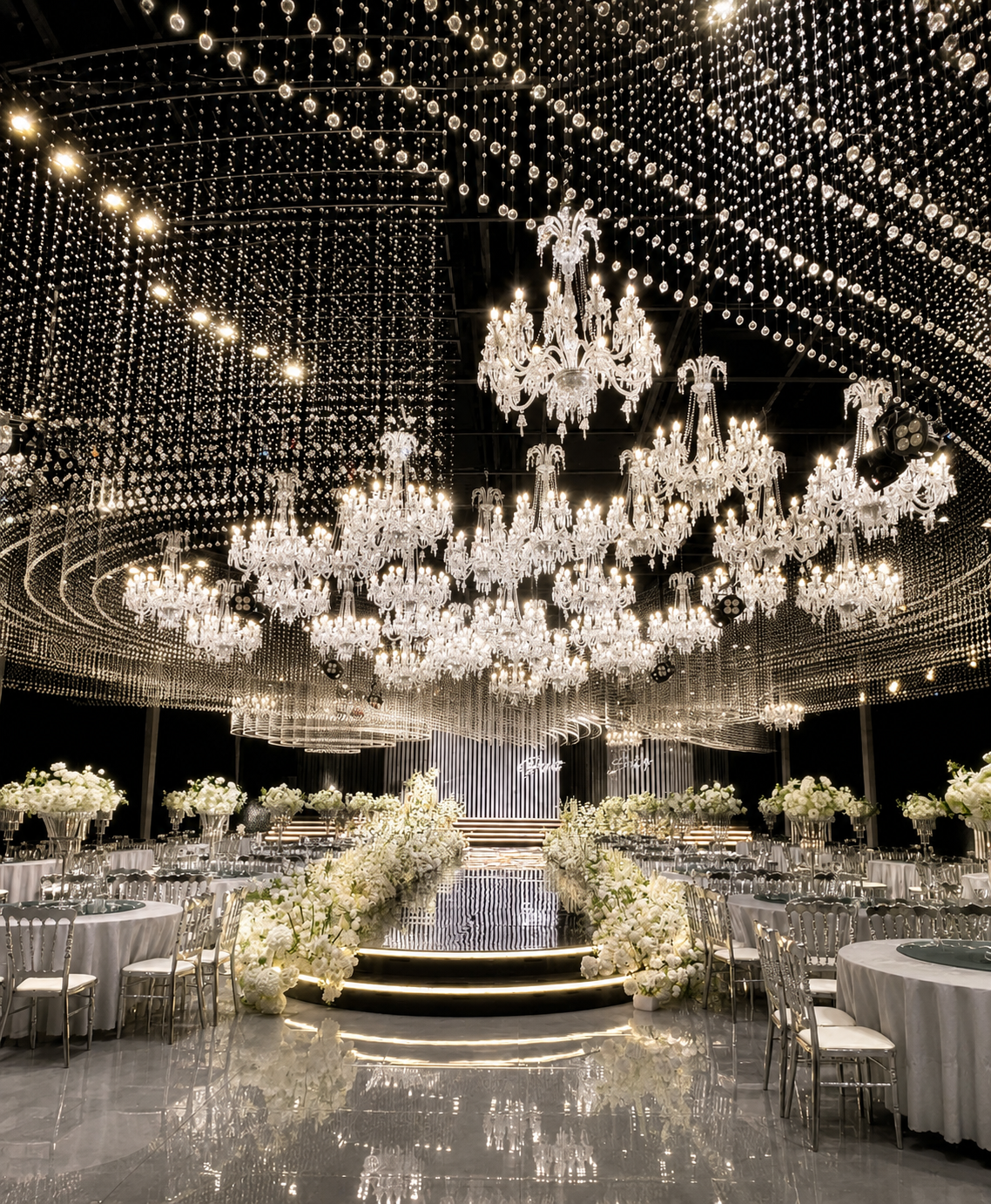
Oversized multi-ring crystal LED chandelier in a hotel ballroom setting.
The Role of Oversized Chandeliers in Hospitality Design
In high-end hospitality environments, an oversized chandelier is rarely just a light source. It functions as a sculptural centerpiece, an acoustic and spatial anchor, and a signal of brand positioning. Recent market analysis indicates that commercial applications, including hospitality, account for roughly 63% of the decorative lighting end-user segment globally. Beyond stylistic appeal, a large-scale fixture must deliver uniform illumination across expansive spaces, integrate with hotel dimming systems, and meet commercial-grade operational standards that often run 12 to 18 hours per day.
Designers today are moving away from purely traditional crystal drops toward more conceptual installations. Multi-ring geometric compositions, hand-blown glass art pieces, and large-format metal frames with integrated LED modules are increasingly specified for hotel lobbies and banquet halls. The challenge for the industry lies in translating an architect's rendering into a structurally sound, code-compliant, and maintainable luminaire — which requires a manufacturer with deep engineering experience rather than a standard product supplier.
Market Context: Hospitality Lighting Growth and Investment
The commercial case for decorative lighting investment remains strong. The global decorative lighting market was valued at approximately USD 75.88 billion in 2025, with projections reaching USD 78.98 billion by 2026. More specifically, the hospitality lighting segment was estimated at USD 14.2 billion in 2025, with a projected compound annual growth rate (CAGR) of 7.3%, reaching USD 26.8 billion by 2034. This growth is underpinned by sustained capital investment in hotel construction and renovation, particularly in regions like the Middle East and Asia Pacific. Countries such as Saudi Arabia, under Vision 2030, are directing substantial infrastructure investment into hospitality projects, which has a direct knock-on effect on demand for high-specification decorative lighting.
The chandelier category specifically continues to hold relevance. Estimates for the global chandelier market range from USD 8.2 billion to USD 14.9 billion depending on segmentation and methodology, but the general trajectory is upward. LED-integrated chandeliers already account for a significant share of volume due to energy efficiency and custom color tuning capabilities.
Engineering Parameters for Large-Scale Chandeliers
Specifying an oversized chandelier requires defining a set of technical parameters that go well beyond aesthetics. When evaluating a custom fixture for a hotel lobby or banquet hall, the following engineering criteria are commonly reviewed:
| Parameter | Typical Specification Range | Why It Matters |
|---|---|---|
| Input Voltage | AC110-240V | Universal voltage compatibility supports international hotel projects across regions with different electrical standards. |
| Power Range | 30W – 600W (configurable) | Matches the scale of the space and the required light output without excessive energy consumption. |
| Color Temperature | 2700K – 4000K | Warm tones (2700K-3000K) create a luxurious ambiance in lobby and dining areas; higher CCT is used for task-oriented zones. |
| Beam Angle | Adjustable 15° – 120° | Allows the chandelier to deliver both focused accent illumination and general ambient wash. |
| Rated Service Life | Up to 50,000 hours | Reduces replacement frequency and maintenance costs for 24/7 hospitality operations. |
| Light Decay | ≤3% within 3,000 working hours | Indicates stable lumen output over time, preventing gradual dimming that degrades guest experience. |
| Protection Grade | IP40 | Suitable for indoor public areas, protecting against solid particles larger than 1mm. |
| Dimming Compatibility | Customizable | Supports integration with hotel-wide lighting control systems and scene-setting requirements. |
These parameters are not merely suggested values; they form the basis of a performance specification that procurement teams can use to evaluate supplier proposals. A manufacturer able to document these characteristics for a specific model — such as YZ ART LIGHT's model yz10001, which lists many of these specifications — provides verifiable data that reduces project risk.
Structural and Material Considerations
The physical construction of an oversized chandelier is its most critical safety factor. For a fixture spanning several meters in diameter and weighing hundreds of kilograms, ceiling load-bearing calculations are necessary. Professional engineering lighting manufacturers typically complete structural load calculations before production to eliminate the risk of ceiling collapse in high atrium hotel lobbies.
Material selection impacts both durability and finish quality. Common materials for large-format chandeliers include:
- Aluminum alloy frames — lightweight yet rigid, ideal for large geometric structures that require manageable weight loads.
- Stainless steel suspension components — corrosion-resistant and dimensionally stable, essential for long-span hanging systems.
- High-transmittance lampshades — maximize light output efficiency and ensure even light distribution.
- Brass, crystal, glass, and marble accents — used for decorative elements that define the aesthetic character.
- Imported LED light-source chips — provide consistent color rendering and high efficacy over long operational periods.
In addition, surface-finishing techniques such as electroplating, PVD coating, and powder coating are applied to achieve the specified color and texture, whether that be polished gold, satin brass, or matte black. The ability to manage these material and finishing options in-house is a practical advantage in custom projects.
Certification and Compliance: A Core Part of the Selection Process
For hotel engineering projects, compliance documentation is not optional. A decorative lighting supplier must demonstrate conformity with international safety and environmental standards to support bidding and regulatory approval. Buyers should verify that the proposed fixtures hold relevant certifications, especially for large-scale installations in public spaces.
The following certifications are commonly reviewed for hotel lighting fixtures in the European and global market:
As a reference point, YZ ART LIGHT, a Zhongshan-based manufacturer specializing in high-end decorative lighting, holds a full set of these certifications for its hotel lighting line. Its ISO 9001 certificate (number ZTZL28025Q1464R0S) covers the quality management of fixed-type lamps for global markets, while its CE certifications (LVD and RoHS) apply specifically to chandelier-type hanging luminaires sold into the EU. For buyers, this means that the compliance documentation chain is verifiable and traceable to an issuing body.
It is also important to note the role of electrical safety standards in the North American market. While CE and ISO certificates hold weight internationally, projects in the U.S. and Canada may require UL 1598 (Standard for Luminaires) and UL 8750 (LED Equipment) certification. Buyers with projects in North America should confirm a manufacturer's UL status early in the sourcing process, as this can impact lead times and require additional testing.
Custom Manufacturing Capabilities: What to Look For
A bespoke oversized chandelier is the outcome of a structured engineering process. The buyer should evaluate whether a supplier can manage the full workflow from drawing to installation. The complete cycle generally includes:
- Drawing deepening — converting architectural renderings into buildable manufacturing blueprints.
- Structural engineering — ceiling load calculation, suspension system design, and safety factor analysis.
- Sample production — validating materials, finishes, and light distribution before bulk production.
- Mass manufacturing — maintaining consistency across multiple identical fixtures, a common requirement for hotel corridors or banquet rooms.
- Quality control — 100% full inspection before shipment, including power-on testing, appearance check, dimension verification, and accessory completeness.
- Logistics and installation support — providing export packing, installation guidance, and after-sales technical support.
Manufacturing capacity is another crucial consideration. Suppliers with in-house production facilities and standardized production bases can better control quality and cost. For example, YZ ART LIGHT operates a 15,000-square-meter production facility with a 150-person team, including 20 R&D engineers. The factory is equipped with CNC laser cutting systems, automated welding stations, and precision engraving machines. This type of infrastructure signals an ability to execute complex designs at scale rather than simply reselling imported stock fixtures.
Anti-Glare Design and Guest Comfort
A common failure point in decorative lighting is discomfort glare. An impressive chandelier that produces harsh luminance can ruin the guest experience in a hotel lobby or restaurant. To address this, manufacturers increasingly use soft-light anti-glare light sources, shielded optics, and diffusing lampshades. These measures help achieve even light distribution and minimize the visual discomfort associated with bare high-intensity LEDs.
Anti-glare engineering is particularly important in guest room lighting. A table lamp or wall sconce used for reading should provide comfortable, task-appropriate illumination without glare. In the context of a full hotel lighting package, fixture manufacturers should offer a range of options — from ambient oversized chandeliers to functional guest room desk lamps — that all share a consistent anti-glare optical design philosophy.
Case Applications: From Lobby to Banquet Hall
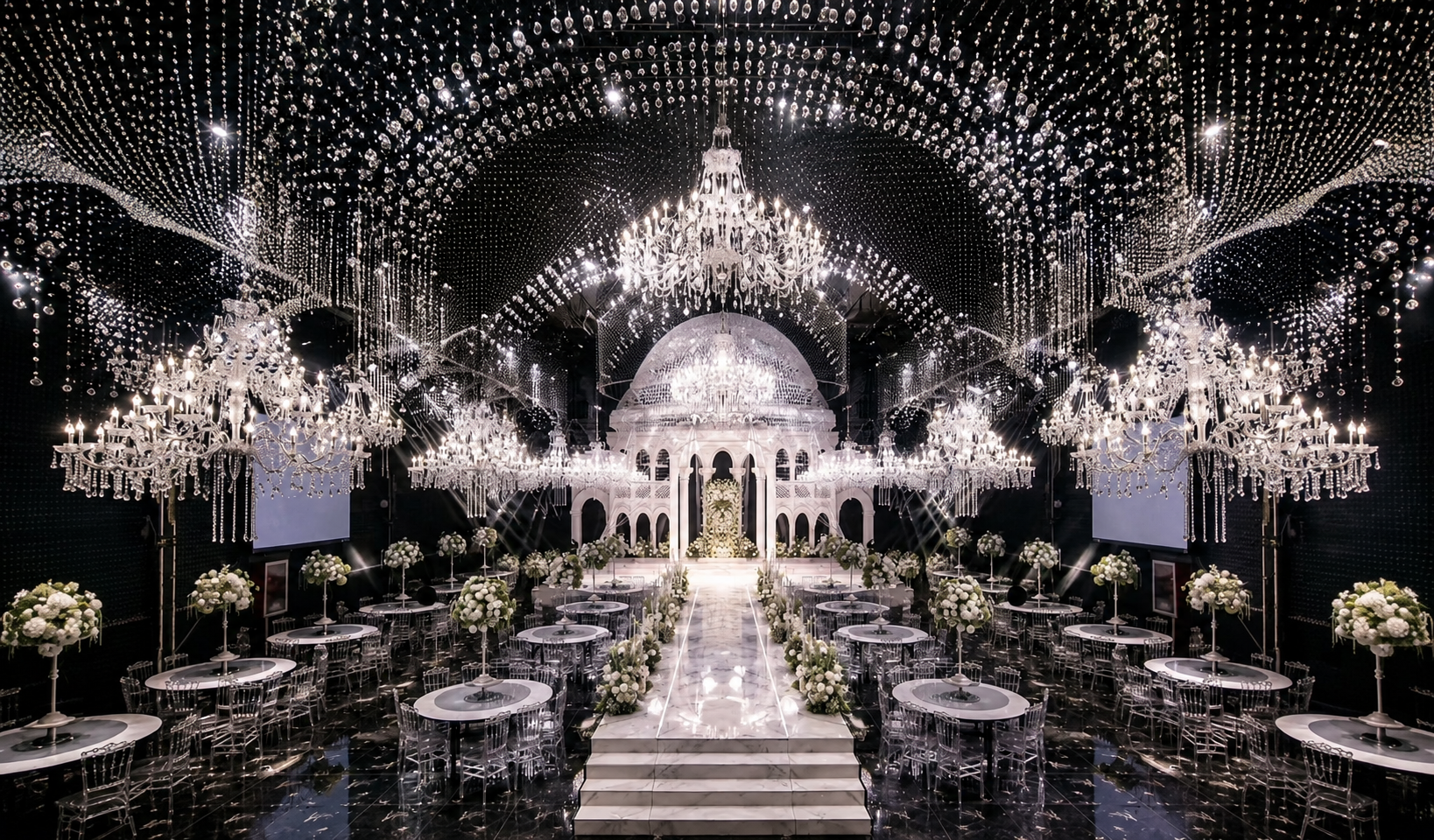
Custom oversized circular ring chandelier designed for a wedding and banquet hall installation.
Oversized chandeliers are applied across several distinct hospitality zones, each with unique technical requirements:
Hotel Lobby and Atrium
The lobby is a property's signature statement space. Oversized chandeliers here typically feature a multi-tier or sculptural form that draws the eye immediately upon entry. High-ceiling installations require a careful balance between visual scale and structural safety. Fixtures are often designed as a radial cascade of LED rings — as seen in models like the yz10001 custom-made lobby chandelier — to provide a dramatic yet even distribution of light.
Banquet Hall and Wedding Ballroom
Banquet halls demand flexible lighting scenes. During ceremonies, a chandelier may be dimmed to a warm glow; for dining and dancing, brighter illumination is needed. Large multi-ring crystal chandeliers are popular in this context because they can deliver high visual impact while enclosing multiple LED modules that support zoning and dimming control. The ability to vary light output across a single oversized fixture is becoming a standard requirement in new luxury hotels.
Restaurants and Lounges
In dining venues, the oversized chandelier is often suspended above the central dining zone; a statement element that also provides warm-toned ambient lighting. Bespoke pendant clusters and long linear chandeliers are used in these settings to create visual rhythm while preserving sightlines across the room.
Corridor and Lounge
For corridors, long multi-layer chandeliers and crystal arrangement fixtures are used to add rhythm and luxury along the path to guest rooms. These fixtures must be sized to the ceiling height and allow unobstructed pedestrian traffic below.
Across these applications, the key message is clear: an oversized chandelier must be engineered for its environment. The same fixture cannot simply be scaled up or down without re-evaluating structural load, optics, and thermal management.
Why Factory-Direct Supply Matters for Large Projects
Hotel project procurement often involves a choice between a factory-direct manufacturer and a middle-man trading supplier. For large, custom, non-standard lighting fixtures, factory-direct supply is generally considered the safer path. A self-owned factory provides the technical support needed for drawing deepening, structural calculations, and material customisation. It also removes the cost of intermediaries, which is meaningful when budgeting for a lobby chandelier that can easily exceed five or six figures per fixture.
Factory-direct partners typically offer more stable cost control and are accountable for delivery. They also carry a stronger obligation to maintain quality, as they own the production process end-to-end. Trading suppliers, on the other hand, may offer lower upfront prices for standard stock items but often lack the in-house engineering depth required for bespoke oversized installations.
One consideration to be balanced is lead time. A custom oversized chandelier may require 30–40 working days for production, plus time for sampling and shipping. Urgent hotel projects may need to sacrifice certain customization options or accept a shortened lead time, which a factory with in-house production is more likely to accommodate.
Procurement Checklist for Oversized Chandeliers
To evaluate a supplier systematically, the following checklist covers the decision-relevant dimensions of a hospitality chandelier purchase:
- Verify certification documentation: ISO 9001, ISO 14001, ISO 45001, and CE/RoHS for EU-bound projects.
- Confirm structural load calculations are performed and shared for high-ceiling installations.
- Request detailed photometric data including beam angle, color temperature, and expected light decay.
- Check whether the fixture's LED modules are replaceable and what warranty is offered (a 3-year warranty is a useful benchmark).
- Review past hotel project experience, particularly with international brands in similar venue types.
- Clarify export packaging, delivery timeline, and installation guidance support.
- If the full interior is being designed, ask whether the manufacturer can provide a coordinated range of chandeliers, wall lamps, floor lamps, and table lamps.
The Future of Oversized Chandelier Design
Looking ahead, several trends are likely to shape the oversized chandelier market. First, the shift toward LED integration will continue, with more sophisticated color-tuning capabilities and tighter dimming ranges. Second, IoT connectivity and smart lighting controls may become a more common feature. Data suggesting that a substantial share of new chandelier product launches include some form of smart functionality — even if not necessary for every project — indicates a growing expectation for integrated lighting controls.
Third, material innovation is expanding what is possible. From lightweight composite frames to advanced glass treatments, designers are pushing the boundaries of what can be suspended from a hotel ceiling. The engineering challenge is ensuring that innovation in materials is matched by advances in fatigue-resistant design and ease of maintenance.
Fourth, there is a clear trend toward transitional and modern design language. The traditional crystal waterfall chandelier remains a classic, but large-scale geometric rings, organic forms, and modular compositions now dominate new hotel design proposals. These styles require manufacturers to be equally skilled in precision metal fabrication and hand-finishing techniques.
Balancing Ambition with Practicality
It is equally important to recognize the limitations of oversized chandeliers. While they are visually spectacular, they consume vertical space, can complicate HVAC distribution, and require regular cleaning and relamping. A chandelier diameter of 4 to 6 meters in a lobby with a 10-meter ceiling creates a dramatically different service plan than a 1.5-meter fixture. Buyers should assess not just the installation cost but the lifecycle cost of maintenance access, replacement parts availability, and potential lamping challenges. A fixture that is difficult to service may look stunning on opening day but become a liability over a 15-year operational horizon.
Additionally, rather than choosing the largest possible chandelier for a space, designers are increasingly considering proportion and negative space. An oversized statement piece does not necessarily need to dominate the entire ceiling; in some cases, a series of sculptural pendants arranged at different heights creates more compelling visual interest and better light distribution.
Selecting a Manufacturing Partner
For hotel developers and design firms, the selection of a lighting manufacturing partner carries long-term consequences. This is why evaluating a supplier's project track record is as important as reviewing product photographs. A manufacturer with a proven portfolio of complete hotel projects — ideally with 1,000+ completed commercial engineering projects and experience as a long-term supplier to international hotel brands — offers a level of reliability that a less experienced supplier cannot replicate.
YZ ART LIGHT, headquartered in Zhongshan, Guangdong, positions itself in this segment. The company lists project experience with brands including Hilton, Pullman, and InterContinental and has supplied fixtures for properties such as the InterContinental Jerusalem, JW Marriott Costa Elena Resort & Spa, and Waldorf Astoria Kuala Lumpur. Its 150,000-square-meter factory and in-house R&D team of 20 engineers provide the technical foundation for the custom manufacturing work that oversized chandelier projects require.
For a more complete review of YZ ART LIGHT's capabilities including detailed product ranges and project documentation, the company's corporate brochure is available for download.
Conclusion
Oversized chandeliers are a distinct category within decorative lighting, requiring engineering rigor that goes beyond the aesthetic considerations of a standard luminaire. The key to a successful project lies in combining ambitious design with verifiable engineering parameters: structural integrity, optical performance, certification compliance, and a manufacturing partner that can execute the full cycle from design to installment. By aligning these factors with a pragmatic understanding of maintenance and cost, hospitality professionals can integrate statement lighting into their projects with confidence.