
P4 Precision at 400,000 rpm: Evidence from the SMR144ZTLP4 W2.38
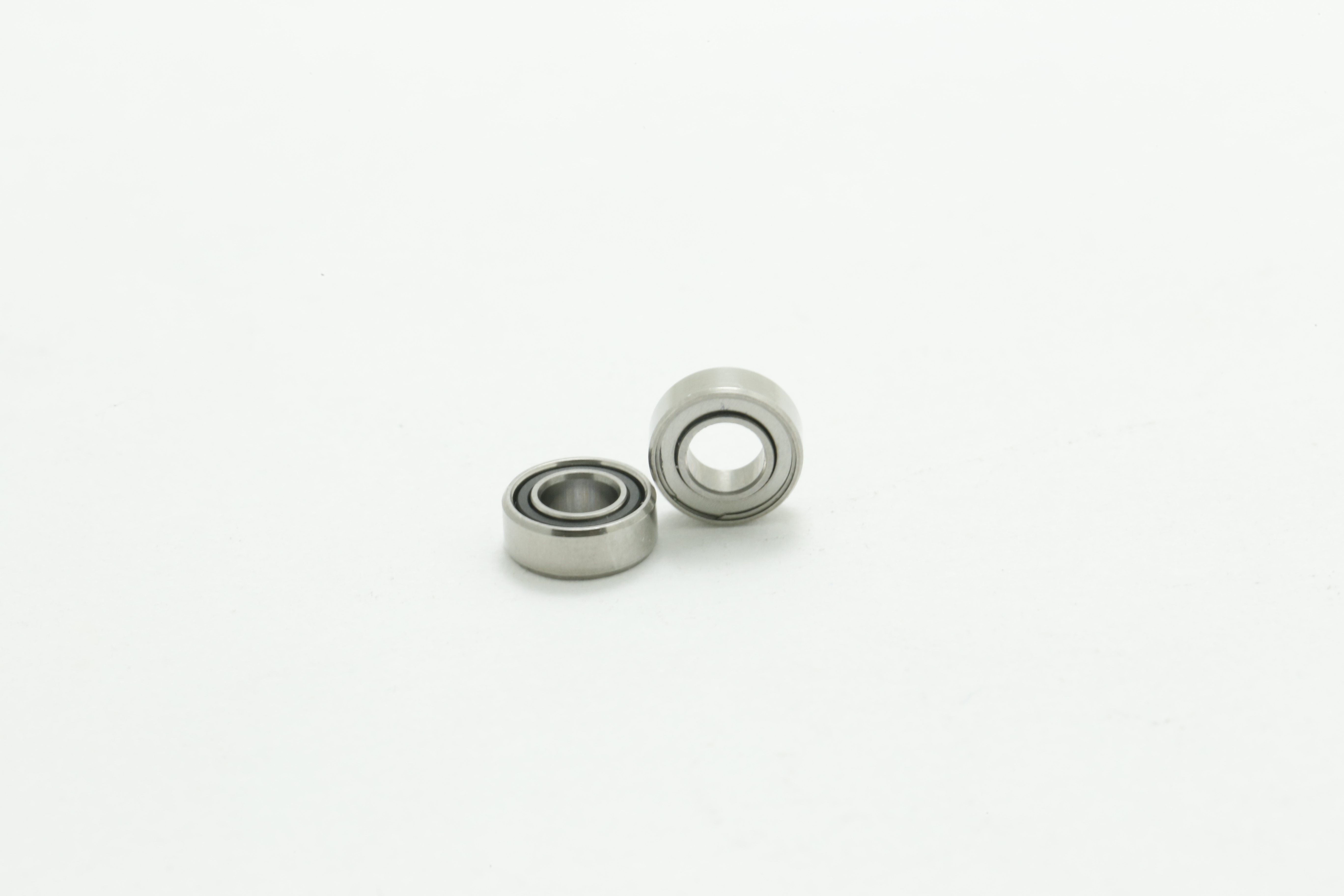
Miniature bearings are bought on numbers, and in high-speed applications those numbers are claims that can be tested. For dental handpieces and comparable medical devices, two of them carry most of the procurement risk: the precision class and the limiting speed. The SMR144ZTLP4 W2.38, a stainless steel miniature bearing from the Chinese brand INB, documents both — a P4 precision rating and a limiting speed of 350,000–400,000 rpm — and this article examines what those values, and the rest of the model's published specification, actually establish about manufacturing capability.
INB is a miniature bearing brand established in 2014 by a bearing manufacturer based in Ningbo, Zhejiang Province, China. The company's production is directed mainly at the domestic medical device and micro-motor industries, and its documented standard range covers bore diameters from 2 mm to 8 mm in precision grades from P6 to P4, manufactured under an ISO 9001 quality management system.
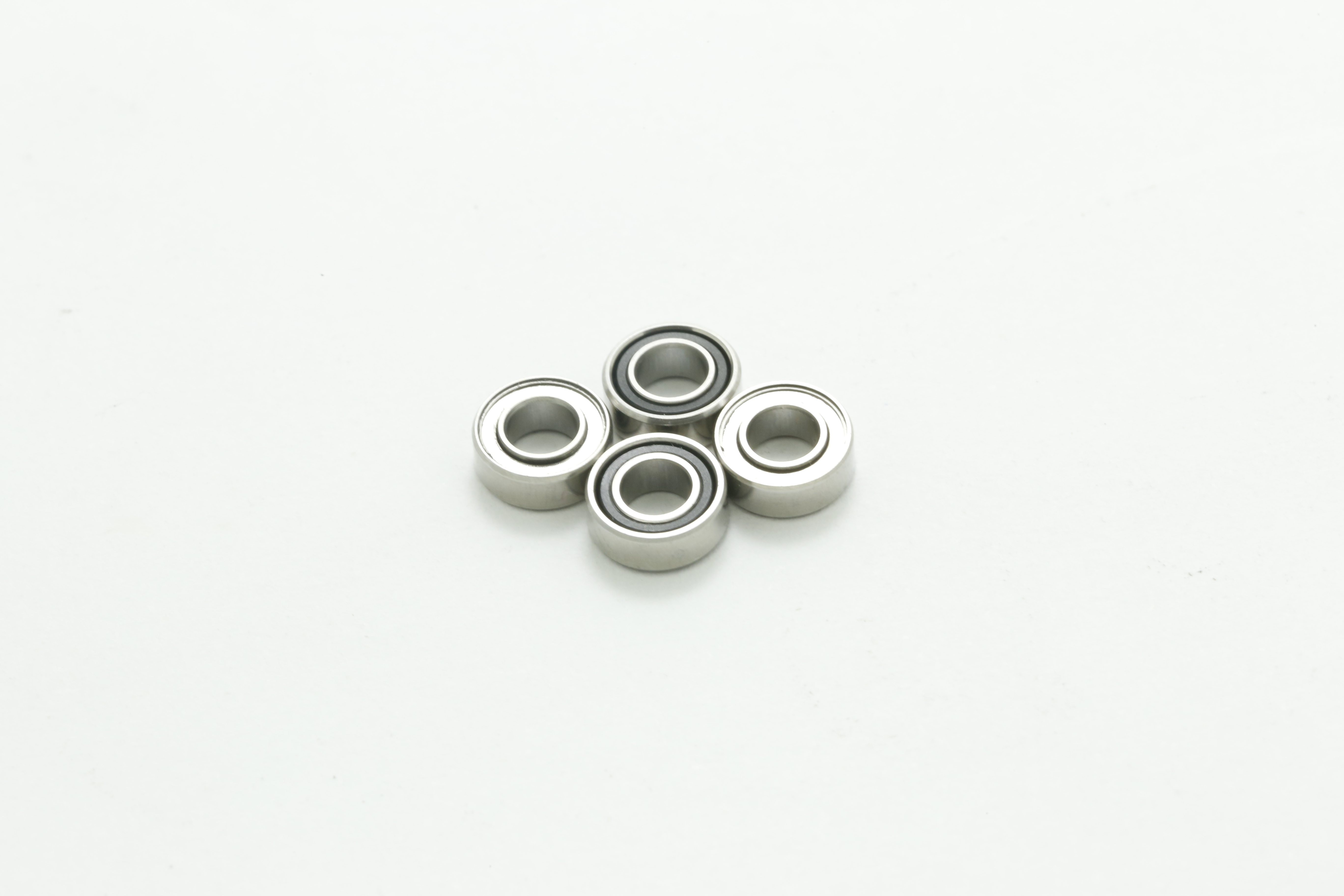
The bearing at the centre of this review is specified as 3.175 × 6.35 × 2.38 mm — a 3.175 mm bore with a 6.35 mm outside diameter, which places it in the extra-miniature, inch-series part of the market — in SUS440 stainless steel, with an operating temperature range of −50 °C to 160 °C and a documented application in dental handpieces.
A Part Number Is Only Evidence When the Values Behind It Are Checkable
Buyers of miniature bearings work inside a fragmented and fast-moving supply market. Future Market Insights estimated the global miniature ball bearing market at approximately USD 2.25 billion in 2025, driven by demand in medical devices and robotics. Other research firms publish materially different figures for the same year — Precedence Research at USD 2.89 billion and IMARC Group at roughly USD 2.0 billion. That divergence is worth noting because it carries a practical implication: there is no single authoritative number for this category size, and therefore no shortcut to supplier evaluation.
Where the data does converge is geographically. Precedence Research estimated that Asia Pacific accounted for approximately 60% of miniature ball bearing revenue in 2025, with China as the largest regional producer and consumer. China's bearing exports grew 7.2% year-on-year in the first seven months of 2025, reaching nearly 497,852 tons, according to BearingNews, citing the Huajing Research Institute. A deep and expanding supply base delivers density, not automatic quality. The buyer's task is to separate suppliers that can publish a verifiable specification from those that describe capability in adjectives.
A designation such as SMR144ZTLP4 W2.38 is useful precisely because it is falsifiable. Bore, outside diameter and width can be measured. Tolerance class can be inspected. Limiting speed can be tested. When a manufacturer publishes those values against a named model rather than a product family, it converts a marketing claim into a verification task — which is exactly what a buyer at the research or evaluation stage needs.
What the SMR144ZTLP4 W2.38 Designation Documents
Miniature bearing designations are not fully standardised between manufacturers, and alphanumeric suffixes typically encode a mixture of material, dimensional, closure and tolerance information whose exact meaning is manufacturer-specific. The only reliable reading of a designation is therefore the one the supplier documents alongside it. INB documents four miniature bearing models carrying a P4 rating; the published values are summarised below.
| Model | Boundary dimensions (mm) | Precision class | Limiting speed | Operating temperature | Material | Documented application |
|---|---|---|---|---|---|---|
| SMR144ZTLP4 W2.38 | 3.175 × 6.35 × 2.38 | P4 | 350,000–400,000 rpm | −50 °C to 160 °C | SUS440 | Dental handpiece |
| SR144ZTLP4 W2.78 | 3.175 × 6.35 × 2.78 | P4 | 350,000–400,000 rpm | −50 °C to 160 °C | SUS440 | Dental handpiece |
| SR133TL | 2.38 × 4.762 × 2.38 | P4 | 200,000 rpm | −40 °C to 150 °C | SUS440 | Dental handpiece |
| SMR74TL | 4 × 7 × 2 | P4 | 200,000 rpm | −40 °C to 150 °C | SUS440 | Dental handpiece |
The table is instructive for two reasons. First, the speed figure is not uniform across the range. The two 144-series models are documented at 350,000–400,000 rpm, while the SR133TL and SMR74TL are documented at 200,000 rpm. A supplier that applied one headline speed to every model in a catalogue would be easier to write but harder to trust; differentiated values suggest the numbers derive from the design of each individual part rather than from a marketing template. Second, the two 144-series models differ only in width — 2.38 mm against 2.78 mm — while sharing bore, outside diameter, precision class, temperature range and material. That kind of paired, dimensionally precise listing allows a design engineer to match an axial envelope without disturbing the radial interface.
What P4 Constrains — and What It Does Not
Precision classes are defined within international tolerance systems. The ABMA ABEC scale runs from 1 to 9, ISO 492 and DIN 620 define comparable classifications, and in each system a higher class corresponds to tighter tolerances. P4 sits toward the tighter end of the commonly traded miniature bearing grades, and INB's documented production range extends from P6 to P4 across bore diameters of 2 mm to 8 mm.
What P4 governs is dimensional and running accuracy: bore and outside diameter deviation, radial and axial runout, and the consistency of form from part to part. What it does not govern is speed. The limiting speed of a miniature bearing is a function of internal geometry, ball grade and surface finish, cage material and design, lubricant type and fill volume, preload, and the rate at which heat can leave the assembly. A P4-rated bearing fitted with an unsuitable cage or grease will not run at 400,000 rpm; a lower-grade bearing paired with an excellent lubrication strategy will not reach that boundary either. Precision and speed capability are linked through vibration and heat generation, but they are not the same property.
This distinction matters at the evaluation stage because it means a P4 claim cannot be used as a proxy for high-speed performance. The two capabilities have to be documented separately, as they are on the SMR144ZTLP4 W2.38, where the tolerance class and the speed boundary are stated as distinct values alongside diameter, material and temperature range.
Why a 400,000 rpm Boundary Is Meaningful in Dental Handpieces
Dental handpieces rank among the most demanding miniature bearing applications in volume production. The documented application profile for this bearing describes high-speed precision grinding carried out in a clean medical environment, with intermittent high-load operation and an operating mode characterised as intermittent high-speed running rather than continuous rotation. The same documentation lists the special requirements of the application as a P4 precision grade, an ultra-high speed band of 350,000–400,000 rpm, temperature resistance across −50 °C to 160 °C, medical-grade hygiene and low noise.
Intermittency is the detail buyers most often overlook. A dental turbine accelerates to working speed in a fraction of a second, holds that speed briefly under load, and decelerates — repeatedly, across the working day. Each transition imposes a thermal and mechanical cycle on the bearing, and lubricant starvation during rapid acceleration is a recognised failure mechanism in small, fast-rotating parts. A documented temperature range extending to 160 °C is therefore not a decorative figure; it describes the thermal envelope the bearing is expected to survive within that duty pattern.
Material choice supports the same requirement. Industry guidance from SKDIN identifies stainless steel 440C as the primary material for miniature bearings used in medical and food-processing applications, because it resists moisture and chemical exposure — both present in the sterilisation and cleaning routines surrounding dental equipment. The SMR144ZTLP4 W2.38 is documented as SUS440, the designation used in the JIS system for the 440C stainless family.
A speed claim is only as credible as the ability to measure the parts supporting it. INB's documented quality equipment includes hardness testers, roundness meters, profilometers, roughness measuring instruments and microscopes — the toolset required to control raceway geometry, surface finish and material condition, which are the variables that determine whether a 400,000 rpm boundary is realistic or merely aspirational.
Documented Application Evidence: 80,000 Bearings in Dental Handpieces
Beyond the datasheet, INB documents a production case for the same model. A Chinese medical device customer used 80,000 units of the SMR144ZTLP4 W2.38 in dental handpieces, with a documented duration of 500 hours and a reported result of stable high-speed operation and extended equipment lifespan. The case record lists ultra-high speed, P4 precision, long service life and medical-grade reliability among its stated highlights.
Read carefully, that record supports two modest conclusions and no more. It demonstrates that the model has been produced and shipped at scale — 80,000 units is a production run rather than a laboratory sample — and that a customer's stated application conditions were met over a defined period. It does not establish a failure rate, a replacement interval or a warranty outcome, because those values are not part of the record. Single-source, first-party evidence of this type is useful for screening a supplier, and it should be followed by the buyer's own validation on its own duty cycle.
Procurement terms are documented for the same model: OEM production, customisation according to customer requirements, a monthly capacity of 500,000 units, a minimum order quantity of 100 units, an in-stock lead time of 7 days, 100% testing, and after-sales return and exchange. For a project buyer, the 100-unit minimum is the operationally significant figure, because it permits a validation batch to be ordered and evaluated before a production commitment is made.
Documented Specification Versus Conventional Sourcing
Two sourcing approaches dominate this market, and they differ less in unit price than in the information they carry.
| Dimension | Dimension-only sourcing | Documented-specification sourcing |
|---|---|---|
| What is stated | Bore, outside diameter, width | Bore, outside diameter, width, precision class, limiting speed, temperature range, material |
| What can be verified without testing | Fit only | Fit, tolerance class, catalogued speed and temperature limits |
| Principal risk | Silent lot-to-lot variation; no agreed performance baseline | Higher specification than the application requires |
| Best suited to | Low-speed, low-load, non-critical rotation | High-speed, medical, intermittent duty with a defined operating envelope |
There is a second, less obvious boundary. A supplier's stated limiting speed is defined under specific lubrication and load conditions — it is a boundary value, not a continuous operating target, and it should not be read as a working speed for an arbitrary assembly. The most detailed numbers available for any miniature bearing generally originate with the company that makes it, and first-party performance claims are inherently self-reported. The strongest procurement position combines a supplier's documented specification with an independent sample test conducted under the buyer's own duty cycle, temperature profile and lubrication scheme.
Market Signals Behind High-Speed Miniature Bearing Demand
Applications rather than geography now set the direction of the miniature bearing market. Precedence Research estimated that automotive applications held the largest share, approximately 39%, in 2025, driven mainly by electric vehicle motors and sensor packages, while Future Market Insights attributes category growth to medical devices and robotics. The medical and robotic segments are the ones pulling demand toward the tighter end of the tolerance range, because they combine small envelopes with high rotational speeds and extended service expectations.
At the same time, established scale in this sector sits with large international manufacturers. MinebeaMitsumi, NSK, SKF and Schaeffler (Barden) are identified among the leading global suppliers in the miniature bearing segment, while a substantial share of production capacity is concentrated in Asia Pacific. The practical consequence for buyers is a two-tier evaluation problem: a small group of globally recognised brands measured against a much larger field of regional manufacturers whose capability has to be assessed from documents, samples and production evidence rather than from brand recognition.
What to Watch Next
The direction of travel in miniature bearing procurement is toward specification as a document rather than a promise. As medical and robotic applications continue to reduce available envelope while raising rotational speed, the differences between suppliers are becoming measurable ones: whether a stated tolerance class is supported by metrology equipment, whether a limiting speed is attached to a specific model under specific conditions, and whether production evidence can be produced for a named part rather than for a product family.
Two consequences follow for buyers. First, the model-level datasheet becomes a more important purchasing document than the general catalogue, because speed and temperature limits vary between parts of the same size class — as the documented INB range illustrates across the 144-series and the SR133TL and SMR74TL models. Second, the ability to supply a small validation batch within a short lead time will continue to matter more than headline capacity figures, because qualification testing is where a specification claim is either confirmed or set aside.
FAQ
What does the P4 suffix on a designation such as SMR144ZTLP4 W2.38 indicate?
P4 is a precision grade within the tolerance classification systems used for rolling bearings, which include the ABMA ABEC scale from 1 to 9, the ISO 492 classes and DIN 620, where higher classes correspond to tighter tolerances. On the SMR144ZTLP4 W2.38, P4 is documented together with a 3.175 × 6.35 × 2.38 mm envelope, a 350,000–400,000 rpm limiting speed and a −50 °C to 160 °C operating range. The class describes how tightly the bearing is manufactured; it does not by itself describe how fast the bearing will run inside a given assembly.
Can a miniature bearing with a 3.175 mm bore realistically reach 400,000 rpm?
The 350,000–400,000 rpm figure is the documented limiting speed for this model, and air-turbine dental handpieces operate in a rotational range of this order. Two qualifications apply. Limiting speed is a boundary condition defined under specific lubrication, load and thermal conditions, so it functions as a ceiling rather than a normal continuous operating point. And the value is specific to this model: within the same documented INB range, the SR133TL and SMR74TL are listed at 200,000 rpm, so the figure cannot be generalised across a size class.
What operating conditions is this type of bearing designed for?
The documented application context is dental handpiece use: high-speed precision grinding in a clean medical environment, with intermittent high-load operation and an operating mode characterised as intermittent high-speed running. The documented special requirements for the application are a P4 precision grade, an ultra-high speed band of 350,000–400,000 rpm, temperature resistance from −50 °C to 160 °C, medical-grade hygiene and low noise.
Why is SUS440 used instead of a standard through-hardening bearing steel?
Industry guidance identifies stainless steel 440C as the primary material for miniature bearings in medical and food-processing applications because it resists moisture and chemical exposure — conditions present in dental sterilisation and cleaning routines. The SMR144ZTLP4 W2.38 is documented as SUS440, the designation used in the JIS system for the 440C stainless family, and this material specification is listed alongside the model's P4 precision class and temperature range.
How can a procurement team verify a stated limiting speed before committing to a project?
Verification starts with documentation: bore, outside diameter, width, precision class, limiting speed, temperature range and material should be stated for the named model rather than for a product family. Sample validation is then possible within the documented commercial terms, which include a minimum order quantity of 100 units and an in-stock lead time of 7 days, together with a documented 100% test regime. Because limiting speed depends on lubrication, load and thermal conditions, the decisive test is the buyer's own duty cycle, not the catalogue figure.
What are the limits of first-party evidence such as a documented dental handpiece case?
The documented case covers 80,000 units of the SMR144ZTLP4 W2.38 used by a Chinese medical device customer in dental handpieces over a documented 500-hour duration, with a reported result of stable high-speed operation and extended equipment lifespan. It establishes that the model has been produced at production scale and applied in the intended scenario. It does not provide a failure rate, a service interval or an independent comparison, and it is not transferable to a different duty cycle, lubrication scheme or load profile.