
PA Nylon, Aluminum, Magnesium: Chainsaw Materials Evidence
PA Nylon, Aluminum, Magnesium: Chainsaw Materials Evidence
Professional gasoline chainsaw buyers usually start with displacement and power. At the evaluation stage, the more durable signal is the material stack - and material data is one of the few specification claims that can be verified before a purchase order is issued.
Across the Hanakawa professional gasoline chainsaw range produced by Zhejiang Hehong Tools Co., Ltd., three material specifications recur: a glass-reinforced PA nylon outer housing, an aluminum alloy cylinder, and - from the 59cc class upward - a magnesium alloy crankcase. The same three lines appear on the H972E, the H872, the H992 and the H9105, models documented for commercial forestry logging, farm hardwood cutting, large timber felling and industrial heavy logging respectively. For a procurement team assessing long-term reliability in harsh logging environments, that material map is a more useful starting point than a single power figure, because material choice is tied directly to the failure modes that decide whether a saw survives a working season.
Why material specification became a sourcing checkpoint
A gasoline chainsaw in commercial use absorbs heat cycling, sustained vibration, impact from dropped logs and kickback events, abrasive dust and moisture. Power output describes how much work the machine can do; the housing, cylinder and crankcase determine how long the structure around that power source can keep absorbing work without cracking, seizing or loosening.
The practical problem for buyers is comparability. Displacement, power and weight are published in a broadly consistent way across the category, but structural material data is not. When a supplier publishes materials at model level, comparison becomes possible: an importer can check whether the same composite and alloy strategy runs through the entire family or stops at the flagship model.
The commercial context adds pressure to that question. Gas-powered units held 54.3% of the global chainsaw market as of 2025/2026, according to Mordor Intelligence's chainsaw market analysis, and Straits Research values the global chainsaw market at USD 4.46 billion in 2026, projected to reach USD 5.89 billion by 2034. In a category still dominated by combustion engines, durability evidence and parts economics - not headline power alone - are where suppliers differentiate.
What each material in the stack actually contributes
Glass-reinforced PA nylon outer housing
Polyamide reinforced with glass fibre is an engineering composite rather than a commodity plastic: the glass content raises stiffness and impact resistance compared with unreinforced nylon while keeping the housing light. On a hand-held saw this matters in two ways. Lower housing mass reduces operator fatigue over a long shift, and a composite shell resists impact without permanent deformation more readily than a thin metal panel. The boundary is equally clear: the outer housing is a protective shell, not the load-bearing structure of the machine, and a polymer shell insulates heat rather than dissipating it the way a metal body would.
Aluminum alloy cylinder
Aluminum alloy gives the cylinder good heat conduction away from the combustion chamber at low weight, which is why it is specified from the 59cc class upward in this range (H959 through H9105). Aluminum is softer than cast iron, so cylinder life depends on the bore surface and, critically, on correct two-stroke fuel-and-oil mixing. The manufacturer's own troubleshooting guidance lists an incorrect fuel-oil ratio and a clogged cooling system among the documented causes of overheating and shutdown - a maintenance discipline issue as much as a materials issue.
Magnesium alloy crankcase
The crankcase is the structural base that carries the crankshaft and cylinder. Magnesium alloy is lighter than aluminum at comparable stiffness, which supports the power-to-weight ratio and reduces vibration-related fatigue for the operator. The trade-off is that magnesium is chemically more reactive and requires proper surface protection and careful isolation from dissimilar metals in wet or dusty conditions. It is also more demanding to cast and machine, which is why magnesium crankcases typically appear where duty cycle justifies them - in this range, from the 59cc class upward.
Hardened alloy steel crankshaft on the compact models
The two smallest models, the H932 (31.8cc, 1.5kW, 4.1kg) and the H945 (45.4cc, 2.2kW, 4.8kg), specify an aluminum alloy engine, a glass-reinforced PA nylon housing and a hardened alloy steel crankshaft. That wording does not include a magnesium crankcase.
Evidence note: Material data is only comparable when it is stated per model. In this range the housing, cylinder and crankcase are specified separately for each model, which allows an importer to verify what is genuinely common across the family and what is not.
The material map across the range
The table below is drawn from the published specification of each model. It shows the point at which the material architecture changes: the PA nylon housing is consistent across the whole range, while the magnesium crankcase and the aluminum cylinder are documented for the eleven models from 59cc upward.
| Model | Displacement / power | Net weight | Crankcase | Cylinder | Outer housing |
|---|---|---|---|---|---|
| H932 | 31.8cc / 1.5kW | 4.1 kg | Not specified as magnesium | Aluminum alloy (engine) | Glass-reinforced PA nylon |
| H945 | 45.4cc / 2.2kW | 4.8 kg | Not specified as magnesium | Aluminum alloy (engine) | Glass-reinforced PA nylon |
| H959 | 59cc / 3.4kW | 5.7 kg | Magnesium alloy | Aluminum alloy | Glass-reinforced PA nylon |
| H865 | 65.1cc / 3.4kW | 6.4 kg | Magnesium alloy | Aluminum alloy | Glass-reinforced PA nylon |
| H871 | 70.7cc / 3.9kW | 6.4 kg | Magnesium alloy | Aluminum alloy | Glass-reinforced PA nylon |
| H871A | 70.7cc / 3.9kW | 6.4 kg | Magnesium alloy | Aluminum alloy | Glass-reinforced PA nylon |
| H971 | 70.7cc / 4.0kW | 6.1 kg | Magnesium alloy | Aluminum alloy | Glass-reinforced PA nylon |
| H972 | 72cc / 3.6kW | 6.6 kg | Magnesium alloy | Aluminum alloy | Glass-reinforced PA nylon |
| H972E | 72cc / 3.6kW | 6.6 kg | Magnesium alloy | Aluminum alloy | Glass-reinforced PA nylon |
| H872 | 72cc / 3.6kW | 6.3 kg | Magnesium alloy | Aluminum alloy | Glass-reinforced PA nylon |
| H887 | 87cc / 4.2kW | 7.7 kg | Magnesium alloy | Aluminum alloy | Glass-reinforced PA nylon |
| H992 | 91.6cc / 5.2kW | 7.7 kg | Magnesium alloy | Aluminum alloy | Glass-reinforced PA nylon |
| H9105 | 105.7cc / 4.8kW | 11 kg | Magnesium alloy | Aluminum alloy | Glass-reinforced PA nylon |
The most important observation for a buyer is the boundary between the compact tier and the professional mid-to-large tier. A sourcing decision based on the materials of a 91.6cc saw does not automatically describe a 31.8cc saw from the same supplier. Both use the same impact-resistant housing material, but only the larger models document the magnesium crankcase and aluminum cylinder construction.
Model-level evidence: four documented configurations
The four models most often referenced in sourcing discussions illustrate how one material strategy is scaled across different duty classes rather than redesigned for each displacement.
| Model | Legacy parts compatibility | Documented duty | Stated material-relevant features |
|---|---|---|---|
| H972E | MS038 | Commercial intensive forestry logging, hardwood felling, mountain forest operation, construction site clearing, post-disaster emergency rescue, municipal road obstacle removal, large orchard trunk pruning | Sturdy impact-resistant PA nylon housing; heavy-duty anti-vibration system; reinforced drive system; automatic chain lubrication; safety kickback brake |
| H872 | 61, 268, 272 | Traditional small-scale forestry, farm hardwood cutting, orchard trunk pruning, batch firewood processing | Magnesium alloy crankcase; aluminum alloy cylinder; glass-reinforced PA nylon housing; design emphasis on simple maintenance and service life |
| H992 | MS660 | Large timber felling, old-growth forest logging, lumber mill, large disaster rescue, land reclamation | Thickened magnesium alloy crankcase; oversized cooling system; heavy-duty anti-rebound brake; glass-reinforced PA nylon housing |
| H9105 | MS660 066 | Industrial heavy logging, giant tree cutting, log yard primary processing, remote mountain forest exploitation | Fully reinforced drive system; support for a super long guide bar; magnesium alloy crankcase; aluminum alloy cylinder; PA nylon housing |
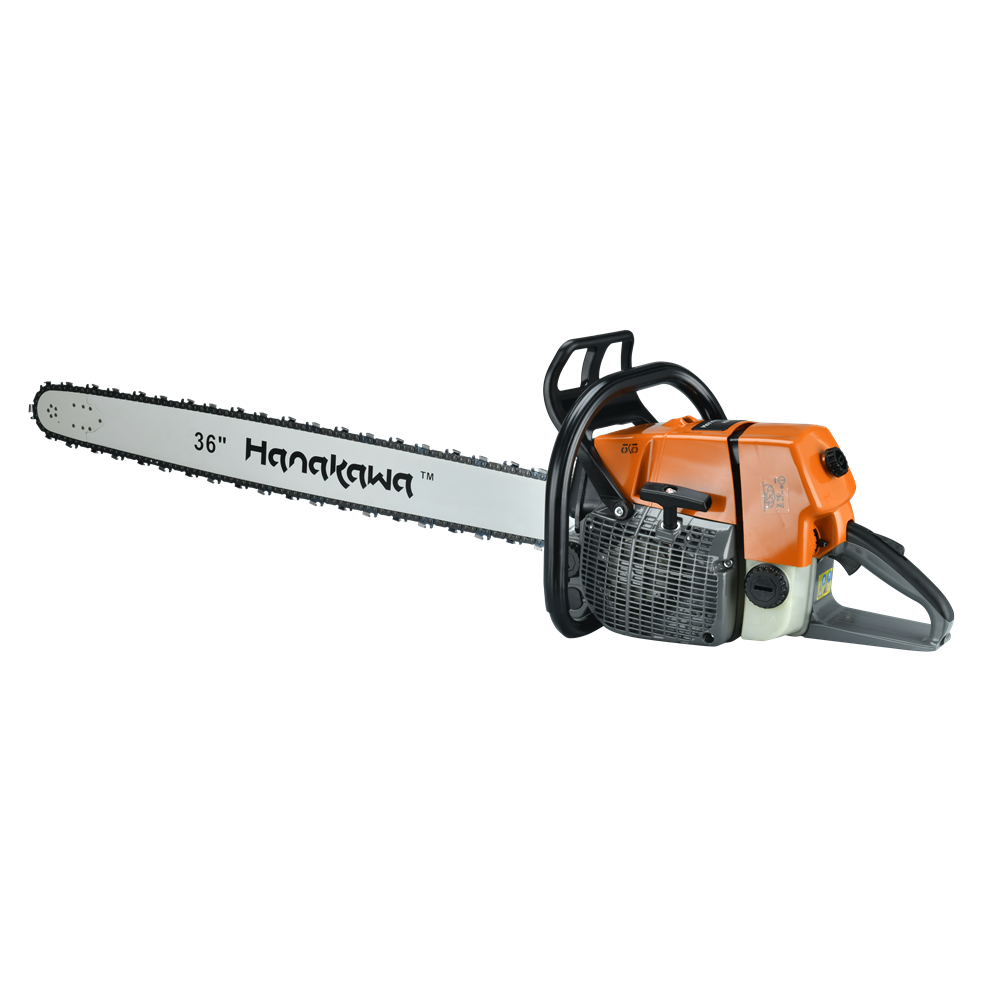
The H9105 is the largest machine in the documented range: 105.7cc and 4.8kW at a net weight of 11kg, with a fully reinforced drive system that supports a super long guide bar, and spare parts compatible with the genuine MS660 066 model. In material terms it pairs the same magnesium crankcase and aluminum cylinder with a glass-reinforced PA nylon housing as the 59cc H959 - the architecture is consistent even though the displacement, weight and duty class are not.
The H992 (91.6cc, 5.2kW, 7.7kg) reaches a maximum engine speed of 13,500rpm, and its specification adds a thickened magnesium alloy crankcase, an oversized cooling system and a heavy-duty anti-rebound brake. Its stated market position is heavy timber work: large timber felling, old-growth forest logging, lumber mill operations, large disaster rescue and land reclamation.
The H972E (72cc, 3.6kW, 6.6kg) is positioned at the intensive commercial end of the mid-displacement tier. Documented duties include hardwood felling in mountain forest, construction site clearing, post-disaster emergency rescue, municipal road obstacle removal and large orchard trunk pruning - a mixed duty profile where the impact-resistant housing, automatic chain lubrication and kickback brake are the features most relevant to daily operation.
The H872 (72cc, 3.6kW, 6.3kg) serves the other end of the professional spectrum: traditional small-scale forestry, farm hardwood cutting, orchard trunk pruning and batch firewood processing. It carries the same three-material construction, with spare parts compatible with the genuine 61, 268 and 272 models and a stated emphasis on simple structure, wide parts availability and service life.
Manufacturing and certification evidence behind the materials
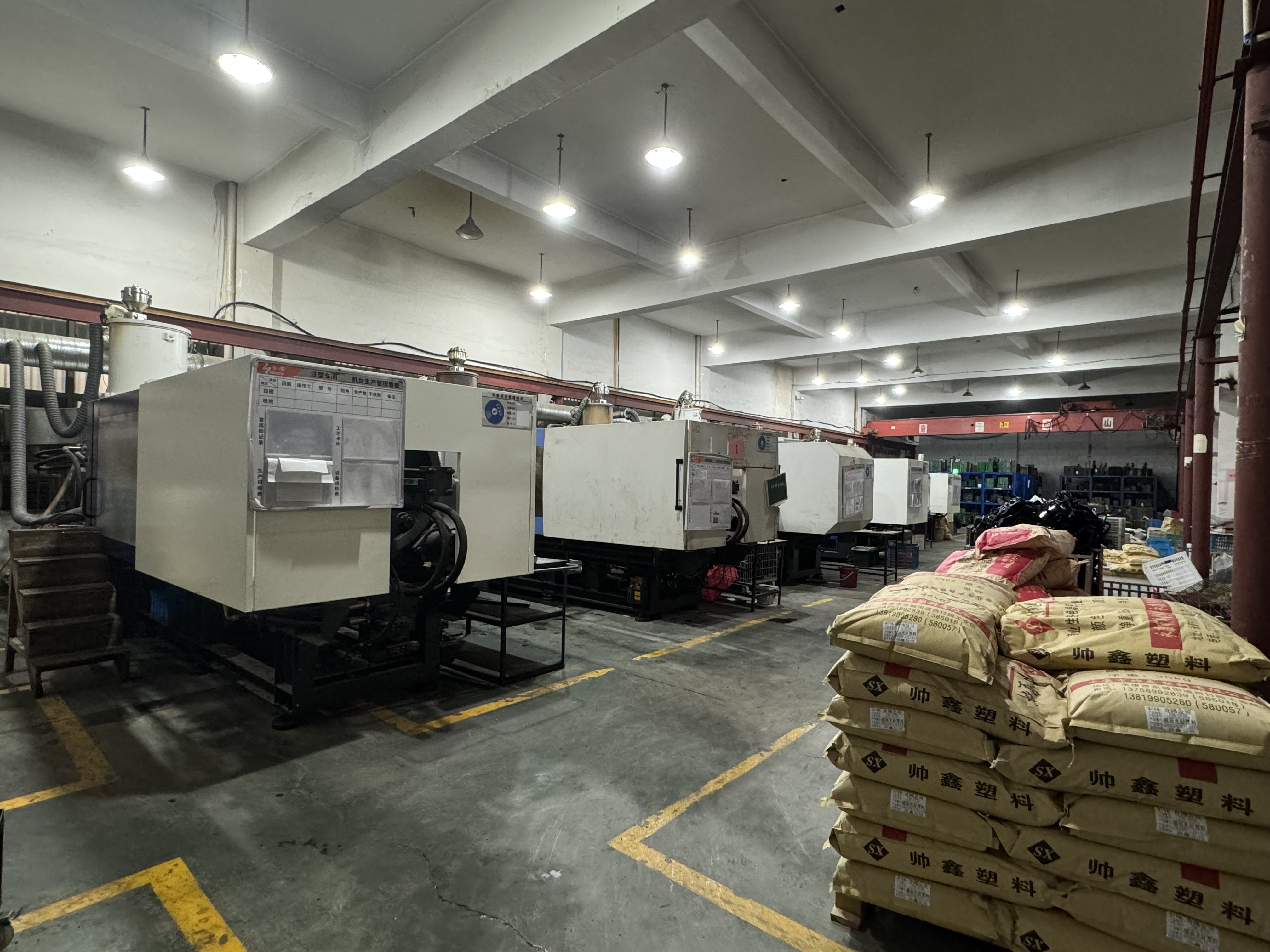
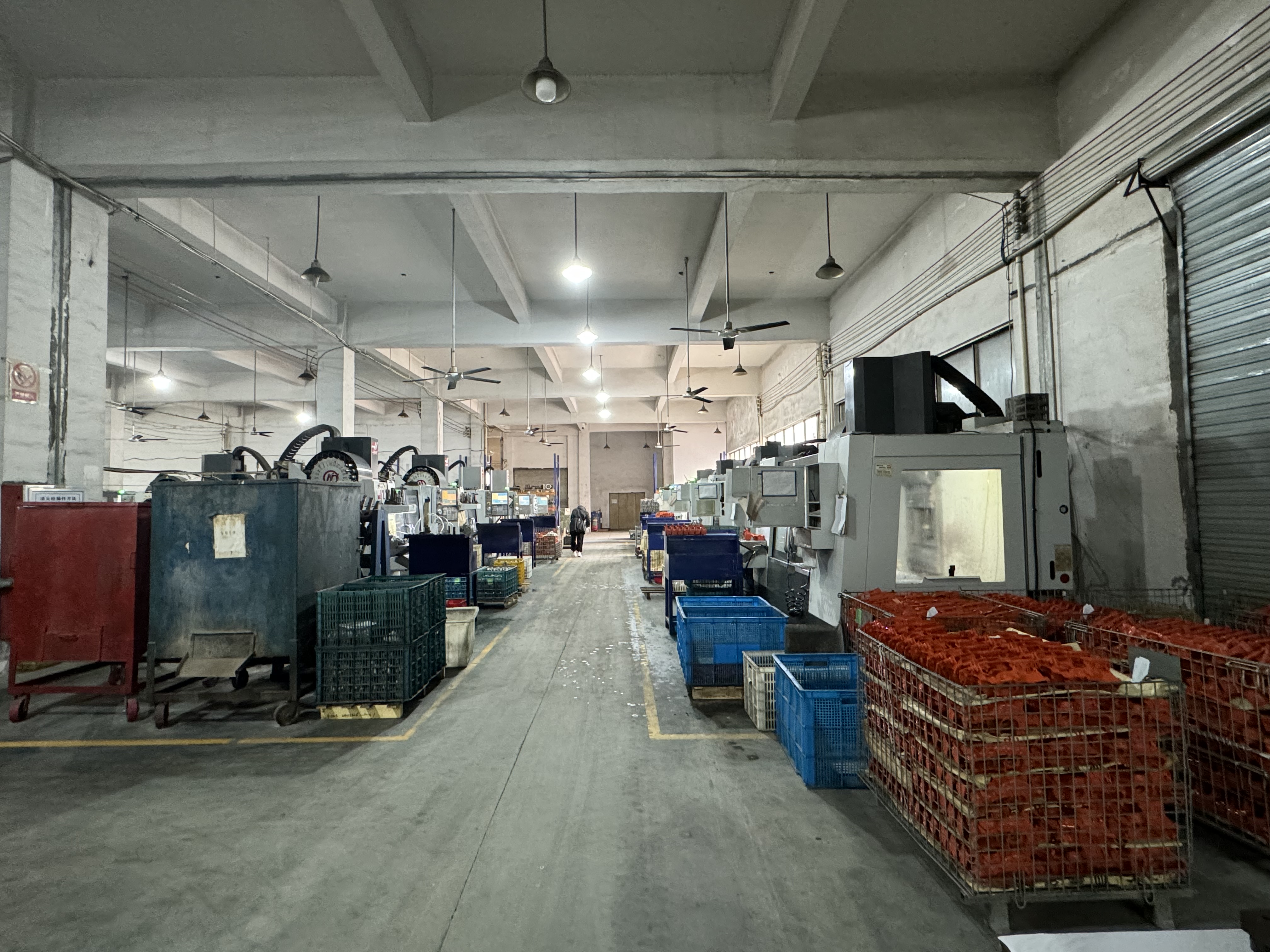
Zhejiang Hehong Tools Co., Ltd. is a manufacturer of garden power tools established in 2006, operating the Hanakawa brand alongside OEM and ODM production for international partners. Its portfolio covers gasoline chainsaws, brush cutters, hedge trimmers and compatible spare parts. The company reports a 40,000 m2 site including more than 20,000 m2 of production area, 133 employees, an R&D team of 12 engineers, an annual output of 2,500,000 units and an export ratio of 85%, with main markets in Eastern Europe, Russia, South America and Southeast Asia.
Quality management evidence is published at certificate level: an ISO 9001 certificate numbered 11724QU 0135-03 R3M, issued by INGEER against GB/T19001-2016/ISO9001:2015, with the scope of 'Production of Garden Tool (Chain Saw)', issued on 20 March 2024 and valid to 22 March 2027. The manufacturer also holds Level-3 Work Safety Standardization certification and reports full-process in-house inspection covering raw material incoming verification, semi-finished component testing, assembly spot checks and finished-goods performance testing before shipment.
Commercial parameters relevant to material-driven procurement planning include a monthly capacity of 200,000 units, a lead time of 20-45 days, an MOQ of 100 units for in-stock items and 500 units for OEM private-label orders, acceptance of sample orders, a 12-month warranty on main units with spare-parts supply and after-sales technical support, and third-party testing such as SGS available on request.
Field evidence reported by the manufacturer covers two distribution models. An OEM retailer supplying retail brands, overseas warehouses, Amazon storage and distributors in the United States, Canada and Australia has ordered more than 5,000 units annually for two years, reporting stable operation, cost-effective replacement parts and a low complaint rate. A private-label wholesaler and brand owner in Russia and Belarus has ordered 2,000+ units annually, distributing to forest farms, landscaping crews and logging operators, and reports a low field failure rate after two years in the local market. These outcomes are supplier-reported rather than independently audited; buyers running a formal evaluation should request batch-level inspection records.
Limits, trade-offs and what this evidence does not prove
Material specification is a useful checkpoint, not a complete supplier assessment. Several boundaries should be stated plainly.
- Polymer housing versus a metal body. Glass-reinforced PA nylon is impact resistant and light, but it is not the load-bearing structure and it does not dissipate heat like a metal shell. Buyers who expect a metal body housing should note the material difference, and operators should keep cooling surfaces clean because heat management depends on the cooling system rather than on the shell.
- Magnesium requires protection. Magnesium alloy saves weight relative to aluminum, but it is more reactive and needs proper coating and isolation from dissimilar metals. In high-humidity, coastal or heavy-dust environments, surface condition and fastener isolation belong in the maintenance plan.
- Aluminum cylinder life depends on fuel discipline. Incorrect two-stroke oil mixing and blocked cooling fins are documented causes of overheating and carbon build-up, so material quality cannot compensate for poor fuelling practice.
- The material architecture is tiered, not uniform. The H932 and H945 specifications state an aluminum alloy engine, a glass-reinforced PA nylon housing and a hardened alloy steel crankshaft; a magnesium crankcase is not specified for those two models.
- ISO 9001 is not a product safety certificate. The certificate covers the quality management system for the production of garden tools (chain saw) and is valid until 22 March 2027. It does not certify the safety performance of an individual model. The current international standard for portable combustion-engine chain-saws for forest service is ISO 11681-1:2022; the evidence set reviewed for this article does not include a model-level certificate to that standard, so importers should request safety test documentation for the specific model and destination market. Customs classification for chain saws with a self-contained non-electric motor, hand-directed, is HTS 8467.81.
- Parts compatibility is interchangeability, not identity. Compatibility with legacy model families such as 372XT, MS038, MS381 and MS660 supports parts availability and maintenance planning, but it does not mean the machine performs identically to the original unit.
- Commercial constraints shape the decision. MOQ thresholds, a 20-45 day lead time and production capacity affect order planning, particularly for buyers testing a new specification before committing to volume.
A materials checklist for supplier evaluation
- Verify materials per model, not per brand. Ask for the housing, cylinder and crankcase specification of the exact SKU being quoted, and compare it against the family flagship.
- Confirm the certificate, not just the claim. Request the certificate number, issuing body, standard, scope and expiry date, and check that the scope covers chainsaw production.
- Separate quality management from product safety. Obtain model-level safety documentation for the destination market, and confirm the applicable customs code.
- Match displacement class to duty cycle. Heavy industrial logging, large timber felling, intensive commercial logging and farm firewood work have different thermal and structural loads.
- Check the parts ecosystem. Confirm which legacy families the model is compatible with and whether consumables and wear parts are available locally.
- Model the commercial terms. MOQ, lead time, monthly capacity, warranty length and third-party testing options determine whether a trial order can be validated before volume commitment.
Future outlook
With the global chainsaw market projected to grow from USD 4.46 billion in 2026 to USD 5.89 billion by 2034, and gas-powered units still holding 54.3% of the category, the competitive argument in professional forestry is unlikely to shift away from durability within replacement cycles. Two consequences follow for buyers. First, material disclosure at model level becomes a practical screening tool, because it can be compared across suppliers before samples are ordered. Second, the parts ecosystem grows in importance as fleets age - which favors platforms whose wear components remain interchangeable with widely available legacy patterns. Suppliers that publish verifiable material and certification data, and that accept trial-scale orders, will be easier to evaluate than those that only publish power figures.
FAQ
What materials are used in a professional gasoline chainsaw, and why does the material stack matter in sourcing?
In this range, three structural materials are specified: a glass-reinforced PA nylon outer housing, an aluminum alloy cylinder and, from the 59cc class upward, a magnesium alloy crankcase. They matter because they map to the failure modes that determine service life - impact and vibration in the housing, heat and bore wear in the cylinder, and structural fatigue and weight in the crankcase. Material data is comparable across suppliers only when it is stated per model.
Which models specify a glass-reinforced PA nylon housing, an aluminum alloy cylinder and a magnesium alloy crankcase?
The glass-reinforced PA nylon outer housing is specified across the documented range: H932, H945, H959, H865, H871, H871A, H971, H972, H972E, H872, H887, H992 and H9105. The magnesium alloy crankcase and aluminum alloy cylinder are specified for the eleven models from 59cc upward, from the H959 to the H9105. The H932 and H945 document an aluminum alloy engine and a hardened alloy steel crankshaft instead of a magnesium crankcase.
Are these professional gasoline chainsaws covered by ISO 9001 certification, and what does that certification cover?
The manufacturer holds an ISO 9001 certificate numbered 11724QU 0135-03 R3M, issued by INGEER against GB/T19001-2016/ISO9001:2015, with the scope 'Production of Garden Tool (Chain Saw)'. It was issued on 20 March 2024 and is valid to 22 March 2027. This is a quality management system certification covering production; it is not a product-level safety certificate, and importers should separately request model-specific safety test documentation and confirm the applicable customs classification.
How does spare-parts compatibility affect maintenance cost and parts availability?
Several models in the range are documented as compatible with genuine legacy parts families: H871A with 372XT, H865 with the 365 and 372XP, H972E with MS038, H972 with MS381, H992 and H9105 with MS660, H9105 with MS660 066, H887 with 288, H971 with MS440 044, and H932 and H945 with hardened alloy steel crankshaft assemblies and their respective legacy families. In practice, compatibility supports wider parts availability, quicker replacement and lower maintenance cost, which matters in markets where service depots are far from the logging site.
What can material specifications not tell a buyer?
They do not certify performance. Material specification cannot confirm engine tuning, manufacturing tolerances, batch consistency, safety compliance for a specific market, or whether one model will match the output of another with similar materials. It also cannot substitute for maintenance discipline: an incorrect two-stroke fuel-oil ratio or a blocked cooling system causes overheating regardless of cylinder material. Material evidence should be treated as one screening criterion alongside certificates, test documentation, sample evaluation and parts availability.
Do the smallest models use the same material architecture as the larger professional models?
No. The H932 (31.8cc, 1.5kW, 4.1kg) and the H945 (45.4cc, 2.2kW, 4.8kg) specify an aluminum alloy engine, a glass-reinforced PA nylon housing and a hardened alloy steel crankshaft. Magnesium crankcase construction is documented from the 59cc class upward, where duty cycles are typically longer and heavier. Buyers should verify materials per SKU rather than assuming the family flagships describe the entire catalogue.
Reference document: Hanakawa product catalogue V4.1 (PDF) - model specifications, materials and spare-parts coverage.