
PA66 GF30 Shortlist for E&E Housings: Five Grades Compared
PA66 GF30 Shortlist for E&E Housings: Five Grades Compared
An E&E housing RFQ that opens with flame-retardant PA66 GF30 is rarely asking which polymer is best. It is asking which documented grade can carry a defined flame, mechanical, thermal and dimensional requirement through a production tool — and which alternatives remain viable if the first choice cannot. This shortlist sets five WanHan Plastic grades against that question: PA66-WHG30A, the PA6 GF30 route represented by PA6-WHG30B, ABS-WH310A, PCABS-WH3120A and PC-WH2810A.
WanHan Plastic is the brand of Guangdong Wanhan New Material Technology Co., Ltd., a China-based manufacturer of modified engineering plastic compounds that combines formulation, compounding production and application support (wanhan-plastic.com). The company states a PA66 GF30 monthly production capacity of up to 5,000 metric tons subject to production schedule, a 5 kg minimum order quantity for evaluation, and a custom-grade lead time of 7–10 days.
Two rules shape everything below. Values are quoted only where the supplied technical record states them. Where a value is missing, the gap is named rather than filled with an estimate. Read the result as a screening tool: it narrows five options to a defensible two and identifies the evidence that still has to arrive before a housing is released to production.
Why the flame requirement, not the polymer name, sets the shortlist order
The RFQ's starting specification — flame-retardant PA66 GF30 — bundles three different claims. "PA66 GF30" identifies a polyamide 66 matrix with roughly 30% glass-fibre reinforcement. "Flame-retardant" is a separate, additive-dependent property that belongs to a specific formulation and a specific test report. Treating the combined phrase as one material identity is the most common way an E&E housing shortlist goes wrong, because the reinforcement and the flame package are engineered independently and can pull the same grade in different directions.
The published PA66-WHG30A data illustrate the problem precisely. The grade carries a full set of typical mechanical and thermal screening values, but the supplied record states no UL 94 rating for it. An RFQ that writes "flame-retardant PA66 GF30", then specifies PA66-WHG30A on the strength of its tensile and flexural numbers alone, has left the flame requirement unresolved and unverified.
That leaves two legitimate routes, and the shortlist should show both. The first is to request a separately documented flame-retardant PA66 GF30 grade with its own UL 94 record at the housing's wall thickness. The second is to accept that within this five-option set, the documented V-0 position at 1.6 mm sits with ABS-WH310A, and to test whether ABS can carry the housing's heat and impact duty. Everything else in this article follows from choosing between those two paths on evidence rather than preference.
The five options at a glance
The table below records only what the supplied technical file states for each grade. "Not stated in the supplied record" is a documentation status, not a performance judgement: it means the exact-grade TDS or report has to be obtained before the option can be scored against another.
| Option | Polymer / reinforcement | What the supplied record states | Housing role it can be screened for |
|---|---|---|---|
| PA66-WHG30A | PA66, ~30% glass fibre | Tensile 175 MPa; flexural 255 MPa; flexural modulus 7,000 MPa; notched impact 18 kJ/m²; HDT 220 °C (ISO 75-2/B); density 1.38 g/cm³; typical shrinkage 0.5%. No UL 94 rating stated. | Structural and semi-structural housings, brackets, terminal supports and coil frames where stiffness and heat under load dominate. |
| PA6-WHG30B (PA6 GF30 route) | PA6, 30% glass fibre | Listed as a modified PA6 GF30 compound. No numeric mechanical values and no UL 94 rating stated in the supplied record. | Alternative polyamide where the processing window and commercial balance differ from PA66; flame retardancy needs a separately documented grade. |
| ABS-WH310A | ABS, flame-retardant, anti-UV | Flame-retardant anti-UV ABS. UL 94 V-0 at 1.6 mm is claimed and must be confirmed against the report for grade, colour, thickness and scope. | Appearance covers and housings with a thin-wall V-0 requirement where ABS heat and impact limits are acceptable. |
| PCABS-WH3120A | PC/ABS alloy, general purpose | UL 94 HB at 1.6 mm as published. General-purpose alloy positioning. | General enclosures needing flow, surface appearance and a balanced impact profile where HB is sufficient. |
| PC-WH2810A | Polycarbonate, high-impact modified | UL 94 HB at 1.6 mm as published. High-impact PC positioning. | Impact-critical covers and housings where PC-level toughness is the governing requirement and HB is sufficient. |
No melt-flow index value appears in the supplied record for any of the five grades. WanHan publishes MFI on grade pages, but a number is only comparable when the test temperature and load match; two MFI figures taken at different conditions say nothing useful about relative filling behaviour in the same tool.
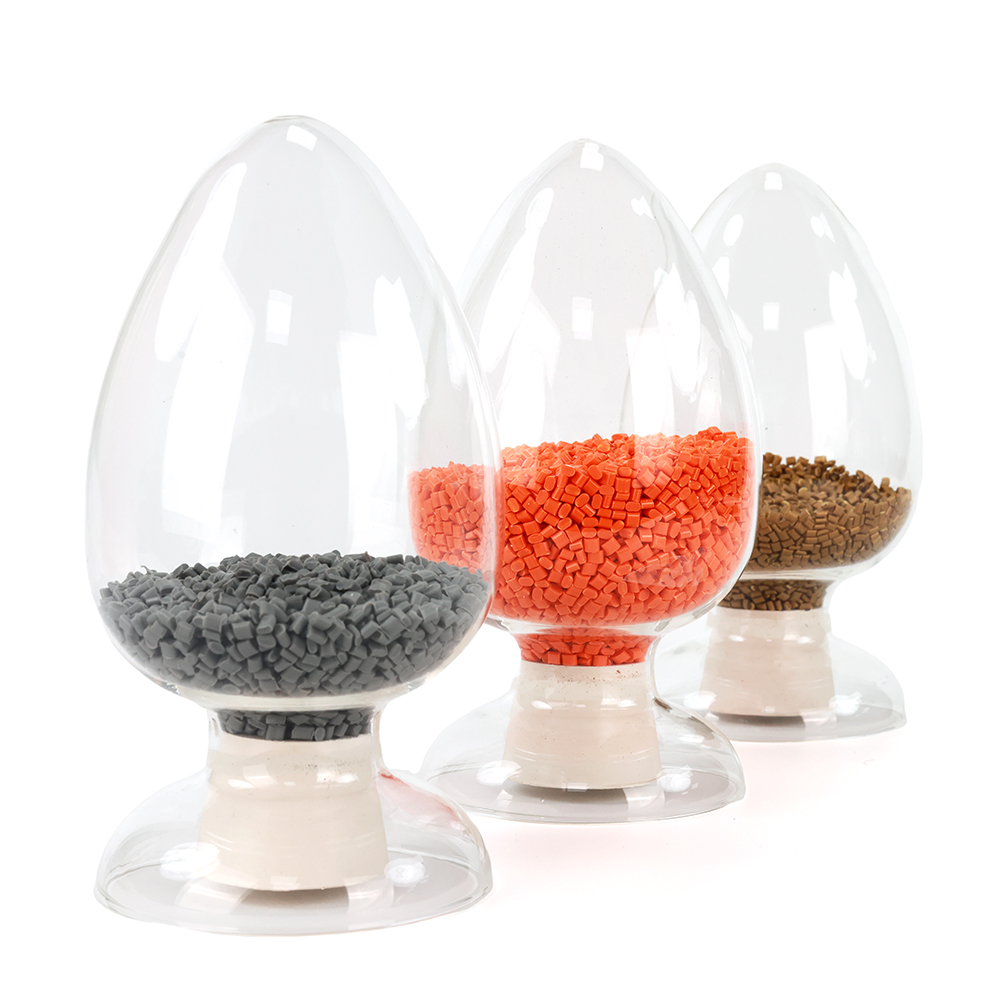
PA66-WHG30A: the reference grade the RFQ starts from
The published PA66-WHG30A values — tensile strength 175 MPa, flexural strength 255 MPa, flexural modulus 7,000 MPa, notched impact 18 kJ/m², HDT 220 °C under ISO 75-2/B, density 1.38 g/cm³ and typical moulding shrinkage 0.5% — are typical screening values for a 30% glass-fibre PA66 grade. They position the material for load-bearing internal structures rather than cosmetic outer skins: brackets, terminal supports, coil frames, internal chassis and connector bodies where stiffness retention and heat resistance under load matter more than surface finish.
Two qualifications belong in the same sentence as those numbers. The 220 °C figure is a heat-deflection result under a defined short-term load; it is not a continuous-use temperature, and long exposure, creep, chemical contact and moisture all sit outside it. The 0.5% shrinkage figure is typical grade data, not a part tolerance — glass fibres orient with the melt flow, so contraction along and across flow can differ in a real housing.
The third qualification is the one that matters most for this RFQ. The supplied record states no UL 94 rating for PA66-WHG30A, and no hydrolysis-resistance claim either. If the housing sits near a heat source and also carries a V-0 requirement, one grade cannot be assumed to satisfy both; the flame package and the stabilisation package have to be documented on the exact grade that will be moulded.
The PA6 GF30 flame-retardant route
PA6 GF30 is the second polyamide option and the one most often raised as a commercial alternative to PA66 GF30. The two are different polymers, not interchangeable labels: a PA6 GF30 grade is not a drop-in equivalent of a PA66 GF30 grade, and neither the mechanical nor the thermal case can be transferred from one to the other by inference. PA6-WHG30B is listed in the supplied record as a modified PA6 GF30 compound, with no numeric mechanical values and no UL 94 rating attached to it.
For a flame-retardant PA6 GF30 route specifically, that documentation gap is decisive. A flame-retardant PA6 GF30 candidate has to arrive with its own exact-grade TDS and its own flammability evidence at the housing's wall thickness. Until it does, the PA6 route is a sourcing question rather than a shortlist candidate, and it should not displace a grade whose data are already in hand.
ABS-WH310A: the documented V-0 position at 1.6 mm
ABS-WH310A is a flame-retardant, anti-UV modified ABS. Within this five-option set it is the only grade carrying a stated UL 94 V-0 position at 1.6 mm, which makes it the natural first screen whenever a housing specification makes V-0 at that thickness mandatory.
The counterweight is equally concrete. ABS is chosen for flow, appearance and cost balance, not for glass-fibre stiffness or for the heat ceiling of a polyamide or polycarbonate. A housing that needs V-0 and also needs to hold dimensional tolerance at elevated internal temperature is being asked to satisfy two requirements from one material family, and the shortlist should test that tension early rather than discover it at tool trial.
PCABS-WH3120A: the general-purpose alloy
PCABS-WH3120A is positioned as a general-purpose modified PC/ABS alloy, published as UL 94 HB at 1.6 mm. The alloy format exists to combine polycarbonate's contribution to impact and heat with ABS's contribution to flow and surface appearance, which is why it appears so often in enclosure work where the part has ribs, bosses and a visible cosmetic face.
Its shortlist role is therefore defined by what it does not cover. HB at 1.6 mm does not satisfy a V-0 requirement, so PCABS-WH3120A cannot be substituted for a flame-rated option on the assumption that "alloy" implies flame performance. It is a candidate where the housing specification settles on HB and where flow, appearance and a balanced impact profile are the governing criteria — and it competes directly with PC-WH2810A on that ground.
PC-WH2810A: high-impact polycarbonate
PC-WH2810A is a high-impact modified polycarbonate, also published as UL 94 HB at 1.6 mm. Where the housing's governing risk is mechanical — a cover that takes knocks, a part with thin sections and high molded-in stress, or a design where a crack means a field failure rather than a cosmetic complaint — the high-impact PC option belongs on the list ahead of a general-purpose alloy.
The trade is process and evidence discipline rather than a ranking. Polycarbonate is moisture-sensitive and demands controlled drying and a documented moulding window; the same technical support record that covers PA grades also flags PC and PC/ABS as grades where drying and molded-in stress control drive results. And again, HB at 1.6 mm is a boundary: a V-0 housing requirement is not met by either the high-impact PC or the alloy in this set.

Why glass fibre changes the dimensional answer more than the strength answer
Adding 30% glass fibre to PA66 raises stiffness and strength because the fibres carry load, but the same fibres align with the melt as it fills the tool. The consequence is directional: shrinkage and mechanical response differ along and across flow, and the difference grows with flow length, wall-thickness change and gate position. A shortlist that compares only tensile and flexural numbers has measured the strength benefit and skipped the dimensional risk.
This is why the 0.5% typical shrinkage figure for PA66-WHG30A is a starting estimate for tool design rather than a dimensional commitment. Housing tolerances — connector-to-connector pitch, cover-to-base fit, boss positions, flatness across a large face — are settled on conditioned parts from the production tool, with flow and transverse dimensions measured separately. Warpage in a reinforced housing is a material, part and process interaction, and changing the grade is rarely the first correct response to it.
The flame package interacts with the same physics. Flame-retardant additives change flow, impact and sometimes colour, so a V-0 formulation cannot be assumed to reproduce the mechanical profile of its non-FR parent grade. Each shortlisted flame-retardant option needs its own data set evaluated on its own terms.
Narrowing five options to two
In practice the housing specification, not the material datasheet, decides the order in which the five options are eliminated. The matrix below converts the common RFQ requirements into a first screen.
| Housing requirement | First screen | Reasoning |
|---|---|---|
| UL 94 V-0 at 1.6 mm is mandatory | ABS-WH310A, after the V-0 report is confirmed for grade, colour and thickness — or a separately documented flame-retardant PA66/PA6 GF30 grade if heat or stiffness rules ABS out | Within this set, only ABS-WH310A carries a stated V-0 position at 1.6 mm; the polyamide and PC options are documented as unrated or HB. |
| Stiffness and heat under sustained load, no flame requirement | PA66-WHG30A | Published 175 MPa tensile, 7,000 MPa flexural modulus and 220 °C HDT under ISO 75-2/B. |
| Impact at service temperature plus surface appearance | PC-WH2810A, with PCABS-WH3120A as the flow-and-appearance alternative | High-impact PC versus general-purpose alloy; both published at HB, 1.6 mm, so the decision is mechanical and cosmetic. |
| Tight tolerance and flatness across a large face | Glass-fibre PA66 with a tool trial measuring flow and transverse shrinkage | 0.5% is typical grade shrinkage; part tolerance is established on conditioned production-tool parts. |
| Long flow length in a thin wall | Request MFI for each candidate at matched temperature and load, then mould both | The supplied record contains no comparable melt-flow values, so flow cannot be ranked from this shortlist. |
A useful discipline is to write the housing's requirement list in the order the drawing will be inspected: flame rating at the specified wall, dielectric or insulation need, continuous and peak temperature, mechanical load, impact, chemical exposure, dimensional tolerance, colour and appearance. The first criterion that is genuinely mandatory usually removes three of the five options immediately, and the remaining comparison becomes a two-grade tool trial rather than a five-way paper exercise.
What a UL 94 V-0 claim at 1.6 mm actually commits you to
A flammability classification is attached to a specific formulation tested in a specific specimen geometry at a specific thickness. It is not a property of a polymer family, and it does not transfer between grades, colours or wall sections. Four checks turn a V-0 statement into something a housing drawing can rely on.
- Grade identity. The report must name the grade designation that will actually be purchased, not a neighbouring product or a generic material description.
- Colour. Flame-retardant packages and pigments interact; a rating obtained on a natural or black specimen does not automatically cover a different colour.
- Thickness. A 1.6 mm classification is the tested condition. A thinner housing wall needs data at that thickness or a design response, not an assumption that thinner sections behave the same way.
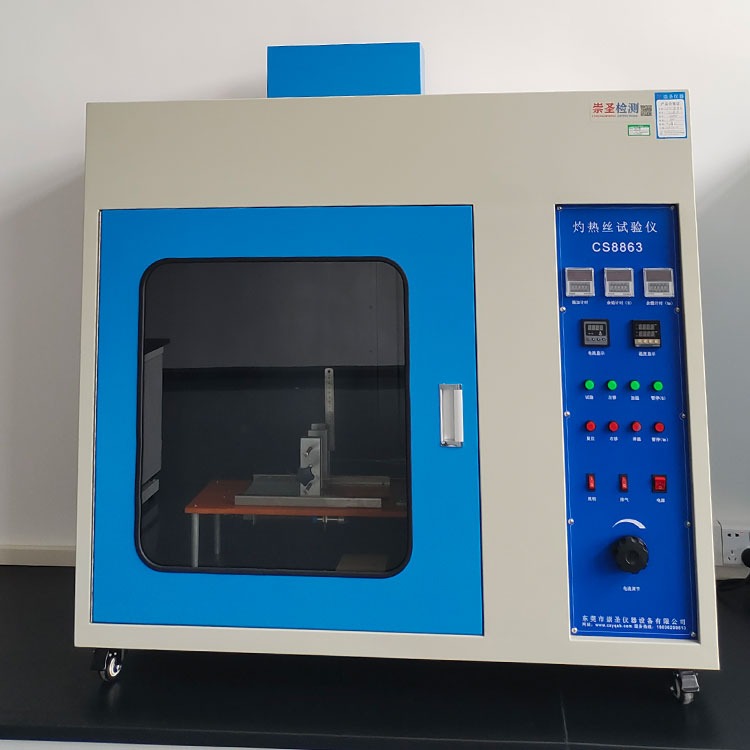
- Part versus specimen. Specimen-level burning tests and any end-product or component-level requirement are different assessments. Internal burning and glow-wire equipment support formulation screening during development; the compliance decision still rests on the exact grade and the standard the housing must meet.
The same discipline applies to hydrolysis, heat ageing and UV claims. None of these should be inferred for a shortlisted grade from its polymer family or from the performance of a related grade in the same portfolio.
Fit boundaries worth writing into the RFQ
Each option has a boundary that is more useful to state early than to discover at validation. PA66-WHG30A: no stated UL 94 rating and no stated hydrolysis resistance, so it is unsuited to a coolant-contact or V-0 housing without a separately documented grade. PA6-WHG30B route: no numeric mechanical values or rating in the supplied record, so it cannot yet be scored. ABS-WH310A: flame and UV positioning against ABS's inherent heat and impact ceiling, with the V-0 claim tied to report scope. PCABS-WH3120A: general-purpose alloy published at HB, so it is excluded from any V-0 housing. PC-WH2810A: high-impact PC published at HB, moisture-sensitive in processing, and outside a V-0 requirement.
Stating these boundaries is not a criticism of any grade. It is what allows a buyer to compare two candidates on the same criteria instead of comparing a documented claim against an undocumented hope.
Validation sequence before approval
Moving from a shortlist to an approved housing material follows a sequence, and skipping a stage is the usual cause of a late failure. The steps below apply to all five options.
- Document review. Confirm the exact grade code, the current TDS, the test methods behind each value and the conditioning state of the specimens.
- Sample identification. Verify the batch label against the purchase order and the TDS. Pellet colour and appearance cannot confirm polymer identity, reinforcement level or compliance status.
- Drying and handling record. Record dryer settings, time and, where applicable, dew point for the grade. Polyamides, PC and PC/ABS are moisture-sensitive, and the required drying conditions differ by grade.
- Controlled moulding trial on the production tool. Document melt and mould temperatures, packing, cooling and gate position, and map weld lines and fibre orientation.
- Conditioned-part testing. Measure dimensions, flatness and warpage after the agreed conditioning cycle, then run the mechanical, thermal, electrical or flame checks the housing specification requires.
- Signed acceptance baseline. Retain reference pellets and reference parts, and agree what constitutes a batch-to-batch change.
- Production release. Only after steps one to six pass for the exact grade, colour and tool.
A 5 kg evaluation quantity is enough for machine set-up, tool filling and initial dimensional checks on a small part, which is why sample-stage screening can be done cheaply before a tool trial is committed. It is not enough to certify a housing.
Documentation and supply considerations
Compliance paperwork is the part of a shortlist most often misread. WanHan holds ISO 9001:2015 (certificate 27326Q00154R153), ISO 14001:2015 (27326E00087R153) and ISO 45001:2018 (27326S00077R153) certification from Zhongren Certification Co., Ltd., issued 2026-06-01 and valid through 2029-05-29, with a scope covering the design and production of modified plastic pellets. These are company management-system certificates. They do not certify the performance or regulatory compliance of any individual grade.
The SGS records in the same file are sample-specific: RoHS report SZXEC24003382501 and REACH SVHC report SZXEC24003382502 both cover a flame-retardant PP sample, model SZX24-0033825-0001.C001. They must not be presented as PA66 GF30 or ABS-WH310A compliance evidence. For any shortlisted housing grade, the exact-grade report has to be requested and matched to the destination market and the customer specification.
On supply, the stated parameters support an evaluation-stage workflow rather than a volume commitment on day one: 5 kg minimum order quantity, 7–10 day custom-grade lead time subject to formulation, testing and order conditions, and up to 5,000 metric tons per month of PA66 GF30 capacity subject to production schedule. The company also states 12 engineers, a 3,275 m² plant and customers in more than 30 countries, with roughly 70% of output exported — context for a buyer assessing whether a supplier can support a development programme as well as a repeat order.
Outlook for the shortlist decision
The practical consequence of this comparison is that flame-rated E&E housing decisions are increasingly settled by documentation scope rather than by polymer preference. Two suppliers can both quote "flame-retardant PA66 GF30" and mean different things: one holds a V-0 report at the housing's wall thickness and colour, the other holds a formulation and expects the customer to test. A shortlist that separates those two positions before the tool is cut costs far less than one that discovers the difference after mould qualification.
For this RFQ, the defensible position today is narrow and clear. PA66-WHG30A is the reference grade on mechanical and thermal evidence, with a documented flame gap. ABS-WH310A is the only option in the set carrying a stated V-0 position at 1.6 mm, subject to report scope and thickness confirmation. PC-WH2810A and PCABS-WH3120A are the HB alternatives where impact, flow and appearance govern, and the PA6 GF30 route stays open pending exact-grade data. Two of those five, taken into a production-tool trial against the housing drawing, will settle the specification faster than a longer list.
Frequently asked questions
What does the PA66-GF30 marking on an electrical connector mean?
It is a generic material identification: polyamide 66 with roughly 30% glass-fibre reinforcement. On a moulded part it identifies the polymer family and reinforcement class, not the resin supplier, the exact compound grade, a flame rating or a regulatory approval. Sourcing replacement pellets therefore requires the part drawing and the approved material specification, and the chosen grade still has to be validated in the production tool.
When should buyers choose standard, heat-stabilized, hydrolysis-resistant, flame-retardant or low-warpage PA66 GF30?
The choice follows the finished part's service environment. Standard PA66 GF30 should not be assumed to provide heat ageing, hydrolysis resistance, flame retardancy or low warpage unless the exact grade's documents and tests support those properties. Heat-stabilized grades address prolonged heat exposure; hydrolysis-resistant grades address hot water or coolant; flame-retardant grades address a documented flame requirement; low-warpage formulations address tight dimensional control. Each variant is confirmed by exact-grade data and moulded-part testing rather than by the base polymer name.
Can two GF30 compounds be treated as equivalent because both contain 30% glass fibre?
No. GF30 states a nominal reinforcement level only. Base polymer, fibre type and length, coupling, additives, processing and moisture conditioning can all differ between two GF30 grades. They should be compared on values measured under the same test method, specimen geometry and conditioning state, and the decision confirmed on parts moulded from the production tool.
When should an enclosure designer consider PC-WH2810A instead of PCABS-WH3120A?
PC-WH2810A is a high-impact modified polycarbonate; PCABS-WH3120A is a general-purpose PC/ABS alloy. The comparison turns on the housing's impact requirement at service temperature, heat exposure, wall thickness, surface appearance, flow length and flame requirement. Both are published as UL 94 HB at 1.6 mm, so neither covers a V-0 requirement. Exact-grade data and moulded-part results decide between them.
Do WanHan's ISO and SGS documents prove PA66-WHG30A is RoHS or REACH compliant?
No blanket product-compliance claim is supported. The ISO 9001:2015, ISO 14001:2015 and ISO 45001:2018 certificates are company management-system certifications covering the design and production of modified plastic pellets. The SGS RoHS and REACH SVHC reports in the record cover a flame-retardant PP sample, model SZX24-0033825-0001.C001. Neither document type can be represented as evidence for PA66-WHG30A or for any other housing grade discussed here.
Working from this shortlist
The next useful step is not a longer list but a narrower brief. A housing drawing, the specified wall thickness, the flame standard and its tested condition, continuous and peak service temperature, mechanical and impact duty, colour target and annual volume are enough to reduce these five options to two candidates and to define what each supplier must document before a tool trial. WanHan's technical documentation and grade selection support for PA66 GF30, PC/ABS, ABS and PC options is set out in its company brochure, available for download here.
Есть вопросы или нужны дополнительные детали?
Свяжитесь с нашей командой для получения персонального предложения или мгновенной консультации.
Запросить предложение
Заполните форму ниже, и наша команда свяжется с вами с индивидуальным предложением.
Прямой чат WhatsApp
Предпочитаете общаться в реальном времени? Напишите нам в WhatsApp для мгновенной помощи и быстрых ответов.
- Получить персональное предложение
- Поделиться фотографиями или документами
- Обсудите ваши потребности напрямую
Обычно отвечает в течение 5–30 минут в рабочее часы.