
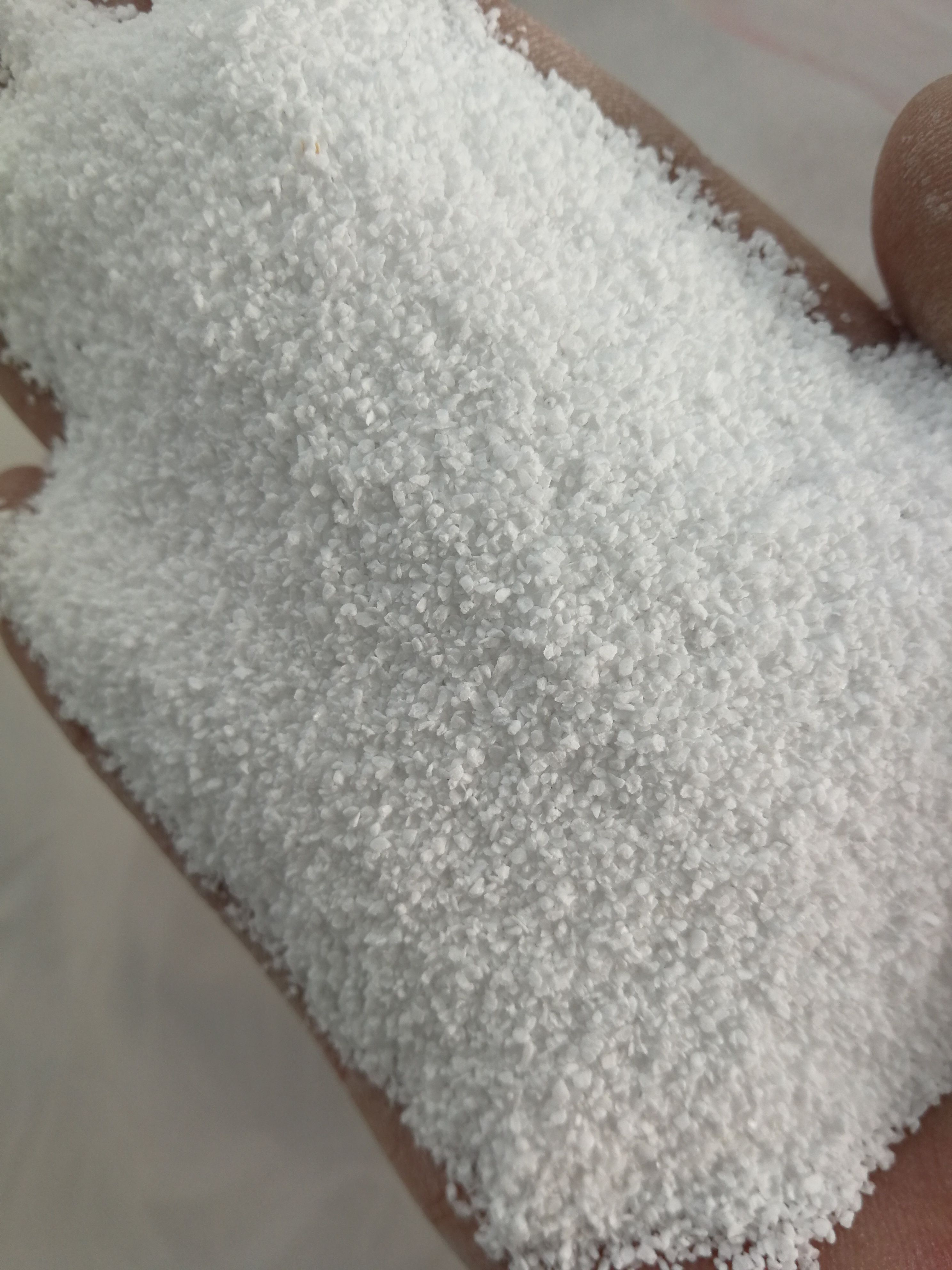
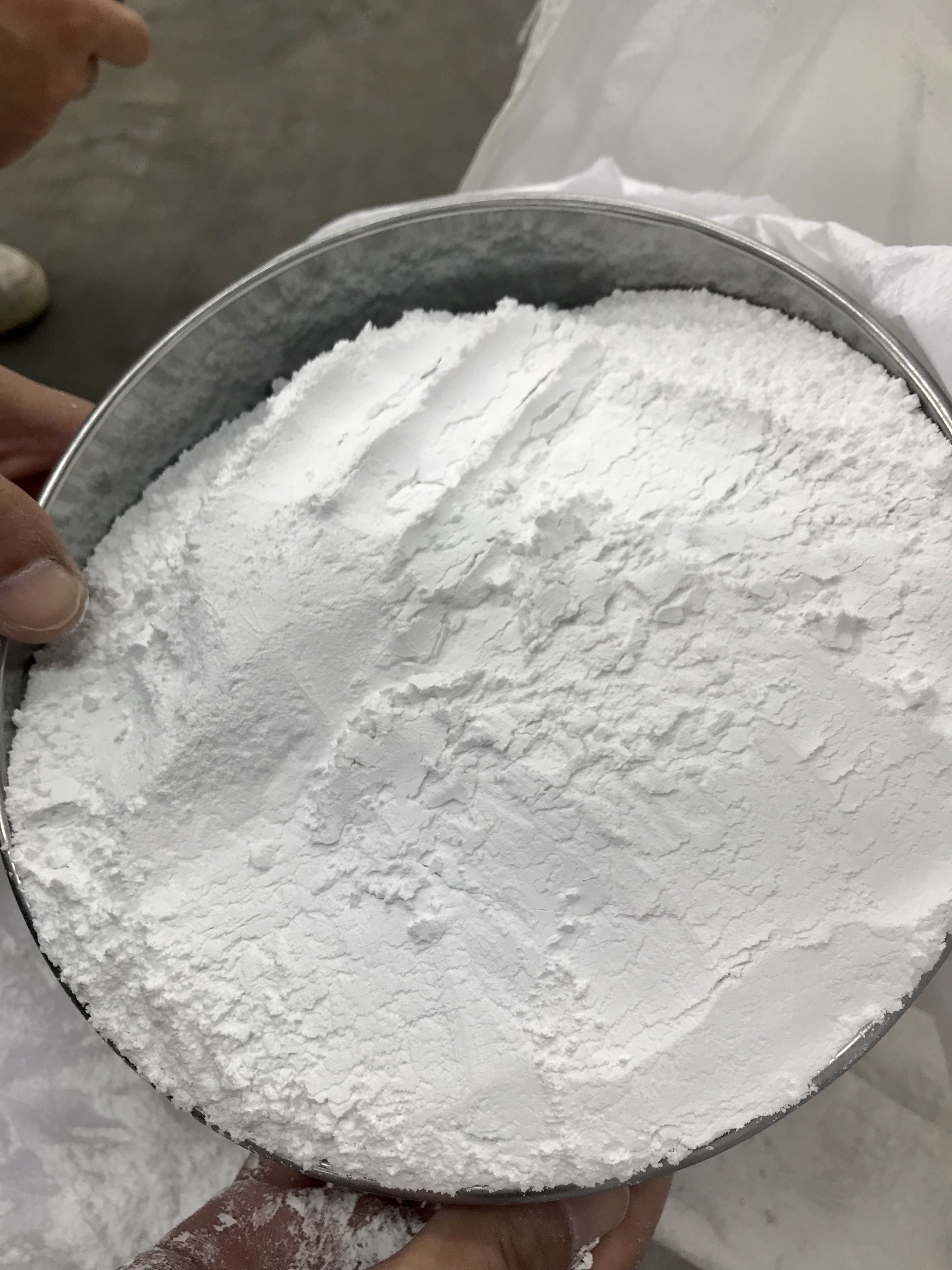
PAF Particle Size Compared: Mesh 200, 0.3-1.0 mm, 0.5-1.5 mm
PAF Particle Size Compared: Mesh 200, 0.3-1.0 mm, 0.5-1.5 mm
PAF Particle Size Compared: Mesh 200, 0.3–1.0 mm, 0.5–1.5 mm
Aluminum brazing is decided at the joint, but the variables that decide the joint are set upstream — in how the flux is specified, mixed, applied and dried. Potassium aluminium fluoride (KAlF4, CAS 60304-36-1, molecular weight approximately 142.07 g/mol) is the established flux chemistry for corrosion-free brazing of aluminum alloys, and buyers are typically offered it in three particle-size bands: mesh 200, 0.3–1.0 mm and 0.5–1.5 mm. The chemistry is identical across all three. What changes is how the material behaves on the line, and therefore what a buyer should verify before committing a production schedule.
Key takeaways
- One compound, three physical bands: choosing between them is a line-integration decision, not a chemistry decision.
- Finer fractions support dispersion and thin, uniform coverage; granular bands support flow and lower dusting. Each carries a trade-off.
- RoHS 2.0 documentation covering product code 8235 is an EU restricted-substances baseline, not a brazing performance certificate.
- Storage in a dry, well-ventilated place and supporting equipment such as mixing machines and curing ovens belong in the specification, not in the afterthoughts.
Why particle size becomes a procurement question
In corrosion-free brazing of aluminum alloys, potassium aluminium fluoride removes oxide films and improves weld quality. That is the function a buyer is paying for, and it only happens when three conditions coincide: the flux is present at the joint in a controlled quantity, it is in contact with the oxide layer, and it is molten at the right moment in the furnace cycle. Potassium aluminium fluoride melts in the region of 557–580 °C, and the phase change absorbs heat from the surrounding zone — a property the same material also exploits as an active filler in resin-bonded grinding wheels.
Particle size is the physical lever that connects the delivered bag to that joint. It shapes how finely the material disperses in a carrier, how quickly a wet deposit releases the carrier in the drying stage, how long the solids stay suspended in a mixing machine, and how much dust operators meet when the packaging is opened. None of that is chemistry. All of it affects equipment choice, cycle time and handling controls, which is precisely why size belongs in the purchasing conversation rather than in the lab notebook alone.
A second variable travels alongside size and is often conflated with it: purity. In commercial practice, high-purity material above 99% — typically the white form — is associated with brazing and specialty glass, while industrial grade at 98% minimum in the grey form is associated with foundry and abrasive applications. A buyer evaluating brazing should confirm colour and purity grade independently of particle size, because the single label ‘PAF’ covers both ends of that spectrum.
The three bands, defined
The three options are not three different products. They are three cuts of the same potassium aluminium fluoride, described under two different conventions: a screen-based mesh designation for fine powder fractions, and millimetre bands for granular fractions. That mixed vocabulary is the first source of confusion in a quotation round.
| Band | Designation basis | Relative fineness | Form | Primary buyer check |
|---|---|---|---|---|
| Mesh 200 | Screen / mesh classification | Finest of the three | Powder | Measured particle size distribution; slurry stability |
| 0.3–1.0 mm | Millimetre granular band | Intermediate | Granular | Flow behaviour; mixing time in the tank |
| 0.5–1.5 mm | Millimetre granular band, widest span | Coarsest | Granular | Band width, segregation, coverage on fine joints |
The two granular bands are nested rather than discrete. The 0.3–1.0 mm band spans a 0.7 mm range; the 0.5–1.5 mm band spans a full millimetre. Every particle in the narrower band also falls inside the wider one — but the wider band additionally admits coarser particles at its upper end. For a buyer, this means a quotation for 0.5–1.5 mm is not interchangeable with one for 0.3–1.0 mm at the mixing tank or the application head, even though the two ranges overlap on paper.
Matching size to the brazing line: five criteria
Selecting a band without reference to the line is guesswork. Five criteria consistently separate a defensible choice from a convenient one.
1. Flux application method
Where the flux is dispersed in a carrier and applied as a slurry, the mix is prepared in a mixing machine, and the fraction that stays suspended longest reduces re-agitation and settling at the bottom of the tank. Finer fractions generally disperse more readily and stay in suspension longer; granular fractions settle faster and demand more mixing energy and shorter hold times between preparation and use. Where the flux is applied dry or in a paste-like deposit, the balance shifts toward flow and metering consistency.
2. Joint geometry and coverage
Potassium aluminium fluoride is used in the brazing of components such as battery water-cooling plates and air conditioning radiators in new energy vehicles — assemblies characterized by dense, thin-walled, multi-channel structures. Fine fractions penetrate narrow paths more readily and allow thinner, more uniform deposits; coarse granules may bridge at entries or sit unevenly across a channel array. The corollary is that a coarse band chosen for handling convenience must be re-validated against the finest joint in the assembly, not against the average one.
3. Drying behaviour ahead of the furnace
Supporting equipment for this application includes curing ovens alongside mixing machines and hot press molding dies, reflecting the fact that a wet deposit must release its carrier before the furnace stage. A finer, thinner deposit generally releases liquid faster and more evenly across a large surface, while heavier granular deposits can retain carrier in thicker pockets. Drying time and oven loading therefore belong in the same decision as particle size, not downstream of it.
4. Dust, exposure and housekeeping
Potassium aluminium fluoride carries a GHS classification of Acute Toxicity Category 4 by the oral, dermal and inhalation routes, together with Skin Irritation Category 2, under OSHA Hazard Communication Standard 29 CFR 1910. Finer powders generate more airborne dust during bag opening, charging and cleaning, so local exhaust ventilation, PPE selection and housekeeping intervals follow from the size band rather than from the tonnage purchased. Granular bands are typically quieter to handle, which is an operational benefit that has nothing to do with brazing performance.
5. Trial capacity and scale-up
A size decision is best made with trial material rather than with datasheet reasoning. Trial-friendly terms — a low minimum order quantity and a predictable lead time — determine how many bands a buyer can realistically test in their own furnace before committing. Where those terms are generous, a three-band trial is practical; where they are not, buyers tend to settle on the band their incumbent already supplies.
Oxide removal and weld quality: what the specification can and cannot promise
The documented role of potassium aluminium fluoride in brazing is narrow and clear: it removes oxide films and improves weld quality. The mechanism requires the flux to be molten and in contact with the oxide at the moment the filler flows. Particle size does not change that chemistry, but it changes the amount of flux delivered per unit of joint area and the uniformity of its distribution — and both of those feed directly into whether the oxide is fully removed across a large, complex assembly.
The boundary is equally clear. Particle size alone does not predict joint quality. Furnace atmosphere, filler metal selection, thermal profile, surface cleanliness before fluxing, assembly gap and flux loading per unit area interact with each other, and a change in any one of them can dominate the effect of the size band. Published product material for potassium aluminium fluoride does not quantify a particle-size-versus-brazing-defect relationship, so a size decision should be treated as a hypothesis to be confirmed on the actual line, with the actual atmosphere, using trial lots. A further practical caution: mesh numbers describe a screen aperture, and conversion to microns depends on the sieve standard applied, so buyers should request a measured particle size distribution rather than converting a mesh figure themselves.
RoHS 2.0 for product code 8235 as an EU baseline
For European buyers, restricted-substances documentation has moved from differentiator to entry gate. Product code 8235, the potassium aluminium fluoride grade offered in grey and white, powder, granular and lump forms across the sizes discussed here, is covered by RoHS 2.0 compliance documentation. In a brazing project that documentation establishes a materials-restriction baseline for the incoming lot and allows the material to be cleared through the buyer’s own compliance workflow without a separate derogation request.
Two boundaries are worth stating plainly. First, RoHS 2.0 is a restricted-substances standard; it does not certify brazing performance, joint quality or thermal behaviour, and it should not be filed as if it did. Second, it does not replace the safety data sheet. The GHS classification noted earlier — Acute Toxicity Category 4 and Skin Irritation Category 2 — drives ventilation and handling requirements independently of RoHS status. On trade documentation, potassium aluminium fluoride is commonly traded under HS code 38101090, which covers pickling preparations for metal surfaces and fluxes, so customs classification and RoHS status answer two different questions.
Storage and supporting equipment are part of the specification
Brazing applications using this material operate under high-purity conditions, and the product requires storage in a dry, well-ventilated place. That requirement is not administrative housekeeping: moisture uptake and contamination during storage work against the purity the process depends on, and a warehouse decision made by a logistics team can quietly undo a purchasing decision made by an engineering team. Storage conditions should therefore appear in the purchase specification and in the receiving inspection routine.
Supporting equipment for the application includes mixing machines, curing ovens and hot press molding dies. The operating mode of the material is subject to actual working conditions, which is a formal way of saying that the line, not the datasheet, sets the final parameters. Buyers comparing bands should map each band against the equipment they actually run, rather than against a reference process described in a brochure.
Where Sumetech sits in this size range
Sumetech Industry Co., Ltd is a China-based manufacturer of potassium aluminium fluoride and boron nitride serving metal smelting and casting auxiliaries, grain refiners, master alloys and fused fluxes. The company was founded in 2019, operates a 6,000 m² facility with 20 employees, and reports annual potassium aluminium fluoride output of 5,000 MT with roughly 90% of production exported, principally to Turkey, Japan, Korea and Europe.
Size control is the relevant capability here. The production line includes ultra-fine mechanical mills for particle size control, crusher and shaping machines for granular output, and sieving and classification systems intended to hold narrow particle size distributions. Commercial terms include a monthly capacity of 1,000 MT, a standard lead time of 30 days, a minimum order quantity of 10 kgs, 100% testing, OEM/ODM customization of size and colour, and after-sales support delivered both remotely and on site.
A relevant reference point is a Korean manufacturer purchasing 60 MT per month for metal additive and flux applications over a two-year period, with a stated requirement for high purity and a reported outcome of stable supply. That case illustrates continuity at volume rather than a particle-size comparison, and it should be read as such. Buyers evaluating Sumetech for a brazing line should still request a measured particle size distribution for the specific band, the RoHS 2.0 document tied to product code 8235, and the current safety data sheet before running a trial.
Market context behind the size question
DataHorizzon Research values the global potassium aluminum fluoride market at USD 1.76 billion in 2024 and projects USD 2.62 billion by 2033, with a CAGR of 4.8% across the 2025–2033 period. Pricing signals from adjacent fluoride products point in the same direction: the Northeast Asia price for aluminium fluoride (AlF3), the primary benchmark for related fluoride pricing, reached 1.80 USD/kg in March 2026, up 6.5% from the fourth quarter of 2025. AlF3 is a benchmark, not a potassium aluminium fluoride quotation, and buyers should not substitute one for the other in a cost model.
One caution applies to anyone reading market data before a sourcing round. Published figures frequently conflate potassium fluoride with potassium aluminium fluoride; one commercial source values the narrower potassium fluoride market at USD 0.42 billion for 2025 against the USD 1.76 billion figure above for potassium aluminium fluoride in 2024. The gap reflects different product definitions and the inclusion of complex metallurgical flux volumes, not a disagreement about growth. Buyers who inherit a market number without its definition inherit an unreliable planning assumption alongside it.
Comparison with common alternatives, and where each breaks down
Four routes are commonly open to an aluminum brazing operation. Each solves a different problem, and each fails in a predictable way.
| Approach | What it offers | Where it breaks down |
|---|---|---|
| Mesh 200 powder, slurried in-house | Fast dispersion, thin uniform deposits, good penetration of narrow channels | Dustier handling; depends on mixing discipline and a verified distribution |
| 0.3–1.0 mm granular | Narrower band, less segregation, lower dusting | Slower to disperse, longer mixing, weaker fit for very fine joint paths |
| 0.5–1.5 mm granular | Widest band, good bulk flow, tolerant of rough handling | Broad distribution, settling in slurry, coverage on fine joints must be proven |
| Ready-made proprietary flux paste | Applied as supplied, fewer in-house variables to control | Less control over solids loading and cost structure; single-source dependency |
No band in this comparison is universally correct, and the honest limitation is structural rather than commercial. Particle size is one of several variables that determine joint outcome, and the industry does not publish a shared dataset correlating specific size bands with defect rates across furnaces and atmospheres. Any comparison — including this one — therefore establishes the decision logic and the questions to ask, but cannot substitute for a trial on the buyer’s own line.
Future outlook
Three trends are likely to move particle size from a secondary line item to a specified parameter. First, the growth trajectory indicated by the market figures above is concentrated in applications where aluminum is used for thermal management, and those assemblies reward flux uniformity rather than flux volume. Second, recycling and casting loops continue to expand the range of aluminum streams entering brazing and casting operations, which raises the variability a single flux specification has to absorb. Third, documentation expectations keep tightening: RoHS 2.0 status, safety data sheets and lot-level measurement are increasingly requested together rather than separately.
The practical consequence is a shift from ordering ‘mesh 200 PAF’ to ordering a measured distribution with a declared purity grade, a stated storage condition and a named compliance document. Suppliers able to hold narrow distributions through sieving and classification, and to customize size and colour under OEM/ODM arrangements, are positioned for that shift; buyers who specify in those terms will find comparisons across suppliers far easier to run.
FAQ
Which particle size of potassium aluminium fluoride is used for corrosion-free brazing of aluminum alloys?
All three bands — mesh 200, 0.3–1.0 mm and 0.5–1.5 mm — are supplied as potassium aluminium fluoride for aluminum-industry applications. In brazing, the material removes oxide films and improves weld quality. The choice among bands depends on application method, joint geometry and the drying stage rather than on a single designated brazing size.
What is the difference between mesh 200 and 0.3–1.0 mm?
Mesh 200 is a screen-based designation describing a fine powder fraction; 0.3–1.0 mm is a millimetre-band granular fraction and is the coarser of the two. Because the two are expressed in different conventions, buyers should compare measured particle size distributions rather than the labels alone.
Do the 0.3–1.0 mm and 0.5–1.5 mm bands overlap?
Yes. The 0.3–1.0 mm band sits inside the 0.5–1.5 mm band. The wider band additionally admits coarser particles at its upper end, so the two are not interchangeable in a mixing tank or at an application head even where their ranges coincide.
What supporting equipment does a potassium aluminium fluoride brazing application require?
Supporting equipment includes mixing machines, curing ovens and hot press molding dies. The operating mode of the material is subject to actual working conditions, and brazing applications run under high-purity conditions.
How should potassium aluminium fluoride be stored before use?
The product requires storage in a dry, well-ventilated place. Storage conditions belong in the purchase specification and in receiving inspection, because moisture and contamination during storage work against the purity the brazing process relies on.
Is RoHS 2.0 compliance sufficient for EU acceptance?
RoHS 2.0 documentation covering product code 8235 establishes a restricted-substances baseline for the incoming lot. It does not certify brazing performance and does not replace the safety data sheet, which records a GHS classification of Acute Toxicity Category 4 and Skin Irritation Category 2 under OSHA HCS 29 CFR 1910.
What should be validated before scaling from a trial to production volumes?
Four items: a measured particle size distribution for the specific band, slurry stability in the plant’s own mixing equipment, drying behaviour in the curing oven, and post-braze joint inspection results. Standard terms for potassium aluminium fluoride include a minimum order quantity of 10 kgs, which supports trial lots, and a lead time of 30 days for production volumes.
Closing note
The comparison between mesh 200, 0.3–1.0 mm and 0.5–1.5 mm resolves, in most brazing projects, to a question about the line rather than about the material: which band can be dispersed, applied, dried and inspected with the equipment already installed, and which one will still hold its distribution in the warehouse six months after delivery. Buyers who answer those two questions before negotiating price tend to run fewer trials twice.
Additional product and technical detail is compiled in the Sumetech 2026 product catalogue.
Есть вопросы или нужны дополнительные детали?
Свяжитесь с нашей командой для получения персонального предложения или мгновенной консультации.
Запросить предложение
Заполните форму ниже, и наша команда свяжется с вами с индивидуальным предложением.
Прямой чат WhatsApp
Предпочитаете общаться в реальном времени? Напишите нам в WhatsApp для мгновенной помощи и быстрых ответов.
- Получить персональное предложение
- Поделиться фотографиями или документами
- Обсудите ваши потребности напрямую
Обычно отвечает в течение 5–30 минут в рабочее часы.