
PC vs PCX Crusher: Buyer Fit in a Stone Crushing Line
PC vs PCX Crusher: Buyer Fit in a Stone Crushing Line
Choosing between a PC Crusher and a PCX Crusher for a stone crushing production line is a question of process role, not simply model naming. The available product information identifies both as hammer-crusher options, while it describes PCX as a shaping hammer crusher intended for a finer product. That distinction can guide a first-stage shortlist, but it is not enough to establish a capacity, product-size, or cost winner. Buyers should match the machine to material, feed, output requirements, and its place in the line, then verify the proposed configuration with comparable evidence.
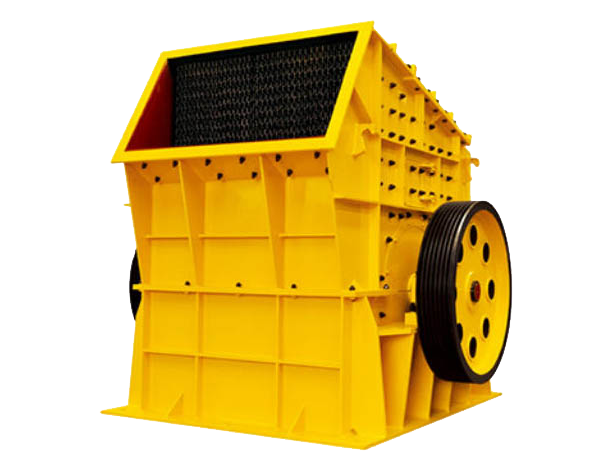
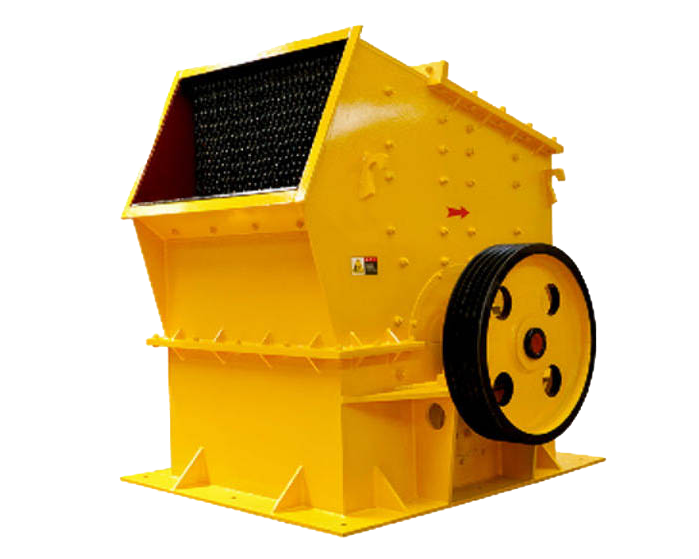
This comparison concerns the PC and PCX ranges associated with LBZG crusher. The supplied product list includes PC models from PC-400×300 through PC-1600×1600 and PCX models from PCX-0808 through PCX-1822. Those model designations alone do not establish equivalent size classes or comparable performance. The available information does not provide a like-for-like test table for the two ranges, so the assessment below focuses on supported role distinctions and on what a buyer should confirm before purchase.
Start with the line duty, not the model label
In a stone crushing production line, a crusher is one stage in a connected flow. Feed characteristics and the target product determine the work required at that stage; screening and conveying must also be considered when the line is configured. A machine that can break material is not automatically a suitable choice for every stage or final product. For this PC-versus-PCX decision, the first questions are whether the feed is suitable for hammer crushing, whether the planned duty is primary or secondary crushing, and whether the buyer needs a finer product or shaping function.
That stage-based approach matters because the two product names do not establish interchangeable duty. The product information describes PC as a hammer crusher and identifies PCX as a shaping hammer crusher for a finer product. It also describes hammer crushers generally as suitable for brittle, soft rock, with higher reduction ratio and lower investment as selection considerations in the stated limestone context. These are useful selection clues, not proof that a specific PC or PCX model will meet a buyer’s target under unreported site conditions.
For a line designer, the practical implication is to specify the duty before asking for a quotation: material type and abrasiveness, maximum feed size, moisture or clay concerns, desired discharge fractions, required throughput, and whether the crusher is primary, secondary, or serving a shaping-related role. The available evidence does not supply all these values for every model, so the buyer should not infer them from the model code.
What the supported comparison says
| Buyer criterion | PC Crusher | PCX Crusher | Evidence boundary |
|---|---|---|---|
| Identified equipment type | Hammer crusher | Shaping hammer crusher; the product information associates it with a finer product | The sources do not provide a complete, standardized specification comparison. |
| Listed models | PC-400×300, PC-600×400, PC-800×600, PC-1000×800, PC-1000×1000, PC-1250×1250, PC-1300×1200, PC-1500×1200, PC-1600×1600 | PCX-0808, PCX-0810, PCX-1010, PCX-1212, PCX-1515, PCX-1518, PCX-1822 | Model labels are not equivalent performance data and should not be compared numerically without model specifications. |
| Potential selection role | Consider where a hammer-crusher duty and the proposed PC model match the feed and required line stage. | Consider where the intended duty includes the finer-product or shaping role described for PCX. | Final fit depends on material, feed conditions, target fractions, and verified model parameters. |
| Wear and operating boundary | Hammers are consumable components; output size can change with hammer wear, sieve-plate aperture, and rock hardness. | As a hammer-crusher option, confirm the applicable hammer and sieve-plate arrangement and maintenance requirements for the specific PCX model. | No PC-versus-PCX comparative wear-life test is supplied. |
The table deliberately separates product description from buyer inference. “Finer product” is a role clue for PCX, not a guarantee of a particular particle-size distribution. Similarly, the general description of hammer crushers as offering high reduction ratio does not provide a verified ratio for each listed PC or PCX model. A procurement comparison should retain those distinctions rather than turning broad descriptions into model-level commitments.
When a PC Crusher may fit the proposed duty
A PC Crusher merits consideration when the process plan calls for a hammer crusher and the selected model’s documented feed and discharge limits match the material and target. In the available limestone selection guidance, PC and PCX hammer-crusher options are associated with clean, low-abrasion limestone applications where lower investment and high reduction ratio are relevant considerations. The same guidance identifies PC hammer crushers for primary or medium crushing of limestone in cement plants. This supports a possible process role; it does not mean every limestone line, or every PC model, is suitable.
The buyer should also account for material behavior. The product information describes hammer crushers as less suitable for moist or sticky material and notes that hammers can wear quickly. It cautions against hammer-crusher use for high-silica or abrasive limestone in the relevant application guidance. These boundaries matter more than a generic claim that a crusher is “low cost”: a purchase-price comparison that ignores feed compatibility, wear components, and product requirements may not represent the operating decision.
Before selecting a PC model, ask for the exact model’s maximum feed size, rated capacity under stated feed conditions, discharge arrangement, sieve-plate aperture options, motor and installation requirements, and the parts that require routine inspection or replacement. The available product list confirms model names, but does not include these specifications for each listed unit. If a supplier’s proposed PC configuration relies on a capacity or feed-size figure, request the corresponding model documentation and clarify the test or operating conditions.
When a PCX Crusher may fit the proposed duty
PCX is the more directly supported candidate when the buyer’s process need is a hammer-crusher option described as shaping-oriented and intended for a finer product. The product information also describes PCX heavy-hammer equipment as capable of reducing large limestone toward mill-feed size in one pass. That statement is not a general guarantee for every PCX model or every stone: the information supplied does not identify a model-specific feed limit, output distribution, material condition, or test protocol for this comparison.
Accordingly, a buyer should treat the PCX description as a reason to investigate its process role, not as proof that it can replace other stages in a complete stone crushing production line. Confirm whether the cited PCX configuration is designed for the project’s actual feed and target, and whether any screening, recirculation, or additional crushing stage remains necessary. The supplied material does not establish that PCX always removes a stage, reduces total line cost, or delivers a specified final fraction.
For procurement, request a proposed PCX model and a written duty statement: incoming material and feed size, expected discharge range, capacity basis, screen or sieve arrangement, and assumptions about moisture and abrasiveness. If shaping is a key requirement, define how the buyer will assess the finished material and under what conditions. Without those details, the phrase “shaping hammer crusher” is descriptive but not a measurable acceptance criterion.
How the feed changes the decision
Hammer-crusher fit depends on more than the name of the rock. The supplied guidance describes the general hammer-crusher application as brittle, relatively soft material, and identifies high abrasiveness, high silica, moisture, or sticky feed as concerns. For clean, low-abrasion limestone, the PC/PCX family is presented as a possible choice; for abrasive or high-silica material, the guidance does not support treating either model family as a default selection. Buyers handling granite, basalt, or other hard, abrasive rock should not extrapolate the limestone application notes to those materials.
Moisture and feed consistency also deserve explicit review. The supplied product information notes that hammer crushers can be sensitive to moist or sticky material and may clog. The exact threshold for a given PC or PCX model is not established in this comparison. A buyer should provide representative feed information and ask the supplier to state the permitted range and any required pre-screening or feed-control measures. A qualification such as “suitable for limestone” is incomplete if the actual feed contains clay, variable moisture, or abrasive inclusions.
This is where a trial or other agreed validation can add value. Define the sample and operating conditions, record the incoming feed and the measured product, and agree how wear components and throughput will be evaluated. Do not treat an informal demonstration, a different model’s result, or an unqualified catalog figure as proof for the selected PC or PCX configuration.
Placement within the production line
PC or PCX selection should be checked against the stages around it. In a conventional crushing-and-screening arrangement, the line may include feeding, crushing, screening, and conveying; a sand-making or washing stage is conditional on the required finished products. Which stages are needed depends on the process design. The available capacity-matching guidance emphasizes that upstream feeding, crushers, screens, and conveyors need coordinated throughput: undersized feeding can leave a crusher underfed, while undersized screening or conveying can create accumulation or recirculation constraints.
That system view prevents a common procurement mistake: selecting a crusher from its standalone description without checking how it connects to the line. Ask for the proposed process flow and equipment schedule, including the selected crusher model, adjacent feeder and screen duties, conveyor basis, and the intended handling of oversize or return material. Compare the actual operating target with the rated data under the stated material conditions; rated capacity is not the same as guaranteed site output.
In particular, do not infer that the PCX shaping role automatically makes it a sand-making machine, or that the PC can serve as a complete line by itself. The supplied product information distinguishes a PCX hammer-crusher option from separate equipment categories such as vibrating screens, feeders, conveyors, and sand-making equipment. The buyer’s product specification should state the required fractions and identify which machine or machines are responsible for producing them.
Long-term ownership: compare what can be checked
For a decision that continues beyond installation, maintenance evidence is more useful than an unsupported promise of service life. The supplied information identifies hammers and sieve plates as relevant wear or operating variables for PC Crusher output. General wear guidance also states that actual wear-part life depends on material hardness, silica content, feed size, and operation. It does not provide a controlled PC-versus-PCX comparison, so buyers should not assume the two ranges have the same replacement interval—or claim that one lasts longer—without model-specific evidence.
Ask for the wear-part list for the quoted configuration, the part materials and dimensions, the inspection approach, and the conditions that would trigger replacement. Confirm whether the sieve-plate aperture and hammer arrangement can be configured for the required output, and whether the supplier’s stated spare parts correspond to the exact model. These questions help a buyer assess routine planning without inventing a service-life estimate.
Output should also be treated as a condition-dependent result. The supplied FAQ material notes that PC discharge size relates to sieve-plate aperture, hammer wear, and raw-rock hardness, and that catalog throughput can vary with material hardness, feed size, moisture, feeding continuity, power supply, and wear condition. This makes acceptance criteria important: specify the material basis, operating configuration, measured output, and inspection method rather than relying on an unqualified nominal figure.
A practical decision path for buyers
- Define the duty. Record whether the candidate is for primary or medium crushing, or for a shaping/finer-product role; identify the target fractions and the other line stages.
- Describe the feed. Provide rock type, abrasiveness or silica concerns, maximum feed size, moisture, clay or sticky content, and any meaningful variability.
- Shortlist by supported role. Consider PC where a conventional hammer-crusher duty matches the documented configuration. Consider PCX where the proposed model is intended for the finer-product or shaping role described in the product information.
- Request comparable specifications. Obtain model-specific feed, discharge, capacity, power, sieve arrangement, and wear-part data. Compare PC and PCX only on the same stated material and operating basis.
- Check the full line. Review feeder, screen, conveyor, and any downstream equipment against the proposed crusher duty and actual production target.
- Agree validation and acceptance. Define test conditions and measurable output criteria before purchase. Treat unverified catalog descriptions as questions to resolve, not as independent proof.
This decision path does not rank PC and PCX universally. It identifies the evidence needed to determine fit for a particular stone crushing production line. The choice may favor PC when the proposed duty matches its documented hammer-crusher role and the product requirements are met. It may favor PCX when the line specifically needs the finer-product or shaping role described for that range and a model-specific proposal substantiates the duty. Where the feed is abrasive, wet, sticky, or outside the proposed model’s documented limits, neither choice should be accepted on name alone.
Buyer questions
Is PCX automatically a better choice because it is described as a shaping hammer crusher?
No. The product information describes PCX as a shaping hammer crusher for a finer product, but it does not provide comparable output tests across PC and PCX models. Buyers need to match the target product and feed conditions to a specific model and verify the proposed result.
Can PC or PCX be selected for any stone in a crushing line?
No. The supplied guidance associates hammer crushers with brittle, relatively soft materials and flags abrasiveness, high silica, moisture, and sticky feed as concerns. Suitability for a specific material and model should be confirmed from documented operating limits and, where appropriate, an agreed validation.
Does the model list show which PC or PCX has higher capacity?
No. The listed model names do not include directly comparable capacity values. Request model-specific ratings and the feed and operating conditions behind them before comparing throughput.
Conclusion
For an independent buyer comparison, the defensible distinction is limited but useful: PC is listed as a hammer crusher, while PCX is described as a shaping hammer crusher intended for a finer product. The available information does not establish a universal capacity, cost, or wear-life advantage for either range. A sound procurement decision therefore depends on matching the exact model to the material, process stage, finished-product requirement, and surrounding line equipment—and verifying those assumptions with comparable, model-specific evidence.
Есть вопросы или нужны дополнительные детали?
Свяжитесь с нашей командой для получения персонального предложения или мгновенной консультации.
Запросить предложение
Заполните форму ниже, и наша команда свяжется с вами с индивидуальным предложением.
Прямой чат WhatsApp
Предпочитаете общаться в реальном времени? Напишите нам в WhatsApp для мгновенной помощи и быстрых ответов.
- Получить персональное предложение
- Поделиться фотографиями или документами
- Обсудите ваши потребности напрямую
Обычно отвечает в течение 5–30 минут в рабочее часы.