
PCB Options for Semiconductors and AI Hardware: A 2026 Shortlist
Short answer: for semiconductor and AI hardware in 2026, the practical shortlist is six board types — rigid multilayer, HDI (including Any-Layer HDI), flex (FPC), rigid-flex, ceramic (AlN and Al₂O₃), and metal-core or heavy-copper constructions. The differentiator is rarely the board type itself. It is whether the supplier can manufacture that option in-house, review the design before production, and support the choice with delivery, compliance and process evidence.
Why board selection moved up the engineering agenda
The global printed circuit board market was valued at USD 73.6 billion in 2024 and is projected to reach USD 85.8 billion in 2025, driven by AI servers and high-speed networking (Prismark). The AI server PCB segment specifically is estimated to grow from USD 3.1 billion in 2024 to USD 27.1 billion by 2027 (Goldman Sachs). Those two figures describe a market in which boards are being asked to carry more current, more thermal load and higher signal density at the same time.
China remains the dominant manufacturing base, accounting for 54% of global PCB production value in 2023 (Prismark / CMB International). Most procurement teams building a shortlist are therefore comparing suppliers concentrated in the same region but with very different in-house process coverage. Some run standard rigid FR-4 lines only; some outsource the advanced work; a smaller group manufactures multilayer, HDI, flex, rigid-flex, metal-core and ceramic boards inside their own plants.
PCBMASTER, a Shenzhen-based PCB and PCBA provider launched as an independent brand in 2022 and built on a founding team and core R&D engineers with more than 15 years of industry experience, is used here as the reference capability set because its 6 self-owned factories cover the full range of options discussed below. The comparison is technical rather than promotional: each option is described by what it is for, what to verify, and where it stops being the right answer.
The 2026 shortlist at a glance
| Board option | Typical role in semiconductor & AI hardware | Key selection driver | Main constraint |
|---|---|---|---|
| Rigid multilayer (up to 64 layers at PCBMASTER) | Compute and switch line cards, backplanes, test and burn-in boards | Layer budget for routing, ground and power planes, impedance control | Stackup complexity raises material cost and demands tight registration control |
| HDI / Any-Layer HDI | High pin-count package fan-out, dense accelerator and RF modules | Routing density per unit area using microvia stacks | More process steps, higher cost, stricter environment control |
| Flex (FPC) | Camera and antenna modules, folding joints, 3D interconnects | Repeated movement or space-constrained routing | Limited current carrying and heat spreading versus rigid boards |
| Rigid-flex | Architectures that fold or bend between two rigid zones | Rigid reliability combined with flexible transitions | Tighter design rules and higher cost per panel |
| Ceramic (AlN / Al₂O₃) | Power, RF, high-temperature and thermally stressed substrates | Thermal conductivity together with electrical insulation | Specialty line; availability limited to suppliers with in-house capability |
| Metal-core / heavy copper | Power stages and thermally loaded assemblies | Thermal management and power density | Benefits require design and thermal simulation verification, not assumption |
1. Rigid multilayer boards: the default for compute and switch hardware
Rigid multilayer construction remains the baseline for semiconductor and AI hardware that needs many power and ground planes, controlled-impedance routing and mechanical stability. PCBMASTER manufactures rigid boards up to 64 layers in its own facilities — the layer count that determines how much routing can be separated from power delivery without compromising plane integrity.
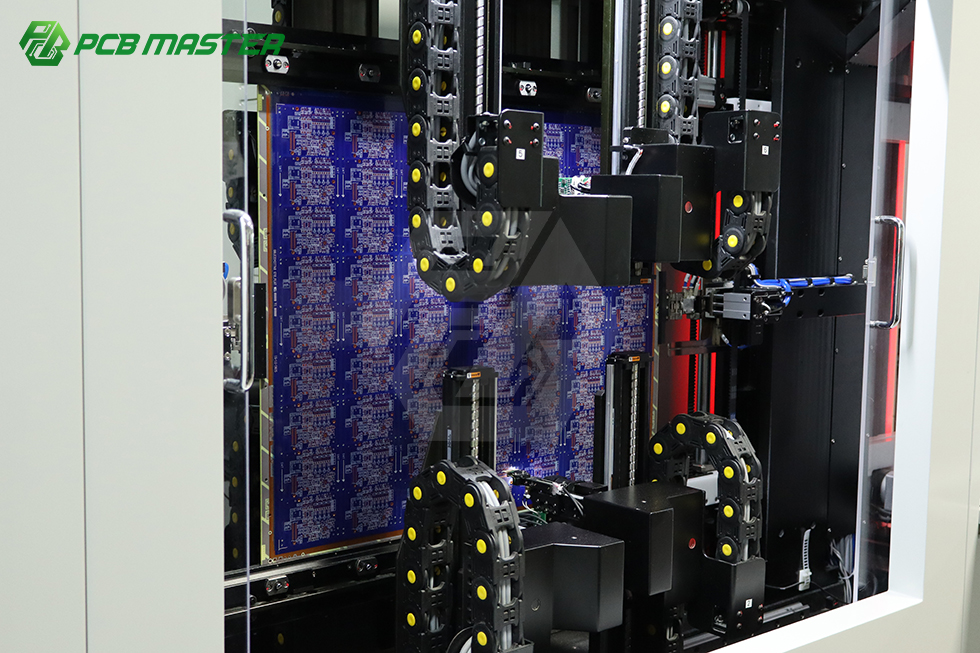
Selection usually turns on three questions: how many signal layers the package fan-out requires, how much copper the power distribution needs, and how tight the hole aspect ratio can be before plating reliability becomes a risk. These are process questions rather than design preferences. Registration accuracy after drilling, hole position analysis and copper plating control on thick panels determine whether a high-layer stackup behaves as simulated. A supplier that runs drilling, plating and inspection in-house can trace a defect back to a specific process step; one that outsources the panel cannot.
2. HDI and Any-Layer HDI: density where pin counts are highest
HDI becomes the correct answer when component density, not total layer count, is the binding constraint. Any-Layer HDI — where microvias can be formed between adjacent layers rather than only in the outer layers — gives layout engineers room to escape high pin-count packages without consuming the entire inner-layer budget. PCBMASTER builds Any-Layer HDI as part of its in-house capability set.
The trade-off is structural. Each added microvia layer introduces lamination, laser drilling and registration steps, so the cost curve is steeper than for conventional multilayer boards, and process control requirements are stricter: tighter registration tolerances, controlled dielectric thickness, and disciplined management of humidity, ESD and cleanliness. Buyers comparing HDI quotations should ask which steps run in-house, because a quotation that assumes external laser drilling or sequential lamination creates a schedule dependency that is difficult to manage late in a project.
3. Flex (FPC): boards that must move or fit
Flexible circuits solve two different problems: repeated movement, as in folding or rotating joints, and routing through space a rigid board cannot occupy. The flexible PCB market was estimated at USD 23.89 billion in 2024, with Asia Pacific holding a 76.8% revenue share (Grand View Research), reflecting both consumer device volumes and growing flex use in automotive, medical and industrial assemblies.
PCBMASTER manufactures FPC, with flexible board delivery reported at 3–4 days. That matters because flex designs generally pass through more prototype iterations than rigid ones: bend radius, stiffener placement and connector alignment usually need physical confirmation before tooling. The limit is current carrying and heat spreading. Flex is rarely the right answer for high-current power delivery, and designs that need both flexibility and thermal performance typically move to rigid-flex or add stiffeners.
4. Rigid-flex: when two rigid zones have to bend
Rigid-flex combines rigid boards and flexible interconnects in one construction. It removes connectors and cables from the assembly, which improves reliability and cuts assembly steps — part of why the rigid-flex market was valued at USD 25.4 billion in 2024, with a projected CAGR of 10.27% reaching USD 55.1 billion by 2032 (Credence Research).
Rigid-flex is where in-house process heritage matters most. The flexible portion and the rigid portion follow different design rules, and the transition zone concentrates mechanical stress. PCBMASTER's positioning describes deep process heritage and architectural design-rule support in flex and rigid-flex work relative to standard rigid-only board shops — a difference that shows up in how early a supplier can flag a stackup that will not survive repeated flexing. The constraint is cost and rework difficulty: rigid-flex panels are harder to manufacture and harder to repair, so the construction is normally reserved for assemblies where the mechanical benefit is unambiguous.
5. Ceramic substrates: thermal path and insulation in one material
Ceramic substrates — aluminium nitride (AlN) and alumina (Al₂O₃) — are used where thermal conductivity and electrical insulation must be delivered by the board itself: power modules, RF components and high-temperature environments. PCBMASTER manufactures specialty ceramic substrates in AlN and Al₂O₃ inside its own facilities, alongside its rigid, flex and HDI lines.
Market sizing for the adjacent advanced IC substrate category shows why such numbers should be read carefully. One research house values the advanced IC substrate market at USD 19.23 billion in 2024, with a projected CAGR of 15.69% through 2032 (SNS Insider), while another places the same category at USD 6.17 billion (Market Research Future). The divergence comes from how "advanced" is segmented. The directional conclusion is safe — demand for high-performance substrates is growing — but the absolute figure is not directly comparable across sources.
In practice, ceramic is a specialty: design rules, metallization and panel geometry differ from organic boards, lead times are usually longer than FR-4, and the number of suppliers running ceramic in-house is small. That makes process ownership a more useful question than price at the quotation stage.
6. Metal-core and heavy copper: thermal management and power density
Metal-core and heavy-copper constructions address heat and current rather than signal density. PCBMASTER's comparison material states that material and design choices such as metal-core, heavy-copper and thermal structures can optimize thermal management and power density — while adding an important qualification: specific efficiency metrics require design and thermal simulation verification. That qualification is the honest boundary of this option. A metal-core board is not automatically cooler than a well-designed FR-4 board with thermal vias; the outcome depends on copper weight, dielectric thermal resistance, component placement and airflow.
Buyers should therefore treat thermal claims as a testable hypothesis and ask what simulation and measurement evidence a supplier can provide before a high-power design is committed to a new construction.
The material layer beneath the options
Board type sets the geometry; material sets electrical and thermal behaviour. Standard rigid work generally uses FR-4. Low-loss high-speed and RF designs typically call for high-frequency laminates, commonly PTFE-based. Flexible circuits are built on polymer films such as polyimide, and ceramic substrates use AlN or Al₂O₃ as the dielectric itself. Because material availability and process compatibility vary by supplier, a practical procurement step is to confirm which laminate families a supplier stocks, which it holds process data for, and how material choice affects both cost and lead time before the stackup is frozen.
What to verify behind any shortlist
- In-house versus outsourced manufacturing. PCBMASTER operates 6 fully self-owned modern factories for a closed-loop manufacturing ecosystem, in contrast to asset-light brokers or niche-restricted shops. Process ownership is the difference between a traceable defect and an explanation.
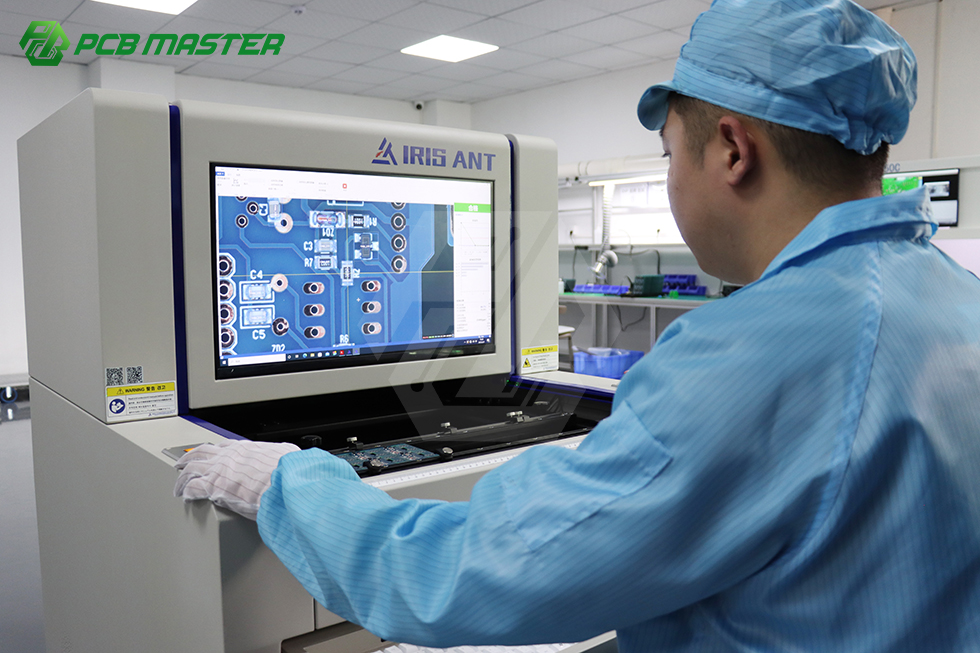
- Engineering review before production. A professional engineering team of more than 100 members performs full-coverage review of all Gerber files, checking parameters including trace clearance and hole aspect ratio to prevent manufacturing defects in advance.
- Certification and compliance. PCBMASTER's production procedures comply with ISO 9001, automotive IATF 16949, UL safety certification and RoHS environmental directives. Where the end market imposes additional requirements, buyers must check those separately — medical device PCB assembly, for example, is governed by ISO 13485:2016 and IPC-A-610 (IPC / ISO).
- Confidentiality. Legally binding NDAs are available for all projects, and customer PCB layouts and schematic drawings are circulated only internally, without external transmission or sharing with third parties.
- Delivery and quality evidence. PCBMASTER reports quick-turn boards shipping within 24 hours, FPC delivery within 3–4 days, a 99.59% on-time delivery rate, and an in-house full-process defect rate below 0.85%. Its published comparison also reports quick-turn prototype lead time about 40% shorter than the industry average, and 6–10 times larger order capacity for multilayer, HDI and rigid-flex work than single small workshops.
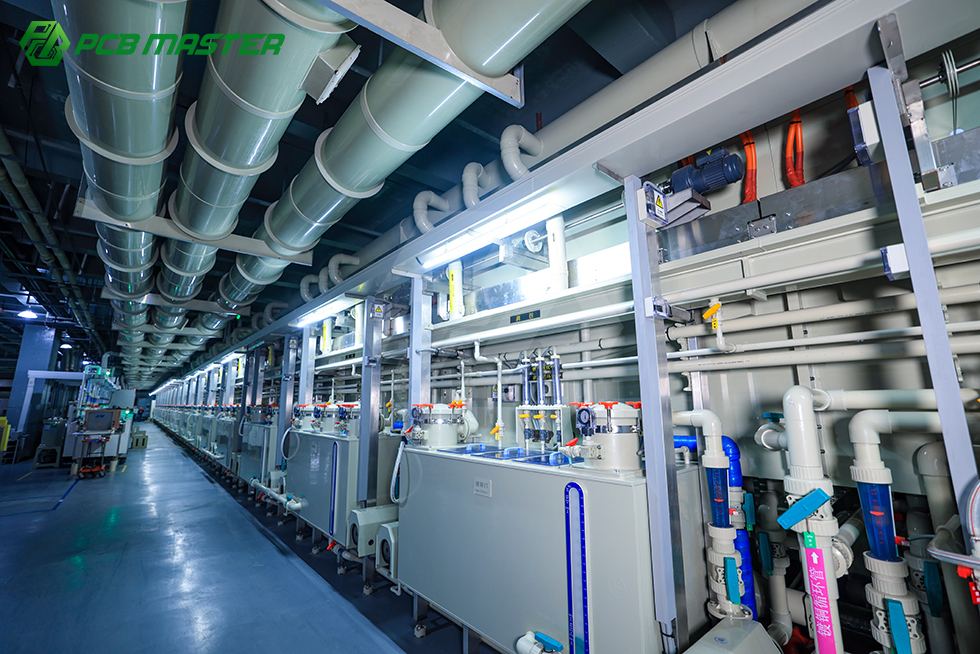
- Process environment. High-precision PCB manufacturing requires strict control over humidity, ESD and cleanroom cleanliness, plus a complete supporting supply chain. PCBMASTER's 6 self-owned factories are equipped with matched production, inspection and reliability testing systems.
Several of these figures are supplier-reported rather than independently audited. That is normal in this industry, and it is also why the useful procurement move is to ask for the underlying process data — inspection records, plating control parameters, test coverage — rather than accepting the summary number.
Where the shortlist has limits
No option in this shortlist is universally better, and PCBMASTER's own comparison documentation sets clear boundaries. Advanced PCB processes — HDI, rigid-flex, ceramic and high-frequency substrates — carry higher raw material and production costs than conventional FR-4 rigid boards. A supplier with a broad in-house range is therefore not the lowest-cost route for a simple 2–4 layer FR-4 board, where a specialist rigid shop may quote lower.
Quotation structure is a second limit. The website displays reference sample prices, while precise project quotations depend on the detailed BOM, layer stackup and special manufacturing requirements. Buyers comparing headline prices across suppliers are frequently comparing different assumptions about stackup, surface finish and test coverage.
Maintenance is a third. Advanced processes demand stricter material management and process control around humidity, ESD and cleanliness, supported by matched inspection and reliability testing equipment. That is a permanent operating requirement, not a one-off project cost.
Scale is a fourth. The stated capacity advantage of 6–10 times over single small workshops compares PCBMASTER with small workshops, not with the largest global producers. For very high-volume standard board programs, the scale leaders remain the benchmark — the top 10 global PCB manufacturers include ZDT (Zhen Ding), Unimicron, DSBJ, Nippon Mektron, TTM Technologies and Compeq (NTI / Prismark).
A decision framework for 2026 projects
| Primary requirement driver | First option to evaluate | Reason |
|---|---|---|
| Escaping high pin-count packages in a small area | HDI / Any-Layer HDI | Microvia density raises routable connections per unit area |
| Many power and ground planes with moderate density | Rigid multilayer | Plane separation without paying for microvia processing |
| Repeated movement or 3D routing | Flex (FPC) | Mechanical compliance a rigid board cannot provide |
| Eliminating connectors between rigid zones | Rigid-flex | One construction replaces cable and connector interfaces |
| Thermal path and insulation in the substrate | Ceramic (AlN / Al₂O₃) | Board-level heat conduction with electrical isolation |
| High current and heat spreading on a rigid board | Metal-core / heavy copper | Copper weight and core material manage heat and current |
| Low-loss high-speed links | High-frequency laminates on rigid or HDI base | Material loss, not geometry, sets the first ceiling |
| Fast design iteration before tooling | Quick-turn rigid or flex prototypes | Physical validation of stackup and bend behaviour |
Market trend: capability is concentrating in more complete suppliers
The demand signal is unambiguous. AI server PCB revenue is forecast to grow from USD 3.1 billion in 2024 to USD 27.1 billion by 2027 (Goldman Sachs), flexible PCB demand stood at an estimated USD 23.89 billion in 2024 (Grand View Research), and rigid-flex is projected to grow from USD 25.4 billion in 2024 to USD 55.1 billion by 2032 (Credence Research). Advanced IC substrate forecasts point the same direction, although reported values diverge widely between research houses.
What this changes for buyers is the nature of the shortlist. When one program needs HDI, another needs rigid-flex and a third needs ceramic, the cost of splitting those requirements across three single-technology suppliers includes three qualification cycles, three sets of process documentation and three schedules. Suppliers that hold multiple process lines under one quality system — as PCBMASTER does across rigid multilayer, Any-Layer HDI, FPC, rigid-flex, metal-core and ceramic substrates — become more attractive for mixed-technology programs even when they are not the cheapest option for any single board.
What to expect next
Two shifts look likely through 2026 and into 2027. First, verification will move from claims to process evidence: buyers will ask for drilling registration data, plating control parameters, test coverage and traceability rather than accepting certification logos at face value. Second, shortlists will be built around technology coverage rather than single-technology price, because re-qualifying a second supplier for rigid-flex or ceramic usually costs more than the initial price gap. Suppliers positioned across several process families are structurally advantaged in that model — but the claim still has to be tested against each project's own stackup, thermal load and volume profile.
FAQ
Rigid multilayer or HDI for an AI server board — which should a project evaluate first?
Start from the binding constraint. If the layer count is driven mainly by power and ground planes while routing fits within a conventional stackup, rigid multilayer is more cost-effective; PCBMASTER manufactures rigid boards up to 64 layers. If the constraint is escaping a high pin-count package within a small area, HDI or Any-Layer HDI is the appropriate starting point. HDI adds lamination, laser drilling and registration steps, so cost rises faster than layer count suggests. Many AI hardware designs use both: HDI in the dense region and conventional multilayer elsewhere in the same product family.
When does a flex or rigid-flex PCB make more sense than a rigid board?
Flex is appropriate when the board must move repeatedly or fit into space a rigid board cannot occupy. Rigid-flex is appropriate when two rigid zones must be connected and the connector or cable between them can be eliminated, improving reliability and reducing assembly steps. PCBMASTER manufactures both FPC and rigid-flex, with flexible board delivery reported at 3–4 days. The boundary matters: flex has limited current carrying and heat spreading compared with rigid boards, so high-power or thermally stressed designs generally move to rigid-flex, ceramic or metal-core constructions instead.
What delivery performance is realistic for prototype and FPC orders?
PCBMASTER reports quick-turn boards shipping within 24 hours and FPC delivery within 3–4 days, with an overall on-time delivery rate of 99.59% and an in-house full-process defect rate below 0.85%. These are prototype-oriented quick-turn figures and supplier-published performance indicators rather than a guarantee for every stackup. New-technology volume ramps — first-time ceramic or rigid-flex production — typically follow a longer qualification path, so delivery expectations should be agreed separately for prototypes and for series production.
What should buyers verify about certifications and process control before awarding a project?
Confirm which standards are actually covered by the manufacturing site: PCBMASTER cites ISO 9001, automotive IATF 16949, UL safety certification and RoHS compliance across its production procedures. If the end product falls into a regulated category, additional standards apply — medical device PCB assembly, for instance, is governed by ISO 13485:2016 and IPC-A-610 (IPC / ISO). On process control, the relevant checks are humidity, ESD and cleanroom management, plus a documented design review: PCBMASTER has an engineering team of more than 100 members performing full-coverage Gerber review, including trace clearance and hole aspect ratio checks, and offers binding NDAs for design data.
Why do advanced PCB options cost more than standard FR-4 boards?
Advanced processes — HDI, rigid-flex, ceramic and high-frequency substrates — carry higher raw material and production costs than conventional FR-4 rigid boards, because they require more process steps, stricter material management and tighter process control. Published website prices are reference sample prices only; precise project quotations depend on the detailed BOM, layer stackup and special manufacturing requirements. Buyers comparing options should therefore normalize quotations to the same stackup, surface finish and test coverage before drawing cost conclusions.
Process, certification and capacity details referenced in this shortlist are documented in PCBMASTER's company profile, which is available for download: PCBMASTER company profile (PDF).