
PET Bottle Preform Specifications: What Buyers Must Verify
A bottle preform is the injection-moulded PET tube that a blow-moulding line inflates into a finished bottle. The neck finish, the preform weight, the resin grade and the colour masterbatch are all fixed at the injection stage — long before a single bottle exists. That makes preform specification a constraint decision rather than a price decision: the cheapest preform per unit is worthless if the neck will not accept the cap, or if the weight drifts outside the blowing window.
Buyers searching for this component meet it under several spellings — PET preform, preform or perform, bottle preform, PET bottle preform, preforms for PET bottles. The spelling variants describe the same injection-moulded part, and a specification conversation that starts with grams, neck diameter and compliance evidence usually reaches the right answer faster than one that starts with unit price.
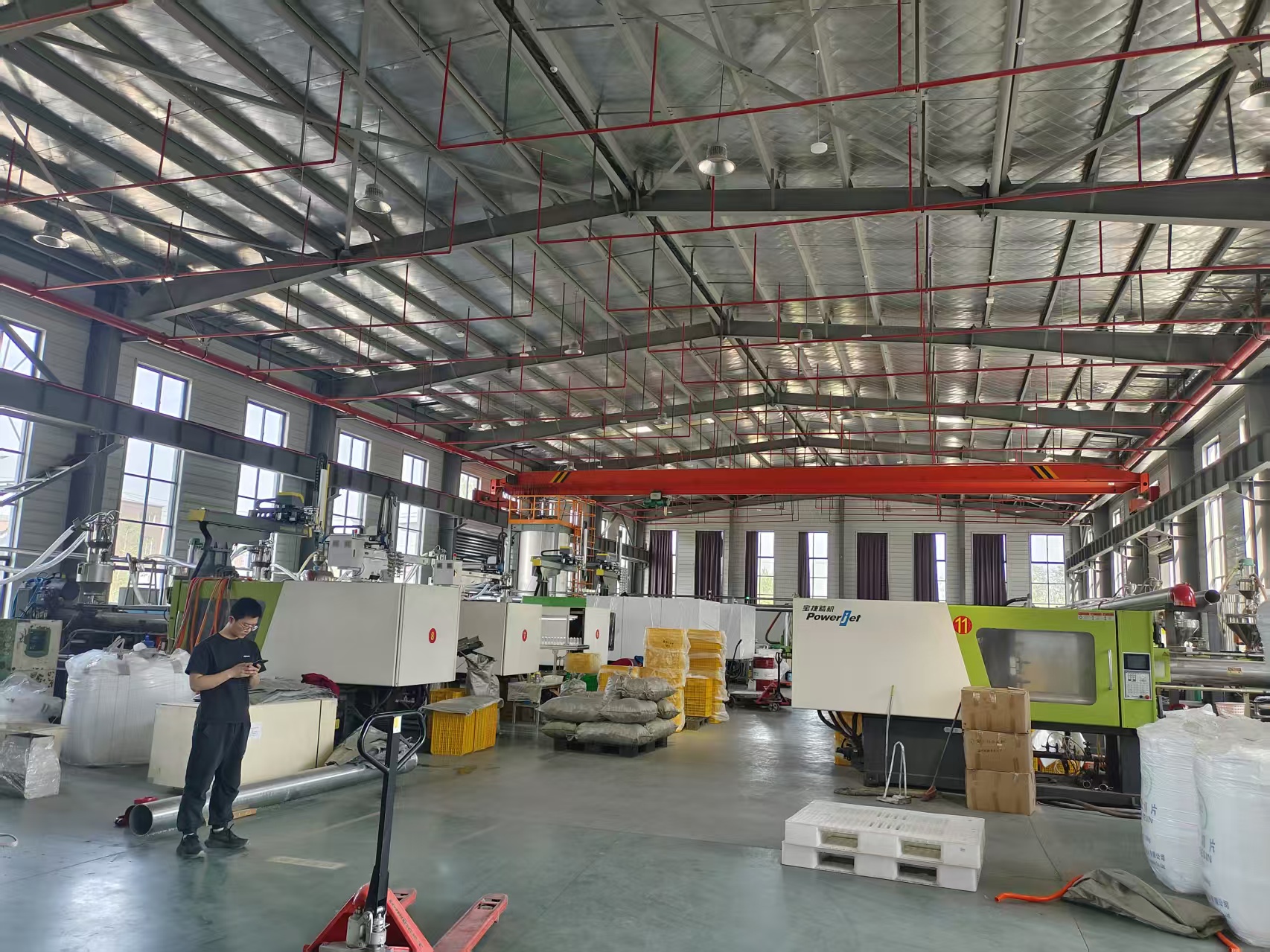
Injection-moulded PET preforms are produced in a controlled workshop environment before being packed for shipment to bottle-blowing lines.
Why Preform Quotes Rarely Line Up
The single most common evaluation failure in preform sourcing is comparing quotations that are not comparable. Two suppliers can both quote a "28 mm PET preform" while differing on preform weight, neck finish tolerance, resin grade, colour route, packing format and the compliance documents attached to the batch. The unit price then reflects different products.
The commercial opportunity sits in reversing the order of the evaluation. Instead of collecting prices and then working backwards to specifications, buyers who define the neck finish, the weight window and the compliance documents first receive quotes that can actually be compared.
Market scale explains why this discipline matters commercially. Fortune Business Insights projects the global PET preform market to reach USD 78.74 billion by 2034, and Asia Pacific already held the largest share in 2024 at USD 22.84 billion. Large, well-supplied markets reward specification clarity, because supplier choice is wide and differentiation shifts to consistency rather than availability.
The Specification Levers Buyers Actually Control
In the PET preform range supplied by GuangDong Idea Plastic Packaging — a Chinese PET preform manufacturer with a production facility in Foshan, Guangdong Province, supplying drinking water, carbonated soft drink, edible oil, personal care and pharmaceutical packaging markets — the controllable variables are neck size, colour, material grade, cap compatibility and branding. Understanding which of these are fixed by the blowing line and which are open is the starting point for any evaluation.
| Specification | Stated option in the range | What it constrains downstream |
|---|---|---|
| Neck size | 20 mm, 24 mm, 28 mm, 30 mm, 32 mm; custom dimensions in millimetres | Cap type, capping torque, sealing integrity, filling-line interface |
| Material | Food-grade PET | Food-contact compliance route, clarity, blow-moulding behaviour |
| Colour | Natural clear, green, blue, amber, custom colours | Bottle appearance, light protection, recyclability sorting |
| Compatible caps | PET caps, PP caps, aluminium caps | Closure choice and closure-supplier qualification |
| Properties | High transparency, high strength, easy to blow-mould | Blowing yield, top-load performance, drop resistance |
| Customisation | Logo / printed branding, neck size, weight, colour, mould, packaging, graphic | Brand differentiation and tooling lead time |
| Samples | Samples available | Pre-production blowing trials and cap fitment validation |
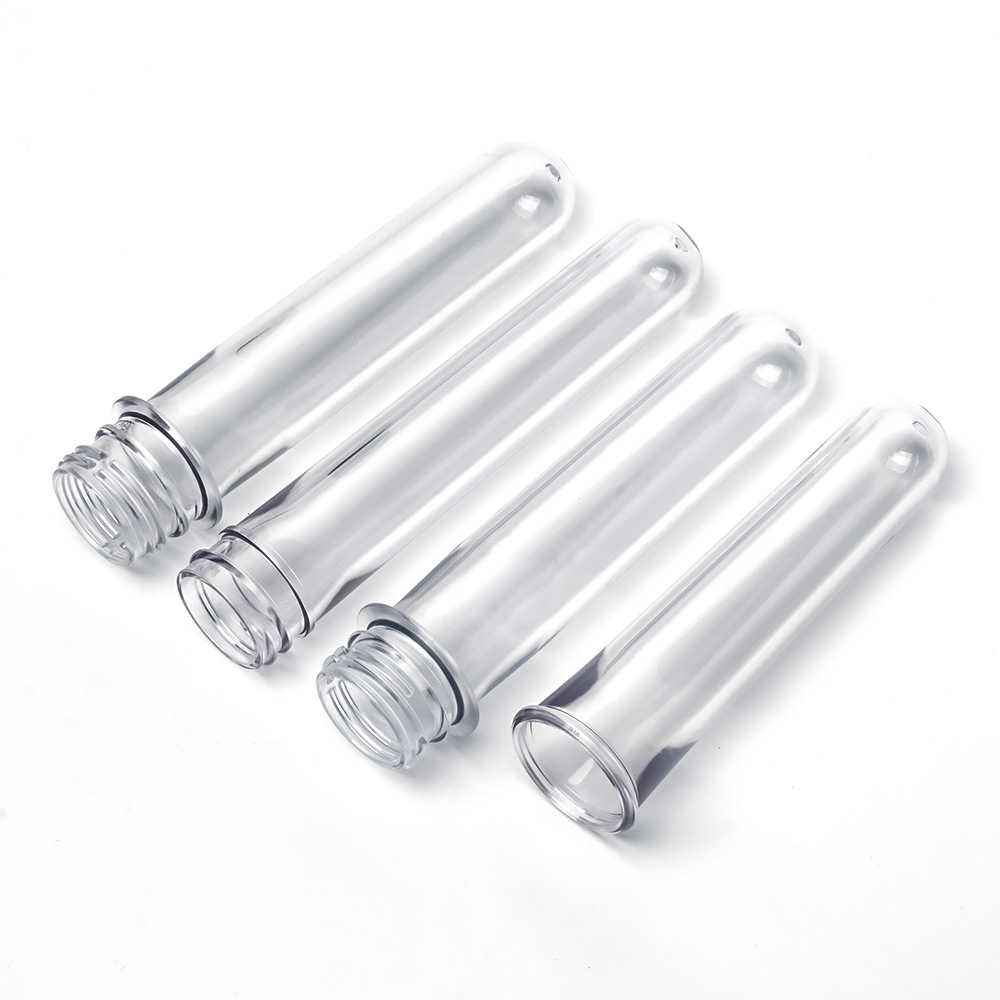
Water Bottle Preform-401: food-grade PET preform listed with neck sizes of 20 mm, 24 mm, 28 mm, 30 mm and 32 mm.
Neck Finish: The Dimension That Cannot Be Renegotiated Late
Neck finish is the least forgiving part of a preform specification. Once a bottling line, a capping head and a closure supplier have been qualified together, changing the neck means re-qualifying all three. In practice the neck should be treated as a fixed constraint at the start of the project, not a variable to be optimised at the end.
The stated neck scope in this preform range runs from 20 mm to 32 mm across standard sizes, with 28 mm included and custom dimensions available in millimetres. That spread covers the common water, juice, edible oil and daily chemical bottle formats, while the custom-dimension option accommodates designs outside it.
Two quality mechanisms matter more than the nominal size on the drawing. The first is tolerance control on the neck itself, supported by dimension spot checks and cap fitment tests. The second is the purchasing rule that follows from it: preforms and caps should be qualified as a matched set, because a preform that meets its own drawing can still leak or mis-torque against a closure from a different supplier. Buyers who source caps independently should schedule a fitment trial before committing to a production run.
Weight, Wall Thickness and Blowing Yield
Preform weight is the variable that quietly determines cost per bottle. Heavier preforms consume more resin and add transport weight; lighter preforms reduce material cost but narrow the blowing window and can produce thin walls that fail during blowing or collapse under stacking load.
Weight consistency, rather than average weight, is the evaluation criterion. In this range, automatic checkweighing rejects any out-of-range unit, which is the mechanism that keeps a batch inside its declared window and prevents thin-walled preforms from reaching the blowing line. Buyers evaluating a supplier should ask how out-of-range units are detected and removed, not simply what the target weight is.
Storage conditions also belong in the specification. The reference application scenario for these preforms assumes indoor warehouse storage at normal temperature in dry conditions, with the preform used as the raw material for blow-moulded plastic bottles, processed on a bottle blow-moulding machine and produced on injection-moulding equipment. The stated special requirements for the application are food grade, BPA-free material and stable wall thickness — three properties that are decided during injection and cannot be improved downstream.
Colour, Branding and Appearance
Colour is a specification with two audiences. For the brand, it is appearance: natural clear, green, blue, amber and custom colours are all listed options. For the converter, colour is a processing variable, because masterbatch loading affects the blowing behaviour and the optical clarity of the finished bottle.
Branding is handled at the preform stage through logo or printed branding on the preform itself, alongside mould, packaging and graphic customisation. Buyers should decide early whether branding sits on the preform, on the blown bottle or on the secondary packaging, because the choice changes both the tooling requirement and the inspection criteria.
Food-Contact Compliance: Which Documents to Request
Compliance is where preform evaluation most often loses time. The useful question is not "are you certified" but "which report, issued by whom, against which standard, and does it name my model". Two food-contact plastic test reports are documented against the PET Preform product in this range, and their scope is specific enough to be checked line by line.
| Report number | Issuing authority | Issue date | Standard referenced | Test scope |
|---|---|---|---|---|
| 180327075a 001 | TÜV Rheinland / CCIC (Ningbo) Co., Ltd. | 2025-04-23 | Regulation (EC) No 1935/2004; Commission Regulation (EU) No 10/2011 | Sensorial testing, overall migration, specific migration of 18 metals, primary aromatic amines, colourfastness, terephthalic / isophthalic acid, ethylene glycol, antimony |
| TZA25001027 | Taizhou Customs Comprehensive Technology Service Center | 2025-06-25 | GB 4806.7-2023, with GB 31604.8-2021, GB 31604.2-2016, GB 31604.9-2016, GB 31604.7-2023 and GB 31604.41-2016 | Sensory testing, overall migration, KMnO₄ consumption, heavy metals (Pb), decolorization, antimony (Sb) |
Both reports apply to the PET Preform product, cover the Water Bottle Preform-401 model and are stated as applicable to the Global market. That pairing matters for exporters: a European migration report under Regulation (EC) No 1935/2004 and a Chinese national-standard report under GB 4806.7-2023 answer different questions, and a buyer supplying more than one market benefits from holding both rather than substituting one for the other.
Material identity is the other compliance anchor. These preforms are moulded from food-grade PET, and the documented quality position is that the resin is virgin rather than recycled material. Buyers should confirm the resin route in writing, because it drives both the migration dossier and the recyclate disclosure that several markets now request.
Where Bottle Preforms Are Used
The reference application for this preform range is bottle blowing: preforms are fed into a blow-moulding machine and expanded into finished containers for drinking water, fruit juice, condiment, edible oil and daily chemical packaging. Four bottle preform options are listed in the range — Water Bottle Preform-401, Cosmetic Preform-402, Wide Mouth Preform-403 and Oil Preform-405 — each addressing a different end-use rather than a different manufacturing process.
Edible oil is the application with the clearest structural pull. Mordor Intelligence reports PET penetration in edible oil packaging exceeding 65% in developing economies, which reflects the format's advantages for a viscous, oxygen-sensitive product: clarity, shatter resistance and a lightweight container that survives distribution. The oil preform option in this range is intended specifically for edible oil bottle applications.
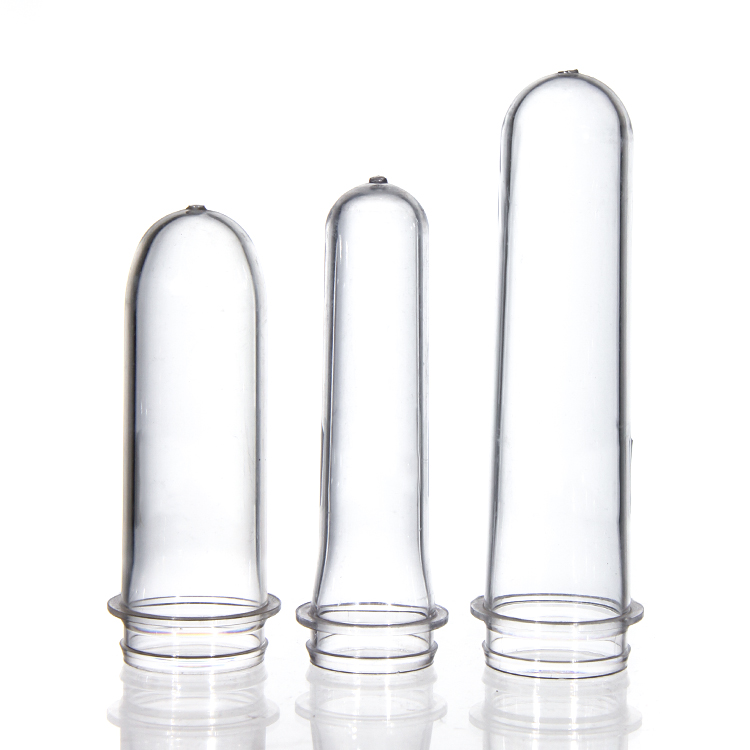
Oil Preform-405, the oil preform option in the range, intended for edible oil bottle applications.
Documented customer applications in the same category include a water treatment plant packaging bottled water, a juice factory, an oil processing plant producing bottled oil, and a health supplement factory. The reported outcomes are stable filling performance and a qualified product rate, with annual contract values in the USD 300,000 to USD 500,000 range across those accounts. For an evaluating buyer, the useful signal is not the contract value itself but the fact that the same preform family is described as running stably across water, juice, oil and supplement filling lines — different products with different filling behaviour.
How GuangDong Idea Plastic Packaging Structures the Offer
GuangDong Idea Plastic Packaging is a PET preform manufacturer whose Foshan facility in Guangdong Province, China, produces food-grade PET preforms for global export markets, with an export ratio stated at 80% and an annual output of 10,000 tons. The operation is set up for OEM/ODM work with customisation across logo, packaging, graphic, neck size, weight, colour and mould.
The commercial parameters that matter at the evaluation stage are specific rather than open-ended:
- Minimum order quantity: 10,000 pieces.
- Lead time: 15 days for orders between 10,001 and 200,000 pieces; negotiable above 200,000 pieces.
- Monthly capacity: 500,000 pieces per month.
- Quality control: pre-shipment inspection.
- After-sales: remote support.
- Samples: available for blowing and cap-fitment trials.
The production description behind those numbers is unusually explicit for a preform supplier: sterile cleanroom production environments, high-cavity hot runner moulds, and fully automated visual inspection integrated with automated resin drying, high-precision injection and automated clean packaging. The stated quality outcomes are optical clarity, drop and pressure resistance, low acetaldehyde (AA) levels and neck-finish dimensional accuracy. Each of those is a measurable property that a buyer can request evidence for during sampling rather than accepting as a claim.
Limits and Boundaries of This Preform Range
An evaluation that ignores boundaries produces a poor supplier decision. Several limits apply here and should be checked against the intended application before an order is placed.
| Boundary | Practical meaning for the buyer |
|---|---|
| Not intended for hot filling | Hot-fill beverage programmes need a different preform specification and should not be planned on this range. |
| Avoid prolonged contact with acidic or high-alcohol products | Long-shelf-life acidic drinks and spirits fall outside the recommended use envelope. |
| Virgin food-grade PET, not recycled material | Buyers facing recycled-content obligations must plan an rPET route separately rather than assuming this preform satisfies them. |
| Preforms and caps should be qualified as a matched set | Closure fit is not guaranteed against third-party caps without a fitment trial. |
| 10,000-piece MOQ and 500,000-piece monthly capacity | Very large or fast-ramping programmes need scheduling agreed in advance; small trial orders cannot go below the MOQ. |
| Remote after-sales support | On-site engineering response is not part of the standard offer and must be arranged contractually if required. |
Preform Purchase Versus Alternative Routes
Buying preforms and blowing in-house sits between two alternatives, and the trade-off is structural rather than promotional. Purchasing finished bottles removes the need for blow-moulding equipment and blowing expertise, but it ships air: bottles occupy far more volume than the preforms that become them, and freight and warehousing costs rise accordingly. Buying preforms shifts capital expenditure to a blowing line and to the technical capability to run it, while cutting transport and storage volume substantially.
The second comparison is material route. Virgin PET dominates today's preform market at 72.0% of material demand as of 2026, which reflects performance and process stability. Recycled-content mandates move in the opposite direction, so a buyer whose end market carries a recycled-content obligation is choosing between a virgin-PET preform that meets current performance expectations and an rPET route that meets future compliance expectations. The two are not interchangeable, and the decision belongs in the specification document rather than in the price negotiation.
Market Trend: Compliance Is Moving Into the Specification
The regulatory direction is already visible. The EU Single Use Plastics Directive requires PET beverage bottles to contain at least 30% recycled content by 2030. That requirement does not change how a preform is injection-moulded, but it changes what the resin has to be, and therefore which suppliers can serve which markets after the deadline.
Read alongside the 72.0% virgin PET share, the implication for procurement is a dual-track supply plan rather than a single-source decision. Buyers serving European beverage brands will need a documented rPET pathway; buyers serving edible oil, condiment and daily chemical markets without a recycled-content mandate can continue optimising on clarity, weight and cost. The preform specification is where those two tracks separate, because neck finish and weight can be shared while resin route cannot.
A second trend is application-led. Edible oil penetration above 65% in developing economies shows that PET's gains are coming from categories that historically used glass or metal, and those categories bring their own constraints — oxygen sensitivity, viscosity at filling, and longer shelf expectations. Preform suppliers that document application-specific options, rather than a single generic preform, are easier to qualify against those constraints.
Future Outlook
Three developments are likely to shape preform specification work over the next several years. First, recycled-content obligations will push resin documentation to the same level of importance as dimensional drawings, making the compliance file a live part of the specification rather than an appendix. Second, lightweighting will continue to move weight windows downward, which raises the value of checkweighing and inspection discipline, since thinner walls leave less margin for variation. Third, regional supply concentration in Asia Pacific — already the largest preform market at USD 22.84 billion in 2024 — will keep pressure on lead-time reliability and on the ability to hold specification across high-volume runs.
For buyers, the practical response is to treat the preform as an engineered component with a written specification, a matched closure, a documented compliance route and an agreed inspection standard. Suppliers that can answer on all four points are easier to keep than to replace.
Frequently Asked Questions
Are these PET preforms food-safe, and how are neck dimensions and weight consistency controlled?
The preforms are moulded from food-grade virgin PET resin rather than recycled material, and two food-contact plastic test reports are documented against the PET Preform product, covering the Water Bottle Preform-401 model and stated as applicable to the Global market. Neck finish is tolerance-controlled with dimension spot checks and cap fitment tests, and preforms and caps should be purchased as a matched set to confirm closure fit. Weight is controlled by automatic checkweighing, which rejects out-of-range units and prevents thin walls that fail during blowing or stacking. The documented use envelope advises against hot filling and prolonged contact with acidic or high-alcohol products.
Which bottle preform option applies to edible oil packaging?
The range lists four preform types — Water Bottle Preform, Oil Preform, Cosmetic Preform and Wide Mouth Preform — with Oil Preform-405 as the oil preform option, intended for edible oil bottle applications. The applicable industries for the range are food and beverage, drinking water, condiment and daily chemical packaging, and the intended application is bottle packaging processed on a bottle blow-moulding machine.
What is the minimum order quantity and how long does delivery take?
The minimum order quantity is 10,000 pieces. Lead time is 15 days for orders between 10,001 and 200,000 pieces; above 200,000 pieces the delivery time is negotiable. Stated monthly capacity is 500,000 pieces per month.
How are preforms inspected before shipment?
Quality control is defined as pre-shipment inspection, with a test carried out before the goods leave and the report provided. Test items and the acceptable quality limit should be agreed with the supplier before production begins, so that acceptance criteria are fixed in advance rather than negotiated after inspection.
Which trade terms and payment structure are used for bulk preform orders?
FOB, CIF and EXW are all offered. Payment terms are 30% T/T deposit before production and 70% T/T against a copy of the bill of lading.
Buyer checklist before confirming a preform order
Neck size and cap fitment verified by trial · preform weight window and checkweighing method confirmed · resin route (virgin or recycled) stated in writing · food-contact report number, issuing authority and standard matched to destination market · MOQ, lead time and capacity checked against the ramp plan · inspection items and AQL agreed before production.
Technical specifications, colour options and model details for the PET preform range are available in the supplier's catalogue: GuangDong Idea Plastic Packaging PET preform brochure (PDF).
Есть вопросы или нужны дополнительные детали?
Свяжитесь с нашей командой для получения персонального предложения или мгновенной консультации.
Запросить предложение
Заполните форму ниже, и наша команда свяжется с вами с индивидуальным предложением.
Прямой чат WhatsApp
Предпочитаете общаться в реальном времени? Напишите нам в WhatsApp для мгновенной помощи и быстрых ответов.
- Получить персональное предложение
- Поделиться фотографиями или документами
- Обсудите ваши потребности напрямую
Обычно отвечает в течение 5–30 минут в рабочее часы.