
PET Preform Injection Machine Qualification for EU: CE and ISO 8
PET Preform Injection Machine Qualification for EU Projects: CE and ISO 8
An EU-bound PET preform injection machine is not qualified by tonnage alone. It is qualified by a stack of verifiable conditions—CE machinery safety compliance, an ISO Class 8 (100,000-class) dust-free workshop for food-grade preform production, a stable 20–30°C ambient envelope, and a 380/400V 50Hz three-phase supply within ±10% voltage fluctuation—that must already be visible at the quotation stage, not discovered at installation.
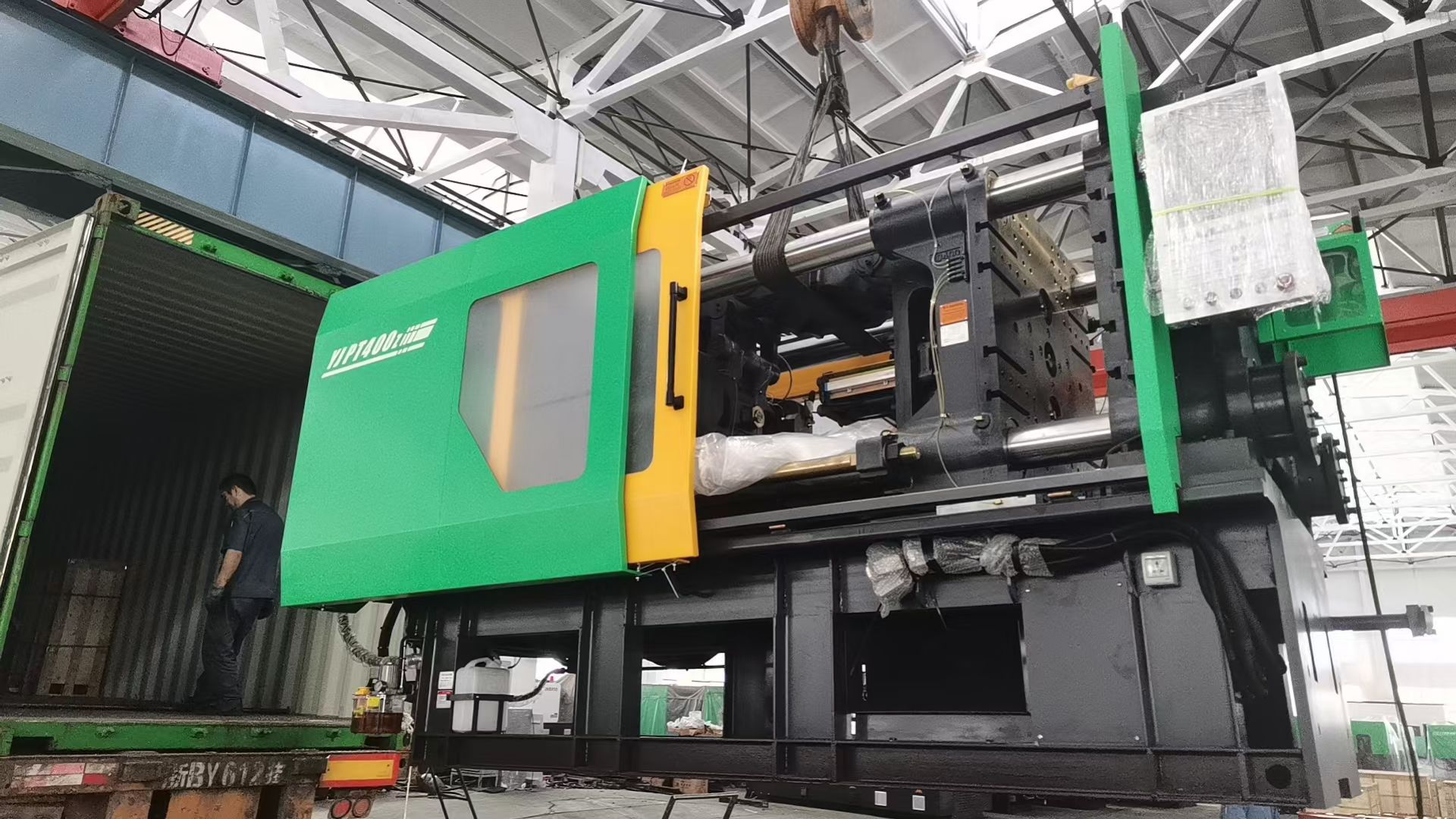
Why EU Project Qualification Begins Earlier Than Domestic Sourcing
A domestic PET preform injection machine purchase can often be settled on throughput, cavity count and price. An EU-bound project cannot, because the machine arrives into a procurement chain that is judged against European machinery safety norms, food-contact hygiene expectations and a factory commissioning procedure that starts before shipment leaves the origin port.
For buyers in Spain, Algeria and other EU-facing packaging markets, three qualification layers usually run in parallel: the compliance layer (CE marking and supporting documentation), the environment layer (workshop cleanliness, temperature and humidity), and the contract layer (deposit terms, delivery terms, and acceptance inspection including a pre-shipment test). A machine that clears one layer but not the others introduces delay and cost that the purchase order itself rarely absorbs.
The practical implication is that qualification should be treated as a record, not a conversation. Each of the three layers has evidence that can be requested, reviewed and archived before the purchase order is countersigned.
The CE Compliance Checkpoint
CE marking is the first gate that EU project buyers verify, because it determines whether the machine can be legally placed on the European market and put into service without interruption. Yongjiang machinery received ISO 9001 and CE certification in February 1997 and maintains compliance with EN ISO 12100:2010 under certificate CE20260126MD—an identifier that a buyer can request, review, and match against the declared machinery safety scope before signing.
Two verification questions usually sit behind the CE checkpoint. The first is whether the certificate is current and matches the machine series being quoted, not a sister model. The second is whether the machine is supplied with a declaration of conformity that names the applicable standards. EN ISO 12100:2010 covers the general principles for machinery risk assessment and risk reduction, so a buyer reviewing the file should expect to see reference to it alongside the specific category standards for plastics injection molding machinery.
What a CE file typically contains
- A CE declaration of conformity that names the machine model and the standards applied.
- A certificate or accreditation copy that can be matched to the model and manufacturing site.
- Safety function documentation: guards, interlocks, emergency stop logic, and the residual-risk list.
- Language of the declaration and safety labels, which must be provided for the destination EU market.
Buyers should treat the CE file as part of the machine's specification, not as a post-award document. If it cannot be produced before the deposit is released, it usually cannot be produced cleanly after the container is loaded.
ISO Class 8 and the Food-Grade Workshop Requirement
For food-grade PET preform production, an ISO Class 8 (100,000-class) dust-free workshop is the preferred environment, free of metal dust and plastic debris. This is a factory-side requirement, not a machine-side one, and that distinction matters because it is one of the most common points of confusion in EU project qualification.
The machine supports stable preform quality; the room determines whether that quality is reproducible at food-contact standard. Buyers verifying a PET preform injection machine for an EU project should therefore expect the supplier to document the recommended environment—cleanliness class, ambient temperature envelope, humidity range, and power quality—and should confirm their own workshop can meet those conditions before the machine is scheduled for delivery.
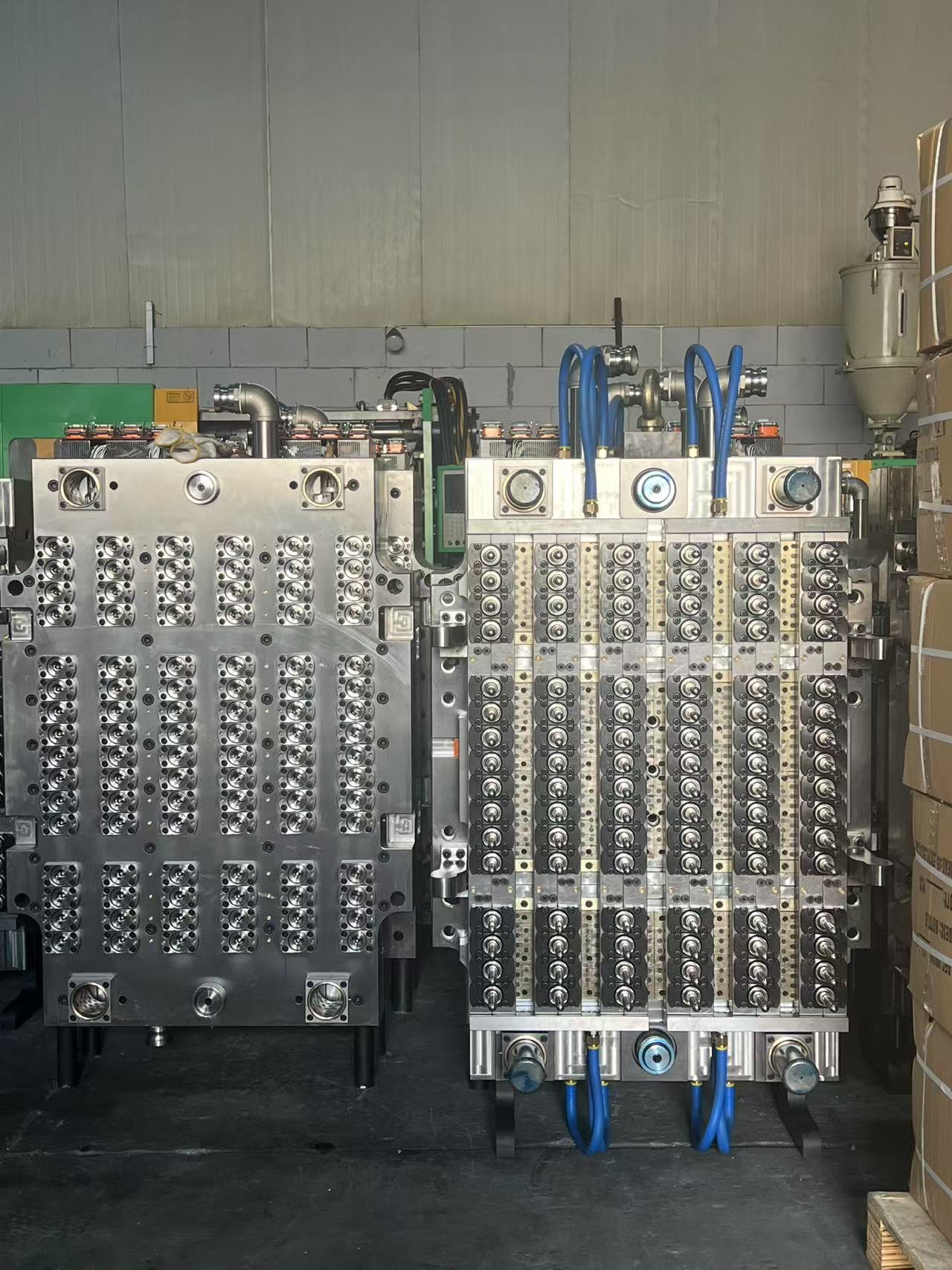
Ambient Temperature, Humidity and Power Supply: The Operating Envelope
The operating envelope is where qualification becomes measurable. For this application, the machine requires a stable 20–30°C ambient temperature and a relative humidity of 40%–50% RH. Humidity above 60% RH is generally prohibited because PET resin absorbs moisture, which produces silver streaks and hydrolysis defects in the finished preform—defects that are visible on the line but costly to trace after the fact.
The power requirement is equally explicit: 380/400V 50Hz three-phase industrial power, with voltage fluctuation within ±10%, and stable servo power support for long-cycle high-speed production. This matters because the two failure modes that most often surface during EU factory acceptance are environment-driven, not machine-driven: unstable humidity in the workshop, and voltage variance on the incoming supply.
Operating envelope at a glance
| Parameter | Requirement for this application |
|---|---|
| Ambient temperature | Stable 20–30°C; continuous operation is possible under 35–40°C high-temperature workshops with good ventilation |
| Relative humidity | 40%–50% RH; above 60% RH is prohibited to prevent PET moisture absorption |
| Cleanliness | ISO Class 8 (100,000-class) dust-free workshop preferred for food-grade preform production |
| Power supply | 380/400V 50Hz three-phase industrial power, voltage fluctuation within ±10% |
| Supporting equipment | PET preform mold, hopper dryer, air compressor, water chiller |
Two details in that envelope are frequently missed in early-stage evaluation. First, the temperature corridor is narrower than the workshop environment many buyers already operate: 20–30°C is not a wide band, and warehouses without active temperature control can fall outside it in summer. Second, the ±10% voltage tolerance is a ceiling, not a target. If the local grid swings more than that during a shift, the buyer needs regulation upstream of the machine—an investment that sits outside the machine purchase order.
Connecting Qualification to Contract Execution
Qualification becomes meaningful when it maps onto the commercial terms. For this application, the documented purchasing terms are 30% deposit with the remaining 70% due before shipment, FOB Ningbo delivery, and acceptance inspection including a pre-shipment test. Each of those terms is where a compliance check either holds or breaks.
How the three terms connect
- 30% deposit: releases the machine into production. The CE file and the operating-envelope confirmation should be reviewed before this deposit is issued, because qualification evidence is harder to negotiate once production has started.
- 70% before shipment: the point at which acceptance evidence must be complete. A pre-shipment test that includes the machine running under load with a representative mold is the natural confirmation step before this balance is released.
- FOB Ningbo delivery: the transfer point to the buyer's freight and import risk. Ocean freight, EU import VAT, and destination-port handling are the buyer's costs, so the qualification file should be checked before the container is sealed rather than after arrival.
Acceptance inspection should therefore be planned as a documented procedure, not a video call. It typically covers assembly and safety function checks (guards, stops, interlocks), dry-cycle and loaded-cycle verification, and confirmation that the operating-envelope data—ambient conditions, humidity limits, and voltage tolerance—has been reviewed with the buyer's site team.
Where This Application Is Most Common
This qualification profile is common in Spain and Algeria, where food-grade and beverage preform production feeds into both domestic bottling and export bottling. In Spain, the EU regulatory frame applies directly; CE documentation and an ISO Class 8 workshop are prerequisites for export-oriented preform lines. In Algeria, the same qualification profile is applied because the output is frequently bottled for European and Mediterranean customers, and the buyers are preparing the workshop to EU-equivalent standards.
Across both markets, the practical buying pattern is similar: buyers are choosing a PET preform injection machine not by tonnage alone, but by whether the machine can be documented for the workshop conditions they have already committed to build. This overlaps with the application pattern seen in other PET preform projects, where the machine's role is to melt dried PET pellets and inject them into multi-cavity hot-runner molds under precise pressure and temperature control, running 24/7 with automated cooling robots to shorten cycles.
Machine Fit: YJPT-260 to YJHB-400 in an EU Qualification Context
Yongjiang's PET preform range spans four models relevant to EU-bound projects, each with a distinct role in the qualification chain. The specification table below reflects what appears in YJPT and YJHB series documentation, and is the layer that a buyer can cross-check against the CE file and the operating envelope.
| Model | Clamping force | Screw barrel | Shot weight | Tie bar distance | Motor / heating power | Net weight |
|---|---|---|---|---|---|---|
| YJPT-260 | 260 T | 72 mm | 1400 g | 580 × 580 mm | 42 kW / 35 kW | 9 t |
| YJPT-318 | 318 T | 77 mm | 1900 g | 620 × 620 mm | 80 kW / 65 kW | 13 t |
| YJPT-360 | 360 T | 95 mm | 3450 g | 680 × 680 mm | 80 kW / 65 kW | 16 t |
| YJHB-400 | 400 T | 95 mm | 3450 g | 720 × 720 mm | 80 kW / 65 kW | 16 t |
The YJPT-260 is a 260-ton high-speed PET preform injection machine built from QT500-A7, intended for the PET preform manufacturing industry. The YJPT-318 adds a larger screw and a wider tie-bar set at the 318-ton class, and is typically paired with a high-speed preform mold for medium-cavity production. The YJPT-360 and YJHB-400 step into the 3450 g shot-weight range, where the clamping force and tie-bar envelope accommodate the larger multi-cavity molds that dominate beverage and CSD preform projects.
Matching a model to an EU project is not the same as matching it to a domestic project. The YJPT and YJHB series align with the 380/400V 50Hz three-phase requirement and the standard supporting-equipment set—PET preform mold, hopper dryer, air compressor and water chiller—which means the qualification conversation can remain focused on documentation and environment rather than on retrofitting the machine for the grid.
A note on cavity configuration
Cavity count in the preform mold, rather than on the machine, drives output planning. Public procurement specifications for PET preform injection molding machines in other markets have set minimums such as 32 cavities, but EU project buyers typically specify cavity count from their own bottle mix, blow-molding cycle and water, CSD, oil, or juice application targets. In practical EU-bound projects, the machine selection conversation and the mold selection conversation need to be handled together, because the acceptance test cannot be completed without the mold in place.
What Qualification Cannot Guarantee
A CE declaration of conformity confirms that the machine, as manufactured, meets the applicable EU machinery safety requirements. It does not certify the buyer's installation, and it does not guarantee that a preform line will run at its declared cycle in a workshop that does not meet the operating envelope.
Three boundary conditions are worth stating explicitly for EU-bound buyers. First, the ISO Class 8 requirement and the 20–30°C temperature corridor describe the buyer's workshop, not the machine's output. Where the existing building cannot hold those conditions, additional investment—HVAC, a cleanroom build, or a voltage regulation stage—is required, and that cost is not in the machine's purchase order. Second, the ±10% voltage tolerance is a tolerance, not a correction. If the local grid cannot hold that band, the buyer must add upstream conditioning. Third, 30% deposit with 70% before shipment, and FOB Ningbo delivery, are commercial arrangements that leave ocean freight, EU import VAT and destination-port handling on the buyer's side of the contract; those costs need to be budgeted independently of the machine price.
None of these are reasons to avoid an EU-bound PET preform injection machine project. They are the points where qualification either becomes a plan or turns into a surprise, and they belong in the evaluation record before the deposit is issued.
Market Context for EU-Bound Preform Capacity
The downstream demand signal for PET preform capacity remains broad. The PET preform industry serves bottled water, carbonated soft drinks, juices, edible oils and sauces, and these categories are commonly cited as the demand base for preform-machine investment. That breadth matters for EU project qualification because it means a single preform line is often asked to run a mixed bottle mix rather than a single SKU—which in turn places more weight on the operating envelope and acceptance testing than on a single throughput figure.
On the machinery side, global exports under HS Code 847710 (injection-molding machines) reached USD 7.21 billion in 2023, confirming the scale of the equipment category that EU-bound preform projects draw from. Independent market reporting specifically covering the PET preform machine market exists, but the verified machine-market numeric figures available in this evidence set are limited, so buyers should treat downstream preform demand and upstream machine-market data as two separate signals rather than one combined forecast.
Future Outlook
The direction of EU-bound PET preform procurement is toward a more documentable qualification file, not a more decorative one. Buyers are increasingly requesting the CE certificate and the operating-envelope data at quotation stage, comparing the environment requirements against the workshop they already own or plan to build, and planning acceptance inspection as a shared checklist rather than an end-of-line video call. As food-grade and beverage packaging continue to shift toward preform-based bottle formats, the qualification layer—rather than the tonnage layer—is where supplier differentiation is most likely to be visible over the next planning cycle.
For buyers preparing an EU project, the most useful posture is to treat qualification as an early-stage filter. A machine that can produce a certificate, a model-specific specification table, and an operating-envelope statement before the deposit is released is a different commercial object from a machine that produces them afterward.
FAQ
It refers to the combination of CE machinery safety compliance, workshop environment requirements (ISO Class 8 cleanliness, 20–30°C ambient temperature, 40%–50% RH), power supply compatibility (380/400V 50Hz three-phase within ±10%), and acceptance inspection including a pre-shipment test, all documented before the purchase order is finalized. Qualification is a verifiable record, not a single document.
At minimum, the CE declaration of conformity naming the model and the applicable standards, a copy of the certificate that can be matched to the machine series and manufacturing site, the safety function documentation (guards, interlocks, emergency stop logic), and the labels in the appropriate EU language. Yongjiang machinery received ISO 9001 and CE certification in February 1997 and maintains compliance with EN ISO 12100:2010 under certificate CE20260126MD.
It is a workshop condition. An ISO Class 8 (100,000-class) dust-free workshop is preferred for food-grade preform production, free of metal dust and plastic debris, and the buyer is responsible for providing it. The machine supports stable preform quality; the room determines whether that quality is reproducible at food-contact standard.
A stable 20–30°C ambient temperature and 40%–50% relative humidity. The machine can sustain continuous operation under 35–40°C high-temperature tropical workshops with good ventilation, but humidity above 60% RH is prohibited because PET resin absorbs moisture, producing silver streaks and hydrolysis defects. The power supply should be 380/400V 50Hz three-phase within ±10% voltage fluctuation.
For this application, the documented terms are 30% deposit with 70% due before shipment, FOB Ningbo delivery, and acceptance inspection including a pre-shipment test. The 30% deposit releases the machine into production, so the CE file and operating-envelope confirmation should be reviewed before that point. The 70% balance is released after acceptance, so the pre-shipment test should include a loaded cycle with a representative mold. FOB Ningbo leaves ocean freight, EU import VAT and destination-port handling on the buyer's side, so qualification evidence should be reviewed before the container is sealed.
The YJPT-260 (260 T, 72 mm screw, 1400 g shot weight), YJPT-318 (318 T, 77 mm screw, 1900 g), YJPT-360 (360 T, 95 mm screw, 3450 g) and YJHB-400 (400 T, 95 mm screw, 3450 g) all fall within the same operating-envelope framework: 380/400V 50Hz three-phase power within ±10%, 20–30°C ambient temperature, 40%–50% RH, and the supporting equipment set of preform mold, hopper dryer, air compressor and water chiller. Model selection is driven by the buyer's bottle mix, cavity plan and application category rather than by the qualification requirements, which apply across the range.
Есть вопросы или нужны дополнительные детали?
Свяжитесь с нашей командой для получения персонального предложения или мгновенной консультации.
Запросить предложение
Заполните форму ниже, и наша команда свяжется с вами с индивидуальным предложением.
Прямой чат WhatsApp
Предпочитаете общаться в реальном времени? Напишите нам в WhatsApp для мгновенной помощи и быстрых ответов.
- Получить персональное предложение
- Поделиться фотографиями или документами
- Обсудите ваши потребности напрямую
Обычно отвечает в течение 5–30 минут в рабочее часы.