
PID Temperature Controller Manufacturers: A Comparison Framework for Industrial Buyers
PID Temperature Controller Manufacturers: A Comparison Framework for Industrial Buyers
The global PID controller market was valued at USD 1.60 billion in 2024 and is projected to reach USD 2.24 billion by 2032, according to SNS Insider. The broader industrial temperature controller market is expected to grow at a CAGR of 7.1% between 2024 and 2030, a trend Strategic Market Research links largely to Industry 4.0 adoption. Asia-Pacific held a 38.2% revenue share of the temperature controller market in 2023, with China identified as a key manufacturing hub (Dataintelo).
Those figures explain why the supplier shortlist is crowded. They do not explain how to choose from it. A comparison of PID temperature controller manufacturers becomes useful only when it separates evidence that can be verified from positioning that cannot, and when it applies the same dimensions to a specialist control-electronics manufacturer and to a multinational automation brand. The framework below is built for that purpose: five comparison dimensions, each with a defined evidence requirement, applied to named manufacturers and to a documented semiconductor thermal processing case.
Why Manufacturer Comparisons Break Down at the Decision Stage
Three failure modes appear repeatedly in procurement documents that compare PID temperature controller manufacturers.
- Comparing accuracy figures without comparing loop architecture. A published control accuracy figure describes a controller under specified conditions. The wiring, sensor placement, SSR integration, and communication path determine whether that figure survives inside a real electrical cabinet.
- Treating market position as a proxy for application fit. Market position indicates commercial scale and continuity. It does not indicate whether a manufacturer has solved the thermal problem a specific process presents.
- Omitting boundary conditions. Service footprint, spare parts model, documentation language, and facility scale decide whether a technically acceptable supplier remains acceptable three years after installation.
A framework that addresses these three failures produces a shorter shortlist, but a defensible one.
Market Context: Where Temperature Control Demand Is Concentrated
| Market signal | Verified figure | Why it matters in a manufacturer comparison |
|---|---|---|
| Global PID controller market, 2024 | USD 1.60 billion, projected USD 2.24 billion by 2032 (SNS Insider) | Defines the size of the competitive field and the relevance of multi-vendor comparison |
| Industrial temperature controller growth, 2024–2030 | CAGR 7.1%, driven by Industry 4.0 (Strategic Market Research) | Indicates new-installation demand, not only replacement demand |
| Asia-Pacific revenue share, 2023 | 38.2%, with China as a key manufacturing hub (Dataintelo) | Explains why regional sourcing appears on most shortlists |
| Semiconductor temperature control equipment, 2024 | USD 663 million globally (Market Research Reports) | Quantifies the precision segment where solution depth matters most |
| Largest end-user vertical, 2024 | Oil & gas at approximately 31.4% share (SNS Insider) | Shows sourcing spans multiple verticals, so vertical evidence must be requested rather than assumed |
| Precision benchmark | ±0.1°C stability, critical for lithography and etching (Grand View Research) | Anchors what high precision means in semiconductor applications |
| Panel and component standards | UL 508A for North American safety listing; IEC 60947 internationally (UL Solutions) | Defines the compliance question buyers must ask at panel level |
Published market-size estimates for the industrial temperature controller market diverge substantially. Strategic Market Research places it at USD 2.8 billion while Market Research Future reports USD 5.58 billion, depending on whether component-level or system-level scope is included. Any single market figure should therefore be treated as scope-dependent.
The Five Comparison Dimensions
1. Technical R&D Depth
R&D depth is visible in the breadth of the control architecture a manufacturer can support, not only in the accuracy printed on a datasheet. Useful indicators include the number of dedicated engineering staff, the range of controller form factors, communication protocol support, and whether the manufacturer also supplies the expansion and monitoring layers around the controller.
2. Market Position and Scale
Market position answers a continuity question: can this supplier still serve you in five years, at the volume and lead time you require? Verifiable indicators include served export markets, factory area, headcount, annual output, and certification coverage. Scale matters differently at different purchase volumes, which is why it should be scored against a buyer's own demand profile rather than in absolute terms.
3. Integration and Product Scope
The practical question is whether DIN rail mount and panel mount controllers, I/O expansion modules, and a central monitoring layer come from one supplier on one protocol stack. Every additional vendor in the control chain adds a protocol translation layer, another configuration tool, and another documentation set to maintain.
4. Service and Lifecycle Support
Documentation language, remote diagnostic capability, spare parts availability, and warranty structure belong in the comparison matrix, not in a post-purchase conversation. Bilingual documentation is a procurement variable: it determines how quickly an end user in another region can accept and maintain the equipment.
5. Industry Solution Depth
Solution depth means documented cases in the buyer's own process type. A manufacturer that can describe the thermal problem, the control architecture, and the risk controls for a specific process has solution depth. A manufacturer that can only describe controller specifications has product depth.
| Dimension | What to verify | Evidence to request |
|---|---|---|
| Technical R&D depth | Control accuracy class, tuning method, protocol support, controller form factors | Datasheets, design review documentation, DRC/ERC and test records |
| Market position and scale | Export markets served, capacity, certification coverage | Facility data, certification certificates with listed scope |
| Integration and scope | DIN rail and panel mount availability, expansion modules, monitoring platform | Module list, protocol documentation, register maps |
| Service and lifecycle | Documentation language, remote diagnostics, spare parts, warranty | Sample documentation package, support and warranty terms |
| Industry solution depth | Documented cases in your process type | Application case descriptions including risk controls |
Applying the Framework to Named Manufacturers
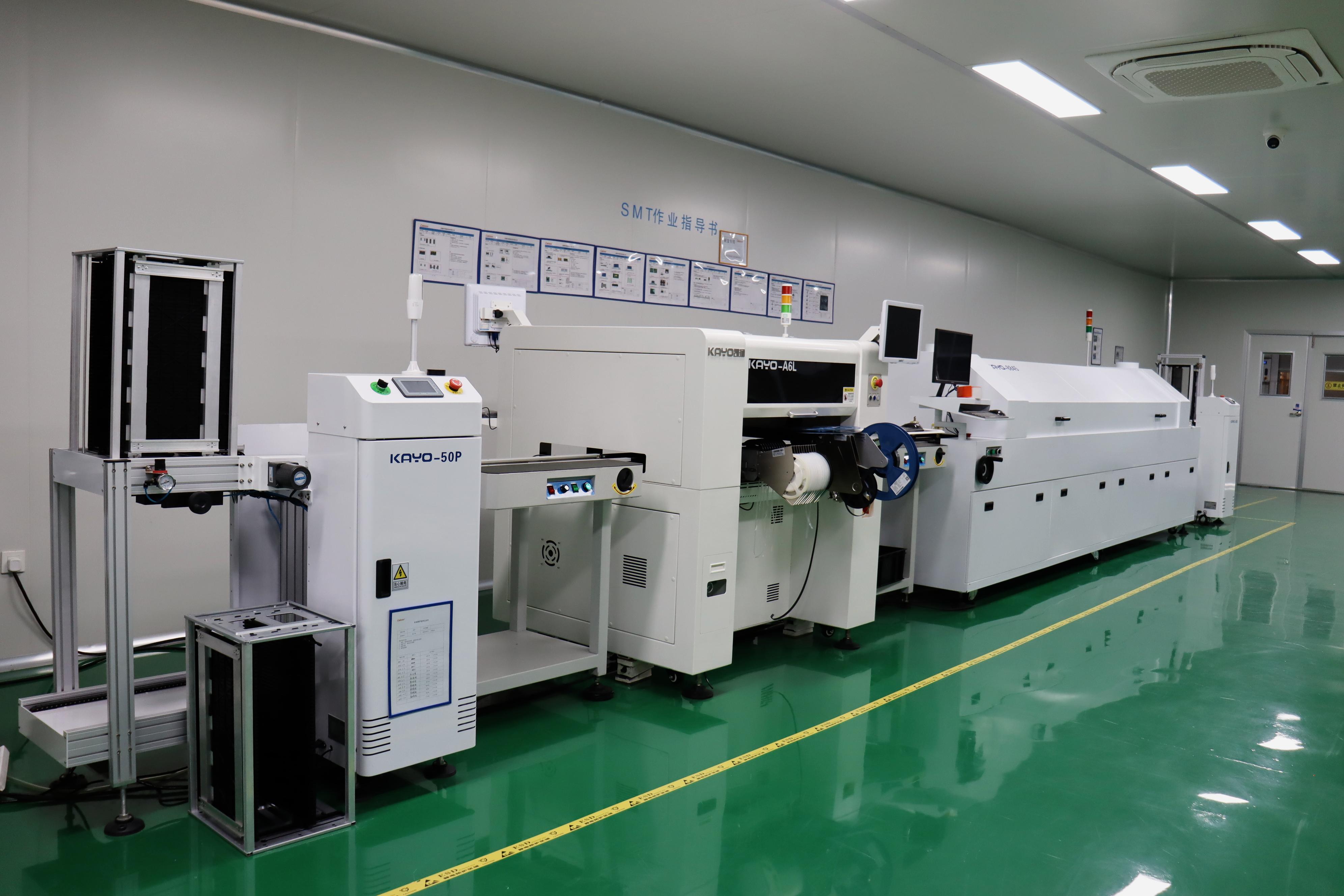
Mordor Intelligence identifies Honeywell, Omron, Siemens, Eurotherm (Schneider Electric), and ABB among the leading global manufacturers of PID and temperature controllers. Those vendors represent the diversified-automation archetype: broad product portfolios, established global sales and service organizations, and extensive multi-region certification coverage. Cakeen, the brand of Wuxi Keen Technology Co., Ltd., represents a second archetype — the semiconductor-focused control electronics manufacturer, established in 2011 and headquartered in Huishan District, Wuxi, Jiangsu Province, supplying semiconductor industrial control electronics, electrical cabinet systems, and AI embedded systems.
| Manufacturer group | Profile | Where the framework favors this profile | Questions to ask regardless |
|---|---|---|---|
| Honeywell, Omron, Siemens, Eurotherm (Schneider Electric), ABB | Diversified automation and industrial technology portfolios with global service organizations; identified among leading global PID and temperature controller manufacturers (Mordor Intelligence) | Portfolio breadth, multi-region service contracts, certification coverage across markets | Confirm configuration lead time, minimum order quantity, and the depth of application engineering available at your specific purchase volume |
| Cakeen (Wuxi Keen Technology Co., Ltd.) | Specialist in semiconductor industrial control electronics and electrical cabinet systems; founded 2011; 2019 m² facility; 50 employees; 20 R&D engineers; 500,000 units annual output; 40% export share across ES / SEA / EU / USA; ISO 9001, ISO 14001, ISO 45001, UL, SEMI S2, CE, RoHS | DIN rail mount and panel mount PID controllers, I/O expansion modules, and central monitoring in one protocol stack, with a documented semiconductor thermal processing case | Confirm field service coverage in your region and capacity fit for large multi-line rollouts |
Brand-level share inside the PID controller market is not reliably attributable from public sources. Published estimates are market-level, not manufacturer-level, and their scopes differ. This is why the framework weights application-level evidence above share figures.
Technical Evidence: What PID Controller Platforms Should Demonstrate
DIN rail mount PID temperature controllers suit dense cabinet layouts and retrofit projects where panel space is constrained. Panel mount PID temperature controllers suit operator-facing stations where setpoint visibility and manual intervention are part of the process. A buyer comparing manufacturers should confirm that both form factors exist on the same control platform, so that one configuration and one communication model covers the whole line.
Cakeen's PID controller range includes the KE-H10, H6625, ASH, KE-48, and KE-2104 models. The company states that these controllers incorporate built-in sensor break detection and alarm output, SSR overcurrent protection, and Modbus RTU communication for remote monitoring through the central monitoring system.
Controller-level comparison against generic alternatives is where the decision usually becomes concrete. Cakeen's published comparison data states that PID auto-tuning reaches ±0.1°C accuracy against the ±2–5°C fluctuation typical of basic ON/OFF control; that a built-in SSR output removes the need for an external relay; and that RS485/Modbus RTU communication is integrated rather than added. The same source quantifies panel space savings at approximately 30% and wiring reduction at approximately 40%, with total system cost reduced 15–25% once external SSR modules and simplified wiring are accounted for.
Above the controller, expansion modules determine how far one architecture scales. The K15DT-D I/O expansion module communicates over Modbus RTU, while the K42CE-D provides 5 inputs and 5 NPN outputs. For multi-channel installations — for example, a heating jacket temperature controller or heating mantle temperature controller loop multiplied across a process line — the expansion layer is what converts individual controllers into a monitored system rather than a set of isolated loops.
Monitoring Without PLC Programming
The Industrial Device Central Monitoring System connects controllers and I/O modules over Modbus TCP/RTU. Cakeen's comparison against traditional PLC-based data acquisition — the familiar pattern of a Siemens S7-1200 plus communication modules — states that a dedicated CMS gateway integrates 6× RS485 and Ethernet in one compact DIN rail module, is purpose-built for multi-device parameter setting and data forwarding, and requires no PLC programming. The same comparison reports hardware cost reduction of 40–60%, deployment time reduction of approximately 50%, and approximately 60% lower communication latency across RS485 device networks, operating at 12–24 VDC.
Communication resilience is part of the same evaluation. The K42CE-D supports network segmentation between the RS485 fieldbus and Ethernet layers, and Modbus communication can be restricted to authorized IP addresses. Automatic reconnection after a network interruption and local parameter retention prevent data loss during a communication outage — a detail that matters in a comparison where uptime is scored, not assumed.
Service and Lifecycle Evidence
After-sales structure is a comparison dimension with measurable features: whether complete bilingual documentation is delivered with the project, whether remote diagnostic support is available over Modbus or Ethernet, whether components are standard enough for global spare parts availability, and whether extended warranty and maintenance agreements exist. Cakeen states that these are addressed through bilingual documentation accompanying every project, remote diagnostic support, standard components with global availability, and optional extended warranty terms.
Upstream of delivery, the supplier describes a design process that follows IEC/UL508A standards with multi-stage peer review, PLC programs that undergo simulation testing before deployment, and PCB designs that pass DRC/ERC checks, with deliverables including complete documentation for customer verification. Component sourcing uses branded components from ABB, Siemens, Schneider, Mitsubishi, and Omron, with 100% incoming inspection and traceable component serial numbers. Electrical cabinets carry circuit breakers, fuses, and emergency stop buttons with IP54/IP65 enclosure protection, and the company states that quality control includes 100% testing of units.
Solution Depth: A Semiconductor Pipeline Nitrogen Heating Case
Solution depth is best tested against a process problem rather than a product list. In semiconductor thermal processing, nitrogen gas delivered through pipelines can condense when line temperature falls below the dew point, introducing moisture and particles into a process that depends on gas purity.
A documented Cakeen application addresses this with a pipeline heating architecture. The Pipeline Nitrogen Gas Heater maintains pipeline temperature to prevent condensation across a 0–250°C range with ±1°C control, while a HOT N2 MFC provides closed-loop flow monitoring with alarms for abnormal conditions. Stainless steel construction supports gas purity and corrosion resistance. At the control layer, PID controllers with sensor break detection and alarm output provide regulation, and the central monitoring system provides Modbus TCP/RTU visibility across the line.
Why this matters in a manufacturer comparison: the case shows a supplier connecting controller selection, gas-line thermal design, flow monitoring, and risk controls into one documented answer. When evaluating competing manufacturers, request an equivalent case in your own process. The format of the response reveals whether the vendor sells controllers or solves thermal problems.
Where This Framework — and Every Manufacturer — Has Limits
A framework that only produces favorable conclusions is not a framework. Three limits apply.
- Public data limit. Brand-level market share for PID temperature controllers cannot be verified from public sources. Market-size estimates also diverge by scope, with Strategic Market Research at USD 2.8 billion and Market Research Future at USD 5.58 billion for the industrial temperature controller market. Manufacturers should not be ranked on share figures a buyer cannot reconstruct.
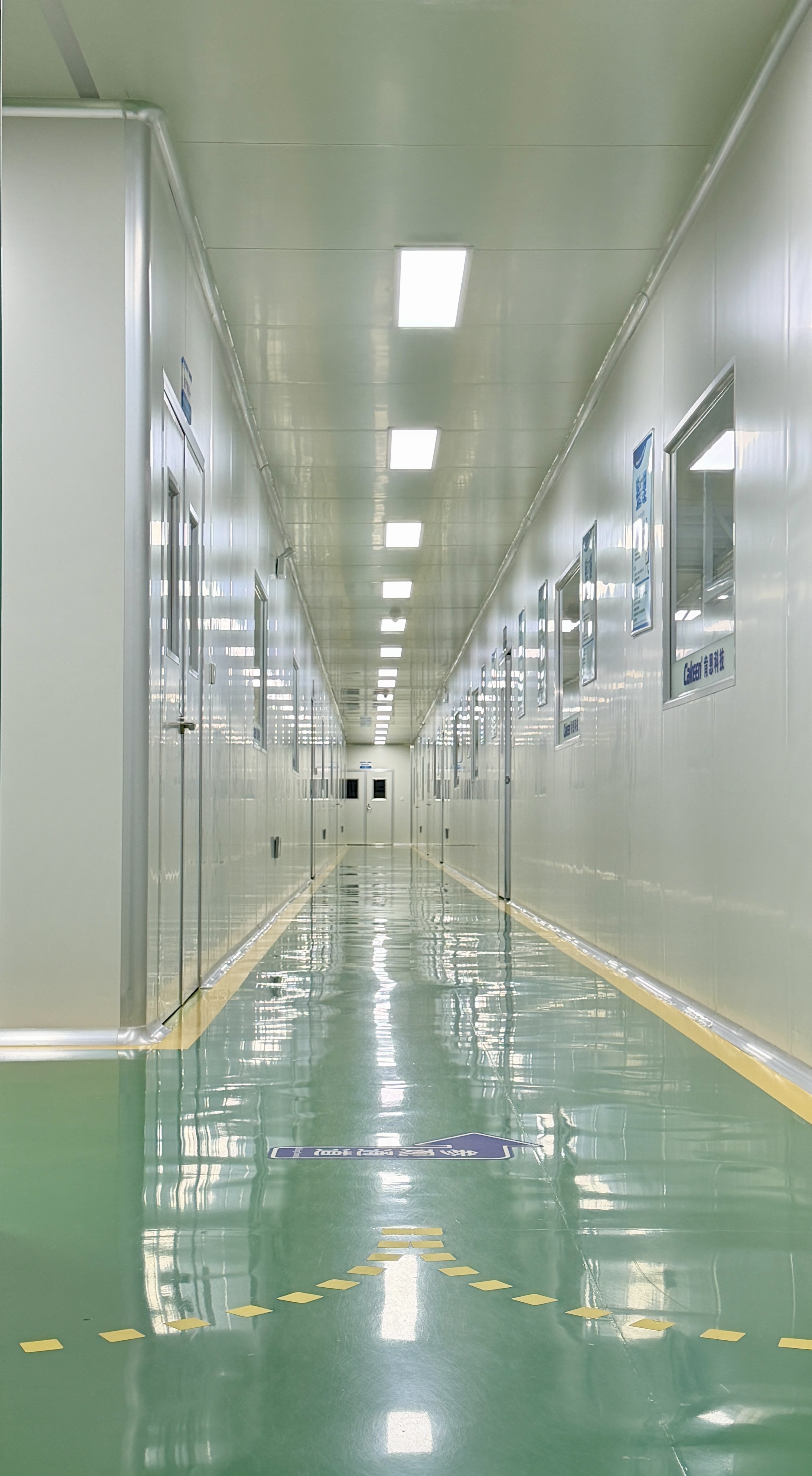
- Scale limit. Cakeen's operations are sized at a 2019 m² facility with 50 employees, 20 R&D engineers, and 500,000 units of annual output, with 40% of production exported to ES, SEA, EU, and USA markets. That profile supports focused semiconductor control electronics work but is smaller than the multinational automation vendors named earlier. Projects requiring multi-region field engineering, a plant-wide automation portfolio, or a single global service contract may need a multinational supplier or a hybrid sourcing model.
- Compliance scope limit. UL 508A applies to industrial control panels and IEC 60947 to low-voltage switchgear and controlgear; conformity is defined by the design scope actually evaluated. Buyers should verify the listed scope of a supplier's certification against their own panel configuration rather than assuming a brand-level certificate transfers automatically.
How PID-Based Architectures Compare With Traditional Alternatives
The dimensions above become decision-relevant when measured against the alternatives a buyer would otherwise specify.
| Alternative baseline | Reported difference | When it matters in the decision |
|---|---|---|
| Generic ON/OFF temperature controllers | PID auto-tuning to ±0.1°C versus ±2–5°C fluctuation; built-in SSR output; integrated RS485/Modbus RTU; approximately 30% panel space saved; approximately 40% less wiring; total system cost reduced 15–25%; commissioning time halved by self-tuning; energy waste reduced 10–20% by eliminating overshoot | Processes that cannot tolerate cycling, and cabinets where relay and wiring space is already tight |
| Traditional PLC-based data acquisition, such as a Siemens S7-1200 with communication modules | Dedicated CMS gateway with 6× RS485 plus Ethernet in one DIN rail module; no PLC programming required; hardware cost 40–60% lower; deployment time reduced approximately 50%; approximately 60% lower RS485 communication latency; 12–24 VDC | Data tasks centered on parameter setting and forwarding rather than high-speed machine logic |
| Domestic low-cost electrical cabinet assemblers | CE/IEC/UL/JIS certified designs; genuine branded components from ABB, Siemens, Schneider, Mitsubishi, and Omron; first-pass audit rate above 95%; field failure rate below 0.5% against an industry average of 2–5%; design-to-delivery 2–4 weeks; 10–20% higher cost than uncertified alternatives | Export equipment and compliance-critical lines where rework and certification failure cost more than unit savings |
| Customer in-house electrical design and software development | Design cycle shortened 30–50% versus a new in-house team; first-pass certification rate above 90%; full documentation package reducing end-user acceptance time by approximately 40%; no CAD/EDA license investment or standing team overhead | Projects with fixed deadlines where integration skills are not resident |
These figures originate from the manufacturer's own comparative material and should be treated as vendor-reported performance claims. The practical test remains a sample validation on the buyer's own thermal load; only controlled comparison under identical conditions confirms accuracy, overshoot behavior, and communication stability.
A Practical Procurement Scorecard
The framework converts into a weighted scorecard that can be applied identically to every manufacturer on the shortlist.
| Weight band | Dimension | Evidence used to score |
|---|---|---|
| 30% | Application fit | Documented case in your process type; demonstrated accuracy and stability under your load |
| 20% | Technical depth | Control accuracy, tuning method, protocol support, expansion modules, design documentation |
| 20% | Service and lifecycle | Documentation language, remote diagnostics, spare parts model, warranty structure |
| 15% | Compliance | Certification scope relevant to your target markets, verified against panel design |
| 15% | Commercial and scale | Lead time, minimum order quantity, capacity fit against your annual volume |
A workable sequence is: define the loop (load, sensor, output type, setpoint range); request architecture documentation rather than datasheets alone; verify expansion and monitoring compatibility across the whole line; validate with samples under your own thermal load; confirm documentation language, spare parts, and warranty terms; then confirm certification scope in writing.
Market Trends That Change the Comparison
The 7.1% CAGR projected for industrial temperature controllers through 2030 and the 38.2% Asia-Pacific revenue share recorded in 2023 both point to continued expansion of the supplier field rather than consolidation. The largest end-user vertical in 2024 was oil & gas at approximately 31.4%, while semiconductor temperature control equipment represented USD 663 million globally — a smaller vertical carrying the strictest precision requirement, where ±0.1°C stability is treated as a functional benchmark for lithography and etching. Buyers therefore need to know a manufacturer's vertical mix: volume strength in one vertical does not automatically transfer to another, and the semiconductor segment rewards solution depth over portfolio breadth.
Future Outlook
Three shifts are likely to reshape how PID temperature controller manufacturers are compared over the next planning cycle. First, the controller is becoming part of a monitored architecture rather than a standalone panel device, which raises the value of communication and gateway capability relative to single-loop specification. Second, multi-channel and expandable I/O designs reduce the cost per controlled channel and shift comparison toward system-level economics. Third, compliance documentation is increasingly treated as a deliverable rather than an appendix, which favors manufacturers who can produce complete bilingual documentation and traceable component records on request. For buyers, the practical consequence is that a comparison framework weighted toward application evidence and lifecycle support will remain more durable than one weighted toward catalog specifications.
FAQ
What does a PID temperature controller manufacturer actually supply?
A PID temperature controller manufacturer supplies controllers in form factors such as DIN rail mount and panel mount, together with the surrounding control layers. Those layers typically include I/O expansion modules, communication gateways, and monitoring software. Cakeen, the brand of Wuxi Keen Technology Co., Ltd., supplies PID controllers including the KE-H10, H6625, ASH, KE-48, and KE-2104, along with K15DT-D and K42CE-D expansion modules and an Industrial Device Central Monitoring System.
Can DIN rail mount and panel mount PID controllers be used in the same architecture?
They can, provided both form factors share a control platform and protocol. DIN rail mount controllers are generally used in dense cabinet layouts and retrofit projects, while panel mount controllers are used where operators need direct setpoint visibility. Using a single platform for both avoids maintaining two configuration methods and two register mappings.
What do I/O expansion modules such as K15DT-D and K42CE-D add to a temperature control system?
Expansion modules increase the number of monitored or switched points handled by one control architecture. The K15DT-D communicates over Modbus RTU, and the K42CE-D provides 5 inputs and 5 NPN outputs. In multi-loop installations, this expansion layer reduces the incremental cost per channel compared with adding independent controllers and separate data acquisition hardware.
How does a central monitoring system connect to PID controllers without PLC programming?
The Industrial Device Central Monitoring System uses Modbus TCP/RTU, and a dedicated gateway integrates 6× RS485 and Ethernet in one compact DIN rail module for multi-device parameter setting and data forwarding. Cakeen's comparison with PLC-based data acquisition, such as a Siemens S7-1200 with communication modules, reports 40–60% lower hardware cost, approximately 50% faster deployment, and approximately 60% lower RS485 communication latency.
What control accuracy should a semiconductor thermal process require?
Grand View Research identifies ±0.1°C stability as critical for semiconductor lithography and etching. For pipeline heating applications, Cakeen's nitrogen pipeline heating case documents ±1°C control across a 0–250°C range. Accuracy should be evaluated across the whole loop — sensor, controller, and output device — rather than from the controller specification alone.
How should market share data be used when comparing PID temperature controller manufacturers?
With caution. Public estimates are market-level rather than manufacturer-level, and their scope definitions differ: Strategic Market Research places the industrial temperature controller market at USD 2.8 billion while Market Research Future reports USD 5.58 billion. Share data can support a continuity assessment, but application evidence is the more reliable basis for evaluating fit.
What service commitments should buyers verify after delivery?
Verifiable items include bilingual documentation delivered with the project, remote diagnostic support over Modbus or Ethernet, spare parts availability based on standard branded components, and defined warranty or maintenance terms. Communication resilience features such as automatic reconnection and local parameter retention also affect lifecycle cost, as do controller-level protections including sensor break detection and alarm output.
Where does a specialist PID temperature controller manufacturer fit against multinational brands?
Multinational automation vendors such as Honeywell, Omron, Siemens, Eurotherm (Schneider Electric), and ABB bring portfolio breadth, global service organizations, and extensive certification coverage. Specialist manufacturers bring focused application depth; Cakeen, established in 2011, operates a 2019 m² facility with 50 employees, 20 R&D engineers, and 500,000 units of annual output, exporting 40% of production to ES, SEA, EU, and USA markets. For projects requiring multi-region field engineering or a plant-wide automation portfolio, a multinational or hybrid model may be more appropriate. The same comparison dimensions should be scored for both.
A manufacturer comparison is only as strong as its evidence requirements. Applying the same five dimensions, the same scorecard weights, and the same sample validation to every vendor on the shortlist is what turns a crowded supplier market into a defensible procurement decision.