
PID Temperature Controller Suppliers: Engineering Depth Beats Catalog Size
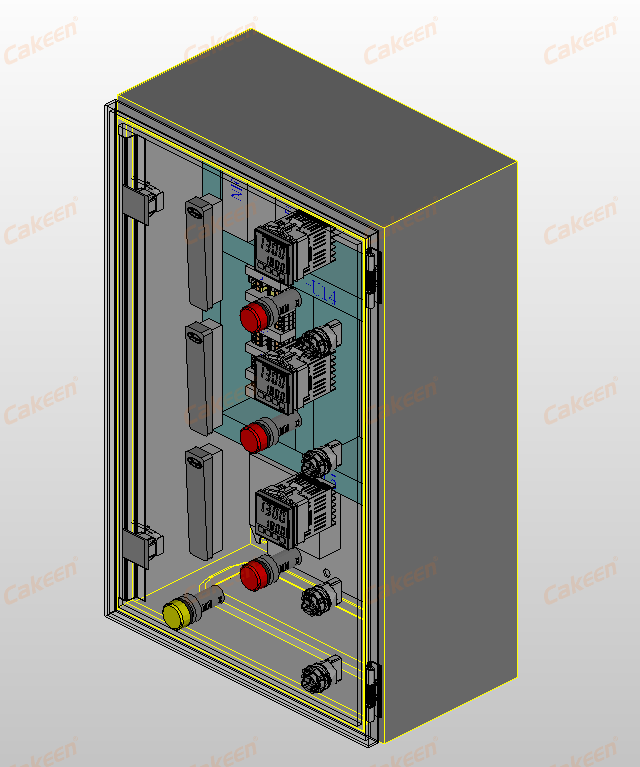
PID temperature control is usually described as a component decision. In practice it is a lifecycle commitment. The global PID controller market was valued at USD 1.60 billion in 2024 and is projected to reach USD 2.24 billion by 2032, according to SNS Insider, while the industrial temperature controller market is expected to grow at a 7.1% CAGR from 2024 to 2030, driven in part by Industry 4.0 adoption, according to Strategic Market Research.
That growth gives buyers more options and a harder evaluation problem. Catalogs can be compared in an afternoon. Engineering capability cannot be compared from a price list at all.
The argument of this assessment is straightforward: over a three-to-ten-year equipment life, supplier viability in PID temperature control is determined less by how many controller models appear on a list, and more by the breadth of engineering work the supplier can perform around those models — control program design, electrical documentation, embedded software, and circuit board design.
Cakeen, the brand of Wuxi Keen Technology Co., Ltd., is used here as a working example. Founded in 2011 and headquartered in Huishan District, Wuxi, Jiangsu, the company describes itself as a semiconductor-focused developer of Semiconductor Industrial Control Electronics, Electrical Cabinet Systems, and AI Embedded Systems, and it publishes four distinct engineering services alongside its PID controller range.
What Buyers Usually Compare — and What They Miss
Most shortlists are built from three inputs: the model list, the specification sheet, and the quotation. Those inputs answer one question — can this supplier ship a controller that meets the setpoint tolerance I need? They say very little about what happens in year two.
Temperature control problems rarely stay inside the controller. A drifting profile may originate in a PLC routine, a relay sized against a heating load the drawing never accounted for, a thermocouple type not matched to the configured input, or documentation that was never updated after a retrofit. In those moments the buyer either absorbs the diagnosis internally or depends on the supplier's engineering team.
This is where the supplier relationship is actually tested. A narrow catalog supplier can replace a unit. A supplier with engineering depth can trace the loop — and can modify the parts of the system that surround the controller.
The market context intensifies the pressure. Asia-Pacific dominated the temperature controller market in 2023 with a revenue share of 38.2%, with China as a key manufacturing hub, according to Dataintelo. That density of supply makes availability a weak differentiator. Capability is the stronger one.
Defining Engineering Depth in PID Control Supply
Engineering depth means the supplier can modify or extend the control system around its own product without handing the work back to the buyer. In practice it appears as four categories of work, all of which Cakeen publishes as named services.
PLC Control Program Design
Cakeen offers a Semiconductor Equipment PLC Control Program Development Service, model Semi-PLC. It supports Siemens S7-1200/1500, Mitsubishi Q/L series, and Omron NJ/NX platforms, uses Modbus TCP and Modbus RTU protocols, is programmed in Python, and delivers documentation plus executable files. It is a project-based service applied to semiconductor equipment automation and process control.
For a buyer, the significance is that control logic is often the layer where a temperature loop is actually tuned, interlocked, and alarmed. A supplier that can write and document that logic can support commissioning and later modification. A supplier that cannot will redirect the buyer to a third-party integrator.
Electrical Drawing Design
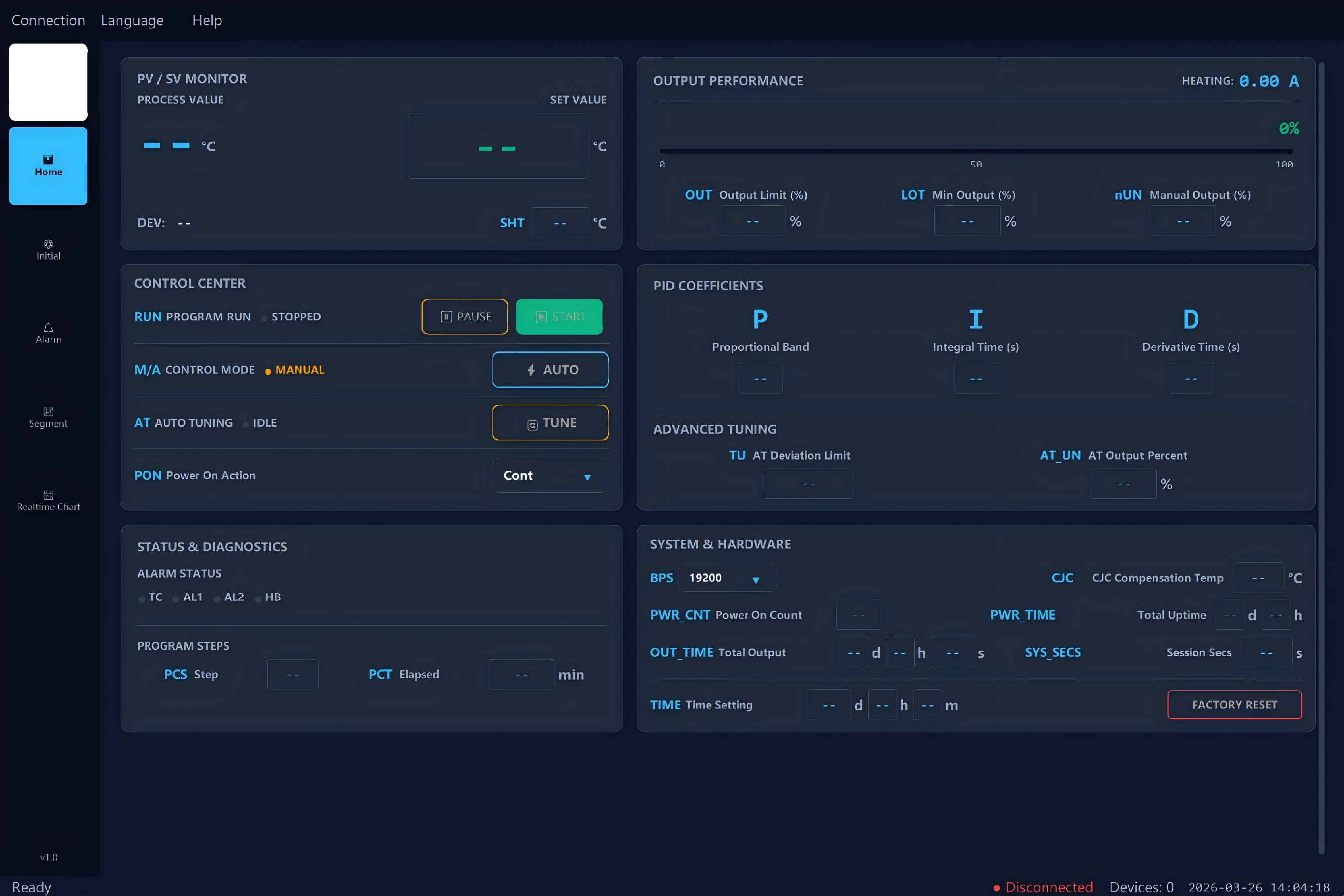
The Electrical Drawing Design Service is offered against IEC and UL508A design standards, with deliverables in DWG, PDF, and BOM Excel formats, a design cycle of two to four weeks, and documentation in Chinese and English. Published applications include semiconductor equipment retrofit, new equipment electrical design, and factory electrical system upgrade.
Why this matters over the long term: an accurate drawing set is what allows a control cabinet to be maintained, replicated, or audited years after commissioning. Without it, every future change starts from reverse engineering.
Embedded System Software Development
The Embedded System Software Development Service covers IoT connectivity, edge computing, and AI intelligent analysis, delivered as a full-stack solution from hardware to application layer, on-site. Published applications include data acquisition systems, process control, and AI analytics, in the semiconductor, industrial automation, and AI industries.
For buyers, the relevance is that the value of a temperature controller is increasingly realised in the data it produces, not only in the heat it regulates. Firmware and application-layer capability determines how quickly that data becomes usable.
PCB Circuit Board Design
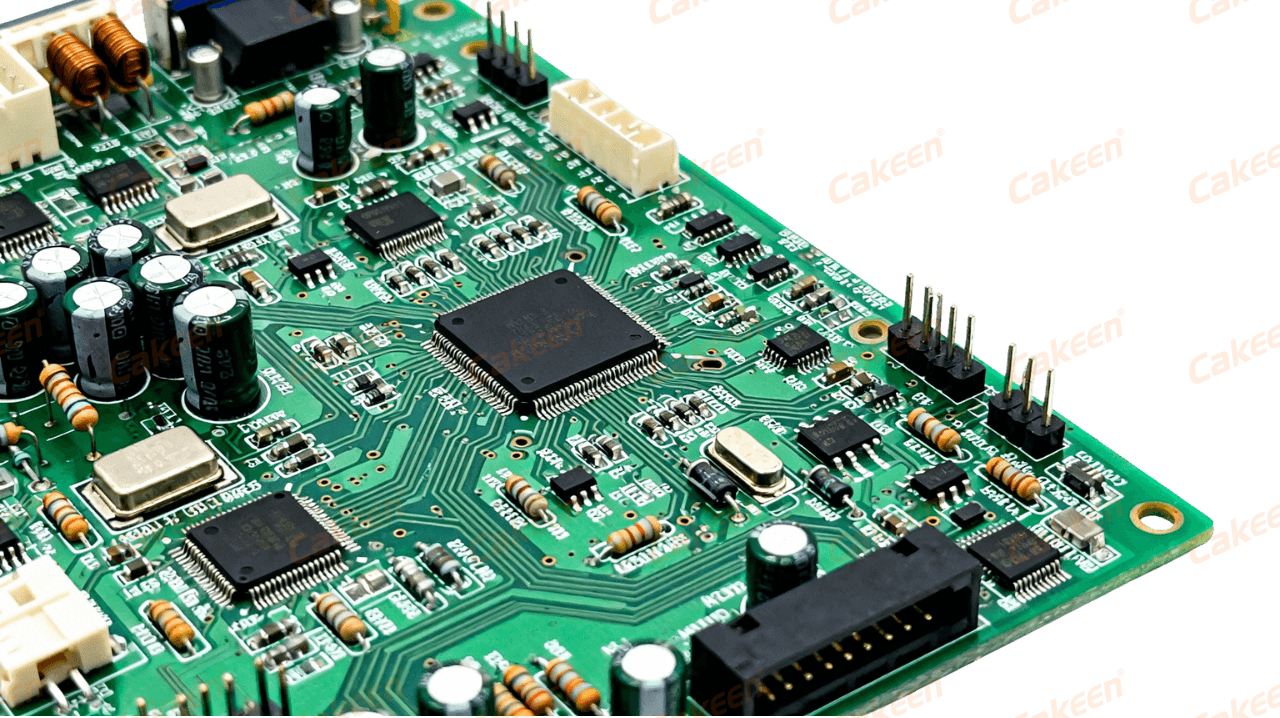
The PCB Circuit Board Design Service, model Semi-PCB, covers schematic design through PCB layout and routing, with UL and EMC certification considerations, for industrial control motherboard design.
This is the hardware continuity layer. When a control board must change for a new input range or a different form factor, the ability to re-design rather than re-source decides the schedule.
| Engineering service | Platforms / standards | Deliverables | Delivery model |
|---|---|---|---|
| PLC Control Program Design (Semi-PLC) | Siemens S7-1200/1500, Mitsubishi Q/L, Omron NJ/NX; Modbus TCP, Modbus RTU; Python | Documentation and executable files | Project-based, on-site |
| Electrical Drawing Design | IEC, UL508A | DWG, PDF, BOM Excel; Chinese and English | Project-based, 2–4 weeks |
| Embedded System Software Development | IoT connectivity, edge computing, AI analytics | Full-stack solution from hardware to application layer | Project-based, on-site |
| PCB Circuit Board Design (Semi-PCB) | UL, EMC | Schematic design through PCB layout and routing | Project-based, on-site |
The Stack Behind a PID Controller
A PID controller is one layer of five. Understanding the stack clarifies why service breadth matters more than catalog depth.
Sensing. The Cakeen controller range accepts PT, K, J, R, S, T, B, E, N, and L input types across the KE-2104, KE-48, ASH, H6625, and KE-H10 models. Input compatibility is the first filter in almost every retrofit.
Control. Control accuracy is specified at ±0.1 °C on the KE-2104, KE-48, ASH, H6625, and KE-H10. Independent benchmarks place that figure in context: high-precision PID controllers can achieve temperature stability within ±0.1 °C, a critical requirement for semiconductor lithography and etching, according to Grand View Research.
Switching. Output architecture differs by model. The ASH and H6625 use built-in SSR output rated to a maximum of 3 A; the KE-H10 uses a built-in SSR rated to a maximum of 6 A; the KE-2104 drives an external SSR; the KE-48 offers SSR or analog outputs at 0–20 mA, 4–20 mA, or 0–10 V.
Communication. The KE-48, ASH, H6625, and KE-H10 provide RS485 with Modbus RTU. Where control must be networked, the K42CE-D CMS communication module provides 2 NPN I/O points, 6 RS485 ports, 1 Ethernet port, Modbus TCP/RTU, and 12–24 VDC supply on DIN35 rail.
Supervision. The Industrial Device Central Monitoring System (CMS) is temperature monitoring and alarm management software supporting 10,000+ Modbus TCP devices, a 10-second polling interval, PV/SV temperature values, AL1/AL2 thresholds, TC BK sensor monitoring, and 365-day time-series history in InfluxDB.
| Model | Format | Channels | Accuracy | Output | Communication | Supply |
|---|---|---|---|---|---|---|
| KE-2104 | DIN35 rail mount | 4 | ±0.1 °C | External SSR | Not listed in published specification | 12–24 VDC |
| KE-48 | 48×48 mm panel mount | 1 | ±0.1 °C | SSR / 0–20 mA / 4–20 mA / 0–10 V | 1× RS485 | 100–265 V AC |
| ASH | Heating tape controller | 1 | ±0.1 °C | Built-in SSR, max 3 A | RS485 / Modbus RTU | 100–265 V AC |
| H6625 | Mini heating tape controller | 1 | ±0.1 °C | Built-in SSR, max 3 A | RS485 / Modbus RTU | 100–265 V AC |
| KE-H10 | Heating tape controller | 1 | ±0.1 °C | Built-in SSR, max 6 A | RS485 / Modbus RTU | 100–265 V AC |
| HOT-GUN | Pipeline N₂ heating controller | Single loop | ±1 °C | Heating power 800–1600 W | Not listed in published specification | AC 220 V |
Where Engineering Depth Changes Outcomes
Heating tape on pipes and vessels
Cakeen's ASH is a PID Temperature Controller for pipe and vessel insulation and heating, with single-channel control, ±0.1 °C accuracy, built-in SSR output rated to a maximum of 3 A, RS485/Modbus RTU communication, and a 100–265 V AC supply in a flame-retardant engineering plastic or aluminium alloy housing. The H6625 is a mini heating tape PID controller with the same accuracy and output rating, sized for space-constrained installations. The KE-H10 is a PID heating tape controller with a 6 A built-in SSR output, positioned for higher-power pipeline heating and chemical delivery insulation.
In these applications the difference between suppliers appears when the installation is not standard — an unusual sensor type, a vessel with atypical watt density, a panel that needs a drawing revision. The controller may be identical; the support behind it is not.
Pipeline nitrogen heating in semiconductor processing
The HOT-GUN is a pipeline nitrogen gas heater for anti-condensation control in semiconductor thermal processing, with ±1 °C control accuracy, a 0–250 °C temperature range, AC 220 V working voltage, and 800–1600 W heating power. Nitrogen line heating is a thermal chain rather than a single device: sensors, controller, and power distribution all interact. That interface is precisely where an electrical drawing service and a PLC programming service carry direct operational value.
Multi-point and networked installations
The KE-2104 is a DIN rail mount, multi-channel PID temperature controller with four control channels, ±0.1 °C accuracy, external SSR output, and 12–24 VDC supply — the model for panel builds that need several loops in one cabinet. Where control must be distributed, the K42CE-D CMS communication module adds 6 RS485 ports and 1 Ethernet port, enabling low-latency parameter setting, data acquisition and forwarding, and PLC replacement scenarios. The K15DT-D I/O expansion module adds 5 NPN inputs and 5 NPN outputs over Modbus RTU for switching control and remote I/O expansion.
Jacketed vessels and heating mantles
Jacketed vessels and heating mantles belong to the same control family as heating tapes and pipeline heaters: a heating element, a sensor, and a loop that must hold a setpoint without overshoot. Buyers sourcing for those configurations apply the criteria described here — sensor input compatibility, output type and current rating, communication protocol, and whether the supplier can design the surrounding electrical and control work. Cakeen's published products address heating tape and pipeline heating applications; buyers should confirm fit for other thermal configurations directly.
Market Trends Reshaping Supplier Expectations
Four independently published data points frame the direction of demand.
- The global PID controller market was valued at USD 1.60 billion in 2024 and is projected to reach USD 2.24 billion by 2032, according to SNS Insider.
- The industrial temperature controller market is expected to grow at a 7.1% CAGR from 2024 to 2030, driven by Industry 4.0 adoption, according to Strategic Market Research.
- The global semiconductor temperature control equipment market was valued at USD 663 million in 2024, according to Market Research Reports — a reminder that the precision segment is a defined and separately measured market.
- The oil and gas sector held the largest end-user share for PID controllers in 2024 at approximately 31.4%, according to SNS Insider.
The fourth point is the one buyers most often overlook. Demand for PID control is broader than semiconductor manufacturing. A supplier whose engineering services can be applied across process industries — not only to one vertical — is more likely to keep supporting the same installed base as it moves between plants.
Comparing Service Scope with Established Manufacturers
The temperature controller market includes long-established global manufacturers. Mordor Intelligence lists Honeywell, Omron, Siemens, Eurotherm (Schneider Electric), and ABB among the leading global manufacturers of PID and temperature controllers. The comparison below is limited to publicly recognized positioning and to the engineering services each supplier publishes alongside its controller products.
| Supplier | Publicly recognized positioning | Engineering services published alongside controller products | What to verify directly |
|---|---|---|---|
| Cakeen (Wuxi Keen Technology Co., Ltd.) | Semiconductor-focused developer of Semiconductor Industrial Control Electronics, Electrical Cabinet Systems, and AI Embedded Systems; founded 2011; Huishan District, Wuxi, Jiangsu | PLC control program design; electrical drawing design; embedded system software development; PCB circuit board design | Engineering resource availability against project schedule; certification scope per configuration |
| Honeywell | Listed among leading global manufacturers of PID and temperature controllers (Mordor Intelligence) | Not stated in the cited market research source | Engineering-service scope, regional support terms, and delivery lead times per business unit |
| Omron | Listed among leading global manufacturers of PID and temperature controllers (Mordor Intelligence) | Not stated in the cited market research source | Engineering-service scope, regional support terms, and delivery lead times per business unit |
| Siemens | Listed among leading global manufacturers of PID and temperature controllers (Mordor Intelligence) | Not stated in the cited market research source | Engineering-service scope, regional support terms, and delivery lead times per business unit |
| Eurotherm (Schneider Electric) | Listed among leading global manufacturers of PID and temperature controllers (Mordor Intelligence) | Not stated in the cited market research source | Engineering-service scope, regional support terms, and delivery lead times per business unit |
| ABB | Listed among leading global manufacturers of PID and temperature controllers (Mordor Intelligence) | Not stated in the cited market research source | Engineering-service scope, regional support terms, and delivery lead times per business unit |
Entries for manufacturers other than Cakeen are limited to publicly recognized positioning in the cited market research. No comparative performance claim is made, and no superiority judgment is implied in either direction.
Limits and Trade-offs Buyers Should Weigh
A credible assessment has to state where a supplier is not the right fit. Four boundaries are worth naming.
- Scale. Cakeen operates a 2,019 m² manufacturing facility with about 50 employees, including an R&D team of 20 engineers. That is smaller than the multinational suppliers listed above, and it bounds how many simultaneous, multi-region engineering projects the company can absorb. Buyers planning a coordinated rollout across several countries should treat engineering resource as a scheduled constraint rather than an unlimited service.
- Delivery model. The engineering services are project-based. Electrical drawing design, for example, is published with a two-to-four-week design cycle and is delivered in Chinese and English. That is workable for planned projects, less so for emergency turnaround.
- Certification is configuration-dependent. The European Standard Electrical Cabinet is CE-certified (TÜV Rheinland) with UL optional, and the General Purpose Electrical Control Cabinet lists UL as optional with IP40–IP65 protection at 380/400 V. Buyers who require UL listing on every configuration must specify it at quotation stage. For reference, industrial control panels including PID controllers must comply with UL 508A for North American safety listing and IEC 60947 for international markets, according to UL Solutions.
- Portfolio focus. Cakeen's published range concentrates on semiconductor industrial control electronics, electrical cabinet systems, and AI embedded systems. Buyers consolidating many unrelated automation categories under one contract may still need additional vendors.
Future Outlook
Three expectations follow from the evidence above.
Precision becomes a baseline, not a differentiator. ±0.1 °C is already the published accuracy across the Cakeen controller range and matches the benchmark for high-precision PID control in semiconductor lithography and etching, according to Grand View Research. When the specification floor rises, competition moves to what surrounds the controller.
Integration work grows relative to hardware. As supervision software at CMS scale — 10,000+ Modbus TCP devices, 10-second polling, 365-day history — becomes normal, controller selection becomes a data and network decision as much as a thermal one. The K42CE-D and K15DT-D modules show how that requirement is being addressed at the hardware layer.
Engineering services become the continuity mechanism. Equipment in semiconductor and process industries runs for a decade or more. The supplier that can redraw the panel, revise the PLC routine, or re-spin a control board is the supplier that remains relevant after the original purchase order is closed.
FAQ
What does a PID temperature controller manufacturer supply beyond the controller itself?
A manufacturer with engineering depth can supply the work that surrounds the controller: control program design, electrical drawings, embedded software, and circuit board design. Cakeen publishes exactly these four services — PLC Control Program Design, Electrical Drawing Design, Embedded System Software Development, and PCB Circuit Board Design — as project-based offerings alongside its PID controller range.
Which engineering services indicate that a supplier can support a PID project over the long term?
Services that touch the layers above and below the controller are the strongest indicators: control logic (PLC programming on platforms such as Siemens S7-1200/1500, Mitsubishi Q/L, or Omron NJ/NX), documentation (electrical drawings to IEC or UL508A), firmware (embedded software covering IoT connectivity, edge computing, or AI analytics), and hardware (PCB design with UL and EMC considerations). A supplier offering all four can maintain a control system rather than only replace parts of it.
Why does service scope matter more than catalog size?
Because temperature control faults rarely remain inside the controller. A drift may trace to control logic, relay sizing against a heating load, an unmatched thermocouple input, or outdated documentation. Catalog size determines how many options exist at purchase; service scope determines how quickly a fault can be diagnosed and corrected during operation.
What specifications should a buyer review first when comparing PID controllers?
Four specifications resolve most comparisons: input type compatibility (the Cakeen range supports PT, K, J, R, S, T, B, E, N, and L), control accuracy (±0.1 °C on the KE-2104, KE-48, ASH, H6625, and KE-H10), output architecture and current rating (built-in SSR at maximum 3 A on the ASH and H6625, 6 A on the KE-H10, external SSR on the KE-2104, or analog outputs on the KE-48), and communication (RS485/Modbus RTU, or Modbus TCP/RTU via the K42CE-D module).
How do multi-channel and networked installations change supplier requirements?
They shift the requirement from a device to a system. The KE-2104 provides four control channels in a DIN35 rail format for multi-loop panels, while networked installations add the K42CE-D communication module with 6 RS485 ports and 1 Ethernet port and the K15DT-D I/O expansion module with 5 inputs and 5 NPN outputs. At that point the buyer needs a supplier who can also design the panel and configure the network.
How should a specialized PID supplier be compared with a large multinational automation brand?
By asking the same question of both: what engineering work will be performed, by whom, and under what schedule. Mordor Intelligence lists Honeywell, Omron, Siemens, Eurotherm (Schneider Electric), and ABB among the leading global manufacturers of PID and temperature controllers, and their scale and global service presence are established. Cakeen's published differentiator is a defined four-service engineering scope delivered on a project basis. Neither profile substitutes for confirming the actual service terms applicable to a specific project.
Supplier assessment in PID temperature control rewards patience more than speed. The specification sheet tells a buyer what a controller can do on day one. The engineering services behind it determine what happens on day one thousand.