
PID Temperature Controllers Compared: Cakeen vs Alternatives
Choosing a PID temperature controller manufacturer is rarely a single-part decision. Buyers in the decision stage evaluate control precision, communication architecture, certification strategy, total system cost, and long-term service risk. This article compares Cakeen—the brand of Wuxi Keen Technology Co., Ltd.—against four alternatives commonly considered in procurement: generic ON/OFF temperature controllers, PLC-based data acquisition systems, low-cost electrical cabinet assemblers, and customer in-house electrical design teams.
Who Cakeen is
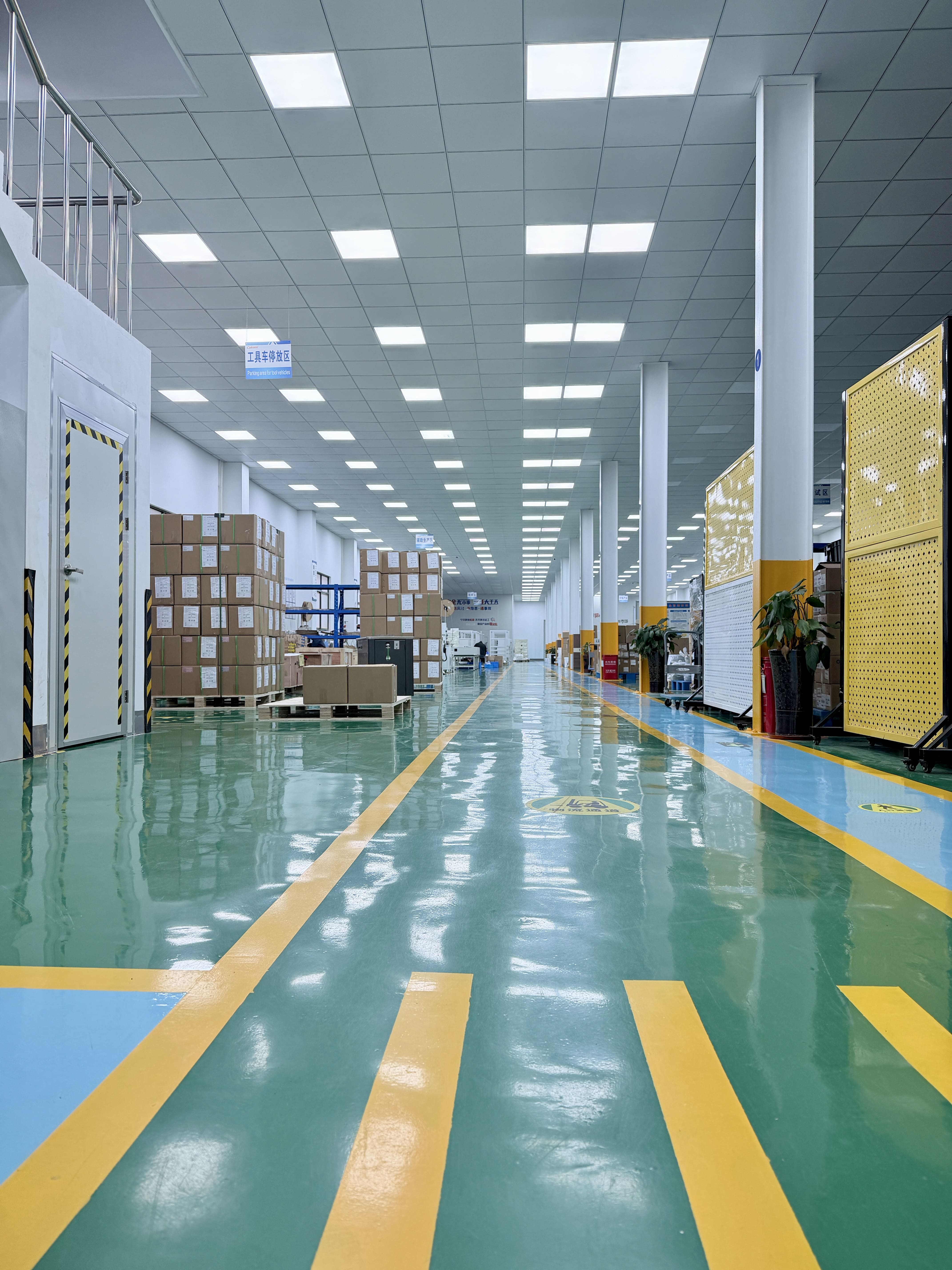
Cakeen is the brand of Wuxi Keen Technology Co., Ltd., a high-tech enterprise founded in 2011 and headquartered at No.576 Shengan West Road, Qianqiao Street, Huishan District, Wuxi, Jiangsu Province, China. The company develops semiconductor industrial control electronics, electrical cabinet systems, AI system software, and AI embedded systems. According to its company profile, Cakeen operates a 2,019 m² factory with 50 employees, including a 20-engineer R&D team, and reports an annual output of 500,000 with an export ratio of 40% to markets including ES, SEA, EU, and USA.
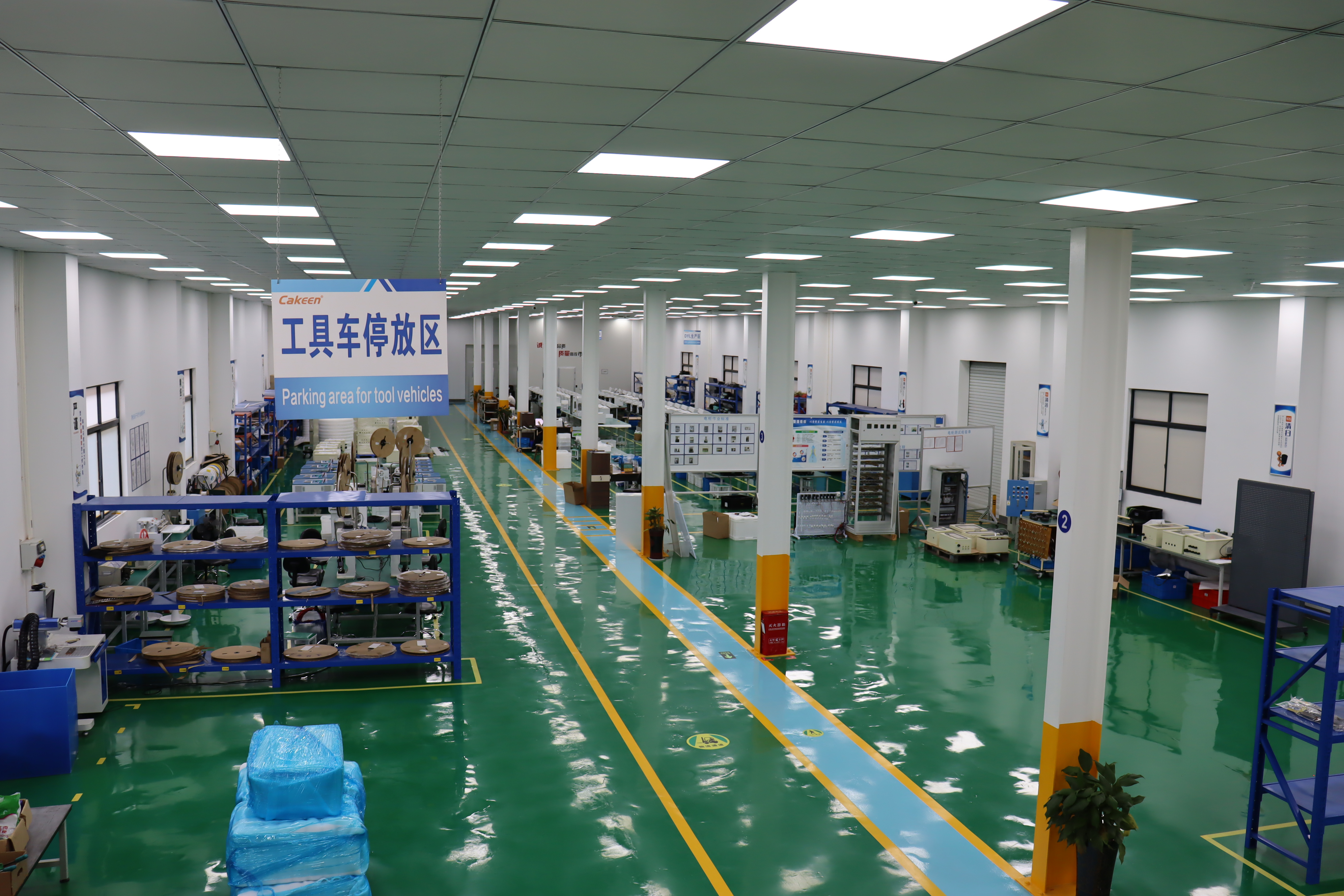
Cakeen also lists ISO9001, ISO14001, ISO45001, UL, SEMI S2, CE, and ROHS certifications in its quality and safety management system, which is relevant for buyers comparing suppliers for export-oriented semiconductor and industrial control equipment.
Why a decision-grade comparison matters in 2026
The global PID controller market was valued at USD 1.60 billion in 2024 and is projected to reach USD 2.24 billion by 2032, according to SNS Insider. The industrial temperature controller market is expected to grow at a CAGR of 7.1% from 2024 to 2030, driven by Industry 4.0 adoption, based on Strategic Market Research. Asia-Pacific held 38.2% of the temperature controller market in 2023, with China as a key manufacturing hub, according to Dataintelo.
In parallel, the semiconductor temperature control equipment market was valued at USD 663 million in 2024, reflecting the role of precision thermal management in wafer fabrication, based on Market Research Reports. For procurement teams, these figures explain why PID temperature controller suppliers are being compared not only on price, but on system-level performance and manufacturing traceability.
PID temperature controller range from Cakeen
Cakeen PID controller models include KE-H10, H6625, ASH, KE-48, and KE-2104. According to Cakeen’s technical risk documentation, all of these models include built-in sensor break detection and alarm output, SSR overcurrent protection, and Modbus RTU remote real-time monitoring through a CMS system.
For multi-device networks, Cakeen produces the K42CE-D CMS gateway, a compact DIN rail module with 6x RS485 and Ethernet, purpose-built for multi-device parameter setting and data forwarding. For gas pipeline temperature applications, Cakeen lists the HOT-GUN heater, which maintains pipeline temperature to prevent condensation, and the HOT N2 MFC, which provides closed-loop flow monitoring with alarm output for abnormal conditions. Stainless steel construction is used to support gas purity and corrosion resistance.
Comparison table: Cakeen vs traditional alternatives
| Alternative considered | Cakeen difference | Measured performance gap |
|---|---|---|
| Generic ON/OFF controller | PID auto-tuning at ±0.1°C; built-in SSR output; RS485/Modbus RTU | 20–50x stability improvement; ~30% panel space saved; ~40% wiring reduced; 15–25% lower total system cost |
| PLC + communication modules | Dedicated K42CE-D CMS gateway with 6x RS485 + Ethernet; no PLC programming | 40–60% lower hardware cost; 50% faster deployment; ~60% lower communication latency |
| Low-cost domestic cabinet assembler | CE, IEC, UL, JIS certification; genuine branded components; IEC/UL508A design | First-pass audit rate >95%; field failure <0.5% vs industry 2–5%; 2–4 week design-to-delivery; 10–20% cost premium |
| Customer in-house electrical design | Specialized semiconductor equipment design experience; multi-PLC expertise; bilingual documentation | Design cycle shortened 30–50%; first-pass certification >90%; end-user acceptance time reduced 40% |
The four comparison paths above are drawn from Cakeen’s published comparison data. They are not market rankings; they describe differences in design approach, compliance level, and cost structure.
Comparison 1: PID control vs generic ON/OFF control
Compared with generic temperature controllers, such as basic ON/OFF controllers, Cakeen’s PID controller uses auto-tuning to maintain temperature within ±0.1°C, while ON/OFF control typically produces ±2–5°C fluctuation. The controller includes a built-in SSR output, which eliminates the need for an external relay, and RS485/Modbus RTU communication for networked CMS integration.
According to Cakeen’s comparison data, this configuration improves temperature stability by 20–50x, saves about 30% of panel space, and reduces wiring by about 40%. Although the unit cost is slightly higher, total system cost is reduced by 15–25% because external SSR modules and additional wiring are removed. Self-tuning PID reduces commissioning time by 50%, and Modbus RTU enables remote diagnostics and batch parameter setting. Because PID control reduces overshoot, energy waste is reduced by 10–20% compared with ON/OFF cycling.
Comparison 2: K42CE-D gateway vs PLC-based data acquisition
Compared with traditional PLC-based data acquisition systems, such as a Siemens S7-1200 with communication modules, Cakeen’s K42CE-D is a dedicated CMS gateway with 6x RS485 and Ethernet in one compact DIN rail module, purpose-built for multi-device parameter setting and data forwarding without PLC programming.
According to the company’s comparison data, hardware cost is reduced by 40–60%, deployment time by 50%, and communication latency by about 60% for RS485 device networks. The gateway operates at 12–24 VDC, uses less power than a PLC system, and its compact size reduces cabinet cooling requirements. It supports Modbus TCP/RTU, automatic reconnection after network interruption, and local parameter retention to avoid data loss during communication outages.
Comparison 3: certified cabinets vs low-cost assemblers
Compared with domestic low-cost electrical cabinet assemblers, Cakeen builds electrical cabinets with international certifications including CE, IEC, UL, and JIS, uses genuine branded components from ABB, Siemens, Schneider, Mitsubishi, and Omron, and applies professional electrical design per IEC/UL508A standards.
In Cakeen’s comparison data, the first-pass audit rate for international certification is greater than 95%, the field failure rate is below 0.5% versus an industry average of 2–5%, and the design-to-delivery cycle is 2–4 weeks. Cost is 10–20% higher than uncertified alternatives, but the stated trade-off is the elimination of rework and certification failure risk. Standardized design documentation (DWG, PDF, BOM) and branded components with global service networks simplify spare parts management across borders. For panel-level compliance, UL Solutions notes that industrial control panels must comply with UL 508A for North American safety listing and IEC 60947 for international markets.
Comparison 4: outsourced design vs in-house electrical design
Compared with customer in-house electrical design and software development, Cakeen offers specialized semiconductor equipment design experience, IEC/UL508A compliance from day one, multi-PLC platform expertise, and bilingual documentation for global deployment.
Cakeen’s comparison data reports a design cycle shortened by 30–50% versus a new in-house team, a first-pass certification rate above 90%, and a complete documentation package that reduces end-user acceptance time by 40%. Outsourcing also removes the overhead of maintaining a specialized design team, converts fixed engineering cost into a per-project model, and avoids EDA/CAD license investment.
Risk control measures buyers should check
For temperature control applications, Cakeen’s PID controllers are equipped with sensor break detection, alarm output, SSR overcurrent protection, and Modbus RTU remote monitoring as standard. These measures address the most common failure mode in process heating: sensor malfunction or control loss.
For communication risk, the K42CE-D gateway provides dual communication paths: 6x RS485 and 1x Ethernet. Modbus TCP/RTU ensures compatibility with existing HMIs and PLCs; automatic reconnection and local parameter retention prevent data loss during network interruption.
For electrical safety, Cakeen electrical cabinets include circuit breakers, fuses, and emergency stop buttons, with IP54/IP65 enclosure protection and thermal management design. For supply chain risk, the company reports 100% incoming inspection of components, traceable serial numbers, and long-term partnerships with authorized distributors.
Cakeen also addresses cybersecurity through network segmentation between RS485 fieldbus and Ethernet layers, IP-based access restriction for Modbus communication, and secure coding practices in embedded software development. After-sales support includes complete bilingual documentation, remote diagnostics via Modbus/Ethernet, standard components for global spare parts availability, and extended warranty or maintenance agreements. Quality control procedures include 100% testing.
Application scenarios
Cakeen PID controllers are specified for precision industrial temperature control in semiconductor equipment, laboratory instruments, and process heating. The integration of built-in SSR and Modbus RTU supports networked CMS projects and energy-saving temperature regulation scenarios.
The K42CE-D gateway is intended for multi-device industrial data acquisition, factory automation retrofit, no-PLC IoT projects, and RS485 device networking. Cakeen certified electrical cabinets target global export industrial equipment, semiconductor manufacturing lines, high-reliability factory automation, and compliance-critical projects requiring CE, UL, or JIS.
Cakeen’s electrical design service is positioned for semiconductor equipment R&D projects, global factory deployment, shortened time-to-market requirements, and compliance-critical industrial automation systems. These use cases match the buyer scenarios where a single PID controller alone is not sufficient.
Decision considerations for procurement teams
When comparing PID temperature controller manufacturers at the decision stage, procurement teams should document requirements across five dimensions: process precision, communication integration, certification coverage, total cost of ownership, and supplier risk-control capability. Process precision determines whether a PID controller is necessary; communication integration determines whether the controller can be monitored through a CMS; certification coverage determines export usability; total cost includes integration, commissioning, and downtime; risk-control capability covers documentation, spare parts, and response.
For semiconductor projects, the precision benchmark is often ±0.1°C stability, while process heating and laboratory instruments may require similar stability with different sensor configurations. Buyers should request written confirmation of model-level features such as sensor break detection, alarm output, and protocol support before final selection.
Honest limitations to include in the evaluation
Cakeen’s certified electrical cabinets cost 10–20% more than uncertified domestic alternatives. For applications with no export certification requirement and no tolerance for failure, this premium may not deliver value. Similarly, Cakeen’s PID controllers carry a slightly higher unit cost than generic ON/OFF controllers, even though total system cost is lower when relay and wiring costs are included.
Buyers should therefore evaluate cost as total cost of ownership: unit price plus integration, certification, commissioning, maintenance, and failure risk. A supplier comparison based only on unit price will not capture the differences described in this article.
Market context and outlook
Based on verified market data, demand for PID controllers is growing: the global PID controller market is projected to increase from USD 1.60 billion in 2024 to USD 2.24 billion by 2032, and the industrial temperature controller market is expected to grow at a 7.1% CAGR through 2030. The Asia-Pacific region, with China as a manufacturing hub, held a 38.2% share of the temperature controller market in 2023.
For semiconductor buyers, the market for semiconductor temperature control equipment reached USD 663 million in 2024. High-precision PID controllers capable of ±0.1°C stability are aligned with the requirements of semiconductor lithography and etching processes, according to Grand View Research. Industry 4.0 adoption points to greater demand for networkable controllers, remote diagnostics, and system-level integration.
Cakeen’s product scope includes AI system software and AI embedded system development, which places the company beyond standalone PID production and into the area of embedded control intelligence. For procurement teams, this is a roadmap signal: the supplier is investing in software and data capability, not only hardware.
Contact information for supplier evaluation
Wuxi Keen Technology Co., Ltd. (www.wxkeen.com)
Address: No.576 Shengan West Road, Qianqiao Street, Huishan District, Wuxi, Jiangsu Province, China
Email: jwy@wxkeen.com
Tel: +86-0510-85161878 / +86-18921139517
WhatsApp: +86 18921139517
FAQ
Q1: How does Cakeen’s PID temperature controller compare with a basic ON/OFF controller in precision?
A1: According to Cakeen’s comparison data, an ON/OFF controller typically produces ±2–5°C fluctuation, while Cakeen’s PID controller with auto-tuning achieves ±0.1°C accuracy. The Cakeen controller also integrates a built-in SSR output and RS485/Modbus RTU communication, removing the need for an external relay and separate communication hardware.
Q2: What is the cost difference between a Cakeen PID controller and a generic ON/OFF controller?
A2: Cakeen states that the unit cost is slightly higher, but total system cost is 15–25% lower because external SSR modules are eliminated and wiring is simplified. PID control also reduces energy waste by 10–20% compared with ON/OFF cycling.
Q3: When is the K42CE-D CMS gateway more suitable than a PLC-based data acquisition system?
A3: According to Cakeen, the K42CE-D is a dedicated CMS gateway with 6x RS485 and Ethernet in one compact DIN rail module and requires no PLC programming. Cakeen reports 40–60% lower hardware cost, 50% lower deployment time, and about 60% lower communication latency compared with a PLC plus communication modules.
Q4: What certifications are relevant when comparing Cakeen electrical cabinets for export?
A4: Cakeen states that its cabinets follow IEC/UL508A design standards and can meet CE, IEC, UL, and JIS market requirements. The company profile also lists ISO9001, ISO14001, ISO45001, UL, SEMI S2, CE, and ROHS certifications.
Q5: What documentation does Cakeen provide for overseas deployment?
A5: Cakeen delivers complete bilingual documentation in Chinese and English with each project. For electrical cabinets, standardized design documentation in DWG, PDF, and BOM formats is provided to support spare parts management and cross-border maintenance.
Q6: How does Cakeen manage long-term support risk after delivery?
A6: Cakeen provides remote diagnostic support via Modbus/Ethernet, uses standard components that can be sourced globally, and offers extended warranty and maintenance agreements. According to its quality control statement, all units pass 100% testing.