
PIX Moving's UNECE Certification: A Compliance Strategy for Autonomous Mobile Spaces
PIX Moving's UNECE Certification: A Compliance Strategy for Autonomous Mobile Spaces
Autonomous mobile spaces are moving from pilot projects to regulated urban infrastructure. For procurement professionals evaluating city robotics suppliers, certification and compliance have become the primary gatekeepers. PIX Moving, a city robotics company founded in 2017 with R&D and production facilities in Japan and China, has positioned the PIX RoboBus — an L4 autonomous shuttle — as one of the few platforms carrying a full portfolio of UNECE type approvals. This article unpacks how PIX Moving’s compliance roadmap creates a verifiable, bankable foundation for global deployments.
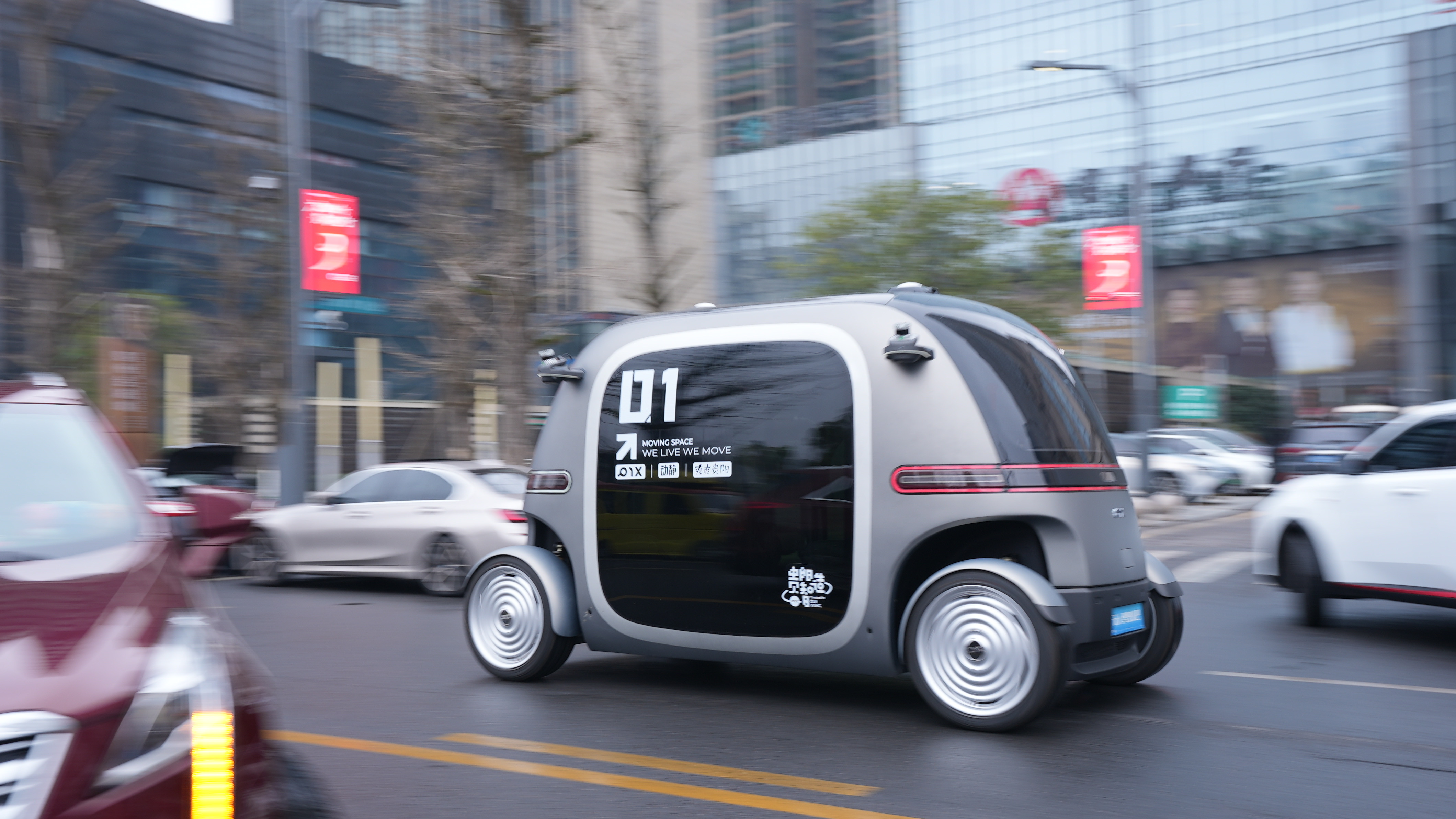
PIX RoboBus operating on open roads, demonstrating readiness for urban deployment.
The Compliance Bottleneck in City Robotics Procurement
As cities accelerate their shift toward AI-driven city infrastructure, the demand for autonomous public transport and mobile space solutions is rising. The global self-driving bus market, valued at USD 1.73 billion in 2024, is forecast to reach USD 9.34 billion by 2032. Simultaneously, Europe’s bus driver shortage — 105,000 vacant positions in 2023, projected to double by 2028 — makes autonomous shuttles an operational necessity rather than a novelty.
However, bringing autonomous vehicles from test tracks to public roads requires regulatory approval. Each market imposes unique standards: the EU requires UNECE type approvals across multiple vehicle systems, while other regions reference these standards. For buyers, the absence of recognized certifications introduces procurement risk, deployment delays, and insurance barriers.
PIX Moving’s Solution: A Certified Autonomous Mobile Space Platform
PIX Moving addresses this challenge by offering the PIX RoboBus — a 6-seat L4 shuttle with a 120–140 km range and a maximum autonomous speed of 35 km/h. Beyond its technical specifications, the platform is distinguished by its compliance infrastructure. The company operates a 20,000+ m² production facility and maintains a 116-person R&D team, enabling in-house development of the robotic chassis, drive-by-wire systems, and vehicle control software.
Critically, PIX Moving has pursued certification for the RoboBus across five UNECE regulatory areas, covering both vehicle-level systems and production quality management.
Technical Breakdown: The PIX RoboBus Certification Portfolio
Each certificate addresses a specific aspect of vehicle safety and environmental performance:
- UNECE R48 — Lighting and Light-Signalling Devices (Certificate No. E5748R04/220206*00): Issued by the Authority for Homologation – Republic of San Marino, this approval confirms that the RoboBus’s exterior lighting installation complies with UN Regulation No. 48, 04 Series, required for EU type approval.
- UNECE R51 — Vehicle Noise Emission (Certificate No. E5751R03/090249*00): Validates exterior noise levels against Regulation No. 51, 03 Series, ensuring the shuttle meets EU noise limits for urban operation.
- UNECE R100 — Electric Power Train Safety (Certificate No. E57100R03/030134*00): Certifies the high-voltage electric powertrain against UN Regulation No. 100, 03 Series – a mandatory safety requirement for all EVs sold in UNECE contracting parties.
- UN R17 — Seat Strength and Anchorage (Certificate No. WT24L0500330): Issued by Shanghai Motor Vehicle Inspection Certification & Tech Innovation Center (SMVIC), this test covers dynamic strength of seat anchorages and head restraints, applicable to global UNECE reference markets.
- UNECE Conformity of Production (COP) (Certificate No. E57COP1806): Issued by Republic of San Marino – Authority for Homologation, this approval verifies that PIX Moving’s production management system consistently builds vehicles that match the certified type. The COP certificate is valid through July 2026.
Together, these certifications form a comprehensive compliance package that covers structural safety, electrical safety, noise, lighting, and manufacturing consistency. For procurement teams, this reduces the due diligence burden: instead of verifying each system independently, the buyer can accept the UNECE approvals as prima facie evidence of regulatory readiness in EU markets and beyond.
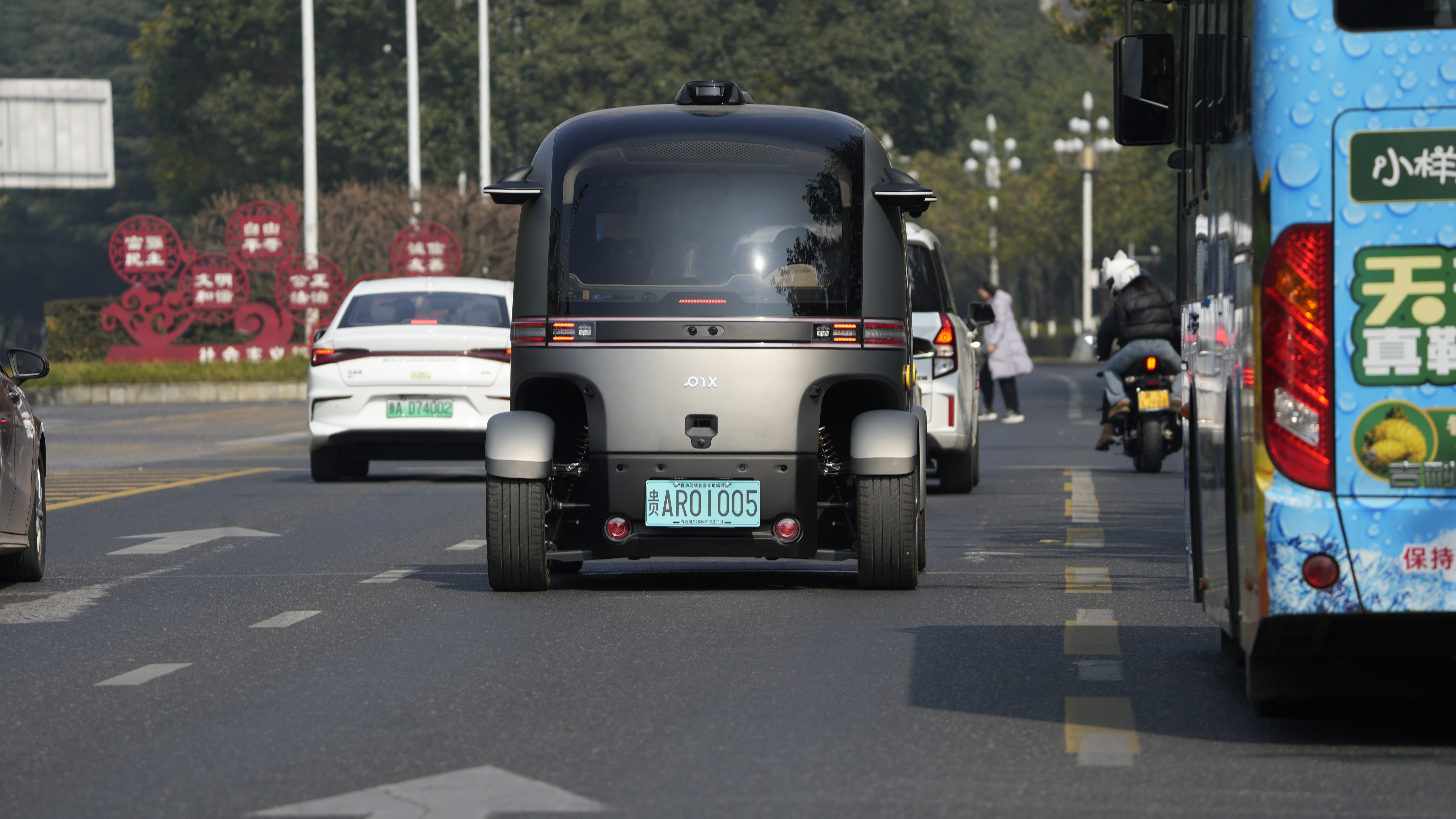
PIX RoboBus in real-world operation on public roads, supported by full UNECE compliance.
Application Scenarios and Operational Use Cases
PIX Moving’s certified autonomous mobile spaces are designed for low-speed urban environments. Typical deployment scenarios include:
- Smart City & Urban Mobility: Cities deploy RoboBus fleets as on-demand shuttles for first-mile/last-mile connectivity, reducing reliance on manned buses and alleviating driver shortages.
- Universities & Research: Campuses use RoboBus and RoboShop units for autonomous mobility research and campus transit, benefiting from OTA software updates and remote monitoring.
- Tourism & Resorts: Parks and tourist zones integrate RoboShop (autonomous retail store) and RoboBus to enhance visitor experience with mobile commercial spaces.
- Industrial & Logistics Campuses: Large factory campuses deploy autonomous shuttles for internal personnel transport, with 24/7 operation capability and real-time fault diagnostics.
PIX Moving’s Robot-as-a-Service (RaaS) subscription model allows operators to deploy fleets without upfront capital expenditure, matching the growing market for fleet-as-a-service for cities. The global RaaS market, valued at USD 1.96 billion in 2024, is projected to reach USD 10.41 billion by 2034.
Market Trend Analysis: Why Certification Drives Procurement Advantage
The alignment between certification and market access is becoming sharper. Multiple trends support this:
- Regulatory convergence: While China’s MIIT has issued mandatory L3/L4 safety standards effective July 2027, the UNECE framework remains the de facto benchmark for cross-border deployment. Suppliers with UNECE approvals gain a time-to-market advantage.
- Bus driver shortage: With Europe’s shortage expected to double by 2028, autonomous shuttles that already comply with EU type approval can be deployed immediately, bypassing the years-long certification wait times faced by uncertified entrants.
- RaaS growth: Operators prefer subscription models but require the underlying assets to be insurable. Certifications directly lower insurance premiums and ease financing.
Comparison with Traditional Solutions and One Honest Limitation
Compared to traditional diesel or electric buses, autonomous mobile spaces offer 24/7 autonomous operation, lower labor costs, and flexible space configuration. They can transform from a people mover to a mobile retail pod without retooling.
Honest limitation: The PIX RoboBus is a low-speed vehicle with a maximum autonomous speed of 35 km/h. It is not designed for high-speed arterial roads; its optimal use case is in controlled or semi-controlled environments such as campuses, parks, and dedicated urban zones. This makes it complementary to, rather than a replacement for, high-speed robotaxis and public buses on main routes.
Future Outlook
As cities worldwide push for smart city infrastructure, the need for certified, modifiable autonomous platforms will intensify. PIX Moving has laid a compliance foundation that can be extended to future products (RoboShop, RoboTaxi) and evolving regulations (e.g., UNECE on automated driving systems). Its use of metal 3D printing and generative design — enabling 10× fewer parts and 60% shorter lead times — suggests a manufacturing agility that pairs well with regulatory rigor. For procurement professionals, the decision framework should weigh certification completeness alongside customization capabilities, production lead time (30–45 days), and MOQ flexibility (starting at 1 unit).
Frequently Asked Questions
A: The PIX RoboBus holds five major UNECE certifications: R48 (lighting installation), R51 (noise emissions), R100 (electric powertrain safety), R17 (seat strength and anchorage), and a UNECE Conformity of Production (COP) certificate. Details of each certificate — including certificate numbers, issuing authorities (Republic of San Marino Authority for Homologation and SMVIC), and applicable standards — are provided in the official documentation.
A: Yes. Four of the five certifications (R48, R51, R100, and COP) are issued for the EU / UNECE Contracting Parties market. Only the R17 certification is issued under the global / UNECE reference scope. All certificates are recognized by EU member states and follow the respective series of amendments.
A: Because the vehicle is already type-approved, buyers in EU markets do not need to wait for the supplier to obtain individual system approvals. This reduces integration risk and accelerates deployment. The production lead time for a standard unit is 30–45 days, with no minimum order quantity (MOQ = 1).
A: Yes. PIX Moving offers customization of vehicle configuration, software, branding, and interior layout. All modifications are made within the certified vehicle architecture. The company provides 100% inspection before delivery and supports OTA software updates and remote diagnostics after deployment.
A: The UNECE Conformity of Production (COP) certificate (E57COP1806) requires continuous monitoring of the production management system. PIX Moving holds this approval from the Republic of San Marino, ensuring that every produced unit matches the certified type. The COP certificate is valid until July 2026 and renews subject to audit.
About PIX Moving
PIX Moving is a city robotics company based in Tokyo, Japan, with manufacturing facilities in Guiyang and Huzhou, China. The company develops autonomous mobile spaces — including RoboBus, RoboShop, RoboTaxi, RoboVan, and Beastie — built on a modular robotic chassis platform. PIX Moving offers its products under a Robot-as-a-Service (RaaS) subscription model, enabling cities and operators to deploy intelligent urban infrastructure without capital-heavy purchases. For certification inquiries or procurement discussions, contact Nancy at nancy@pixmoving.com or +86-18111991219.