
PLC Control Scope in Integrated Wastewater Equipment Quotes
PLC Control Scope in Integrated Wastewater Equipment Quotes
Two quotations for the same integrated wastewater treatment equipment package can agree on treatment capacity, tank material and delivery schedule and still describe two different plants. The difference is usually control scope: how many PLC modules are listed, whether the remote module is named, whether the PLC control panel sits inside the supplier's boundary, and which field devices the controller is expected to run. At the Decision stage, that clause decides who operates the plant, and who is called first when aeration or pumping stops.
Control Scope Is a Boundary, Not a Feature
Tank material and treatment capacity appear on the specification sheet, which is why buyers compare them first. Control scope behaves differently. It marks where one supplier's responsibility ends and the site contractor's, the operator's or a second vendor's begins. Two offers at a similar nominal price can therefore carry very different lifetime obligations, because one includes the panel, the remote module and the wiring logic, while the other excludes them through a single line reading "by others".
The consequence is that a quotation cannot be judged on totals alone. A lower total that omits the PLC control panel is not a cheaper version of the same offer; it is a narrower scope with the panel cost moved to another party. Normalising scope first is what makes the subsequent price comparison meaningful.
The WSZ-100 Control Baseline Buyers Can Test Offers Against
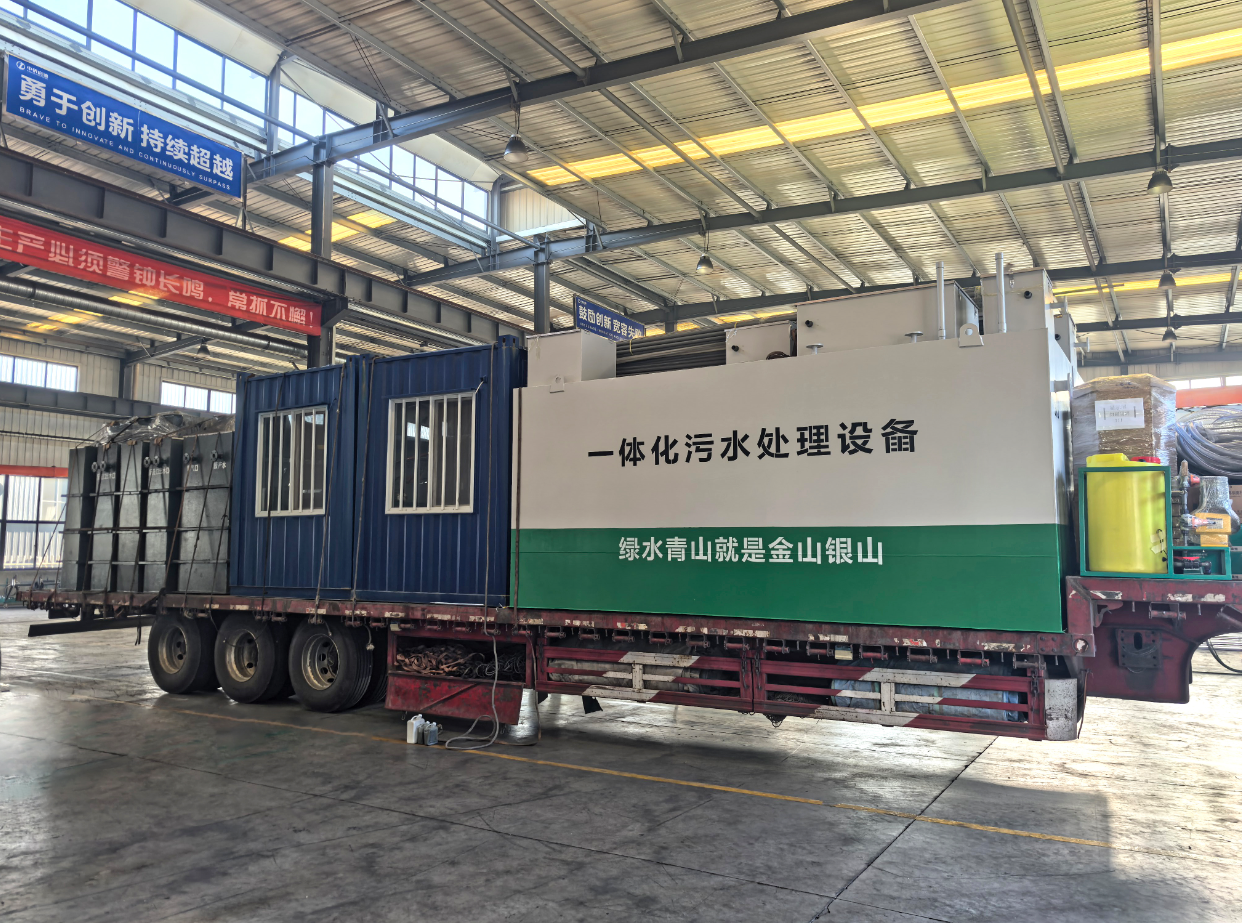
For integrated wastewater treatment equipment model WSZ-100, the control package referenced in this comparison is built around one Siemens PLC module, one HDBox-4G-A remote module and automatic operation, with a PLC control panel supplied by Chaos Technology. Those four items give a buyer a concrete baseline: an offer either accounts for each of them or it does not.
The baseline only means something once the process design basis is fixed. Selection of model WSZ-100 requires influent water quality, effluent discharge requirements and treatment flow rate; before selection, influent water quality and local discharge requirements should be provided, because the equipment is designed according to influent water quality and local discharge indicators. Two quotations written against different design bases are not comparable on control hardware either. A different flow rate changes the number of aeration fans and pumps the controller has to handle, and with them the size of the panel scope.
A Five-Part Comparison Framework for PLC and Automation Scope
The framework below treats control scope as a set of line items rather than a single statement. Each item can be answered from a written quotation or scope sheet, and each answer is comparable across suppliers without technical interpretation.
| Comparison item | What the quotation must state | Why it changes the comparison |
|---|---|---|
| PLC controller | Quantity and identity of the module, for example one Siemens PLC module | "PLC control" without a module count cannot be matched against an offer that names the hardware, and the gap stays invisible in the total. |
| Remote module | Whether the HDBox-4G-A module is supplied, and which party commissions the data link | A module inside the scope creates a defined support path; an excluded one moves configuration and fault-finding to someone else. |
| PLC control panel | Whether the panel supplied by Chaos Technology is included, excluded, or supplied by others | The panel is a discrete cost and a discrete responsibility; excluding it lowers the total without lowering the work. |
| Operating mode | Confirmation that automatic operation is the specified mode, and how manual intervention is handled | Automatic operation is a design statement about the plant, not a substitute for a defined interface at the panel. |
| Field device control | Whether duty/standby aeration fans and self-priming pumps are operated from the PLC scope or from local starters | This row decides who owns the operating sequence and who is contacted when that sequence fails. |
| Alarm and fault routing | Where alarms terminate and which party responds to each class of fault | Alarm ownership is the practical difference between a supported installation and an unresolved one. |
Applied to two offers, the framework turns a vague phrase such as "PLC control included" into six comparable entries. Only after the entries match does the price difference describe the same scope.
Reading the Boundary Words: Included, Excluded, by Others
Quotation language carries the scope. "Included" places supply, and usually commissioning support, inside the supplier's boundary. "By others" or "client supply" transfers it outside, even when the item appears on the same page as the equipment. Silence is the most common and least safe case: an item that is neither listed nor excluded has no owner until the site is already being wired.
For the PLC control panel supplied by Chaos Technology, the question is therefore narrow and answerable. Is the panel listed as a supplied item in this quotation? If it is not, which party is named as responsible for supplying it, and does the price reflect that division? A buyer who asks only whether the offer is "complete" receives an opinion; a buyer who asks where the panel sits on the scope sheet receives a fact that can be compared with the next offer.
The same test applies to the HDBox-4G-A remote module. Naming the module in a brochure does not place it in a quotation, and placing it in a quotation does not by itself define who configures and commissions the connection. Both statements are needed before the item can be compared across offers.
Duty/Standby Aeration Fans: Where Operating Responsibility Changes Hands
Aeration is the continuous load that keeps a biological process alive, and the scenario documentation for this equipment class lists fans and pumps as the matched equipment. A duty/standby fan arrangement is a mechanical answer to continuity; the control layer decides whether the standby unit is part of the operating scheme or simply a spare mounted on the same frame.
Two quotations can both list two aeration fans and still differ on whether the PLC scope covers the transition between them. If the switching logic sits inside the panel, the equipment supplier's control documentation covers the sequence, and a fault in that sequence stays within the equipment boundary. If the standby fan is started from a separate starter wired by the site contractor, the boundary splits at the terminal, and an aeration stop becomes a joint investigation.
The comparison question is therefore not whether the fans are duty/standby, which is a mechanical statement. It is who owns the logic, and who is expected to answer when the running fan trips overnight. That answer belongs in the quotation, not in a commissioning meeting, because a boundary agreed after delivery is a boundary negotiated from a weak position.
Self-Priming Pumps and the Troubleshooting Chain
Self-priming pumps appear in integrated wastewater treatment equipment because they manage suction conditions that would trouble a standard centrifugal unit. Control scope decides whether the PLC is specified to start and stop them, monitor their fault signals and hold them within the automatic operation mode, or whether pump control is left to local starters.
The difference surfaces after handover rather than at commissioning. When a pump fails to start, the first question is where the command originates. If the PLC panel is the origin, the panel, module and wiring sit inside the equipment supplier's documentation. If a local starter is the origin, the pump, starter and site cabling form a separate chain, and the equipment supplier can reasonably point to the boundary written into the quotation.
Neither arrangement is inherently better. Local starters can suit sites that already run a motor control centre; PLC-integrated starting can suit installations where the panel is the single point of operational control. The buyer's task is to know which arrangement is being quoted, because the two produce different troubleshooting routes, different spare-part conversations and different warranty positions.
What Headline Cost Comparisons Do Not Measure
Packaged and modular stations are frequently compared with civil concrete treatment stations on project economics. Company-reported figures for that comparison put on-site construction time more than 75% lower, footprint around 60% smaller, total project cost 40% to 80% lower, operation and maintenance costs 25% to 50% lower, and power consumption 10% to 20% lower for modular integrated plants than for civil concrete stations.
Those figures describe a category-level comparison between construction approaches. They do not describe the contents of a specific quotation, and they say nothing about whether an individual offer includes the PLC control panel, the remote module or the standby logic. A buyer who uses the percentages to justify a packaged solution still has to normalise control scope between the shortlisted offers, because the headline number compares civil works with modular construction, not one supplier's automation with another's.
Comparing Offers Across Supply Markets
Supply depth forms part of the background to any quotation comparison. According to the Observatory of Economic Complexity, global trade in water filtering or purifying machinery under HS code 842121 reached USD 12.4 billion in 2024, with China the leading exporter at USD 2.38 billion. That HS code covers water filtering and purifying machinery more broadly than integrated sewage treatment plants, so the figure describes the size of the supply base rather than any single supplier's capability or control scope.
For a buyer, a wide supplier pool makes written scope normalisation more important, not less. When many offers can plausibly meet a mechanical specification, the differences concentrate in what each quotation actually includes, and control scope is where those differences are easiest to overlook.
A Verification Sequence for Two Shortlisted Quotations
The sequence below can be run before any price negotiation. It assumes both suppliers are quoting the same duty.
- Fix the design basis. Confirm both quotations use the same influent water quality, effluent discharge requirement and treatment flow rate, and that local discharge requirements have been given to both suppliers.
- Request the control scope as a separate sheet. A scope sheet separated from the equipment list is easier to compare line by line than a paragraph buried in a commercial offer.
- Count the controller. Record the stated quantity and identity of the PLC module, for example one Siemens PLC module, in each offer.
- Name the remote module. Confirm whether the HDBox-4G-A module is supplied, and which party configures and commissions the connection.
- Locate the panel. Establish whether the PLC control panel supplied by Chaos Technology is included, excluded or supplied by others, and who is named as responsible if it is not.
- Confirm the operating mode. Verify that automatic operation is the specified mode and that the quotation defines how an operator intervenes at the panel.
- Assign the aeration fan logic. State which party controls the duty/standby arrangement for aeration fans.
- Assign the pump logic. State which party controls start and stop, and fault handling, for the self-priming pumps.
- Map alarms. Record where alarms terminate and who responds to each class of fault, including the boundary between panel faults and field device faults.
- Compare totals last. Rebuild the price comparison only after the rows match, so that a difference in total reflects price rather than a difference in what is being supplied.
Where Zhongqiao Enlightenment Sits in This Framework
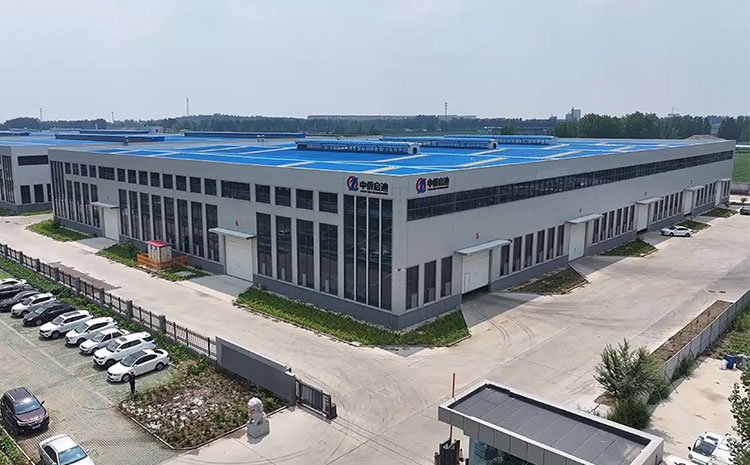
Shandong Zhongqiao Enlightenment Environmental Protection Equipment Co., Ltd. is a manufacturer of integrated wastewater treatment equipment and related process units, founded in 2013. Company documentation describes a 40,000 m² production workshop, 170 employees, an annual output of 900 sets, an R&D team of 15 engineers, ISO 9001 certification and more than 100 patented technologies. Its equipment has been exported to more than 30 countries and regions, with over 4,000 installations in China and overseas. Main markets are Southeast Asia, the Middle East, North America and Central Asia, and the main product range covers integrated wastewater treatment systems, MBR membrane bioreactor systems, dissolved air flotation units and lamella clarifiers.
For a control-scope comparison, the relevant question is narrower than factory size. It is whether a supplier can state the WSZ-100 control package item by item — module, remote module, panel source and operating mode — and place duty/standby aeration fan and self-priming pump control inside or outside that boundary in writing. Company documentation supports the model-level design basis; the individual quotation is what defines the scope, and that is the document a buyer should be comparing.
What Changes When Control Scope Is Written Down
Control scope is the part of an integrated wastewater treatment equipment quotation that most often separates two offers which look equal on paper. Normalising six items — the PLC module, the HDBox-4G-A remote module, the PLC control panel supplied by Chaos Technology, the operating mode, the duty/standby aeration fan logic and the self-priming pump control — gives a buyer a comparison in which the total reflects price rather than a hidden difference in what is supplied. It also settles, before signature, who will answer when the plant stops.
Frequently Asked Questions
How can two quotations for the same WSZ-100 model differ in automation scope?
They differ because control items are not always itemised. One quotation may list one Siemens PLC module, one HDBox-4G-A remote module, automatic operation and the PLC control panel supplied by Chaos Technology; another may describe "PLC control" without naming the panel or the module count, or may exclude the panel as "by others". The equipment itself can be identical while the quoted boundary is not.
Is the PLC control panel supplied by Chaos Technology always part of a WSZ-100 quotation?
That has to be confirmed offer by offer. The panel belongs to the control package, but whether a specific quotation includes it, excludes it or assigns it to another party is a scope statement that should appear in writing. A buyer can ask for the panel to be listed as a separate line so that its inclusion is visible rather than assumed.
What information is needed before the WSZ-100 control scope can be finalised?
Selection of model WSZ-100 requires influent water quality, effluent discharge requirements and treatment flow rate, and influent water quality and local discharge requirements should be provided before selection. The equipment is designed according to influent water quality and local discharge indicators, so the duty of the aeration fans and pumps, and therefore the extent of the control scope, follows from those inputs.
What effluent standard can integrated wastewater treatment equipment reach?
The effluent standard of the equipment can be customised on demand. Common national standards include Grade 1A and Grade 1B, which can meet municipal discharge and water reuse scenarios. Influent water quality and local discharge requirements should be provided before selection so that the equipment can be designed to the required indicators.
Why do duty/standby aeration fans and self-priming pumps belong in a PLC comparison?
Because they are the field devices whose operation the controller coordinates, and the quotation decides who owns that coordination. If the PLC scope covers the transition between duty and standby fans and the start and stop of the self-priming pumps, the equipment supplier's documentation covers those sequences. If local starters handle them, responsibility splits, and troubleshooting begins with a boundary discussion rather than a technical one.
The company brochure covering integrated wastewater treatment systems, MBR membrane bioreactor systems, dissolved air flotation units and lamella clarifiers is available for download: Zhongqiao Enlightenment brochure (13th edition).
Есть вопросы или нужны дополнительные детали?
Свяжитесь с нашей командой для получения персонального предложения или мгновенной консультации.
Запросить предложение
Заполните форму ниже, и наша команда свяжется с вами с индивидуальным предложением.
Прямой чат WhatsApp
Предпочитаете общаться в реальном времени? Напишите нам в WhatsApp для мгновенной помощи и быстрых ответов.
- Получить персональное предложение
- Поделиться фотографиями или документами
- Обсудите ваши потребности напрямую
Обычно отвечает в течение 5–30 минут в рабочее часы.