
PN16 vs PN25 Gate Valves: A Technical Procurement FAQ
Pressure class is one of the first lines a pipeline engineer reads on a gate valve datasheet — and one of the last items the site team actually verifies before the valve is bolted into the line. Under the DIN/EN system, PN16 and PN25 are nominal pressure designations, not a simple good-versus-better pair. Moving from one to the other changes body mass, flange mating, allowable service temperature and, in some projects, whether the isolation point is accepted by the engineering consultant at all.
This technical FAQ addresses the questions that recur most often in gate valve procurement enquiries: what PN16 and PN25 actually describe, how carbon steel and stainless steel ranges behave for specific media and temperature ranges, which installation conditions change the specification, and why strainers, filter separators and pressure relief devices are treated as mandatory supporting equipment rather than optional accessories.
WEIZIDOM Group is a valve and pipeline accessory manufacturer based in Henan, China, producing gate valves, butterfly valves, ball valves, check valves, globe valves, strainers, pipe fittings, water meters and flow meters in gray iron, ductile iron, carbon steel, forged steel and stainless steel. Its gate valve range spans ductile iron, carbon steel, stainless steel and forged steel families across DIN, EN, API, ANSI, BS, JIS and GB design standards — which is precisely why the PN16 versus PN25 question has to be answered against a specific product family rather than against "gate valves" in general.
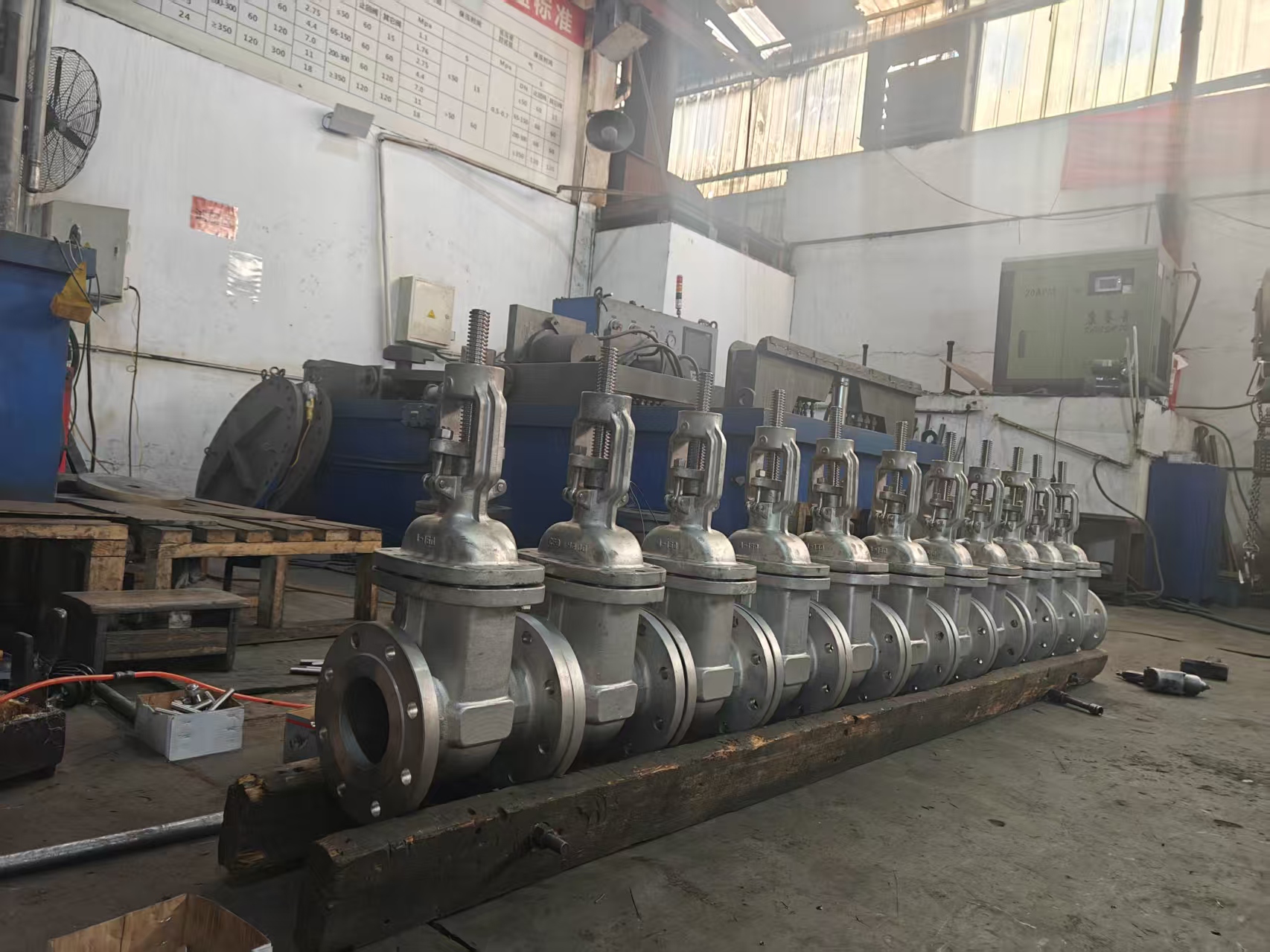
Stainless steel gate valve assembly. Material selection and pressure class are decided together, not sequentially.
Why the PN16 vs PN25 Question Keeps Returning
Two procurement patterns explain most of the confusion, and both are avoidable at the specification stage.
The first is overspecification. A buyer treats PN25 as inherently safer than PN16 and applies it across a whole water distribution package without checking whether the mating flanges, the structural allowance and the handling equipment can absorb the change. In ductile iron water service, PN16 and PN25 flange resilient gate valves sit in the same DIN 3352 F4/F5 family, so the upgrade looks effortless on paper — until the connecting joint has to be re-verified and the chamber design has to be re-checked against a heavier valve.
The second is underspecification driven by a temperature assumption. A nominal rating is referenced to a baseline condition, and the pressure a valve can hold falls as service temperature rises. A line that is comfortably PN16 in ambient water service may not remain PN16 once elevated heating or process temperature, body material and seat material are all accounted for. The reverse error is just as common: paying for PN25 on a low-pressure irrigation network where the constraint was never pressure at all.
What PN16 and PN25 Describe — and Where They Sit in the Range
PN designates a nominal pressure rating within the DIN/EN standard system. A PN25 gate valve is designed and verified as a higher nominal pressure class than a PN16 valve in the same family. The word "nominal" carries real weight here: the figure is a design classification that must be read together with the material of construction, the governing design standard and the temperature of the service — it is not a guaranteed working pressure at every operating condition.
The table below maps how pressure ratings distribute across the gate valve families in the WEIZIDOM range. It is the single most useful reference for a buyer trying to establish whether a requirement is even manufacturable in the material they have in mind.
| Product family | Design standard | Pressure rating | Size range | Typical service |
|---|---|---|---|---|
| Flange resilient gate valve (ductile iron) | DIN 3352 F4 / F5 | PN10 / PN16 / PN25 | DN40–DN1200 | Water supply and drainage, agricultural irrigation, wastewater treatment |
| Underground cap soft seal gate valve | BS5163 Type A/B, DIN 3352 F4/F5 (underground), Z45X-16Q | PN10 / PN16 | DN50–DN600 | Municipal underground water supply, roadside drainage, residential water supply |
| BS5163 rising stem gate valve | BS5163 Type B (OS&Y), EN 1074, AWWA C509 | PN10 / PN16 | DN50–DN800 | Municipal water supply, European water treatment, water works |
| Socket connection gate valve | DIN 3352 SW, EN 1074 SW, GB/T 12234 SW | PN10 / PN16 / PN25 | DN15–DN100 | Building water supply, HVAC, small-diameter industrial pipeline, fire protection |
| Carbon steel gate valve | DIN 3352 F4/F5 (WCB), EN 12516 (LCB), GB/T 12234 | PN16 / PN25 / PN40 / PN63 | DN50–DN1000 | Petrochemical, power plant, heating ventilation, industrial pipeline |
| Stainless steel flange gate valve | DIN 3352 F4/F5 (CF8/CF8M), EN 1074, JIS B2062 | PN10 / PN16 / PN25 / PN40 | DN40–DN800 | Food & beverage, pharmaceutical, chemical industry, seawater desalination |
| Carbon steel knife gate valve | API 598 (WCB), DIN 19526, GB/T 12237 | PN16 / PN25 / PN40 | DN50–DN800 | Coal mining, power plant ash handling, industrial waste slurry |
| Stainless steel knife gate valve | API 598 (CF8/CF8M), DIN 19526, JIS F7380 | PN10 / PN16 / PN25 | DN50–DN600 | Wastewater treatment, pulp & paper, mining, chemical slurry |
| API gate valve | API 600, API 602, API 6D | Class 150 / 300 / 600 / 900 | NPS 1/2"–48" (DN15–DN1200) | Oil & gas, petrochemical, refinery, offshore platform, power plant |
| Rising stem forged steel gate valve | API 602, ASME B16.34, DIN 3356 | Class 150 / 300 / 600 | NPS 1/4"–4" (DN8–DN100) | High pressure pipeline, oil & gas wellhead, chemical injection, instrumentation pipeline |
Two boundaries in that table deserve attention. Ductile iron resilient-seated gate valves — the family most often used in water supply, drainage, irrigation and wastewater treatment — extend to PN25. Carbon steel reaches PN63 and stainless steel flange gate valves stop at PN40. Where higher pressure classes are required, the range shifts to the API family, where the rating is expressed as an ASME class rather than a PN figure: API 600 heavy duty gate valves at Class 150/300/600/900, API 602 forged steel gate valves at Class 150/300/600, and API 6D pipeline gate valves at Class 150/300/600/900.
The API 600 publication identifies the standard's scope as steel gate valves with flanged and butt-welding ends and bolted bonnets, covering pressure class designations 150, 300, 600, 900, 1500 and 2500. Public records also identify both an API 600 edition publication dated 2015 and a later catalogue record for API STD 600:2021. Because that edition status is not settled by a single accessible record, buyers should verify the currently applicable edition against the official API catalogue before accepting a certificate reference in a supplier quotation.
Technical Explanation: Why PN25 Is Not Simply a Stronger PN16
Three engineering consequences follow from moving a gate valve from PN16 to PN25 within the same family, and each one has a procurement cost attached.
1. Body and trim mass
A higher nominal pressure class generally requires heavier body and bonnet walls, with a heavier stem and wedge or disc assembly. That change is rarely confined to the valve. It propagates into pipe support spacing, valve chamber dimensions for buried installations, lifting arrangements on site, and the manual effort required by an operator turning the handwheel. For a large-diameter valve in a confined chamber, the operating torque difference is a genuine design consideration, not a rounding error.
2. Flange and joint compatibility
The PN rating on the valve and the PN rating on the mating flange, gasket and bolting set must be confirmed as a complete assembly. Design standards such as DIN 3352 F4/F5 govern the geometry of each valve family, and the joint is only valid when the mating components are specified to the same basis. A PN25 valve is therefore not automatically a drop-in replacement for a PN16 valve, even where the face-to-face length and nominal size match. During commissioning, the flange drilling, gasket selection and bolting torque sequence should be verified against the documents actually supplied, not against the original project specification.
3. Temperature and seat interaction
Allowable working pressure decreases as service temperature increases. The rate of decrease depends on the body material and the seating design, and the WEIZIDOM range uses several distinct approaches:
- Full wrapped EPDM rubber seating in the flange resilient family, the BS5163 rising stem family and the underground cap soft seal family — a soft-seated, resilient construction common in water and wastewater service.
- EPDM/NBR seating in the socket connection family, with EPDM or Viton in the stainless steel flange gate valves.
- Metal-to-metal or Stellite-faced seating in the API gate valve family, and metal-to-metal or PTFE seating in the rising stem forged steel gate valve family.
Soft elastomer seating and metal seating do not derate identically, and they do not tolerate the same media. That is why "PN16 or PN25?" is never separable from "with which body material, which seat and which design standard?" A specification that answers only the first question leaves the most consequential variables open.
Carbon Steel or Stainless Steel? Matching Material to Medium
Material selection is normally driven by the medium, the temperature range and the consequence of leakage — not by pressure class alone. The table below sets out the material families available in the WEIZIDOM gate valve range against the services they are intended for.
| Body material | Grades in range | Pressure rating | Media and service conditions | Typical industries |
|---|---|---|---|---|
| Ductile iron | GGG50, QT500-7 | PN10 / PN16 / PN25 | Water, wastewater, irrigation water, drainage | Water supply and drainage, agricultural irrigation, wastewater treatment, municipal underground water supply, roadside drainage, residential water supply |
| Carbon steel | WCB | PN16 / PN25 / PN40 / PN63; Class 150–900 in the API family | Hydrocarbon, petrochemical and heating-system duty | Petrochemical, power plant, heating ventilation, industrial pipeline, refinery, offshore platform |
| Low temperature carbon steel | LCB | EN 12516 (LCB) | Low-temperature carbon steel service | Petrochemical, power plant |
| Chrome molybdenum steel | WC6 | PN16 / PN25 / PN40 (knife gate) | Abrasive and high-temperature slurry | Coal mining, power plant ash handling, industrial waste slurry |
| Stainless steel (wrought and forged) | 304 (SUS304), 316 (SUS316), CF8, CF8M, A105/F304/F316 forged | PN10 / PN16 / PN25 / PN40; Class 150–600 | Corrosive and hygienic media, seawater | Food & beverage, pharmaceutical, chemical industry, seawater desalination, chemical injection, instrumentation pipeline, oil & gas wellhead |
The reading rules that follow from this mapping are straightforward:
- Water and wastewater. Ductile iron resilient-seated gate valves with full wrapped EPDM rubber seating are the standard choice across PN10, PN16 and PN25. Upgrading a municipal water line to PN25 only makes sense where the network's actual maximum pressure and surge conditions justify it.
- Corrosive, hygienic or seawater media. Stainless steel 304 or 316 constructions are used in chemical, pharmaceutical, food and beverage, and seawater desalination service, where carbon steel is not the appropriate body material regardless of pressure class.
- Petrochemical, power plant and heating service. Carbon steel WCB constructions at PN16 through PN63 cover petrochemical, power plant, heating ventilation and general industrial pipeline duty, with LCB available where low-temperature carbon steel is required.
- Abrasive slurry and ash handling. Knife gate constructions in WCB or WC6 chrome molybdenum steel are used in coal mining, power plant ash handling and industrial waste slurry, where the obstruction-free bore matters more than a fine pressure increment.
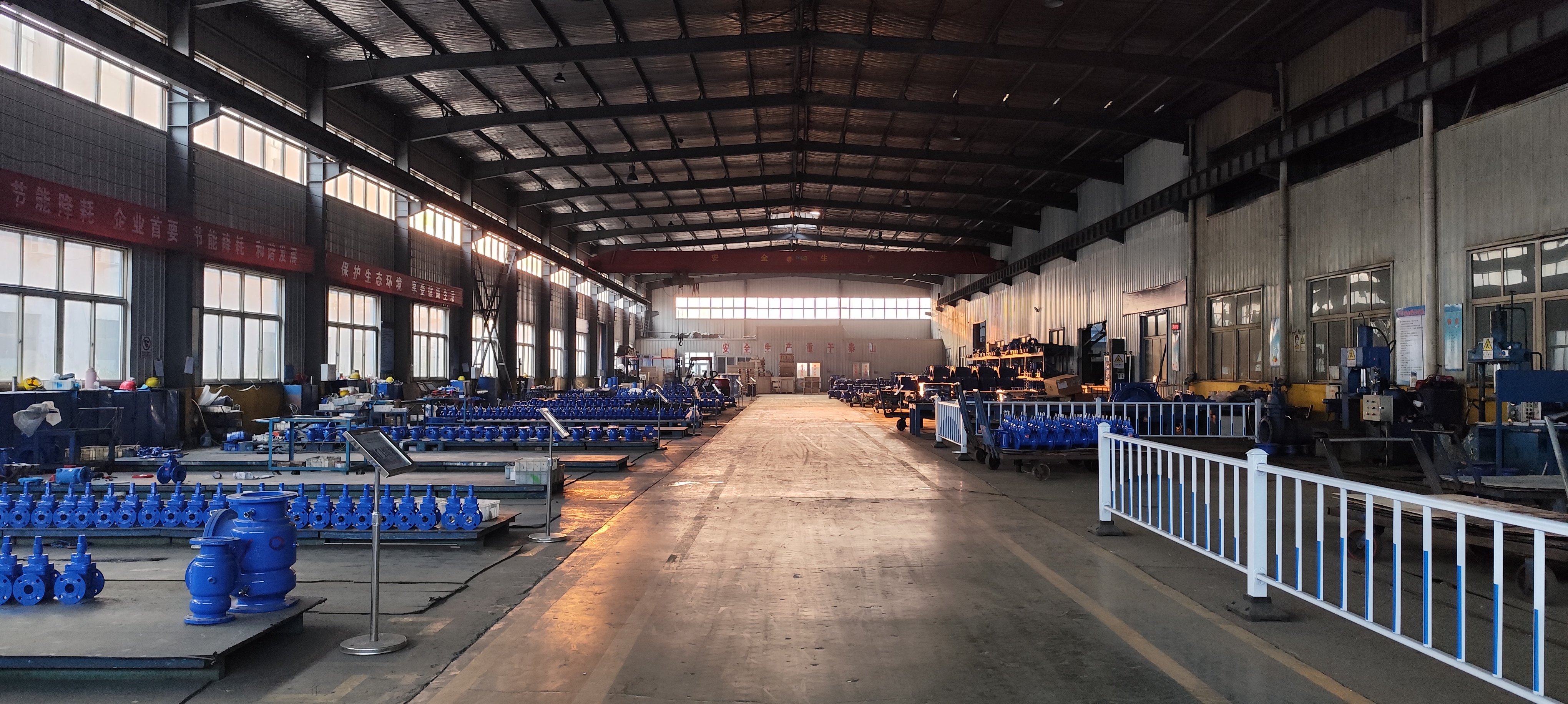
Ductile iron resilient-seated gate valves staged for water supply and wastewater projects, where PN10, PN16 and PN25 constructions share the same design family.
Installation Requirements That Change the Specification
Installation conditions frequently decide the correct product configuration before pressure class is even discussed. Three variables dominate.
Buried or above ground. The underground cap soft seal family — BS5163 Type A/B, DIN 3352 F4/F5 underground and Z45X-16Q cap type — exists specifically for municipal underground water supply, roadside drainage and residential water supply, in PN10 and PN16 and sizes DN50 to DN600. A documented example comes from a Colombian water utility project, where 30 valves were installed for city potable water supply over a three-year collaboration; the design used extended valve stems so that a deeply buried line could still be operated from ground level. That single detail — stem extension — frequently decides whether a buried installation is serviceable at all, and it has nothing to do with the PN number.
Operating mechanism. The range includes both OS&Y (outside screw and yoke, rising stem) and NRS (non-rising stem) constructions. OS&Y designs in the BS5163 rising stem and forged steel families give a visible indication of the valve's open or closed position, which matters where operators must confirm isolation state directly. NRS designs are common in buried and confined installations. Socket-weld NRS constructions are used for building water supply, HVAC, small-diameter industrial pipeline and fire protection duty in sizes DN15 to DN100.
Site support and documentation. A Philippine government project supplying an urban water supply network with 200 valves over three years recorded zero leakage, with the project highlights including fast delivery and on-site installation guidance. That outcome reflects commissioning discipline as much as product selection: correct flange alignment, correct gasket and bolting sequence, correct stem orientation, and verification that the delivered valve matches the approved drawing.
Why Strainers, Filter Separators and Pressure Relief Devices Are Specified Alongside Gate Valves
This is the part of the specification that buyers most often treat as optional, and the part that most often explains premature seat damage in service.
Particulate protection. A gate valve closes on its seating surfaces. Any debris carried by the line — weld slag, construction residue, scale, mineral solids or process carry-over — reaches those surfaces at the moment of closure. Upstream particulate protection, typically in the form of strainers or filter separators, is the standard engineering response, and it is specified as part of the system rather than as an accessory to the valve. WEIZIDOM's product range includes strainers alongside gate valves and other pipeline accessories, which allows a project to align the valve and strainer specification within a single supply chain instead of reconciling two independent deliveries.
Overpressure protection. Pressure relief valves and surge protection equipment are system-level devices selected by the pipeline designer or the engineering consultant. They are not, and cannot be, a function of the gate valve. A gate valve must never be relied upon as a pressure-relief device under any circumstances, and a line that depends on a gate valve to control overpressure has a design fault rather than a procurement problem. The practical consequence for buyers is that relief devices and gate valves are usually procured on different specification sheets and different schedules — which is exactly why they are so often forgotten until the piping and instrumentation review.
Why both are treated as mandatory. Particulate and overpressure protection address the two failure modes a gate valve cannot defend against on its own: damage to the seating surface, and pressure excursion beyond the class rating. Neither is solved by moving from PN16 to PN25. A PN25 valve with a damaged seat leaks exactly as a PN16 valve with a damaged seat does.
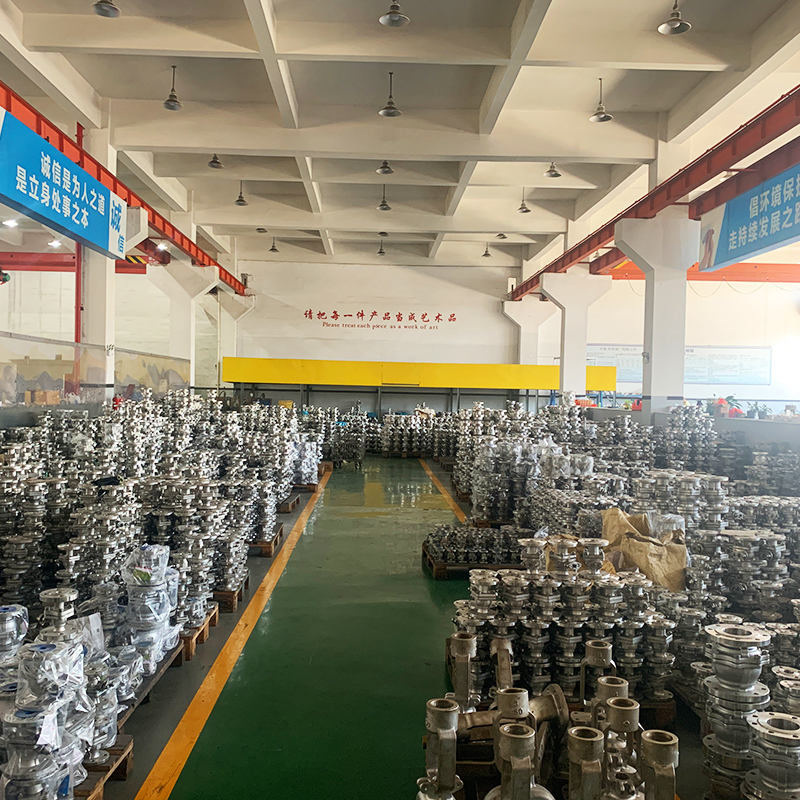
API gate valve production for oil, gas and refinery isolation duty, where class rating, material and seating design are verified together.
Field Evidence: Where These Ratings Are Actually Used
Documented projects in the WEIZIDOM case record illustrate how pressure class and material selection interact in practice, without requiring any inference about performance beyond what was recorded.
- Kazakhstan — power plant, 160 units, one-year project duration. Carbon and stainless steel gate valves were used to control a pipeline system for a large energy company in continuous production and heating service. The recorded result was resistance to high temperatures and high pressure, with the valves supporting the stability and safety of equipment operation.
- Pakistan — wastewater treatment plant, 100 units, five-year project. The recorded results were durable, excellent sealing performance, and highlights of ample stock and fast delivery.
- Vietnam-scale water utility — Colombia, 30 units, three years. Potable water supply with extended stems for deeply buried pipelines, recorded as achieving low maintenance costs.
- Philippines — government project, 200 units, three years. Urban water supply network, zero leakage recorded, with on-site installation guidance cited as a key highlight.
- Iraq — project contractor, 571 units, two years. Recorded as two years of stable operation, with systematic piping products provided to improve procurement efficiency.
- Zimbabwe — wholesaler, 600 units, three years. The client is the largest local hardware tool wholesaler, with annual orders exceeding 200 valves and 100% positive reviews recorded.
- Morocco — bidding project, 50 units, two years. Zero leakage recorded; the client won the bid on their first attempt using the supplied solution.
- Malawi — irrigation network, 120 units, two years. Two years of stable operation, with repeat orders recorded.
What these cases demonstrate collectively is that the specification decisions discussed above — material family, seat type, stem configuration and associated pipeline accessories — are the variables that get recorded as outcomes. In almost none of them was the deciding factor a single step up in nominal pressure class.
Market Trend Analysis
Two published data points frame the commercial context for these technical decisions.
The global industrial valve market was estimated at USD 73.9 billion in 2025, according to Global Market Insights. Within that market, gate valves accounted for approximately 15% of revenue by product category in the same year, according to the same source — a share that places gate valves among the highest-volume isolation product types in industrial piping. For buyers, the implication is straightforward: gate valve specification decisions are made at scale, and a systematic error in pressure class or material selection propagates across an entire procurement programme rather than a single line item.
Three secondary trends are visible in the enquiries themselves. First, actuation: customisation options across the range include actuator selection, and electric gate valve configurations are increasingly requested alongside manual options for remotely operated networks. Second, documentation discipline: buyers are asking for pressure-class verification, material certificates and standard-edition checks before shipment rather than after arrival. Third, standard-system reconciliation: projects that combine DIN, EN, BS, AWWA, JIS, GB and API requirements on the same site increasingly ask suppliers to state which standard governs each valve, because a PN figure and an ASME class cannot be treated as interchangeable in a document set.
Comparison with Conventional Defaults — and Where This Approach Stops
The most common conventional default is simple: specify one pressure class across a project, and specify carbon steel unless the medium is obviously aggressive. That default has real advantages — it reduces SKU count, simplifies spares holdings, and reduces the number of drawings that must be reviewed.
Its limitation is equally real. Applying a single class and a single material across a mixed-media site means either overpaying on the low-demand lines or under-specifying the critical ones, and it quietly transfers the material-versus-medium decision to whoever receives the valves on site. A ductile iron resilient-seated valve and a stainless steel flange gate valve are not substitutes for one another at any pressure class, and neither is a substitute for the other in a chemical or seawater line.
Two further boundaries should be stated plainly, because they affect how far this article's guidance can be applied:
- Gate valves are isolation devices. They are not a solution for throttling, flow control or pressure regulation. Where a line requires frequent modulation, the gate valve is the wrong product category, irrespective of PN rating.
- Peak ratings cannot be assumed at elevated temperature. The allowable pressure at the operating temperature must be confirmed for the specific body material, seating design and design standard. A catalogue PN figure alone is not sufficient evidence of suitability for a high-temperature service.
- Verified third-party performance data is limited. Independently verified corrosion, slurry abrasion, low-temperature and bidirectional sealing performance data is not universally available in the public domain for gate valves generally. Where a project depends on such performance, the buyer should request type-test records, material certificates and test documentation from the specific supplier rather than relying on category-level claims.
Future Outlook
Three developments are likely to shape gate valve specification over the next several years.
Specification is moving from class to evidence. Buyers are increasingly treating the PN or class figure as an entry condition and asking for the supporting documentation that sits behind it — governing standard, standard edition, material certificate, pressure test record and dimensional verification. Suppliers that can present that package consistently will be easier to qualify, and suppliers that cannot will face longer qualification cycles.
Standard editions will need active monitoring. The coexistence of a 2015 API 600 publication record and a later API STD 600:2021 catalogue record shows how easily an obsolete edition reference can enter a procurement package. Document control is becoming a procurement function, not a paperwork afterthought.
Automation will pull actuation into the valve decision. As water networks and industrial pipelines move toward remote monitoring, the actuator — and therefore the torque requirement of the valve, which is itself a function of pressure class and size — becomes part of the initial specification rather than a later retrofit.
FAQ
What is the practical difference between PN16 and PN25 on a gate valve datasheet?
PN designates a nominal pressure rating under the DIN/EN standard system, so PN25 is a higher nominal pressure class than PN16 within the same product family. Both ratings appear in the WEIZIDOM range: ductile iron flange resilient gate valves, stainless steel flange gate valves, socket connection gate valves and stainless steel knife gate valves cover PN10, PN16 and PN25, while carbon steel gate valves extend from PN16 to PN63. The practical difference is not only the pressure figure — body mass, flange mating and the allowable pressure at the operating temperature all change with the class.
Can a PN25 gate valve replace a PN16 valve if the flanges appear to line up?
Not on the basis of flange appearance alone. A higher nominal pressure class generally requires heavier body and bonnet construction, and the joint is only valid when the valve, mating flange, gasket and bolting set are specified to the same basis under the governing standard, such as DIN 3352 F4/F5 for the ductile iron family. Dimension and drilling verification should be carried out against the documents actually supplied before installation, together with confirmation that the supporting structure and chamber can accept the additional weight.
When should stainless steel be selected instead of carbon steel gate valves?
Stainless steel flange gate valves in 304 or 316 are used for food and beverage, pharmaceutical, chemical industry and seawater desalination service, and stainless constructions are also used in chemical injection and instrumentation pipelines. Carbon steel gate valves in WCB, and LCB where low-temperature carbon steel is required, are used in petrochemical, power plant, heating ventilation and industrial pipeline duty. The decision is driven by the medium and temperature range rather than by pressure class: stainless steel does not become unnecessary at PN16, and carbon steel does not become acceptable at PN63 in a corrosive line.
How does service temperature affect the PN16 or PN25 rating?
Allowable working pressure decreases as service temperature increases, and the rate of decrease depends on both the body material and the seating design. The WEIZIDOM range uses several seating approaches: full wrapped EPDM rubber in the ductile iron flange resilient, BS5163 rising stem and underground cap families; EPDM/NBR in the socket connection family and EPDM or Viton in stainless steel flange gate valves; metal-to-metal or PTFE in the rising stem forged steel family; and metal-to-metal or Stellite facing in the API gate valve family. Because soft elastomer and metal seating derate differently, the allowable pressure at operating temperature must be confirmed for the specific material and seat combination rather than assumed from the catalogue class.
Which installation details most often change the correct gate valve specification?
Three details dominate. Buried or above-ground service determines whether an underground cap soft seal configuration, such as BS5163 Type A/B or Z45X-16Q, or an extended stem arrangement is required — a Colombian water utility project used extended stems so that deeply buried pipelines could be operated from ground level. The operating mechanism determines whether an OS&Y rising stem design is needed for visible position indication or an NRS design is sufficient. Size and connection type determine the family: socket-weld NRS constructions serve DN15 to DN100 building water supply, HVAC, small-diameter industrial pipeline and fire protection installations, while flanged families serve DN40 to DN1200.
Are strainers, filter separators and pressure relief valves really mandatory alongside gate valves?
They address failure modes a gate valve cannot defend against itself. Debris carried by the line reaches the seating surfaces at the moment of closure, so upstream particulate protection — normally strainers or filter separators — is specified as part of the system to protect the seat. Pressure relief valves and surge protection are system-level devices selected by the pipeline designer, and overpressure protection is never a function of a gate valve. Neither problem is solved by moving from PN16 to PN25: a higher-pressure-class valve with a damaged seat leaks in the same way as a lower-class valve with a damaged seat.
What should be verified before accepting delivery of a PN25 gate valve?
Verification should cover the product, the documents and the standard basis. Product-level checks include the pressure test, visual inspection and dimensional check that each WEIZIDOM valve undergoes, with every product passing through 12 tests from raw material to finished item. Document-level checks include the material certificate, the governing design standard, and the certificate identifiers and validity dates for any management-system certification claimed. WEIZIDOM holds an ISO environmental management system certificate, certificate number 064-24-E-4054-R0-S, issued by a CNAS-accredited authority, valid from 12 December 2024 to 11 December 2027. Because public records identify more than one API 600 edition record, buyers should also confirm the currently applicable edition against the official API catalogue before accepting a standard reference.
Reference document: WEIZIDOM product brochure (PDF) — https://cdn.socialarks.com/sbsp/24731/0/2026/0423/69e9901a76f27.pdf
Note on scope: material and rating data in this article are drawn from the manufacturer's published product and certification information and from publicly available standard and market references. Project outcomes cited are those recorded in the manufacturer's case documentation. Where a project depends on corrosion, abrasion, low-temperature or sealing performance beyond standard scope, buyers should request type-test records and material certificates for the specific configuration.
Есть вопросы или нужны дополнительные детали?
Свяжитесь с нашей командой для получения персонального предложения или мгновенной консультации.
Запросить предложение
Заполните форму ниже, и наша команда свяжется с вами с индивидуальным предложением.
Прямой чат WhatsApp
Предпочитаете общаться в реальном времени? Напишите нам в WhatsApp для мгновенной помощи и быстрых ответов.
- Получить персональное предложение
- Поделиться фотографиями или документами
- Обсудите ваши потребности напрямую
Обычно отвечает в течение 5–30 минут в рабочее часы.