
PSA Nitrogen Generator Supplier Long-Term Evaluation: Parts, Service and Upgrade Paths
PSA Nitrogen Generator Supplier Long-Term Evaluation: Parts, Service and Upgrade Paths
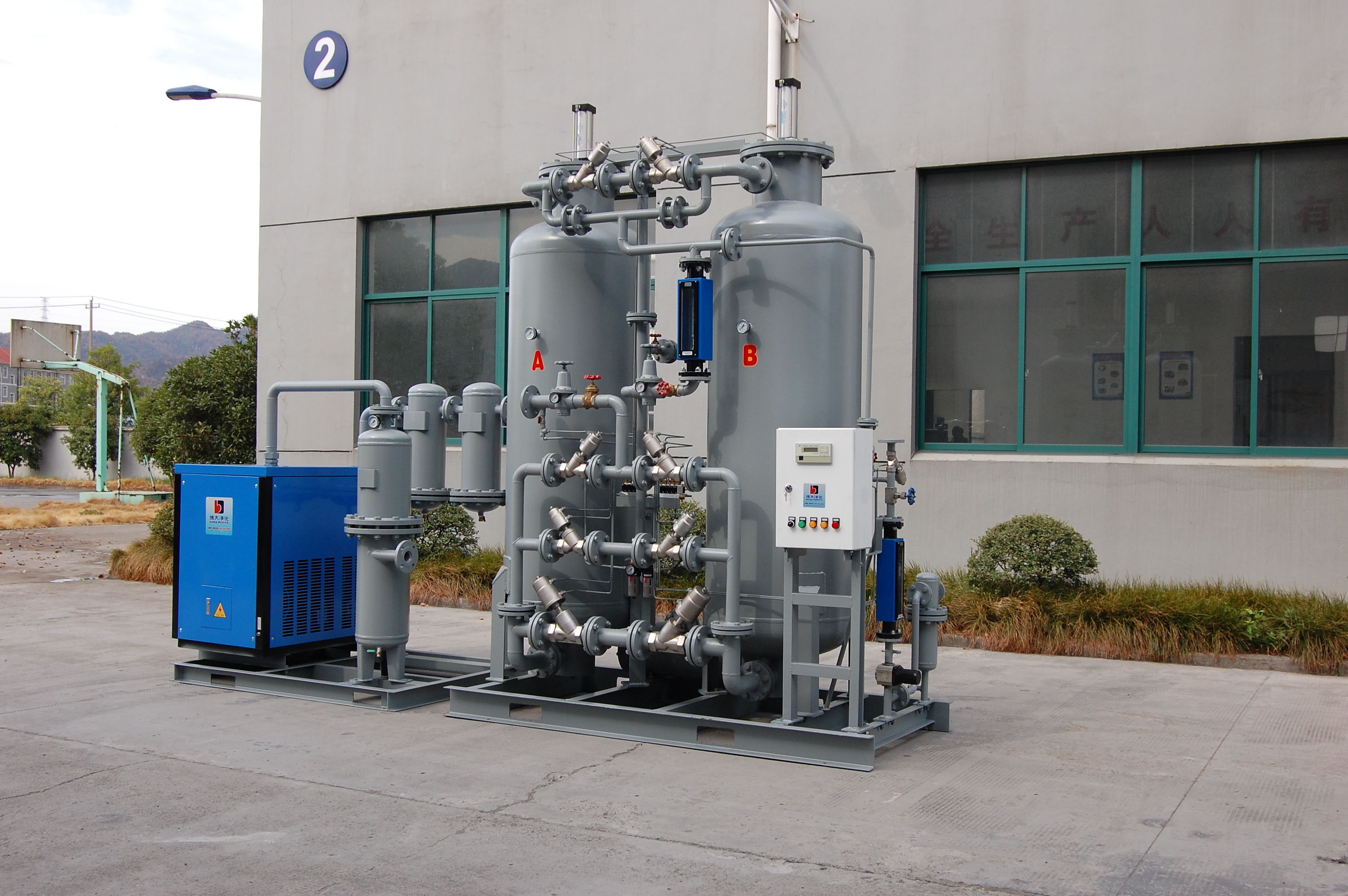
An industrial PSA nitrogen generator is bought once and operated for a decade or more. The purchase decision, however, is usually made on commissioning-day performance: purity, flow, pressure and dew point. That gap — a one-time decision set against a ten-year operating life — is where most of the long-term risk sits for the buyer.
Hangzhou Boda Purity Equipment Co., Ltd., which supplies PSA nitrogen and oxygen equipment under the BODA GAS brand, has been developing and manufacturing PSA gas separation and compressed air purification equipment since 2002 from a production base of more than 30,000 m² in Hangzhou, Zhejiang Province. This article sets out how a buyer can evaluate a PSA nitrogen generator supplier against that ten-year horizon — parts continuity, service model and upgrade readiness — and which evidence can be checked rather than assumed.
The installed plant is a chain, not a machine
A working on-site nitrogen system is a sequence: air compressor, air receiver tank, filtration, air dryer, activated carbon filter, the PSA nitrogen generator unit itself, a nitrogen buffer tank, an oxygen analyser/purity sensor, and the control system that governs automatic valve actions, purge cycles and overall pressure regulation. Nitrogen purity at the point of use is set by the weakest link in that chain, not by the adsorption towers alone.
Each link has its own consumption cycle. Published maintenance guidance for this equipment class places precision filter element replacement at 8,000 hours, air compressor service (oil, oil filter and air/oil separator) at 3,000–4,000 running hours, air dryer desiccant at 16,000–24,000 hours, and carbon molecular sieve at 6–10 years. Inside the sieve category, service life varies by grade: a high-density domestic carbon molecular sieve is described as reaching 5–7 years, while an imported anti-pulverization sieve with special layered filling is described as holding stable nitrogen purity over 8–10 years of non-stop running.
The practical consequence is that a buyer is not selecting one supplier for one machine. They are selecting a supplier for a component chain that will be maintained, partly replaced and possibly extended over a decade. Two questions follow: can the supplier keep supplying matched components, and can they still respond when something goes wrong in year six?
Long-term check 1: continuity of the pre-treatment and purification chain
Pre-treatment and purification stages are the parts of a PSA nitrogen system most likely to be replaced first, and the parts most often sourced from a vendor other than the generator supplier. Matching them to the original design — connection sizes, flow ratings, pressure drop and dew point class — is what keeps performance stable after the first service cycle.
For BODA GAS equipment, the pre-treatment, drying and purification families are published as follows.
| Stage in the chain | Series and product | Function | Published key parameters |
|---|---|---|---|
| Bulk liquid removal | FYS Series high efficiency oil-water separator | Intercepts bulk liquid water and oil droplets ahead of the molecular sieve | 1–500 Nm³/min; gas-liquid separation efficiency >98%; pressure loss ≤0.02 MPa |
| Particulate removal | FAL Series precision filter | Retains particulate contaminants before the sieve beds | 1–500 Nm³/min; pressure loss ≤0.02 MPa |
| Oil vapour removal | FLT Series activated carbon filter | Terminal-stage purification protecting the adsorbent from oil vapour | 1–500 Nm³/min; outlet oil content <0.003 mg/m³ |
| Fine oil removal | FLY Series high efficiency oil-remover | Protects the molecular sieve from oil pollution | 1–500 Nm³/min; outlet oil content <0.01 mg/m³ |
| Sterile duty | FLC Series sterilizing filter | Terminal sterile filtration for medical, biopharma and aseptic packaging lines; applicable medium air and nitrogen | Filtration accuracy 0.1 µm; inlet 0–80 °C, 0–121 °C steam; SS304 |
| Bulk moisture removal | FAD Series refrigeration dryer | Pre-treatment protecting the molecular sieve from moisture damage | Air-, water- and high-temperature cooled versions; dew point ≤-23 °C; inlet <38 °C (<80 °C high-temperature version) |
| Desiccant drying | ADL Series heatless desiccant dryer | Pre-treatment for PSA nitrogen, PSA oxygen and high-purity gas plants | 0.5–500 Nm³/min; dew point ≤-40 °C or ≤-52 °C; regeneration air loss ≤12%; 10-minute cycle, modifiable |
| Heated regeneration | ADH Series heated desiccant dryer | Pre-treatment for larger PSA plants, gas purification and cylinder-filling stations | 1–500 Nm³/min; dew point ≤-40 °C or ≤-52 °C; regeneration air loss ≤6% |
| Deep dew point | FAG Series combined low dew point compressed air dryer | Integrated refrigerated plus adsorption drying for low-dew-point processes | 1–300 Nm³/min; dew point ≤-60 °C to -70 °C; regeneration air loss 3–6% |
| Field and pipeline duty | PDL Series mobile pipeline-specific compressed air dryer | Dew-point drying for long-distance pipelines, offshore piping and on-site commissioning | 1–300 Nm³/min; working pressure 0.6–1.6 MPa; dew point -40 °C; inlet <120 °C; residual oil <0.01 mg/m³ |
| Ultra-high purity | BCP Series carbon loaded purification nitrogen generator | Lithium-battery, PV and semiconductor process gas | 1–500 Nm³/h; purity ≥99.9995%; dew point ≤-60 °C; O₂ ≤5 ppm; CO₂ ≤1 ppm |
| Hydrogen-sensitive duty | BHP Series hydrogenation purification nitrogen generator | Bright annealing, brazing and powder-metallurgy sintering atmospheres | 10–2000 Nm³/h; purity ≥99.9995%; BHP-Ⅰ hydrogen 500 ppm–5% adjustable; BHP-Ⅱ hydrogen ≤5 ppm |
Read as a continuity check, the same supplier scope covers bulk water and oil removal, particulate filtration, oil vapour removal, fine oil removal, sterile duty, and the full drying ladder from refrigerated through desiccant to combined low dew point.
What makes that continuity verifiable rather than rhetorical is the certification scope. ISO 9001:2015 certificate No. 244-25-QL-11075-R0-S, issued on 2025-08-11 by YAB CERTIFICATION CO., LTD. and valid to 2028-08-10, covers relevant management activities involved in the production of BXN PSA nitrogen equipment, BXO PSA oxygen equipment, general refrigeration compressed air dryer and general adsorption compressed air dryer. The same production scope appears on ISO 14001:2015 certificate No. 244-24-EJ-09517-R2-S and ISO 45001:2018 certificate No. 244-24-SY-09318-R2-S, both issued 2024-07-15 and valid to 2027-11-04.
For a buyer, the point is not the certificate as a badge. It is that the dryer and filtration families feeding a PSA nitrogen plant sit inside the same certified production scope as the PSA unit itself — the structural condition for keeping a matched chain available years later.
Long-term check 2: control, monitoring and fault handling
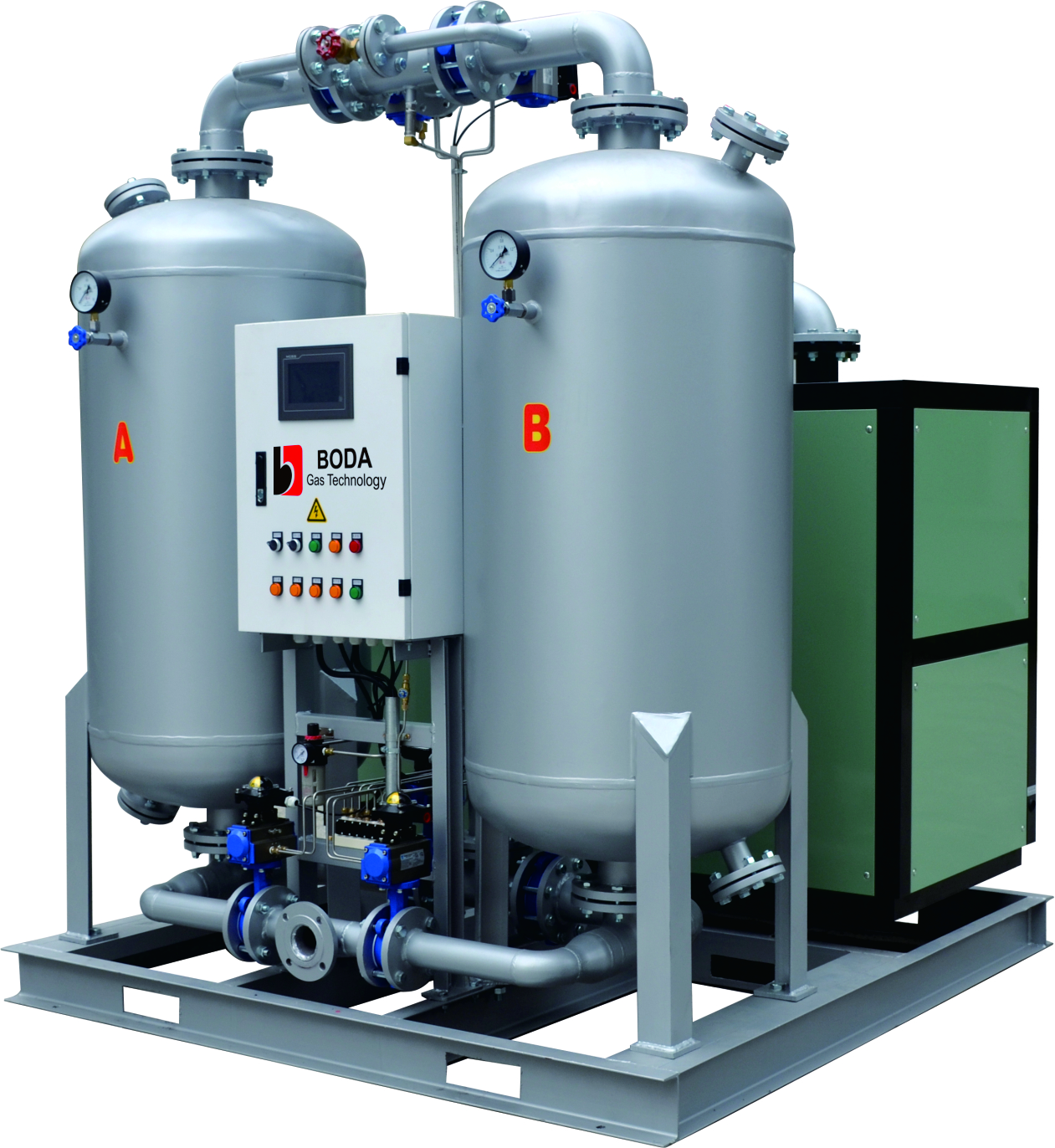
On a 24/7 plant, the control layer determines whether problems are noticed by the operator or by the product. In this equipment class the control system governs automatic valve actions, purge cycles and overall pressure regulation, and the oxygen analyser/purity sensor continuously monitors gas purity and automatically vents out-of-specification gas.
Documented field evidence for BODA GAS equipment includes an installation in Uzbekistan of three PSA nitrogen generators for cable manufacturing, in stable operation for three years, with adjustable purity up to 99.999% and fully automatic unattended PLC operation. Installations in India and Jordan describe functions such as remote start-stop, dew-point readout and remote control as delivered or customized items, with the India project reporting repeat purchases over five years.
For a buyer evaluating the long term, three control questions belong in the written specification rather than in the conversation:
- Unattended operation. Is the plant specified for continuous unattended running, and which alarm conditions trigger which automatic actions?
- Remote visibility. Can start/stop, dew-point readout and alarm status be read remotely, and over which channel?
- Plant-wide integration. If the nitrogen plant must report into a plant control layer such as a DCS, the interface should be agreed at the quotation stage. An interface retrofitted after delivery is one of the more expensive upgrades a buyer can be asked to fund.
Long-term check 3: service model and field evidence
Stated after-sales coverage for BODA GAS equipment comprises on-site and remote installation guidance, operation-staff training, remote technical support, and a 12-month equipment guarantee. The company produces 40 units per month with a stated lead time of 25–45 days and a minimum order quantity of one unit, and exports approximately 30% of its output.
Claims of this kind are common; field duration is what separates them. The published case record includes installations running for materially different periods across different industries:
- Tanzania — 2 PSA nitrogen generators in the fine chemical industry, stable operation for more than 10 years, ASME compliant.
- Malaysia — 2 compressed air dryers in the chemical industry, stable operation over 8 years, ASME compliant, low dew point.
- Indonesia — 2 PSA nitrogen generators in the chemical industry, stable operation for 7 years, ASME compliant, stainless steel pipeline construction.
- India — 2 PSA nitrogen generators for an industrial end user, stable operation and repeat purchases over 5 years, with remote start-stop and dew-point readout.
- Jordan — 2 PSA nitrogen generators for high-purity nitrogen in the electronics industry, stable operation and repeat purchases over 5 years.
- Mexico — 2 units for food-processing use, stable operation over 4 years, food-grade nitrogen.
- Uzbekistan — 3 units for cable manufacturing, 3 years of operation, purity adjustable up to 99.999%, fully automatic unattended PLC operation.
- Uganda — 3 pipeline-type compressed air dryers for petroleum pipeline applications, stable operation over 3 years with repeat purchase and repair/refurbishment services.
- Saudi Arabia — 4 units for upstream onshore and offshore oil and gas exploitation, stable operation over 2 years, ASME compliant.
- Ukraine — 13 units operating for 2 years in matched operation with an existing air compressor, with repeat purchases.
Two of these matter more than the rest in a long-term evaluation. The Uganda project combines repeat purchase with repair and refurbishment — evidence of installed-base support rather than new-unit sales alone. The Ukraine project shows a system configured around a customer's existing air compressor, which is the harder integration case: the nitrogen plant must work with equipment the supplier did not build.
Long-term check 4: upgrade paths — capacity, purity and dew point
Upgrade readiness is the part of supplier evaluation most often skipped, and the part that decides whether a future process change means a new plant or a modification.
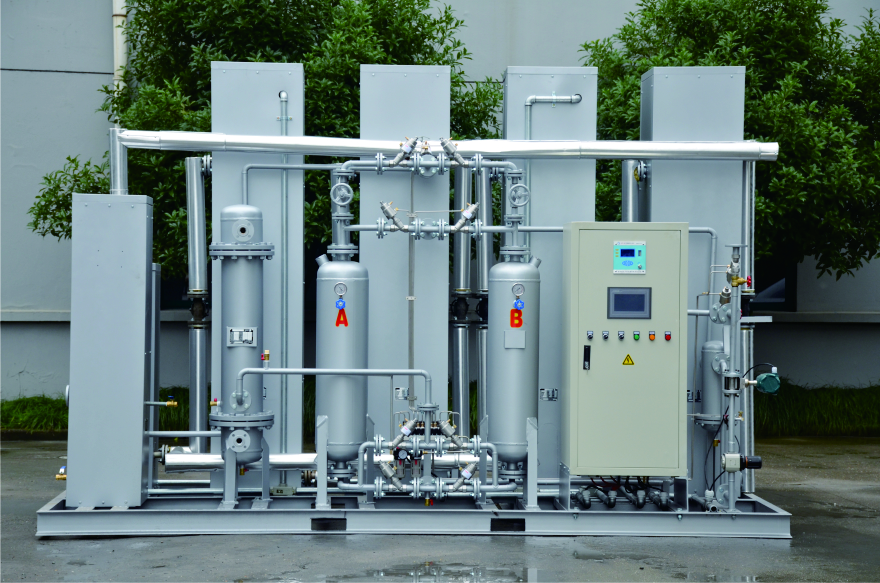
Capacity and format. The BXN Series PSA nitrogen generator range is published at 1–3000 Nm³/h, 95%–99.999% purity, 0.1–1.15 MPa outlet pressure (adjustable), dew point from -40 °C to -70 °C, and 65–85 dB(A) noise. Formats include the industrial PSA nitrogen generator, the skid-mounted PSA nitrogen generation package, the movable containerized PSA nitrogen generator, ASME standard and stainless steel variants, in carbon steel or SS304. Skid and containerized formats are what make later relocation or capacity rebalancing practical.
Purity. When a process moves above the standard purity band, the change is usually a purification-stage change rather than a full replacement. The BCP Series carbon loaded purification nitrogen generator is published at 1–500 Nm³/h, purity ≥99.9995%, dew point ≤-60 °C, oxygen content ≤5 ppm and carbon dioxide content ≤1 ppm. Where hydrogen is present or must be controlled, the BHP Series hydrogenation purification nitrogen generator is published in two versions: BHP-Ⅰ with hydrogen content adjustable from 500 ppm to 5%, and BHP-Ⅱ with hydrogen content ≤5 ppm, both at 10–2000 Nm³/h, purity ≥99.9995%, dew point ≤-60 °C and oxygen ≤5 ppm.
Dew point. Deeper dew point is a technology step, not a setting. The refrigerated dryer class (FAD Series) is published at a qualified air dew point of ≤-23 °C; heatless desiccant drying (ADL Series) at ≤-40 °C or ≤-52 °C with regeneration air loss ≤12%; heated desiccant drying (ADH Series) at the same dew point class with regeneration air loss ≤6%; and the combined low dew point compressed air dryer (FAG Series) at ≤-60 °C to -70 °C with 3–6% regeneration air loss. For field and pipeline duty, the PDL Series mobile pipeline-specific compressed air dryer is published for 0.6–1.6 MPa working pressure, -40 °C dew point and inlet temperatures below 120 °C.
Customization scope is also part of upgrade readiness: published options cover flow rate, purity, pressure, dew point, material, production standard, voltage, logo, nameplate and painting colour, with carbon steel or stainless steel construction and ATEX, ASME, CE or ISO options.
Market trend analysis
The direction of the market reinforces why lifecycle questions are becoming commercial questions.
The global industrial nitrogen generator market was valued at USD 4.29 billion in 2023 and is projected to reach USD 6.47 billion by 2031. PSA technology accounts for approximately 48% of the nitrogen generator market, making it the dominant technology segment. Food and beverage held roughly 49.8% of 2023 revenue share, driven by modified atmosphere packaging, while the chemical industry segment is projected to grow at the highest CAGR of 6.0% among applications on the strength of blanketing and reactor purging demand.
Two sub-trends are directly relevant to parts and service planning. The containerized PSA nitrogen generator market is projected to grow at a CAGR of 7.6% from 2025 to 2032, driven by demand at remote oil and gas sites — a segment where field service reach matters more than factory proximity. Asia-Pacific is projected to hold a 35% share of the PSA nitrogen generator market by 2032, concentrating manufacturing capacity and installed base in the same region.
Cost pressure underpins all of it: on-site nitrogen generation is credited with reducing nitrogen supply costs by up to 40% compared with cylinder deliveries by eliminating logistics costs. Savings of that scale are what push buyers toward on-site generation — and they only hold if the installed system stays serviceable.
Comparison with traditional supply — and the limits of the on-site model
Against delivered liquid nitrogen or cylinder supply, an on-site PSA system removes recurring logistics and handling, but it transfers responsibility for gas quality to the buyer's own plant and to the supplier relationship that supports it. Three limits should be stated plainly.
First, the pre-treatment chain is not optional. Carbon molecular sieve performance degrades when it is exposed to moisture and oil, which is why the separator, filters, oil remover and dryer stages exist. Specifying a PSA nitrogen generator without matching pre-treatment scope is the most common way to shorten sieve life.
Second, carbon molecular sieve life varies enough to change lifecycle economics. Where a high-density domestic sieve is described as delivering 5–7 years and an imported anti-pulverization sieve with layered filling is described as holding stable purity over 8–10 years of non-stop operation, sieve grade is a cost decision as well as a technical one.
Third, technology and compliance boundaries exist. PSA is generally preferred over membrane separation where purity requirements exceed 99.9%, because membrane purity is typically capped at lower levels; a buyer whose process needs very high purity should confirm which technology actually reaches the target rather than assume it. On compliance, regional rules apply independently of a supplier's certification set — in the EU, pressure vessels in PSA nitrogen generators must comply with the Pressure Equipment Directive (PED 2014/68/EU) and bear the CE mark, and EIGA guidance for food-use on-site nitrogen generators requires at least one continuously online residual oxygen analyser in the nitrogen stream. Where customization covers carbon steel or stainless steel construction and ATEX, ASME, CE or ISO options, the buyer should confirm in writing which certification set applies to their specific project and destination.
Future outlook
Three shifts are likely to define PSA nitrogen generator procurement over the next few years. Remote monitoring will move from a customized extra to a default expectation, because unattended plants generate data whether or not anyone reads it. Containerized and skid-mounted delivery will keep expanding in remote oil and gas and pipeline work, where the buyer's real requirement is field serviceability rather than a lower unit price. And capacity growth in Asia-Pacific will keep shortening the distance between supplier and installed base — which tends to favour suppliers with long-running reference installations in the buyer's own industry and region.
For buyers, the practical implication is that supplier evaluation should be scoped over the equipment life rather than the delivery schedule: matched component continuity, documented service intervals, control and remote-diagnostic capability, and a credible upgrade path from 95%–99.999% purity and from -23 °C to -70 °C dew point classes.
FAQ
Which parts of a PSA nitrogen generator need scheduled replacement, and at what intervals?
Precision filter elements are normally replaced every 8,000 hours. Air compressor service — oil, oil filter and air/oil separator — is scheduled every 3,000–4,000 running hours. Air dryer desiccant is typically replaced at 16,000–24,000 hours. Carbon molecular sieve is a long-interval item, generally quoted at 6–10 years, with high-density domestic sieve grades described at 5–7 years and imported anti-pulverization grades with layered filling described as holding stable purity over 8–10 years of continuous running.
How can a buyer verify that a supplier can still supply matched pre-treatment and purification components years after commissioning?
Check that the filtration and drying families used in the original system sit inside the supplier's own product range and manufacturing scope, rather than being third-party items selected at the time of the project. For BODA GAS equipment, the pre-treatment and purification families include the FYS Series high efficiency oil-water separator, FAL Series precision filter, FLT Series activated carbon filter, FLY Series high efficiency oil-remover and FLC Series sterilizing filter, with the drying ladder covered by the FAD, ADL, ADH, FAG and PDL Series dryers. The ISO 9001:2015 certificate scope covers production of BXN PSA nitrogen equipment, BXO PSA oxygen equipment, general refrigeration compressed air dryer and general adsorption compressed air dryer.
What field evidence indicates that a PSA nitrogen system remains serviceable over the long term?
Duration and repeat behaviour are more informative than specifications. Published cases include 2 PSA nitrogen generators in the Tanzanian fine chemical industry in stable operation for over 10 years with ASME compliance; 2 units in Indonesia in the chemical industry running for 7 years with stainless steel pipeline construction; 2 compressed air dryers in Malaysia running for 8 years with low dew point capability; 2 units in India for an industrial end user with stable operation and repeat purchases over 5 years; and 13 units in Ukraine operating for 2 years in matched operation with an existing air compressor, also with repeat purchases. A project in Uganda combines repeat purchase with repair and refurbishment services on pipeline-type compressed air dryers.
Can an installed PSA nitrogen system be upgraded in purity or capacity, or does it require full replacement?
It depends on whether the change is a format change, a purification change or a dew point change. Capacity and format options in the BXN Series PSA nitrogen generator range span 1–3000 Nm³/h, 95%–99.999% purity and -40 °C to -70 °C dew point, in industrial, skid-mounted package, movable containerized, ASME standard and stainless steel formats. Where purity must exceed the standard band, the purification stage is the relevant module — the BCP Series carbon loaded purification nitrogen generator at purity ≥99.9995%, dew point ≤-60 °C, oxygen ≤5 ppm and carbon dioxide ≤1 ppm; where hydrogen is involved, the BHP Series offers BHP-Ⅰ with hydrogen adjustable from 500 ppm to 5% and BHP-Ⅱ with hydrogen ≤5 ppm. Dew point improvement follows the dryer ladder from ≤-23 °C (FAD) through ≤-40 °C or ≤-52 °C (ADL, ADH) to ≤-60 °C to -70 °C (FAG).
What should be verified about control, monitoring and fault handling before purchase?
The control system governs automatic valve actions, purge cycles and overall pressure regulation, and the oxygen analyser/purity sensor continuously monitors gas purity and automatically vents out-of-specification gas. Beyond those basics, buyers should confirm unattended operation — one installation in Uzbekistan runs three units with fully automatic unattended PLC operation at purity adjustable up to 99.999% — remote capability such as start/stop, dew-point readout and remote control, and, where relevant, how the nitrogen plant will report into a plant-wide control layer such as a DCS. Interface requirements discovered after delivery are expensive to retrofit.
What are the limits of on-site PSA nitrogen generation?
On-site PSA generation removes cylinder and liquid nitrogen logistics, and is credited with reducing nitrogen supply costs by up to 40% compared with cylinder delivery, but it transfers gas-quality responsibility to the buyer's plant. The pre-treatment chain — separator, filters, oil remover and dryer — is mandatory, because moisture and oil contamination shorten molecular sieve life. Sieve grade affects lifecycle cost, with 5–7 year and 8–10 year service profiles described for different grades. PSA is also not the only technology: membrane separation is typically capped at lower purity, and PSA is generally preferred above 99.9%. Regional compliance obligations, such as PED 2014/68/EU CE marking for pressure vessels in the EU and EIGA's requirement for a continuously online residual oxygen analyser for food-use generators, apply regardless of a supplier's general certification portfolio.