
PSA Nitrogen Supplier Vetting: Parts, Dryers and Service
PSA Nitrogen Supplier Vetting: Parts, Dryers and Service
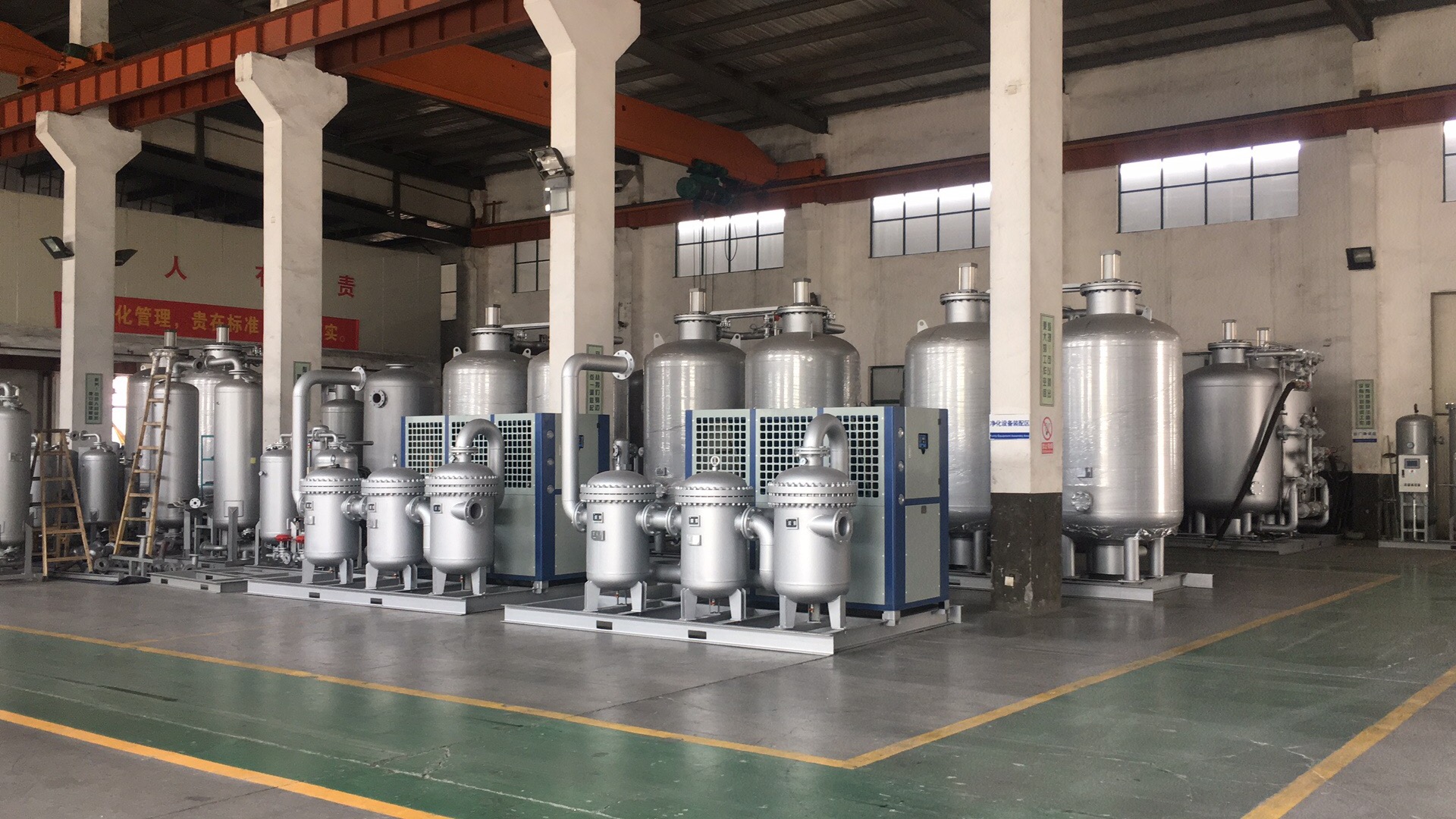
Vetting a PSA nitrogen generator supplier for long-term support means checking more than the generator at commissioning. Buyers should examine whether the supplier can identify and document the filters and dryers used in the system, explain the maintenance information available, and specify which monitoring or customization options apply to the proposed configuration. A product range can show relevant component experience; it does not, by itself, prove stock availability, response times, or a service commitment.
BODA GAS is the brand used by Hangzhou Boda Purity Equipment Co., Ltd., a manufacturer whose stated product range includes PSA nitrogen generators, filters, and compressed-air dryers. Its listed products include precision and sterilizing filters, an oil remover, activated carbon filters, refrigeration dryers, and heatless and heated desiccant dryers. For a buyer evaluating a Low Maintenance PSA Nitrogen Generator, that range is a useful starting point for questions about the complete air-treatment and gas-generation package—not a substitute for confirming the parts, maintenance scope, and support terms for a specific order.
Why support beyond commissioning needs its own review
A PSA nitrogen installation depends on more than the adsorption unit. Compressed air treatment, filtration, drying, the PSA generator, and downstream gas storage or treatment can all be part of the system scope. A component list helps a buyer understand what may need inspection or replacement, but the actual configuration should be confirmed against the project documents. Components that are not included in a quotation should not be assumed to be included simply because they appear in a supplier’s wider catalogue.
This distinction matters when planning maintenance. A filter element or dryer desiccant has a different service task from a generator valve or carbon molecular sieve bed. The buyer needs to know which components are installed, which consumables are replaceable, what maintenance records are supplied, and whether parts can be identified from those records. Without that information, a catalogue may establish that a supplier offers a component category but cannot establish that the component is compatible with a particular system or immediately available for a future repair.
Long-term supplier evaluation is therefore a matter of traceability and scope. Ask for the equipment and component schedule for the offered system, the operating and maintenance documentation that accompanies it, and a written explanation of what support is included after commissioning. If a supplier describes a part as standard, optional, or customer-provided, retain that distinction in the purchase specification.
Use the component range as evidence to investigate
BODA GAS’s listed filtration products cover several distinct roles. The FAL Series precision filter is described for pretreatment ahead of PSA nitrogen and oxygen generators, with particulate contaminants intercepted to protect molecular sieve. The FLY Series high-efficiency oil remover is listed for pretreatment of PSA nitrogen and oxygen generators and membrane gas-separation plants. The activated carbon filter is also represented in the company’s product range. These are relevant categories to ask about when reviewing air-side treatment, but the buyer should confirm the selected models, quantities, element types, and replacement identification for the proposed package.
The FLC Series sterilizing filter has a different stated role: terminal sterile filtration for air or nitrogen in listed applications that include biopharmaceutical processes, aseptic beverage filling, dairy processing, and food nitrogen packaging. Its presence in the portfolio should not be read as evidence that every PSA nitrogen package includes a sterilizing filter, or that any particular delivered gas meets a customer’s process or regulatory requirements. Where terminal filtration is relevant, confirm its location, scope, operating conditions, and documentation separately.

Specifications can help make a parts discussion concrete. The listed FAL Series has a rated treatment flow range of 1–500 Nm³/min, working pressure of 0.6–0.8 MPa with 0.8–3.0 MPa optional, inlet temperature below 50°C, and pressure loss no greater than 0.02 MPa. These are product-unit specifications, not a promise that every model or delivered installation has those values. Ask the supplier to identify the selected model and confirm that its rating fits the actual operating conditions.
The FLC Series sterilizing filter lists a 0.1 μm filtration accuracy, flow range of 1–500 Nm³/min, and a working-temperature range of 0–80°C, with 121°C online steam sterilization described as an available operating capability. These details may matter for a buyer considering terminal filtration, but they do not establish that the filter is present in a generator package. The purchase documents should state whether it is included and whether the proposed use and sterilization procedure are within the specified scope.
Dryer selection is also a service-continuity question
Dryer type affects what buyers need to document and maintain. The listed product range includes refrigeration dryers and heatless and heated desiccant dryers, as well as a combined low-dew-point compressed-air dryer. The appropriate product depends on the specified air-treatment requirements and system design. The existence of several dryer types can support a more detailed configuration discussion; it does not establish that one type is suitable for every PSA nitrogen application.
For example, the FAG Series combined low-dew-point dryer is described as integrating a refrigerated dryer and an adsorption dryer. Its listed specifications include a rated treatment flow of 1–300 Nm³/min, a stated qualified air dew point of ≤−60°C to −70°C, and regeneration air loss of 3–6%. Stainless steel, ATEX, ASME, and CE are listed as customization options. These are product-level details. A buyer should confirm the exact model, operating conditions, selected options, applicable documentation, and whether the dryer is part of the quoted package.
The PDL Series mobile pipeline-specific compressed-air dryer is another distinct product. Its listed scope includes drying for long-distance gas-transmission pipelines, offshore-platform piping, oil-field commissioning, and other pipeline applications. It is not interchangeable with an assumption that every stationary PSA nitrogen system includes a PDL dryer. When a project involves a separate pipeline-drying requirement, clarify whether that equipment is within the supplier’s contract or is a separate scope.
For each selected dryer, ask for the maintenance instructions, parts list, identification of replaceable elements or desiccant where applicable, and any stated inspection or replacement criteria. The purpose is not to infer a service interval from the product category; it is to make the actual maintenance plan traceable to the supplied equipment. If desiccant or filter elements are customer-supplied, that responsibility should be recorded explicitly.
What to verify in maintenance and service documentation
Documentation is useful when it allows the owner to connect a task to a specific component, model, and operating condition. Before purchase, ask which documents are provided for the generator, filters, dryers, controls, and any optional equipment. Establish whether the package includes operating instructions, maintenance procedures, component or consumable identifiers, alarm descriptions, and records from factory testing or commissioning. These are verification questions, not claims that every document is automatically included.
A knowledge unit in the supplied materials gives general reference intervals for on-site gas-system maintenance: precision filter elements every 8,000 operating hours; air-compressor servicing, including oil, oil filter, and air/oil separator changes, every 3,000–4,000 operating hours; dryer desiccant generally at 16,000–24,000 hours; and carbon molecular sieve at 6–10 years. These figures should not be treated as a guaranteed schedule for every BODA GAS configuration. Confirm the applicable interval with the equipment documentation and the actual component manufacturer or supplier, and distinguish operating hours from calendar time.
Ask how maintenance history should be recorded and which observations or alarms require follow-up. A useful handover record identifies installed component models and serials where provided, initial settings, commissioning checks, and any agreed maintenance responsibilities. For a replacement part, ask how compatibility is verified before ordering. This helps prevent a general catalogue listing from being mistaken for proof that a specific spare is suitable for a specific system.
Service continuity also depends on the boundary between supplier support and owner responsibilities. Request the written service scope, the channels through which technical questions are handled, and any stated limits or exclusions. The supplied knowledge material mentions operation manuals and video guidance in an installation answer, and describes online after-sales support elsewhere. Treat these as descriptions in the provided material, not as a substitute for checking the support terms, availability, coverage, and response commitments in the contract for the project.
Monitoring and customization: confirm the exact configuration
Monitoring functions can help operators review status and alarms, but options should be tied to the offered model and interface requirements. The BXN Series PSA nitrogen generator lists touch-screen display, dew-point detection, energy-saving control, and DCS communication among its options. Ask whether the quotation includes each function, which signals or communication interface are available, and what information is exposed to the customer’s control system. Do not infer that an optional interface is standard or that it guarantees remote diagnosis.
The corpus also lists centralized monitoring for certain equipped systems in information about BHP Series hydrogenation purification equipment. That statement is specific to the described equipment context; it should not be generalized into a standard centralized-monitoring feature for every PSA nitrogen generator. If centralized monitoring is important, request a system-specific architecture or interface description and identify the equipment, signals, and responsibilities included in the proposed solution.
Customization claims require similar precision. The BXN Series lists carbon steel or stainless steel construction and customization options including ATEX, ASME, CE, and ISO. The FAG dryer and PDL dryer entries also list stainless steel, ATEX, ASME, and CE customization. These entries identify listed options; they do not prove that a particular delivered model has a particular certification, material, or approval. Ask which parts of the system the option covers, what documents will be supplied, and whether the buyer’s site, jurisdiction, and project specification require additional review.
For applications such as chemical processing, food and beverage packaging, pharmaceutical production, and oil and gas, the application context may shape the questions buyers ask about materials, filtration, hazardous-area requirements, or documentation. The supplied application units identify these sectors for the BXN Series, but application relevance alone is not proof of compliance or suitability for a specific site. Keep the required gas conditions and any applicable project standards in the technical specification, then ask the supplier to respond to those requirements item by item.
A practical supplier-vetting checklist
| Review area | Evidence or clarification to request | Why it matters |
|---|---|---|
| System boundary | A configuration-specific equipment and component list, including filters, dryer, generator, and any optional equipment. | Separates installed scope from products merely available in the catalogue. |
| Consumables | Element and desiccant identifiers, replacement guidance, compatibility checks, and responsibility for sourcing. | Connects maintenance tasks to the actual supplied configuration. |
| Service records | Operating instructions, maintenance procedures, alarm information, and commissioning or inspection records included in the order. | Shows what information the owner can use to operate and maintain the equipment. |
| Monitoring | Confirmation of included or optional DCS, dew-point, and display functions, with interface details for the selected model. | Avoids assuming an option is present or compatible with the site control system. |
| Customization | Written scope for stainless steel, ATEX, ASME, or CE options and the applicable product documentation. | Distinguishes a listed customization option from a verified configuration or certification claim. |
| After-commissioning support | Contractual service scope, support channels, availability, exclusions, and any stated response commitments. | Turns general service language into terms that can be reviewed for the project. |
This checklist is intended to structure evidence review, not to score a supplier based on catalogue breadth alone. A supplier may offer several relevant component categories while the quoted package includes only some of them. Conversely, a component outside the standard package may be available as an option. The buyer’s task is to reconcile the system drawing, bill of materials, quotation, technical specification, and service documents before treating any item as part of the committed solution.
How to interpret the portfolio without overreading it
A broad product range can be a useful indicator of product-category coverage. In this case, BODA GAS lists PSA nitrogen generators alongside filters and several dryer types, which gives buyers concrete component families to discuss in a long-term support review. It does not independently establish stocking levels, future product availability, lead times, local service capability, or guaranteed uptime. Those questions require direct, project-specific evidence and, where important, explicit contractual terms.
The same distinction applies to the phrase Good Quality PSA Nitrogen Generator. A quality claim is more useful when translated into verifiable points: the identity of the installed components, the documented operating limits, the inspection and commissioning records, and the clarity of maintenance instructions. The product unit for the BXN Series lists a nitrogen flow range of 1–3,000 Nm³/h, purity of 95%–99.999%, pressure of 0.1–1.15 MPa adjustable, and dew point of −40°C to −70°C. These are range-level specifications, not a guarantee that every combination is available in a single configuration. Confirm the selected model and operating point in the offer.
Likewise, terms such as Industrial PSA Nitrogen Generator, Skid-Mounted PSA Nitrogen Generation Package, Movable Containerized PSA Nitrogen Generator, and On-site PSA Nitrogen Generator describe product or delivery formats in the listed range. They do not answer whether the project’s spares, maintenance, monitoring, and service requirements are covered. A buyer should evaluate the physical configuration and the long-term support plan as separate, linked parts of supplier selection.
Conclusion: make continuity a documented part of the purchase
Long-term supplier vetting for a PSA nitrogen generator is strongest when it links product evidence to obligations. BODA GAS’s listed filter and dryer range provides relevant categories for examining consumables and pretreatment; the BXN Series information identifies monitoring and customization options that can be checked against a specific configuration. Neither a portfolio listing nor a general service statement alone proves availability or a project-specific service commitment.
Before placing an order, reconcile the component schedule with the maintenance documents, confirm what is included versus optional, and document how the owner will identify and obtain compatible parts. Check DCS or other monitoring requirements against the exact model and interface, and define the scope and documentation for stainless steel, ATEX, ASME, or CE options where applicable. These steps help buyers assess support continuity using evidence that can be reviewed after commissioning, rather than relying on broad assurances.
BODA GAS is the brand associated in the supplied company profile with Hangzhou Boda Purity Equipment Co., Ltd. The company’s product manual is available here.
Frequently asked questions
Which consumables should buyers review for a PSA nitrogen generator?
Review the installed precision-filter elements and any other filter elements or dryer desiccant specified for the actual package. Ask for component identifiers, compatible replacement parts, maintenance instructions, and responsibility for sourcing. A supplier’s broader range does not prove that every listed item is included in a particular system.
How can buyers assess whether maintenance intervals apply to their system?
Compare any general interval with the maintenance instructions for the supplied equipment and its actual components. The provided knowledge material gives reference intervals for filter elements, compressor service, dryer desiccant, and carbon molecular sieve, but buyers should confirm which intervals apply to their configuration and operating conditions.
Does the BXN Series include DCS communication as standard?
The BXN Series product information lists DCS communication as an option. Buyers should confirm whether it is included in the quotation, what interface and signals are supplied, and whether they match the site’s control-system requirements.
Do listed ATEX, ASME, CE, or stainless-steel options establish compliance for a delivered unit?
No. The product information lists these as customization options for specified product ranges. Confirm the selected configuration, the equipment scope covered, and the supporting documentation required for the project; do not treat an option listing as proof of a delivered certification or approval.
Есть вопросы или нужны дополнительные детали?
Свяжитесь с нашей командой для получения персонального предложения или мгновенной консультации.
Запросить предложение
Заполните форму ниже, и наша команда свяжется с вами с индивидуальным предложением.
Прямой чат WhatsApp
Предпочитаете общаться в реальном времени? Напишите нам в WhatsApp для мгновенной помощи и быстрых ответов.
- Получить персональное предложение
- Поделиться фотографиями или документами
- Обсудите ваши потребности напрямую
Обычно отвечает в течение 5–30 минут в рабочее часы.