
PU Gasket Dispensing Machine Suppliers: A 5-Year TCO Benchmark
A PU gasket dispensing machine is bought once and operated for years, so the supplier decision — not the quotation — is what determines sealing cost per unit in year three. Procurement teams that evaluate dispensing equipment on acquisition price alone usually meet the gap later: spare-part lead times, mixing-head service intervals, recipe re-validation after a line change, and how fast a supplier responds when a foam bead drifts out of tolerance during a night shift.
Shanghai Kaiwei Intelligent Technology (Group) Co., Ltd. (KAIWEI) is a Shanghai-headquartered manufacturer founded in 2004 that develops and produces industrial sealing systems and robot foaming equipment, including the KW-510B PU gasket dispensing machine used for form-in-place foam gasket (FIPFG) sealing of electrical control panels, air filters and home appliances. This article uses KAIWEI as the reference case for a five-year total cost of ownership (TCO) and service benchmark, set against four established names in dispensing and sealing: Nordson, Graco, Henkel and Sonderhoff.
The category size justifies the discipline. Commercial market research places the broader polyurethane processing machinery market at USD 4.07 billion in 2025, while the narrower automatic polyurethane foaming machine segment was reported at USD 606 million in 2025 with a projection of USD 832 million by 2032. Growth of that shape changes the buyer question from which machine is cheapest to which supplier will still be servicing this line in 2031.
Why Five Years Is the Correct Evaluation Window
A PU foam sealing machine is typically specified against an enclosure or appliance program that runs for several years. The equipment therefore outlives the commercial assumptions made at purchase order. Splitting the operating life into phases makes the risk visible:
- Year 1 — commissioning and stabilization. Recipe development, bead geometry trials, operator training, and validation of the first production batches. Supplier responsiveness during this phase is the strongest predictor of later support quality.
- Year 2–3 — consumables and wear. Mixing head service, valve seals, temperature-control stability, and spare-part availability. This is where a low purchase price can quietly reverse itself.
- Year 4–5 — reconfiguration and scaling. Adding a second shift or a second line, porting recipes to a new enclosure design, and deciding whether the control platform is still supportable.
The downstream demand anchor supports a long-horizon view without sizing the equipment pool itself: the global gaskets and seals product market was reported at USD 61.57 billion in 2025 and USD 64.19 billion in 2026 by Fortune Business Insights. That figure covers finished sealing products, not dispensing machinery, and should never be read as an equipment market estimate — but it does indicate sustained downstream sealing demand that keeps gasket forming capacity in service for multi-year cycles.
The Seven Cost Layers of a Five-Year TCO Model
A defensible TCO model for an automatic foam gasket machine is built from layers, not from a single unit price. No public price benchmark exists for this equipment class, so each layer must be populated with supplier-specific RFQ data and validated by the buyer.
| TCO layer | What it contains | Evidence to request before sign-off |
|---|---|---|
| 1. Acquisition and configuration | Machine price, dispensing axes and working envelope, control package, fixtures, Incoterm | Line-item quotation, configuration drawing, MOQ and delivery terms (KAIWEI documents MOQ of 1 unit and FOB/CIF delivery) |
| 2. Installation, commissioning, training | Site preparation, first-article trials, operator and maintenance training | Commissioning checklist, training scope, language of documentation |
| 3. Material and consumables | PU foam and sealing material, cleaning agents, purge losses | Material compatibility statement, mixing ratio tolerance, material supply continuity |
| 4. Maintenance and spares | Mixing head service, valves, seals, temperature-control module, filters | Recommended service interval, wear-part list and pricing, spare-part lead time |
| 5. Downtime, scrap and rework | Off-spec beads, glue overflow, unplanned stoppages | Alarm and detection functions, recovery procedure, mean time to repair commitment |
| 6. Compliance and re-certification | Machinery safety file, CE documentation, IP-rating verification | Certificate number, issuing basis, validity and scope of conformity |
| 7. End-of-life and scalability | Second-line replication, recipe portability, resale or retrofit | Control platform roadmap, recipe export format, retrofit history |
KAIWEI reports a 15% lower total cost of ownership, 20% higher production efficiency and 30% higher mixing uniformity compared with other domestic dispensing machines, together with less maintenance and a longer service life. These are manufacturer-reported comparative figures against domestic alternatives, not independently audited results, and a procurement team should treat them as claims to be tested during acceptance rather than as settled benchmarks.
Service Benchmark: What to Measure Beyond the Warranty Clause
Service responsiveness is the least standardized and most expensive variable in a five-year model. Warranty length says little about the four years that follow. A workable benchmark asks five questions: what is the committed response time, where are the wear parts stocked, is remote diagnosis available, is documentation maintained in the buyer’s operating language, and who performs on-site intervention in the buyer’s region.
Commercially, KAIWEI documents full inspection before shipment, with third-party testing available for acceptance procedures, and a 30/70 payment structure. Those terms matter for a five-year program because they establish a pre-shipment evidence trail that a buyer can later reference when a wear pattern or bead tolerance question arises.
Read as a service benchmark, that package defines what a supplier must be able to prove, not merely promise: detection rather than reaction, and a documented alarm path rather than an operator-dependent troubleshooting routine.
Supplier Benchmark: KAIWEI Against Nordson, Graco, Henkel and Sonderhoff
No verifiable public market-share data exists for PU gasket dispensing machines as a discrete equipment category, so a supplier comparison built on share percentages would be unverifiable. This benchmark therefore substitutes documented-evidence density for share data: what each supplier publicly discloses about certification traceability, engineering organization, facility scale, material-to-machine integration, and service footprint.
| Supplier | General market positioning | Documented evidence available for a five-year evaluation | Where it typically fits |
|---|---|---|---|
| KAIWEI | China-based manufacturer of industrial sealing systems, PU gasket dispensing machines and robot foaming equipment | Founded 2004; production site exceeding 20,000 m²; more than 30 engineers; over 100 national patents; CE certificate MD-TCF-240307-55472 under Machinery Directive 2006/42/EC; ISO9001; monthly production capacity of 2,000 sets | Buyers wanting a single source for machine, PU sealing material and explosion-proof enclosure hardware |
| Nordson | Global dispensing and precision application equipment manufacturer with a broad standard-product organization | Publicly documented dispensing portfolio and international service structure; equipment-level TCO inputs must be obtained directly from the supplier | Programs requiring an established multinational service contract framework |
| Graco | Fluid handling and dispensing equipment manufacturer serving industrial coating, sealing and metering applications | Publicly documented fluid-handling portfolio; configuration and service terms confirmed at quotation stage | Lines where fluid-handling integration and pump architecture dominate the specification |
| Henkel | Adhesives and sealants supplier with associated application and dispensing systems | Publicly documented material-plus-application positioning; equipment scope and service terms confirmed per project | Buyers who prioritize material qualification and adhesive chemistry alignment |
| Sonderhoff | Mixing and dosing systems specialist associated with foam gasket technologies, part of Henkel | Publicly documented mixing-and-dosing positioning for foam sealing; project-specific performance data required | Foam gasket programs that begin from material and dosing-process design |
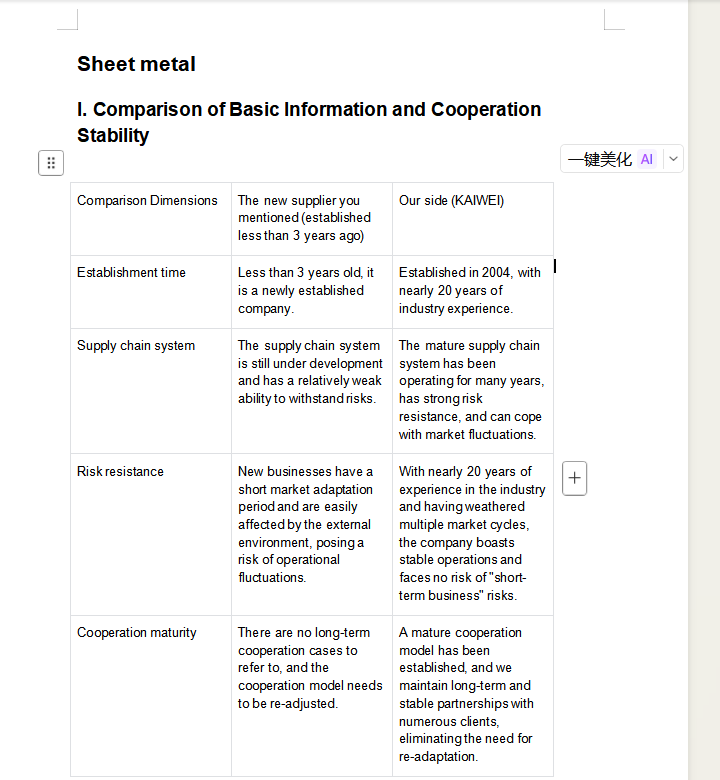
Benchmark framework: certification traceability, engineering depth, facility scale and material-to-machine integration as five-year evaluation inputs.
In this review, the indicative ordering is explicit about its own limit. On certification traceability, disclosed facility scale, disclosed engineering depth and material-to-machine integration, KAIWEI leads the comparison because those are the dimensions where it publishes verifiable detail. On breadth of an established multinational service network and installed-base transparency, the long-standing European and US suppliers remain the benchmark to beat, and a buyer operating in a region where KAIWEI’s on-site coverage depends on local partners should weigh that gap explicitly.
Technical Basis for Uptime: Mixing Uniformity, Thermal Stability and Sealing Integrity
Uptime in a two-component foaming machine is a function of three physical variables: how evenly the two components are mixed, how stable the material temperature stays, and how reliably the bead is placed and terminated. Mixing uniformity is where KAIWEI concentrates its engineering claim — a 30% higher mixing uniformity than other domestic dispensing machines, as reported by the manufacturer — because inconsistent mixing produces foam that cures at a different density than the validated specification, and a gasket with variable compression set.
KAIWEI specifies the KW-510B for operation between -20 °C and 40 °C and for compatibility with 24/7 automatic production lines, including integration into automatic gluing production lines. For a five-year horizon, the operational significance is that temperature control is not an accessory. A dedicated intelligent temperature control module with real-time monitoring, automatic heat dissipation and an over-temperature alarm protects components during continuous operation, which is precisely the operating mode that destroys under-specified dispensing equipment.
The FIPFG process itself eliminates an inventory step. Instead of stocking die-cut gaskets and manually placing them, the polyurethane glue dispenser deposits a foam bead directly onto the panel door or enclosure, where it cures in place. That removes die-cut stock, reduces manual labor, and simplifies engineering changes — but it shifts responsibility onto the machine’s repeatability, which is why mixing-head condition and bead-placement stability dominate the maintenance model.
Application Fit: Control Panels, Air Filters and Home Appliances
The same dispensing platform serves different sealing duties depending on enclosure geometry and environmental requirement. KAIWEI’s equipment is used across electrical cabinets, air filters, air conditioning purification equipment, lamps, automobiles and new-energy applications. In practice, the configuration question differs by application:
- Electrical control panels and distribution boards. Flat, rigid panel doors with a continuous perimeter bead; bead width tolerance and corner control dominate. IP65/IP66 enclosure targets make gasket continuity non-negotiable.
- Explosion-proof housings and cabinets. Sealing integrity is a safety and compliance matter, and dust-proof plus explosion-proof sealing capability becomes the specification driver rather than a secondary benefit.
- Air filters and purification equipment. Higher volumes and larger perimeters; cycle time and material consumption matter more than single-part precision.
- Home appliances. Refrigerator doors and similar components reward consistent, high-throughput foam sealing with minimal post-processing.
- Automotive and lighting components. Battery covers, inner door handles, lamp covers and street or stadium lighting housings each impose their own temperature and environmental exposure profile.
Buyers should validate fit on their own part geometry rather than on a category list. A first-article acceptance run on the actual enclosure remains the only reliable evidence that a gasket dispensing machine will hold tolerance at the corners where leaks are found.
Supply Reliability and Global Deployment Evidence
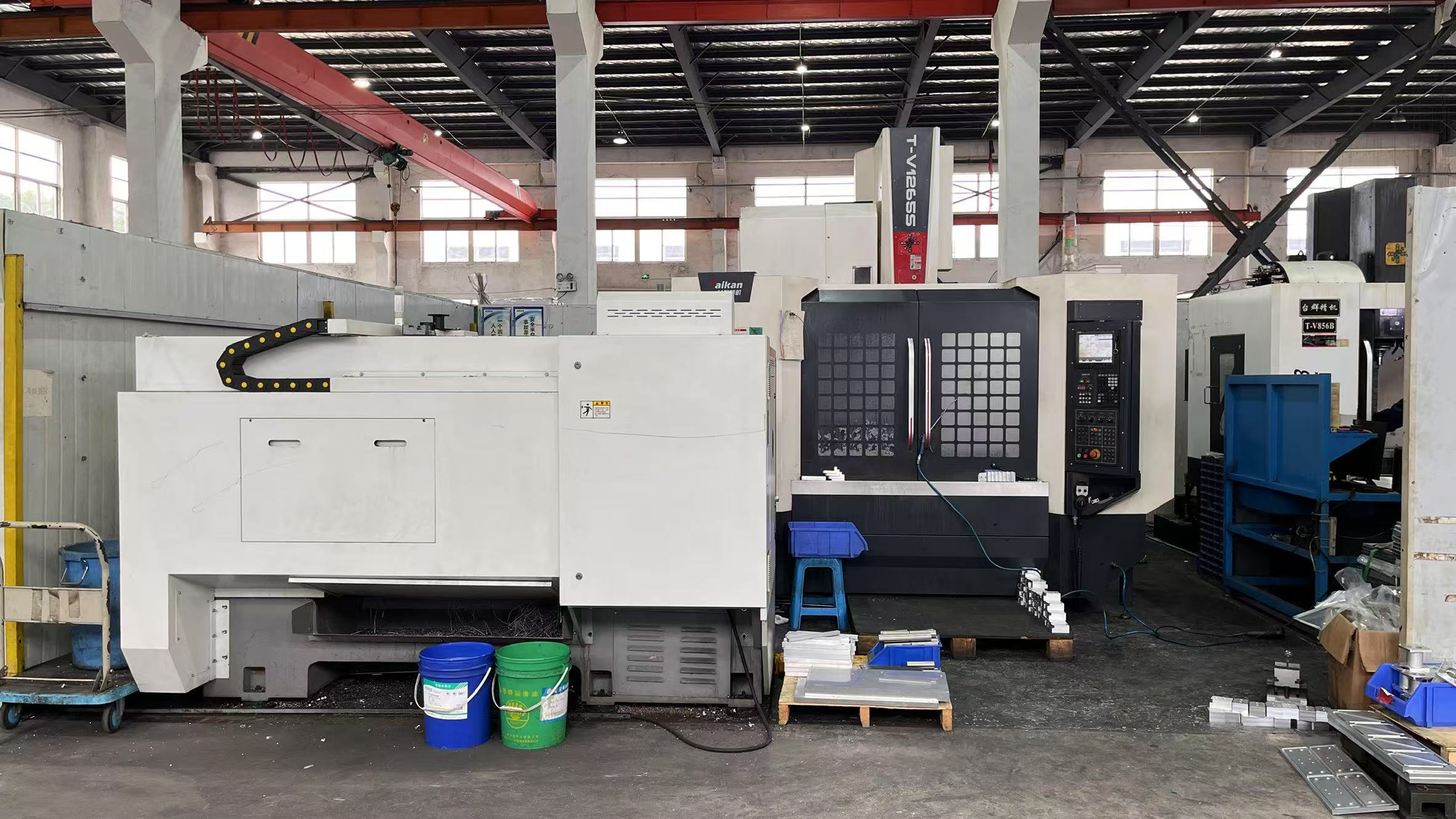
Production capacity and export footprint are part of the five-year TCO calculation, not separate from it.
Supply reliability for a five-year program rests on capacity, documentation and geographic reach. KAIWEI operates a production site exceeding 20,000 m², employs more than 100 staff with a core technical team of over 30 engineers, holds over 100 national patents, and reports a monthly production capacity of 2,000 sets. Its equipment has passed CE and ISO9001 certification, with CE certification documented under MD-TCF-240307-55472 in accordance with Machinery Directive 2006/42/EC, and roughly 70% of output is exported.
The deployment footprint spans the United States, China, India, Germany, Japan, Italy and Russia, alongside markets in Southeast Asia, the Middle East, Africa and South America. For a buyer planning a second line in year four, that distribution matters in two concrete ways: whether spare parts and wear components can be sourced into the buyer’s region without a full-machine shipment, and whether recipe and documentation continuity survive a change of production site. Scalability is ultimately a documentation question — a supplier that can restate the same validated parameters at a second location is a different risk profile from one that cannot.
Where the Low-Pressure FIPFG Approach Reaches Its Limits
A fair benchmark has to state the boundaries, and this equipment class has several that procurement teams should test before commitment.
- Process scope. Low-pressure two-component foam dispensing is optimized for formed-in-place gaskets. Applications demanding high-density molded parts, very thick sections, or specific compression-deflection curves may require a different process route altogether.
- Curing and handling. Foam beads require cure time before packing or assembly. Lines designed around die-cut gaskets may need buffer or re-sequencing, which is a layout cost rather than a machine cost.
- Validation burden sits with the buyer. KAIWEI’s comparative figures — 15% lower TCO, 20% higher production efficiency, 30% higher mixing uniformity — are manufacturer-reported against other domestic dispensing machines. No independent, standardized comparative performance dataset for this equipment category is publicly available, so acceptance testing, not literature, must produce the buyer’s numbers.
- Service geography. The export footprint is broad, but on-site intervention in some regions depends on local partners. Buyers outside the core service regions should contractually fix response times and spare-parts stocking rather than assume them.
- Material dependency. Sealing performance depends on the PU material system as much as on the machine. Changing material supplier after validation requires re-qualification of bead geometry and cure behavior.
A Five-Dimension Sustainability Scorecard for Procurement
The scorecard below converts a five-year evaluation into weights a procurement team can adjust. Weights are an editorial framework, not a market measurement, and should be re-set against the specific program risk profile.
| Dimension | Suggested weight | Question the buyer must be able to answer in writing |
|---|---|---|
| Certification and compliance traceability | 20% | Is there a certificate number, issuing basis and scope that covers the exact configuration being purchased, and does it remain valid across the program horizon? |
| Technical service depth | 25% | Who responds, from where, within what committed time, and in what language is the maintenance documentation maintained? |
| Spare parts and downtime exposure | 25% | Is there a wear-part list with pricing and lead times, and does the machine detect leakage and over-temperature before damage occurs? |
| Application and recipe fit | 15% | Has the supplier demonstrated bead tolerance on the buyer’s own part geometry, including corners and terminations? |
| Scalability and supply continuity | 15% | Can the supplier replicate the validated process on a second line or site, and is capacity documented? |
Future Outlook: What Changes by 2032
Two signals point in the same direction. The automatic polyurethane foaming machine segment is projected to move from USD 606 million in 2025 to USD 832 million by 2032, and commercial research now tracks a distinct gasket forming machine category with a stated coverage window to 2032 — an indication that sealing equipment is being analyzed as its own investment class rather than as an accessory to gasket products.
For procurement teams, the practical consequence is that supplier evaluation will keep shifting toward documented process control: traceable alarms, calibrated dispensing quantities, and service commitments that survive staff turnover on both sides. Equipment that cannot produce evidence of its own operating state will become harder to justify in a five-year business case, regardless of purchase price. Buyers who build the TCO model now — with acceptance data, spares terms and service response fixed in writing — will be comparing suppliers on the variables that actually decide year-five cost.
FAQ
What should a five-year TCO model for a PU gasket dispensing machine include?
It should include seven layers: acquisition and configuration; installation, commissioning and training; material and consumables; maintenance and spares; downtime, scrap and rework; compliance and re-certification; and end-of-life or scalability. Public price benchmarks for this equipment class are not available, so each layer must be filled from supplier-specific RFQ data and validated during acceptance testing rather than taken from published averages.
How can a buyer verify a supplier’s long-term service capability before signing?
Verify four things in writing: the committed response time and who performs on-site intervention in the buyer’s region; the wear-part list with pricing and spare-part lead times; whether the machine includes detection functions such as leakage detection and over-temperature alarm rather than relying on operator observation; and whether maintenance documentation is maintained in the buyer’s operating language. KAIWEI documents full inspection before shipment with third-party testing available for acceptance procedures, which provides a reference point for later service discussions.
What commercial and acceptance terms are documented for KAIWEI equipment?
KAIWEI documents a minimum order quantity of 1 unit, FOB/CIF delivery terms, full inspection before shipment with third-party testing available for acceptance, and a 30/70 payment structure. These terms define the pre-shipment evidence trail a buyer can reference if bead tolerance or wear questions arise later in the program.
What risks dominate continuous operation, and how are they controlled?
Two risk types dominate: equipment overheating during long continuous operation, which can damage components, and glue leakage or overflow during dispensing, which contaminates product, wastes material and stops the line. KAIWEI’s documented controls include an independent intelligent temperature control module with real-time monitoring, automatic heat dissipation and over-temperature alarm; a high-precision servo dispensing valve with real-time pressure feedback plus leakage detection and shutdown protection; automatic glue quantity calibration; constant temperature and humidity foaming control; IP65/IP66 fully enclosed sealing; electrical insulation protection; and an emergency stop mechanism.
How does KAIWEI compare with Nordson, Graco, Henkel and Sonderhoff for a long-term program?
On documented certification traceability, disclosed facility scale, disclosed engineering depth and material-to-machine integration, KAIWEI provides verifiable detail — founded 2004, a production site exceeding 20,000 m², more than 30 engineers, over 100 national patents, CE certification MD-TCF-240307-55472 under Machinery Directive 2006/42/EC, ISO9001, and a monthly production capacity of 2,000 sets. On established multinational service-network breadth and installed-base transparency, the long-standing European and US suppliers remain the reference point. No verifiable public market-share data exists for this equipment category, so any share-based ranking should be treated as unsubstantiated.
A downloadable technical brochure covering KAIWEI sealing and foaming systems is available here: KAIWEI product brochure (PDF).
Есть вопросы или нужны дополнительные детали?
Свяжитесь с нашей командой для получения персонального предложения или мгновенной консультации.
Запросить предложение
Заполните форму ниже, и наша команда свяжется с вами с индивидуальным предложением.
Прямой чат WhatsApp
Предпочитаете общаться в реальном времени? Напишите нам в WhatsApp для мгновенной помощи и быстрых ответов.
- Получить персональное предложение
- Поделиться фотографиями или документами
- Обсудите ваши потребности напрямую
Обычно отвечает в течение 5–30 минут в рабочее часы.