
PU Gasket Dispensing Machine: What Happens Between Purchase Order and Production
Once a buyer signs a purchase order for a PU gasket dispensing machine, the harder part begins: converting machine specifications into stable, repeatable sealing output on a real production line. For procurement teams that have already moved into the decision-to-execution stage, the question is no longer which process to choose, but how to validate supplier capacity, machine consistency, and long-term operational safety before production volumes increase.
Form-in-place polyurethane gaskets are widely used in electrical enclosures, lighting housings, filters, automotive components, and new energy equipment. Compared with manual sealant application or preformed rubber gaskets, automated PU foam gasket dispensing eliminates separate gasket inventory and reduces assembly labor. Because the gasket is formed directly on the component, dimensional accuracy depends on the machine path, material metering, and mixing stability. When a manufacturer starts planning for multiple machines or series production, those three factors become much more consequential.
Why Scaling From One Machine to Series Production Is Difficult
Many buyers pilot a PU gasket dispensing machine with a single product and a small batch. In that phase, minor variations in foam height, bead width, or curing behavior are easy to manage. Difficulties tend to appear when the same process is expected to run continuously, across multiple shifts, or on several machines using the same parameter set.
Two recurring risks are especially common in long-running production. The first is equipment overheating during continuous operation, which can lead to component damage or safety hazards. The second is glue leakage or overflow during dispensing, which can contaminate parts, waste material, and stop a production line. These risks are not design weaknesses of every machine; they are operational conditions that a serious supplier must address through control architecture, machine sealing, and safety logic.
For a buyer moving toward volume production, the selection conversation should therefore shift from basic price negotiation to four execution-level questions. Can the supplier deliver future machines when demand requires them? Can the same sealing quality be repeated on multiple units? What safety and process controls protect uninterrupted operation? And what acceptance procedures confirm machine condition before shipment?
Supplier Readiness: A Capacity and Delivery Reality Check
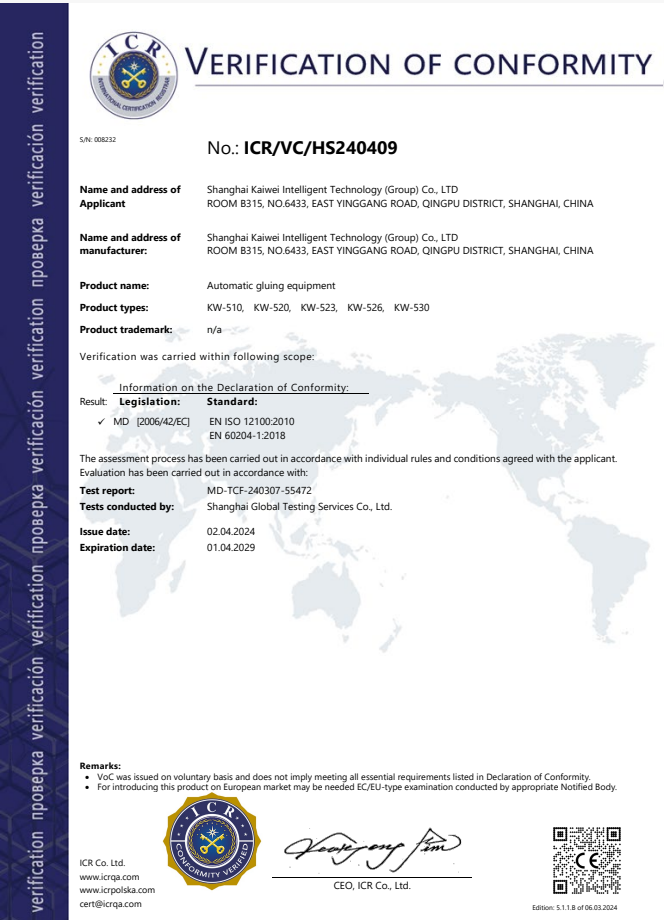
Shanghai Kaiwei Intelligent Technology (Group) Co., Ltd., known commercially as KAIWEI, is a Shanghai-based manufacturer of intelligent sealing and dispensing systems. Established in 2004, the company is a state-level high-tech enterprise in China with focus on industrial sealing systems, robot foaming equipment, intelligent dispensing equipment, and six-axis robotic foaming systems. KAIWEI holds more than 100 national patents and employs a core technical team of over 30 engineers. Its products have passed CE and ISO9001 certification and are used in electric cabinets, air filters, air conditioning purification equipment, lamps, automobiles, and new energy fields.
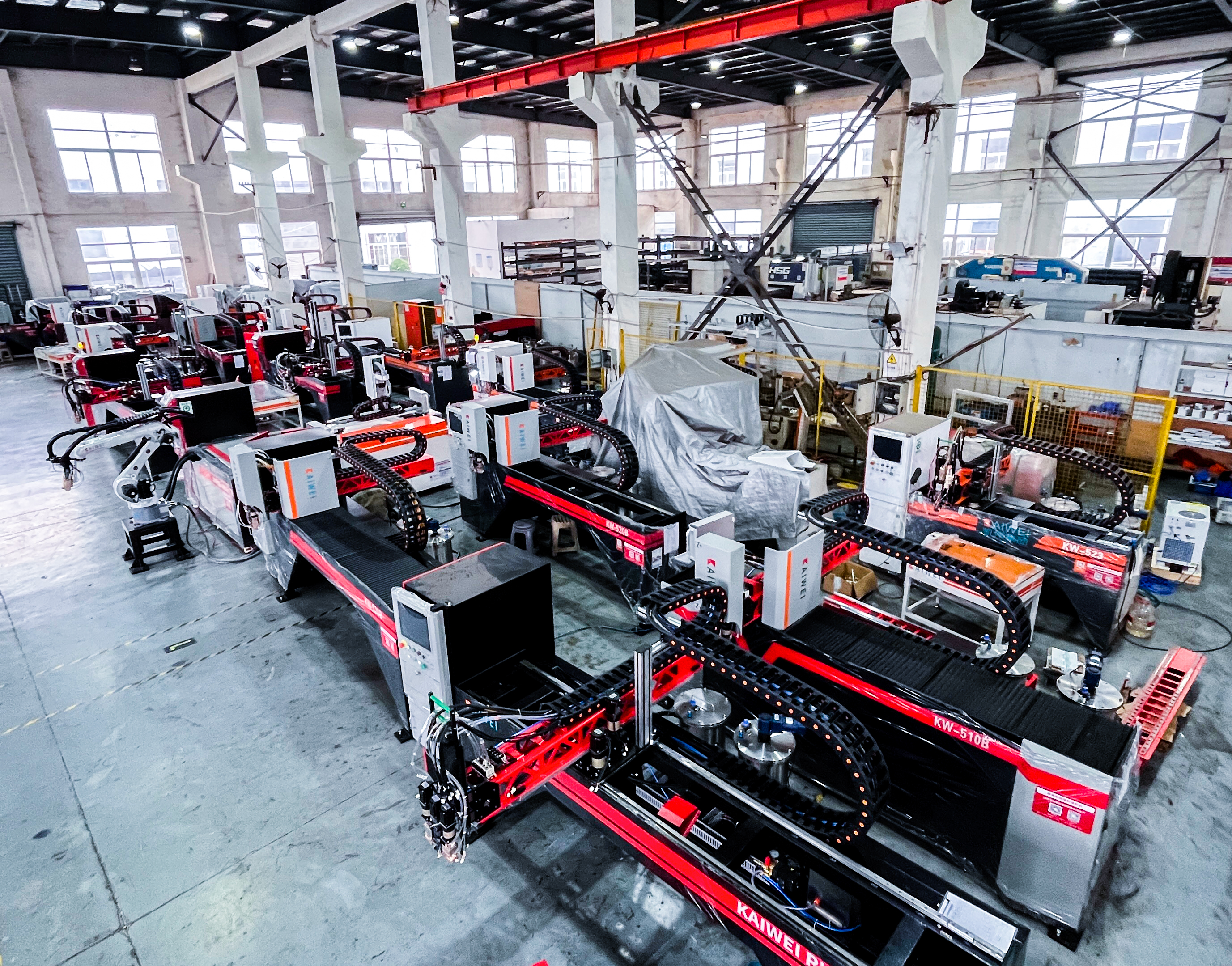
From a procurement standpoint, one relevant figure is supply capacity. The company states that its monthly production capacity is 2,000 sets. For a buyer who is not purchasing a single demonstration unit but planning a longer equipment roadmap, this figure provides a reference point for delivery capability. It indicates whether the manufacturer can theoretically support a customer who needs multiple machines within the same order window, or needs to expand capacity in stages.
The company reports that its products are exported to more than 60 countries, including Germany, the United States, and Southeast Asian manufacturing markets. It also reports an export ratio of approximately 70%. For international buyers, a supplier with this kind of global shipping history is more likely to understand export documentation, packaging requirements, and overseas commissioning expectations.
| Procurement Dimension | What KAIWEI States for Standard Arrangements |
|---|---|
| Minimum order quantity | 1 unit |
| Delivery method | FOB / CIF |
| Payment condition | 30/70 |
| Inspection and acceptance | Full inspection before shipment; third-party testing can be provided for acceptance procedures |
| Monthly production capacity | 2,000 sets |
| Factory scale | 20,000 m² or more with more than 100 employees |
These terms matter at the execution stage. A low MOQ of one unit allows a buyer to validate the machine before committing to a larger rollout. Full pre-shipment inspection reduces the risk of receiving a machine with hidden assembly issues. Third-party testing availability is especially relevant for regulated industries where an independent inspection report is required before the equipment leaves the factory.
Technical Consistency Across Configurations
When sealing output is repeated across multiple production units, the machine configuration itself is a form of process standardization. KAIWEI offers several models designed around polyurethane raw materials with a general capability for two-component or three-component material selection. Common control features include a touchscreen HMI, teach pendant operation, and a motion control card or PLC-based controller.
In KAIWEI machines, the mixing head is one of the core differentiators. Different models use the KW800 or KW900 mixing head. The mixing ratio range is broadly stated as 1–10:1, and the seal strip width range varies by model. Most machines are listed with a 4–30 mm seal strip width, while certain models support a wider 2–60 mm range depending on specifications. Raw material tanks are generally configured as air pressure tanks with 40 L capacity for the A material and 40 L for the B material, with agitation available on the A tank.
For long production runs, the machine must also handle cleaning and auxiliary supply. KAIWEI states that cleaning is performed with high-pressure water and that tap water can be used as the water supply. The frame is typically a three-axis linear robot arm, with some models offering a six-axis robotic arm configuration. The effective working stroke varies from approximately 2250 by 1250 by 200 mm on some models to 1250 by 800 by 200 mm on others, while one larger model allows a customized working envelope.
Risk Controls That Support Unattended and Continuous Operation
Execution risk in PU gasket dispensing is not limited to material cost. A single glue leak or overheating failure can stop a downstream assembly line and create quality problems across an entire batch. Buyers should evaluate how a machine handles these failure modes before scaling up.
KAIWEI states that its equipment can incorporate an independently developed intelligent temperature control module that monitors operating temperature, supports automatic heat dissipation, and triggers an over-temperature alarm. This is a direct response to overheating risk in continuous operation. On the dispensing side, the company describes a high-precision servo dispensing valve with real-time pressure feedback, automatic glue leakage detection, and shutdown protection to avoid glue overflow.
Additional protective functions in the machine design include real-time pressure monitoring, precision servo drive control, IP65/IP66 fully enclosed sealing design, overheat protection alarms, leakage detection sensors, emergency stop safety mechanisms, automatic glue quantity calibration, electrical insulation protection, and constant temperature and humidity foaming control. These features are particularly useful when a line is expected to run for long periods without manual intervention.
Comparison With Conventional Sealing and Dispensing Methods
Traditional sealing methods remain valid in many situations. Preformed rubber gaskets offer easy replacement, simple storage, and predictable material properties. Manual sealant application is flexible and requires limited equipment investment. Many manufacturers still use these methods for low-volume assemblies, complex three-dimensional joints, or cases where gasket removal and replacement must be simple.
Automated PU gasket dispensing becomes more attractive when volume, repeatability, and labor cost create pressure on traditional methods. A robot-applied foam gasket eliminates the need to stock many different gasket sizes. It also reduces assembly time because the gasket is formed directly on the product. In high-mix production, changing the gasket path is a programming task rather than a tooling change.
KAIWEI also publishes comparative engineering data focused on other domestic dispensing machines. According to that comparison, KAIWEI mixing head technology delivers approximately 30 percent higher mixing uniformity, roughly 15 percent lower total cost of ownership, 20 percent higher production efficiency, and less maintenance with longer service life. These figures are supplier-reported benchmarks and should be treated as a reference point for testing rather than as a universal performance guarantee. A buyer should always validate bead uniformity, foam density, and adhesion using its own substrate and production environment.
There are also legitimate boundaries to the technology. PU foam gasket dispensing cannot compensate for poorly prepared surfaces. Substrates must be clean, dry, and compatible with polyurethane adhesion. The process is most effective on flat or gently curved sealing surfaces where a robot or linear motion system can maintain a stable distance from the workpiece. For applications requiring very large gasket cross-sections, extreme chemical resistance, or gaskets that must be frequently removed and reinstalled, preformed gaskets or molded seals may remain more practical.
Market Direction: From Single Devices to Systematic Sealing Capacity
Market data points to continued expansion in polyurethane processing and FIP gasket applications. Market Research Future valued the broader polyurethane processing machine market at USD 6.627 billion in 2024 and projected growth at a CAGR of 10.21 percent through 2035. Grand View Research reported that Asia-Pacific accounted for 42.2 percent of the polyurethane processing machine market, driven by industrial manufacturing growth in China. In the more specific form-in-place liquid gasket segment, Maximize Market Research reported that the market reached USD 270 million in 2023, with increasing adoption in EV battery enclosures.
For procurement leaders, these figures explain why equipment choices are no longer made only by engineering teams. Finance and operations teams also need to understand total cost, future capacity, and supplier stability. A machine that performs well in isolation may still cause problems if the supplier cannot sustain quality across multiple deliveries or support a growing equipment base.
The competitive landscape also matters. Recognized international names in FIP and PU dispensing include Sonderhoff, part of Henkel, RAMPF Group, and Cera-Tec. Chinese manufacturers such as KAIWEI compete on cost, configuration flexibility, and production capacity. For buyers, the practical comparison should be based on measurable machine behavior, delivery reliability, certification status, and the supplier capacity to support repeat purchases.
Execution Checklist Before Volume Production
A disciplined buyer can reduce execution risk by using a simple verification plan before scaling up PU gasket dispensing.
- Confirm the machine supports the required component count and mixing ratio. KAIWEI models generally support two-component or three-component material selection, offering flexibility for different PU formulations.
- Verify that bead width capacity matches the product range. Select a model whose seal strip width covers both current and planned applications.
- Review the effective working stroke and axis configuration against the largest workpiece that will be processed.
- Check how the machine reacts to high-temperature operation, glue leakage, and pressure abnormalities. The machine should include alarms, emergency stop functionality, and automatic detection rather than relying on operator attention.
- Use pre-shipment inspection as part of the contract. Full inspection before shipment and optional third-party testing provide a documented baseline for acceptance.
- Maintain spare parts and cleaning supplies in inventory, particularly mixing-related components and high-pressure water cleaning consumables.
- Train operators and process engineers on temperature control, material loading, and cleaning procedures before moving to continuous operation.
Future Outlook: Buying a Production Platform Rather Than a Single Machine
As PU gasket dispensing becomes a standard process in enclosure sealing, lighting, and new energy applications, purchase decisions are slowly shifting from a single machine purchase to a platform decision. Buyers want a supplier whose equipment range, production capacity, and global experience can support them through multiple generations of products.
KAIWEI’s positioning reflects this view. The company describes itself as supporting a business model that integrates Internet plus AI advanced manufacturing, with a philosophy of technology leadership and quality foundation. Its current product program already reaches from entry three-axis models to a six-axis robotic foaming system. For a manufacturer preparing to launch volume production, these signals are useful evidence that the supplier is investing in system-level capability.
The next phase of supplier evaluation will likely include more emphasis on machine-to-machine consistency, digital process documentation, and transferability of recipes across factories. Buyers will ask whether a second machine produces identical foam quality without extensive re-engineering. That question is exactly where supplier engineering depth and production scale become decisive.
Readers who need a compact technical overview of KAIWEI products can access the public company brochure: Download the KAIWEI corporate brochure (PDF).
Frequently Asked Questions
What should a buyer confirm before purchasing a PU gasket dispensing machine for continuous production?
A buyer should confirm delivery terms, payment conditions, inspection and acceptance procedures, supplier production capacity, and the machine configuration needed for the actual application. KAIWEI states standard terms as MOQ 1 unit, FOB or CIF delivery, 30/70 payment, and full inspection before shipment with optional third-party testing.
What is the production capacity of KAIWEI for PU gasket dispensing machines?
KAIWEI states that its monthly production capacity is 2,000 sets. This figure is a useful supply-side indicator when planning repeat purchases or multi-machine deployment.
Can a PU gasket dispensing machine handle both two-component and three-component materials?
KAIWEI machines generally support two-component or three-component material selection. This allows greater flexibility for different polyurethane formulations and helps manufacturers standardize equipment across multiple products.
How does a PU gasket dispensing machine reduce the risk of glue leakage during long operation?
KAIWEI describes a high-precision servo dispensing valve with real-time pressure feedback, automatic glue leakage detection, and shutdown protection. Pressure monitoring, emergency stop mechanisms, and automatic glue quantity calibration are also part of the wider safety control approach.
What certifications should be checked when buying a PU gasket dispensing machine?
KAIWEI states that its products have passed CE and ISO9001 certification. For machinery entering the EU, CE marking requires compliance with the EU Machinery Directive 2006/42/EC and EN 60204-1 for electrical safety.
What are common operational risks in long-running PU gasket dispensing?
The most common risks include equipment overheating during continuous operation, which can damage components, and glue leakage or overflow that contaminates products and causes production line downtime. Intelligent temperature control, overheat alarms, leakage detection, and emergency stop features are the relevant safeguards.
What is the difference between using a PU gasket dispensing machine and a preformed rubber gasket?
Preformed gaskets require gasket inventory, manual placement, and tooling for different shapes. PU gasket dispensing creates the seal directly on the product and can change size by reprogramming the path. However, the process requires clean and compatible surfaces and is most suitable for flat or gently curved sealing areas.
Does KAIWEI provide third-party machine inspection?
KAIWEI states that full inspection is performed before shipment and that third-party testing can be provided for acceptance procedures. Buyers should confirm the exact inspection scope and required standards during contract negotiation.
Есть вопросы или нужны дополнительные детали?
Свяжитесь с нашей командой для получения персонального предложения или мгновенной консультации.
Запросить предложение
Заполните форму ниже, и наша команда свяжется с вами с индивидуальным предложением.
Прямой чат WhatsApp
Предпочитаете общаться в реальном времени? Напишите нам в WhatsApp для мгновенной помощи и быстрых ответов.
- Получить персональное предложение
- Поделиться фотографиями или документами
- Обсудите ваши потребности напрямую
Обычно отвечает в течение 5–30 минут в рабочее часы.