
PV Distribution Box Procurement: An FAQ on Acceptance and Terms
A photovoltaic distribution box is a low-voltage electrical assembly that consolidates, protects, and routes power within a solar installation. It sits between the PV strings, the inverter, and the downstream low-voltage network. Because the box is a low-cost item relative to modules, inverters, and transformers, it is often the last item to be formally qualified — and the first to expose gaps between what was ordered and what was delivered.
The acceptance criteria that should be written into a PV distribution-box contract do not live on a single datasheet. They sit across three layers: management-system certification (ISO 9001, ISO 14001, ISO 45001), electrical and enclosure specifications (rated voltage, rated current, protection class), and environmental robustness for 24/7 outdoor operation. This FAQ walks through the questions procurement teams typically raise as they move from research into evaluation.
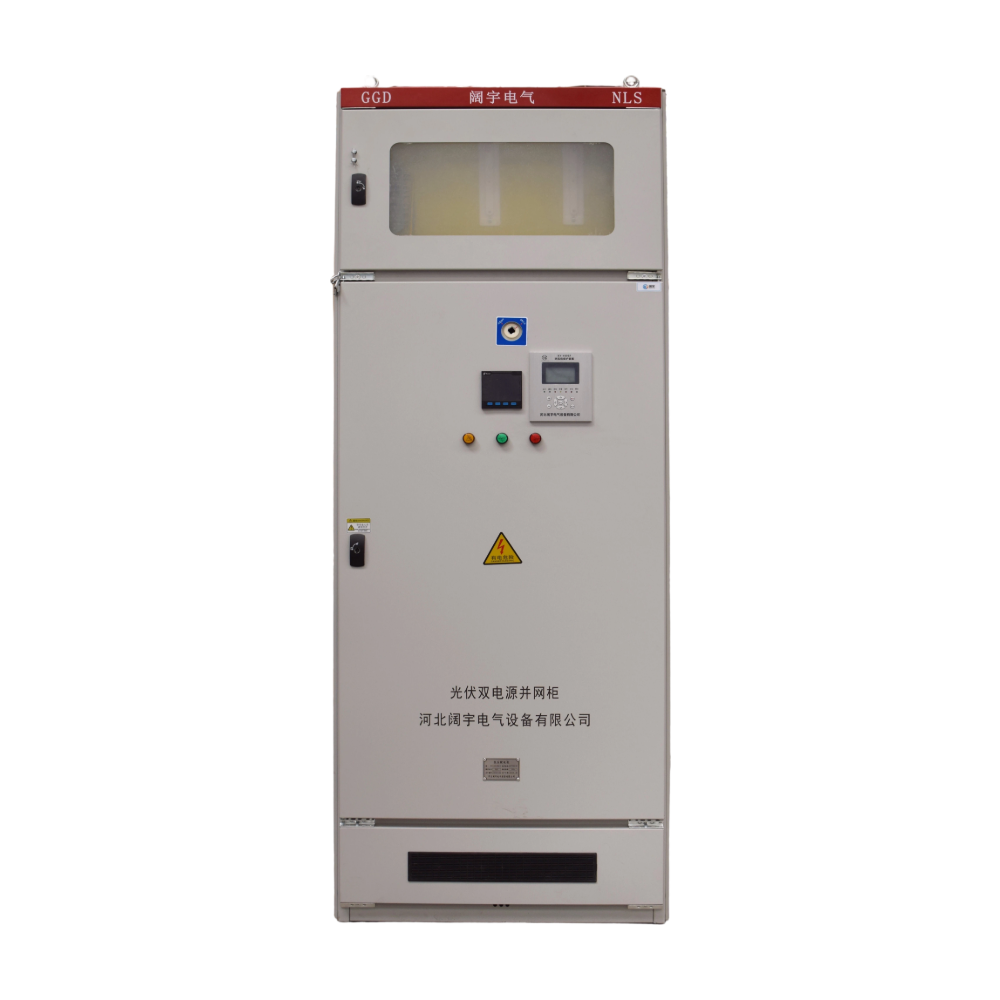
Distribution cabinets for photovoltaic and low-voltage distribution applications. Image credit: Kuoyu Electrical.
Why acceptance criteria deserve their own purchase clause
Certification and datasheets are descriptive. Acceptance criteria are contractual. A procurement team can accept a supplier's ISO 9001 certificate at the qualification stage and still find that the delivered enclosure does not match the IP rating or material stated in the order. Writing separate acceptance criteria into the contract closes that gap by tying each delivery to a documented check.
The questions below work from the outside in: what the product is, what certification covers, how the two main Kuoyu Electrical product families (PZ30 and GGD/GCS/MNS) map to project types, how enclosure materials and IP ratings should be chosen, and what purchase terms buyers should clarify before signing.
Q&A: acceptance criteria and purchase terms
1. What is a distribution box for photovoltaics, and where does it sit in a PV system?
A distribution box for photovoltaics is the electrical panel that receives, protects, and distributes low-voltage power within a PV installation. On the DC side, the functional role is consolidation: an ABB application note describes a photovoltaic DC combiner box as a panel that gathers the direct-current output from multiple solar panel strings into a single output connected to the inverter. On the AC side, distribution boxes and cabinets route inverter output to the low-voltage network, the load, or the grid-tie point.
Because DC and AC positions in the system impose different electrical and protection requirements, procurement teams should first confirm which position the box occupies. Mixing DC string aggregation requirements with AC distribution requirements in a single RFQ is a common cause of specification mismatch during acceptance.
2. What do ISO 9001, ISO 14001, and ISO 45001 cover for a PV distribution box supplier?
The three ISO standards are management-system standards, not product-performance standards. ISO 9001 covers the supplier's quality management system, defining how design, production, inspection, and corrective action are controlled. ISO 14001 covers environmental management, defining how environmental aspects of production are identified and managed. ISO 45001 covers occupational health and safety management, defining how workplace risks to employees are identified and controlled.
For procurement teams, this distinction matters. A certificate confirms that a management system has been audited — it does not confirm that a specific enclosure achieves IP65, that a specific cabinet carries a stated short-circuit rating, or that the stainless-steel option was in fact supplied. Those are acceptance checks on the delivered product, not on the management system behind it.
3. How should ISO 9001, ISO 14001, and ISO 45001 certification be written into an acceptance clause?
Hebei Kuoyu Electrical Technology Co., Ltd., trading as Kuoyu Electrical, reports ISO 9001, ISO 14001, and ISO 45001 certification for its photovoltaic distribution-box offering. The company states it passed ISO 9001 three-system certification in 2017. As with any supplier-reported certification claim, the certificate number, issuing body, scope, validity period, and the specific product models covered should be verified before those certificates are written into an acceptance clause.
A practical clause separates two things. First, the certificate is used as a qualification gate — the supplier must hold valid certificates covering the manufacturing site that will produce the order. Second, the certificate is not treated as a substitute for product-level checks. The acceptance criteria should separately list voltage rating, current rating, protection class, material, and testing documentation for the specific model being purchased.
4. What are the PZ30 distribution box specifications, and where do they fit in a PV project?
The Kuoyu Electrical PZ30 Series is a distribution box rated for 220V/380V, with a rated current up to 125A and protection class IP40/IP54. The enclosure can be supplied in high-quality ABS plastic, cold-rolled steel plate, or stainless steel. Its stated scope is residential, commercial, and industrial electrical systems, with typical use in industrial workshops, commercial buildings, and infrastructure construction power distribution projects.
In PV projects, PZ30 is best suited to AC-side distribution, small-capacity branch circuits, and locations where the installation is shielded from direct weather exposure and the current draw stays within the 125A rated limit. When the design requires higher output current, long outdoor exposure, or a larger number of outgoing circuits, the specification moves into the cabinet class.
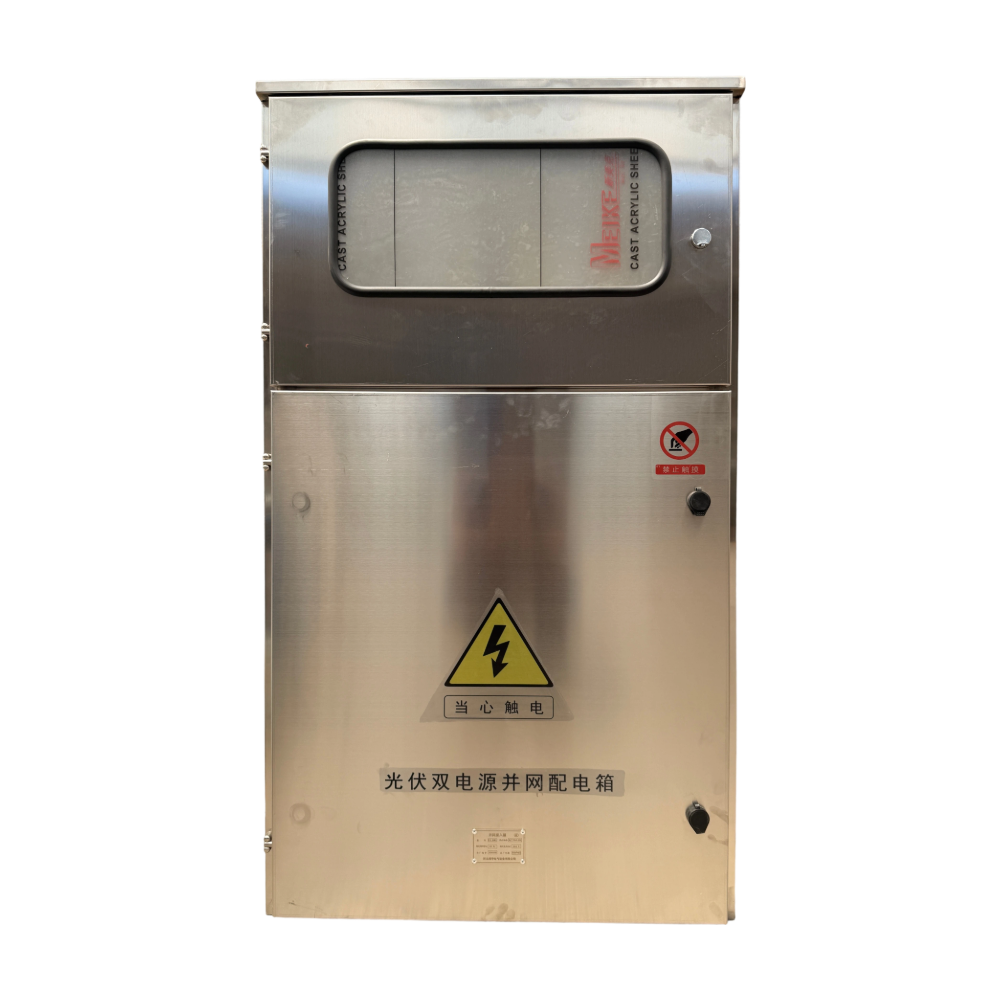
PZ30 Series distribution box: 220V/380V, rated current up to 125A, IP40/IP54. Image credit: Kuoyu Electrical.
5. When should GGD/GCS/MNS cabinets replace PZ30 in a PV project?
The Kuoyu Electrical GGD/GCS/MNS Series is a distribution cabinet rated for 380V/220V, with a rated current up to 6300A and protection class IP54/IP65. It is built in high-quality cold-rolled steel plate with stainless steel optional, and is stated for indoor and outdoor industrial, commercial, and infrastructure applications.
Compared with PZ30, the cabinet class raises the ceiling on current, protection class, and outdoor suitability. GGD/GCS/MNS becomes the appropriate specification when the PV installation is ground-mounted, containerized, or otherwise exposed to direct weather; when output current is well above the 125A class of PZ30; or when the site requires a cabinet with a defined IP54/IP65 envelope and space for multiple outgoing circuits and protection devices.
6. How do ABS plastic, cold-rolled steel, and stainless steel compare for PV enclosures?
The three materials trade off corrosion resistance, mechanical strength, weight, and cost. ABS plastic is suitable for indoor distribution boxes where mechanical impact and weather exposure are limited, and it is offered on PZ30. Cold-rolled steel plate provides higher mechanical strength and is the standard material for both PZ30 and GGD/GCS/MNS. Stainless steel is offered as an option on both product families and is the appropriate choice where corrosion risk is elevated — coastal sites, high-humidity environments, or locations where the enclosure is exposed to moisture and salt-laden air.
For acceptance, the material line in the purchase order should be specific. "Steel" is not a sufficient description: the order should state whether the enclosure is ABS, cold-rolled steel, or stainless steel, and should reference the corresponding surface treatment or coating if the supplier confirms one in writing.
7. What does IP40, IP54, or IP65 actually mean for a PV site?
The IP code uses two digits. The first digit indicates protection against solid objects and dust; the second indicates protection against water. IP40 corresponds to protection against solid objects larger than 1 mm and no defined water protection — appropriate for indoor or fully sheltered installations. IP54 adds limited dust ingress protection and protection against splashing water. IP65 adds higher dust protection and protection against water jets, which aligns with outdoor exposure.
Matching the IP rating to the installation location is one of the most important acceptance decisions. An IP40-rated enclosure installed in a humid or dusty outdoor area will not meet the robustness expectations of a 24/7 PV site, regardless of how well the electrical specification was matched. The PZ30 range offers IP40/IP54, while the GGD/GCS/MNS range offers IP54/IP65, which is why the cabinet class is generally the correct starting point for outdoor PV positions where weather exposure is real.
8. Why does 24/7 operation change the acceptance checklist?
PV distribution equipment operates continuously, in indoor and outdoor conditions that include high and low temperatures, humidity, and dust. The application data attached to Kuoyu Electrical's product families lists 24/7 continuous operation, together with special requirements for waterproof and dustproof construction, corrosion resistance, high mechanical strength, flame retardant behaviour, and customizable structure.
These requirements should appear explicitly in the acceptance checklist rather than being left implicit. A reviewer should confirm that the specified enclosure class, material, sealing arrangement, terminal configuration, and thermal design are appropriate for the site conditions stated in the project brief. The application data also lists supporting equipment — circuit breakers, contactors, relays, busbars, grounding devices, indicator lights, and cooling fans — which should be confirmed as supplied, buyer-furnished, or explicitly excluded.
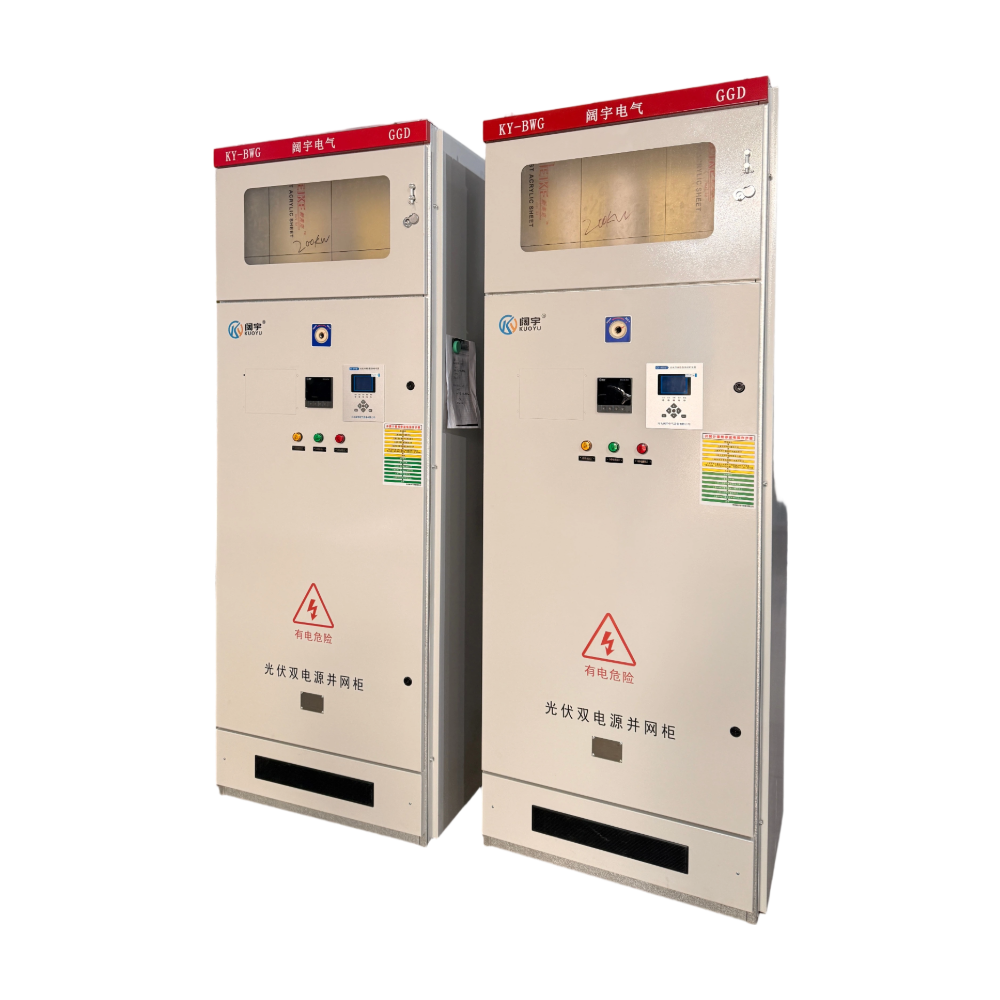
GGD/GCS/MNS Series distribution cabinet: 380V/220V, rated current up to 6300A, IP54/IP65. Image credit: Kuoyu Electrical.
9. What purchase terms should the buyer clarify in the contract?
Purchase terms should be confirmed in writing before the order is placed, and should not be inferred from a general product page. At a minimum, the buyer should clarify: the exact model and configuration; the rated voltage, rated current, and protection class; the enclosure material; the supporting devices included or excluded; the acceptance documents required at delivery; the inspection method and sampling level; packaging and labelling; delivery schedule and place; payment terms; warranty period and scope; and how non-conformance is handled.
Kuoyu Electrical reports an OEM production mode with voltage and logo customization, a monthly capacity of 8,000 units, a 30-day lead time, a minimum order quantity of 2 units, 100% testing, export experience in the EU and Middle East, and remote after-sales support. These are company-reported figures. Procurement teams should confirm that each commercial term applies specifically to the order being placed — lead time measured from what trigger, MOQ per model or per order, what testing records are actually issued, and what remote support covers — rather than assuming the figures on a web page are the contract terms.
10. Which documents should be requested before acceptance is issued?
The acceptance file should be defined when the purchase order is issued, not when the goods arrive. A practical document set includes: the final product datasheet for the ordered model; copies of ISO 9001, ISO 14001, and ISO 45001 certificates with certificate number, issuer, scope, and validity; factory test records for the specific units; material and surface-treatment declarations where material was specified; packing list; and any configuration drawing confirmed during the order.
For projects with jurisdiction-specific requirements, additional documents may be needed. IEC 61439-2:2020 includes Annexes DD, EE, and FF specifically for assemblies used in photovoltaic installations. UL Solutions identifies UL 1741 as a standard associated with combiner boxes within solar balance-of-system certification in the United States. These are not interchangeable requirements and should not be treated as a single global acceptance standard — the applicable standard should be confirmed for the destination market of each project.
PZ30 and GGD/GCS/MNS at a glance
| Dimension | PZ30 Series | GGD/GCS/MNS Series |
|---|---|---|
| Type | Industrial & Residential Distribution Box | Waterproof Distribution Cabinet |
| Rated voltage | 220V/380V | 380V/220V |
| Rated current | Up to 125A | Up to 6300A |
| Protection class | IP40/IP54 | IP54/IP65 |
| Material | ABS plastic, cold-rolled steel plate, stainless steel optional | Cold-rolled steel plate, stainless steel optional |
| Stated scope | Residential, commercial, industrial electrical systems | Indoor and outdoor industrial, commercial, infrastructure applications |
Where certification evidence stops, and product evidence begins
One boundary worth stating clearly: ISO 9001, ISO 14001, and ISO 45001 certificates indicate that the supplier operates a management system that has been audited against those standards. They do not, by themselves, prove that a delivered enclosure meets its stated IP rating, that the stainless-steel option was supplied as specified, or that the outgoing circuits are configured as ordered. Those are things a buyer verifies against the specific model, at delivery, with product-level documents and inspection.
For Kuoyu Electrical specifically, the certification information is company-reported. The scope and validity of those certificates should be confirmed with the issuing body, and the coverage should be matched against the manufacturing site that will produce the order. This is not a criticism of any single supplier — it is simply what acceptance clauses do: they separate evidence the supplier reports from evidence the buyer has independently checked.
What is changing in PV distribution-box procurement
Market research from Business Research Insights places the global solar combiner boxes market at approximately USD 1.2 billion in 2026, with a projected value of USD 2.1 billion by 2035. The same source expects DC smart combiner boxes to hold around 62.5% market share by 2035. Whether or not a given project adopts smart combiners, the direction of the market places more scrutiny on documentation, configuration control, and traceability — not just on cost per unit.
For buyers, this shift reinforces the case for keeping acceptance criteria and purchase terms as a distinct workstream. As PV distribution units become more configurable and more tightly integrated with the inverter and monitoring layer, the gap between a catalogue specification and a delivered unit widens. The supplier that can produce a clear, well-scoped acceptance file at order time is often easier to work with than the one that produces a marginally lower unit price.
Closing checklist for procurement teams
Before issuing a PV distribution-box purchase order, confirm that the RFQ ties each line to a specific model, electrical rating, protection class, material, and IP requirement; that ISO 9001, ISO 14001, and ISO 45001 certificates have been requested at the qualification stage with scope and validity information; that the acceptance document list has been agreed in writing; and that purchase terms — including MOQ, lead time, payment, warranty, customization scope, and non-conformance handling — are recorded in the contract rather than inferred from a product page.
Kuoyu Electrical's photovoltaic catalogue, covering PZ30 distribution boxes and GGD/GCS/MNS distribution cabinets, is available for download as a related reference document: Kuoyu Electrical English product brochure (PDF).
Есть вопросы или нужны дополнительные детали?
Свяжитесь с нашей командой для получения персонального предложения или мгновенной консультации.
Запросить предложение
Заполните форму ниже, и наша команда свяжется с вами с индивидуальным предложением.
Прямой чат WhatsApp
Предпочитаете общаться в реальном времени? Напишите нам в WhatsApp для мгновенной помощи и быстрых ответов.
- Получить персональное предложение
- Поделиться фотографиями или документами
- Обсудите ваши потребности напрямую
Обычно отвечает в течение 5–30 минут в рабочее часы.