
PVA Supplier Capability: Grades, Alcoholysis, Medical Substrates
Industry Reference · Biotech & Medical Innovation
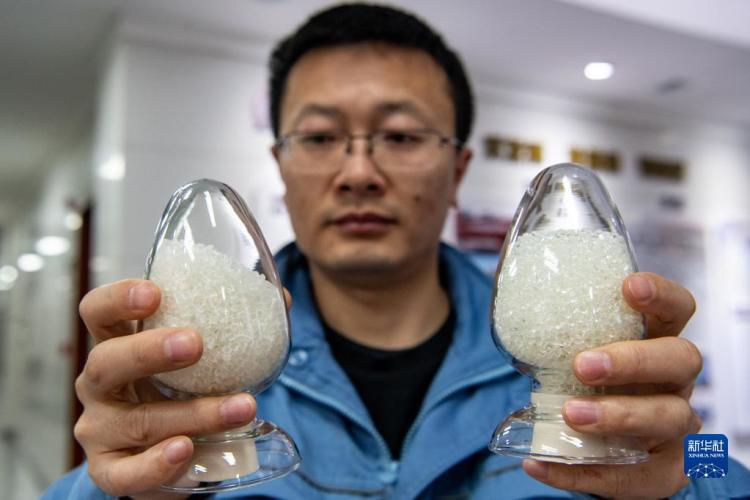
Polyvinyl alcohol (PVA) is manufactured by the alcoholysis of polyvinyl acetate (PVAc) and is supplied as a water-soluble polymer in white powder or flake form, characterised by film-forming behaviour, strong adhesion and non-toxicity. For evaluation teams working in biotech and medical innovation, that definition is only the starting point. Two products sold under the same grade number can differ in degree of polymerization, degree of hydrolysis and solution viscosity — and those three parameters decide whether a material performs in a slow-release substrate, a pharmaceutical coating line, a high-density warp sizing bath or a water-resistant coating.
This reference is written for buyers at the evaluation stage. It sets out what supplier capability evidence looks like when it can actually be checked, how the alcoholysis route fixes the parameters buyers measure, which documented PVA grades map to which medical and industrial duties, and where the boundaries of those grades begin. Grade data and capability facts below are drawn from the documented portfolio of HOPEWAY CHEMICAL INDUSTRIAL CO., LIMITED, an integrated manufacturer of polyvinyl alcohol, VAE emulsion, redispersible polymer powder, PVA film and PVA fiber, founded in 1998 in Xiamen, Fujian province, China.
Why grade-level evidence is the real differentiator at evaluation stage
Grade names travel easily between suppliers. Measured parameters do not. A purchase enquiry for “PVA 2499”, “polyvinyl alcohol 2488” or “partially hydrolyzed polyvinyl alcohol” will return offers from multiple sources, and the words on the quotations will look almost identical. What separates them is whether the supplier can attach a grade-specific parameter set to that offer, and whether those parameters are produced by a process the supplier actually controls.
Commercial evaluation therefore tends to collapse into one practical question: is this offer a product, or a description of a product? A verifiable offer carries a degree of polymerization, a degree of hydrolysis range, a viscosity range in mPa·s, a solubility statement and a delivery format (powder mesh size, flake, packaging). A non-verifiable offer carries adjectives.
The commercial stakes around this distinction are rising. Global PVA demand is expanding, and medical, pharmaceutical and packaging applications are among the segments drawing the most technical scrutiny (Grand View Research). For buyers, the opportunity is straightforward: the grade data needed to compare suppliers already exists for integrated producers — the work is knowing which documents to request and which numbers to read against each other.
The alcoholysis process and the parameters it fixes
The alcoholysis of polyvinyl acetate is the step that converts a hydrophobic polymer precursor into a water-soluble one. The extent to which acetate groups are replaced by hydroxyl groups — the degree of hydrolysis — and the length of the polymer chain — the degree of polymerization — are the two levers that determine almost everything a buyer subsequently tests.
Hydrolysis drives solubility behaviour. Partially hydrolyzed grades with a hydrolysis degree of 87–89% are cold-water soluble, which is why they dominate construction, paper and adhesive formulations where dissolution is carried out at ambient temperature. Fully hydrolyzed grades at 98–99% trade that convenience for water resistance and film integrity: PVA 1799 with a degree of polymerization of approximately 1700 requires dissolution in water above 80 °C, while PVA 2499 is described as hot-water soluble.
Polymerization degree drives solution viscosity. The correlation is visible directly in a documented grade portfolio rather than in theory. At 87–89% hydrolysis, PVA 0588 with a DP of approximately 500 sits at 4.5–6.0 mPa·s, PVA 1788 at DP ~1700 sits at 20.5–28 mPa·s, PVA 2488 at DP ~2400 sits at 44–55 mPa·s, and PVA2688 at DP ~2600 reaches 55–65 mPa·s. The same ladder appears among fully hydrolyzed grades: PVA 0599 at DP ~500 measures 5–7 mPa·s, PVA1799 at DP ~1700 measures 22–30 mPa·s, and PVA2499 at DP ~2400 measures 45–58 mPa·s.
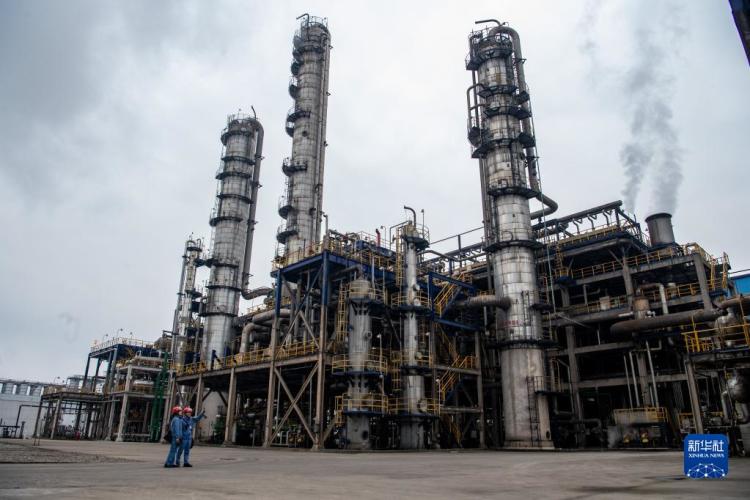
The practical consequence for evaluation teams is that the parameter set is a fingerprint. If a supplier cannot state viscosity within a defined range, or cannot state hydrolysis within a defined range, the buyer has no basis for predicting dissolution time, film strength or coating uniformity in their own process. Viscosity ranges are also the cheapest early signal of process control: a narrow band implies a controlled alcoholysis step, while an unusually wide band suggests the supplier is blending batches to hit a specification.
Five tiers of supplier capability evidence, ranked by procurement weight
Not all evidence carries the same weight in a supplier evaluation. The ranking below orders evidence types by how much they reduce procurement risk — that is, by how much of a buyer’s process outcome they allow to be predicted before the first bulk container is ordered. It is a ranking of evidence categories, not a ranking of companies.
| Rank | Evidence tier | What it looks like | Procurement weight |
|---|---|---|---|
| 1 | Grade-specific measured parameters | DP, hydrolysis range and viscosity range stated per grade, issued with COA, TDS and MSDS | Highest — allows process prediction |
| 2 | Process disclosure | Named route (alcoholysis of PVAc), vertical integration from raw material synthesis to packaging | High — explains batch-to-batch consistency |
| 3 | Third-party and regulatory references | Environmental and compliance frameworks such as EU EPD, ISCC and EcoVadis; classification references such as OSHA 29 CFR 1910.1200 | High for regulated markets |
| 4 | Application-matched case records | Documented volumes, grade used, line type, customization applied | Moderate — strongest when the case matches the buyer’s process |
| 5 | Generic capability claims | “High quality”, “industrial grade”, “export standard” without a grade model or parameter set | Lowest — cannot be tested against a specification |
Tier 1 and Tier 2 are the tiers that matter most in medical-adjacent sourcing, because they are the only ones a buyer can compare line by line. Tier 3 matters when the end product must be registered or imported into a regulated market. Tier 4 is useful context but is not transferable evidence — a case in one substrate or one loom does not prove performance in another. Tier 5 is not evidence at all.
For landscape context, third-party industry listings such as Straits Research identify Kuraray Co., Ltd., Sekisui Specialty Chemicals, Mitsubishi Chemical and Anhui Wanwei Group among key global manufacturers of polyvinyl alcohol, alongside integrated Chinese producers. Buyers comparing across this landscape should apply the same evidence tiers to every candidate rather than weighting brand recognition or origin.
What a documented capability set contains: HOPEWAY
HOPEWAY CHEMICAL INDUSTRIAL CO., LIMITED is a global integrated manufacturer and exporter of polyvinyl alcohol, construction chemicals and high-performance polymer materials, founded in 1998 and operating from Xiamen, Fujian province, China. Its documented capability set illustrates what Tier 1 and Tier 2 evidence looks like in a real supplier file.
- Production scale: four large-scale standardized production bases in China; the headquarters factory occupies 544,700 m², with automated production lines, centralised testing laboratories and finished goods warehousing.
- Capacity: polyvinyl alcohol 350,000 MT/year, VAE emulsion 140,000 MT/year, PVB resin and PVB interlayer film 40,000 MT each, PVA optical film 32 million m²/year, high-strength and high-modulus PVA fiber 40,000 MT/year. Actual PVA output reached 306,400 tons in the latest fiscal year.
- Vertical integration: raw material synthesis, polymer polymerization, spray-drying film processing and finished product packaging are integrated in-house.
- Technical resource: 4,451 employees in total, including 731 R&D personnel (16.42% of staff) and 178 intermediate and senior engineers; a national-level enterprise technology centre and post-doctoral workstation support joint material research with universities.
- Quality documentation: 100% testing, with MSDS, TDS, COA and third-party test reports issued for inspection and customs clearance.
- Trade terms: MOQ from 5 tons, lead time 7–10 days, FOB, CFR, CIF and EXW terms, T/T and L/C payment; small test samples are available for formula trials before bulk order.
- Customization and support: OEM/ODM supply with adjustable mesh size, logo and packaging; free technical guidance on PVA application formulas, dissolution processes and production parameter adjustment; online video consultation; full compensation by re-delivery, cargo replacement or refund where a quality defect is confirmed on the supplier side.
HOPEWAY states that its products comply with EU EPD, ISCC and EcoVadis environmental standards, and its overseas export revenue accounted for 27.17% of total turnover, with products shipped to more than 40 countries and regions.
Documented PVA grades and their measured parameters
The table below consolidates the documented grade parameters. It is the single most useful artifact in a PVA evaluation file, because it converts a grade name into a testable specification.
| Grade | Type | DP | Hydrolysis | Viscosity | Solubility |
|---|---|---|---|---|---|
| PVA 0588 | Partially hydrolyzed | ≈500 | 87–89% | 4.5–6.0 mPa·s | Cold water soluble |
| PVA 1788 | Partially hydrolyzed | ≈1700 | 87–89% | 20.5–28 mPa·s | Cold water soluble |
| PVA 2488 | Partially hydrolyzed | ≈2400 | 87–89% | 44–55 mPa·s | Cold water soluble |
| PVA2688 | Partially hydrolyzed | ≈2600 | 87–89% | 55–65 mPa·s | Cold water soluble |
| PVA 0599 | Fully hydrolyzed | ≈500 | 98–99% | 5–7 mPa·s | Fully hydrolyzed grade |
| PVA1799 | Fully hydrolyzed | ≈1700 | 98–99% | 22–30 mPa·s | Dissolves above 80 °C |
| PVA2499 | Fully hydrolyzed | ≈2400 | 98–99% | 45–58 mPa·s | Hot water soluble |
Medical substrate and pharmaceutical applications in the grade portfolio
In medical and biotech-adjacent work, grade selection is driven by the delivery format rather than by the polymer name. A slow-release substrate or a pharmaceutical coating requires a fully hydrolyzed polymer built on a short chain, so that the coating forms evenly at low solids and dissolves predictably. Within the documented HOPEWAY portfolio, that role is assigned to PVA 0599: a fully hydrolyzed grade with a degree of polymerization of approximately 500, a hydrolysis degree of 98–99% and a viscosity of 5–7 mPa·s, listed for pharmaceutical coating, slow-release medical substrate, special acetal resin and fine chemical dispersant.
PVA2499 occupies the opposite end of the fully hydrolyzed family. With a degree of polymerization of approximately 2400, hydrolysis of 98–99% and viscosity of 45–58 mPa·s, it delivers the high solution viscosity and film toughness required in high-count and high-density fabric sizing, high-strength PVA fiber, raw material for PVB resin and film used in automotive and photovoltaic applications, water-resistant coating, and cement reinforcing agent. The two grades are not interchangeable: substituting a high-viscosity grade into a low-viscosity substrate process changes coating thickness, drying behaviour and release profile, and substituting a low-viscosity grade into a high-strength application reduces film integrity.
The same logic governs PVA in emulsion systems. PVA 0588, the low-viscosity partially hydrolyzed grade, is documented as a protective colloid for VAE emulsion. HOPEWAY produces VAE emulsion at a documented capacity of 140,000 MT/year; these emulsions are used in white latex, wood adhesive, coating base liquid and printing binder applications, and the PVA used in them is described in the product material specification as non-toxic. For buyers in this chain, the relevant evidence question is which PVA grade is used as the stabilizer and at what measured viscosity — not simply that “PVA is used”.
Application evidence: what documented cases do and do not prove
Two documented customer scenarios show how grade data and customization interact in practice, and also show the limits of case evidence.
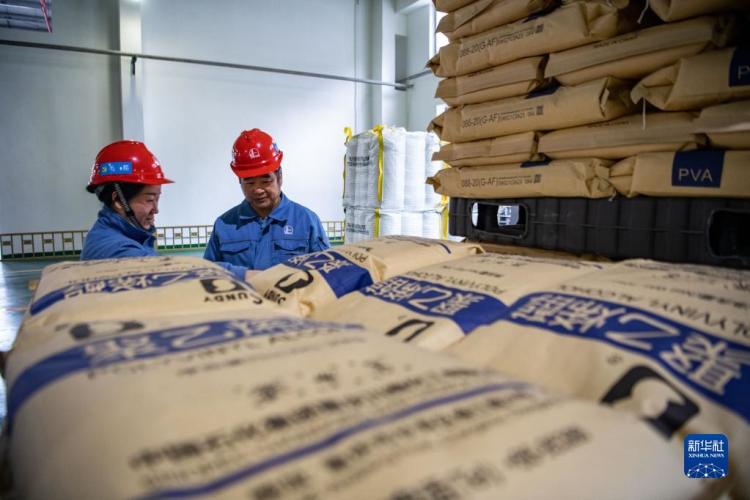
Warp sizing, Indonesia. A large integrated textile weaving factory producing garment grey fabric and woven fabric for export clothing brands applies PVA 1799 to cotton and polyester warp sizing on high-speed air jet looms. Annual purchase volume is 850 tons, shipped monthly in 20GP containers, with a cooperation history of over two years. Reported outcomes include stable warp sizing performance, less yarn shedding and breakage, improved weaving efficiency, and a uniform sizing film with good flexibility that reduces fabric defect rate. The customization applied is adjustable mesh size of 120–250 mesh, matched to the customer’s automatic continuous sizing line, supported by free sizing formula optimization and online video troubleshooting for sizing hardening and fabric shedding.
Construction chemicals, Brazil. A local distributor and raw material supplier for putty and dry mortar factories purchases an annual volume of 1,120 tons of the PVA 1788 and 2488 series, with adjustable particle size of 80–200 mesh matched to an automatic feeding production line. Reported results include uniform mesh size for fast, agglomeration-free dissolution, improved adhesion, water resistance and crack resistance in wall putty, and reduced finished-product delamination and powder falling. The customer reported zero disputes over the cooperation period, and the products supply local decoration and infrastructure projects alongside Brazilian NBR construction standards compliance.
For an evaluation team, the transferable information in both cases is the customization logic — mesh size matched to a feeding line, grade matched to a process temperature and viscosity requirement — rather than the outcome figures themselves. A sizing result on an air jet loom does not predict behaviour in a coating pan, and construction-grade cold-water-soluble behaviour does not predict medical substrate performance.
Market trend signals for PVA buyers
Three verified data points frame the current demand picture, and each has a different implication for procurement planning.
Market size. The global polyvinyl alcohol market was estimated at USD 1.21 billion in 2025 and is projected to reach USD 1.66 billion by 2033 (Grand View Research). Published estimates differ by scope: Market.us has cited USD 1.9 billion on a 2024 base, largely because secondary forms and specialised films are valued differently. Buyers should treat headline market size as a growth signal rather than a precise figure.
Export concentration. China is the world’s leading exporter of polyvinyl alcohol in primary forms, with export values reaching approximately USD 366.6 million in 2024 (UN Comtrade). For international buyers, this means supplier selection in this category is heavily weighted toward Chinese producers, and evidence quality — not sourcing geography — is the variable that most needs managing.
Application mix and growth. PVA consumption in China is dominated by polymerization aids at 38%, fabric sizing and pulp at 20%, and adhesives at 12% (China Industrial Research Institute / Elephchem). Separately, the global market for PVA films for packaging is expanding at a CAGR of 7.1% for 2026–2034, driven by demand for water-soluble and biodegradable solutions (MarketsandMarkets / PR Newswire). The medical, pharmaceutical and packaging segments are where grade documentation requirements are tightening, not loosening.
Boundaries and trade-offs buyers should plan for
Capability evidence is only useful if it is read alongside limitations. Several boundaries apply to PVA supply regardless of supplier.
Solubility is a process constraint, not a preference. Fully hydrolyzed grades require elevated dissolution conditions: PVA1799 dissolves in water above 80 °C and PVA2499 is hot-water soluble, so a plant without heating capacity in its dissolution stage cannot use them at all. Partially hydrolyzed grades at 87–89% hydrolysis are cold-water soluble, but that convenience comes with lower water resistance than fully hydrolyzed equivalents. A buyer who needs both cold-water processing and high water resistance is facing a genuine trade-off, not a selection gap.
Grade substitution is the most common and most expensive error. Because the fully hydrolyzed family shares a hydrolysis range of 98–99%, it can look homogeneous on a quotation. In practice the viscosity spread from 5–7 mPa·s at PVA 0599 to 45–58 mPa·s at PVA2499 changes coating weight, drying load and film properties. Substituting across that range to save cost usually reappears as a downstream quality problem.
Handling requirements apply to all grades. Under the US OSHA Hazard Communication Standard (29 CFR 1910.1200), PVA is generally considered non-hazardous, but it may form combustible dust concentrations. Buyers should confirm that dust control measures are addressed in the supplier’s handling documentation before scaling up.
Customization has a floor. Customized mesh size, viscosity and hydrolysis adjustment, logo and packaging are available in the documented HOPEWAY capability set, but the stated minimum order quantity is 5 tons, with a lead time of 7–10 days. Buyers at pilot scale should plan for sample trials before committing to a container, rather than assuming custom specifications can be supplied in laboratory quantities.
Future outlook
The direction of travel in this category is toward documentation rather than toward new polymer chemistry. As PVA demand grows in packaging, coating and medical-adjacent segments, the buyers who can compare suppliers efficiently will be the ones holding parameter sets rather than product names. That shift favours integrated producers that control alcoholysis and polymerization in-house, because they can trace a viscosity range back to a process rather than to a blended lot.
For medical and biotech evaluation teams specifically, the practical outlook is that low-DP fully hydrolyzed grades — the segment represented by PVA 0599 in this portfolio — will continue to carry the strictest documentation requirements, while the high-DP grades represented by PVA2499 remain anchored in sizing, fiber and PVB-linked demand. Suppliers that can present both ends of that range with measured data, and state their limits honestly, are the ones that will shorten buyer qualification cycles.
FAQ
What is PVA2499 and what specifications are documented for it?
PVA2499 is a fully hydrolyzed polyvinyl alcohol grade. Its documented parameters are a degree of polymerization of approximately 2400, a degree of hydrolysis of 98–99%, and a viscosity of 45–58 mPa·s; it is hot-water soluble. Documented applications include high-count and high-density fabric sizing, high-strength PVA fiber, raw material for PVB resin and film used in automotive and photovoltaic applications, water-resistant coating, and cement reinforcing agent.
Which PVA grade is documented for slow-release medical substrates?
Within the documented HOPEWAY portfolio, PVA 0599 is the grade listed for pharmaceutical coating, slow-release medical substrate, special acetal resin and fine chemical dispersant. It is fully hydrolyzed at 98–99%, with a degree of polymerization of approximately 500 and a viscosity of 5–7 mPa·s. The low degree of polymerization combined with full hydrolysis is what distinguishes it from high-viscosity fully hydrolyzed grades such as PVA2499.
How do PVA1799 and PVA2499 differ if both are fully hydrolyzed?
Both have a degree of hydrolysis of 98–99%. The difference is chain length and therefore viscosity: PVA1799 has a degree of polymerization of approximately 1700, a viscosity of 22–30 mPa·s and dissolves in water above 80 °C, while PVA2499 has a degree of polymerization of approximately 2400, a viscosity of 45–58 mPa·s and is hot-water soluble. Higher viscosity grades are generally selected where film strength and water resistance dominate; lower viscosity grades where penetration and coating uniformity dominate.
What acceptance criteria should a PVA supplier document?
At minimum, a grade-specific parameter set covering degree of polymerization, degree of hydrolysis range, viscosity range in mPa·s and solubility behaviour, issued with COA, TDS and MSDS. Where the buyer’s line requires it, the accepted mesh size range should also be stated, since documented cases use adjustable particle size such as 120–250 mesh for automatic sizing lines and 80–200 mesh for automatic feeding lines. Third-party test reports and documents such as a certificate of origin are relevant where customs clearance or regulated-market registration applies.
How can a buyer verify supplier capability without visiting a plant?
By ranking the evidence the supplier can produce. Grade-specific measured parameters supported by process disclosure, such as an integrated route from raw material synthesis through polymerization, spray-drying and packaging, allow a buyer to predict batch consistency. Third-party and regulatory references, and application-matched case records with named grades and volumes, provide supporting context. Offers that contain only generic quality claims, with no grade model or parameter range, cannot be tested against a specification and therefore carry the least weight.
What order quantities and handling constraints should be planned for?
In the documented HOPEWAY capability set, the minimum order quantity is 5 tons with a lead time of 7–10 days, and small test samples are available for formula trials before a bulk order. On the handling side, fully hydrolyzed grades require elevated dissolution temperatures, and PVA generally may form combustible dust concentrations under OSHA 29 CFR 1910.1200 even though it is considered non-hazardous. Buyers should confirm both the dissolution capability of their line and the dust control measures in the supplier’s handling documentation before scaling up.
For readers who need the full grade list, packaging options and parameter tables, the HOPEWAY PVA catalogue is available for download: PVA Catalogue (PDF).