
PVC Dipping vs. Injection Molding vs. CNC Machining: A Buyer Framework
Choosing between PVC dipping, injection molding, and CNC machining is not a vote on which technology is better. It is a check on which route the part geometry, the annual volume, the tolerance band, and the service environment will actually allow — and the answer is normally settled before price is discussed.
Injection molding held 42% of the global plastic market in 2025, the largest share of any single forming technology, according to Grand View Research. That figure is often read as a default recommendation. It should not be. A process that depends on tooling investment, cavity count, and shrinkage control is a poor fit for a low-volume grip cover or a single machined spacer, and at the decision stage a buyer should be able to state on one page why one route won over the other two.
Lingo Rubber Plastic (Hangzhou Lingo Rubber and Plastic Product Co., Ltd) is a China-based manufacturer of custom rubber and plastic components that operates plastic injection molding, plastic extrusion, PVC dip molding, and CNC precision machining within one facility. That combination makes a like-for-like process comparison possible without splitting a project across suppliers. The company reports a 3,000 m² facility, around 40 employees, a 10-person R&D team, and an annual output of 1.58 million units, with the majority of its output exported to the United States and Europe.
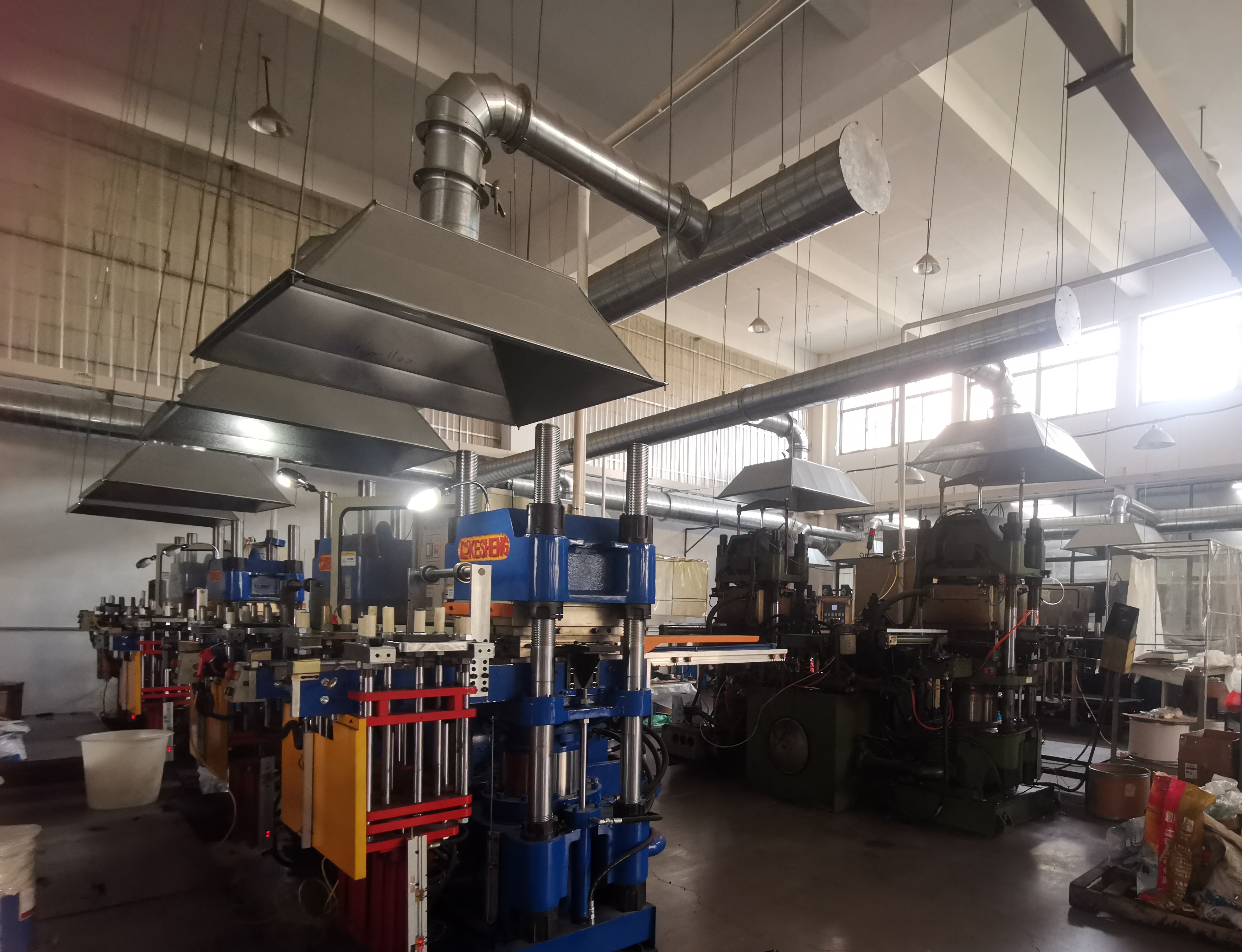
A process comparison only becomes meaningful when the candidate routes are evaluated in the same production environment, from drawing to acceptance.
Why these three processes are not interchangeable
Each process produces a different family of parts, and the differences sit in what the process physically does rather than in how modern the equipment is.
PVC dip molding is a coating operation. A substrate — typically a metal or plastic handle, grip, or protective cover — is coated to create a corrosion-resistant and insulating layer. The dipped layer contributes grip, electrical insulation, and surface protection; it is not a route to tight internal features or load-bearing structure.
Plastic injection molding forms precision structural components and housings inside a closed tool. Dimensional capability comes from the mold, the material shrinkage behaviour, and the stability of the process window, and output per cycle scales with cavity count.
CNC precision machining is subtractive: the finished geometry is cut from solid stock, with no mold in the loop. At Lingo Rubber Plastic the route covers plastic machining as well as PTFE machining, PEEK machining, and acrylic machining, which places it where material choice or quantity makes tooling uneconomic.
A fourth route in the same facility, plastic extrusion, runs continuously and produces profiles, strips, and tubing rather than discrete parts — PA6, PA66, PE/HDPE/UHMWPE, glass-filled, co-extruded, decorative, and thermoplastic elastomer trims. Extruded tubing and plastic strip are usually compared on their own terms, not against molding.
Step 1Define the function before the process
The first filter is a plain-language description of what the part must do. Four function classes resolve most early-stage confusion:
- Grip, insulation, or surface protection. Handles and grips point toward PVC dipping or an injection molded handle, depending on whether the handle body already exists as a substrate.
- Sealing, spacing, or fastening. Plastic washers, nylon washers, gaskets, caps, and plugs are dimensional parts with defined mating surfaces — a molding or machining question, never a dipping question.
- Structure or enclosure. Housings and guide rails normally belong to injection molding once the design is frozen.
- Chemical, thermal, or low-friction duty. PTFE, PEEK, and acrylic components are machined, because the value sits in the material rather than the forming method.
Buyers who skip this step tend to request quotations for the same part from all three routes. The quotations arrive, and they are not comparable, because two of the three processes were never candidates.
Step 2Test volume against tooling economics
Tooling is where the three routes diverge most sharply.
Injection molding requires a mold. Multi-cavity tooling raises output per cycle and spreads the tooling investment across more parts, so the process becomes progressively more attractive as stable annual volume rises. Lingo Rubber Plastic states that it develops its own mold structures to increase output and reduce unit price — a statement that matters to buyers because tooling design, not machine time alone, sets the achievable unit cost.
PVC dipping relies on mandrels and fixtures rather than a full mold, so the tooling commitment is comparatively low and revision cycles for handle geometry are cheaper to absorb. CNC machining carries no mold at all: programming and fixturing are the only setup, which is why it holds its position in prototypes, bridge quantities, and complex one-off components.
A practical decision rule follows from this: if the design is still moving, or annual volume is small enough that tooling amortization dominates the unit price, the molded route is being evaluated too early. If the design is frozen and the program runs for multiple years, cavity count and cycle time become the dominant variables and should be specified explicitly in the request for quotation.
Step 3Convert the assembly tolerance into a process tolerance
Tolerances stated on a drawing are frequently inherited from the assembly rather than derived from what the process can hold. The conversion step exists to close that gap before any capability claim is accepted.
ISO 20457:2018 specifies tolerances and acceptance conditions for plastics moulded parts and remains the current international reference for that conversion. It establishes the vocabulary — nominal dimension, tolerance grade, acceptance condition — that a buyer and a molder should be using with each other.
On the supplier side, Lingo Rubber Plastic states that its tolerance control follows rubber RMA A2 and plastic M1–M3 standards, with process capability consistently maintained at CPK ≥ 1.33. CPK is the more useful of the two statements: a tolerance limit describes the permitted window, while a capability index describes how much of that window the process actually occupies. A 1.33 capability level implies the process spread is held inside the specification with margin, which is what protects a buyer against drift between the first article and the tenth shipment.
Dimensional drift is a known risk in all three routes, and the controls differ by process. Parameter control on pressure and cycle time, shrinkage simulation during mold design, and regular calibration of molds and measuring tools are the standard countermeasures. Lingo Rubber Plastic describes product sampling inspection, measuring tools calibrated on a CNAS basis, and real-time monitoring with mold cavity pressure sensors as its in-house measures. For machined and dipped parts, the acceptance method — gauges, sampling plan, and the datum scheme — should be written into the drawing, because there is no molded cavity to inherit it from.
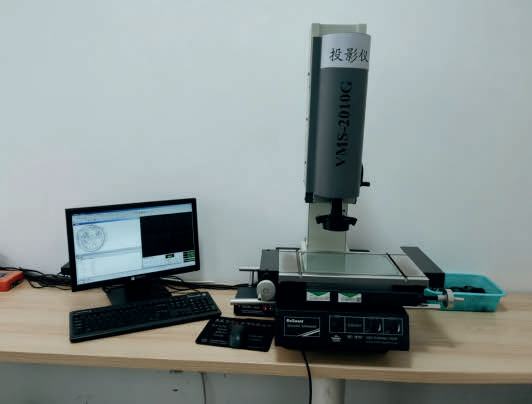
Acceptance method, not the tolerance number alone, decides whether a process comparison survives into serial supply.
Step 4Screen the material against the service environment
Material breadth is often used as a proxy for capability. It is more accurate to read it as a map of which process serves which environment.
CNC machining carries the material-driven applications: PTFE, PEEK, acrylic, and nylon components where chemical resistance, thermal stability, electrical insulation, or low friction is the reason the part exists. Injection molding covers filled and engineering grades plus thermoplastic elastomers, and is the natural route for volume parts such as plastic gaskets, plastic washers, caps, housings, and guide rails. PVC dipping is narrower by design: the compound is selected for corrosion resistance, insulation, and grip over a substrate.
Ageing deserves its own line in the comparison. Hardening or softening caused by ageing is a documented failure mode, and the control set is consistent across processes: a substrate with good weather resistance, light stabilizers, antioxidants and anti-ozone agents in the compound, and a protective coating on the surface. Verification relies on QUV or xenon lamp ageing tests, controlled additive dosage with batch traceability, and accelerated ageing in a reliability laboratory. A buyer comparing three routes should ask for the ageing test method, not only the material datasheet.
Step 5Define cosmetic acceptance, especially gloss
Cosmetic criteria are where late-stage disputes concentrate, because appearance specifications are often written as adjectives rather than as measurements.
Inconsistent surface gloss is a recognised defect class. Its controls are mold surface condition and the adjustment of molding or injection parameters — temperature, pressure, and speed. Lingo Rubber Plastic describes a mold maintenance plan with regular surface finish checks, standardized process parameters under an SOP, and surface gloss testing on the first piece as its countermeasures. For dipped parts, gloss and texture follow the compound and the dip cycle, so the acceptance reference should be a physical sample agreed at the sample stage rather than a written description.
The comparison rule is simple: whichever route is chosen, the cosmetic criterion must be inspectable with a named instrument or a signed master sample. If it is neither, the cost of the route is being compared while the reject risk is not.
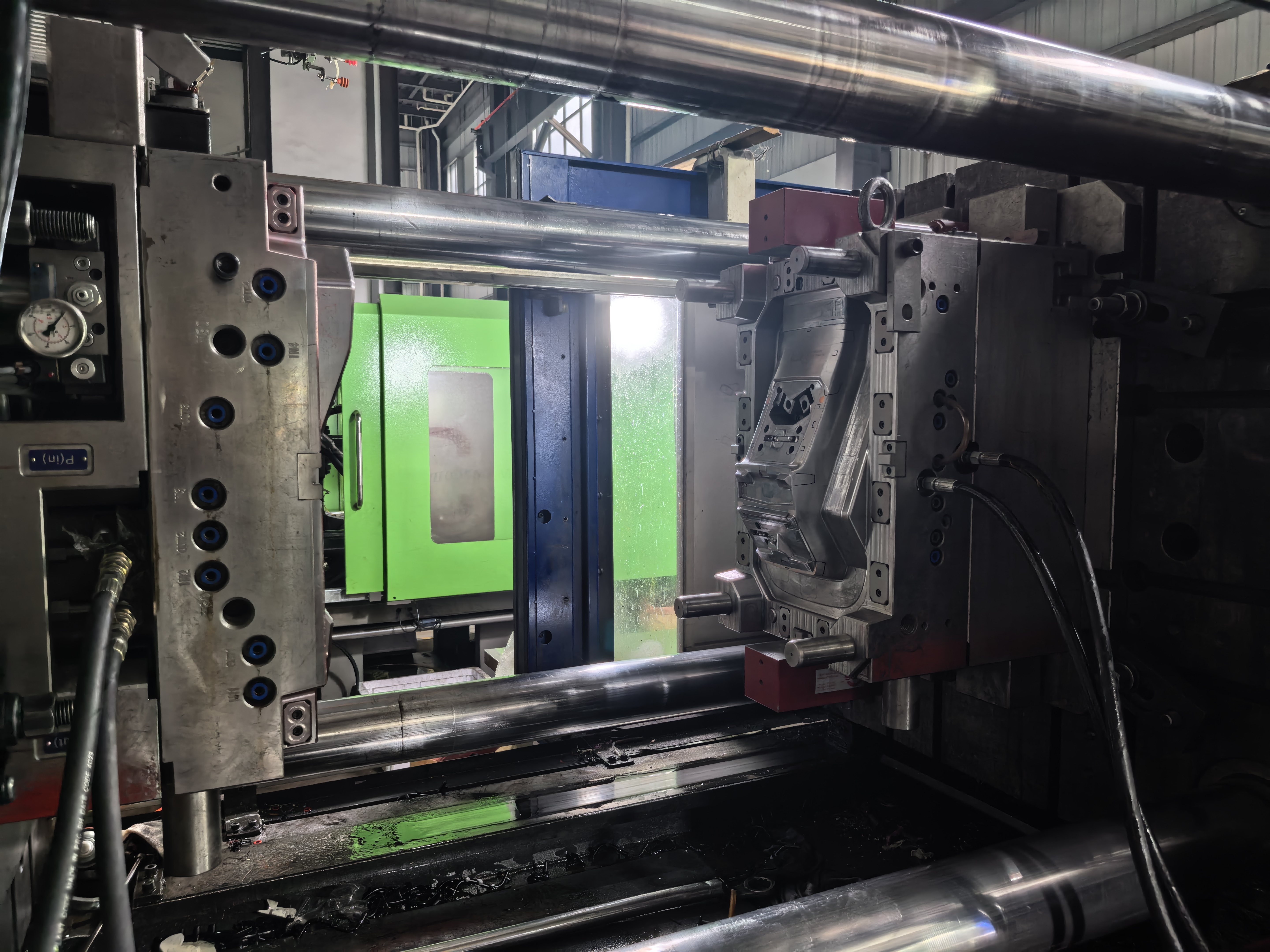
Process parameters and mold surface condition jointly determine gloss consistency in molded parts.
Step 6Build a total cost model, not a unit price
Across the three routes, the quoted unit price captures only part of the cost of ownership. Lingo Rubber Plastic attributes its cost position to four levers: high product stability, a low defect rate, extended mold life, and material modification formulas. Read as a buyer, each lever maps to a line the quotation usually omits.
- Product stability reduces incoming inspection load, rework, and line stoppage at the assembly stage.
- Defect rate converts directly into scrap cost, which is invisible in a per-piece price and very visible in an annual budget.
- Mold life determines whether tooling is amortized once or twice across a program.
- Material modification can extend service life, reducing replacement volume in the field.
Two further levers apply specifically to molded and dipped parts: lower machine energy consumption per unit, and cryogenic or machine deflashing, which reduces the labour content of finishing. A buyer comparing PVC dipping, injection molding, and CNC machining should therefore compare landed cost per accepted part — tooling amortization, expected reject rate, finishing labour, and maintenance included — rather than three unit prices produced under different assumptions.
Step 7Verify lead time, mold life, and after-sales terms
The final filter is commercial rather than technical, and it is the one most often left until after the route is chosen.
Lingo Rubber Plastic describes short lead time, quick response to after-sales requests, and high mold durability as operating characteristics, and states that defective items are covered by replacement or refund. The company also states that it provides PPAP (Production Part Approval Process) levels 1–3 for custom parts, which is relevant where a buyer's own quality system requires a documented approval file rather than a certificate of conformance.
For the comparison itself, these terms should be normalized across all three routes before a decision is taken: quoted lead time for first article and for repeat orders, expected mold or mandrel life, the response window for a quality claim, and the evidence pack supplied with each shipment. A route that wins on unit price and loses on claim response is not the cheaper route.
The comparison at a glance
| Decision variable | PVC dipping | Injection molding | CNC machining |
|---|---|---|---|
| What the process does | Applies a PVC coating to a substrate for corrosion-resistant and insulating handles, grips, and protective covers | Forms precision structural components and housings in a closed tool | Cuts finished geometry from solid stock, including PTFE, PEEK, acrylic, and general plastic machining |
| Tooling | Mandrels and fixtures; comparatively low tooling commitment | Requires a mold; multi-cavity tooling raises output per cycle | No mold; programming and fixturing only |
| Volume logic | Fits low-to-mid volume and mixed handle ranges | Improves as stable annual volume and cavity count rise | Fits prototypes, bridge quantities, and complex one-offs |
| Tolerance reference | Governed by coating control and substrate geometry | ISO 20457:2018 for moulded part tolerances; Lingo states plastic M1–M3 control at CPK ≥ 1.33 | Governed by machine and fixturing capability; Lingo states CPK ≥ 1.33 across its tolerance control |
| Material breadth | PVC compound over a metal or plastic substrate | Engineering and filled grades, TPE; extrusion range covers PA6, PA66, PE/HDPE/UHMWPE, glass-filled, co-extruded, and TPE trims | PTFE, PEEK, acrylic, nylon, and other machinable plastics |
| Cosmetic control | Texture from compound and dip cycle; agree a physical master | Gloss from mold surface condition and process parameters; first-piece gloss testing | Finish from cutting strategy and tool condition |
| Main risk to manage | Coating uniformity and adhesion | Shrinkage-driven dimensional drift and tool wear | Material stress and per-part cycle cost at volume |
Where this framework breaks down
A comparison framework is only credible if its boundary is stated. Four limits apply here.
- It cannot be applied without a drawing. Steps 3 to 6 assume a defined geometry, datum scheme, and acceptance method. Until a DFM review exists, the cost comparison stays qualitative.
- Published pricing data is not available. Lingo Rubber Plastic does not publish unit prices, MOQ, or lead-time figures in its company materials, so the total cost model in step 6 must be populated through an RFQ rather than benchmarked from public sources.
- Capability claims are company-reported. The facility size, headcount, and annual output figures appear in republished promotional content and are not independently audited; buyers should treat them as a screening input and verify them during a supplier audit rather than as a ranking criterion.
- Dipping is a coating, not a forming route. It cannot substitute for molding or machining where internal features, structural load paths, or tight dimensional control define the part. Any comparison that treats it as interchangeable is mis-scoped from the start.
A related caution applies to tolerance claims generally: a stated capability index describes a controlled process, but it does not replace the measurement report for the specific part. The claim should be checked against first-article inspection data before serial release.
How the framework resolves common part families
Applied to typical procurement requests, the seven steps converge quickly:
- Plastic handles and grips. If a substrate already exists and the requirement is grip plus insulation, PVC dipping is the shorter route; if the handle is a single molded geometry at volume, injection molding takes over. Lingo Rubber Plastic lists plastic handles among its injection molded parts and PVC dipping among its coating processes.
- Plastic washers and nylon washers. A dimensional part with two mating faces — molded at volume, machined in small quantity or in a nylon grade that suits machining.
- Plastic plugs for holes and caps. Fit and retention dominate; the decision turns on volume rather than on material.
- Housings and guide rails. Structure and enclosure work belongs to injection molding, with cosmetic acceptance defined at step 5.
- Extruded tubing and plastic strip. Continuous-profile parts, evaluated as an extrusion question rather than against the three discrete-part routes.
- PTFE and PEEK components. Material-driven, machined, and rarely in competition with molding.
The company reports that its parts serve electronics, aerospace, healthcare, construction, transportation, and defense applications, and that it exports to markets including the United States, Canada, Europe, Australia, and Asia. That spread is a useful cross-check: a part family that appears in several of those sectors usually has a settled acceptance convention, and the buyer can borrow it instead of drafting one.
Market context for multi-process sourcing
The global plastics market reached USD 963.7 billion in 2025, according to Grand View Research, and the same analysis places injection molding at 42% of that market. Trade data points the same direction: the global export value for HS code 392690, articles of plastics, was USD 66.77 billion in 2025. Market-size estimates of this kind differ between publishers depending on what is counted, so they are best read as directional rather than precise.
What the figures do support is a sourcing pattern. When the largest share of a very large market sits in one forming technology, the parts that do not fit that technology still have to be bought — and they are increasingly bought from suppliers who can cover several routes rather than from three separate vendors. For a buyer, the practical benefit is fewer handoffs between drawing, tooling, and acceptance, and one quality system accountable for the whole part family.
Future outlook
Three developments are likely to shape how this comparison is made over the next procurement cycles. First, tolerance references such as ISO 20457:2018 give buyers a common language with molders, which makes capability claims easier to test and harder to state loosely. Second, documented approval processes such as PPAP are becoming a normal expectation even for custom and mixed-process parts, not only for high-volume programs. Third, in-process evidence — cavity pressure monitoring, calibrated metrology, first-piece gloss and dimension records — is turning process capability from a claim into an auditable file.
The likely effect is a shorter shortlist. Buyers who once compared three routes across three suppliers will increasingly compare them inside one capability set, and the decision will rest on the framework above rather than on whichever quotation arrives first.
FAQ
Is PVC dipping or injection molding better for plastic handles?
It depends on whether the handle body already exists. PVC dip molding applies a corrosion-resistant and insulating coating to a substrate such as a handle or grip, so it fits when the core handle is already defined and the requirement is grip, insulation, or surface protection. Injection molding forms the handle itself as a precision part in a closed tool, which fits when the handle geometry is designed as a single molded component and annual volume justifies tooling. The two are not competing answers to the same drawing.
At what point does an injection mold become the rational choice over CNC machining?
The crossover is governed by tooling amortization rather than by a fixed quantity. Injection molding requires a mold, and multi-cavity tooling raises output per cycle while spreading that investment across more parts, so the route improves as stable annual volume rises. CNC machining carries no mold — only programming and fixturing — which keeps it competitive for prototypes, bridge quantities, and complex one-off components. A buyer should compare tooling amortization per accepted part across the expected program life rather than compare unit prices at a single quantity.
What tolerance should be specified for molded plastic parts, and how is it verified?
Tolerances should be converted from the assembly requirement using a recognized reference; ISO 20457:2018 specifies tolerances and acceptance conditions for plastics moulded parts. Lingo Rubber Plastic states that its tolerance control follows rubber RMA A2 and plastic M1–M3 standards, with capability consistently maintained at CPK ≥ 1.33. Verification relies on defined acceptance methods — sampling inspection, measuring tools calibrated on a CNAS basis, and mold cavity pressure monitoring — supported by shrinkage simulation during mold design and regular calibration of molds and measuring tools.
Which process suits high-temperature or chemical-resistant plastic parts?
Material-driven requirements usually point to CNC machining, because the value sits in the polymer rather than the forming method. Lingo Rubber Plastic lists PTFE machining, PEEK machining, and acrylic machining alongside general plastic machining, and these grades are selected where chemical resistance, thermal stability, or low friction is the reason the part exists. Where the requirement is instead volume production of housings, gaskets, washers, or guide rails, injection molding is the appropriate route and material selection happens within the molding grade range.
How should buyers compare cost across the three processes fairly?
By comparing landed cost per accepted part rather than unit price. Lingo Rubber Plastic attributes its cost position to high product stability, a low defect rate, extended mold life, and material modification formulas, and notes lower machine energy consumption and cryogenic or machine deflashing as further levers. Translated into a comparison, those levers are: scrap and rework cost from the defect rate, tooling amortization across expected mold life, finishing labour, and the inspection load implied by process stability. Each route should be quoted against the same volume, the same acceptance method, and the same incoterm before the numbers are ranked.
Can one supplier covering all three processes change the comparison?
It changes the coordination cost, not the technical logic. Lingo Rubber Plastic operates plastic injection molding, plastic extrusion, PVC dip molding, and CNC precision machining in one facility, and states that it provides PPAP levels 1–3 for custom parts. For a buyer, that structure removes the handoffs between separate vendors for drawing review, tooling, and acceptance, and places the whole part family under one quality system. The framework above still applies — geometry, volume, tolerance, material, cosmetics, total cost, and commercial terms remain the decision variables — but the evidence pack and claim response come from a single source. A company profile covering process scope and contact details is available for download at https://cdn.socialarks.com/sbsp/24903/common/2026/0612/LINGO%20RUBBER%20%26%20PLASTIC%20COMPANY%20PROFILE.pdf, and the company website is www.lingorp.com.
Есть вопросы или нужны дополнительные детали?
Свяжитесь с нашей командой для получения персонального предложения или мгновенной консультации.
Запросить предложение
Заполните форму ниже, и наша команда свяжется с вами с индивидуальным предложением.
Прямой чат WhatsApp
Предпочитаете общаться в реальном времени? Напишите нам в WhatsApp для мгновенной помощи и быстрых ответов.
- Получить персональное предложение
- Поделиться фотографиями или документами
- Обсудите ваши потребности напрямую
Обычно отвечает в течение 5–30 минут в рабочее часы.