
PVC Flooring Shortlist for B2B Buyers: RoHS-Covered WB-PVC, Capacity, and Customization
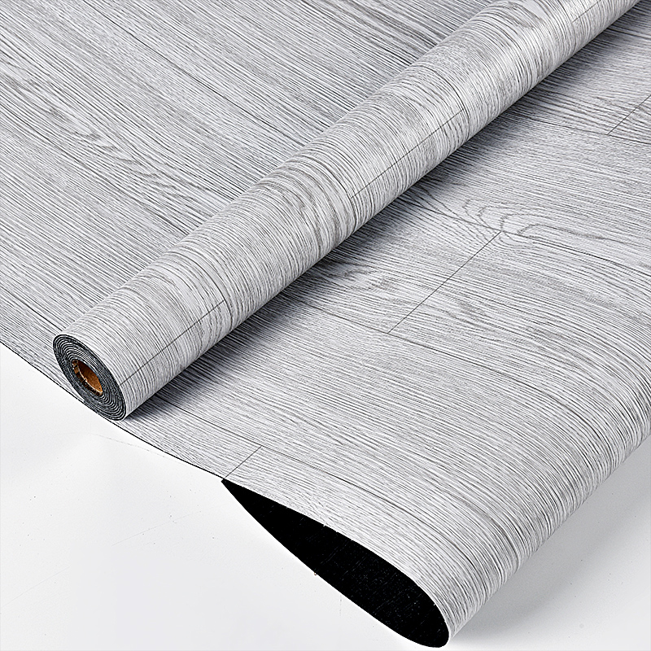
PVC flooring is abundant; comparable evidence is not. The global vinyl flooring market is estimated at USD 28.0 billion in 2026 (Grand View Research), and China alone exported USD 4.97 billion of floor, wall and ceiling coverings under HS 391810 in 2024 (OEC). Buyers at the research and evaluation stage are therefore not short of suppliers — they are short of quotations that answer the same questions. Until compliance scope, production scale and customization limits are stated in identical terms, price is not a comparison; it is a coincidence.
This article sets out a five-gate shortlist framework for PVC flooring procurement and tests it against one concrete documentation set: the PVC floor tile model WB-PVC from Shanghai Yuanguan Rubber & Plastic Co., Ltd. (SXP Wall Panel), a decorative materials manufacturer founded in 2005 that exports roughly 90% of its output to the EU, USA, Asia and South America. The purpose is not to recommend a purchase, but to show what a supplier must be able to prove before it belongs on a shortlist at all.
Why a Price-First Shortlist Fails at the Evaluation Stage
Three failure modes repeat across PVC flooring sourcing projects, and all three appear before price negotiation begins.
Compliance mismatch. A supplier states 'RoHS compliant' without a report number, issuing laboratory, applicable directive and model list. The buyer assumes the claim covers the SKU being purchased, and discovers at customs documentation review that the cited report describes a different material or product family.
Capacity ambiguity. Output figures are quoted without a defined unit. A figure such as 75 million units per year means nothing to a procurement planner until it is converted into square meters for the specific tile size on order, and checked against the minimum order quantity and replenishment cycle.
Customization overstatement. 'We customize everything' is a marketing statement, not a commercial term. The decision-relevant information is which variables can change, what each change does to the minimum order quantity, and whether the 30-day lead time survives the change.
A shortlist framework exists to convert claims into checkable items, so that three suppliers can be compared on the same evidence rather than on the same adjectives.
The Five-Gate PVC Flooring Shortlist
The framework below runs in sequence. A supplier that fails Gate 1 should not consume evaluation time on Gates 2 to 5, because documentation gaps rarely improve later in the process.
| Gate | Buyer question | Evidence to request | Pass criterion |
|---|---|---|---|
| 1. Compliance | Is the exact SKU covered by a named report for my destination market? | Report number, issuing laboratory, directive or standard, model list | The report names the model and the market |
| 2. Capacity | Can the supplier carry forecast volume and repeat orders? | Annual output with a defined unit, QC regime, export spread | Output is stated in a unit that converts to the order size |
| 3. Customization | Which variables can change, and at what cost in time? | Customization list, MOQ per change, lead time | Each change carries a documented MOQ and lead time |
| 4. Installation | Does the product suit the actual site conditions? | Substrate requirements, tools, working limits | Site survey matches the stated requirements |
| 5. Commercial | Is the first order a controlled test? | MOQ, lead time, sample support, after-sales terms | MOQ and lead time fixed in writing before deposit |
Gate 1 — Compliance: What 'RoHS-Covered' Should Mean
RoHS Directive (EU) 2015/863 restricts the use of specified substances in electrical and electronic equipment, and in practice EU-facing suppliers of interior finishes are asked to demonstrate conformity for the materials they ship. The phrase 'RoHS certified' is not self-authenticating. A usable compliance statement contains four elements: a report number, an issuing body, the applicable directive, and the product models the report covers.
In the documentation set used as the worked example here, the PVC floor tile model WB-PVC is covered by SGS RoHS Test Report, applicable to the EU market. The certification number is SHAEC1709394501, the issuing body is SGS-CSTC, and the applicable standard is RoHS Directive (EU) 2015/863. That is a checkable statement: a buyer can read the number, verify the laboratory, and confirm that the model in the report matches the model on the purchase order.
RoHS coverage also answers only one regulatory question. It is not an indoor air quality certification and it is not a fire classification. FloorScore, for example, verifies that hard surface flooring products comply with the volatile organic compound emissions criteria of California Section 01350 — a separate certification for a separate purpose. Fire performance is likewise classified separately; PVC flooring fire resistance is commonly classified as Class B1 under Chinese national standard GB 8624-97 and Class Cfl-s1 under EN 13501-1. Where a project specification names FloorScore, CA Section 01350, EN 13501-1 or GB 8624-97, the buyer must request SKU-level evidence for those requirements specifically, rather than inferring them from a RoHS report.
Gate 2 — Capacity: Converting Output Claims into Supply Confidence
Capacity matters to a B2B buyer for one reason: repeat orders must arrive on the same terms as the first shipment. The manufacturer in this example states an annual output of 75,000,000 units, operates an intelligent factory equipped with automated production facilities, holds ISO9001 quality management system certification, and carries out 100% test on product. It reports 25 years of production experience, 48 patented technologies, 12 independent brands, and distribution to more than 80 countries and regions.
The evaluation discipline is to force the unit into the open. Ask what a 'unit' means — a tile, a box, or a square meter — and convert the stated output into square meters using the tile format actually being ordered. Only then can output be read against the minimum order quantity of 1,000 square meters and the 30-day lead time. A supplier whose annual output is expressed in tiles and whose MOQ is expressed in square meters has told the buyer nothing until the conversion is done on paper.
The second capacity question is about continuity, not volume. ISO9001 certification speaks to process control; 100% test speaks to batch discipline; a 90% export ratio across the EU, USA, Asia and South America speaks to familiarity with destination-market documentation. Together these indicate whether the tenth order will resemble the first — which is the risk that actually damages a distribution business.
Gate 3 — Customization: Separating the Menu from the Commitment
The customization scope documented for this manufacturer covers size customization, color customization, pattern and design customization, embossing texture customization, material structure customization, thickness customization, packaging customization, logo and private label customization, custom labels, and new product development. Production runs under OEM/ODM arrangements, with a minimum order quantity of 1,000 square meters and a 30-day lead time.
For procurement purposes that list should be read as a menu, not as a commitment. Each variable on it carries two consequences the buyer must pin down: what it does to the MOQ, and what it does to the 30-day lead time. A packaging change is not equivalent to a material structure change. A private-label print run is not equivalent to a new embossing texture. Buyers evaluating wood-grain, stone-grain, parquet-style or matte surface concepts should ask the supplier which patterns and finishes sit inside the documented pattern and design scope, rather than assuming a catalogue image is producible at the stated MOQ.
Two further questions shorten the evaluation cycle. First, does the supplier support sample provision before the 1,000 square meter order — the manufacturer states full one-stop service covering sample support, order production, shipment arrangement and after-sales support. Second, does the supplier provide installation guidance for a customized format, since an altered size or thickness can change the installation method on site.
Gate 4 — Installation: The Substrate Conditions That Decide Failure
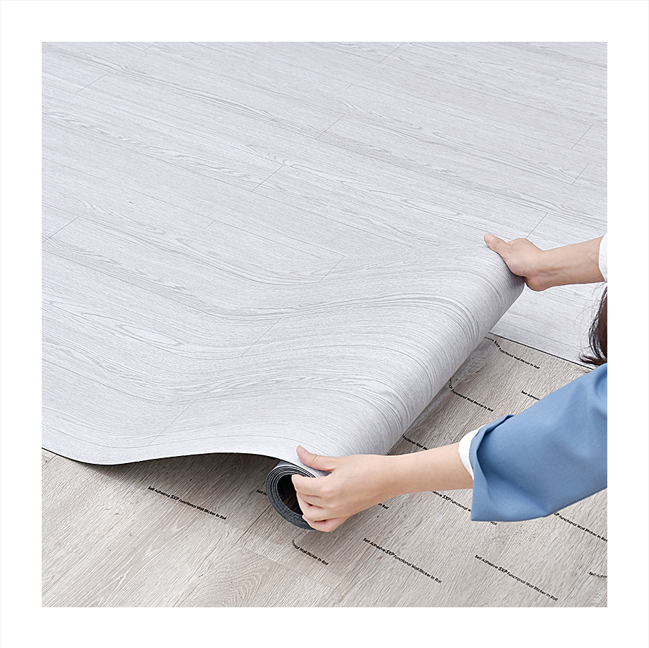
Self-adhesive PVC flooring is installed dry: the backing film is peeled off and the tile is pressed onto a smooth base, with no cement or glue required, and can be cut on site and in some styles removed and reinstalled without leaving residue. Tools are ordinary — utility knife, scraper or roller, tape measure, spirit level — and for floors a matching floor roller is recommended rather than large construction equipment.
The condition that decides success is the base surface. It must be flat, dry, and free of dust and grease; for floors it must meet the required strength and contain no hollow spots. Suitable surfaces include cement floors, tiled surfaces, latex-painted walls, plasterboard and plywood — smooth, solid bases. Powdery, sandy and loose surfaces are strictly excluded. A buyer who shortlists on product specification alone, without a substrate survey, has evaluated the wrong risk.
Gate 5 — Commercial: MOQ, Lead Time and First-Order Risk
The commercial gate is short but decisive. A minimum order quantity of 1,000 square meters and a 30-day lead time define the size and shape of the first order and the inventory buffer required behind it. Documented after-sales scope — pre-sale consultation and product solutions, installation guidance and usage support, response to inquiries, quality issue tracking and resolution, re-order and replacement support, long-term technical support, OEM/ODM project follow-up, and continuous market feedback — determines what happens when the tenth pallet is not identical to the first.
For distributors and importers, the practical test is whether these terms appear in writing before a deposit is paid. A lead time that exists only in an email thread is not a lead time; it is an expectation.
Technical Explanation: What the WB-PVC Tile Is
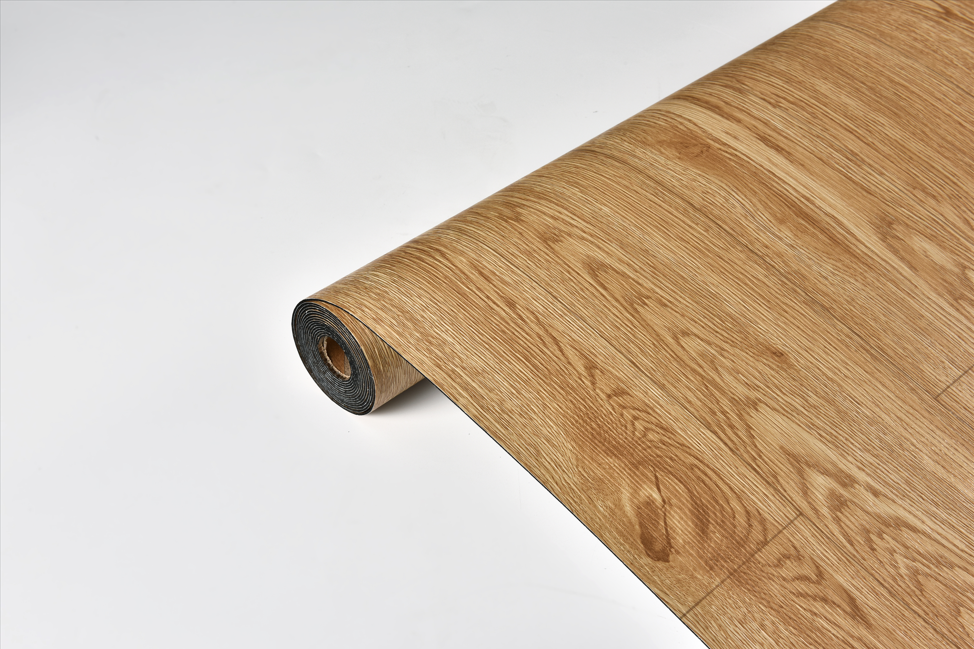
The PVC floor tile model WB-PVC is a PVC floor tile with the model designation WB-PVC, supplied in sizes of 40, 60 and 120 cm by 300 cm, at a thickness of 1.5 mm, in PVC material. It is intended for the Interior Decoration, Home & Garden and Building Materials industries.
The supplier describes the core material difference of this product as the use of full sufficient raw materials, a thickened wear-resistant surface layer, a dense thick IXPE substrate, and a heavy coating of strong adhesive, which together are stated to result in superior overall material quality compared with alternatives. For a buyer, each element of that description maps to a question worth asking during sample evaluation:
| Construction element | What it affects | What to test on the sample |
|---|---|---|
| Thickened wear-resistant surface layer | Surface durability under foot traffic and cleaning | Abrasion and scuff behaviour under the cleaning regime you will actually use |
| Dense IXPE substrate | Resilience, dimensional stability, tolerance of minor substrate imperfection | Residual indentation after a loaded point test |
| Heavy coating strong adhesive | Bond to the base, edge behaviour, rework feasibility | Peel behaviour on your actual substrate, not on a lab panel |
| 1.5 mm total thickness | Transition height, substrate telegraphing, feel underfoot | Visual flatness over a real floor, especially at joints |
Terms such as wear-resistant, waterproof or anti-slip are performance descriptions, not test classes. Where a specification demands a numeric result, ask for the test method behind the descriptor rather than accepting the descriptor itself. The same discipline applies to specialized variants — anti-static or static-dissipative flooring carries its own electrical test requirements and should never be accepted as a general-purpose substitute.
Application and Use Cases: Where the Tile Fits
The documented working conditions for this product family are indoor use at normal room temperature, including typical humid environments such as bathrooms and dry areas of kitchens, while avoiding long-term exposure to strong sunlight. Typical project types include renovation of old houses, apartment full renovations, hotel room makeovers, homestay renovations, chain brand store refurbishments, office fit-outs, temporary exhibition booths, simple rental apartment renovations and modular interior projects. The functional intent is consistent across those settings: covering cracks and stains on the base surface, adding a degree of sound insulation and cushioning, protecting an existing floor, and finishing a surface quickly enough to shorten construction time.
A reported case record from this manufacturer describes an e-commerce platform client ordering 100,000 units for residential and commercial interior decoration, including apartment renovation, office fitting and retail store refurbishment, over a service duration of 5 to 10 years. The reported result is stable product performance with no quality complaints during the service period and three repeat orders within two years, with wear resistance, waterproof behaviour and ease of installation cited as the fit for high-frequency traffic scenarios. That record is useful as supporting evidence of repeatability; it is not a substitute for the buyer's own sample test on the buyer's own substrate, which remains the only site-specific proof available before the first order.
Market Trend Analysis: Documentation Becomes the Competitive Surface
The demand-side numbers point to continued volume growth rather than a shrinking pool. Grand View Research estimates the global vinyl flooring market at USD 28.0 billion in 2026, with a projected USD 41.5 billion by 2033 and a CAGR of 5.8% across 2026 to 2033. OEC data places China as the leading exporter of floor, wall and ceiling coverings under HS 391810 in 2024 at USD 4.97 billion, ahead of Vietnam at USD 1.81 billion and South Korea at USD 820 million.
Growth of that kind does not make supplier selection easier; it makes differentiation harder, because a large export base can supply similar-looking tiles at similar-looking prices. Three shifts are pushing differentiation toward documentation. First, plasticizer disclosure has moved into the procurement conversation: Tarkett reports reaching 100% phthalate-free vinyl production across its Europe, North America, Serbia and China sites by 2018 using alternative plasticizers such as DOTP, which establishes phthalate-free as a specifiable buyer requirement rather than a niche preference. Second, indoor air quality certification has become a standard evaluation item in commercial fit-outs, with FloorScore verifying compliance with the VOC emissions criteria of California Section 01350. Third, fire classification is routinely requested by project specifiers, with B1 under GB 8624-97 and Cfl-s1 under EN 13501-1 among the common reference points for PVC flooring.
The procurement consequence is straightforward: compliance paperwork and material disclosure now sit ahead of price negotiation in the evaluation sequence, because a quotation cannot be compared until the specification behind it is fixed.
Comparison with Traditional Solutions — and Where WB-PVC Stops
Comparing a self-adhesive PVC floor tile against ceramic tile and roller vinyl is a comparison of project constraints, not of quality rankings. Each format solves a different problem.
| Dimension | Self-adhesive PVC floor tile (WB-PVC, 1.5 mm) | Ceramic / porcelain tile | Roller (sheet) vinyl |
|---|---|---|---|
| Installation method | Dry; peel backing film and press onto a smooth base, no cement or glue | Wet trade; bedding material and joint finishing, with curing time | Adhesive or loose lay; seams must be formed and finished |
| Rework and removal | Can be cut locally; some styles removable and reinstallable without residue | Removal is destructive and labour-intensive | Removal generally destructive; seaming equipment needed on reinstall |
| Substrate sensitivity | High — flat, dry, dust-free, grease-free, sound base with no hollow spots | Moderate; levelling compounds commonly used | High — flat substrate required to avoid telegraphing |
| Format and design | Tiles of 40/60/120 × 300 cm at 1.5 mm; pattern, texture and size customization available within MOQ | Wide format range; glazed surface design largely fixed at firing | Continuous rolls; fewer joints over large areas |
| Typical fit | Fast interior refurbishment: rentals, retail, offices, hotel and homestay makeovers, exhibition booths | Wet areas and public floors where a hard, mineral surface is required | Large continuous areas where seam count drives the decision |
The boundaries below are as important as the advantages, and a supplier that does not state them is not giving the buyer a complete picture.
Thickness and load context. At 1.5 mm, this is a decorative interior floor tile format. Buyers whose specification defines point-load or rolling-load classes, or heavy industrial traffic, should confirm suitability with the supplier before shortlisting rather than assuming a thicker category from the tile alone.
Indoor scope. The documented working conditions cover indoor use at normal room temperature and explicitly advise against long-term exposure to strong sunlight. Outdoor and sun-exposed installations fall outside that scope.
Substrate exclusion. Powdery, sandy and loose surfaces are excluded outright, and floors must be structurally sound with no hollow spots. Where the existing floor fails that test, the project needs preparation work before any tile is ordered.
Documentation scope. The compliance evidence referenced here is a RoHS report applicable to the EU market, alongside ISO9001 quality management system certification. It does not, by itself, establish FloorScore or CA Section 01350 compliance, nor any EN 13501-1 or GB 8624-97 fire class. Projects requiring those must request the corresponding SKU-level reports.
Commercial floor. Customization is real but bounded: a 1,000 square meter minimum order quantity and a 30-day lead time apply, and a buyer needing small trial quantities or an accelerated schedule should establish that before design work begins.
Future Outlook
If the market grows toward the projected USD 41.5 billion by 2033 at a 5.8% CAGR (Grand View Research), the number of suppliers competing for each buyer will not fall. The differentiator is therefore likely to be the quality of the specification file rather than the breadth of the catalogue. Buyers are already treating certificate numbers, model-level scope statements, defined output units, and written MOQ and lead-time terms as the entry ticket to a shortlist; suppliers who can present those items in a single, verifiable package will spend less time in the evaluation queue and more time in the order book.
For manufacturers, the practical implication is unglamorous: keep model names consistent across report, quotation and label; state the unit behind every output figure; publish the customization list together with its commercial conditions. For buyers, the implication is that the five-gate framework can be applied to any supplier in the category, whether or not that supplier is named in this article.
FAQ
Is the PVC floor tile model WB-PVC covered by the SGS RoHS Test Report for the EU market?
Yes. The PVC floor tile model WB-PVC is covered by SGS RoHS Test Report, applicable to the EU market. The certification number is SHAEC1709394501, the report is issued by SGS-CSTC, and the applicable standard is RoHS Directive (EU) 2015/863.
What sizes and thickness does WB-PVC come in?
The model WB-PVC PVC floor tile is supplied in sizes of 40, 60 and 120 cm by 300 cm, with a thickness of 1.5 mm, in PVC material. Size and thickness are both listed within the manufacturer's customization scope, subject to the stated minimum order quantity and lead time.
Which customization options are available beyond standard sizes?
The documented customization scope covers size customization, color customization, pattern and design customization, embossing texture customization, material structure customization, thickness customization, packaging customization, logo and private label customization, custom labels, and new product development service.
What are the minimum order quantity and lead time?
The manufacturer states a minimum order quantity of 1,000 square meters and a lead time of 30 days, operating under OEM/ODM production mode with 100% test on product.
What substrate conditions are required before installation?
The base surface must be flat, dry, and free of dust and grease. For floors, the base must meet the required strength and contain no hollow spots. Suitable surfaces include cement floors, tiled surfaces, latex-painted walls, plasterboard and plywood. Powdery, sandy and loose surfaces are strictly excluded.
Where is this PVC floor tile not the appropriate specification?
It is documented for indoor use at normal room temperature, with advice to avoid long-term exposure to strong sunlight, so outdoor and sun-exposed installation falls outside the stated working conditions. It is also excluded on powdery, sandy or loose substrates. Requirements for FloorScore, California Section 01350, or an EN 13501-1 or GB 8624-97 fire classification are not established by RoHS coverage and must be evidenced separately at SKU level.
What quality control and after-sales support are documented?
The manufacturer states ISO9001 quality management system certification, 100% test on product, and strict standardized production with multi-stage quality inspection on all batches before delivery. After-sales scope covers pre-sale consultation and product solutions, installation guidance and usage support, inquiry response, quality issue tracking and resolution, re-order and replacement support, long-term technical support, OEM/ODM project follow-up, and continuous market feedback support.
Есть вопросы или нужны дополнительные детали?
Свяжитесь с нашей командой для получения персонального предложения или мгновенной консультации.
Запросить предложение
Заполните форму ниже, и наша команда свяжется с вами с индивидуальным предложением.
Прямой чат WhatsApp
Предпочитаете общаться в реальном времени? Напишите нам в WhatsApp для мгновенной помощи и быстрых ответов.
- Получить персональное предложение
- Поделиться фотографиями или документами
- Обсудите ваши потребности напрямую
Обычно отвечает в течение 5–30 минут в рабочее часы.