
PVC Flooring for Retail Fit-Outs: When Self-Adhesive Tiles Fit High-Turnover Leases
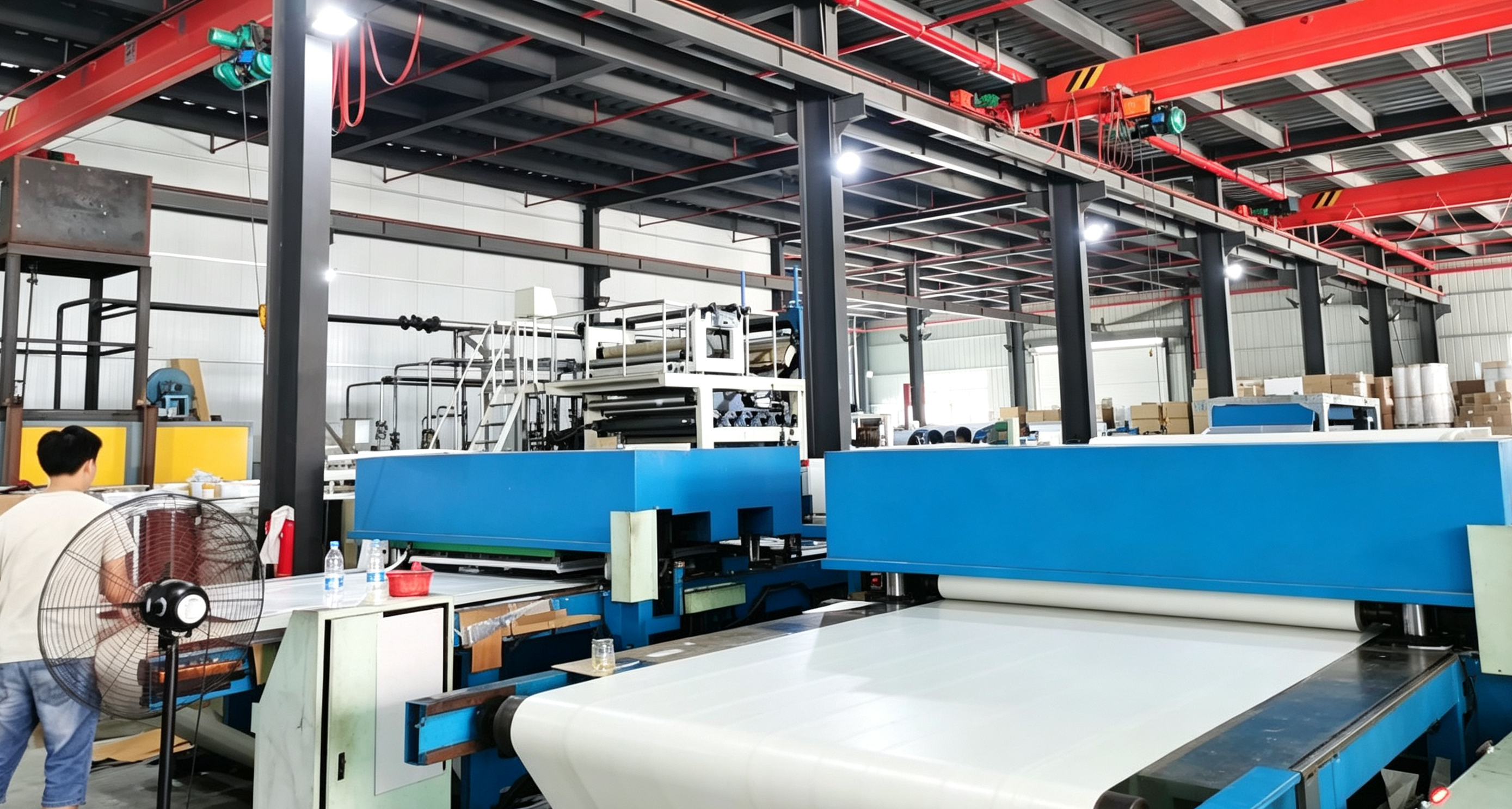
A retail floor is a supply-chain decision as much as a design decision. Image: production environment for self-adhesive PVC flooring and interior decorative materials.
Retail fit-out programmes are measured in weeks. Leases are measured in years. The two rarely finish together, and that mismatch is the reason self-adhesive PVC flooring keeps appearing in retail conversations. A tenant on a short-to-medium lease, a pop-up operator taking a seasonal pitch, or a franchise brand refreshing its store identity can all replace a floor long before a conventional heavy-duty system has reached its expected service life.
The global vinyl flooring market was estimated at USD 28.0 billion in 2026 and is projected to reach USD 41.5 billion by 2033, a compound annual growth rate of 5.8% across 2026–2033, according to Grand View Research. That figure describes resilient flooring demand as a whole rather than one installation format, but it explains why specifiers increasingly compare installation methods — not only designs — when they price a retail floor.
This article examines one narrow question. When a retail unit needs a floor that installs quickly, survives a lease cycle and can be repaired in patches rather than replaced entirely, does a self-adhesive PVC floor tile such as the WB-PVC model make sense — and where does it stop making sense?
The fit-out problem: downtime, adhesive systems and lease-end removal
Conventional flooring installation in a retail unit usually involves an adhesive or a mechanical fixing, a setting or curing period, and a removal process at the end of the term. Each step carries a commercial cost that never appears in the material price: trading days lost while the floor goes down, protection of the finished surface while other trades complete their work, and reinstatement obligations at handover.
Self-adhesive PVC flooring changes that sequence. According to the product's published application guidance, the tile is supplied with a protective backing film; the installer peels the film away and presses the tile onto a suitable surface. It is a dry installation — no cement and no glue are required — and the material can be cut on site. The same guidance states that installed pieces can be removed and reinstalled, and that some styles can be lifted without leaving adhesive residue.
Reversibility matters more in retail than in almost any other interior category. Where a fit-out is a temporary or franchise-standard overlay on an existing floor, the ability to reverse part or all of the installation can determine whether a landlord or a head office approves the specification at all. For contractors, the real opportunity is not simply a lower material price — it is a shorter and more predictable critical path between possession of the unit and the first trading day.
How self-adhesive PVC flooring is built and installed
A peel-and-stick PVC floor tile is a layered product: a printed directional layer that carries the visual pattern, a wear-resistant surface layer that absorbs footfall and cleaning, and a substrate with an adhesive coating protected by a release film. In the manufacturer's published comparison of its construction against ordinary wall-and-floor sticker products, the differences listed are a thicker wear-resistant surface layer, a dense thick IXPE substrate and a heavier adhesive coating. The same supplier-reported comparison cites a 22% increase in total material thickness, a 35% increase in glue coating weight and a 180% increase in wear-layer thickness, with surface wear resistance improved five times and long-term aging resistance promoted by 200%.
Those figures are supplier-reported comparisons against ordinary products of the same broad category, not third-party test results, and a tender document should label them as such. Their practical meaning for a retail specifier is directional rather than absolute: more wear-layer thickness and a heavier adhesive coating generally support longer intervals between repairs in a shop where trolleys, fixtures and cleaning equipment pass over the same route every day.
Installation tooling is deliberately light. The published guidance lists a utility knife, a scraper or roller, a tape measure, a spirit level and an adhesive remover for later disassembly. For floor installation it recommends a matching floor roller rather than large construction equipment. That keeps the work compatible with overnight and weekend handover windows, which is where most retail programmes are won or lost.
Substrate condition is the deciding factor
The same application guidance is explicit about limits. The base surface must be flat, dry and free of dust and grease. For floor applications the base must meet the required strength and must show no hollow spots. Powdery, sandy or loose surfaces are strictly excluded. The product is intended for indoor use at normal room temperature, including typical humid environments such as bathrooms and dry areas of kitchens, and it should not be exposed to strong direct sunlight over long periods.
Translated into a retail project, the peel-and-stick decision is really a subfloor decision. A sound, level screed or a stable tiled surface is a good candidate. A floor with broken screed, rising damp, hollow patches or heavy contamination is not, and the cost of preparing that base should be priced before the flooring is specified rather than after.
A short-lease specification: the WB-PVC PVC floor tile
SXP Wall Panel is the brand under which Shanghai Yuanguan Rubber Plastic Co., Ltd., a decorative materials manufacturer founded in 2005, supplies wall stickers, wallpaper, wall panels, carpet tiles and flooring. The company states that around 90% of its output is exported, with main markets in the EU, the USA, Asia and South America, and that its products reach more than 80 countries and regions.
Within that portfolio, the PVC floor tile identified as model WB-PVC is offered in sizes of 40, 60 and 120 × 300 cm at a thickness of 1.5 mm. The model is covered by an SGS RoHS test report for the EU market (report reference SHAEC1709394501), which documents testing of restricted substances within the RoHS scope for that specific model.
Retail portfolios rarely want one identical format in every store, so the supplier supports flexible customization on size, thickness, pattern, surface and packaging. For a fit-out contractor, that covers the decisions that actually get asked about in a design review: overall tile format, surface feel in a sales area, and how the goods are packed for a specific market or warehouse.
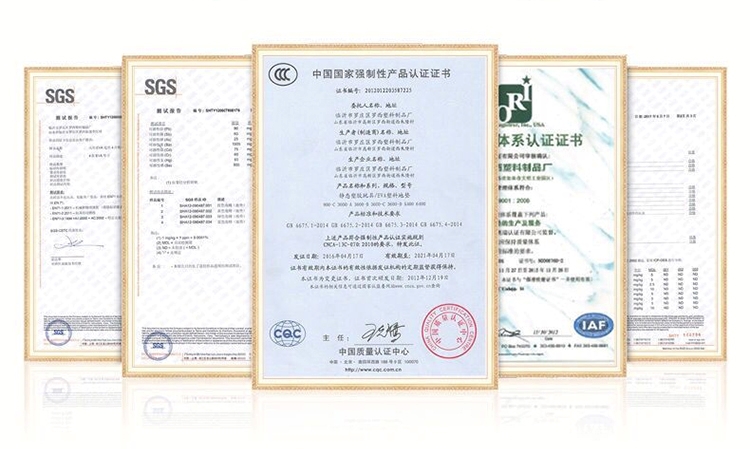
Compliance documentation accompanies the WB-PVC PVC floor tile for EU-bound orders. Image: certification records held for exported flooring and decorative materials.
| Attribute | Detail |
|---|---|
| Model | WB-PVC (PVC floor tile) |
| Material | PVC |
| Sizes | 40 × 300 cm, 60 × 300 cm, 120 × 300 cm |
| Thickness | 1.5 mm |
| Installation | Self-adhesive, dry installation with protective backing film; local cutting on site |
| Compliance record | SGS RoHS test report for the EU market, reference SHAEC1709394501 |
| Customization | Size, thickness, pattern, surface and packaging |
| Indoor application scope | Shop interiors, hotel rooms, kindergartens, residential rooms and similar indoor settings |
| Supplier-recorded service effect | Maintenance frequency reduced by 85%; reported service life three times longer than ordinary wall-and-floor sticker products |
Company-level evidence a contractor can request alongside the product record includes ISO9001 quality management system certification, a stated portfolio of 48 patented technologies and 12 in-house brands, an R&D team of five engineers, a total production, quality-control and sales team of around 200 people, and an annual output of 75,000,000 units. The company states that standardized production and multi-stage inspection are applied to every batch before delivery.
Where the format fits in a retail portfolio
Self-adhesive PVC flooring is not a universal retail answer. It fits a recognisable set of project types where the lease clock and the programme clock are both short.
- Chain brand store refurbishments where multiple units are fitted to one standard and installed in sequence.
- Temporary and pop-up retail, exhibition booths and seasonal units where the floor is expected to be lifted again.
- In-line mall units and street shops whose existing screed or tiled surface is already flat, dry and sound.
- Simple rental retail units where reinstatement conditions are written into the lease.
- Interior areas such as hotel-style guest spaces, staff rooms and kindergartens within a larger retail building, where the same installation method is used throughout.
Because the material is cut on site with hand tools, installation does not depend on specialist cutting equipment arriving before the flooring crew. Where a section is later damaged, the repair question becomes a local one rather than a whole-floor decision — a structural advantage in stores where fixtures are moved between seasons.
Market signals shaping retail flooring specifications
Three verifiable signals are relevant to anyone writing a retail flooring specification now.
Supply concentration. In 2024, China was the leading exporter of vinyl chloride polymer floor coverings under HS code 391810, with export value of USD 4.97 billion, ahead of Vietnam at USD 1.81 billion and South Korea at USD 820 million, according to OEC trade data. For retail projects in Europe and North America, that concentration is a lead-time and documentation variable as much as a price variable.
Compliance expectations. Fire performance for PVC flooring is commonly classified as Class B1 under Chinese national standard GB 8624-97 and as Cfl-s1 under EN 13501-1, while ASTM E648 is also referenced in some specifications. Indoor air quality requirements increasingly point to FloorScore certification, which verifies that hard surface flooring complies with the volatile organic compound emissions criteria of California Section 01350.
Material formulation. Phthalate-free production has moved from a niche claim towards a mainstream manufacturing position in some regions. Tarkett reported that by 2018, 100% of its vinyl production sites in Europe, North America, Serbia and China used phthalate-free technology with alternative plasticizers such as DOTP. Buyers specifying phthalate-free PVC flooring should still ask which plasticizer system is used and request matching documentation, rather than treating the term alone as evidence.
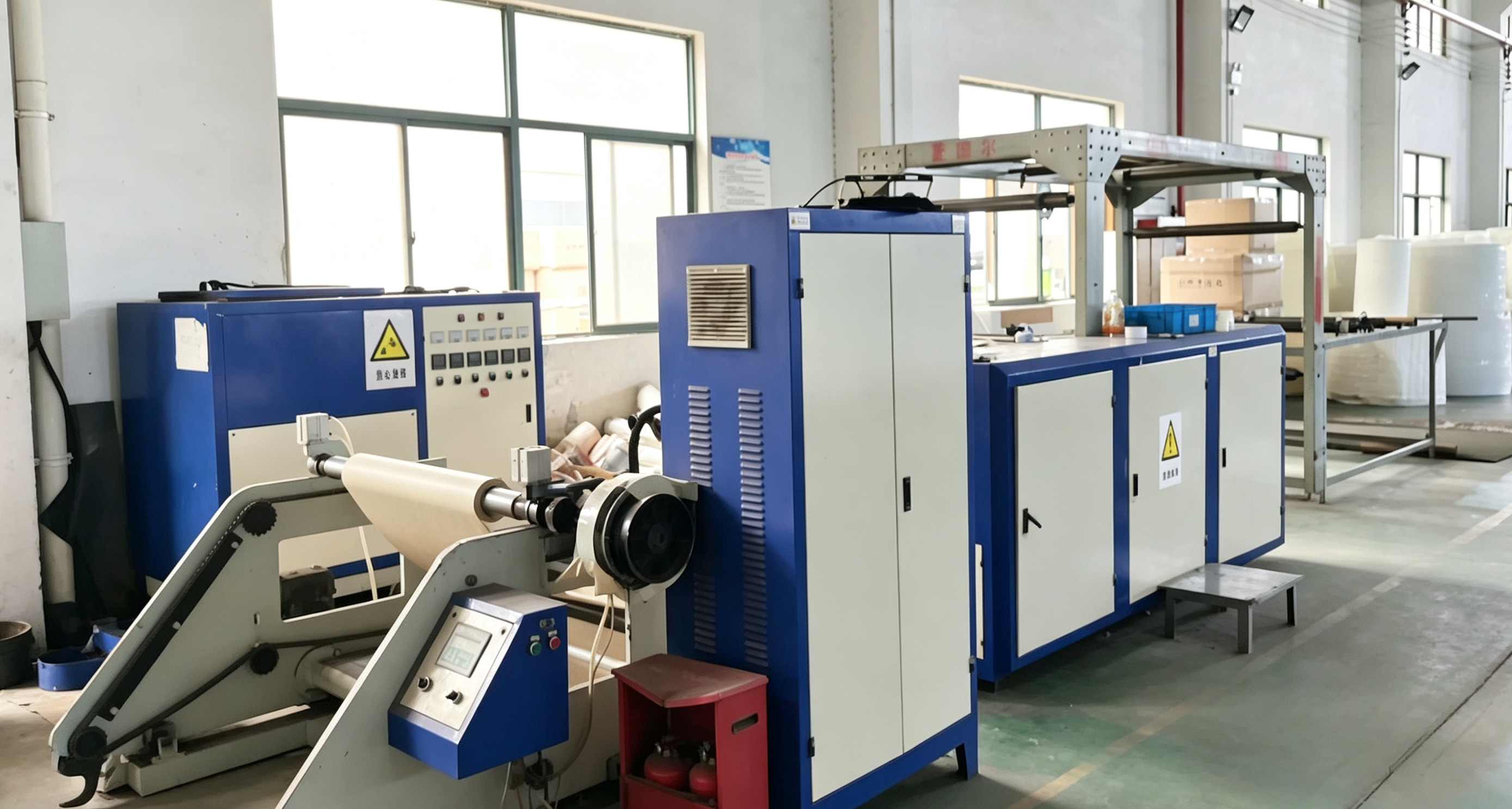
Batch handling and inspection records are part of the evidence pack a retail contractor can request. Image: material handling and inspection before shipment.
Self-adhesive tiles compared with other retail flooring approaches
The comparison below is deliberately category-level. It describes how installation formats behave in a fit-out programme; it does not rank brands, and it does not claim that one system is correct in every store.
| Consideration | Self-adhesive PVC tile | Adhesive-applied resilient flooring | Click-locking floating flooring |
|---|---|---|---|
| Installation method | Dry, peel-and-stick, no cement or glue | Adhesive applied to a prepared substrate | Mechanical click joint, typically over an underlay |
| Floor-ready time | Walkable after pressing and rolling | Requires a setting period before full use | Fast, dependent on underlay and acclimatisation |
| Substrate tolerance | Must be flat, dry, sound, dust- and grease-free; no powdery, sandy or loose bases | Also requires a prepared, sound substrate | Can accommodate minor unevenness where an underlay is used |
| Lease-end handling | Can be removed and reinstalled; some styles lift without residue | Removal work generally required | Can be lifted and reused in some installations |
| Local repair | Material cut to size on site | Repair involves cutting and re-bonding | Individual boards can be replaced |
| Typical best fit | Short-to-medium lease retail, pop-ups, fast handovers | Permanent high-traffic stores with a longer programme | Fast-fit projects wanting a thicker floating profile |
Where self-adhesive PVC flooring is the wrong specification
- Unsound or contaminated subfloor. Powdery, sandy and loose surfaces are excluded by the product's own application guidance, and hollow spots must be rectified before any self-adhesive product is laid.
- Long-term direct sunlight. The product is intended for indoor use and should not be exposed to strong direct sunlight over extended periods, which rules out some glazed frontages and conservatory-style retail spaces.
- Permanent standing water or heavy rolling loads. The WB-PVC floor tile is a 1.5 mm indoor format. Stores with wash-down areas, permanent moisture or sustained heavy wheeled traffic should assess a heavier-duty specification before ordering.
- Treating a RoHS report as blanket market clearance. The SGS RoHS report addresses restricted substances for the covered model. Separate EU requirements such as CE-CPR, REACH and PPWR packaging rules may still apply, and shipments without valid certificates carry a risk of customs detention, return shipment and fines.
- Buying on price alone. Differences in this category usually trace back to raw material grade, thickness, formulation and quality control. Recycled-material products can show dimension deviation, fading and odour and may lack complete test certificates, which creates after-sales and clearance risk on export orders.
A contractor's evaluation checklist for retail fit-out orders
The supplier's one-stop service model covers four stages: sample support, order production, shipment arrangement and after-sales support. Each stage produces a document or a decision that a contractor should confirm before the purchase order is released.
| Stage | What to confirm | Why it matters in a retail fit-out |
|---|---|---|
| Sample support | Physical samples in the intended pattern, surface and thickness; on-site test of adhesion and ageing behaviour | Confirms appearance under the store's own lighting and reduces the risk of a bulk-order mismatch |
| Order production | Written specification for size, thickness, pattern, surface and packaging; batch inspection records | Limits dimension and shade variation between stores that are fitted months apart |
| Commercial terms | MOQ of 200 square metres; FOB delivery terms; TT payment; pre-shipment test as the acceptance criterion | Aligns the order size and payment schedule with the fit-out programme and cash flow |
| Shipment arrangement | Packaging specification for the destination market, documentation pack, transit schedule | Protects the opening date from clearance delays caused by incomplete paperwork |
| After-sales support | Contact route for defect claims, reference for replacement pieces, agreed response terms | Turns a damaged section into a local repair instead of a full floor replacement |
Sampling is the point at which supplier claims become checkable. The published guidance is that physical samples should be tested for adhesion and ageing performance, and that compliance certificates for the target market should be verified before bulk purchasing. A contractor who follows that sequence is not adding a step to the programme; they are moving the risk earlier, where it is cheaper to resolve.
Future outlook: flooring that follows the lease
The direction of travel is fairly simple to read. Resilient flooring demand continues to grow, with the global vinyl flooring market projected to reach USD 41.5 billion by 2033 at a 5.8% CAGR from 2026. At the same time, retail tenants refresh interiors, relocate and re-brand on shorter cycles than they did when store floors were expected to last a decade.
That combination favours formats that are reversible, locally repairable and quick to install — and it rewards suppliers that can support a distributor or a contracting partner over repeated orders rather than a single shipment. For a manufacturer exporting around 90% of its output to the EU, the USA, Asia and South America, the practical version of long-term partnership looks like batch consistency across repeat orders, packaging customized for the destination market, and a documented one-stop route from sample to after-sales support.
A self-adhesive PVC tile will not suit every retail floor. But for the specific case of a leased unit that has to be trading quickly and handed back or refreshed on a short cycle, it removes several steps that other flooring formats cannot avoid.
The full product range, specifications and packaging options for SXP Wall Panel decorative materials are summarized in the Shanghai Yuanguan product brochure, available for download.
FAQ: self-adhesive PVC flooring in retail fit-outs
Is self-adhesive PVC flooring suitable for a retail unit on a short lease?
It can be, where the subfloor allows it. The format is installed dry with a protective backing film, requires no cement or glue, and can be cut on site with hand tools such as a utility knife, roller, tape measure and spirit level. Published guidance states that installed material can be removed and reinstalled, and that some styles can be lifted without leaving adhesive residue, which suits reversible fit-outs. Suitability still depends on the condition of the base and on the traffic the unit will carry.
What substrate conditions must be verified before installation?
The base surface must be flat, dry and free of dust and grease. For floors, the base has to meet the required strength and must not contain hollow spots. Powdery, sandy and loose surfaces are strictly excluded. The product is intended for indoor use at normal room temperature, including typical humid areas such as bathrooms and dry kitchen zones, and it should not be exposed to strong direct sunlight over long periods.
When is self-adhesive PVC flooring the wrong choice for a store?
It is the wrong choice where the existing screed is unsound, powdery or contaminated, where the area sees permanent standing water or sustained heavy rolling loads, or where the surface would be exposed to strong direct sunlight for long periods. The WB-PVC PVC floor tile is a 1.5 mm indoor format; permanent high-traffic environments with demanding mechanical conditions should be assessed against a heavier-duty specification before an order is placed.
What does the SGS RoHS test report mean for an EU-bound retail order?
The WB-PVC PVC floor tile is covered by an SGS RoHS test report for the EU market, report reference SHAEC1709394501, which documents restricted-substance testing within the RoHS scope for that model. It is one part of an EU compliance file, not a substitute for the rest of it. CE-CPR construction product certification, REACH hazardous-substance rules and PPWR packaging requirements are separate, and missing valid certificates can result in customs detention, return shipment and fines. Certificate validity should be verified before the order is placed.
What can be customized on a retail flooring order?
The manufacturer supports flexible customization on size, thickness, pattern, surface and packaging. Standard WB-PVC floor tile sizes are 40, 60 and 120 × 300 cm at 1.5 mm, with other dimensions available on request. Because surface and pattern are independently customizable, a retail brand can align the floor with its store identity and its cleaning regime; the exact pattern and surface option should be confirmed against physical samples before bulk production.
What commercial terms and support stages should a contractor confirm before ordering?
For this supplier, the stated purchasing terms are a minimum order quantity of 200 square metres, FOB delivery terms, TT payment, and pre-shipment testing as the acceptance criterion. Around those terms sits a one-stop service model with four stages: sample support, order production, shipment arrangement and professional after-sales support. For chains rolling out several stores, the relevant questions are batch consistency across repeat orders, packaging configured for the destination market, and how a replacement piece would be sourced if a section is damaged later in the lease.
Есть вопросы или нужны дополнительные детали?
Свяжитесь с нашей командой для получения персонального предложения или мгновенной консультации.
Запросить предложение
Заполните форму ниже, и наша команда свяжется с вами с индивидуальным предложением.
Прямой чат WhatsApp
Предпочитаете общаться в реальном времени? Напишите нам в WhatsApp для мгновенной помощи и быстрых ответов.
- Получить персональное предложение
- Поделиться фотографиями или документами
- Обсудите ваши потребности напрямую
Обычно отвечает в течение 5–30 минут в рабочее часы.