
PVC Flooring: Types, Standards, and What Buyers Should Know
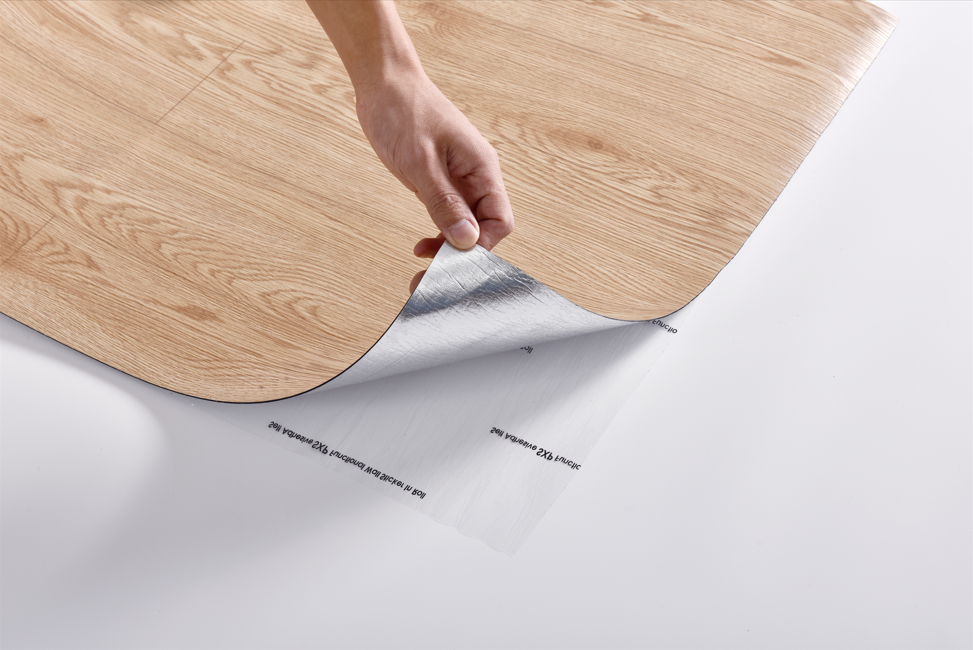
PVC flooring has moved from a budget alternative to a mainstream specification in residential and commercial renovation. The category includes self-adhesive tiles, click-lock planks, roll formats and specialized variants described by performance (fire-resistant, wear-resistant, anti-slip, anti-static) or by surface design (wood-grain, stone-grain, carpet-pattern, parquet-pattern).
For buyers in the early research stage, the practical question is not whether PVC flooring is acceptable, but how to compare products that carry different claims, certifications and price levels. This article explains the main PVC flooring types, installation requirements, compliance considerations and procurement criteria, with a focus on what a manufacturer should be able to document.
Why the PVC Flooring Market Is Hard to Navigate
The number of PVC flooring variants creates a documentation problem. Two products with the same visual pattern can differ in material formula, thickness, wear layer, adhesive quality and certification status. Products described as "click locking", "self adhesive", "waterproof", "anti-static" or "hospital-grade" are not interchangeable, and the terminology is not always standardized by suppliers.
For importers and renovation contractors, the practical risks are installation failure, early surface wear, odor, and rejected shipments. According to industry trade data, China was the top exporter of vinyl chloride polymer floor coverings (HS 391810) in 2024, with exports valued at USD 4.97 billion. That scale is an advantage for supply availability, but it also means buyers need a reliable way to screen manufacturers.
The opportunity is equally visible. The global vinyl flooring market is estimated at USD 28.0 billion in 2026, with a projected market size of USD 41.5 billion by 2033 and a compound annual growth rate of 5.8%, according to Grand View Research. Rising renovation activity, shorter construction timelines and growing acceptance of resilient flooring all support this trend.
PVC Flooring Basics: What Buyers Should Understand First
PVC flooring is a resilient floor covering made primarily from polyvinyl chloride. It can be produced as tiles, planks or rolls and is commonly used indoors in both residential and commercial spaces. A common format in the renovation market is the self-adhesive tile, which uses a peel-and-stick backing for dry installation.
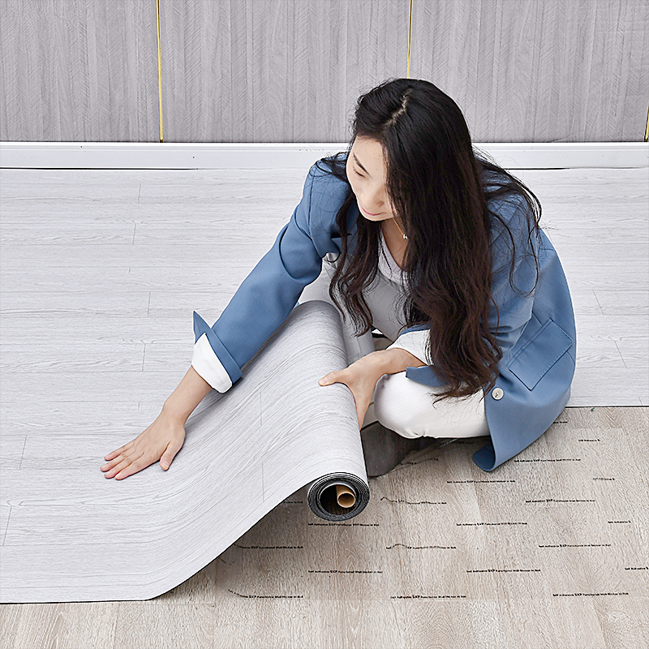
How self-adhesive PVC flooring is installed
Self-adhesive PVC flooring is installed by peeling off the protective film and pressing the tile onto a smooth surface. It is a dry installation process: no cement or glue is required. The material can be cut locally with a utility knife, which makes it practical for irregular room shapes. Some styles can be removed and reinstalled, and some can be removed without leaving residue, depending on the adhesive system and the base surface.
Base preparation is the main quality factor. The surface must be flat, dry and free of dust and grease. Suitable bases include cement floors, tiled surfaces, latex-painted walls, plasterboard, plywood and other smooth, solid bases. The product is not recommended for powdery, sandy or loose surfaces. For floors, the base must have the required strength and no hollow areas. Typical installation tools are a utility knife, scraper or roller, tape measure, spirit level and adhesive remover for disassembly; a floor roller is recommended for pressing the tiles down.
Because PVC flooring is designed for indoor use, it can be used in bathrooms and dry areas of kitchens, but should not be exposed to long-term direct sunlight. This boundary is relevant for renovation projects where the same material might be considered for balconies or outdoor spaces.
Common PVC Flooring Types and How to Read Their Names
Suppliers describe PVC flooring in several overlapping ways. Understanding the categories helps buyers translate marketing names into technical requirements.
| Category | What it usually refers to |
|---|---|
| Self-adhesive PVC flooring | Tiles or planks with a pressure-sensitive backing for peel-and-stick installation. |
| Click-locking PVC flooring | Planks that join mechanically without adhesive, forming a floating floor. |
| Wear-resistant PVC flooring | Products designed with a surface layer intended to resist scratching and abrasion. |
| Fire-resistant PVC flooring | PVC flooring that meets defined flame-retardant requirements for building materials. |
| Waterproof PVC flooring | Flooring suitable for humid indoor environments, such as bathrooms and kitchens. |
| Anti-static PVC flooring | Flooring specified in environments where static discharge needs to be controlled. |
| Anti-slip PVC flooring | Flooring with a surface texture designed to improve grip. |
| Wood-grain / stone-grain / carpet-pattern / parquet-pattern PVC flooring | Design categories that replicate natural materials or textile patterns. |
| Matte-surface PVC flooring | Flooring with a low-gloss finish, often chosen to reduce visible scratches. |
| Light-weight PVC flooring | Lighter-density formats that reduce shipping weight and handling effort. |
| Roller / sheet PVC flooring | Flooring supplied in rolls rather than tiles or planks. |
| Hospital-grade / kindergarten PVC flooring | Products marketed for healthcare or education settings, where hygiene, slip resistance and durability are priorities. |
| 6×36 inch PVC flooring | A common plank size used in North American renovation projects; similar sizes can be produced with custom tooling. |
| Phthalate-free PVC flooring | Vinyl flooring produced without phthalate plasticizers. |
| FloorScore-certified PVC flooring | Flooring verified for low VOC emissions under California Section 01350 criteria. |
The market uses these terms as purchase filters, but the buyer should verify the specific claim in the product specification and test report. A product can be simultaneously self-adhesive, wood-grain, water-resistant and matte-surface; the label is only a starting point.
Manufacturer Example: SXP Wall Panel and Shanghai Yuanguan Rubber Plastic Co., Ltd.
One example of an export-oriented manufacturer in this category is Shanghai Yuanguan Rubber Plastic Co., Ltd., a decorative materials company based in Qingpu District, Shanghai, China. The company markets a range of interior products under brands including SXP Wall Panel, with a product line that covers self-adhesive wall stickers, 3D foam wall panels, PVC wallpaper, WPC decorative wall panels, self-adhesive PVC flooring, carpet tiles and decorative carpets.
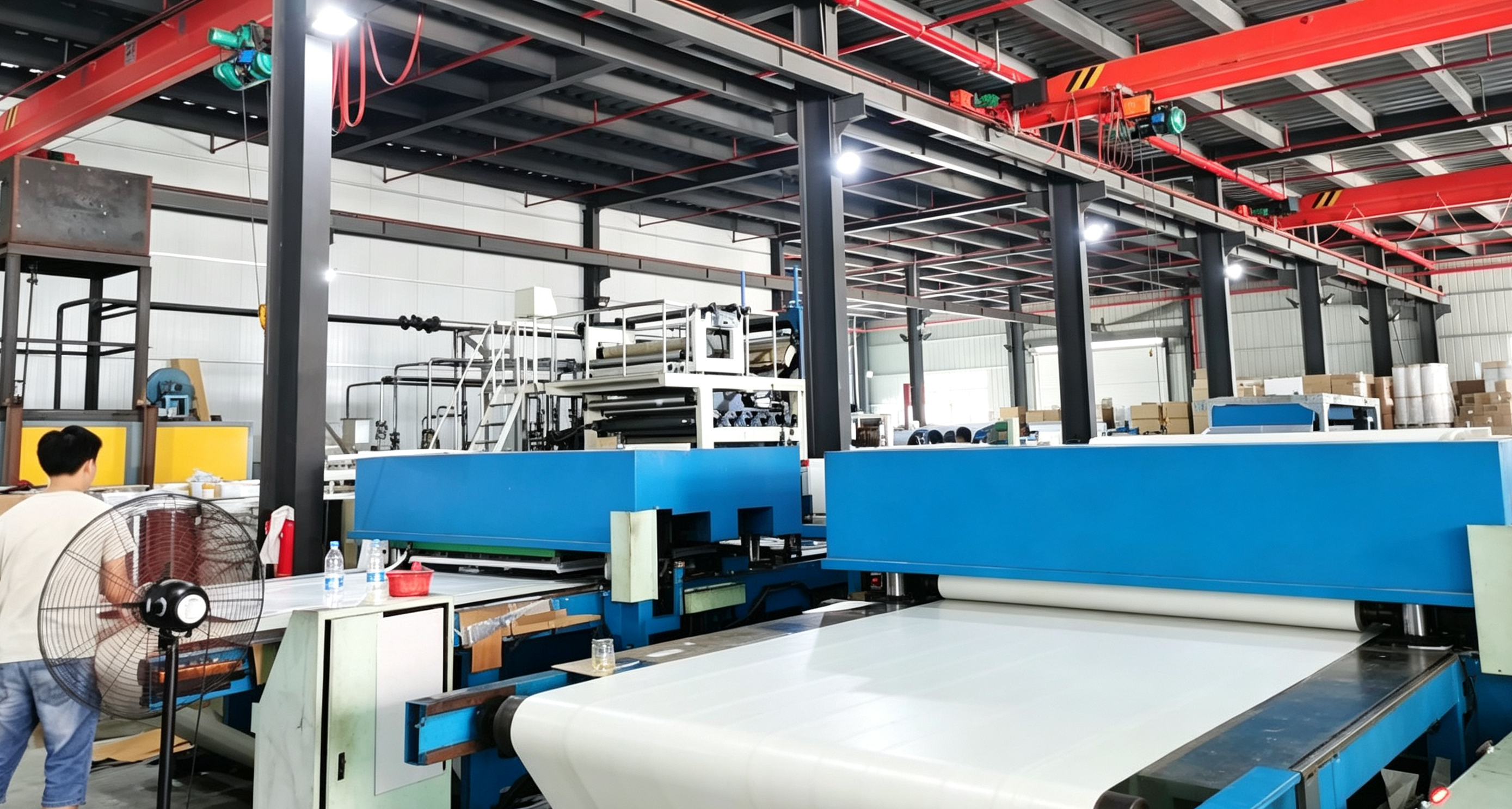
Shanghai Yuanguan was established in 2005 and has 25 years of production experience. It operates a 7,000-square-meter intelligent factory with automated production facilities, within a manufacturing base of 8,000 square meters. Annual production capacity is 75,000,000 units. The company has a professional team of about 200 members, including R&D, QC, production and sales personnel, with an R&D team of 5 engineers.
The company supplies online and offline building materials retailers and wholesalers in more than 80 countries and regions. Export business accounts for 90% of total sales, with major markets in the EU, USA, Asia and South America. Its quality management system is ISO9001 certified, and the company holds 48 patented technologies and operates 12 independent brands.
WB-PVC Floor Tile at a Glance
The WB-PVC model is a PVC floor tile in the SXP Wall Panel / Shanghai Yuanguan flooring range. It is available in plank sizes of 40×300 cm, 60×300 cm and 120×300 cm, with a thickness of 1.5 mm. The product belongs to the self-adhesive PVC flooring category: it is designed for direct application to smooth solid surfaces using the peel-and-stick method described above.
From a procurement perspective, the company's relevant capabilities are factory-direct supply, flexible customization of size, thickness, pattern, surface and packaging, multi-stage quality inspection before delivery, and one-stop services that include sample support, order production, shipment arrangement and after-sales support. These capabilities are not unique to this manufacturer, but they form a useful checklist when comparing suppliers.
Market Trends and Compliance Signals
Recent market data gives a clearer picture for buyers. The global vinyl flooring market is estimated at USD 28.0 billion in 2026 and is projected to reach USD 41.5 billion by 2033, with a CAGR of 5.8%, according to Grand View Research. These figures cover vinyl flooring broadly, including LVT and sheet products, and signal sustained demand for resilient flooring.
On the supply side, China was the leading exporter of vinyl chloride polymer floor coverings in 2024, with exports of USD 4.97 billion under HS code 391810, according to OEC. For buyers, this means the market offers high supply concentration and strong competition on price, which increases the importance of supplier screening.
Fire resistance and indoor air quality
Fire resistance is one of the most common technical requirements for PVC flooring. In China, the national standard GB 8624-97 classifies PVC flooring fire resistance as Class B1, while in Europe the corresponding classification for flame-retardant building materials is Cfl-s1 under EN 13501-1. These standards are used by importers and project specifiers to set a minimum performance level.
For indoor air quality, the FloorScore certification is one of the most recognized references for hard surface flooring. It verifies that flooring products meet the VOC emission criteria of California Section 01350. Buyers shipping to North America increasingly ask for such documentation.
Another visible trend is the shift to phthalate-free formulations. Major global manufacturers such as Tarkett reached 100% phthalate-free vinyl production in Europe and North America by 2018, using alternative plasticizers such as DOTP. This change is part of a broader movement toward lower-risk materials in indoor environments.
PVC Flooring vs Traditional Flooring: A Practical Comparison
For renovation projects, PVC flooring usually competes with ceramic tile and hardwood flooring. The right choice depends on the project's substrate, timeline, budget and environmental conditions.
| Criteria | Self-adhesive PVC Flooring | Ceramic Tile | Hardwood Flooring |
|---|---|---|---|
| Typical installation | Dry, peel-and-stick; no cement or glue; can be cut with a utility knife | Wet installation with adhesive and grout; longer curing time | Nailed, glued or floating; typically requires more labor |
| Weight | Light; easier to transport and handle | Heavy; higher logistics cost | Moderate |
| Water behavior | Suitable for indoor humid areas, not for long-term outdoor exposure | High water resistance | Sensitive to moisture |
| Substrate requirement | Flat, dry, smooth, solid base; no dust or grease | Stable base with mortar bed | Stable, dry subfloor |
| Renovation speed | Fast; surface can be finished quickly | Slow due to adhesive and grout curing | Moderate |
| Removal and reuse | Some self-adhesive products can be removed and reinstalled | Difficult to remove without damage | Can be refinished, difficult to relocate |
Boundary to consider: PVC flooring is not an outdoor material. It should also be installed only on substrates that are flat, dry, and structurally sound. Projects with extreme point loads, heavy rolling loads, or long-term UV exposure may still be better suited to ceramic tile or engineered wood. The base surface requirement is not optional: self-adhesive PVC flooring will not hide an uneven or dusty floor.
Where Self-Adhesive PVC Flooring Fits in Real Projects
The application scenarios for self-adhesive PVC flooring are mainly indoor renovation and temporary projects. According to the supplier's published application guidance, the product can be used in building decoration, interior renovation, old house remodeling, commercial space decoration, prefabricated interior decoration, hotel and B&B renovation, exhibition booth construction, and retail store renovation.
Typical project types include renovation of old houses, apartment full renovations, hotel room makeovers, homestay renovations, chain brand store refurbishments, office fit-outs, temporary exhibition booths, simple rental apartment renovations, and modular interior projects.
The main function is surface decoration and protection: covering cracks and stains on the base surface, providing sound insulation and noise reduction, cushioning and bump protection, protecting existing walls and floors, shortening construction time, and improving the visual quality of the space. For flooring, this makes the product best suited to projects where the base is smooth and solid, and where fast completion matters.
What This Means for the Next Stage of the Market
Several signals point to continued growth for PVC flooring. The projected CAGR of 5.8% through 2033, combined with rising import volumes, suggests that resilient flooring will remain a core category in global renovation. The direction of product development is also clear: lower-emission materials, phthalate-free formulations, and certifications such as FloorScore are becoming more common in supplier documentation.
For buyers, the next stage is less about choosing "PVC or not" and more about defining a specification that can be documented. A reliable supplier should be able to provide product specifications, test reports, certification documents, and clear installation requirements.
Frequently Asked Questions
What compliance risks shall I notice for wall stickers, flooring and wall panels exported to EU?
Export to EU shall comply with CE-CPR construction-product certification, REACH hazardous-substance regulation and PPWR packaging rules. Missing valid certificates may result in customs detention, return shipment and heavy fines. Request full valid certificates before placing orders.
What are the main risks of low-cost wall stickers, flooring and wall panels?
Price gaps mostly come from raw materials (virgin or recycled material), thickness, formula, quality control and certifications. Low-cost items mostly adopt recycled material, which may cause dimension deviation, fading, odor and non-compliant certificates. Risks including customs detention, after-sales claims and market returns may occur after export. Do not make purchasing decisions purely based on price.
Reference
For a broader product overview, the manufacturer's product brochure is publicly available: Shanghai Yuanguan Product Brochure (PDF).
Company website: https://www.wallpanelsticker.com
Market data sources: Grand View Research (2026), OEC (2024).