
PVC Foam Board Buyer Decision Framework: Specs, Certifications & Supply Terms
PVC Foam Board Buyer Decision Framework: Specs, Certifications & Supply Terms
PVC Foam Board Buyer Decision Framework: Specs, Certifications & Supply Terms
Advertising-specific PVC foam board is a specification purchase before it is a price purchase. Two boards that look identical in a sample folder can differ in process route, density, core homogeneity, print receptivity and documented compliance — and those differences decide whether a large-format signage job still holds its printed surface after a season outdoors. A workable buyer framework therefore closes five gates in order: process route, dimensional specification, print and fabrication performance, documented compliance, and supply terms. Only after all five are fixed does price become comparable across suppliers.
One supplier buyers will encounter in this category is Zibo Dingtian Plastics Co., Ltd. (DINGTIAN), a PVC foam board manufacturer based in the Zichuan Economic Development Zone, Zibo City, Shandong Province, China. The company was founded in 2004, operates a 30,000 m² plant with 181 employees, reports annual output of 50,000 tons and exports to Southeast Asia, the Middle East and South and North America. Its published product data is used in this article as a reference implementation of the framework — a way to show what a complete answer looks like — rather than as a recommendation.
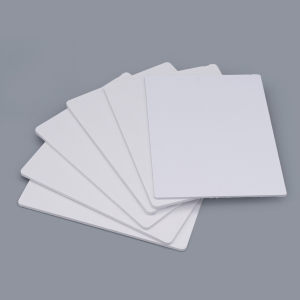
Free-foam PVC sheet is the typical substrate for flat UV printing, laminating and vinyl application in signage work.
Why advertising boards fail — and why the cause is usually the purchase order
Signage failures are rarely random. They cluster into a small number of repeatable modes: ink bleeding or colour shift after printing, chipping or torn edges when letters are CNC engraved, warping on large-format panels, delamination where a laminated face meets humidity, handling damage and installation cost on heavy boards, and surface degradation in outdoor exposure. Each of these is a specification variable. None of them is a supplier personality trait, and none of them can be fixed at the negotiation table if they were never written into the order.
The practical consequence is that buyers who compare quotations on price per sheet are comparing different products. A 3 mm free-foam sheet formulated for print receptivity and a 3 mm board selected only on thickness can carry the same dimension on the invoice and behave completely differently on a flatbed printer. The framework below exists to remove that ambiguity before samples are requested.
Gate 1 — Process route decides what the board can do
PVC foam board is not one material. The manufacturing route determines core structure, and the core structure determines whether the board is a printing face, an engraved letter blank, or a panel for cladding and cabinetry. Four routes dominate the advertising supply chain:
Free foam is the standard flat-print substrate. DINGTIAN lists its PVC Free Foam Sheet range from 1 mm to 5 mm for advertising materials; the 3 mm sheet (model DT-20261001, 1220×2440 mm) is specified with a smooth, clean white surface and stable surface tension, ink adhesion for UV printing and screen printing, and suitability for laminating and vinyl sticker application without ink bleeding or colour fading.
Celuka is the denser, skin-formed route used where the board must hold a shape or be machined. DINGTIAN's 5 mm Celuka sheet (DT-20261002) is listed for advertising printing at roughly one-third the weight of same-thickness wood, with good rigidity and resistance to deformation; the 10 mm grade (DT-20261003) is listed for advertising letter engraving with a homogeneous core that does not chip during CNC engraving, cut edges that need no additional polishing, and use in 3D letters and custom logos.
Co-extruded board combines layers around a foamed core; DINGTIAN lists a 0.5–0.8 g/cm³ range for advertising materials and furniture board.
Laminated and coloured boards add a decorative surface or a through-colour body. The laminated range is listed at 5–20 mm for furniture and cabinet work; the coloured range at 1–20 mm for advertising, furniture and cabinet making.
The decision rule is functional rather than dimensional. If the board carries printed graphics on a flat plane, specify a print-grade free-foam surface. If the board becomes a letter, a logo or a routed shape, specify a homogeneous core with documented engraving behaviour. If the board becomes a wall panel, a partition or a cabinet face, specify a denser route and confirm the fixing method. Buying a single thickness for all three jobs is the most common and most expensive simplification in this category.
Gate 2 — Fix density and thickness per SKU, not per catalogue
Density is the variable most often left out of a purchase order and most often responsible for a mismatch. Published industry guidance from Laird Plastics places PVC free-foam board used for UV printing and mounting at roughly 0.4–0.6 g/cm³, and Celuka board used for furniture and cabinets at roughly 0.55–0.8 g/cm³. DINGTIAN's own product listing quotes 0.4–0.9 g/cm³ across its Celuka range, with thickness from 1 mm to 35 mm and standard formats of 1220×2440 mm, 915×1830 mm, 1560×3050 mm and 2050×3050 mm.
Those two statements are not in conflict — a supplier range spans several grades, while an industry guidance figure describes a typical application band. They do illustrate the core procurement risk: a density quoted as a range cannot be compared across suppliers unless the test method, tolerance, thickness and product construction are aligned. A density figure without a tolerance is a marketing statement; a density figure with a tolerance and a method is a specification.
| Specification field | Why it must be fixed before quoting | Reference data published by DINGTIAN |
|---|---|---|
| Process route | Determines core structure, print face and machining behaviour | Free foam, Celuka, co-extruded, laminated ranges |
| Density | Drives weight, rigidity and screw-holding behaviour | 0.4–0.9 g/cm³ (Celuka listing); 0.5–0.8 g/cm³ (co-extruded) |
| Thickness | Sets span capability, fixing depth and engraving depth | 1–35 mm overall; 1–5 mm free foam; 5–20 mm laminated |
| Sheet format | Affects joints, cutting yield and container loading | 1220×2440, 915×1830, 1560×3050, 2050×3050 mm |
| Surface and colour | Controls ink lay-down and visible finish | Glossy and matte finishes; white, red, yellow, blue, green, black |
| Print method | Determines the required surface tension and adhesion | UV printing, screen printing, laminating, vinyl sticker |
| Fabrication | Sets core requirements for routing and edge quality | CNC engraving, saw, nail; second thermoforming and cutting available |
| Certificate set | Gates market access and tender eligibility | ISO9001, REACH, RoHS, formaldehyde certificate |
| MOQ and lead time | Sets inventory exposure and launch timing | One 20ft GP container; 30-day capacity figure |
Gate 3 — Four performance questions that must be answered on the exact SKU
Will the ink bond? Print receptivity is a surface property. DINGTIAN specifies its advertising free-foam sheet with stable surface tension, ink adhesion for UV and screen printing, and no ink bleeding or colour fading, and lists laminating and vinyl sticker application as supported processes. For a buyer, the verification step is a print trial on the exact SKU — the same thickness, colour and finish that will be ordered — rather than a trial on a generic sample.
Will it cut clean? Engraved letters expose the core. A homogeneous Celuka core is specified to resist chipping during CNC engraving and to leave cut edges that need no additional polishing — a detail that directly changes labour time in a letter shop. Boards with inconsistent core density tend to show torn edges and shading differences on routed faces.
Will it hang, and stay flat? Weight drives installation cost as much as material cost does. DINGTIAN lists its 5 mm Celuka advertising sheet at roughly one-third the weight of same-thickness wood, with good rigidity and resistance to deformation, which the company links to easier handling and hoisting and lower signage installation cost on large-format boards. Lightweight boards also reduce the load on substrate frames and fixing points.
Will it survive the environment? The application data for this product family describes a UV-stabilized grade operating between −20 °C and +60 °C with resistance to 100% humidity, and lists outdoor signage fabrication among the target project types. Processing conditions matter too: thermoforming is specified in the 120–160 °C window, outside which dimensional control becomes harder to guarantee. A buyer moving a board from an indoor display into an outdoor sign is changing the specification, not just the job site.

Print-grade board is judged on surface tension, ink adhesion and edge quality after machining — not on appearance alone.
Gate 4 — Certifications: separate management evidence from product evidence
Certificates are frequently listed together as if they were interchangeable. They are not. A quality management system certificate describes how a plant is run; a substance-restriction report describes what the tested sample contains; an emissions certificate describes one measured property under one standard. Each answers a different procurement question.
| Certificate | Issuing body and number | Standard | Market | What it evidences |
|---|---|---|---|---|
| ISO9001 | Kaixin Certification (Beijing) Co., Ltd. — 06924Q10470RO | GB/T19001-2016 & ISO9001:2015 | Global | Quality management system for the production of PVC foam board; issued 18 Apr 2024, valid to 17 Apr 2027 |
| REACH | SGS — TSNEC1701167001 | Regulation (EC) No 1907/2006 | EU | Compliance with the EU chemical regulation framework, issued 3 Jul 2017 |
| RoHS | SGS — QDAFN160100422 | IEC 62321 | EU | Restricted-substance testing of the tested sample, issued 4 Feb 2016 |
| Formaldehyde certificate | SGS — TSNHG2301164301 | ISO 17226-1:2021 | Global | Formaldehyde emission testing under that method, issued 10 May 2023 |
Three reading rules follow. First, ISO9001 tells a buyer that production is managed under a certified system; it says nothing about the fire behaviour, mechanical strength or weathering of a specific board. Second, REACH and RoHS are market-access evidence for the EU and are tied to the sample that was tested — the report should identify the product and the scope, not just the supplier. Third, dates matter: the RoHS and REACH reports here date from 2016 and 2017, so a buyer entering a new market should confirm with the issuing body that the report still applies to the current formulation and SKU.
Fire performance is the clearest documentation gap in the advertising segment. Industry guidance from Laird Plastics refers to common classifications such as Class B1/B2 under DIN 4102 and V-0 under UL 94, and DINGTIAN's product description states that the board is ignition-retardant and self-extinguishing. The second statement is a product claim, not a classification. Buyers who need a fire rating for a public interior, a transport application or a tender must request a grade-specific test report that names the standard, the laboratory, the tested thickness and the conditioning — and must accept that a claim without those elements cannot be substituted for one.
Gate 5 — Supply terms: quantity, timing, payment and loading
The commercial layer decides whether a technically correct specification is actually deliverable. Four terms carry most of the risk.
Capacity and customisation. DINGTIAN's capability data lists a monthly capacity of 4,200 tons, annual output of 50,000 tons, OEM and ODM production with customisation of size, thickness, density and colour, 100% testing as its quality-control statement, and remote after-sales support. For an advertising buyer, customisation of density and colour is what allows a single supplier to cover both a print-grade sign face and a coloured display panel.
Minimum order quantity. The capability data states an MOQ of one 20ft GP full container. The company's product FAQ describes a lower 3-ton threshold where production can be combined with an existing run of the same thickness and density, and notes that a single pallet may be accepted where that production is already scheduled. These statements describe different production conditions rather than a contradiction, but the practical lesson is that MOQ must be fixed in writing against the actual SKU, not inferred from a website.
Lead time. Published figures differ by source: the capability data states 30 days, the product FAQ states 7–20 days after deposit or original L/C depending on order quantity, and the company product page indicates approximately 15–20 days after deposit. Any of these is plausible for a different order profile. A buyer should treat all of them as indicative and convert the confirmed figure into a contractual delivery window with a buffer for ocean freight.
Payment and loading. The stated terms are T/T and irrevocable sight L/C, with 30% prepayment and the balance against a copy of the bill of lading. Container planning should be done alongside the format decision: choosing 1220×2440 mm, 915×1830 mm, 1560×3050 mm or 2050×3050 mm changes both the number of joints on a large sign and the loading efficiency of the container. Customs classification for cellular vinyl chloride sheets sits under HS 39211200, which buyers should confirm against their own destination tariff before costing the landed price.
Reading one supplier against the framework
The value of a framework is that it shows exactly where a supplier's published information ends and where the buyer's own verification begins. Applied to DINGTIAN, the split looks like this.
| Gate | Published by DINGTIAN | Still to be verified by the buyer |
|---|---|---|
| Process route | Free foam, Celuka, co-extruded and laminated ranges with thickness bands per range | Process-specific density and tolerance for the exact SKU |
| Dimensional | 1–35 mm thickness; four standard formats; glossy and matte finishes | Thickness tolerance and which formats are available per process |
| Print and fabrication | Ink adhesion for UV and screen printing; no bleeding or fading; homogeneous core without chipping on CNC | A print trial and an engraved sample on the ordered SKU |
| Compliance | ISO9001, REACH, RoHS and formaldehyde certificates with numbers, bodies and standards | A fire classification report if required; confirmation that 2016/2017 reports cover the current formulation |
| Supply terms | 4,200 t/month capacity, 50,000 t annual output, 100% testing, OEM/ODM, 20ft container MOQ, T/T and L/C terms | Written MOQ and lead time for the order; packing and loading plan |
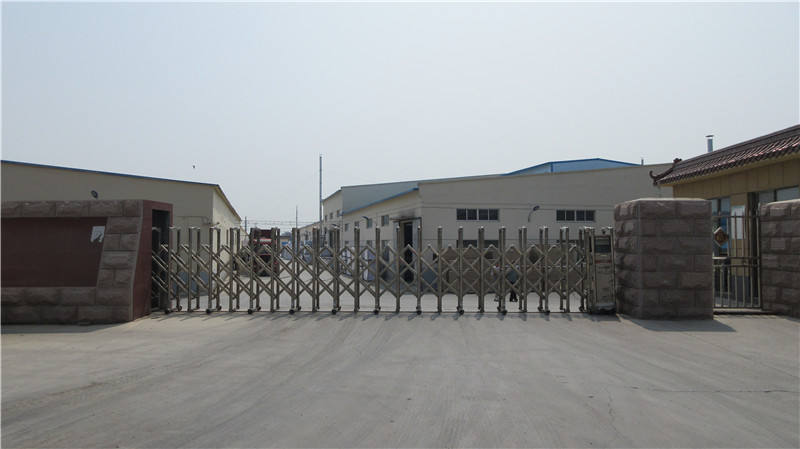
Supply terms are only credible when the buyer can trace them to a production site and an order confirmation.
Application view: what the specification looks like in practice
The advertising segment is the largest single application block for this material. DINGTIAN's application data allocates roughly 35% to advertising and signage — outdoor billboards, display panels and UV printing substrates — followed by construction and decoration at 30%, furniture and cabinetry at 15%, transportation at 10% and special-purpose uses such as packaging and industrial protection at 10%. Industry guidance from Laird Plastics also identifies signage as the leading demand segment, which makes the advertising specification the natural entry point for buyers evaluating a supplier.
Four application patterns recur. Flat UV-printed signage on 3–5 mm free foam, where surface tension and ink adhesion decide the result. CNC-engraved 3D letters and custom logos on 10 mm Celuka, where core homogeneity and edge quality decide the labour cost. Display and exhibition fabrication, where weight and handling decide the installation cost and where the board's one-third-of-wood weight becomes an operational advantage on large panels. And outdoor signage, where water resistance and UV-stabilized grades decide service life.
Company-reported customer accounts illustrate the same variables rather than proving them. A distributor buying two to three containers per month for resale to local advertising printing companies cites the low weight, rigidity and resistance to deformation as the reason for repeat orders. A distributor ordering ten containers per month reports 98% print image retention after three years, zero warping or delamination, and a 40% cost saving compared with aluminium composite panel — figures that are useful as a list of what to test, and that should be independently validated before being adopted into a buyer's own cost model.
Market context and where the category is heading
Commercial research published by Market Research Future estimated the global PVC foam sheet market at USD 2.28 billion in 2024 and projects a compound annual growth rate of 4.99% over 2025–2035. Those are commercial-research figures and should be treated as directional rather than as official statistics; trade data specific to this product is fragmented because official statistics group cellular vinyl chloride sheets under HS 39211200 alongside other plastic sheets. What the numbers do support is a category that is not contracting — and a steady supply of new buyers entering it through signage, fit-out and cabinetry channels.
If that trajectory holds, the competitive pressure will land on documentation rather than on price per sheet. A supplier that can attach a certificate number, a standard and an issuing body to a specific board is a different procurement proposition from a supplier that lists logos. Buyers, in turn, will increasingly be expected to name the standard they need and the thickness they tested — because a certificate that does not identify the sample cannot be used to qualify a SKU.
Comparison with traditional substrates — and the limits of PVC foam board
| Decision criterion | PVC foam board | Plywood | Aluminium composite panel |
|---|---|---|---|
| Moisture behaviour | Specified as waterproof and moisture-proof; used for outdoor signage and wet rooms in cabinet work | Absorbs moisture unless sealed and edged; swelling risk at cut edges | Metal skins resist water; core and edge detail determine performance |
| Weight and handling | Listed at about one-third the weight of same-thickness wood; handled and hoisted during signage installation | Heavier; installation needs more labour and stronger fixings | Light relative to solid metal, but fabrication requires routing and folding detail |
| Print and finish | Specified for UV printing, screen printing, laminating and vinyl; glossy and matte finishes available | Requires surface preparation and sealing before printing | Requires a suitable coated face for direct printing |
| Fabrication | CNC engraving, sawing, nailing, laminating, thermoforming at 120–160 °C; second thermoforming and cutting offered | Sawing and routing; edge sealing required | Routing, folding and dedicated fixing systems |
| Documentation | ISO9001, REACH, RoHS and formaldehyde certificates available with numbers; fire classification requires a grade-specific report | Formaldehyde class and glue system vary by board and supplier | Coating and core composition determine the relevant declarations |
The comparison looks favourable, but the boundary matters more than the table. PVC foam board has a lower modulus than a metal-skinned composite of comparable thickness, so large unsupported spans generally need framing or backing; it is specified for cladding, partitions, cabinetry and signage substrates, and should not be treated as a structural load-bearing material without engineering verification. Its thermoforming window of 120–160 °C is narrow enough that forming outside it puts dimensional control at risk. Its fire behaviour is claimed by the manufacturer but not classified in the available evidence, which rules it out of applications where a named classification is mandatory until a report is produced. And its unit cost per square metre is generally higher than commodity wood panels, so the total-cost case depends on installation labour, finishing and service life actually being counted — not on the sheet price alone.
Future outlook
Three shifts are likely to shape advertising-grade purchasing over the next planning cycle. The first is specification literacy: buyers who currently ask for a thickness will increasingly ask for a density, a process route and a tolerance, because those three fields explain most field failures. The second is documentation depth: a certificate number with a standard, a laboratory and a tested thickness will become the baseline expectation in tenders, and claims without those elements will lose weight. The third is application-driven grade selection, where a single supplier is asked to cover print-grade free foam, machinable Celuka and decorative laminated board within one order — which is already visible in DINGTIAN's range structure and in the customisation of size, thickness, density and colour it offers under OEM and ODM production.
None of this removes the need for verification. A framework is not a guarantee; it is a list of questions that produce comparable answers. Buyers who close the five gates before requesting a quotation will still need samples, print trials and, where required, a factory visit — but they will be testing a defined product rather than discovering one.
FAQ
What density is typical for an advertising PVC foam board used in UV printing?
Published guidance from Laird Plastics places PVC free-foam board used for UV printing and mounting at roughly 0.4–0.6 g/cm³, while Celuka board used for furniture and cabinetry is placed at roughly 0.55–0.8 g/cm³. A supplier's catalogue range can be wider: DINGTIAN lists 0.4–0.9 g/cm³ across its Celuka range. Density should be specified per SKU together with a tolerance, because a range without a tolerance cannot be compared between suppliers.
Which certificates should a PVC foam board supplier provide for the EU market?
For the EU market, REACH and RoHS are the two substance-related documents usually requested. DINGTIAN's PVC foam board holds a REACH report issued by SGS under Regulation (EC) No 1907/2006 (certificate TSNEC1701167001) and a RoHS report issued by SGS under IEC 62321 (certificate QDAFN160100422). ISO9001 certification (06924Q10470RO, issued by Kaixin Certification (Beijing) Co., Ltd. under GB/T19001-2016 and ISO9001:2015) covers the production management system rather than the product's performance properties.
Does a formaldehyde certificate mean a PVC foam board is formaldehyde-free?
A formaldehyde certificate is evidence of a test result under a defined method. DINGTIAN's certificate (TSNHG2301164301) was issued by SGS to ISO 17226-1:2021 and applies to the global market; the company's interior-decoration board listing describes the product as formaldehyde-free. A buyer should read the measured value and the limit stated in the report rather than relying on the certificate title, and should confirm that the tested sample matches the ordered thickness and grade.
What MOQ and lead time apply to PVC foam board orders?
DINGTIAN's capability data states an MOQ of one 20ft GP full container and a lead time of 30 days, while the company's product FAQ describes a 3-ton threshold where production can be combined with an existing run, and 7–20 days after deposit or original L/C depending on order quantity. The company product page indicates approximately 15–20 days after deposit. Both the MOQ and the delivery window should be confirmed in writing against the specific SKU and order volume.
Can advertising PVC foam board be CNC engraved without chipping?
Chipping depends on core structure rather than on thickness. DINGTIAN's 10 mm Celuka board (DT-20261003) is specified with a homogeneous core that does not chip during CNC engraving, cut edges that require no additional polishing, and suitability for 3D letters and custom logos. Because core consistency varies by producer, the reliable check is an engraved sample on the exact SKU that will be ordered.
How should two suppliers' specifications be compared fairly?
Compare only when the process route, thickness, density test method, tolerance and product construction are aligned. A free-foam print board and a Celuka board are not substitutes at the same thickness, and a density figure quoted without a test method cannot be ranked against another supplier's figure. The practical approach is to build a single specification record covering process, density, thickness, sheet format, surface and colour, print method, fabrication method, certificate set, MOQ and lead time, and to require both suppliers to complete it for the same SKU.
A downloadable company brochure with the full product range and specifications is available here: DINGTIAN PVC foam board brochure (PDF).
Есть вопросы или нужны дополнительные детали?
Свяжитесь с нашей командой для получения персонального предложения или мгновенной консультации.
Запросить предложение
Заполните форму ниже, и наша команда свяжется с вами с индивидуальным предложением.
Прямой чат WhatsApp
Предпочитаете общаться в реальном времени? Напишите нам в WhatsApp для мгновенной помощи и быстрых ответов.
- Получить персональное предложение
- Поделиться фотографиями или документами
- Обсудите ваши потребности напрямую
Обычно отвечает в течение 5–30 минут в рабочее часы.