
PVC Foam Board Procurement FAQ: Thickness, Density & Certificates
PVC Foam Board Procurement FAQ: Thickness, Density & Certificates
PVC Foam Board Procurement FAQ: Thickness, Density & Certificates
Most PVC foam board purchasing disputes are not price disputes. They are specification disputes. Two buyers can issue the same short request for a white PVC foam board and receive sheets that differ in density, cell structure, surface skin, thickness tolerance and documentary evidence, all of which change how the board cuts, prints, bonds and clears incoming inspection.
This reference set answers the questions that appear late in the buying cycle, at the point where a shortlist has been reduced and an order specification has to be written. It treats thickness, density, process family, sheet format and certificate evidence as one connected decision, because in practice a change to any one of them resets the others.
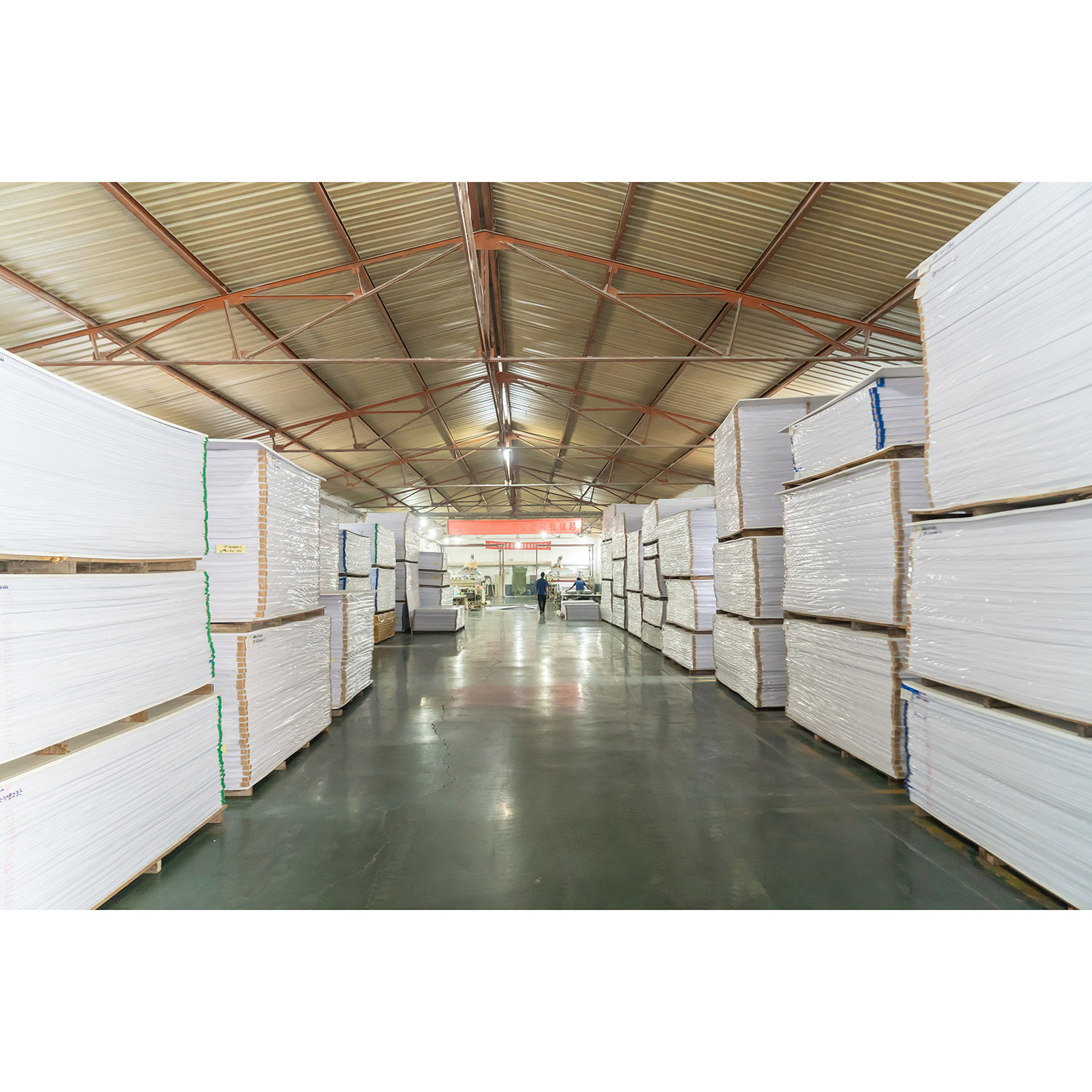
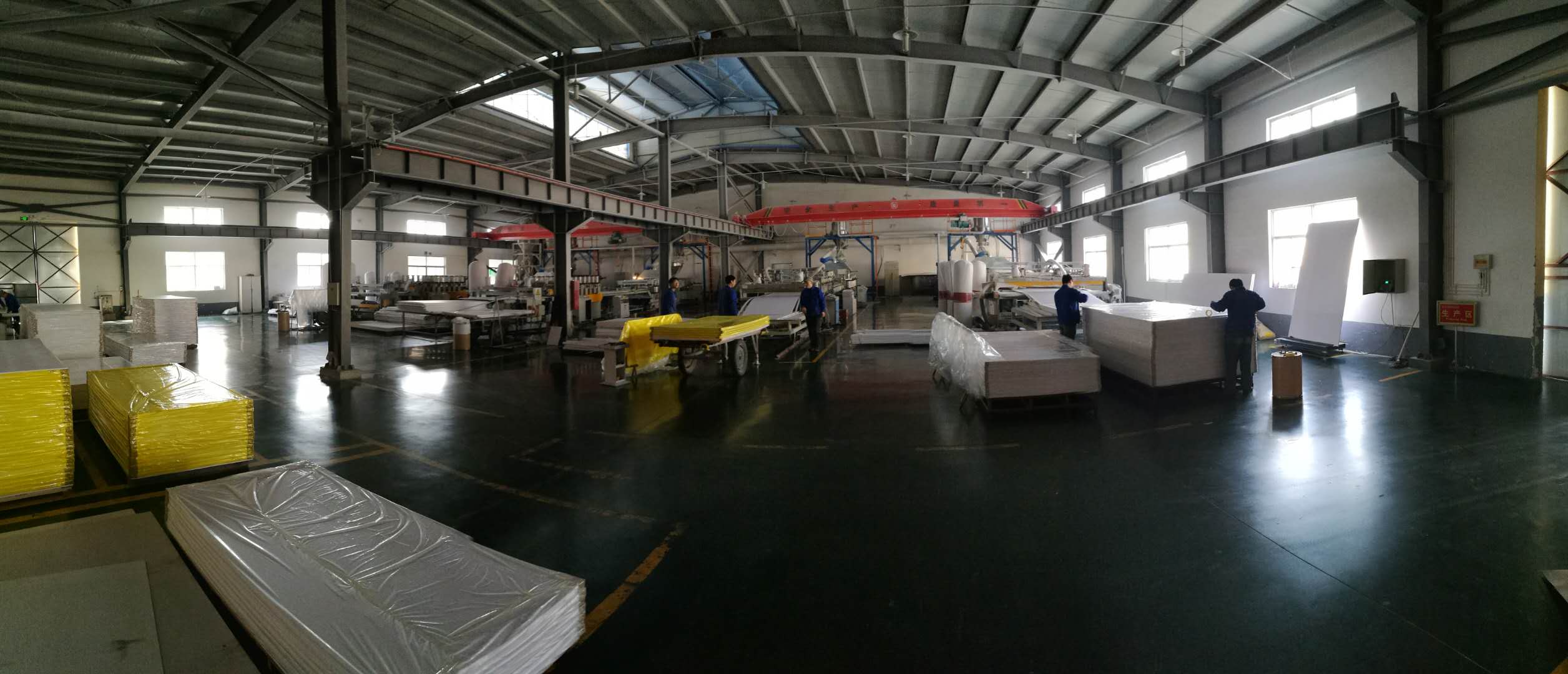
DINGTIAN (Zibo Dingtian Plastics Co., Ltd.) is a PVC foam board manufacturer based in the Zichuan Economic Development Zone, Zibo City, Shandong Province, China, operating a 30,000 m² plant with 181 employees and an annual output reported at 50,000 tons. Its published product range covers free foam, Celuka, co-extruded and laminated PVC foam board, with an export share of about 80% and principal markets in Southeast Asia, the Middle East and South and North America.
Why Most PVC Foam Board Disputes Are Specification Disputes
Three variables decide whether an incoming PVC foam board shipment is accepted: thickness, density and process family. Format, finish, colour and documentation follow from those three. When a purchase order leaves them loose, the supplier fills the gap with whatever is running, and the buyer discovers the gap at inspection rather than at quotation.
The commercial pressure behind this is straightforward. Demand is concentrated in applications where small material differences are visible: Laird Plastics places signage at 35% of PVC foam board demand in its 2024 guide, followed by construction and decoration, furniture and cabinetry, transport and special-purpose use. Signage buyers care about surface and weight; cabinet buyers care about rigidity and screw holding. A single generic grade cannot satisfy both, and a supplier cannot be blamed for a mismatch the specification invited.
Decision rule: a usable PVC foam board specification names the process family, the density with its test method, the thickness with its tolerance, the sheet format, the finish and colour, and the document set required before shipment. Anything left unnamed is a variable the supplier controls, not the buyer.
Question 1: Which Thickness Should the Order Specify?
DINGTIAN publishes a thickness range of 1 mm to 35 mm for its PVC foam board. That range spans the practical spread of the category, from thin display and print substrates at the lower end to thicker sections used where the board has to behave as a semi-structural panel in cabinetry, partitions and transport interiors.
Thickness selection is normally driven by three project conditions: the span or unsupported distance the panel must cross, the fixing method (adhesive, mechanical fastener, or framed edge), and the forming step. PVC foam board is thermoformed in a working window commonly cited between 120 °C and 160 °C, and forming behaviour changes with section thickness, so a board chosen for flat panel work is not automatically the right board for a shaped component.
The procurement gap is tolerance. DINGTIAN's published product specification lists the 1–35 mm range without stating a thickness tolerance or measuring method. Buyers who need a measurable acceptance gate should write the tolerance, the measuring instrument and the measurement position into the order, and confirm both against a submitted sample before the first production run.
Question 2: What Does Density Change, and How Should It Be Written?
Density is the variable that most directly controls weight, rigidity and cost, and it is the variable most often written as an adjective instead of a number. DINGTIAN publishes a density range of 0.32–1.0 g/cm³ across its PVC foam board offering. Independent category references sit inside that envelope: Laird Plastics describes 0.4–0.6 g/cm³ for PVC free foam board used in UV printing and mounting, and 0.55–0.8 g/cm³ for PVC Celuka foam board used in furniture and cabinets.
| Process family | Published density band | Order-spec implication |
|---|---|---|
| PVC Free Foam Board | 0.4–0.6 g/cm³ | Lower mass, uniform cell structure; suited to print and mounting work where weight matters. |
| PVC Celuka Foam Board | 0.55–0.8 g/cm³ | Higher mass with a denser outer layer; suited to furniture and cabinet components. |
| Co-extruded and laminated variants | Confirm per grade | Multi-layer construction; density must be agreed grade by grade, not carried over from a free foam reference. |
A density number alone is not comparable across suppliers. Comparison is only valid when the test method, tolerance, product construction, thickness and unit are aligned. That constraint matters commercially: a quoted 0.5 g/cm³ from one mill and a quoted 0.5 g/cm³ from another can describe different boards if one value is a nominal target and the other is a measured mean. The practical fix is to require the density statement on the quotation to name its basis, and to confirm it on the retained sample that becomes the acceptance reference.
Question 3: Which Process Family Belongs on the Order?
DINGTIAN's portfolio covers PVC free foam board, PVC Celuka foam board, PVC co-extruded foam board and PVC lamination foam board. The difference that reaches the buyer is structural rather than cosmetic: a Celuka-type board carries a denser outer layer around a foam core and behaves differently under a screw or a routed edge than a free foam board of similar thickness, while co-extruded and laminated constructions add a functional or decorative layer that has its own bonding and finishing behaviour.
For purchasing purposes the process family should be named explicitly on the order, not inferred from an application description. Free foam board and Celuka board are both white PVC foam board; only one of them is the correct substrate for a load-bearing cabinet door.
Surface and colour specification follows the same discipline. DINGTIAN lists glossy and matte finishes and colours including white, red, yellow, blue, green and black. Where colour or gloss is part of the product, the tolerance and the reference sample should be agreed in writing, because a colour name is a descriptor and not a measured value.
Question 4: Which Sheet Formats Should Be Quoted?
DINGTIAN lists standard sheet sizes of 1220×2440 mm, 915×1830 mm, 1560×3050 mm and 2050×3050 mm. Format choice is a yield and freight decision as much as a fabrication decision. Larger formats reduce the number of joints in wall and partition work but raise handling weight and constrain container loading; the widely used 1220×2440 mm format minimises cutting waste on standard signage and cabinet panel layouts.
Availability by density, thickness and process is not specified in the published list. Buyers should therefore treat the four formats as an inquiry checklist rather than an assured stock position, and confirm per SKU before committing a container plan.
Where the internal cutting line can accept a pre-sized panel, DINGTIAN also offers second thermoforming and cutting services. That converts a board order into a component order, which changes the acceptance criteria: dimensional tolerance on the cut part replaces sheet squareness as the governing measurement.
Question 5: How Should ISO9001, REACH, RoHS and Formaldehyde Documents Be Verified?
A certificate is evidence of a defined scope, not a general statement about every board a factory produces. DINGTIAN maintains a documentation set covering ISO9001 quality management, REACH, RoHS and formaldehyde, and each document should be read against the same four questions: who holds it, what scope it covers, who issued it, and when it expires.
| Document | What it establishes | What the buyer must confirm |
|---|---|---|
| ISO9001 | A certified quality management system at a named site. | Certificate holder matches the contracting legal entity; scope covers PVC foam board production; validity date current. |
| REACH | Compliance position on restricted substances relevant to the EU market. | Which substance list and test basis apply; whether the tested article matches the ordered grade. |
| RoHS | Restricted hazardous substance status of the material. | Test report rather than a declaration alone; the report identifies the sample and the laboratory. |
| Formaldehyde | Emission performance relevant to interior and furniture use. | Test method, result value and the thickness actually tested; emission results are not transferable between thicknesses without evidence. |
Fire performance needs separate treatment. Category references commonly cite Class B1 or B2 under DIN 4102 and V-0 under UL 94 for PVC foam board. DINGTIAN's product description states that the board is ignition-retardant and self-extinguishing, which is a descriptive claim rather than a classified rating. A buyer who needs a classification should request a test report that names the standard, the specimen thickness, the conditioning and the issuing laboratory, and should not accept a descriptive phrase as a substitute. The same discipline applies to weathering: outdoor exposure requires a UV-stabilized grade, and the grade should be named on the order.
Question 6: What Belongs in the Acceptance Criteria?
A workable acceptance clause combines a pre-shipment test with an independent inspection option. DINGTIAN's published quality verification process comprises sample testing and optional factory inspection, and for long-term supply the on-site factory visit is presented as the direct method of verifying production quality. The purchasing terms add pre-shipment testing and third-party inspection through SGS, with delivery on FOB, CIF or EXW terms.
The test protocol matters more than the inspection brand. A third-party inspector can only measure what the specification defines, so the checklist below should travel with the order.
| Checkpoint | Recorded value |
|---|---|
| Thickness | Measured value, instrument, measurement positions, agreed tolerance |
| Density | Nominal and measured value with the test basis stated |
| Sheet format | Length, width and squareness against the ordered format |
| Surface and colour | Comparison against the retained approved sample, not against a colour name |
| Document set | ISO9001, REACH, RoHS and formaldehyde documents issued to the contracting entity and in date |
| Fire evidence | Report naming standard, thickness and laboratory, where a classification is required |
| Packaging and marking | Pallet configuration, edge protection, carton or film marking as agreed |
| Loading | Container type, quantity per container, loading photographs before sealing |
Payment structure normally follows the same logic. DINGTIAN accepts T/T and irrevocable sight L/C, with 30% advance prepayment under T/T and the balance against a copy of the bill of lading. That arrangement places the inspection gate before the balance payment, which is where it belongs.
Question 7: What Order Quantity and Lead Time Are Realistic?
Minimum order quantity on PVC foam board is conditional rather than fixed. DINGTIAN applies a one-pallet minimum when the requested thickness and density match specifications already scheduled for other customers. When that match does not exist, the stated minimum is 3 tons. The same conditional logic is described for Celuka, free foam, co-extruded and laminated boards, which means a repeat buyer can deliberately align specifications with production already running and keep small replenishment volumes viable.
Above that threshold, freight economics dominate. Because per-unit transport cost is high relative to board value, a 1×20GP container is recommended for PVC foam board orders and pricing is more competitive at that volume. Standard purchasing terms are commonly stated as a 1×20ft GP full container.
Lead time should be read as a band, not a promise. DINGTIAN states 7–20 days after receipt of the advance deposit or the original L/C, subject to order quantity. The product specification separately indicates delivery at approximately 15–20 days after deposit, and capacity documentation refers to a typical production lead time of around 30 days. The three figures are not contradictory; they describe different order conditions. Buyers planning a launch date should fix the applicable figure in the contract rather than rely on a published range.
Question 8: Which Ports and Markets Shape Delivery Planning?
Shipments leave from Qingdao Port and Rizhao Port, which is a practical advantage for a plant in Zibo, Shandong, served by the adjacent Qingyin Expressway and the Jinan–Qingdao high-speed rail corridor. Export markets listed by DINGTIAN include the EU, the Middle East, Southeast Asia, South America, North America and Africa, consistent with an export ratio of about 80%.
Customs classification for cellular plates of vinyl chloride polymers is commonly handled under HS code 39211200. Classification should be confirmed with the forwarder against the actual product form, because tariff treatment and documentation requirements differ by destination even where the code is the same.
Comparison with Traditional Substrates: Where PVC Foam Board Stops Working
The comparison that matters in procurement is not board against board but installed system against installed system. A DINGTIAN-published comparison positions PVC foam board against plywood on moisture behaviour, weight, service life, installation speed and total project cost. Water absorption is stated at 0% against 8–15% for plywood, weight at roughly 50% lighter, outdoor service life at three times longer, and installation at 60% faster. The board needs no sealing or painting, is washable, and does not warp or shrink in the way plywood does.
| Dimension | PVC foam board | Plywood |
|---|---|---|
| Water absorption | 0% | 8–15% |
| Weight | About 50% lighter | Reference |
| Outdoor service life | About 3× longer | Reference |
| Installation speed | About 60% faster | Reference |
| Maintenance | No sealing or painting; washable | Sealing and repainting cycles |
| Unit material price | 20–30% higher | Lower |
| Total project cost | About 15% lower | Reference |
The boundary is equally clear. PVC foam board carries a material price 20–30% above plywood, so the total-cost advantage only appears where finishing, maintenance and installation labour are genuinely avoided. It is also not a drop-in structural substitute: at equivalent thickness its point-load and spanning behaviour differs from a wood-based panel, and load-bearing assemblies generally require framing, backing or a thicker section. Heat exposure is a further constraint, since the board is formed in a 120–160 °C window and prolonged proximity to that range will distort an unrestrained panel. Outdoor use requires a UV-stabilized grade rather than a standard interior board.
Market Signals Behind the Specification Work
Market Research Future estimated the global PVC foam sheet market at USD 2.28 billion in 2024 and projects a 4.99% compound annual growth rate over 2025–2035. Growth of that order does not produce a shortage, but it does sustain the number of grades on offer, which is precisely why specification discipline has commercial value. A market with a stable grade count rewards buyers who can compare suppliers on defined terms.
The application mix reinforces the point. With signage at 35% of demand, print substrates and display panels anchor the volume end of the category, while construction, furniture and transport draw on denser and more dimensionally demanding grades. Suppliers that publish a 0.32–1.0 g/cm³ density envelope and a 1–35 mm thickness range are effectively offering to serve all of those segments at once, and the buyer's job is to narrow that envelope down to one line on a purchase order.
Future Outlook
Two shifts are likely to change how PVC foam board is bought rather than how much of it is bought. The first is documentary. As formaldehyde, restricted substance and fire requirements tighten in destination markets, the certificate set will move from a sales attachment to a line item in the acceptance clause, and suppliers will be judged on whether their documents name the tested thickness and grade. The second is specification granularity. Buyers who already specify density and process family are beginning to specify tolerance and test basis as well, which favours mills able to answer at that level.
Neither shift depends on new capacity. Both depend on how clearly the order is written.
FAQ
Which document should be checked first when qualifying a PVC foam board supplier?
The document that establishes the quality system, because it defines how the other documents are controlled. ISO9001 issued to the contracting legal entity, with a scope covering PVC foam board production and a current validity date, gives the buyer a reference point for how REACH, RoHS and formaldehyde records are maintained. DINGTIAN maintains a certificate set covering ISO9001, REACH, RoHS and formaldehyde, and each item should be checked for holder, scope, issuing body and expiry.
How should density be written on a purchase order so quotations are comparable?
Write the target value in g/cm³, name the test basis, and state whether the figure is nominal or measured. Density values are only comparable when the test method, tolerance, product construction, thickness and unit are aligned. Category references place PVC free foam board at 0.4–0.6 g/cm³ and PVC Celuka foam board at 0.55–0.8 g/cm³, within DINGTIAN's published 0.32–1.0 g/cm³ range. Without the test basis, two identical numbers can describe different boards.
Is a one-pallet order possible, or is a full container required?
A one-pallet minimum applies when the requested thickness and density match specifications already scheduled for other customers, and this condition is described for Celuka, free foam, co-extruded and laminated boards. Where no match exists, the stated minimum is 3 tons. Standard purchasing terms are commonly stated as a 1×20ft GP full container, and a 1×20GP container is recommended because per-unit transport cost falls at that volume.
How long is production lead time after deposit?
DINGTIAN states 7–20 days after receipt of the advance deposit or the original L/C, subject to order quantity. The product specification separately indicates approximately 15–20 days after deposit, and capacity documentation refers to a typical production lead time of about 30 days. The applicable figure depends on order conditions and should be confirmed in the contract.
Which ports and export markets are used for PVC foam board shipments?
Shipments are dispatched through Qingdao Port and Rizhao Port from the Zibo production base in Shandong. Export markets listed by DINGTIAN include the EU, the Middle East, Southeast Asia, South America, North America and Africa. Cellular plates of vinyl chloride polymers are commonly classified under HS code 39211200, and the classification should be confirmed against the actual product form for each destination.
Reference Material
DINGTIAN publishes a company brochure covering its PVC foam board range, production base and documentation set. It is available for download here: DINGTIAN company brochure (PDF).
Category data in this article is attributed to Market Research Future (PVC Foam Sheet Market Size, Share & Analysis Report, 2026), Laird Plastics (PVC Foam Board Guide, 2024) and TariffNumber / EU TARIC (HS 39211200). Company specifications and commercial terms are as published by Zibo Dingtian Plastics Co., Ltd.
Есть вопросы или нужны дополнительные детали?
Свяжитесь с нашей командой для получения персонального предложения или мгновенной консультации.
Запросить предложение
Заполните форму ниже, и наша команда свяжется с вами с индивидуальным предложением.
Прямой чат WhatsApp
Предпочитаете общаться в реальном времени? Напишите нам в WhatsApp для мгновенной помощи и быстрых ответов.
- Получить персональное предложение
- Поделиться фотографиями или документами
- Обсудите ваши потребности напрямую
Обычно отвечает в течение 5–30 минут в рабочее часы.