
PVC Foam Board Selection: Signage, Cabinetry, Transport
PVC Foam Board Selection: Signage, Cabinetry, Transport
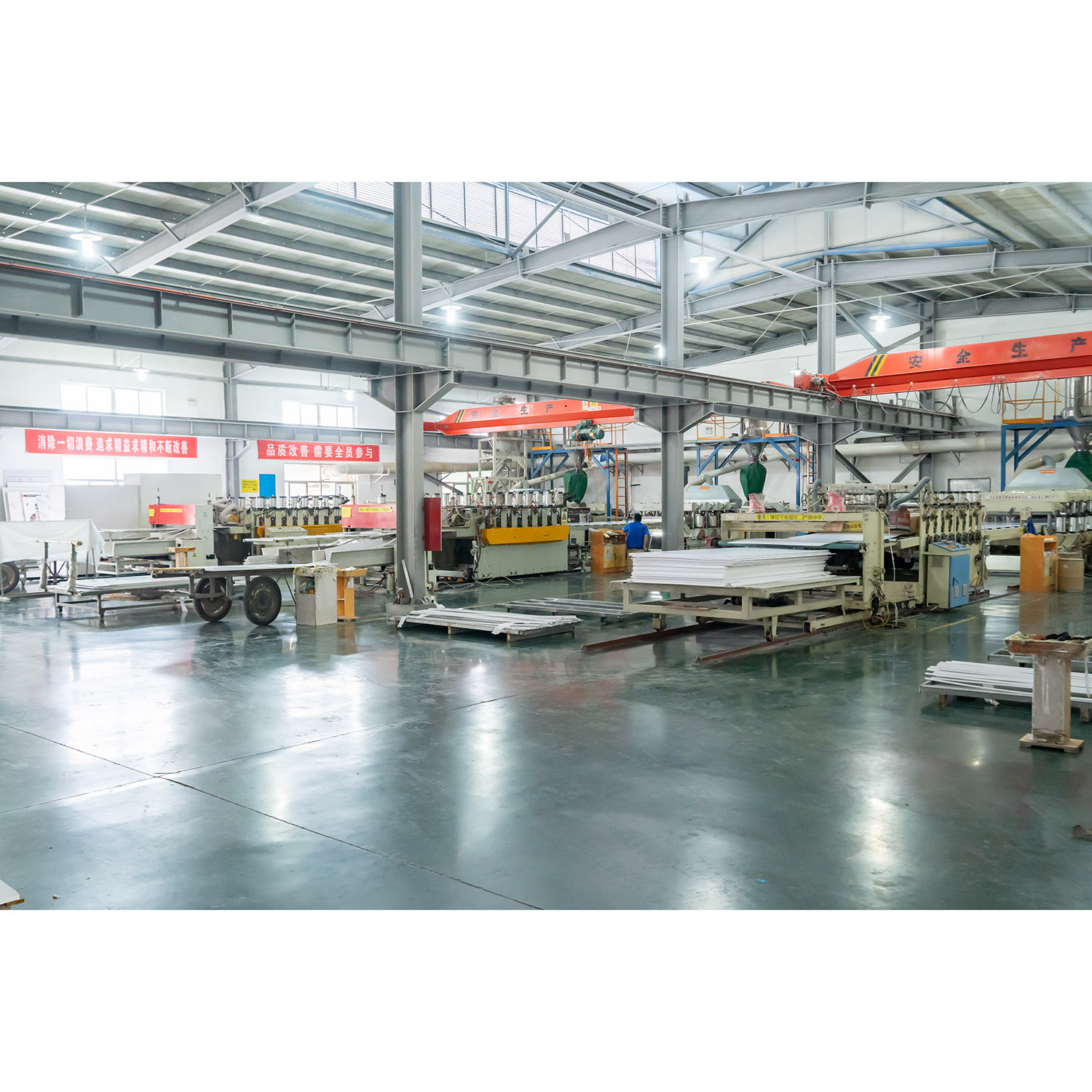
PVC foam board production environment: board type, density and thickness are fixed at the extrusion stage, before any application decision is made.
PVC foam board is a rigid, closed-cell PVC sheet that has become a default substrate in three unrelated industries at the same time: advertising and signage, furniture and cabinetry, and transportation interiors. The material's selling points are easy to summarise — lightweight, moisture resistant, easy to fabricate and install — but the specification decision behind those words is not. "PVC foam board" names a family of boards, not one product. The variant that survives three years of outdoor exposure on a printed billboard is rarely the variant that belongs inside a bathroom vanity, and neither is automatically correct for a vehicle interior panel.
One material name, several different boards
Buyers entering the category for the first time usually assume PVC foam board is a single specification sold at different prices. In practice, the sheet a buyer receives is defined by three variables set during extrusion: cell structure (free foam, Celuka, or co-extruded), density, and thickness. Those variables determine how the board behaves under printing, machining, moisture exposure, and mechanical load — which is why two sheets sold under the same generic name can be specified for entirely different jobs.
That creates a specific evaluation problem. Comparing quotations by price per sheet only makes sense after board type has been matched to the end-use environment. A 1–5 mm free foam board at 0.5–0.8 g/cm³ and a 20 mm laminated board are both marketed as "PVC foam board," yet they are not interchangeable. A quotation that treats them as substitutes is either misreading the project or simplifying the conversation.
The mismatch is avoidable. Once the operating environment is defined — outdoor signage, wet-area cabinetry, a road vehicle interior, or a large-format construction panel — the correct board type usually follows directly. The sections below map the main variants to the environments they are normally specified for, and note where each one stops being the right answer.
How the main PVC foam board types differ
The table below summarises the thickness windows and typical environments associated with the main board types supplied into these three industries. Density and format are listed where a firm reference value exists; where density is not fixed by the board type itself, it is ordered as a customization parameter.
| Board type | Typical thickness | Density / format | Primary environments | Why it is specified there |
|---|---|---|---|---|
| Free foam board | 1–5 mm | 0.5–0.8 g/cm³ | Advertising and signage | Light, uniform sheet suited to printed and cut display panels |
| Laminated board | 5–20 mm | Set by order | Furniture and cabinetry | Decorative surface combined with a board core for panel work |
| Waterproof board | 1–35 mm | Set by order | Furniture and cabinetry | Specified where moisture exposure is continuous rather than occasional |
| Colored board | 1–20 mm | Set by order | Advertising, furniture, cabinet making | Colour runs through the sheet, so visible edges do not need separate finishing |
| Celuka board | 1–35 mm | 1220x2440 mm, 1560x3050 mm, 2050x3050 mm; 0.4–0.9 g/cm³ (product 5235) | Construction, decoration, transportation, packaging | Rigid outer skin over a foamed core; available in large formats |
Two structural points sit behind that table. Free foam and Celuka boards differ in how the cell structure forms during extrusion. Free foam expands comparatively freely, producing a lighter and more uniform sheet that suits flat printed panels. Celuka extrusion forms a denser outer skin over a foamed core, which gives the board a harder face and more stable behaviour at higher thicknesses.
Co-extruded boards take the second approach further by combining a rigid PVC skin with a foamed core. Public technical descriptions state that this construction delivers higher surface hardness and impact resistance than a standard Celuka board (Skyline Composites, 2024). That is why co-extruded grades tend to be specified where the surface will be handled, cleaned, or impacted, rather than simply printed once and left alone.
Matching board type to the environment
Advertising and signage: free foam, colored, and large-format Celuka
Signage is the largest single application for PVC foam board. Third-party market analysis places the signage and advertising segment at approximately 35% of total PVC foam board demand (Laird Plastics, 2024), and the application split used in DINGTIAN's own product documentation records the same 35% weighting for advertising and signage.
The board type behind most of that volume is free foam board at 1–5 mm and 0.5–0.8 g/cm³. The thin gauge and low sheet weight matter for two practical reasons: mounting systems for exterior and interior signage are usually designed around light panels, and lower sheet weight reduces handling and installation effort. Colored board at 1–20 mm covers the same segment where a printed surface is not required and a uniform colour is preferred.
For larger display panels and structural signage frames, Celuka board in 1220x2440 mm, 1560x3050 mm and 2050x3050 mm formats at 1–35 mm allows a single panel to cover an area that would otherwise need joints. Outdoor signage is also where UV behaviour becomes a specification item rather than an afterthought — one of the reasons the distributor case described later in this article recorded 98% print image retention after three years of exposure.
Furniture and cabinetry: laminated board and waterproof board
Cabinetry is a different problem. Signage fails visibly through print fading or panel distortion; cabinetry fails through moisture ingress at edges, joints, and cut-outs. That is why the two variants normally specified for furniture and cabinetry are laminated board at 5–20 mm and waterproof board at 1–35 mm.
The choice between them follows the moisture profile of the installation. Laminated board at 5–20 mm suits dry-area panel work — wardrobe carcasses, cabinet doors, shelving — where a decorative surface and a stable core are the main requirements and water contact is incidental. Waterproof board at 1–35 mm is the variant specified where moisture exposure is continuous rather than occasional, such as bathroom vanities and other wet-area furniture. Colored board at 1–20 mm also appears in cabinet making, particularly where sheet edges remain visible in the finished assembly.
Transportation: Celuka board in vehicle interiors
Transportation accounts for a smaller but technically demanding share of demand — approximately 10% of the application split, covering vehicle interiors and RV refitting. The requirement here is a combination that few substrates deliver at once: low weight, moisture resistance, and the ability to be cut and installed in curved or confined assemblies.
Celuka board at 1–35 mm is the variant normally used, because the rigid skin over the foamed core gives the panel a harder, more dimensionally stable face than a free foam sheet of comparable thickness. Lightweight construction is the reason the material appears in vehicle interiors at all: every kilogram removed from an interior panel is a kilogram that does not have to be carried for the life of the vehicle.
Construction, decoration, and packaging: large formats and special-purpose use
Construction and decoration represent roughly 30% of the application mix in DINGTIAN's product documentation, with a further 10% classified as special-purpose use covering packaging, prototypes, and industrial protection. In these environments, format availability is often as decisive as material properties.
Celuka board supplied in 1560x3050 mm and 2050x3050 mm sheets reduces the number of joints in wall panels, partitions, and ceiling assemblies, which in turn reduces sealing work and the number of potential moisture entry points. For packaging and industrial protection, the same board's moisture resistance and light weight support protective structures that do not add significant transport weight.
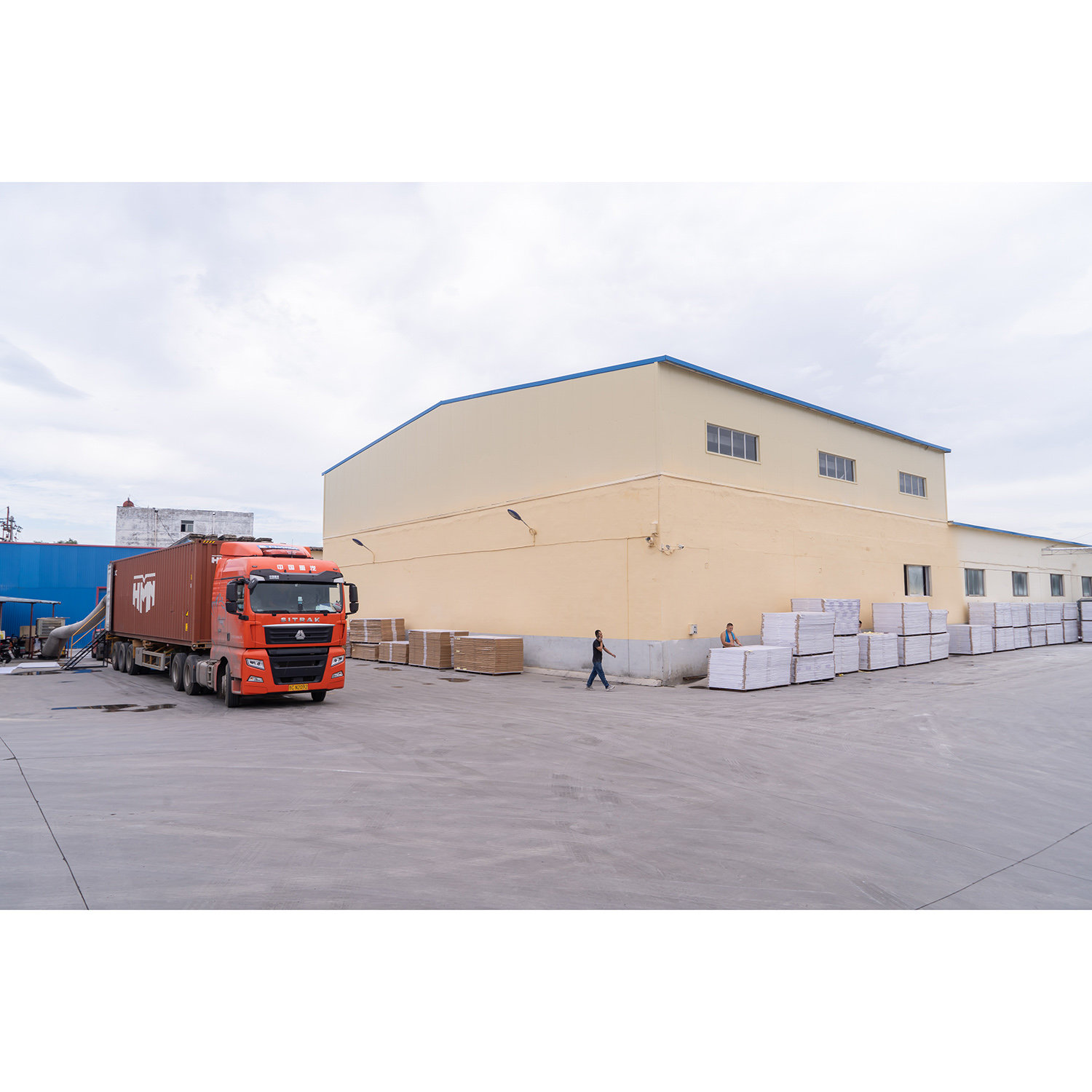
Board type, thickness and density are confirmed before sheets are cut for signage, cabinetry, transport or construction orders.
What the DINGTIAN product range covers
Zibo Dingtian Plastics Co., Ltd. is a manufacturer of high-grade PVC foam board based in the Zichuan Economic Development Zone, Zibo City, Shandong Province, China. The company was founded in June 2004, operates a 30,000 m² plant with 181 employees, and reports an annual output of 50,000 tons, supported by a 20-engineer R&D team. Its export ratio is 80%, with main markets in Southeast Asia, the Middle East, and South–North America.
The relevant product for the applications discussed here is listed as product 5235, PVC FOAM BOARD, classified as a PVC Celuka Foam Board with a density range of 0.4–0.9 g/cm³ and available sizes of 1220x2440 mm, 1560x3050 mm and 2050x3050 mm at 1–35 mm thickness. Because both free foam and Celuka extrusion positions sit inside the same category, buyers evaluating the range can specify board type alongside thickness and format rather than selecting from a fixed catalogue.
Manufacturing and supply terms are also published rather than negotiated case by case. Customization covers size, thickness, density, and colour. Monthly capacity is 4,200 tons, standard lead time is 30 days, and the minimum order quantity is one 20 ft GP full container. Quality control is described as 100% testing, export markets extend to the EU, the Middle East, Southeast Asia, South–North America and Africa, and after-sales support is provided remotely.
Certification evidence buyers can check
For evaluation-stage buyers, certification is where a supplier's claims become checkable. The documents below relate specifically to PVC FOAM BOARD and can be requested with their certificate numbers.
| Certification | Type | Certificate number | Authority | Standard | Issued |
|---|---|---|---|---|---|
| ISO9001 | ISO Quality Management System Certification | 06924Q10470RO | Kaixin Certification (Beijing) Co., Ltd. | GB/T19001-2016 & ISO9001:2015 | 2024-04-18 |
| REACH | SGS Test Report | TSNEC1701167001 | SGS | REACH Regulation (EC) No 1907/2006 | 2017-07-03 |
| RoHS | RoHS | QDAFN160100422 | SGS | IEC 62321 | 2016-02-04 |
| Formaldehyde | SGS Test Report | TSNHG2301164301 | SGS | ISO 17226-1:2021 | 2023-05-10 |
The ISO9001 certificate scope covers production of PVC foam board, which is the relevant scope for a buyer verifying that the quality system applies to the actual manufacturing step rather than to a trading operation. On the regulatory side, EU REACH Regulation Annex XVII Entry 63 restricts lead concentration in PVC articles to less than 0.1% by weight, effective 29 November 2024. Buyers specifying boards for the EU market should confirm compliance against that specific limit rather than assuming that a general REACH statement covers it.
Field evidence: three years of outdoor exposure
The clearest available evidence on scenario fit comes from a distributor/wholesaler client that has used product 5235 for advertising and furniture material applications for 5 to 10 years, at a volume of 10 containers per month. The material in that programme is UV stabilised for long-term outdoor exposure, lightweight to reduce installation cost, and easy to fabricate and install.
The measured outcome after three years was 98% print image retention, zero warping or delamination, and 100% waterproof performance. Compared with aluminium composite panel, the same application recorded a 40% cost saving. Two points in that record matter for evaluation: the retention figure is a print-surface result, so it speaks to the signage use case rather than to structural performance; and the zero-warping result is reported for a stabilised board, which is a specification decision rather than a property of PVC foam board in general.
Market trend: demand is broadening beyond signage
The global PVC foam board market was valued at approximately USD 2.1 billion in 2024 and is projected to reach USD 3.6 billion by 2032 (Verified Market Research). Scope matters when reading that figure: some public estimates covering the wider PVC foam industry rather than foam board alone quote substantially higher values, so buyers comparing growth rates should check what each report includes.
Supply-side concentration is another structural feature. China accounted for 20% of total exports of plastic building materials — the category that includes PVC boards — in 2024, retaining its position as the largest exporter (Observatory of Economic Complexity). At a regional level, Zibo recorded USD 180 million in plastic product export volume in 2024 with nearly 500 export-oriented manufacturers, forming a sizeable plastics processing cluster in East China (Qilu Network).
Application demand remains led by signage, but the mix is not static. Regulatory pressure is also reshaping specifications: the EU lead restriction on PVC articles, the ASTM E84 Class A fire rating commonly required for construction boards in North America, and UL 94 V-0 classifications reported for PVC foam board at thicknesses down to 1 mm (The Vinyl Institute) all push buyers toward documented, grade-specific compliance rather than generic material claims.
Comparison with traditional substrates — and where PVC foam board stops
Against aluminium composite panel, the comparison recorded in the distributor case is a 40% cost saving alongside 100% waterproof performance in a signage and furniture application, with the additional practical advantage that the material is easy to fabricate and install. On the supply side, third-party estimates place 3A Composites as the largest single participant in the global PVC foam sheet market with an estimated 13.8% share in 2024 (Dataintelo) — a reminder that the category is served by both global brands and export-oriented manufacturers, and that supplier comparisons should be made on specification and documentation rather than on size alone.
The limits of the material are as important as its advantages, and they are frequently skipped in supplier literature.
- Thickness and density windows are real constraints. Free foam board is supplied at 1–5 mm and 0.5–0.8 g/cm³, which makes it suitable for printed and cut panels but not for structural or load-bearing cabinetry components. Specifying free foam for a load-bearing role is a category error, not a price trade-off.
- Fire performance is grade- and thickness-dependent. UL 94 V-0 classifications are reported for PVC foam board at thicknesses down to 1 mm, and ASTM E84 Class A testing is a common construction requirement in North America. Neither should be assumed for a board that was not tested at the thickness and grade being ordered.
- Lead content is now a compliance gate in the EU. Since 29 November 2024, REACH Annex XVII Entry 63 restricts lead in PVC articles to below 0.1% by weight. Boards that do not carry a report against that limit create a compliance risk for importers regardless of how the rest of the specification performs.
- Density must be stated, not assumed. With density available as a customization parameter across a 0.4–0.9 g/cm³ range, a buyer who does not specify density may receive a board that behaves differently from the sample that was approved.
- Ordering geometry has a floor. A minimum order quantity of one 20 ft GP full container and a 30-day standard lead time mean that pilot quantities and urgent substitutions need to be planned rather than assumed.
None of these limits disqualify the material. They define the boundary inside which it performs predictably, and a buyer who works inside that boundary gets the lightweight, moisture-resistant behaviour the category is known for.
Future outlook
Three forces look likely to shape PVC foam board selection over the next several years. The first is application mix: the market is projected to grow from approximately USD 2.1 billion in 2024 toward USD 3.6 billion by 2032 (Verified Market Research), and the transportation and construction segments are where lightweight substitution arguments are strongest.
The second is documentation. As the EU lead restriction takes effect and fire-rating requirements tighten in construction specifications, the practical difference between suppliers will increasingly sit in test reports and grade-specific data rather than in material descriptions. Buyers can expect certification scope and certificate numbers to become standard items in a quotation.
The third is specification granularity. Density, colour, and format are already customization parameters rather than catalogue variables. As more buyers specify board type against the environment instead of ordering a generic sheet, the conversation shifts from price per sheet to fit per application — which is the more useful comparison in the first place.
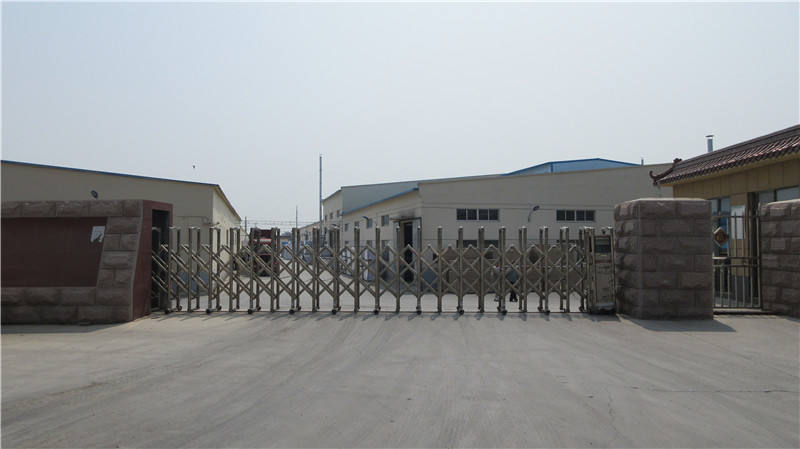
Board type, density and thickness are set during extrusion, which is why application fit is decided before the order is placed.
Frequently asked questions
Which PVC foam board type is used for outdoor advertising and signage?
Free foam board is the variant normally specified, supplied at 1–5 mm thickness and 0.5–0.8 g/cm³ density. Colored board at 1–20 mm covers signage where a colour is required through the sheet rather than printed on it, and Celuka board in large formats such as 1560x3050 mm and 2050x3050 mm is used for larger display panels. Signage and advertising represent approximately 35% of total PVC foam board demand (Laird Plastics, 2024).
How do laminated board and waterproof board differ for cabinetry?
Both are specified for furniture and cabinetry, but against different moisture conditions. Laminated board at 5–20 mm is used for dry-area panel work where a decorative surface and a stable core are the priority. Waterproof board at 1–35 mm is specified where moisture exposure is continuous rather than occasional, such as bathroom vanities and other wet-area furniture.
What sizes and thicknesses does Celuka PVC foam board come in?
Celuka board is supplied in 1220x2440 mm, 1560x3050 mm and 2050x3050 mm formats at thicknesses from 1 mm to 35 mm. Product 5235, DINGTIAN's PVC Celuka Foam Board, is listed with a density range of 0.4–0.9 g/cm³. Application areas associated with this board include construction, decoration, transportation, and packaging.
Is PVC foam board suitable for transportation interiors and packaging?
Yes, within defined limits. Transportation accounts for approximately 10% of the application mix, covering vehicle interiors and RV refitting, while a further 10% covers special-purpose uses such as packaging, prototypes, and industrial protection. Celuka board at 1–35 mm is the variant normally used in these environments because its rigid skin over a foamed core provides a harder, more stable face than a comparable free foam sheet.
Which certifications should a buyer verify before ordering PVC foam board for the EU?
The relevant documents are an ISO9001 quality management certificate covering production of PVC foam board, a REACH test report against Regulation (EC) No 1907/2006, a RoHS report against IEC 62321, and a formaldehyde test report against ISO 17226-1:2021. Since 29 November 2024, EU REACH Annex XVII Entry 63 also restricts lead concentration in PVC articles to less than 0.1% by weight, so a report addressing that specific limit should be requested separately.
What ordering constraints should buyers plan for?
Manufacturers differ, but published terms provide a reference point: customization across size, thickness, density, and colour; a monthly capacity of 4,200 tons; a standard lead time of 30 days; and a minimum order quantity of one 20 ft GP full container. Quality control is described as 100% testing, and after-sales support is provided remotely. Buyers planning trial volumes or urgent substitutions should confirm these terms against their own schedule before committing to a specification.
The order of decisions matters more than the order of quotations. Board type is set first, because it determines which thicknesses, densities, and surface behaviours are even available; environment comes next, because it eliminates variants that would underperform; and price is compared last, across boards that are genuinely equivalent for the job. Buyers who follow that sequence tend to find that the cheapest sheet is rarely the least expensive project. For a fuller view of the DINGTIAN PVC foam board range, specifications, and manufacturing capabilities, the company brochure can be downloaded here: DINGTIAN product brochure.