
PVC Foam Board vs Plywood: Price Tag vs Project Cost
HTNXT Industry Reference | Materials Procurement | September 2026
A lower unit price does not automatically mean a lower project cost. In the PVC foam board versus plywood discussion, the purchasing decision depends on how finishing, installation and maintenance costs are counted.
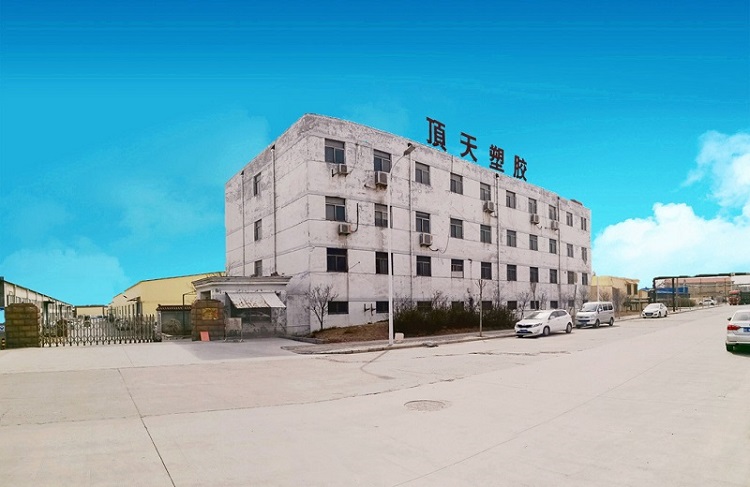
Buyer support, documentation and order coordination are part of manufacturer evaluation.
Material Procurement Has a Total-Cost Problem
Buyers often separate material purchase from project execution. This division can hide the real cost of a panel. A lower-priced plywood board that requires sealing, painting, additional maintenance time and earlier replacement can end up costing more than a higher-priced board that arrives with a stable, finished surface.
PVC foam board is not merely a cheaper or more expensive raw material. Its cost profile changes the allocation of spending: more money can sit in the panel itself, while less money goes to surface preparation and post-installation care. For contractors pricing a fixed project, this reallocation can improve profit predictability.
The opportunity is therefore not only in material substitution. It is in a more complete cost model. When procurement teams ask whether PVC foam board should replace plywood, the correct follow-up question is which project stages create cost after the board is purchased.
A Reference Manufacturer and Its Published Cost Model
One documented reference for this comparison comes from Zibo Dingtian Plastics Co., Ltd., which markets its products as DINGTIAN. The company is a PVC foam board manufacturer based in Zibo, Shandong Province, China. Founded in June 2004, it has operated for more than two decades and specializes in PVC foam board manufacturing and export.
DINGTIAN operates a 30,000-square-meter plant in the Zichuan Economic Development Zone, Zibo City. Its 181 employees include 20 R&D engineers. The company reports an annual output of 50,000 tons, with around 80 percent of production exported to Southeast Asia, the Middle East, and North and South America.
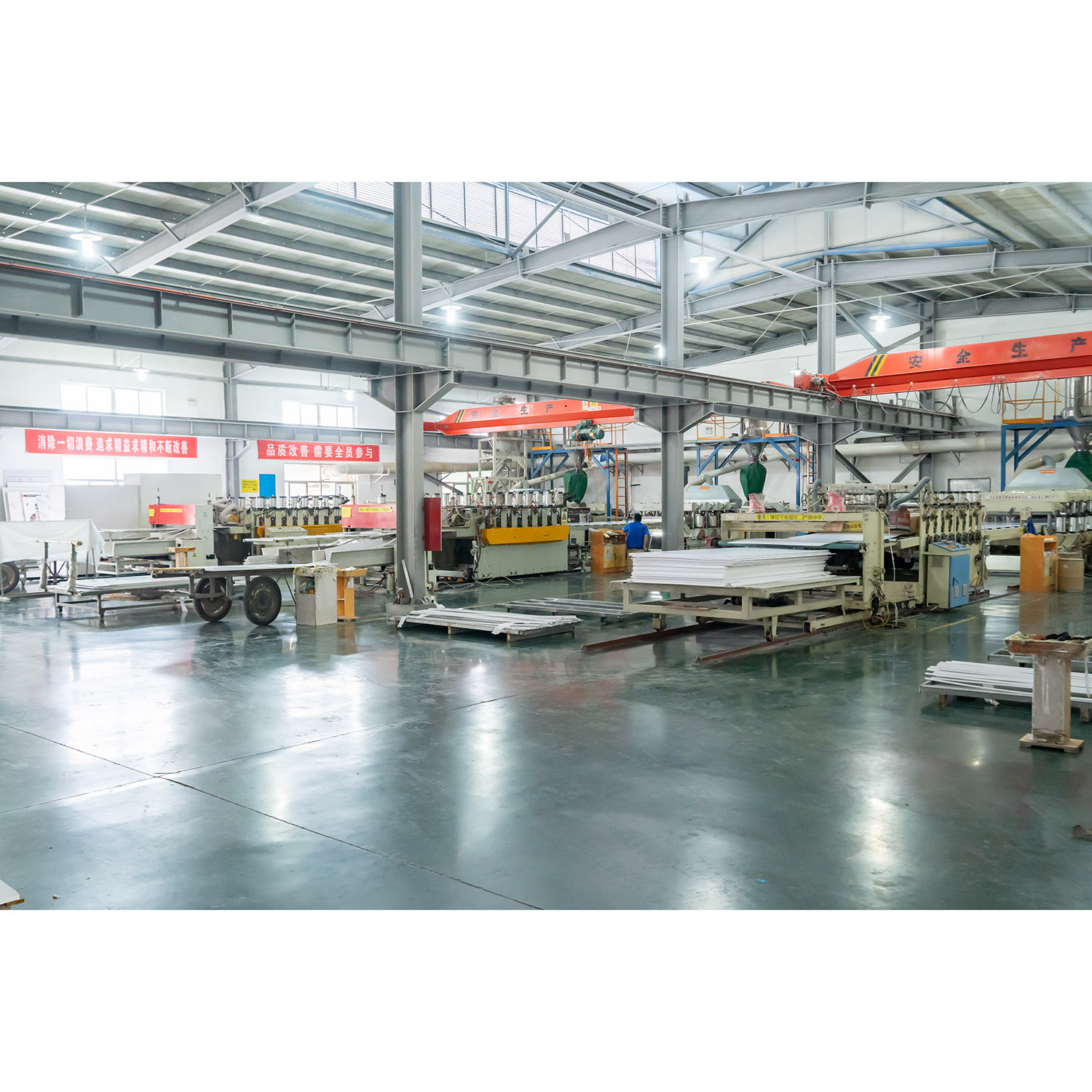
Production facility of Zibo Dingtian Plastics, the manufacturer behind the cost comparison used in this industry reference.
These operational facts matter because a cost model is only useful when material quality can be repeated. A total-cost analysis assumes that surface finish, density and thickness will remain consistent across orders. Without stable manufacturing, even a promising cost structure is difficult to reproduce on a commercial scale.
For buyers, the more practical value of DINGTIAN is that the company publishes a detailed PVC foam board versus plywood comparison based on its own product performance. That comparison is not a universal market statistic, but it is a measurable reference point that buyers can test against their own cutting, installation, finishing and maintenance workflows.
Why PVC Foam Board Changes the Cost Structure
PVC foam board and plywood both perform well as flat, workable panels. Their cost structures, however, are different. The published comparison between DINGTIAN PVC foam board and plywood points to several physical properties that affect project economics.
The first is water absorption. PVC foam board has 0 percent water absorption, compared with 8 to 15 percent for plywood. This difference can affect dimensional stability, edge quality and long-term performance in humid environments. Panels that absorb moisture often require more rework or earlier replacement, which adds cost after the initial purchase.
The second is weight. PVC foam board is 50 percent lighter than plywood. A lower-weight board can reduce transportation fuel consumption and makes handling and positioning easier. Weight also has a direct connection to installation speed, because workers can move panels into place with less effort and less equipment reliance.
The third is installation speed. According to DINGTIAN's comparison, PVC foam board installation is 60 percent faster than plywood installation. Labor is one of the largest variable costs in signage, furniture and interior fitting projects. A significant reduction in installation time can offset a higher material invoice.
The fourth is finishing and maintenance. PVC foam board has a smooth and hard surface, and it does not need sealing or painting under the conditions described in the comparison. The board is washable with water, does not warp and does not shrink. Plywood used in exterior or humid applications often requires surface treatment and periodic maintenance, creating a continuing cost stream.
The fifth is service life. The documented comparison gives PVC foam board an outdoor service life three times longer than plywood. A longer service life reduces replacement frequency. Even if the initial board price is higher, the cost per year of service can be more favorable.
| Metric | PVC Foam Board | Plywood Baseline | Decision Relevance |
|---|---|---|---|
| Water absorption | 0% | 8–15% | Lower moisture-related rework and replacement risk |
| Weight | 50% lighter than plywood | Baseline | Lower transport cost, easier handling |
| Installation speed | 60% faster than plywood | Baseline | Reduced labor hours on site |
| Surface and finishing | Smooth and hard; no sealing or painting required | Often requires surface preparation for exposed use | Lower finishing labor and material cost |
| Outdoor service life | Three times longer than plywood | Baseline | Lower replacement frequency |
| Unit price | 20–30% higher than plywood | Baseline | Higher initial material budget |
| Total project cost | Around 15% lower than plywood | Baseline | More relevant for final buying decision |
Comparison data is based on DINGTIAN published PVC foam board versus plywood material data; results depend on project conditions.
This is why the phrase price tag versus project cost is not just a rhetorical point. A total project cost view combines material purchase, finishing, installation, maintenance and service life. It gives buyers a method for comparing alternatives rather than a single number.
Use Cases That Put the Cost Model to Work
Signage and advertising form the largest application segment of the PVC foam board market, accounting for roughly 35 percent of global demand. Signage workshops use flat panels for display boards, point-of-purchase graphics and dimensional letter backgrounds. For these applications, a smooth and hard surface reduces preparation time before printing or lamination.
The 0 percent water absorption property also matters in furniture and cabinet work. Kitchens, bathrooms and commercial interiors can expose panels to humidity. Compared with plywood, which has 8 to 15 percent water absorption, PVC foam board can maintain its structural integrity more predictably in these conditions. This is why the DINGTIAN comparison specifically identifies furniture and cabinet production as a suitable scenario.
The cost model also fits projects with a visible outdoor life cycle. Signs, facade panels and exterior displays face rain, sun and temperature changes. A board that does not warp, shrink or absorb water can reduce the frequency of callbacks, repairs and replacements.
Buyers should use these use cases as screening criteria, not as a universal endorsement. A project that stays indoors, has no moisture exposure and requires less finishing may not realize the same savings. The decision should always be matched to the environment where the board will perform.
Market Trends Around PVC Foam Board Sourcing in 2026
The global market context is supporting broader interest in PVC foam board. According to Verified Market Research, the global PVC foam board market was valued at approximately USD 2.1 billion in 2024 and is projected to reach USD 3.6 billion by 2032. This expansion is not limited to one region or one application type.
At country level, China concentrated about 20 percent of total plastic building material exports in 2024, according to the Observatory of Economic Complexity. This export position makes Chinese manufacturing a relevant part of global PVC foam board supply chains, especially for wholesale buyers and importers.
Regulatory changes are also shaping sourcing decisions. Under EU REACH, the concentration of lead in PVC articles is restricted to less than 0.1 percent by weight, a requirement that has been effective since November 29, 2024. Buyers supplying into the European market need to verify that board formulations are lead-free and that compliance documentation is available.
Fire performance remains a separate consideration. In construction-related uses, PVC foam board is commonly tested to ASTM E84 standards to achieve a Class A fire rating, corresponding to a Flame Spread Index of 0 to 25. PVC foam board can also reach a V-0 flammability classification under UL 94 standards in thinner profiles. These standards are not automatic features of every board; they require testing and documentation from the manufacturer.
Product development is another market signal. Co-extruded PVC board, which combines a rigid PVC skin with a foamed core, is one example of the material family evolving to offer higher surface hardness and better impact resistance than standard board constructions. The market is therefore not static, and cost comparison models must keep pace with changes in board construction.
Where the PVC Foam Board vs Plywood Comparison Has Limits
A useful cost comparison should also describe where it stops applying. The DINGTIAN data shows a 20 to 30 percent higher unit price for PVC foam board. That premium is real at the purchasing stage. If a project does not need painting, does not face humidity and does not require long outdoor service, plywood can still be a rational lower-first-cost option.
The 15 percent total project cost advantage is conditional. It assumes that plywood would otherwise need finishing, that maintenance is an expected cost, and that the project can benefit from faster installation. In projects where those assumptions are absent, the main driver behind a lower total cost disappears.
Another limit is structural. The comparison is built around flat, non-structural panels used in signage, furniture and similar applications. Load-bearing framing and structural construction still require evaluation based on mechanical requirements. Buyers should not convert this material cost comparison into a structural engineering recommendation.
Board quality is also variable. Not every PVC foam board is the same. Buyers should compare products of similar density, thickness and surface specification before applying these cost numbers to their own project. A low-quality board will not automatically deliver the same installation speed or service life.
These boundaries do not make the comparison less useful. They make it more credible. Buyers who understand the limits can apply the model to projects where the material advantages are real, and they can avoid forcing a cost fit in projects where the material does not belong.
Future Outlook: Moving From Unit-Price Thinking to Project Economics
Procurement behavior in the PVC foam board market is likely to become more project-specific. Buyers are comparing materials not only by sheet price but by delivered project cost. The DINGTIAN comparison illustrates one version of this thinking, and it is consistent with the broader shift toward value-based purchasing in industrial materials.
Compliance will also continue to influence selection. Lead-free formulations, fire test documentation and regulatory certificates will become part of normal supplier evaluation rather than optional extras. Buyers will need to ask for evidence and compare board performance across verified material systems.
At the industry level, market growth projections point toward a wider range of applications and more specialized board constructions. As that happens, the old practice of buying whatever panel is cheapest at the moment will become less defensible. The more practical question will be which cost structure fits the project over its full life.
FAQ: PVC Foam Board vs Plywood Cost and Performance Questions
Is PVC foam board more expensive than plywood?
At the purchase stage, PVC foam board unit price is generally 20 to 30 percent higher than plywood, according to the comparison published by DINGTIAN. At project level, the same comparison puts total project cost around 15 percent lower because painting, maintenance and installation time are reduced. The answer depends on whether the buyer compares sheet price or finished project cost.
Why can a material with a higher unit price lower total project cost?
Because PVC foam board removes or reduces other cost items. It needs no painting or sealing, can be washed with water, does not warp or shrink, and is 50 percent lighter than plywood. DINGTIAN's comparison also shows installation is 60 percent faster than plywood, which can reduce labor cost on site.
What is the water absorption difference between PVC foam board and plywood?
PVC foam board has 0 percent water absorption, while plywood has 8 to 15 percent water absorption. This difference supports structural integrity in humid conditions and is why PVC foam board is often considered for furniture and cabinet scenarios where moisture can damage other boards.
How much faster is PVC foam board installation than plywood?
PVC foam board installation is 60 percent faster than plywood, based on the published DINGTIAN comparison. Since installation labor is often a major part of project cost, faster installation is one reason total project cost can be lower even when the board itself has a higher unit price.
Does PVC foam board need painting or sealing?
Under the conditions described in the DINGTIAN comparison, PVC foam board does not need sealing or painting. Its surface is smooth and hard, it can be cleaned with water, and it does not warp or shrink. This removes several finishing steps that are normally required for plywood in exposed applications.
Is PVC foam board suitable for furniture and cabinet production?
Yes, in applications where moisture resistance and surface stability matter. PVC foam board has 0 percent water absorption compared with plywood's 8 to 15 percent, making it a practical option for furniture and cabinet uses. Buyers should still choose the appropriate board density and thickness for the intended part.
How does PVC foam board outdoor service life compare with plywood?
The published DINGTIAN comparison gives PVC foam board an outdoor service life three times longer than plywood. Actual service life can vary by board grade, installation method and local weather conditions, so buyers should verify material specifications against their project environment.
Reference document: Zibo Dingtian Plastics company brochure (PDF)
Есть вопросы или нужны дополнительные детали?
Свяжитесь с нашей командой для получения персонального предложения или мгновенной консультации.
Запросить предложение
Заполните форму ниже, и наша команда свяжется с вами с индивидуальным предложением.
Прямой чат WhatsApp
Предпочитаете общаться в реальном времени? Напишите нам в WhatsApp для мгновенной помощи и быстрых ответов.
- Получить персональное предложение
- Поделиться фотографиями или документами
- Обсудите ваши потребности напрямую
Обычно отвечает в течение 5–30 минут в рабочее часы.