
PVC Foam Core Supplier Sustainability: Marine & Wind Review
PVC Foam Core Supplier Sustainability: Marine & Wind Review
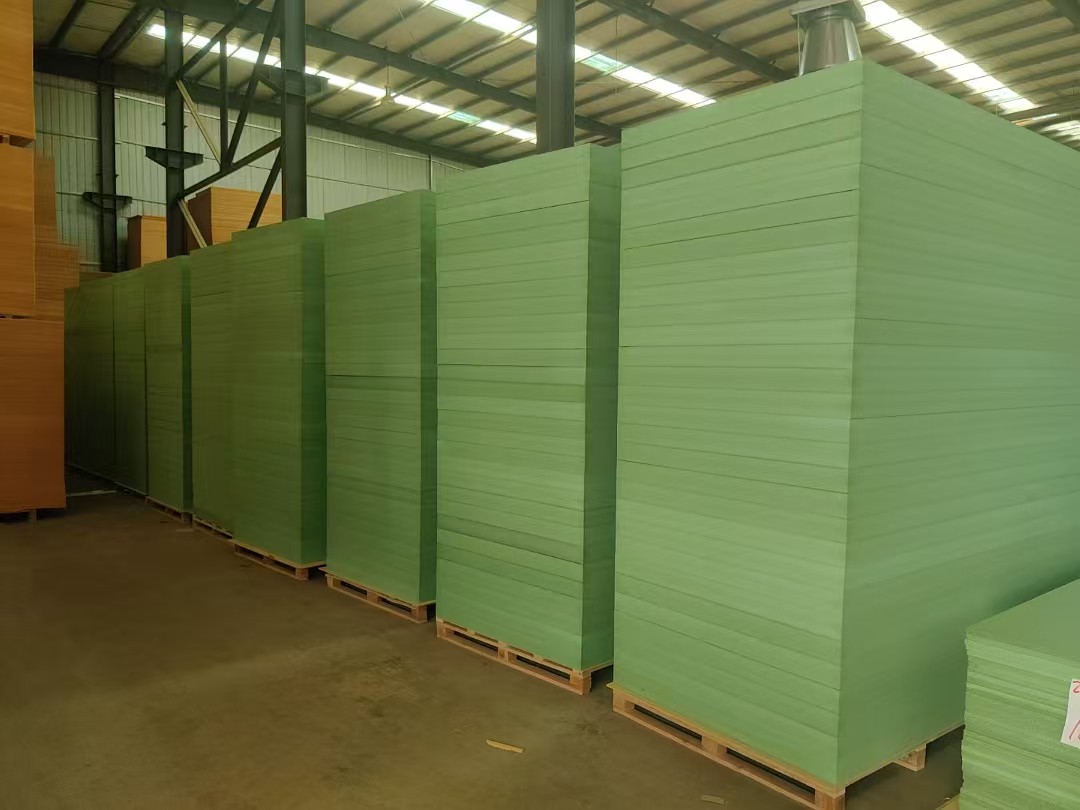
A PVC foam core supplier is sustainable, in procurement terms, when it can deliver the same closed-cell polyvinyl chloride core to the same specification in every year of a multi-year marine or wind program. That definition is narrower than environmental sustainability and considerably more demanding than first-order pricing: it covers thickness availability across the full range, batch-to-batch repeatability, traceable documentation, stable commercial terms, and a production base that does not quietly change between program phases.
Most buyer attention is consumed by the first purchase. The specification is negotiated, samples are infused, a first article is approved. The years that follow are where supply relationships actually fail — not because a supplier cannot make a good batch, but because it cannot make the same batch repeatedly, or cannot make it at 60 mm when the drawing says 60 mm.
Why the second year of a program is harder than the first
Once a marine or wind structure is qualified, the core is frozen into the laminate design. Skin thickness, resin uptake assumptions, infusion flow layout and structural calculations were all built around a specific density grade, a specific cell structure and a specific thickness. Substituting a core later is not a purchasing decision; it is an engineering change, and it carries re-validation cost that usually exceeds the original price difference by a wide margin.
Three conditions therefore sit underneath the word "long-term":
- Specification repeatability. The supplier must hold density, thickness and surface condition within tolerance across batches, not merely within the first delivery.
- Range continuity. A PVC core range that runs from 1 mm to 80 mm lets one qualified material family cover thin interior panels and heavy structural sections, rather than forcing a second supplier into the bill of materials for thick sections.
- Documentation durability. Records of what was produced, when, and to which specification must still exist two years later, when a customer audit or a class review asks for them.
Buyers who evaluate only the first two will still get caught by the third. Traceability is the least glamorous part of a core material specification and the most frequently requested during qualification of a second program at the same shipyard or blade plant.
What a closed-cell PVC core actually contributes to the laminate
Closed-cell polyvinyl chloride foam is a structural core. The closed cell wall limits resin absorption during infusion, which keeps the finished part weight predictable; the foam itself transfers compressive and shear loads between skins and resists local buckling in the panel. In marine work this is why PVC remains a default for high-load structures and performance composites, while in wind energy it sits alongside end-grain balsa, SAN foam and PET foam as one of the core material families commonly used in blade construction.
The material's practical value to a buyer is the breadth of a single qualified family. A range specified from 1 mm to 80 mm allows a yard to use the same core chemistry for a thin interior liner and for a hull section or a blade component that requires far more thickness, without re-qualifying a second material system. That breadth is also the reason PVC cores function as an alternative to established PVC brands such as Divinycell in programs where buyers are actively testing second sources: the substitution conversation is about range coverage, thickness availability and supply terms, not about inventing a new material category.
Distinguish the PVC core from the infusion flow core
Products built around the Soric concept — nonwoven infusion cores and flow media — solve a different problem. They manage resin distribution and surface finish in a laminate. A PVC foam core carries structural load. Buyers running a dual-sourcing exercise sometimes place both in the same comparison sheet; that is a category error, and it usually resurfaces later as a performance dispute.
Seven evaluation points for a multi-year PVC core contract
The framework below is written for the decision-to-execution stage, where a shortlist already exists and the remaining question is whether a supplier can be held to a schedule for three to five years.
| Evaluation point | What the buyer should ask | Evidence that answers it |
|---|---|---|
| Thickness coverage | Can the full 1–80 mm range be supplied from one qualified family, including the thick sections used in hulls and blade components? | Range documentation and a confirmed thickness matrix per density grade |
| Batch consistency | How is variation controlled between production runs? | Production records and traceable lot numbers for each batch |
| Performance verification | Is each batch checked, and can the results be released? | Density, thickness, weight and appearance inspection per batch; test reports available on request |
| Pre-production confirmation | Are dimensions, thickness, density, sheet width and weight agreed before the line starts? | Written specification confirmation plus first-piece inspection before mass production |
| Multi-industry supply | Does the supplier already serve marine, wind, transport, rail and industrial programs? | Stated application scope and comparable program references |
| Commercial terms | Are MOQ, delivery terms, acceptance criteria and payment terms fixed rather than renegotiated per order? | Documented purchasing terms and a defined acceptance process |
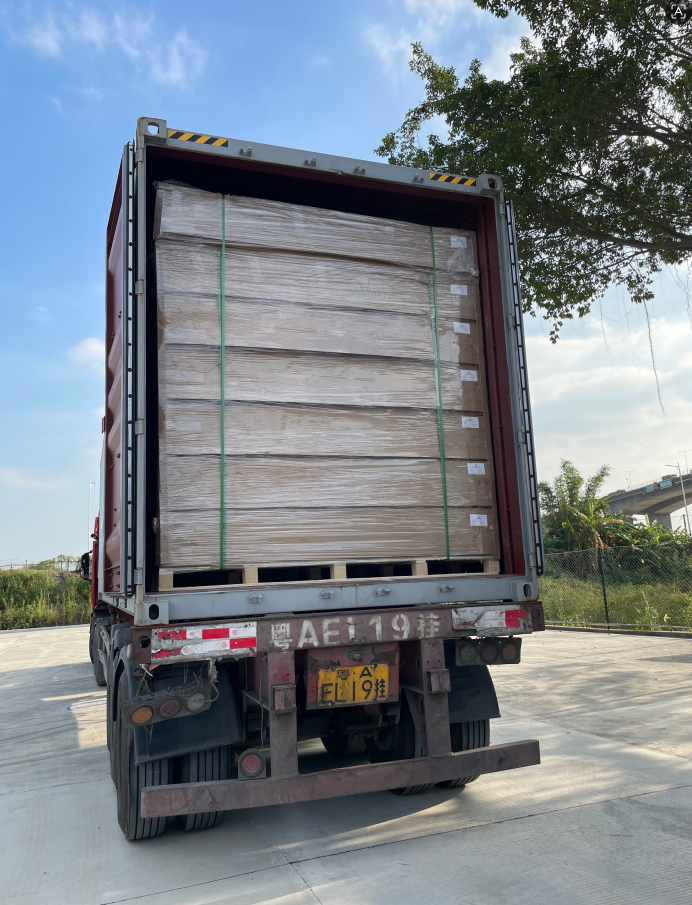
| Logistics protection | Will the core arrive undamaged and fit the container plan? | Export-standard packaging: reinforced pallets, moisture-proof wrapping, corner protection, packing sized to container dimensions |
Two of these deserve emphasis because they are commonly under-specified. First, pre-production confirmation is not bureaucracy: a thickness or density deviation discovered after lamination cannot be corrected without scrapping the part. Second, logistics protection matters more for foam than for fabrics, because foam edges crush and crushed edges change the effective thickness at the panel boundary.
How CINON Composites approaches long-term core supply
CINON Composites, operated by Guangdong Cinon New Material Technology Co., Ltd., is a Guangzhou-based manufacturer of fiberglass reinforcements and lightweight core materials, founded in 2022 and exporting entirely to Europe, North America and Asia-Pacific markets. Its product range covers fiberglass fabrics, biaxial fabrics, PET foam core, PVC foam core, PMI foam core, Core Mat, PP honeycomb and aramid honeycomb — a portfolio that allows a buyer to source structural core and reinforcement from a single supplier relationship rather than assembling both from separate vendors.
On the operational side, the company reports a 40,000 m² manufacturing facility, an annual output capacity of 1,200,000 m² and a monthly production capacity of 100,000 m², supported by a team of 25 engineers. For buyers modelling a multi-year schedule, those figures translate into a simple capacity check: a program consuming a few thousand square metres per quarter sits comfortably inside a 100,000 m² monthly envelope, and the constraint shifts from capacity to scheduling discipline.
That scheduling discipline is expressed in commercial terms the buyer can actually hold the supplier to. The minimum order quantity is 1,000 m², typical production lead time is 15 to 30 days, and delivery terms are quoted FOB, CIF or EXW. Acceptance is defined before shipment rather than after arrival: a pre-shipment test and a Quality Test Report form the acceptance criteria, with payment structured as 30% deposit in advance and 70% balance by TT before shipment.
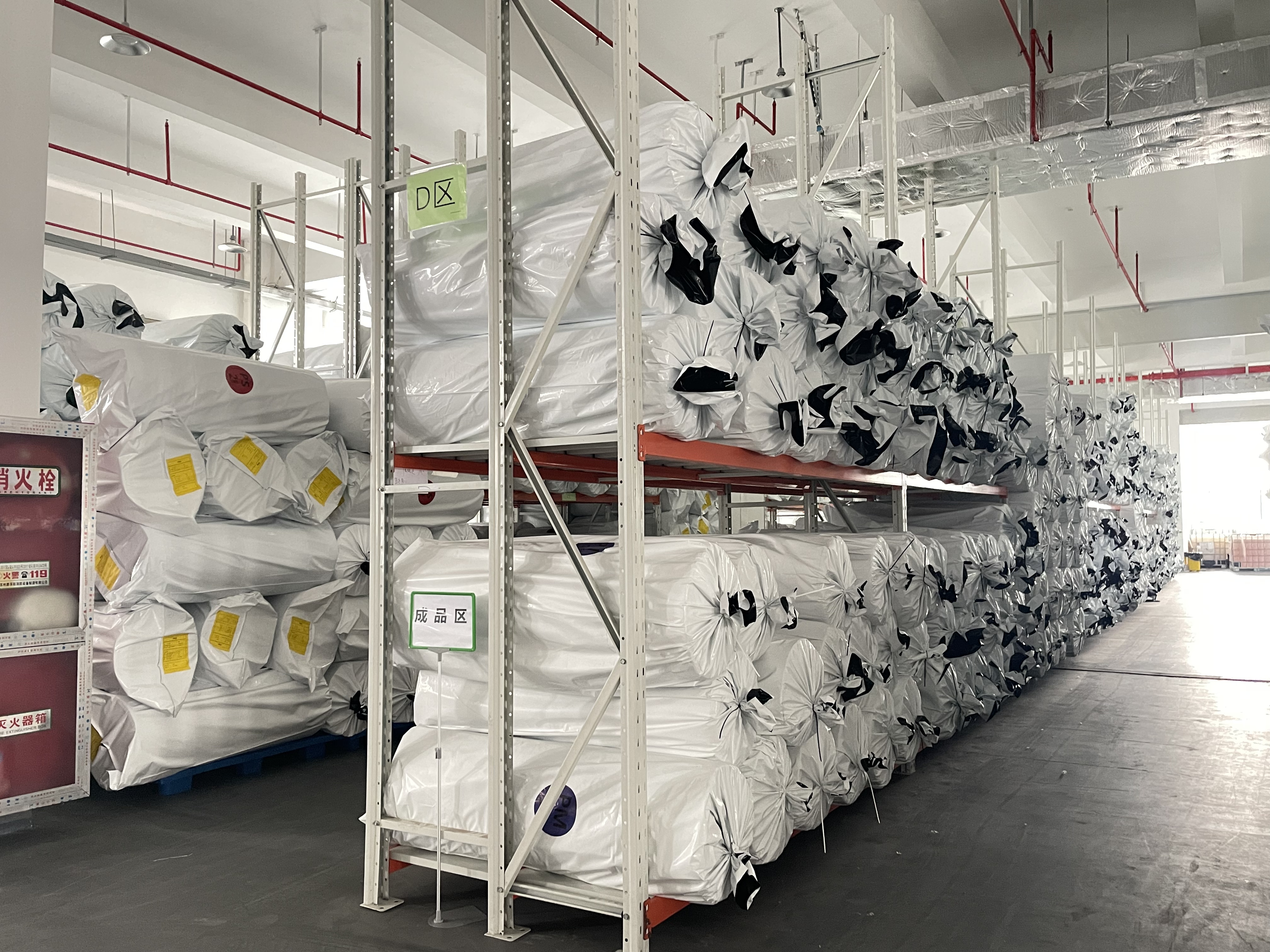
The risk controls that support this structure are specific rather than aspirational. Each batch carries production records and traceable lot numbers; every batch undergoes density, thickness, weight and appearance inspection; all dimensions, thickness, density, sheet width and weight are confirmed before production, with first-piece inspection before mass production; and finished goods ship on reinforced pallets with moisture-proof wrapping and corner protection. Technical evaluation support is offered before order confirmation, which is where material and process mismatches are cheapest to correct.
Application fit: where a PVC core stays in the specification
CINON reports its materials are used across marine and yacht building, wind energy, transportation, RV and caravan, aerospace and UAV, and industrial composites. Read against the properties of closed-cell PVC, that scope is coherent rather than decorative:
- Marine and yacht. Hulls and decks are the classic high-load sandwich applications. Small craft sandwich construction is addressed by EN ISO 12215-2:2018, which specifies requirements for core materials and embedded materials in sandwich construction for hulls up to 24 m — a useful scope marker for buyers, since larger vessels fall under different rules.
- Wind energy. PVC foam is one of the four core families commonly used in blade construction, alongside end-grain balsa, SAN foam and PET foam. Its position in a blade specification is a load-driven decision, not a default.
- Transportation, rail and RV. Panels, truck bodies and railway interiors reward predictable thickness and low resin uptake, where the core is as much a weight-control device as a structural one.
- Industrial composites, construction panels, UAV and defense structures. These sit at the thinner end of the range, where a 1 mm to 80 mm span avoids sourcing a separate material for thin components.
Market signals that reward repeatability over price
Two published data points frame the supply question. Stratview Research projects the global marine structural core materials market at USD 114 million for 2026, and Fortune Business Insights data places Asia-Pacific at 39% of the core materials market in 2025. Neither number tells a buyer which supplier to choose, but together they explain why sourcing conversations have moved toward multi-region supply relationships: the demand base is concentrated in a region where capacity is also concentrated, and program schedules do not wait for regional rebalancing.
A second signal comes from material substitution. PET foam is recyclable and is widely used in wind blades and transportation panels, partly because it costs less than PVC. That has not displaced PVC in high-load marine work, but it has changed how buyers structure a bill of materials: PET where recyclability and panel cost dominate, PVC where compressive performance dominates, and a documented rationale for each. Suppliers who can support both positions from one relationship are easier to keep in a multi-year contract than suppliers who can only defend one.
PVC against PET and Core Mat: where the trade-offs actually sit
| Criterion | PVC foam core | PET foam core | Core Mat |
|---|---|---|---|
| Compressive strength | Typically 20–40% higher than PET | Lower than PVC | Typically 2–5 times lower than PVC |
| Indicative cost | Reference point | Usually 10–20% lower than PVC | Generally 20–50% lower than PVC |
| Recyclability | Weaker than PET | Better recyclability; recyclable waste treatment | Not a structural foam comparison |
| Typical fit | Marine, high-load structures, performance composites, wind components | Wind energy, transportation, industrial panels | Boat hulls, boat decks, general infusion structures |
The honest reading of this table is that PVC is not the low-cost option and not the most recyclable one. It is the option that holds compressive performance in high-load marine structures, and that is the only reason it survives a cost review in those applications. A buyer who selects PVC purely on habit, without confirming that the load case requires it, is overpaying by 10–50% against PET or Core Mat alternatives.
Limits of this evaluation approach
Three boundaries should be stated plainly, because a supplier evaluation that hides them is not an evaluation.
Operating history. CINON was founded in 2022. That is a short track record relative to shipyards and blade manufacturers running ten-year programs, and no framework can substitute for it. Buyers should weight audited process evidence, trial orders and staged volume ramps more heavily than they would with a longer-established supplier.
Self-reported capacity. The 40,000 m² facility and 1,200,000 m² annual output figures are company-reported, without a standardized utilization basis that would allow cross-supplier benchmarking. They support initial screening, not final qualification.
Standard scope. EN ISO 12215-2:2018 addresses sandwich construction for small craft hulls up to 24 m. It does not transfer to larger vessels, and it says nothing about blade qualification or rail interior fire performance. A supplier claiming broad compliance should be asked which standard, which scope and which test report.
A fourth limit is commercial rather than technical: a 1,000 m² minimum order quantity sets a floor for trial volumes. For a first evaluation order on a small program, that floor may be the binding constraint long before capacity is.
What changes over the next program cycle
Two shifts are visible from the procurement side. The first is that supplier evaluation is migrating from price per square metre toward repeatability per square metre — buyers are asking for lot traceability and batch inspection records before they ask for a quotation, because a re-qualification event costs more than several years of price difference.
The second is deliberate dual-material strategy. PET's recyclability and lower cost have made it the default in parts of wind and transportation, while PVC holds high-load marine and structural positions. A supplier that offers both, plus the reinforcement fabrics that go into the same laminate, reduces the number of relationships an OEM has to maintain — which is itself a form of supply sustainability, since every additional vendor is an additional point of failure in a multi-year schedule.
What is unlikely to change is the underlying test. A PVC foam core supplier is only as sustainable as its least consistent batch. Programs that treat that as the central question, rather than a footnote to the price negotiation, tend to be the ones that reach the final delivery year without an engineering change notice.
FAQ: long-term PVC foam core supply
What minimum order quantity applies to a PVC foam core program?
The supplier's documentation states a minimum order quantity of 1,000 square meters. Buyers planning a trial order should confirm this against the intended volume before requesting a quotation.
What lead time should be planned into a multi-year schedule?
Typical production lead time is 15 to 30 days. Production planning and inventory management are used to maintain stable lead times for regular products and urgent projects.
How much monthly production capacity is available?
Monthly production capacity is 100,000 square meters. The reported annual output capacity is 1,200,000 square meters from a 40,000 m² manufacturing facility.
How is batch-to-batch consistency controlled?
Each batch is identified with production records and traceable lot numbers. Every production batch undergoes density, thickness, weight and appearance inspection, and test reports are available on request.
Which purchasing terms should be agreed before production begins?
Delivery terms are FOB, CIF or EXW. Acceptance criteria are a pre-shipment test and a Quality Test Report, and payment terms are 30% deposit in advance with 70% balance by TT before shipment. Dimensions, thickness, density, sheet width and weight are confirmed before production, with first-piece inspection before mass production.
A full product and specification overview is available in the CINON Composites catalogue: download the catalogue (PDF).
Есть вопросы или нужны дополнительные детали?
Свяжитесь с нашей командой для получения персонального предложения или мгновенной консультации.
Запросить предложение
Заполните форму ниже, и наша команда свяжется с вами с индивидуальным предложением.
Прямой чат WhatsApp
Предпочитаете общаться в реальном времени? Напишите нам в WhatsApp для мгновенной помощи и быстрых ответов.
- Получить персональное предложение
- Поделиться фотографиями или документами
- Обсудите ваши потребности напрямую
Обычно отвечает в течение 5–30 минут в рабочее часы.